Tag: Kingdom of God

  • Thinking Out Loud

    Thinking Out Loud

    After 2,000 years, many are still waiting for the Kingdom of God to arrive from the outside. But what if the kingdom Jesus spoke of is already here—within us, waiting quietly to be recognized? These thoughts are shared not as answers, but as reflections… thinking out loud…

    In Jesus’ words, “The Kingdom of God is within you.” It’s such a profound teaching, yet so many, even after 2000 years, continue to look outward, as if the kingdom is a distant place or a future event. The truth is, it is already here, in the present moment, within each of us, waiting to be recognized.

    “nor will people say, ‘Here it is,’ or ‘There it is,’ because the kingdom of God is in your midst.” Luke 17:21

    In this verse, Jesus is responding to a question from the Pharisees about when the Kingdom of God will come. He answers by saying that it’s not something to be observed externally, but rather that it’s already present within those who believe.

    It’s as though the external waiting reflects our inability to fully embrace what is already present—our reluctance to fully step into the fullness of our own being, the divine spark that resides within. The kingdom is not a far-off land to be found after death, nor is it a king to be crowned in a distant future. It’s a recognition, a shift in awareness.

    Jesus, in his life and teachings, pointed again and again to this truth, yet even his followers continued to expect a king who would come in glory, overthrow empires, and bring physical peace. But the peace Jesus offered was internal—a peace that passes understanding, a peace that comes from being aligned with the divine within.

    The kingdom is not about external events, but about the internal shift—a shift from seeking to knowing, from waiting to realizing, from longing to embodying.

    Is it possible that we’re all waiting for an external kingdom, while the kingdom quietly resides in our hearts, patiently waiting for us to recognize it?

    Yes?

    🙏🕊🙏

  • Into the Mystic: The Wave and the Water – Finding Peace in Aimlessness

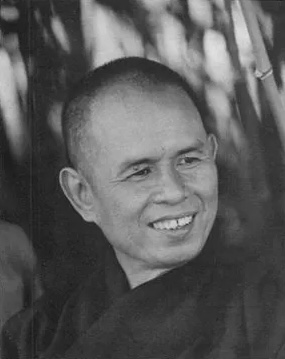
    In his gentle and profound way, Thich Nhat Hanh reminds us that we are already what we seek to become. Like a wave searching for water, we often find ourselves running in circles, seeking stability and peace, when in fact we are already made of the very essence we are searching for.

    In the previous post, we reflected on the words, “Be still and know that I am God,” and on the teachings that the Kingdom of God is within us, not something to be sought outside. Thich Nhat Hanh offers a similar invitation to stillness, a reminder that we need not search beyond this moment to touch the Divine. His teachings on apranihita—aimlessness—invite us to stop running after something outside of ourselves. The Buddha is not somewhere far away, hidden behind our efforts; the Buddha is within us, right here, right now. We don’t need to become something else or achieve some great transformation to touch the truth of our being. We only need to stop, to recognize that what we are seeking is already present in us.

    This echoes the Christian mystic path as well, where we are called to enter the stillness, to trust in the unfolding of the Divine presence within. St. John of the Cross speaks of surrendering into the Divine presence that is always here, guiding us without the need for striving. The great mystics remind us that the more we seek, the further we may feel from the truth. Yet when we stop seeking, when we allow ourselves to simply be, we find that the Kingdom of God is already here, waiting for us in the stillness of our own hearts.

    Thich Nhat Hanh’s teachings give form to this same truth. He uses the image of a wave to help us understand that we are not separate from what we seek. Just as the wave is made of water, we too are made of the very essence we long to touch. The wave doesn’t need to run after the water; it is already water. The black cloud doesn’t need to become a white cloud; it only needs light to shine on it, revealing what was always there. In the same way, we don’t need to become something else to experience peace. We need only to stop, to rest in the awareness of who we already are.

    As both Sri Nisargadatta Maharaj and Papaji have taught, the very act of searching can take us further from what we seek. Papaji even wrote a book titled Call Off the Search, emphasizing that the more we search, the more we reinforce the illusion that the truth is somewhere else. This persistent search keeps us from realizing the truth that is already right here, right now. By continuing to look outside of ourselves, we create a sense of distance, when in reality there is no distance at all—only the stillness of the present moment, where what we seek has always been.

    “You are already what you want to become,” Thich Nhat Hanh says. Yet we spend much of our lives not believing this truth, searching for happiness, fulfillment, and wisdom outside of ourselves. Whether it’s the Kingdom of God, Buddha-nature, or enlightenment, we chase after these ideas as though they are separate from us. But all of the great teachers—whether it be Jesus, the Buddha, or St. John of the Cross—urge us to look within. They tell us that when we stop running after what we already are, we can finally rest in the truth that has always been there.

    This is what Thich Nhat Hanh calls aimlessness. The practice of aimlessness is to no longer place something in front of you to chase after. It is to recognize that everything you are searching for is already here. By stopping the search, by becoming still, we can touch the wonders of life that are already present in this moment.

    In one of his talks, Thich Nhat Hanh describes this stillness beautifully: “The Kingdom of God, the Pure Land of the Buddha, is available in the here and now.” He reminds us that happiness is found in the simple things—a rose, the fresh air, a loving smile. Like the wave that need not search for water, we need only to stop and recognize the treasures already around us, treasures that we so often miss because we are running in circles.

    Thich Nhat Hanh teaches that walking meditation can be a wonderful way to practice this stopping, this resting in the here and now. Each step is not taken with a sense of rushing to arrive somewhere, but with the awareness that we are already where we need to be. With each step, we arrive fully in the present moment, touching the peace, the beauty, and the wonder that is always available. It is a practice that brings us back to the present, back to ourselves, and back to the truth that there is nothing to attain.

    “You don’t need to become a Buddha,” Thich Nhat Hanh says, “You are already a Buddha.” You don’t need to search for the Divine; the Divine is already within you. It is only when we stop running that we can finally touch this truth. Like the black cloud that becomes a white cloud when the light shines upon it, we are transformed by the simple act of recognition. In the stillness of aimlessness, we realize that there is no distance between us and what we seek.

    As we continue our contemplative journey, may we learn to embrace the wisdom of aimlessness. May we stop chasing after what is already here, within us. And in that stopping, may we find the peace, the joy, and the freedom that comes from recognizing that we have always been enough.

    🙏🕊️🙏

  • Seeking the Kingdom of God: The Paradox of Perfection and Presence

    The mystic journey is one of paradox—seeking that which is already present. Across traditions, whether in Christian teachings about the Kingdom of God or in non-dual philosophies like Advaita Vedanta and Buddhism, the central truth remains: the divine, or perfection, is already here, but it must be realized through spiritual insight. As Jesus said, “The Kingdom of God is within you” (Luke 17:21), yet for most of us, it remains hidden behind the veil of ego and conditioned perception.

    The Spiritual Paradox:

    At the heart of many mystical teachings is the idea of striving for a perfection that we will never attain—because it is not something to attain. It’s not a destination, but a present reality we fail to recognize. This paradox mirrors the Christian teaching of seeking the Kingdom of God, even though it’s already in our midst. In this journey, we are continually asked to refine ourselves, knowing that the striving itself is a tool for unveiling the deeper truth that we are already complete.

    In the words of a friend: “Strive always for perfection, knowing that you will never attain it, and yet you’re as perfect as you will ever be.” This echoes not only in Christian thought but also in the non-dual traditions of the East. Whether it’s Brahman or Buddha-nature, spiritual traditions agree that the ultimate reality is not something the ego-self can grasp or reach.

    Having Eyes to See and Ears to Hear:

    Jesus emphasized that the Kingdom of God is already here for those who have “eyes to see” and “ears to hear.” This teaching parallels the non-dual realization that enlightenment or liberation is not a distant goal, but a shift in awareness. It’s about seeing through the illusion that we are separate from the divine or that the divine is elsewhere.

    In the mystic experience, the ego—the self that seeks—is a pratyaya (a conditioned phenomenon), something that must dissolve for true realization to occur. The ego can never “attain” enlightenment, because the one seeking is part of the illusion. The task, therefore, is to see through this illusion. As Jesus said, those who are spiritually awake can recognize that the Kingdom of God is already here.

    The Practice of Seeking:

    Even though we are already in the Kingdom, we must continue to strive. This striving is not about accumulating spiritual merit or becoming more worthy. It’s about peeling back the layers of ego and illusion to reveal the truth that has always been there. The very act of seeking becomes a practice in humility and surrender, recognizing that the self cannot attain the Kingdom, but that the realization of the Kingdom involves a shift in consciousness—not in achievement.

    In Buddhism, this is the realization of emptiness or shunyata—the recognition that all things, including the self, are empty of inherent existence. In Christianity, it’s the surrender to God’s will and the realization that “it is no longer I who live, but Christ who lives in me” (Galatians 2:20).

    Conclusion:

    The mystical path is one of paradox and deep humility. We strive to seek perfection, knowing that the ego will never attain it, because the perfection we seek is beyond time, space, and the limitations of the mind. We often speak of this perfection as being “present,” yet the present itself is elusive. As we’ve observed, the present moment can never truly be experienced by the senses—by the time we become aware of it, it has already slipped into the past. The perfection we seek is not in the present as we conventionally understand it, but rather beyond time itself, in the timeless reality that transcends the ego.

    This is why enlightenment cannot be made to happen. As Red Anderson said, enlightenment is like an accident—a spontaneous revelation beyond our striving and beyond our ego. And yet, the purpose of practice, whether in Zen, Christian mysticism, or other spiritual traditions, is to make us accident-prone. Practice, mindfulness, and ethical discipline create the conditions for enlightenment or grace to arise, even though we cannot control when or how it will happen.

    In this way, the act of striving itself becomes a form of grace—not because we earn grace through effort, but because our striving prepares us to receive what is already present. Grace, in the spiritual sense, is not something we can control or achieve. Rather, it is a gift that arises when the striving dissolves. Like rain that falls when the soil is ready, grace arrives spontaneously, not as a reward, but as a revelation of the truth that has always been.

    This is why mystics across traditions teach that while we cannot force grace to appear, we can create the conditions for it. Practices like prayer, meditation, or mindfulness soften the ego and open us to receive what is already here. In this sense, grace is the ultimate outcome of our paradoxical journey—not something earned through effort, but something realized when we let go of the need to attain it.

    Thus, as we strive, we also surrender. And when grace arrives, it reveals that the perfection we seek has always been present, beyond time and striving. This recognition dissolves the illusion of separation and resolves the paradox: the Kingdom of God, or enlightenment, was never distant—it was simply waiting to be seen.

    This mirrors the paradox of non-duality in a world of duality: we appear to strive, yet the truth we seek is always here, beyond time and duality. Practice, whether Zen meditation, mindfulness, or prayer, is a way to soften the ego, make us open, and create the conditions for the Kingdom of God, enlightenment, or grace to spontaneously arise. In this sense, we become like a field prepared for rain—we cannot control when the rain will come, but by cultivating the soil, we make ourselves accident-prone to the downpour of grace.

    Thus, in the mystic journey, striving and letting go are not opposites but two parts of the same dance. We strive, knowing we cannot ‘make it happen,’ but in doing so, we prepare the ground for the possibility of grace.

    The beautiful metaphor of becoming “accident-prone” weaves it into the ongoing theme of striving without attachment. It acknowledges the value of practice, even when we know the ego cannot reach enlightenment directly, and creates a sense of the mystical unfolding that happens when conditions are right.

    The mystic experience is ultimately about recognizing that what we seek has always been here, and in this recognition, the striving itself becomes a form of grace.

    🙏🕊️🙏

  • The True Temple Within: Answering the Call of Jesus’s Teachings on Compassion and Love

    The True Temple Within: Answering the Call of Jesus’s Teachings on Compassion and Love

    A Reflection on Finding God’s Kingdom Within and Building a Temple of Compassion in Our Hearts


    Embracing the Inner Kingdom of God

    In times of uncertainty and division, many Christians look to prophecy and signs as they await the return of Jesus. Some believe that rebuilding the physical Third Temple in Jerusalem is a vital step, a tangible marker in the unfolding of divine plans. But as we search the scriptures and reflect on Jesus’s teachings, perhaps there’s another path we’re being called to—a path that brings the temple closer to home, within each of our hearts.

    When Jesus spoke of the kingdom of God, he did not point to a distant place or a building yet to be constructed. Instead, he said, “The kingdom of God is within you” (Luke 17:21). These words offer us a profound insight: the divine presence we seek is already here, woven into the fabric of our being. The true temple, then, may not be built of stone or situated on any particular piece of land. Instead, it is a spiritual sanctuary we create within ourselves through acts of compassion, forgiveness, and love.

    The Call to Build an Inner Temple

    Imagine that the “temple” Jesus invites us to build is one that lives within, a place where we cultivate the values he embodied. In 1 Corinthians 3:16, Paul writes, “Do you not know that you are God’s temple and that God’s Spirit dwells in you?” This suggests that each of us can become a vessel of the divine, embodying Jesus’s teachings through our choices, words, and actions.

    In a world often marked by conflict and separation, answering this call becomes even more essential. The peace we seek outwardly begins with a peace cultivated inwardly. We are invited to become living temples, where loving-kindness flows freely and forgiveness is extended not only to others but also to ourselves. Each time we choose compassion over judgment, each time we practice forgiveness, we add another stone to the temple within, creating a sanctuary that honors the essence of Jesus’s message.

    The Kingdom of God: Here and Now

    When asked about the coming of God’s kingdom, Jesus said it was already “within and around you, for those with eyes to see and ears to hear.” The kingdom, then, is not a distant promise but an ever-present reality, accessible to those who open their hearts. It is an invitation to see the sacred in the everyday, to recognize that God’s love permeates all creation.

    This perspective encourages us to shift from waiting for a distant event to actively living in alignment with Jesus’s teachings now. By embracing love, compassion, and forgiveness in our daily lives, we make the kingdom of God visible in our world. Each act of kindness, each moment of understanding, becomes a glimpse of this divine kingdom, alive and vibrant within us.

    A Spiritual Temple Not Made by Hands

    The Bible hints at this concept of a temple “not made by hands.” In Acts 7:48, it says, “The Most High does not dwell in houses made with hands.” This idea reminds us that God’s presence isn’t confined to physical spaces; it lives in the open-hearted expressions of love and compassion we extend to one another.

    For some, the idea of a Third Temple remains deeply significant, symbolizing devotion and fulfillment of prophecy. But perhaps this prophecy points us toward something greater than a building. Perhaps it calls us to the work of inner transformation—a temple built with virtues rather than walls, where Jesus’s teachings find their true home.

    Answering the Call of Jesus’s Teachings

    As we reflect on this message, we are each invited to answer the call of Jesus in our own lives. What if the true “return” of Jesus is a return to his teachings of love, compassion, and forgiveness? What if the temple he seeks is one that we build within our hearts, where his presence can dwell through our actions?

    This journey isn’t always easy. Building a temple within requires self-reflection, a willingness to forgive, and a commitment to love even when it’s difficult. But each step brings us closer to a peace that surpasses understanding—a peace that flows from knowing that the kingdom of God is here, within and around us, ready to be realized by all who seek it.

    In a world yearning for healing, perhaps the greatest offering we can make is to create this inner temple. Let us honor Jesus’s teachings by embodying them fully, by becoming the living temples where his love shines brightly. May we each be guided by his call, building not with bricks and mortar but with kindness, patience, and the boundless compassion that is the true foundation of God’s kingdom.

    Final Thoughts

    This post invites readers to consider that the true temple of God resides within each of us, and that we honor Jesus’s teachings not by waiting for signs, but by embodying love and compassion in our daily lives. Together, as living temples, we bring the kingdom of God closer to earth, revealing a divine reality that is always here, for those who have eyes to see and hearts to embrace it.

    🙏🕊️🙏

  • Heaven on Earth: The Teachings of Jesus and Bob Marley


    Introduction

    In a world often divided between the sacred and the secular, it can be refreshing—and deeply inspiring—when we find connections between contemporary culture and ancient spiritual wisdom. Bob Marley’s iconic song “Get Up, Stand Up” is more than just an anthem of empowerment; it’s a profound reflection on the nature of heaven, the divine, and our place within it. Surprisingly, Marley’s message aligns closely with the teachings of Jesus, who often spoke about the Kingdom of God as a present reality, accessible to those who have the eyes to see and the ears to hear.

    This post explores the powerful parallels between Bob Marley’s call to recognize heaven on earth and Jesus’ teachings about the Kingdom of God being within us and among us. Together, these voices urge us to look beyond the distant heavens and see the divine right here, right now.


    Jesus’ Teachings on the Kingdom of God

    Jesus frequently spoke about the Kingdom of God, and His words often challenge our assumptions about where and when this Kingdom exists. In Luke 17:21, He says, “The Kingdom of God is within you,” emphasizing that the divine realm is not something far off in the future or located in some distant place. Instead, it is something that can be realized within ourselves, here and now.

    In Mark 1:15, Jesus proclaims, “The time is fulfilled, and the Kingdom of God is at hand; repent and believe in the gospel.” This statement underscores that the Kingdom is not only within us but is also a present reality—something to be lived and experienced in our daily lives. For Jesus, the Kingdom of God is less about a heavenly afterlife and more about a transformative way of living that reflects divine values like love, compassion, justice, and peace.


    Bob Marley’s Message in “Get Up, Stand Up”

    Bob Marley’s “Get Up, Stand Up” carries a message that resonates deeply with Jesus’ teachings. In the song, Marley challenges the idea that heaven is a far-off place that we only reach after death. He sings, “Most people think / Great God will come from the sky / Take away everything / And make everybody feel high.” But Marley counters this with a profound truth: “If you knew what life is worth / You would look for yours on earth.”

    Marley’s lyrics echo the idea that heaven is not something we passively wait for, but something we actively create and experience in the here and now. His call to “stand up for your rights” is not just a social or political statement; it’s a spiritual one, urging people to recognize their own worth, dignity, and divine connection. Like Jesus, Marley is telling us that the divine is not some distant, unattainable reality—it’s right here, in our midst, and within us.


    Connecting the Dots: Heaven on Earth

    When we place Jesus’ teachings alongside Bob Marley’s message, a clear picture begins to emerge: both are calling us to recognize that heaven is not a place we go to, but a reality we can create and live out on earth. Jesus tells us that the Kingdom of God is within us and among us, a present reality that manifests when we live according to divine principles. Marley, in his own way, reminds us that we must recognize this truth and stand up for the heavenly reality in our everyday lives.

    The idea of “heaven on earth” is not just a comforting thought—it’s a radical challenge. It asks us to see the divine in every aspect of our lives and to live in a way that reflects the values of the Kingdom of God: love, justice, compassion, and peace. This is not easy, and it’s certainly not always comfortable, but it’s the path that both Jesus and Marley urge us to take.


    Living the Message

    So, how do we live out this message of bringing heaven to earth? It begins with a shift in perspective—seeing the divine in the ordinary and the sacred in the everyday. It means treating each moment as an opportunity to manifest the values of the Kingdom of God: loving our neighbors, standing up for the oppressed, caring for the needy, and seeking justice.

    Just as Marley calls us to “Get up, stand up,” Jesus calls us to take up our cross and follow Him. This isn’t about waiting for a distant paradise, but about actively participating in the creation of a heavenly reality on earth. It’s about recognizing that the Kingdom of God is already here, in our midst, and that we are called to bring it to life in the way we live, love, and serve others.


    Conclusion

    The teachings of Jesus and the message of Bob Marley both point us to a profound truth: heaven is not just a destination; it’s a way of life. The Kingdom of God is not somewhere far off in the clouds; it’s within us and among us, waiting to be realized and lived out. As we reflect on these teachings, let’s challenge ourselves to see heaven on earth, to live in a way that manifests the divine, and to stand up for the values that make the Kingdom of God a reality in our world today.

    So, the next time you listen to “Get Up, Stand Up,” remember that the call is not just to resist oppression or claim your rights—it’s also a call to recognize and live out the heaven that is already here, within you, and in our midst.


    Bob Marley – Get Up, Stand Up

    (Live at Munich, 1980)

  • Seeking the Kingdom Within: Prioritizing Core Christian Teachings

    Navigating the Essence of Faith Beyond Theological Distractions

    In the vast landscape of Christianity, it’s easy to become sidetracked by the myriad of theological debates and denominational differences. With over 140,000 denominations, each with its own interpretation of scripture and doctrine, the focus can often shift from the essence of Christian practice to intricate theological disputes.

    At the heart of Jesus’ teachings is a call to seek the Kingdom of God within. In Matthew 6:33, Jesus instructs us to “Seek first the Kingdom of God and His righteousness,” emphasizing a pursuit that goes beyond mere belief into the realm of personal transformation and spiritual alignment. This instruction invites us to cultivate an intimate relationship with God, focusing on living in accordance with His teachings rather than getting lost in debates or distractions.

    Historically, early Christianity centered on practical spirituality and the personal relationship between individuals and God. The teachings of Jesus were designed to guide followers toward an authentic and transformative relationship with the divine, not merely to engage in speculative theological discussions.

    In contrast, contemporary culture often brings distractions that can overshadow these core teachings. The focus on popular cultural experiences, such as music, debates, and conflict, can divert attention from the fundamental practice of living out Jesus’ teachings in daily life. Such distractions may lead to a superficial engagement with faith rather than a deep, transformative relationship with God.

    To realign with the essence of Christianity, it is crucial to return to the core teachings of Jesus. This involves prioritizing personal growth and alignment with the Kingdom of God within, nurturing a genuine relationship with Christ. It’s about moving beyond debates and cultural distractions to focus on how we live out the teachings of Jesus in our everyday lives.

    As we navigate the complexities of modern Christianity, let us remember the essence of our faith: a call to seek God’s Kingdom within, to grow in our relationship with Christ, and to live out His teachings with authenticity and devotion. By doing so, we honor the true spirit of Jesus’ message and foster a deeper, more meaningful faith.

    Contemplative Questions:

    • How can we shift our focus from theological debates to a more personal and transformative relationship with God?
    • In what ways can we align our daily lives with the teachings of Jesus, beyond mere belief?
    • What practical steps can we take to ensure that our faith remains centered on the Kingdom of God within?

    I’d love to hear your thoughts on how we can refocus our spiritual practices on the core teachings of Jesus. Share your reflections and experiences in the comments section below!

    🙏🕊️🙏

  • Book Review: “The Crystal and the Way of Light: Sutra, Tantra, and Dzogchen” by Namkhai Norbu

    Exploring the Parallels Between Tibetan Dzogchen and the Teachings of Jesus

    Namkhai Norbu’s “The Crystal and the Way of Light” serves as a profound introduction to the ancient teachings of Tibetan Buddhism, particularly Dzogchen. In this book, Norbu presents the essence of Dzogchen as a path that emphasizes the direct recognition of our true nature, transcending the complexities of conceptual thought and practices.

    Dzogchen and the Teachings of Jesus: A Spiritual Parallel

    What makes this book particularly compelling is how its core principles resonate with the teachings of Jesus. At the heart of Dzogchen lies the understanding of our innate purity and the inherent clarity of our minds. This is akin to Jesus’s teachings about the Kingdom of God being within us (Luke 17:21). Both traditions encourage a direct, experiential understanding of our true nature.

    The Innate Purity of Mind

    In Dzogchen, the mind is often likened to a crystal—naturally pure and clear, yet often obscured by the transient stains of thoughts and emotions. This parallels Jesus’s teachings on purity of heart: “Blessed are the pure in heart, for they shall see God” (Matthew 5:8). Just as Dzogchen practitioners seek to recognize and rest in the natural state of their mind, Christians are called to seek purity of heart to experience the divine presence.

    The Path of Immediate Recognition

    Dzogchen emphasizes the immediate recognition of one’s true nature without the need for elaborate practices or rituals. This echoes Jesus’s message of simplicity and directness in spiritual practice. He taught, “When you pray, go into your room, close the door and pray to your Father, who is unseen. Then your Father, who sees what is done in secret, will reward you” (Matthew 6:6). Both paths advocate for an intimate, direct connection with the divine, free from external distractions.

    Embracing Compassion and Love

    Compassion is a cornerstone of both Dzogchen and Jesus’s teachings. Dzogchen encourages practitioners to cultivate bodhicitta, the compassionate wish to attain enlightenment for the benefit of all beings. Similarly, Jesus commanded, “Love your neighbor as yourself” (Mark 12:31). This universal call to compassion bridges both traditions, highlighting the importance of love and kindness in the journey toward spiritual awakening.

    Emphasizing Respect and Clarity of Intent

    This article aims to foster respect and understanding between different spiritual traditions. It is not intended to equate Dzogchen with Christian teachings or suggest blending the two into a single cohesive belief system. Instead, it highlights resonances and shared values that can promote mutual appreciation and dialogue. The intention is to encourage exploration and respect for spiritual wisdom across traditions, not to challenge or alter core Christian beliefs.

    Interfaith Dialogue vs. Ecumenism

    It is important to distinguish between interfaith dialogue and ecumenism. Interfaith dialogue seeks to promote understanding, respect, and cooperation among different religious traditions without attempting to merge them into one. It values each tradition’s unique perspective, fostering a spirit of learning and collaboration.

    Ecumenism, on the other hand, focuses on promoting unity within the Christian faith, seeking to reconcile differences among various Christian denominations. While both interfaith dialogue and ecumenism aim to reduce conflict and promote peace, interfaith dialogue is about respecting and valuing the diversity of religious expressions.

    Conclusion

    Namkhai Norbu’s “The Crystal and the Way of Light” not only offers valuable insights into the practice and philosophy of Dzogchen but also provides a remarkable parallel to the teachings of Jesus. Both paths guide us toward a deeper understanding of our true nature, emphasizing purity, directness, and compassion. For those interested in exploring spiritual traditions that transcend cultural boundaries, this book is a compelling read that highlights the universal truths shared by Dzogchen and the teachings of Jesus.

    I invite readers to approach this exploration with an open mind and heart, fostering a dialogue that respects and honors the rich diversity of spiritual paths. Your reflections and perspectives are welcomed as we seek to learn and grow together in a spirit of love and compassion.

    🙏🕊️🙏

  • Embracing Love and Hope: Navigating Turbulent Times

    Choosing Faith Over Fear in a Divided World

    In a time when fear and uncertainty seem to dominate the narrative, it’s easy to feel overwhelmed by the challenges facing our world. Yet, amidst the chaos, there is a quiet voice that whispers hope. Imagine waking from a dream with the words, “It doesn’t have to end this way,” echoing in your mind. This profound message invites us to see beyond the current challenges and envision a future where love and hope prevail.

    In a world inundated with images of division and disaster, it’s crucial to pray not only for personal salvation but also for the healing and transformation of our communities and nations. Rooted in scripture, John 14:1-3 assures us of Jesus preparing a place for us in his Father’s house, where we will dwell with him. This promise of eternal life in a New Earth and Heaven inspires us to live with integrity and righteousness (Revelation 21:1-4), knowing that our actions rooted in love and hope can influence a more peaceful and righteous outcome in our world – here and now.

    Moreover, by shifting our focus from the Kingdom of war, greed, and hatred that surrounds us, we can begin to perceive the Kingdom of God, which is present all around us. Through eyes of faith, we see glimpses of God’s Kingdom in acts of kindness, moments of forgiveness, and expressions of compassion. This vision empowers us to live as ambassadors of God’s Kingdom here and now, spreading love and hope in a world hungry for peace and righteousness.

    As we navigate these turbulent times, let us hold fast to the teachings of love and hope. Let us embrace forgiveness, loving-kindness, and compassion as our guiding principles. By embodying these virtues, we not only prepare ourselves for the promise of eternal life with Christ but also actively participate in shaping a world where love triumphs over fear. May our actions today reflect our faith in a future where righteousness reigns.

    Crucially, let us remember the profound commandment to treat others as we wish to be treated, avoiding the pitfalls of polarization and blame. Instead, let us seek truth and embody it in our daily lives, fostering understanding and unity rather than division. Together, let us walk in the light of love and hope, inspiring others to join us on this journey of transformation.

    🙏🕊️🙏

    In love’s embrace,
    Hope blooms eternal,
    Peace whispers softly.

    🙏🕊️🙏