Tag: Inner peace

  • Into the Mystic: The Wave and the Water – Finding Peace in Aimlessness

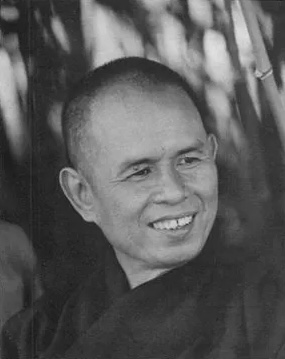
    In his gentle and profound way, Thich Nhat Hanh reminds us that we are already what we seek to become. Like a wave searching for water, we often find ourselves running in circles, seeking stability and peace, when in fact we are already made of the very essence we are searching for.

    In the previous post, we reflected on the words, “Be still and know that I am God,” and on the teachings that the Kingdom of God is within us, not something to be sought outside. Thich Nhat Hanh offers a similar invitation to stillness, a reminder that we need not search beyond this moment to touch the Divine. His teachings on apranihita—aimlessness—invite us to stop running after something outside of ourselves. The Buddha is not somewhere far away, hidden behind our efforts; the Buddha is within us, right here, right now. We don’t need to become something else or achieve some great transformation to touch the truth of our being. We only need to stop, to recognize that what we are seeking is already present in us.

    This echoes the Christian mystic path as well, where we are called to enter the stillness, to trust in the unfolding of the Divine presence within. St. John of the Cross speaks of surrendering into the Divine presence that is always here, guiding us without the need for striving. The great mystics remind us that the more we seek, the further we may feel from the truth. Yet when we stop seeking, when we allow ourselves to simply be, we find that the Kingdom of God is already here, waiting for us in the stillness of our own hearts.

    Thich Nhat Hanh’s teachings give form to this same truth. He uses the image of a wave to help us understand that we are not separate from what we seek. Just as the wave is made of water, we too are made of the very essence we long to touch. The wave doesn’t need to run after the water; it is already water. The black cloud doesn’t need to become a white cloud; it only needs light to shine on it, revealing what was always there. In the same way, we don’t need to become something else to experience peace. We need only to stop, to rest in the awareness of who we already are.

    As both Sri Nisargadatta Maharaj and Papaji have taught, the very act of searching can take us further from what we seek. Papaji even wrote a book titled Call Off the Search, emphasizing that the more we search, the more we reinforce the illusion that the truth is somewhere else. This persistent search keeps us from realizing the truth that is already right here, right now. By continuing to look outside of ourselves, we create a sense of distance, when in reality there is no distance at all—only the stillness of the present moment, where what we seek has always been.

    “You are already what you want to become,” Thich Nhat Hanh says. Yet we spend much of our lives not believing this truth, searching for happiness, fulfillment, and wisdom outside of ourselves. Whether it’s the Kingdom of God, Buddha-nature, or enlightenment, we chase after these ideas as though they are separate from us. But all of the great teachers—whether it be Jesus, the Buddha, or St. John of the Cross—urge us to look within. They tell us that when we stop running after what we already are, we can finally rest in the truth that has always been there.

    This is what Thich Nhat Hanh calls aimlessness. The practice of aimlessness is to no longer place something in front of you to chase after. It is to recognize that everything you are searching for is already here. By stopping the search, by becoming still, we can touch the wonders of life that are already present in this moment.

    In one of his talks, Thich Nhat Hanh describes this stillness beautifully: “The Kingdom of God, the Pure Land of the Buddha, is available in the here and now.” He reminds us that happiness is found in the simple things—a rose, the fresh air, a loving smile. Like the wave that need not search for water, we need only to stop and recognize the treasures already around us, treasures that we so often miss because we are running in circles.

    Thich Nhat Hanh teaches that walking meditation can be a wonderful way to practice this stopping, this resting in the here and now. Each step is not taken with a sense of rushing to arrive somewhere, but with the awareness that we are already where we need to be. With each step, we arrive fully in the present moment, touching the peace, the beauty, and the wonder that is always available. It is a practice that brings us back to the present, back to ourselves, and back to the truth that there is nothing to attain.

    “You don’t need to become a Buddha,” Thich Nhat Hanh says, “You are already a Buddha.” You don’t need to search for the Divine; the Divine is already within you. It is only when we stop running that we can finally touch this truth. Like the black cloud that becomes a white cloud when the light shines upon it, we are transformed by the simple act of recognition. In the stillness of aimlessness, we realize that there is no distance between us and what we seek.

    As we continue our contemplative journey, may we learn to embrace the wisdom of aimlessness. May we stop chasing after what is already here, within us. And in that stopping, may we find the peace, the joy, and the freedom that comes from recognizing that we have always been enough.
    🙏🕊️🙏

  • Sitting at the Door: A Buddhist and Mystical Practice

    Sitting at the Door: A Buddhist and Mystical Practice

    The Cloud of Unknowing teaches us to sit at the door of divine mystery, letting go of effort and surrendering to grace. This mirrors profound teachings in the Buddha Dharma, emphasizing direct experience, trust, and stillness.

    The Buddha’s phrase “Ehi Passiko” (Come and see) invites us to encounter truth directly—not through intellectual striving, but through quiet observation. In the Satipatthana Sutta, mindfulness is described as simply observing the body, feelings, and mind as they arise, with no need to grasp or resist.

    This is like sitting at the door of unknowing: allowing thoughts, emotions, and sensations to come and go, while resting in awareness. We are not called to force understanding or make something happen; we simply sit, trusting the process.

    Another Buddhist teaching, Vossagga (letting go), encourages us to release grasping and surrender to the natural flow of life. Even the ego’s restlessness becomes part of the practice, not something to fight against. As we trust the unfolding of awareness, stillness grows.

    This gentle practice reminds us that neither the ego nor effort creates transformation—it is the natural interplay of surrender and grace. Whether we call it divine love or pristine awareness, sitting at the door reveals a deeper truth.

    How can you embrace this today? Simply sit. Let go. Trust.

    #Contemplation #Mindfulness #CloudOfUnknowing #Buddhism #Stillness #Grace

    🙏🕊🙏

  • Renewal in Stillness: The Quiet Strength of Sitting at the Door

    Renewal in Stillness: The Quiet Strength of Sitting at the Door

    In a world that celebrates action, stillness offers a different kind of renewal. Sitting at the door of unknowing—open, patient, and without expectation—allows a subtle yet profound transformation.

    Renewal doesn’t have to mean physical strength or outward achievements. It can be the quiet resilience to face life’s challenges, the emotional peace to let go of striving, and the trust to simply be.

    In this practice, strength is not about doing more but about surrendering more deeply. Renewal arises not from effort but from grace, gently unfolding as you rest in the simplicity of presence.

    Sitting at the door is enough. Renewal comes when we stop chasing it and allow it to find us.

    🙏🕊🙏

  • On this December 15th, as we find ourselves in the midst of a busy season, it’s a wonderful opportunity to reflect on what truly matters.

    On this December 15th, as we find ourselves in the midst of a busy season, it’s a wonderful opportunity to reflect on what truly matters.

    In moments of busyness or stress, we can look to Psalm 46:10, which says, “Be still, and know that I am God.” This verse reminds us to take time to pause and recognize God’s sovereignty and presence in our lives.

    Embracing stillness can lead us to deeper peace and understanding. Perhaps today could be a day for you to practice that stillness—whether through prayer, meditation on Scripture, or simply taking a few moments of quiet reflection.

    How do you usually find peace amid the hustle and bustle?

    🙏🕊🙏

  • Be Still: A Contemplation of Presence

    In the chaos of life, there are words that call us to pause, to breathe, and to return to the essence of our being. Today, I find myself reflecting on a simple yet profound invitation: Be still. These words are not merely a command; they are a gentle reminder to return home to ourselves.

    In a world filled with noise and distraction, these words, “be still,” invite us to rest, to find solace in the quiet moments that lie between our thoughts. How often do we forget the power of stillness, seeking answers in the frenzy of life rather than in the peaceful embrace of the present moment?

    In stillness, we discover a deeper truth. It is here that we can let go of our worries, our desires, and the incessant need to control. The invitation is to surrender—to allow ourselves to simply be, without judgment or expectation. When we immerse ourselves in this stillness, we begin to experience the richness of life beyond the surface chaos.

    The teachings of various traditions converge in this space of stillness. In Buddhism, the concept of mindfulness encourages us to be present, to observe without attachment. The stillness is where we can witness our thoughts and emotions without becoming entangled in them.

    Similarly, in Christian teachings, we are reminded to be still and know that God is present. This stillness opens a doorway to the Divine, where we can encounter love, compassion, and grace.

    In this journey of stillness, we are reminded of the command, “Seek ye first the Kingdom of God,” for it is within this sphere of inner quietude that we find the true essence of the Divine. Jesus tells us, “The kingdom of God is in the midst of you” (Luke 17:21), emphasizing that this sacred space resides within each of us. In the depths of this inner stillness, we uncover a realm filled with love, compassion, and grace—a place where the noise of the world fades away, revealing the interconnectedness of all beings and the vibrant presence of the Divine.

    As I sit with this invitation, I am reminded that stillness is not an absence but a presence—a vibrant space filled with potential and awareness. It is where we can connect with our true selves and the interconnectedness of all beings.

    In this stillness, we find the beauty of life unfolding. We learn to embrace the moments of joy and sorrow alike, recognizing that each is a part of the sacred tapestry of existence.

    So, let us take a moment to be still. In that stillness, we can hear the whispers of our hearts, the gentle nudges of intuition, and the voice of the Divine guiding us.

    As we cultivate this practice of stillness, we allow ourselves to grow and transform. The world may continue to swirl around us, but within, we can find peace, clarity, and connection.

    “Be still and know that I am God.”

    —The Five Books of Moses, Psalm 46:10

    🙏🕊️🙏

  • Sitting at the Door: Contemplation as Spiritual Rest

    Sitting at the Door: Contemplation as Spiritual Rest

    In The Cloud of Unknowing, the author describes contemplation as a form of “spiritual sleep.” This isn’t physical sleep but a metaphor for the quieting of the active, discursive mind. It’s a state where the soul surrenders to divine mystery, resting in stillness and trust.

    Contemplation, like spiritual sleep, is not about doing—it’s about resting. It invites us to let go of striving, reasoning, or trying to achieve. Instead, we allow ourselves to simply be in the moment, releasing the need to understand or control.

    This restful quality makes contemplation deeply transformative. By sitting at the door, we step into a space where the usual busyness of thought subsides. In this stillness, we aren’t unconscious but profoundly present—open to grace and insight beyond the grasp of the mind.

    Here are a few reminders to guide you in this practice:

    Rest in Not-Knowing: Let go of the need for answers or outcomes. Allow the mystery to hold you.

    Surrender Effort: Contemplation is not something you achieve but something you allow. Trust that simply sitting is enough.

    Embrace Stillness: Like the restful quality of sleep, let the mind settle naturally without forcing it to be quiet.

    When you sit at the door, remember that this practice is about creating space for grace to unfold. Whether thoughts arise or the mind becomes still, you are already practicing. By resting in this spiritual sleep, you connect with a deeper awareness that transcends the ordinary.

    Contemplation isn’t about doing—it’s about resting. And in that resting, profound transformation is quietly at work.

    #Zen
    #Zazen
    #LivingTheDream
    #MindfulnessMatters

  • Balancing Strong Determination and Just Sitting in Practice

    Balancing Strong Determination and Just Sitting in Practice

    Meditative practice offers many paths, each with its unique approach to cultivating awareness and equanimity. Two practices that beautifully complement each other are Adhitthana (strong determination sitting) and the practice of just sitting.

    What is Adhitthana?
    In Vipassana meditation, Adhitthana translates to strong determination or resolve. It involves committing to sit with absolute stillness for a set period—whether one minute, five minutes, or longer. During this time, the practitioner resists the urge to move, scratch, or adjust, no matter what sensations or thoughts arise.

    The purpose is not to create tension but to cultivate mental strength and patience. By sitting still, you observe discomfort, restlessness, or thoughts with equanimity, realizing that they, too, will pass. This practice sharpens focus and builds resilience.

    What is Just Sitting?
    On the other hand, the practice of just sitting is about letting go of effort. It invites you to allow everything—thoughts, sensations, and even subtle movements—to arise naturally. There’s no striving for stillness or achievement. Instead, it’s an act of surrender, simply being present without resistance or judgment.

    How Do These Practices Work Together?
    While they may seem different, Adhitthana and just sitting are complementary:

    Adhitthana strengthens discipline and equanimity, helping you navigate discomfort with grace.

    Just sitting emphasizes openness and surrender, encouraging a relaxed acceptance of what is.

    By alternating these practices, you can experience the benefits of both. For instance, you might set aside a few minutes for Adhitthana to cultivate stillness, then transition into just sitting to release effort and rest in awareness.

    Finding Balance in Your Practice
    There’s no “right” way—only what feels supportive in the moment. Both practices honor the essence of meditation: being present with what is. Whether you’re sitting still with strong determination or allowing movement and thoughts to flow, each approach deepens your connection to the present.

    Remember, the goal is not perfection but presence. Through these practices, you learn to meet both stillness and movement with equanimity, trusting that each has its place in the journey of self-discovery.

    #Zen
    #Zazen
    #LivingTheDream
    #MindfulnessMatters

  • Nothing Is Happening: The Profound Simplicity of Sitting Practice

    Nothing Is Happening: The Profound Simplicity of Sitting Practice

    In the practice of sitting at the door of contemplation, we often expect something to happen—insight, peace, or even enlightenment. But the deeper truth of the practice is this: nothing is happening.

    This doesn’t mean the practice is empty or pointless. Quite the opposite. It invites us to rest in the simplicity of just sitting, letting go of the need for results or experiences. Whether thoughts arise or stillness emerges, the essence of the practice remains untouched.

    Even when “something” seems to happen—discursive thoughts, emotions, or sensations—it’s all part of the flow. In the vastness of awareness, these waves rise and fall, and yet nothing truly happens. The mind seeks meaning or progress, but the practice reminds us that the profound is found in the ordinary.

    The Zen saying “Enlightenment is nothing special” echoes this wisdom. By resting in the present moment without striving, we discover the extraordinary within the mundane. Whether the mind is busy or still, whether the body is at ease or in discomfort, the practice holds steady.

    So, when you sit at the door, let go of the need for something to happen. Trust in the simplicity of the posture, the breath, and the stillness. By allowing the moment to be as it is, you discover the quiet power of simply being.

    In sitting practice, the phrase “Nothing is happening” becomes a mantra of freedom. It liberates us from striving and invites us to rest in the truth of the present.

    How does it feel to embrace the idea that nothing is happening?

    #Zen
    #Zazen
    #LivingTheDream
    #MindfulnessMatters

  • Finding the Stillness in All Things: A Journey through Balance

    There is a truth that whispers through the ages, from every corner of the world. A truth that doesn’t shout but waits patiently to be found. It’s in the stillness between breaths, in the space between thoughts, where the Divine waits quietly, holding everything together. It is in this stillness that we come to know not just the world, but the very essence of life itself.

    Each tradition, each wisdom teaching, seems to point toward this same place: the balance, the center, where opposites meet and dissolve into harmony. In Tibetan Buddhism, they call it the middle way. It’s a path that doesn’t go too far in either direction. It’s like tuning a guitar string: pull it too tight, and it will snap. Leave it too loose, and no sound will come. But find the right tension, the perfect balance, and the music flows effortlessly. In life, as on this string, we are invited to find that middle path, where balance and stillness coexist—neither too rigid nor too lax.

    This same balance appears in the teachings of the Tree of Life in Jewish mysticism, where Chesed, loving-kindness, and Gevurah, discipline, meet in Tiferet—the heart, the place of beauty. When we lean too far toward kindness without boundaries, we lose ourselves. And when we cling too tightly to discipline, we become hardened. But in Tiferet, where the heart finds its rhythm, loving-kindness and discipline meet, creating a beauty that is greater than either one alone.

    In Advaita Vedanta, we learn that the Divine is non-dual. It is beyond the opposites of good and bad, right and wrong. The Divine is the I am that resides not in separation, but in unity. The opposites that pull us in different directions are merely illusions—like shadows on a wall. In the stillness of non-duality, all of these dualities fall away, and we come to know the true nature of the Self, where the Divine and the world are one and the same.

    Jewish mysticism also offers us the teaching of the three mothers: Aleph, Mem, and Shin—air, water, and fire. In this balance, Aleph represents the space between, the silent breath that holds fire and water in harmony. Aleph is the stillness in the sound, the quiet knowing that speaks of the Divine’s presence, hidden in the spaces where opposites touch. The very shape of Aleph, made of Yud-Vav-Yud, points to the number twenty-six, a name for God. Even in silence, the Divine whispers its truth.

    And perhaps this is what we all seek—the stillness that lies between, where everything comes together, like the proton, electron, and neutron in an atom, each holding a place, neither more important than the other. The center, the balance, the stillness, is where all of life’s forces find their peace. Here, we realize that stillness is found in the balance, and balance is found in stillness, creating a dynamic interplay within us.

    As I reflect on these teachings, I am reminded of the invitation from the Old Testament: “Be still and know that I am God.”—The Five Books of Moses, Psalm 46. This stillness, this knowing, is not for the ego to claim, but for the deeper I am—the Divine within us—to speak. The ego, the seer, and the Divine all reside in this stillness, each playing its part in the dance of life. In the stillness, we find that there is no separation, only the one true essence, the Divine presence that holds us all.

    From yin and yang in Eastern traditions to the scientific balance of particles, the message is the same: seek the stillness between, where opposites meet, where tension gives way to harmony, where God can be found. The path is not to extremes but to the center, to the place where all forces—internal and external—are in balance.

    In the end, all of these teachings converge into one simple truth: in the stillness, everything finds its place. In the balance of loving-kindness and discipline, of fire and water, of duality and non-duality, we are called to rest in the space between, where the Divine waits, not in the noise, but in the quiet, in the heart of all things.

    “Out beyond ideas of wrongdoing and rightdoing, there is a field. I will meet you there. When the soul lies down in that grass, the world is too full to talk about; language, ideas, even the phrase ‘each other’ doesn’t make any sense.”


    —Jalal ad-Din Rumi (1201 – 1273)

    🙏🕊️🙏

  • Into the Mystic: Embracing Impermanence, Resting in Awareness

    As I sit here in my yard, under the shade of tall trees and a sky so vast, I am reminded of the gentle teachings of impermanence. The pratyayas, those rising and falling sensations, memories, and thoughts, have once again surfaced, but they do not hold the weight they once did. Instead, there is a soft awareness that everything is already changing, and that in the grand scheme of time, everything is already gone.

    I look over at my RV, which has been a sanctuary for me for so many years. Soon, this land will become something else, transformed into a clubhouse. And yet, in this moment, I am filled with deep appreciation for what has been, for the unconscious and conscious years spent on this blessed earth. The impermanence of it all doesn’t bring sadness, but rather a profound gratitude for having lived through it, both mindfully and unmindfully.

    Namkhai Norbu’s sky-gazing practice teaches us to rest in the awareness of what is, without grasping or rejecting. In these moments of contemplation, I’m reminded that sky-gazing isn’t about observing the physical sky but allowing the mind to open into its own natural spaciousness. The practice reflects what is already within—clear, vast, and untouched by the clouds of thought.

    As pratyayas of impermanence arise, they are met not with resistance but with curiosity. Curiosity has become my companion on this contemplative path, gently guiding me to rest in awareness without the need for answers or conclusions. There is no longer a push for meaning, only the quiet observation of the present moment unfolding, just as it is.

    In this state of being, I can feel both the impermanence of the physical world and the abiding stillness of awareness. It is a paradox, and yet it is also the simplest truth: everything changes, and yet awareness remains the same.

    The teachings of St. John of the Cross, Ramana Maharshi, and Namkhai Norbu all point to this truth in their own ways. We move through life, through our spiritual practices, sometimes seeking, sometimes grasping for deeper experiences. But there comes a moment when we simply stop, when we rest in the spaciousness that has always been there. It is not a state we attain; it is a state we remember.

    As I continue this practice, I feel a deep gratitude, not just for the present moment, but for all that has been and all that will come. And in this gratitude, the pratyayas seem to soften, leaving behind the quiet awareness that is always there, patiently waiting for us to return.

    🙏🕊️🙏

  • Neti Neti #20: Taming the Restless Mind and The Story of the Genie

    Question:

    My mind often feels restless and insatiable, constantly creating desires and distractions. I’ve heard the story of the genie climbing the pole to stay busy as a metaphor for controlling the mind. How can I apply this wisdom to my own practice, especially through the use of ‘Neti Neti,’ to keep my mind focused and find peace amidst its relentless demands?

    Dear Friend,

    There are stories that come to us from distant times and places, stories that hold within them a wisdom that speaks to the very heart of our human experience. One such story, from the Sufi tradition, tells of a man who encountered a powerful genie—a being capable of granting any wish, yet bound by a condition. The genie, restless and insistent, demanded that he be given tasks to perform, lest his untamed energy turn destructive. At first, the man found this simple enough, asking for wealth, health, and all manner of earthly pleasures. But soon, the genie’s demands for more tasks grew relentless, and the man, overwhelmed and desperate, turned to a wise sage for help.

    The sage, understanding the nature of the genie, offered a solution both simple and profound: “Tell the genie to climb up and down a pole, and to keep climbing until you have another task for him.” And so, the man did as he was advised, and the genie, with no other choice, began his endless task of climbing the pole. The man lived in peace, free from the threat of the genie’s unrest.

    In this tale, the genie represents the mind—our own restless, insatiable mind, always seeking, always wanting, always creating desires and distractions. When left unchecked, the mind can become our greatest enemy, leading us into worry, confusion, and suffering. It spins endlessly, caught up in its own creations, driving us to exhaustion with its demands for more.

    But the sage’s solution is a metaphor for the power of disciplined practice. The pole that the genie climbs is akin to the focus we give our mind through spiritual practices, such as mantra repetition. Just as the pole gives the genie a task, the mantra gives the mind something to hold onto, something to engage with, preventing it from causing harm through its restless wanderings.

    You have wisely chosen Neti, Neti—”Not this, not this”—as the task for your mind. This mantra, with its gentle negation, guides the mind away from distraction, away from attachment, away from the endless pursuit of desires. It directs the mind back to the simplicity of being, to the quiet truth that lies beyond all names and forms.

    In this practice, the mind, like the genie, is given a task that is both meaningful and liberating. It is kept busy, yes, but in a way that leads to peace rather than exhaustion. The mind climbs the pole of Neti, Neti, moving up and down with each repetition, each negation, until it eventually tires of its own restlessness and begins to quiet, to settle, to rest in the stillness that is always present beneath the surface.

    This story reminds us that discipline, when applied with wisdom, is not a form of restriction but a path to freedom. By giving the mind a task, by guiding it through the repetition of a mantra, we are not suppressing its nature but rather channeling it in a way that allows it to serve us, rather than enslave us. The mind, once a source of turmoil, becomes an ally on the path, helping us to stay focused, to stay present, and to return again and again to the truth of who we are.

    Dear friend, as you continue with the practice of Neti, Neti, remember the story of the genie and the pole. Let it serve as a reminder that the mind, when disciplined, can be a powerful tool for transformation. Each repetition of the mantra is like a step on the pole, guiding the mind upward, guiding it toward the light of awareness. And as you give the mind this task, may you find, as the man in the story did, a sense of peace, a sense of liberation, and a deeper connection to the truth that lies beyond all distractions.


    🙏🕊️🙏

  • Into the Mystic: The Journey from Meditation to Contemplation

    As I re-read the works of St. John of the Cross, I have become more attuned to the threshold of transition—the dryness and emptiness that so often precede the invitation to move from meditation into contemplation. This is not unique to St. John; it is something pointed to by many of the great teachers. Whether it’s Namkhai Norbu, Ramana Maharshi, Thich Nhat Hanh, the Dalai Lama, or Orgyen Chowang in Pristine Mind, they all plant the seeds of meditative absorption, which only take root when the time is right. Now, it seems, those seeds are beginning to bloom, not as intellectual concepts, but as a living, unfolding experience.

    Today, I found myself drawn into this quiet transformation. As I lay in stillness, the pratyayas—those passing thoughts, sensations, and memories—began to rise and fall, like waves on a distant shore. Curiosity, that soft and patient witness, guided me deeper, not into understanding but into presence.

    The breath came of its own accord, a deep release from somewhere beyond my conscious will, as if the body itself knew what needed to unfold. And then, an awareness—a spaciousness—arose. It was not something I had summoned, nor could I hold it in place. It was simply there, naked and pure, like a clear blue sky.

    St. John of the Cross speaks of this as a kind of surrender, but not the kind we can choose. It is a grace bestowed, not earned. In the stillness, I realized that my role was not to force this shift but to allow it to happen. To remain as the observer, the witness, as the Divine unfolded in its own time.

    What struck me most deeply was the paradox of this surrender. The very act of trying to let go becomes an obstacle. Instead, it is curiosity that opens the door to pure awareness—curiosity that has no desire, no need for something to happen, but simply observes what is.

    Today, in this unfolding, I realized that even the longing for deeper experience can become a barrier. The path is not one of striving but of witnessing. And in that witness, the Divine does its quiet work, purifying what needs to be released, and bringing us ever closer to the essence of who we truly are.

    As I reflect on my own journey today, it is my hope, and the shared intention (Sankalpa) behind all of this work, that by sharing these reflections, insights, and experiences, they may serve as a guide, a comfort, or a spark of inspiration to those who come across them.

    🙏🕊️🙏

    Book Recommendation: St. John of the Cross, Dark Night of the Soul

    Dark Night of the Soul by St. John of the Cross is a spiritual masterpiece that explores the transformative power of suffering and the journey toward union with the Divine. This work describes the profound spiritual experience of being stripped of all attachments, both inner and outer, as a necessary process for purification and deeper connection with God. For those experiencing a time of spiritual dryness or emptiness, St. John’s words offer hope and guidance through the darkness, illuminating the path to deeper faith and surrender. The Dark Night is not a time of despair, but of ultimate transformation, where we are invited to let go of our limited understanding and trust in the unfolding of the Divine. This book serves as a timeless companion for anyone navigating the challenges of the contemplative path, especially those who feel drawn to the shift from meditation to deeper contemplation.

    Book Recommendation: Orgyen Chowang, Our Pristine Mind

    In The Pristine Mind, Orgyen Chowang offers profound teachings on accessing our natural state of mind—a state of clarity, openness, and peace. He draws from the Dzogchen tradition, emphasizing that our true nature is already pure and perfect, and that through practice, we can return to this unconditioned state. For those on a contemplative journey, Chowang’s words provide a practical path for moving beyond mental noise and distractions, guiding us back to the inherent stillness of the mind. This book is especially helpful for those who wish to deepen their meditation practice or shift from intellectual understanding to living experience. The Pristine Mind invites readers to discover the profound joy and serenity that arises when we rest in the awareness of our true nature.