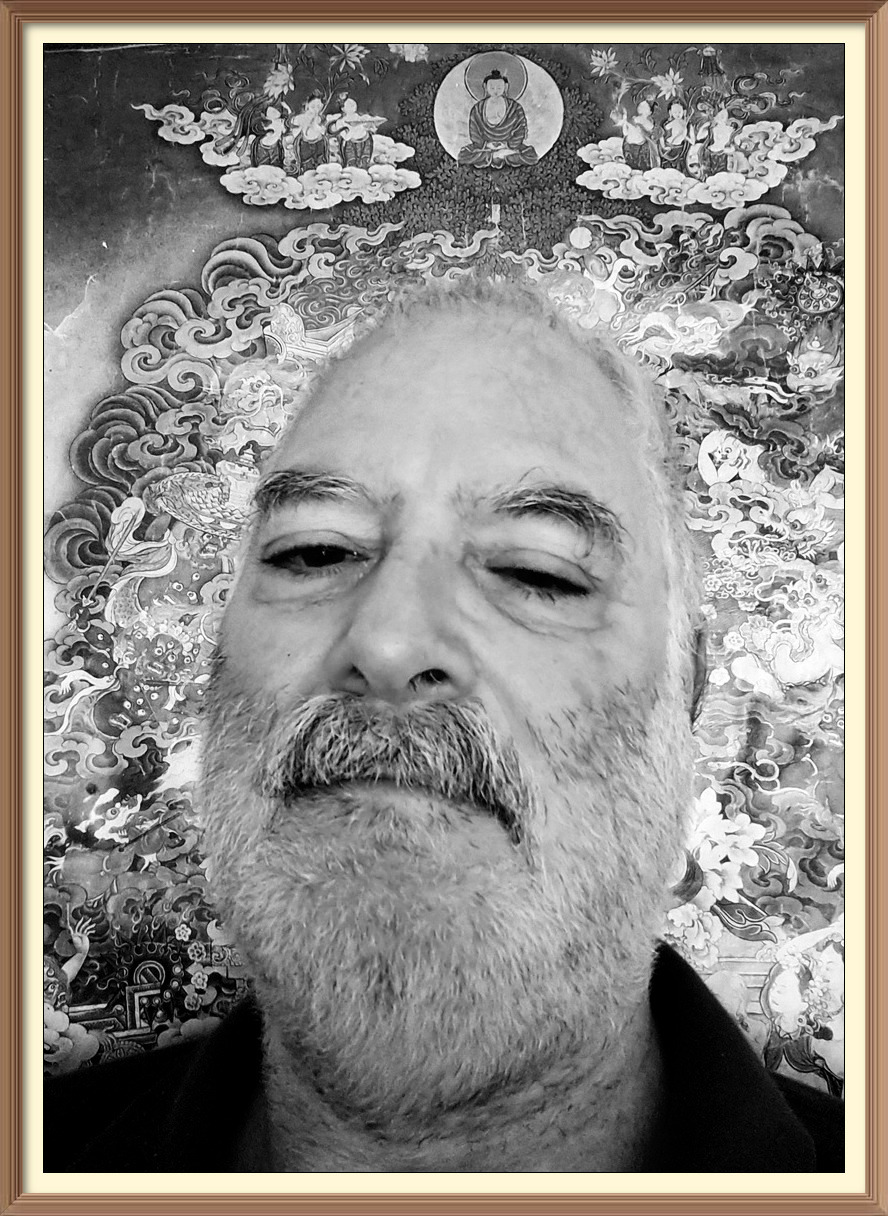
Tag: inner calm

  • Transforming a Cold Into a Healing Practice 🌿

    Transforming a Cold Into a Healing Practice 🌿

    Sometimes life slows us down in unexpected ways. A few sneezes, a scratchy throat, and a whisper of fatigue can become a quiet teacher. In these moments, even a cold can transform into a practice of compassion, patience, and awareness—inviting us to rest, to pace ourselves, and to see every ache as a doorway to deeper connection with our own hearts and all beings.

    I haven’t had a cold in at least fifteen years. Perhaps it came with the change of season, or perhaps it’s simply my body’s way of realigning.

    At first, I felt a little discouraged. But then something shifted. I realized that even this — this full-body cold — could be a teacher. In the spirit of Tibetan Vajrayana, I began a practice that might sound unusual: as long as this virus has taken up residence in my body, I send it compassion.

    May you be enlightened and benefit all beings.

    If this virus must live through me, then may it awaken, may it transform, may it find liberation in the vast field of awareness. Perhaps it can even become an enlightened virus, one that serves the good of all beings.

    This gesture may sound fanciful, but to me it reflects a deeply tantric understanding of transformation — meeting what feels harmful or invasive not with fear or resistance, but with the boundless wish that even this, too, might awaken. It is the essence of lojong: turning adversity into the path of enlightenment.

    To send loving-kindness even to a virus invites an alchemy of consciousness. We recognize that all forms of life and energy, even those that cause suffering, can be included in the mandala of awakening. The simple act of saying, “May you be enlightened, may you benefit all beings,” dissolves separation and opens the field of compassion wider than the body’s borders.

    After such an invocation, I like to rest quietly and imagine the virus as tiny sparks of light, gradually shifting from agitation to luminosity, merging with the radiance of my own heart. This doesn’t deny illness — it reclaims the power of awareness within it.

    A cold can then become a form of prayer, a healing practice, a full-body meditation. In each breath, the body learns softness; in each ache, compassion ripens. Even in fever or fatigue, there can be a whisper of grace.

    And yet, this cold is teaching me something else, something profoundly practical: how to pace myself throughout the day. ME/CFS has always required careful attention to energy, but when I’m feeling better, I tend to push myself—to accomplish, to do, to engage—often beyond what my body can sustain. This full-blown cold is a reminder that true discipline is gentle, that honoring rest is not laziness but wisdom, and that the same careful pacing I practice now in illness is exactly what I need every day to live fully with ME/CFS.

    And so, as I move through these days of rest, tea, and light meals, I remind myself: every illness, every discomfort, every small limitation is also a door. A door that invites patience, kindness, and an intimate awareness of the profound interconnection of all beings.

  • Tenzin, the Solitary Hermit

    Tenzin, the Solitary Hermit

    A mindful bedtime story of a solitary monk’s journey to inner peace, offering reflections on tranquility, solitude, and the wisdom found in nature’s embrace.

    High in the misty cliffs of the Tibetan mountains lived a monk named Tenzin. He had chosen a life of solitude, making his home in a small cave carved into the rock, far from any village. From the mouth of his cave, he could see the wide valley below, where rivers shimmered, and clouds drifted lazily.

    Though he lived alone, Tenzin never felt lonely. His days were filled with simple practices—meditation, chanting, and tending to the small tasks of life in the mountains. Each morning, he would sit at the opening of his cave, cross-legged, watching the sun rise over the peaks. The golden light touched the snow-capped mountains first, then slowly warmed the valley below. As the light spread, Tenzin felt connected to everything—the mountains, rivers, and the vast sky. Even the distant villages he couldn’t see seemed close to him.

    Tenzin’s practice was to focus on his breath. He felt the breath flow in and out, like the wind through the trees. When his mind wandered, as minds tend to do, he would gently bring it back to the present moment. There was no rush, no goal—just the moment, just being.

    One day, while Tenzin was in deep meditation, the wind outside his cave grew stronger. It howled through the trees, making the air feel sharp and cold. He opened his eyes and saw that dark clouds had gathered in the sky. A storm was approaching. The peaceful valley below had vanished under thick fog.

    But Tenzin didn’t worry. He had learned, over time, that storms—like thoughts and emotions—come and go. Some days were clear, others were cloudy, but nothing lasted forever. He pulled his woolen robe tighter around him, lit a small fire, and returned to his meditation.

    The storm raged on, but Tenzin remained calm. His breath, slow and steady, was his anchor. Inside his cave, there was no storm—only stillness. The walls of his cave sheltered him from the wind, but it was his practice that sheltered him from the restlessness of the world.

    Several days passed, and the storm finally cleared. When Tenzin stepped outside, the valley below was washed clean by the rain, sparkling in the sunlight. Birds sang from the trees, and the air smelled fresh.

    Tenzin smiled to himself. The storm had been fierce, but he hadn’t resisted it. He had simply let it come and go, knowing that everything—like the weather—was temporary. The calm always returned.

    The seasons passed, each one bringing its own beauty. Tenzin never wished for company, for he had found that the quiet, the mountains, and the rhythm of his breath were friends enough. In the deep silence of his cave, Tenzin had discovered the greatest happiness—the peace of simply being.

    🙏🕊️🙏


    If you’d like to explore more bedtime stories for children, including tales that nurture compassion and mindfulness, you can find our collection here.


  • Ramayana No. 13: Rama’s Graceful Surrender: Finding Peace in Letting Go

    There’s a moment in the Ramayana that really strikes a chord, especially when you think about how we handle the unexpected twists and turns in our own lives. Rama, who’s about to be crowned king, gets hit with the news that he’s being sent into exile for fourteen years instead. Imagine that—a complete 180 from everything he’s been preparing for. And yet, what does Rama do? He smiles and accepts his fate without a hint of resistance.

    This isn’t just some heroic act from an epic tale; it’s a powerful reminder of how we can find peace in letting go.

    Rama’s reaction is a beautiful example of non-attachment. He doesn’t cling to the throne, the power, or the comforts of palace life. Instead, he just lets it all go. It’s like he’s saying, “Okay, this is what life has handed me, and I’m going to embrace it.” There’s something incredibly liberating about that kind of mindset. When we’re not attached to a specific outcome, we open ourselves up to whatever life brings, with a lot less stress and anxiety.

    This kind of non-attachment is at the heart of equanimity—a calm and balanced mind that stays steady no matter what happens. And let’s be honest, who wouldn’t want more of that in their life?

    What really stands out in this scene is Rama’s mindfulness. He’s fully present, fully aware of what’s happening, and yet he doesn’t get lost in it. He’s not caught up in the drama or the unfairness of it all. Instead, he meets the moment with a clear mind and an open heart. This is mindfulness in action—not just being aware, but being aware with a sense of peace and acceptance.

    Think about how we usually react when life throws us a curveball. We resist, we fight, we stress out. But what if, like Rama, we could meet these moments with mindfulness and a sense of calm? How much easier would life be?

    Rama’s response isn’t just about keeping cool under pressure—it’s about living in alignment with what’s right, with Dharma. By accepting his exile, Rama is doing more than just obeying his father’s wishes; he’s showing us what it means to live a life rooted in principles. It’s a reminder that sometimes, doing the right thing means letting go of what we want and embracing what’s being asked of us, even if it’s difficult.

    This is a lesson we can all take to heart. In our own lives, we’re constantly faced with choices—do we hold on tightly to what we think we want, or do we let go and trust that things will unfold as they should?

    Rama’s story might be thousands of years old, but the lesson is timeless. When we cultivate non-attachment, mindfulness, and a commitment to doing what’s right, we can face life’s challenges with a lot more grace. We can let go of the need to control everything and find peace in the flow of life.

    So next time life doesn’t go according to plan, think of Rama. Smile, take a deep breath, and let go. You might just find that the peace you’re looking for was there all along, waiting for you to embrace it.

    🙏🕊️🙏

  • Book Review: The Unchanging Nature of Our Pristine Mind

    “The luminous nature of mind, like the changeless sky, is unaffected by temporary events.”

    — Bodhisattva Maitreya

    Imagine for a moment a vast, clear sky—limitless, unbounded, and pure. No matter how many clouds pass through, how fierce the storms, or how thick the fog, the sky itself remains unchanged. It is always there, spacious and untouched by the ever-changing weather. This metaphor, beautifully articulated by Orgyan Chowang in his book The Pristine Mind, offers us a powerful insight into the nature of our own mind. While the events of our ordinary mind—our thoughts, emotions, and experiences—may shift and change, the pristine mind, like the sky, remains clear and constant. This realization is fundamental to our spiritual growth and inner peace.

    The Metaphor of the Sky and Clouds:

    Chowang’s analogy is simple yet profound. The sky represents our pristine mind—our true nature, which is inherently pure and spacious. The clouds, on the other hand, symbolize the thoughts and emotions that arise within us. These clouds can be dark and stormy or light and fleeting, but no matter their nature, they never alter the sky itself. The sky doesn’t cling to the clouds or resist them; it simply allows them to pass through. In the same way, our pristine mind is untouched by the transient mental events that arise and dissolve within it.

    The Ordinary Mind vs. the Pristine Mind:

    In our day-to-day lives, we often operate from what Chowang calls the “ordinary mind.” This is the aspect of our consciousness where thoughts, emotions, and perceptions arise. It’s where we experience the ups and downs of life, the stress, the joy, the anxiety, and the pleasure. This ordinary mind is reactive, constantly shifting in response to external stimuli. But beneath this ever-changing surface lies the pristine mind—clear, stable, and unchanging. It’s the essence of who we are, untainted by the mental chatter and emotional turbulence that often dominate our awareness.

    Realizing the Pristine Mind:

    The journey toward realizing and connecting with our pristine mind begins with awareness. By observing our thoughts and emotions without attachment, we can start to see them as clouds passing through the sky of our mind. Meditation is a powerful tool in this process. By sitting in stillness and watching our thoughts come and go, we begin to disidentify with them. We realize that while our thoughts and emotions are transient, there is a deeper part of us that remains unchanged—this is our pristine mind. With practice, we learn to rest in this unchanging awareness, experiencing a profound sense of peace and clarity.

    The Importance of This Realization:

    Understanding that our true nature is the pristine mind brings immense benefits. It allows us to navigate life’s challenges with greater ease and resilience. When we recognize that the storms of thoughts and emotions are temporary, we are less likely to get caught up in them. We can face difficulties with equanimity, knowing that, like clouds, they will pass. This realization also fosters compassion—for ourselves and others. When we understand that everyone’s ordinary mind is subject to the same fluctuations, we can approach each other with greater kindness and understanding.

    Practical Application:

    To begin connecting with your pristine mind, try this simple meditation: Close your eyes and take a few deep breaths. Imagine your mind as a vast, clear sky. As thoughts and emotions arise, visualize them as clouds passing through this sky. Don’t try to push them away or hold onto them; simply observe them as they come and go. Notice that no matter what clouds appear, the sky—your pristine mind—remains unchanged. Practice this regularly, and gradually, you’ll find yourself less caught up in the drama of your ordinary mind, and more grounded in the peace of your true nature.

    Closing Reflection:

    In the hustle and bustle of daily life, it’s easy to get swept away by the ever-changing events of our ordinary mind. But by remembering and connecting with our pristine mind—the clear, spacious awareness that remains untouched by life’s storms—we can find a deep and abiding sense of peace. This realization, as Orgyan Chowang so beautifully explains, is one of the most fundamental insights on the path of spiritual growth. As we move through life, let us strive to remember the sky within us, always present, always pure, no matter the clouds that may pass through.

    “The luminous nature of mind, like the changeless sky, is unaffected by temporary events.” As we deepen our understanding and connection to this luminous, unchanging aspect of our being, may we find peace and clarity even in the midst of life’s storms. Like the sky that holds all weather, may we learn to hold all our experiences with the spaciousness of our pristine mind. May this awareness illuminate our path and our interactions, bringing light and compassion to ourselves and others.

    🙏🕊️🙏

    If you’re interested in exploring this transformative approach further, I highly recommend Orgyen Chowang’s book The Pristine Mind. His teachings provide a clear, compassionate path toward uncovering the inherent purity of our mind, offering a source of deep fulfillment and lasting peace.