Tag: Indian culture

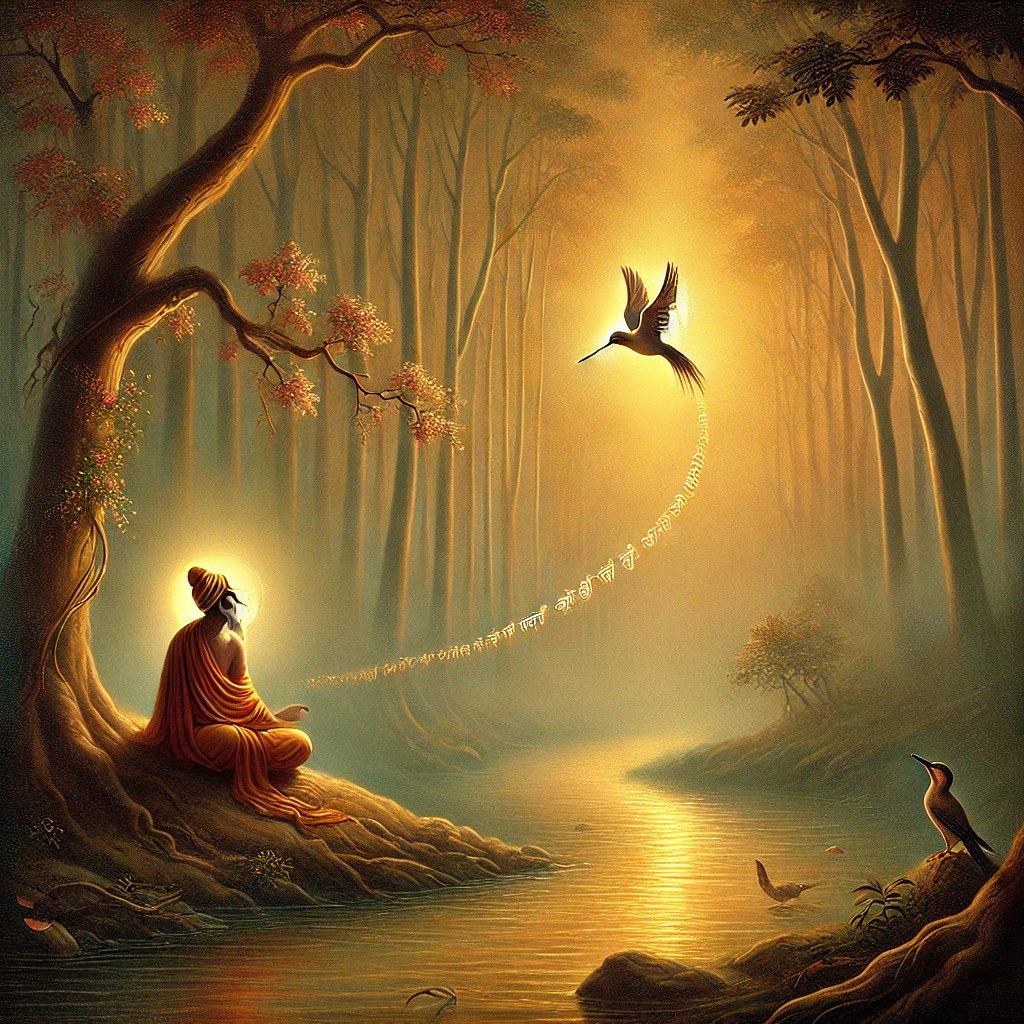
  • Ramayana No. 16: The Birth of Creation: How Compassion and Sorrow Sparked the First Verse of the Ramayana

    Ramayana No. 16: The Birth of Creation: How Compassion and Sorrow Sparked the First Verse of the Ramayana

    Inspired by Chapter 1.2 of the DeBroy Translation of the Ramayana

    We often think of creativity as a product of inspiration, but the creation of the first verse of the Ramayana reminds us that profound art can also emerge from sorrow and compassion. In this ancient tale, the sage Valmiki witnesses a cruel act—the senseless killing of a bird—and from his grief, he unintentionally composes a verse that becomes the foundation of one of the greatest epics in human history. This moment offers us powerful insights into the nature of creativity, ethics, and the emotional depths that often fuel artistic expression.

    The Power of Emotion in Creativity

    Valmiki’s first verse is not a product of calculation or planning but a spontaneous outpouring of grief and compassion. It was born from a moment of deep emotional disturbance, reflecting how powerful feelings can give rise to meaningful creation. In modern life, we often suppress our emotions in the pursuit of efficiency, but this story reminds us that some of the most authentic and resonant creations come when we allow ourselves to feel deeply.

    Whether it’s art, writing, or simply how we engage with the world, emotions are not weaknesses to be hidden but powerful forces that can inspire new perspectives, innovations, and beauty. When we embrace our emotions, even those stemming from sorrow, we open ourselves up to greater creativity and expression.

    Compassion as the Foundation of Justice and Ethics

    Valmiki’s reaction to the bird’s death was not just sorrow but an ethical response. He immediately recognized the hunter’s act as adharma—an unjust act against nature. This compassion, this immediate identification with the suffering of another being, is what transformed his grief into something greater.

    In today’s world, where injustice often abounds, compassion remains the foundation for any meaningful response. Valmiki’s story invites us to ask: How do we respond to the suffering around us? Do we let ourselves feel the weight of another’s pain, and can we transform that empathy into constructive action? Just as Valmiki’s compassion gave birth to a timeless epic, our empathy can be the starting point for creating a more just and ethical world.

    Art as a Medium of Truth and Endurance

    When Brahma appears to Valmiki, he blesses the verse and assures him that the story of Rama, composed in these beautiful shlokas, will endure as long as rivers flow and mountains stand. This promise speaks to the power of art and storytelling—not just to entertain but to communicate timeless truths that resonate across generations.

    In an age of constant distraction and fleeting trends, the Ramayana stands as a reminder that art with a foundation in truth, compassion, and dharma endures. It reminds us that, as creators or consumers of art, we should seek and value works that reflect the deeper truths of existence—those that inspire, challenge, and uplift the human spirit.

    Conclusion: Embracing Sorrow as a Catalyst for Growth

    Valmiki’s first verse emerged from a moment of sorrow and compassion, demonstrating how even painful emotions can lead to profound creativity and insight. In our own lives, we can take heart from this ancient story, knowing that our most difficult moments have the potential to lead us to growth, understanding, and even beauty.

    Whether in art, in work, or in how we live our lives, Valmiki’s story teaches us that sorrow can be a powerful catalyst for creation, and compassion a guide for ethical action. By embracing our emotions and responding to the world with empathy, we too can create something that uplifts and endures.

    Read Chapter 1.2 of the DeBroy Translation of the Ramayana here.

    🙏🕊️🙏

  • Ramayana No. 11: The Beginning and the End—Understanding the First Canto of the Gita Press Ramayana

    As I begin my journey through the Gita Press edition of the Ramayana, I find myself immediately struck by the structure of the first canto. Within just a few verses, the entire epic is laid out before the reader—Rama’s exile, his defeat of Ravana, the rescue of Sita, and his triumphant return to Ayodhya where he reigns as king. It’s a “happily ever after” summary that seems to condense the entire narrative into a brief prologue. But why start a story this way? What is the purpose of summarizing the entire epic right at the beginning?

    This approach, common in ancient epics, serves multiple purposes. First, it provides readers with a roadmap, offering a glimpse of the destination before embarking on the journey. In the context of the Ramayana, it reminds us that the ultimate outcome of the story is not in question—Rama, the embodiment of dharma, will triumph, righteousness will be restored, and order will prevail. Knowing this from the outset allows readers to focus not on the suspense of what will happen, but on the lessons to be learned along the way.

    The first canto functions as both an introduction and a promise. It assures us that despite the trials, battles, and moments of despair that will inevitably follow, the story ends in the victory of good over evil. It also invites us to consider the deeper meaning behind these events. By presenting the conclusion first, the text suggests that the journey is just as important—if not more so—than the destination.

    As I continue reading, it’s clear that the richness of the Ramayana lies not just in its grand narrative, but in the details, the interactions between characters, the challenges they face, and the decisions they make. The first canto’s summary is just the beginning—a way to frame the epic and to prepare us for the moral and spiritual lessons that will unfold in the subsequent chapters.

    In the Gita Press version, the simplicity and directness of this introduction serve to draw the reader in, setting the stage for a deeper exploration of dharma, devotion, and the complexities of human life. It is an invitation to not only read the story but to reflect on its teachings and apply them to our own lives.

    As I delve deeper into the Ramayana, I am reminded that the true value of this epic lies in its capacity to guide us on our own spiritual journey, offering insights that are as relevant today as they were thousands of years ago.

    For those interested in exploring this epic themselves, the Gita Press edition, along with the detailed Debroy translation, is embedded in this blog post. You can access them and embark on your own journey through the Ramayana, discovering the layers of wisdom and truth that this ancient text has to offer.

    🙏🕊️🙏

  • Leadership, Dharma, and the Power of Story: Lessons from the Ramayana

    As we prepare to embark on our exploration of the Ramayana, it’s important to recognize that this epic is much more than a tale of gods, goddesses, and mythical battles. It’s a story deeply embedded with lessons on morality, intelligence, right action, and dharma—principles that are just as relevant today as they were thousands of years ago. Before diving into the narrative, it’s worth considering how the Ramayana—and the way its stories have been told and retold—serves as a mirror for our own times, particularly in how we think about leadership and moral responsibility.

    The Role of Conflict in Traditional Narratives

    The traditional Ramayana, as attributed to the sage Valmiki, doesn’t shy away from presenting complex moral dilemmas. One of the most significant and debated moments in the epic is Rama’s rejection of Sita after rescuing her from Ravana. This is not simply a plot twist; it’s a deliberate narrative choice that forces both the characters and the readers to grapple with the complexities of dharma (Righteous Action)

    In this episode, Rama—an incarnation of the divine—faces a conflict between his personal feelings and his duties as a king. Despite knowing Sita’s purity, Rama chooses to distance himself from her, prioritizing his duty to his subjects over his personal happiness. This moment challenges us to think deeply about what it means to uphold dharma, especially when it requires personal sacrifice and difficult decisions.

    The Impact of a “Happy Ending” in William Buck’s Version

    In William Buck’s westernized retelling of the Ramayana, this conflict is resolved with a happy ending—Rama welcomes Sita back without hesitation, sidestepping the painful dilemma present in the traditional narrative. While this version may be more palatable for modern Western audiences, it also simplifies the story, removing the layers of moral complexity that invite deeper reflection.

    This choice reflects a broader cultural tendency in the West to favor narratives that resolve conflict neatly, often prioritizing personal happiness over the challenging moral questions that unresolved conflicts can raise. While this approach makes the story more accessible, it also diminishes its potential as a tool for moral and ethical education.

    Dharma and Leadership: A Contrast Between Cultures

    In traditional Indian culture, a king was expected to embody dharma—righteousness, moral integrity, and a commitment to the greater good. This meant making decisions that, while difficult, served to uphold the moral fabric of society. The rejection of Sita, while harsh, is portrayed as Rama’s adherence to this principle, demonstrating the importance of dharma even at great personal cost.

    In contrast, modern Western political leadership often prioritizes popularity, pragmatism, and short-term success over timeless moral principles. Leaders are frequently more concerned with maintaining power and appealing to public opinion than with upholding the kind of righteousness that demands sacrifice and integrity.

    The Value of the Original Conflict

    The original conflict in the Ramayana is invaluable because it forces us to confront the uncomfortable realities of leadership and the complexities of dharma. It challenges us to think critically about what true righteousness looks like and what sacrifices might be necessary to uphold it. This is not just a story about the past; it’s a narrative that speaks directly to the moral challenges of our own time.

    Balancing the Versions

    While William Buck’s version of the Ramayana offers a more straightforward narrative, engaging with the traditional story allows us to explore these deeper moral and ethical questions. Both versions have their value, but it’s the original narrative that offers the richest opportunities for reflection and growth.

    A Call for Righteous Leadership

    As we prepare to dive into the Ramayana, it’s important to remember that this epic is not just about divine battles and mythical adventures. It’s a profound exploration of dharma, leadership, and moral responsibility—topics that are sorely lacking in much of our modern educational and religious systems. The story of Rama and Sita is a reminder that true leadership requires more than just power or popularity; it demands a deep commitment to righteousness, even when it comes at a personal cost.

    In our own time, as we look around at the state of leadership in the world, there is much we can learn from the Ramayana. The story invites us to reflect on the qualities we should seek in our leaders and the moral standards to which they should be held. It challenges us to consider how we, too, can embody dharma in our own lives, making decisions that are guided by integrity and a commitment to the greater good.

    Conclusion: The Relevance of the Ramayana Today

    The Ramayana is not just a story from the past; it’s a living tradition that continues to offer wisdom and guidance for our time. By engaging directly with Valmiki’s original version, we immerse ourselves in the authentic narrative that has inspired countless generations. As we journey through this epic, let’s keep in mind that the lessons it imparts are not just for ancient kings and queens—they are for all of us, here and now, as we navigate the challenges of modern life. By engaging deeply with these teachings, we can rediscover the importance of righteousness, moral integrity, and the pursuit of dharma in our own lives and in the leaders we choose to follow.

    Further Reading: The Original Ramayana

    For those interested in exploring a more traditional version of the Ramayana, you may want to consider the Kindle edition translated by Suparna Ghosh. This version stays closer to the original text attributed to the sage Valmiki, offering a richer understanding of the epic’s cultural and spiritual context. Whether you’re drawn to the modern retelling by William Buck or the more traditional narrative, both versions provide valuable insights into this timeless story.