Tag: Hindu Philosophy

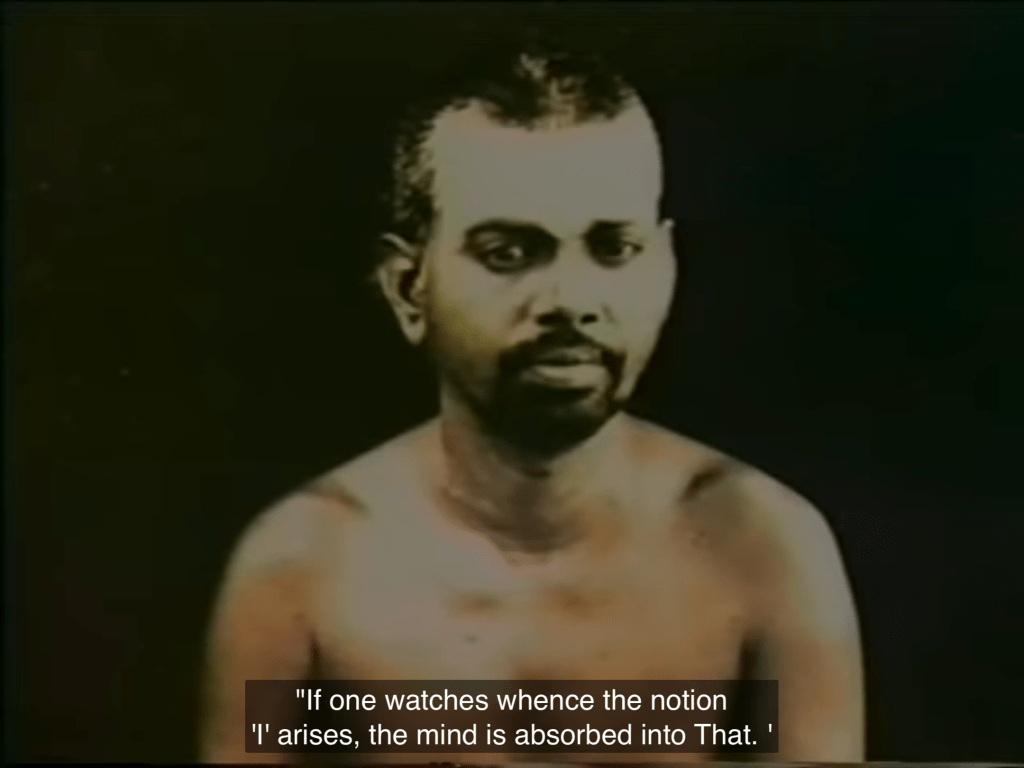
  • Who is Ramana Maharshi?

    Discovering the Self: Ramana Maharshi’s Guide to Self-Inquiry and True Realization

    Ramana Maharshi is one of the most revered spiritual teachers of the 20th century, known for his profound teachings on self-realization and non-duality. Born in 1879 in Tamil Nadu, India, he experienced a spontaneous awakening at the age of 16, during which he became acutely aware of the impermanence of the body and the eternal nature of the Self. Following this experience, he left his home and spent the rest of his life on the sacred mountain of Arunachala, where he became a guiding light for spiritual seekers from around the world.

    Ramana’s teachings are centered around the practice of Atma Vichara, or self-inquiry, which he considered the most direct path to realizing one’s true nature. Unlike other spiritual practices that involve rituals or external observances, Ramana emphasized turning inward to investigate the true nature of the ‘I’—the sense of individual self that we all experience.

    The Essence of Self-Inquiry

    Ramana Maharshi’s core teaching can be encapsulated in the question, “Who am I?” He taught that the sense of ‘I’ or ego, which we often associate with our thoughts, emotions, and bodily identity, is merely a superficial layer that veils our true Self, which is pure consciousness or awareness.

    The process of self-inquiry involves directing your attention inward, asking yourself where this sense of ‘I’ originates. Ramana explained that by persistently asking this question and observing the ‘I’ thought, one can trace it back to its source. This source is the true Self, the unchanging awareness that underlies all experience.

    If One Watches Whence the ‘I’ Arises

    In one of his teachings, Ramana Maharshi stated, “If one watches whence the notion ‘I’ arises, the mind is absorbed into That.” This teaching points to a subtle yet profound practice. The ‘I’ thought is the root of all mental activity and the sense of individuality. By turning attention to this root, rather than being entangled in the branches of thoughts and feelings, the mind can naturally dissolve into its source—pure awareness, which Ramana refers to as “That.”

    How to Practice Self-Inquiry

    If you find yourself puzzled by this teaching or struggle to sense “That” from which the ‘I’ arises, know that this is a common experience on the path of self-inquiry. The mind, accustomed to focusing outward, finds it challenging to turn inward and settle into stillness.

    Here’s how you can approach this practice:

    1. Sit Quietly: Begin by sitting quietly, with your eyes closed if that feels comfortable. Take a few deep breaths and allow your body and mind to relax.
    2. Turn Inward: Gently bring your attention to the sense of ‘I’. This ‘I’ could be a thought, a feeling, or simply the awareness that you exist.
    3. Ask the Question: Silently ask yourself, “Who am I?” or “Where does this ‘I’ arise from?” Don’t seek an intellectual answer. Instead, let the question be a pointer that guides your awareness inward.
    4. Observe: As you focus on the ‘I’, observe its nature. Does it have a shape, a location? Can you find its origin? Be curious, but not analytical.
    5. Rest in the Awareness: As you continue this enquiry, allow the mind to settle. If thoughts arise, simply notice them and gently bring your attention back to the feeling of ‘I’. Over time, the mind may begin to merge with the deeper awareness that is always present.

    Realizing the Self

    Through persistent practice, you may come to realize that the ‘I’ you have always identified with is not your true Self. The ‘I’ arises and dissolves in the vast expanse of pure awareness—‘That’ which Ramana Maharshi points to. This realization is not something to grasp intellectually, but a direct experience that brings about a profound inner peace and freedom.

    Ramana Maharshi’s teachings are a beacon for those seeking to transcend the ego and discover their true nature. The path of self-inquiry, though simple in its approach, can lead to the ultimate realization of the Self—the awareness that is ever-present, unchanging, and beyond all notions of individuality.

    🙏🕊️🙏
  • Ramayana No. 2: Ayodhya—The Unsubdued Kingdom Within

    Rama’s Exile and Our Spiritual Journey: Reclaiming the Pristine Mind


    As I sit with the first chapter of the Ramayana, I find myself drawn to the idea of Ayodhya—the city that cannot be subdued by war. This simple yet profound description speaks to something deeper, something within each of us that remains untouched by the chaos of the world.

    Ayodhya, the capital of King Dasharatha’s kingdom, is not just a physical city, but a symbol—a metaphor for the pristine mind, the true self that resides within us all. Just as Ayodhya stands strong against external threats, so too does our innermost self, the Atman, remain pure and invincible against the storms of life and the fluctuations of our mind.

    In the early pages of the Ramayana, we find ourselves in a kingdom of righteousness, where the people live in harmony under the guidance of a just king. It is a vision of what life can be when we are in tune with our true nature, when the mind is calm and clear, and the heart is aligned with the divine. Ayodhya, in this sense, is our inner sanctuary, a place of peace and stability, untouched by the turmoil of the external world and the inner conflicts of ego and desire.

    But as the story unfolds, we know that Rama, the hero of the epic, is exiled from this idyllic kingdom. He leaves Ayodhya, and with that, he leaves behind the safety and serenity of his home. This exile, I realize, is not just a physical journey, but a reflection of our own experience as we move from the innocence of childhood into the complexities of the world.

    We are all, in a way, exiled from our own Ayodhya. As we grow, we face the trials and tribulations of life, and our minds become cluttered with the noise of the world—the vrittis and pratyayas, the mental fluctuations and impressions that cloud our true nature. The ego begins to take shape, and we lose touch with that pristine mind, that inner Ayodhya where peace and purity reside.

    Rama’s battles during his exile are not just against external enemies, but against the forces that seek to pull him away from his true self. And so it is with us. The challenges we face in life—be they loss, betrayal, or the struggles within our own hearts—are the battles we must fight to reclaim our inner Ayodhya. These are the trials that, if met with courage and wisdom, can lead us back to the realization of who we truly are.

    In this way, the Ramayana is more than just a story; it is a map of the spiritual journey. It teaches us that the path to self-realization is not without struggle, but that each challenge is an opportunity to return to the pristine mind, to reclaim the peace and purity that are our true nature.

    As I read these early chapters, I find inspiration in this metaphor. Ayodhya is not just a city in an ancient epic; it is the capital of our inner kingdom, the seat of our soul, where the divine presence within us reigns. The journey of Rama is our journey—a journey of exile and return, of losing ourselves in the world only to find our way back to the heart of who we are.

    So, as we embark on this exploration of the Ramayana, let us keep in mind this deeper layer of the story. Let us see Ayodhya not just as a distant, mythical city, but as a reflection of our own pristine mind, untouched by the chaos of life. And let us approach each chapter not just as a narrative of ancient battles and heroic deeds, but as a guide to our own spiritual journey, where the ultimate victory is the realization of our true self.

    As we read the Ramayana, and reflect on Ayodhya, the unassailable kingdom within, we may find ourselves drawn to its promise of peace, purity, and unwavering truth. Though we may not yet dwell fully within this sacred space, the very knowledge of its existence and the awareness of its presence within us is a profound gift. To aspire to be a citizen of Ayodhya is to commit to the journey of self-realization, to seek the pristine mind that remains untouched by the world’s chaos and the fluctuations of the ego.

    Let us consider it a great fortune to even know of Ayodhya’s whereabouts, its possibility, and its promise. This awareness is the first step on the path toward reclaiming our true nature. Each day, with every thought, word, and action, we move closer to aligning with this unshakable core of our being.

    May this reflection, and each future post in this series, inspire you, dear reader, to continue on your own journey with a heart full of devotion, wisdom, and love, always keeping the inner Ayodhya in sight. Together, let us aspire to dwell in that place of peace, as we explore the depths of the Ramayana and the timeless wisdom it offers.

    🙏🕊️🙏

    You can find the edition of the Ramayana used in this series, written by Valmiki and translated by Suparna Ghosh, on Amazon here.

    🙏🕊️🙏