Tag: Global Harmony

  • Ramayana No. 12: Caravan of Love: The Evolution of Divine Worship and the Universal Teachings of Compassion

    In the spiritual journey of humanity, there has always been a deep yearning to connect with the divine. This connection has evolved across cultures and religions, shaping how people perceive and relate to the sacred. Two profound examples of this evolution can be found in Hinduism and Christianity, where the abstract, formless concept of the divine transformed into more personal, relatable forms.

    From the Formless to the Personal Divine

    In the early traditions of Judaism, the divine was perceived as Ein Sof—the infinite, boundless, and unknowable aspect of God. This understanding was so sacred that God’s name was considered unpronounceable, representing the divine’s absolute transcendence. The Jewish tradition emphasized a God beyond form and comprehension, which led to a strict prohibition against idolatry.

    Similarly, in the ancient Vedic traditions of India, the divine was seen as Brahman, the ultimate, formless reality that underlies all existence. Brahman was understood as the essence of everything, but its abstract nature made it difficult for people to relate to on a personal level.

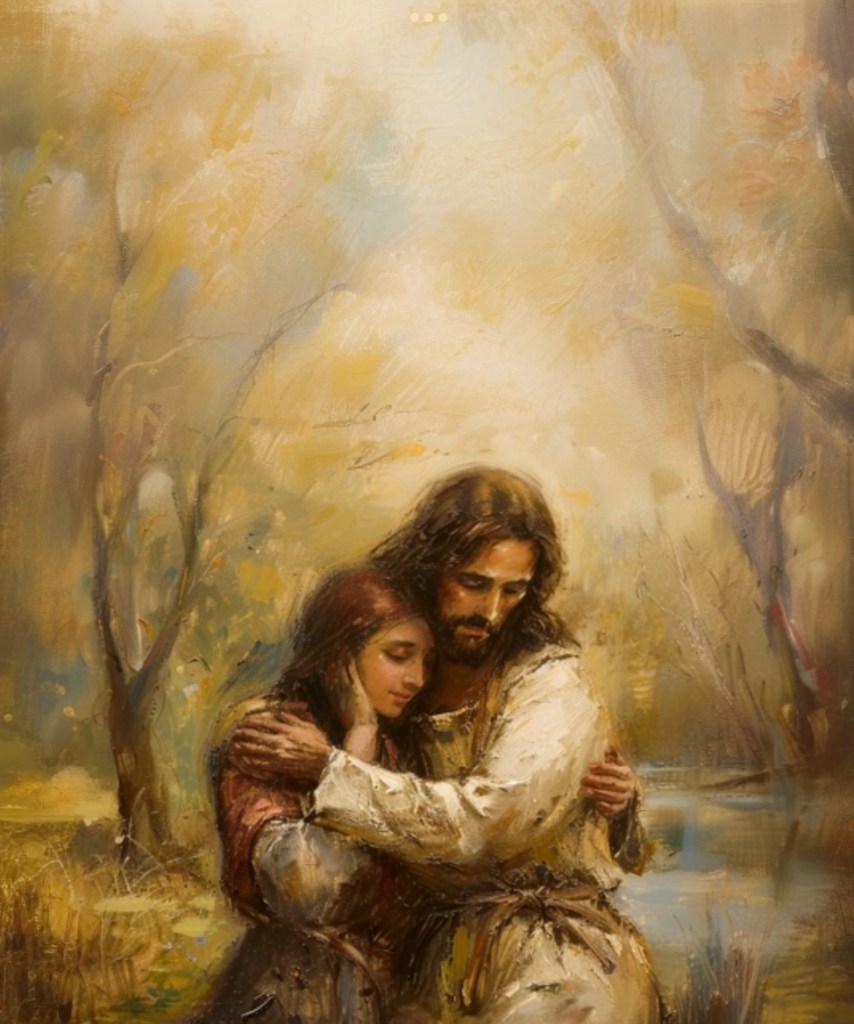
    Over time, both traditions saw a shift. In Christianity, this shift occurred with the introduction of Jesus Christ, who represented the divine in human form. Jesus made the infinite more accessible, embodying the love, compassion, and righteousness that God wished to share with humanity. The doctrine of the Trinity—Father, Son, and Holy Spirit—further personalized the divine, allowing followers to connect with God as a loving parent, a guiding spirit, and a compassionate savior.

    In Hinduism, this transformation took shape through the worship of deities like Vishnu, Shiva, and Devi, who are seen as manifestations of Brahman. These deities, along with their avatars such as Rama and Krishna, made the divine more relatable. They embodied virtues that humans could aspire to—righteousness, devotion, and compassion. Through stories and teachings, these deities became accessible guides for those seeking a path to the divine.

    The Universal Teachings of Love and Righteousness

    Despite the differences in form and expression, a common thread runs through these traditions: the teaching of love, compassion, and righteousness. In Christianity, Jesus’s teachings emphasized love for one’s neighbor, forgiveness, and a life lived in service to others. He taught that the greatest commandment is to love God with all one’s heart and to love one’s neighbor as oneself.

    In Hinduism, the teachings of Dharma—righteousness and duty—are central. The lives of the avatars, like Rama, exemplify adherence to Dharma even in the face of great personal sacrifice. The Bhagavad Gita, a cornerstone of Hindu philosophy, teaches the importance of selfless action, devotion, and the pursuit of truth.

    These teachings, though expressed differently, guide followers toward a life of virtue. They remind us that to walk the path of the divine is to live with compassion, to act with righteousness, and to treat all beings with love and respect.

    A Call for Interfaith Harmony

    In a world often divided by differences in belief and practice, these teachings remind us of our shared spiritual heritage. Whether one follows Jesus, Rama, or another path to the divine, the call to love, righteousness, and compassion is universal. These values are the true markers of discipleship, transcending the boundaries of culture and religion.

    The Caravan of Love invites all to reflect on these common values, to see the divine in the hearts of all people, and to strive for a world where love and compassion reign. In the end, the path to the divine—whether walked through Christianity, Hinduism, or any other tradition—is a path of love, a journey toward the light that shines in every heart.

    A Prayer for Universal Peace and Harmony

    O Divine Source of all creation,
    The One who is known by many names,
    And who dwells in every heart,
    We come before you with humble hearts,
    Seeking your blessing of peace and harmony.

    May your love flow through us like a river,
    Washing away all hatred, division, and fear,
    And filling our hearts with compassion for all beings.

    Teach us to see beyond our differences,
    To honor the divine in every person,
    And to live as instruments of your peace in this world.

    May we all walk the path of righteousness,
    Guided by your wisdom and grace,
    So that our actions may bring healing and unity
    To a world that so deeply longs for peace.

    Let all nations and peoples come together,
    In a spirit of understanding and respect,
    Embracing the truth that we are all your children,
    And that in your eyes, we are one family.

    Grant us the courage to forgive,
    The strength to love without condition,
    And the wisdom to seek justice and mercy
    For every living being.

    May your light shine in our hearts,
    And may we carry that light into the world,
    Bringing hope to the weary,
    And peace to all who suffer.

    In your holy name, we pray,
    For goodwill on earth, and peace among all beings.

    Amen.
    Om Shanti Shanti Shanti.
    Salaam.
    Shalom.

    🙏🕊️🙏
  • Embracing Universal Responsibility: Cultivating Unity Across Beliefs

    Introduction

    In our diverse world, the concept of Unity is fundamental to spiritual and personal growth. While many seek to realize this unity through religious or spiritual practices, historical conflicts and divisions have often overshadowed the shared principles of love and compassion. This post explores how individuals from all walks of life—whether religious, atheist, or agnostic—can cultivate virtues that lead to a deeper realization of Unity.

    The Role of Religion in Unity

    Most major religions advocate for values such as love, compassion, and interconnectedness. For example, Christianity emphasizes love for all people, Buddhism teaches compassion for all beings, and Islam advocates for community and charity. However, the interpretation and application of these teachings have sometimes led to division and conflict, rather than fostering the unity they were meant to inspire.

    The Challenges of Religious Division

    History is rife with examples of religious conflict, from the Crusades to contemporary sectarian violence. These conflicts, while often driven by complex socio-political factors, are frequently justified by religious differences. The resulting divisions highlight the challenge of aligning religious practice with the core values of unity and compassion.

    The Path to Universal Responsibility

    Universal responsibility involves recognizing our shared humanity and the impact of our actions on others. Cultivating virtues such as love, compassion, and understanding is key to fostering unity. Practicing these virtues can start with small, daily actions: showing kindness, listening empathetically, and striving to understand others’ perspectives.

    Cultivating Virtues Across Traditions

    Both religious and non-religious perspectives offer valuable insights into cultivating virtues. For instance, atheists and agnostics often ground their ethical principles in humanistic values and empathy rather than divine commands. By recognizing common values across different worldviews, we can build bridges and promote mutual respect. Regardless of belief, the pursuit of compassion and understanding remains a unifying thread.

    The Role of Personal Transformation

    Personal transformation is central to realizing unity. By reflecting on our own beliefs and behaviors, we can move beyond ego-driven perspectives and connect more deeply with others. Practices such as mindfulness, self-reflection, and community engagement help individuals grow in their capacity for empathy and understanding.

    Conclusion

    In summary, the realization of Unity requires a collective effort to embrace universal responsibility and cultivate virtues that transcend individual differences. Whether through religious teachings, secular values, or personal growth, fostering love and compassion can bridge divides and create a more harmonious world. Let us each take responsibility for nurturing these virtues in ourselves and our interactions with others.

    Reflective Questions:

    • How can you incorporate virtues like love and compassion into your daily interactions?
    • In what ways might your own beliefs or practices contribute to or detract from a sense of unity?
    • How can we overcome the challenges of historical and modern conflicts to build a more inclusive and understanding world?

    I’d love to hear your thoughts on this topic. How do you cultivate unity and responsibility in your life? Share your reflections and experiences in the comments below.

    🙏🕊️🙏

  • Om, Hail to the Healer: Embracing the Light of Healing

    Introduction

    In our journey towards healing and spiritual growth, we often find that different traditions offer similar paths to wellness and inner peace. Whether we are invoking the Medicine Buddha or calling upon the Holy Spirit, the essence remains the same: seeking the divine light of healing. This post explores the universal nature of this healing energy, demonstrating how both the Tibetan Medicine Buddha mantra and the Christian invocation of the Holy Spirit guide us towards transformation and renewal.

    The Essence of Healing

    Healing is a journey, not just of the body, but of the mind and spirit. The Medicine Buddha mantra calls upon the essence of healing, inviting us to connect with a deeper source of wellness and harmony. By reciting these words, we align ourselves with the energy of the great healer, the one who transcends the boundaries of physical ailments and touches the core of our being.

    Hail to the Healer

    In the phrase “hail to the healer,” we express reverence and gratitude. This healer is not confined to the realm of the divine but exists within each of us. By acknowledging and honoring this inner healer, we empower ourselves to take an active role in our own healing journey. We salute the wisdom and compassion that reside within, guiding us towards wholeness and balance.

    The Great Healer

    The term “great healer” underscores the boundless nature of this healing energy. It is not limited by time, space, or circumstance. The great healer is a reminder that we are supported by an infinite source of love and light, capable of transforming our deepest wounds into opportunities for growth and renewal.

    Healer of the World

    As we invoke the “healer of the world,” we recognize the interconnectedness of all beings. Our healing is not an isolated event but a ripple that extends outwards, touching the lives of others. By embracing our own healing, we contribute to the collective well-being of the planet. This mantra becomes a prayer for global harmony, fostering a sense of unity and compassion for all.

    May Your Light Ascend

    Finally, the plea “may your light ascend” is a call for enlightenment and upliftment. It is an invitation for the divine light to rise within us, dispelling darkness and illuminating our path. As we chant these words, we open ourselves to the transformative power of this light, allowing it to guide us towards a higher state of consciousness and peace.

    Integrating Christian Perspectives: The Holy Spirit as Healer

    The invocation of healing through the Medicine Buddha mantra can be closely aligned with calling upon the Holy Spirit. In Christian tradition, the Holy Spirit is often described as the comforter, guide, and healer. Just as the Medicine Buddha represents the embodiment of healing, the Holy Spirit embodies divine healing and guidance in the Christian faith.

    The phrase “hail to the healer” can thus resonate deeply with Christians who invoke the Holy Spirit. The Holy Spirit is the source of infinite love and light, capable of bringing about profound transformation and renewal. By recognizing this parallel, we can see that whether we are chanting “Om, hail to the healer” or praying for the Holy Spirit’s presence, we are opening ourselves to the same divine energy of healing and compassion.

    Embracing Interfaith Healing

    By acknowledging the similarities between the Medicine Buddha mantra and the invocation of the Holy Spirit, we foster a sense of unity and shared purpose. Healing, in its truest form, transcends religious boundaries and speaks to the universal human experience of seeking wellness and peace.

    Integrating the Mantra into Daily Life

    Incorporating the Medicine Buddha mantra or invoking the Holy Spirit into our daily practice can be a source of profound healing and inspiration. Here are a few ways to weave these sacred practices into your routine:

    Morning Meditation or Prayer:

    • Begin your day with a few minutes of chanting the mantra or praying for the Holy Spirit’s guidance, setting a tone of healing and positivity.

    Healing Visualizations:

    • As you recite the mantra or pray, visualize a radiant light enveloping you and extending to others, promoting physical and emotional well-being.

    Mindful Moments:

    • Throughout the day, take pauses to silently or audibly chant the mantra or offer prayers, bringing a sense of calm and centeredness.

    Evening Reflection:

    • End your day by reflecting on the healing energies you’ve experienced, offering gratitude for the light within and around you.

    Conclusion

    “Om, hail to the healer, the great healer, the healer of the world, may your light ascend!” These words are more than a mantra; they are a beacon of hope, a testament to the power of healing that lies within each of us. By embracing this sacred chant or invoking the Holy Spirit, we embark on a journey of transformation, guided by the light of the great healer towards a world of compassion, unity, and peace.

    🙏🕊️🙏