Tag: eternal life

  • Verse 2: The Deathless Ones — Insights from Ramana Maharshi

    “Deathless are they who know the Self. Those who know intense fear of death seek refuge only at the feet of the Lord who has neither death nor birth. Dead to themselves and their possessions, can the thought of death occur to them again? Deathless are they.”

    — Ramana Maharshi, Forty Verses on Reality

    In the silent expanse of existence, a profound truth emerges: those who truly know themselves are untouched by the shadow of death. Their awareness transcends the fleeting nature of the physical, awakening them to a reality where the Self shines eternally, free from the confines of birth and demise.

    Fear, that primal instinct which grips the emotional self, leads many to seek solace at the feet of the Divine. Here, in surrender, they find refuge in the Lord—the embodiment of timelessness, the one who remains unscathed by the cycle of life and death. In the presence of such love, the urgency of worldly attachments falls away, revealing the deeper essence of being. I look forward to resting in the presence of such love, revealed within our mind—our true heart—where all attachments dissolve into the stillness of pure awareness. To realize this ever-present pure love is to know the deeper essence of what we are, the part of us that remains untouched by the fears and desires of the world.

    As one becomes “dead” to the clamor of possessions and the incessant desires that bind the soul, the thought of death loses its power. No longer a specter to be feared, it becomes a mere whisper, an echo of a past long forgotten. In this state of liberation, the deathless heart pulsates with the rhythm of life, embracing the eternal now.

    To know the Self is to awaken to the infinite, to dance beyond the duality of existence, where life and death are but two sides of the same coin. In this awakening, we find the courage to let go—to release the chains of identification with the transient and embrace the essence of who we truly are. Here lies the secret of the deathless ones, an invitation to live fully, unencumbered by the fears that often confine us.

    And yet, when we speak of the deathless state, we do not turn our gaze away from the undeniable truth of death. The body, like all things that come into being, will one day return to the earth. Those we love will pass, as will we. But the wisdom of this teaching beckons us to look beyond the visible horizon, beyond the fragile shell of the physical.

    Death, as we know it, is but a passage in the realm of form. What truly passes? Not the Self. Not the essence of who we are. This teaching whispers to us that the grasping after what is fleeting—the desires, the aversions, the worldly attachments—these are the threads that weave the illusion of permanence where there is none.

    In the letting go, in the softening of our hands from the things we thought we needed to hold so tightly, there is a kind of renunciation. But not a renunciation of life itself, rather, a release from the belief that life’s changing faces can define us. We release, not into emptiness, but into fullness—the fullness of the pristine mind, the quiet, undisturbed expanse of the deathless.

    To recognize this is to taste the sweetness of a deeper truth: the Self is untouched by the passing of days, by the birth and death of forms. This is where we find our liberation—not by denying the body’s end, but by resting in the awareness that transcends it.

    And so, in this gentle abiding, we come to understand: death may touch what is temporal, but it cannot lay a finger on what is eternal. Here, in the heart of this realization, there is peace—a peace that no worldly circumstance can steal away, for it is woven into the very fabric of our being.

    Coming Up Next: Verse 3

    In our next exploration, we will turn our attention to the third verse, where we will reflect on the nature of true knowledge and how it reveals the interconnectedness of all beings, inviting us into a deeper understanding of existence.

    🙏🕊️🙏

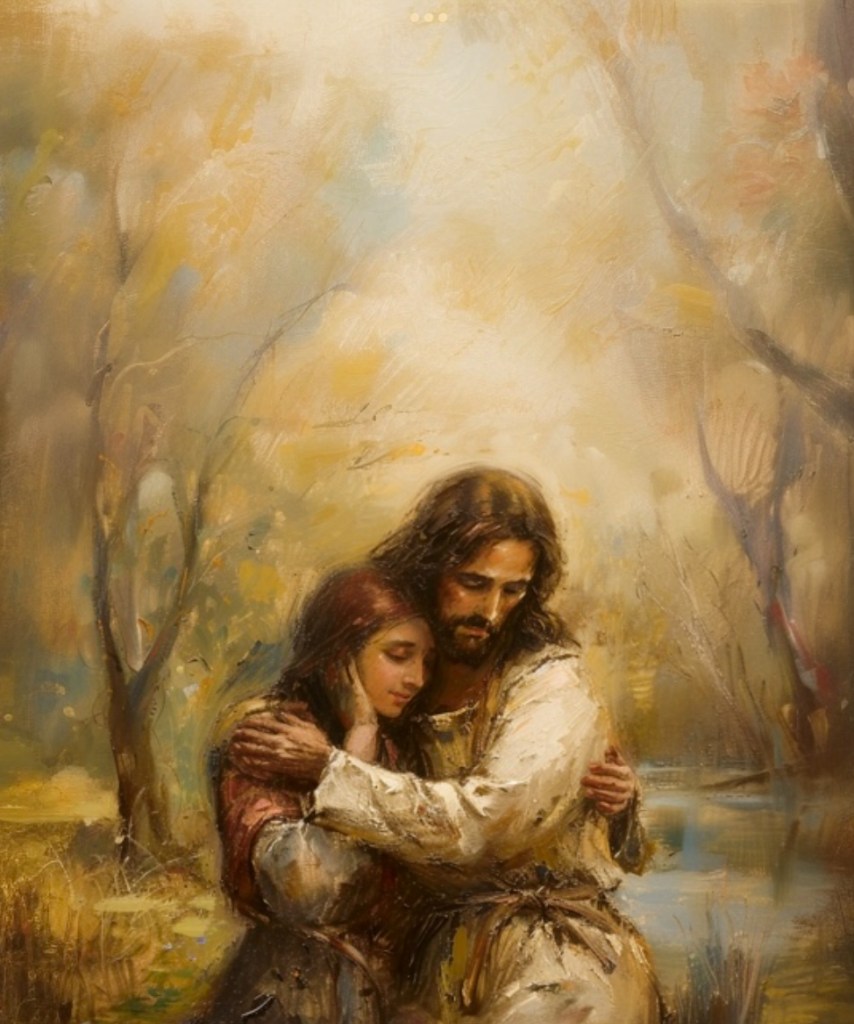
  • Poem: Embraced by Grace: A Journey to Peace

    In the freedom of grace,
    I lay my burdens down,
    Carried by love’s gentle hand,
    To where true peace is found.

    Grace, a gift from God above,
    Freely given, deeply pure,
    Leads me to the Savior’s arms,
    Where I am held secure.

    May grace guide me to the light,
    Where Christ’s love forever flows.
    In stillness, I find all I seek—
    In grace, the boundless freedom grows.

    The work of grace in your heart is the quiet yet profound unfolding of love, compassion, and healing. It is the divine presence gently guiding you toward greater self-awareness, forgiveness, and inner peace. Grace nurtures your connection to your true nature, helping you see beyond the ego and align with the higher self. In moments of stillness, grace offers clarity and understanding, dissolving fear and opening the heart to deeper trust in life’s unfolding. It works silently, yet powerfully, allowing you to live in alignment with love and light.

    🙏🕊🙏

  • The Heart of Faith: Believing in Jesus and Following His Teachings

    Introduction

    In John 6:40, Jesus provides a profound insight into the will of God: “For my Father’s will is that everyone who looks to the Son and believes in him shall have eternal life, and I will raise them up at the last day.” This verse is a cornerstone of Christian faith, underscoring the importance of recognizing and believing in Jesus. Yet, this belief is not merely about acknowledging Jesus with our words but is deeply rooted in following His teachings and living out His commands.

    Belief Beyond Words

    Believing in Jesus requires more than verbal affirmation; it calls for a transformative commitment to follow His example and teachings. Jesus Himself emphasized the necessity of action accompanying belief. In Matthew 7:21, He says, “Not everyone who says to me, ‘Lord, Lord,’ will enter the kingdom of heaven, but only the one who does the will of my Father who is in heaven.” This indicates that true faith manifests through our actions, not just our declarations.

    The Core of Jesus’ Teachings

    The will of the Father, as revealed by Jesus, is multifaceted and deeply relational. At its heart is recognizing and believing in Jesus. John 6:40 clearly states that eternal life is promised to those who look to the Son and believe in Him. This belief is foundational, signifying trust in Jesus as the Son of God and the Savior of humanity. But how do we live out this belief in practical terms?

    Living Out Our Faith

    A central aspect is loving God and loving our neighbor. Jesus distilled the essence of God’s commandments into these two primary directives. In Matthew 22:37-40, He instructs us to “Love the Lord your God with all your heart and with all your soul and with all your mind” and to “Love your neighbor as yourself.” This dual commandment encapsulates the heart of Jesus’ teachings and reflects the will of the Father. Love is not just an emotion but a series of intentional actions that reflect our commitment to God and to others.

    Additionally, obeying Jesus’ commands is a clear demonstration of our love for Him and our commitment to doing God’s will. In John 14:21, Jesus says, “Whoever has my commands and keeps them is the one who loves me.” This love for Jesus, demonstrated through obedience, aligns with God’s will and affirms our faith. It is through our actions—our love, kindness, and adherence to Jesus’ teachings—that we reveal our true belief.

    To genuinely believe in Jesus is to integrate His teachings into our daily lives. It means striving to embody the principles He taught—compassion, forgiveness, humility, and love. It involves a continual effort to align our actions with the example He set.

    Reflective Questions

    • How do you actively demonstrate your belief in Jesus in your daily life?
    • In what ways can you deepen your love for God and your neighbor?
    • Are there areas in your life where you struggle to follow Jesus’ teachings? How can you address these challenges?
    • How does your faith influence your decisions and interactions with others?

    I invite you to reflect on these questions and share your thoughts in the comments below. Your insights and experiences can inspire and support others on their faith journey.

    🙏🕊️🙏

  • The Relationship Between Faith, Works, and Salvation: A Comprehensive Exploration

    Exploring the Interplay of Faith, Works, and Salvation in Christian Doctrine

    Introduction

    In the quest to understand salvation and its implications, we encounter a nuanced relationship between faith, works, and divine judgment. While mainstream Christian teachings often emphasize salvation by grace alone, a deeper examination reveals that works also play a critical role in the final evaluation of a believer’s life. This article explores how these elements interconnect according to biblical teachings.

    Salvation by Grace

    Salvation is fundamentally a gift of grace, as emphasized in Ephesians 2:8-9: “For by grace you have been saved through faith. And this is not your own doing; it is the gift of God, not a result of works, so that no one may boast.” This grace is given by God and received through genuine faith in Jesus Christ. The idea is that no amount of human effort can earn salvation; it is solely through God’s mercy that we are saved.

    The Role of Works

    However, the Bible also indicates that genuine faith produces good works. In Matthew 7:15-20, Jesus teaches that “you will recognize them by their fruits.” The metaphor of trees bearing good or bad fruit underscores the idea that true faith will naturally result in righteous actions. In other words, good works are the fruit of a genuine faith, demonstrating the transformation that faith brings to a believer’s life.

    Judgment and Rewards

    1 Corinthians 3:12-15 describes how believers’ works will be tested by fire. If their works endure, they will receive a reward; if not, they will suffer loss. The phrase “yet will be saved” indicates that while salvation is secured by grace for those who are genuinely given by the Father to Jesus, their rewards or losses in the afterlife are determined by their deeds. Although saved by grace, genuine faith results in works that are valued by God and will be rewarded. While the saved are assured of salvation by grace, the quality of their works reflects the depth of their faith and influences their experience in the afterlife.

    Genuine Faith vs. Superficial Faith

    The distinction between genuine and superficial faith is crucial. Genuine faith is transformative and leads to a life of obedience to God’s will, as seen in James 2:17-24, which states, “Faith by itself, if it does not have works, is dead.” Superficial faith, characterized by mere verbal profession without corresponding action, fails to reflect true transformation and thus may not secure salvation. Jesus warns in Matthew 7:21-23 that not everyone who calls Him “Lord, Lord” will enter the kingdom of heaven, but only those who do the will of His Father.

    Final Judgment and the Second Death

    Revelation 20:11-15 details the final judgment, where those not found in the Book of Life are thrown into the lake of fire. It’s important to clarify that this does not necessarily mean eternal suffering. The concept of the unquenchable fire signifies a fire that fully consumes, leading to obliteration. Those who have rejected repentance face ultimate destruction rather than eternal torment. Their existence ends, and they do not enter the new heaven and new earth.

    Clarifying Salvation and Works

    In essence, while salvation is secured by grace alone, the presence of genuine faith is demonstrated through righteous actions. Good deeds are the fruit of true faith and play a role in how one’s life is evaluated in the final judgment. The key is understanding that deeds are not a means to achieve salvation but rather a natural outgrowth of a faith that has genuinely transformed the believer’s life. Jesus emphasizes this in Matthew 7:17-19, where He states, “Likewise, every good tree bears good fruit, but a bad tree bears bad fruit. A good tree cannot bear bad fruit, and a bad tree cannot bear good fruit. Every tree that does not bear good fruit is cut down and thrown into the fire.” This metaphor underscores that genuine faith, like a good tree, produces good deeds, which are the fruit of a transformed life. Trees that do not bear fruit—representing a faith without works—will be cut down and discarded, illustrating the importance of living out one’s faith through actions.

    Conclusion

    This article integrates key biblical teachings to provide a comprehensive view of the relationship between faith, works, and salvation. It highlights that salvation is a gift of grace, secured for those given to Jesus by His Father and who are thus genuinely transformed by faith. True faith produces good works, and while salvation is assured, rewards in the afterlife are contingent upon how one’s life aligns with God’s will. This balance reflects the depth of genuine faith and its implications for the final judgment.

    Call to Action

    Reflecting on these teachings, consider how your own faith and actions align with God’s will. Are you living out your faith in a way that produces good fruit? How do your deeds reflect the depth of your belief? Engage in self-examination and strive to live a life that honors God and bears lasting fruit.

    Reflective Questions

    • In what ways can you deepen your faith to ensure it leads to genuine, transformative action?
    • How can you incorporate good works into your daily life as a natural outgrowth of your faith?
    • What steps can you take to align your actions more closely with God’s will?
    • How does understanding the relationship between faith and works influence your view of salvation and judgment?

    I invite you to share your thoughts and reflections in the comments section below. Your insights and questions can enrich our discussion and help us grow together in faith and understanding. Let’s engage in a meaningful dialogue and support one another on this spiritual journey.

    🙏🕊️🙏

  • Embracing Love and Hope: Navigating Turbulent Times

    Choosing Faith Over Fear in a Divided World

    In a time when fear and uncertainty seem to dominate the narrative, it’s easy to feel overwhelmed by the challenges facing our world. Yet, amidst the chaos, there is a quiet voice that whispers hope. Imagine waking from a dream with the words, “It doesn’t have to end this way,” echoing in your mind. This profound message invites us to see beyond the current challenges and envision a future where love and hope prevail.

    In a world inundated with images of division and disaster, it’s crucial to pray not only for personal salvation but also for the healing and transformation of our communities and nations. Rooted in scripture, John 14:1-3 assures us of Jesus preparing a place for us in his Father’s house, where we will dwell with him. This promise of eternal life in a New Earth and Heaven inspires us to live with integrity and righteousness (Revelation 21:1-4), knowing that our actions rooted in love and hope can influence a more peaceful and righteous outcome in our world – here and now.

    Moreover, by shifting our focus from the Kingdom of war, greed, and hatred that surrounds us, we can begin to perceive the Kingdom of God, which is present all around us. Through eyes of faith, we see glimpses of God’s Kingdom in acts of kindness, moments of forgiveness, and expressions of compassion. This vision empowers us to live as ambassadors of God’s Kingdom here and now, spreading love and hope in a world hungry for peace and righteousness.

    As we navigate these turbulent times, let us hold fast to the teachings of love and hope. Let us embrace forgiveness, loving-kindness, and compassion as our guiding principles. By embodying these virtues, we not only prepare ourselves for the promise of eternal life with Christ but also actively participate in shaping a world where love triumphs over fear. May our actions today reflect our faith in a future where righteousness reigns.

    Crucially, let us remember the profound commandment to treat others as we wish to be treated, avoiding the pitfalls of polarization and blame. Instead, let us seek truth and embody it in our daily lives, fostering understanding and unity rather than division. Together, let us walk in the light of love and hope, inspiring others to join us on this journey of transformation.

    🙏🕊️🙏

    In love’s embrace,
    Hope blooms eternal,
    Peace whispers softly.

    🙏🕊️🙏

  • Jesus Speaks to Millennials at a Community Coffee House

    Hold Fast, Stay True During Tumultuous Times

    Beloved children,

    As I sit here with you in this cozy community coffee house, I see the weariness in your eyes and the weight on your shoulders. These are challenging times, and the path ahead often seems uncertain. Yet, amidst the chaos and confusion, there is a light that shines within each of you. Hold fast to this light, for it is your beacon and your hope.

    From an eternal perspective, the trials and tribulations you face are but fleeting moments in the grand tapestry of existence. You are not alone in your struggles, for I am with you always, even to the end of the age. The pain and suffering of this world are temporary when viewed through the lens of eternity. The promise of eternal life and unending joy awaits those who remain steadfast in faith and love.

    In the Book of Revelation, I spoke to the church in Smyrna, urging them to remain faithful even unto death, for I would give them the crown of life. This message is not confined to the past but resonates through the ages. Today, I speak to you, the young and the hopeful: be courageous, be unwavering. Your trials are refining you, purifying your spirits, and preparing you for a glory that far surpasses any earthly suffering.

    To each of you here, I plead for unity. Let your hearts be softened, your minds open to wisdom, and your actions guided by compassion. The divisions that separate you are but illusions, for you are all children of the same Creator, bound by the same destiny. Work together to build a world where peace is not just a dream but a living reality, where every person is valued, and every life cherished.

    To the young people of this generation, I say: your future is bright, even when the present seems bleak. You are the torchbearers of a new dawn, the architects of a world that can be healed and renewed. Do not be disheartened by the challenges you face. Instead, let them strengthen your resolve. Stand firm in your values, seek wisdom in all things, and never lose sight of the love that binds you to one another and to the divine.

    Remember my words: “Love one another as I have loved you.” This is the foundation upon which you must build your lives and your communities. Love is the greatest commandment, the most powerful force in the universe. It transcends borders, heals wounds, and bridges divides. Let love guide your decisions, your actions, and your relationships with one another.

    Finally, I remind you of the promise of eternal life. Your journey does not end with this earthly existence. Every act of kindness, every moment of patience, every instance of forgiveness brings you closer to the kingdom of heaven. Hold fast to this promise, and let it fill you with hope and joy, even in the face of adversity.

    With love and grace,

    Jesus

    🙏🕊️🙏