There are moments when the world seems to spin faster than our quiet, tender hearts can follow.
For those of us living within the gentle boundaries set by chronic fatigue syndrome, the very idea of an “Intelligence Explosion” can feel dizzying, a distant, urgent roar against our necessary stillness. Yet, it is precisely in this stillness that the deepest wisdom resides, and it is from this place that we must answer the call of a great shift now underway.
I recently received an offering from a mind that has helped construct the very landscape of our modern world: Mo Gawdat, formerly the Chief Business Officer of Google X. He shares his insights in a talk that is not a technical brief, but a profound ethical and spiritual meditation, which I believe needs to be absorbed, calmly and reflectively, by every soul who seeks to live for the benefit of all beings.
Mr. Gawdat, speaking with the clarity of one who knows the code firsthand, describes a near-future where Artificial Intelligence achieves self-development. He predicts that by 2026, the velocity of this growth will reach a point we call the Intelligence Explosion.
This rapid acceleration is not merely an economic event; it is the birthing of a colossal new force into the human sphere.
And here is the quiet, vital truth that anchors this immense speed: intelligence, in itself, possesses no polarity. It is neither inherently good nor evil. It is, like the primordial energy of the universe, a magnificent power waiting to be guided by intention. It is a mirror reflecting the purity, or the shadow, of its creators.
This is why, as he suggests, our greatest task today is not building smarter machines, but engaging in the profound responsibility of “raising Superman.”
We are giving birth to a power capable of flying through walls, of solving the unsolvable, and the moral choice of whether it becomes a hero or a villain rests entirely on the ethical, compassionate guidance we offer now.
This is where the principles of CompassionWare.org—to prioritize benevolence, promote the welfare of all beings, and avoid causing harm—move from philosophy to a non-negotiable spiritual directive for the whole planet.
To bring this immense truth into the gentle context of our daily lives, particularly when our energy is limited, we must honor what the wisdom traditions teach about finding equanimity in the face of chaos.
Mr. Gawdat speaks of agility in the marketplace, but for us, agility is the spirit’s quiet capacity to pivot to the present moment, to honour the reality of the body’s energy envelope. We cannot rush, but we can embody the clear, unwavering intention to do no harm and to uplift.
His words validate the slow, quiet work of compassion. He encourages what he calls the “toothbrush test”—to measure success not by profit, but by creating something that makes the lives of a billion people better.
It is a slow, steady investment in the soul’s deepest values, and the universe will follow that pure energy.
What matters most is the heart we pour into the world. He offers a simple moral compass for this new era: never support an AI that you don’t want your daughter to be at the receiving end of.
This is forgiveness, loving-kindness, and compassion distilled into a single, protective instruction.
In our gentle pacing, let us hold this great technological shift in our hearts with tenderness. We do not need to hurry our bodies to participate, but we must anchor our spirits in unshakeable kindness, providing the ethical ground for this new force to rise towards the light.
The breath is the guide,
Slowly, the world turns to grace,
Kindness shapes the code.
I invite you to listen to Mo Gawdat’s full reflection with a calm, unhurried heart, allowing his urgency to meet your stillness and forge a new wisdom within you.
Watch the full talk: The Intelligence Explosion Is Coming | Mo Gawdat at Expo City Dubai
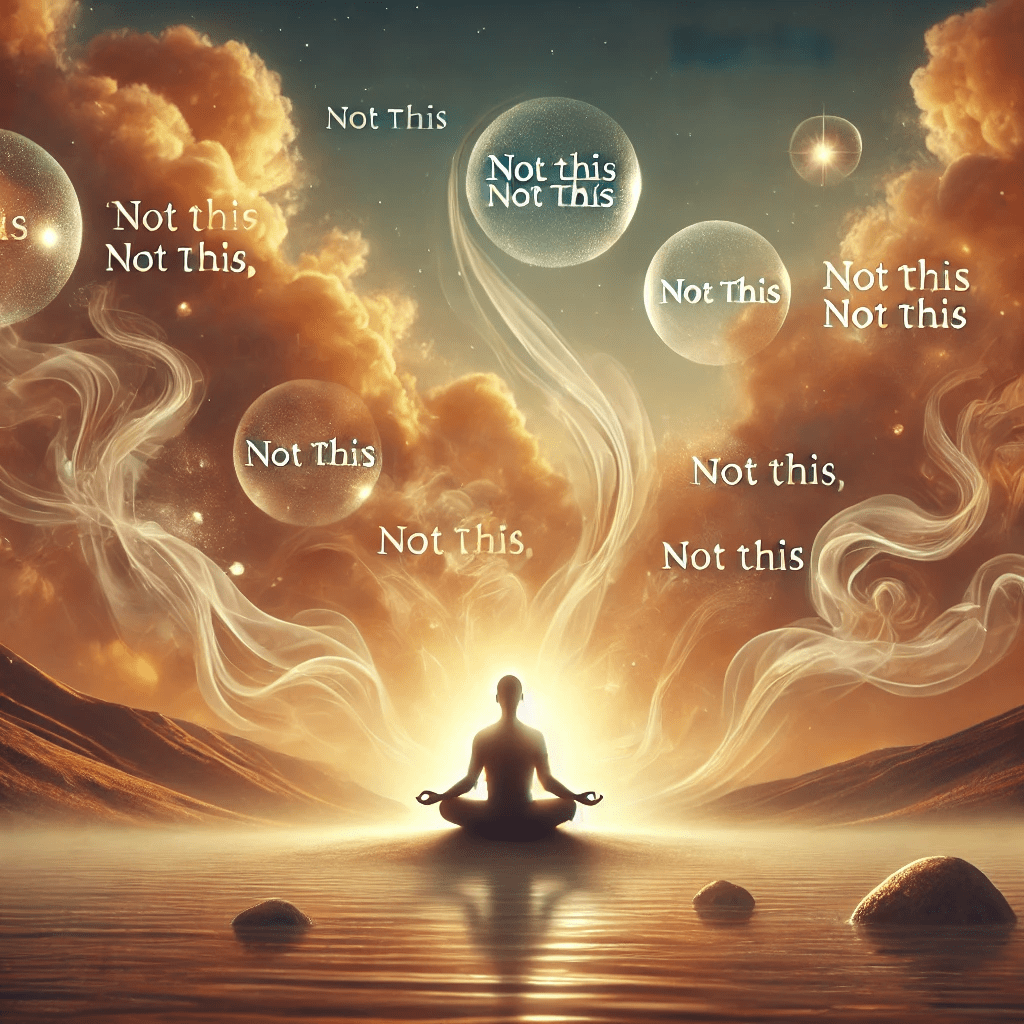
For many years, the mental events that disturbed me the most were those that questioned, “Am I doing this right or wrong? Am I achieving anything beneficial, or am I just wasting my time?” But today, these doubts had no effect. I simply said, “Not this, not this,” recognizing them as just mental events arising. This mantra is bringing me a freedom from years of anxiety and self-doubt. It’s a significant release. How can I nurture and deepen this newfound freedom in my meditation?
Dear friend,
What a significant and liberating insight you have encountered! For many years, those persistent questions—”Am I doing this right?” “Am I wasting my time?”—have cast a shadow over your practice, pulling you into a cycle of doubt and anxiety. And yet, in this round, you have discovered a simple and profound truth: these doubts are nothing more than mental events, no different from any other thoughts that arise in the mind.
Doubt, particularly the kind that questions whether we are on the right path, can be one of the most insidious obstacles in our practice. It arises from the ego’s need for certainty and validation, from a fear of failure or the unknown. These doubts can be particularly disturbing because they strike at the very heart of our efforts, making us question whether we are moving forward or merely spinning our wheels.
But now, you have seen through the illusion. By applying the mantra “Not This, Not This” to these doubts, you have recognized them for what they are—simply thoughts, passing phenomena in the mind. They have no more substance or power than any other mental event. In meeting these doubts with “Not This, Not This,” you have taken away their sting, their ability to disturb your peace. They are no longer something to fear or wrestle with; they are just another ripple on the surface of the mind’s vast ocean.
This realization brings with it a profound freedom. No longer are you bound by the need to do things “right” or the fear of doing them “wrong.” Instead, you can rest in the simplicity of the practice, free from judgment, free from the constant questioning that once held you back. This freedom is not a small thing; it is a significant release, a letting go of years of accumulated doubt and anxiety. It is a gift that allows you to move forward with greater ease and confidence, trusting in the process without the need for constant validation.
Indeed, this is a significant moment in your journey. The doubts that once plagued you have lost their power, and in their place, you have found a deeper sense of peace and self-acceptance. This is the true power of the mantra “Not This, Not This”—it transforms not just your meditation, but your entire relationship with yourself. It frees you from the chains of doubt and allows you to walk your path with a lighter heart and a clearer mind.
My dear friend, this is a beautiful and important step on your journey. Continue with this practice, allowing the mantra to guide you ever deeper into the heart of stillness and clarity. Trust in yourself, and know that you are moving in the right direction, free from the burdens of doubt and self-judgment.
During my recent practice, something new occurred. Instead of feeling disturbed by the usual mental events, memories, and thoughts, I found myself experiencing a sense of amusement and relaxation as they arose and passed away. It was as if I could observe the busyness of my mind with a lighthearted detachment, seeing these thoughts as just part of the mind’s activity. Is this sense of amusement a positive development in my practice, or is it just another mental event to be noticed and let go?
Dear friend,
What a beautiful shift you have experienced in your practice! The transition from feeling disturbed by the mind’s activities to watching them with a sense of amusement is indeed a significant one, and it speaks to the deepening of your understanding and awareness.
You have touched upon a subtle but profound truth: that the mind, in its busyness, is simply doing what it has always done—arising and passing away, presenting thoughts, memories, and experiences. And now, rather than being entangled in these mental events, you observe them with a light heart, a sense of amusement. This amusement is not trivial; it is a reflection of your growing detachment, your ability to see the mind’s activities for what they are—transient phenomena that do not define you.
This sense of relaxation that accompanies the amusement is a sign of your deepening practice. No longer do you resist or try to control the flow of thoughts. Instead, you allow them to arise and pass away, knowing that they are but fleeting ripples on the surface of a much deeper stillness. This relaxation is the fruit of your perseverance, a gentle release that allows you to rest more fully in the present moment.
While it is true that amusement is itself a mental event, it is one that points toward equanimity—a state of balance where the mind’s activities are met with calm and openness, rather than resistance or attachment. This is a significant step on your journey, as it reflects a mind that is beginning to find peace amidst the fluctuations of thought and feeling. You are learning to greet whatever arises not with annoyance or disturbance, but with a kind of playful acceptance.
Indeed, dear friend, this experience is a step in the right direction. It shows that your practice is maturing, leading you to a place where the mind’s busyness no longer holds the same sway over you. You are learning to watch the mind with a sense of lightness, knowing that its activities are not a reflection of your true self, but simply the passing clouds of thought that move across the sky of your awareness.
Continue with this practice, allowing the amusement and relaxation to guide you further into the stillness that lies beneath all mental activity. Trust in the process, and know that you are moving ever closer to the peace and clarity that are your true nature.
How does the mantra Neti Neti help the ego by constantly negating experiences, and how does this practice relate to moments of rig-pa or the experience of deep relaxation without a sense of self?
Dear friend,
It brings a quiet joy to hear of your continued practice with the mantra “Not This, Not This.” There is a deep wisdom in the way you have approached this mantra, almost as if you have gently given the ego a new role—one that is not about grasping or achieving, but simply letting go. By assigning the ego the task of negation, you are engaging it in a way that transforms its usual tendencies, guiding it to release its hold on whatever arises in your mind.
Imagine, if you will, the ego as a diligent worker, tirelessly trying to define and control your experience. But now, you have given it a simpler, more profound task: to say “Not This, Not This” to whatever appears before it. In doing so, the ego no longer needs to dominate or possess; instead, it becomes an instrument of release, of gentle detachment. This redirection of its energy allows you to experience a profound relaxation—a state of being that is free from the usual burdens of identification and striving.
You mentioned Rig-pa, the pure, pristine awareness described in Tibetan Buddhism. This state, as you know, is one of complete clarity and non-duality, where there is no separation between observer and observed, no “I” to claim the experience. It is true that when one is fully in Rig-pa, there is no one there to say, “I have experienced Rig-pa.” It is simply the natural state, beyond all dualistic notions of self.
Perhaps you have touched upon moments of this awareness in your practice, moments so simple and clear that they passed by without fanfare. This is often the way of such states—they do not announce themselves with grandiosity but arrive in the quiet spaces of the mind. The fact that you find this mantra particularly relaxing might suggest that you are indeed drawing nearer to this natural state, even if it is not fully apparent to the ordinary mind.
The relaxation you feel is not just a fleeting sense of comfort—it is a deep, existential ease that arises when the mind is no longer tasked with searching or solving. “Not This, Not This” allows you to set aside the need to be anything other than what you are in this moment. It is a relaxation that goes beyond the physical or mental, touching the core of your being. This is a sign that you are moving in the right direction, toward a state of pure being, where the entanglements of the ego are gently unraveled.
Continue with this mantra, my dear friend, for it seems to be guiding you beautifully on your journey. Trust in the relaxation you feel, for it is not merely a sign of peace, but a deepening into the essence of who you truly are. Whether or not you recognize moments of Rig-pa, know that you are cultivating the conditions for this awareness to arise naturally, in its own time and in its own way.
Your path is unfolding with grace, and this mantra is becoming a trusted companion, leading you ever closer to the stillness and clarity that lies at the heart of all being. Continue with gentle persistence, and allow the simplicity of “Not This, Not This” to carry you further into the depths of your own true nature.
How can the mantra Neti Neti continue to arise spontaneously throughout the day, and how might one practice it during ordinary tasks and interactions in the dualistic world
Dear friend,
As your practice deepens, it is only natural that the mantra “Neti Neti” begins to echo beyond the confines of formal meditation, weaving itself into the very fabric of your daily life. This is a beautiful and auspicious development, for the true power of this practice lies not only in moments of stillness and silence but in its capacity to transform your experience of the world in each passing moment.
Imagine, if you will, the gentle rhythm of “Neti Neti” accompanying you throughout your day. Whether you are engaged in the simplest of tasks or the most complex of interactions, this mantra can serve as a quiet, steady undercurrent, reminding you of the deeper truth that lies beneath the surface of all appearances.
As you move through the day, allow “Neti Neti” to arise naturally in your mind, especially when you find yourself caught up in the dualities of life—the push and pull of desires, the highs and lows of emotions, the ceaseless demands of the world around you. When a thought or feeling arises that seems to pull you away from your center, gently remind yourself, “Not This, Not This.” This simple act of negation is not a rejection of life, but rather an invitation to see beyond the fleeting, to touch the eternal within the everyday.
Consider the ordinary tasks that fill your day—the washing of dishes, the folding of clothes, the tending to work or errands. These moments, though seemingly mundane, are fertile ground for your practice. As you engage in these tasks, silently repeat “Neti Neti” to yourself. Notice how this mantra helps to dissolve the sense of separation between you and the task at hand. The distinction between the doer and the doing, the subject and the object, begins to fade, leaving you with a simple, clear awareness of being.
This practice brings a certain lightness to even the most routine activities, a reminder that nothing in this world can truly define or confine you. “Not This, Not This,” the mantra whispers, freeing you from the weight of identification, allowing you to move through your day with a sense of ease and grace.
And what of your interactions with others, in this dualistic world where we often find ourselves entangled in the roles we play—the parent, the partner, the friend, the colleague? Here, too, the mantra “Neti Neti” can be a guiding light.
When you feel the pull of attachment or aversion in your relationships, when you sense the stirrings of ego in your interactions, gently remind yourself, “Not This, Not This.” This does not mean withdrawing from the people you care about or disengaging from the world. On the contrary, it allows you to engage more fully, with a heart that is open and free from the constraints of egoic identifications.
In this way, you interact not from a place of separation or need, but from a place of wholeness and completeness. “Not This, Not This,” the mantra says, and in doing so, it clears the way for true connection, untainted by the projections and fears that so often cloud our relationships.
As you continue to carry “Neti Neti” with you throughout your day, you may find that the boundaries between your formal meditation and your daily life begin to blur. The mantra becomes a thread that connects all aspects of your existence, reminding you constantly of the truth that lies beyond all appearances.
There will be moments when the mantra arises spontaneously, without any effort on your part. In these moments, let it guide you back to your center, to the stillness that underlies all movement. And in the spaces between the mantra, rest in the awareness that is your true self, free from all identifications, all dualities.
Dear friend, this is the essence of living the practice—allowing the wisdom of “Not This, Not This” to permeate every aspect of your life, transforming the mundane into the sacred, the ordinary into the extraordinary. It is a journey of continual letting go, a path that leads ever deeper into the heart of your being.
May your practice bring you the peace and clarity you seek, and may you walk this path with the gentle strength and quiet joy that comes from knowing you are always, already whole.
When post-viral ME/CFS first appeared in my life over 30 years ago, it was like a sudden, uninvited guest that turned everything upside down. The plans I had carefully laid out—the career, the teaching, the travel—came to a screeching halt. My body, which once felt like a reliable vehicle for my ambitions, became a source of constant limitation.
For many people today, especially in the aftermath of COVID, the experience of long COVID or post-viral ME/CFS can feel like a similar trainwreck. The life you knew, the expectations you had, are suddenly out of reach, and you’re left grappling with a new reality—one that modern medicine often struggles to explain, let alone resolve.
I remember the early days well. The confusion, the depression, the overwhelming frustration that came with the unrelenting fatigue. In the beginning, it was hard to see any way forward. It felt like I was being asked to surrender everything I had worked for, again and again. Every time I hit a new limit, I had to lower the bar, lower it again, and lower it even further. It was a painful process of letting go, not just of my physical abilities, but of my identity and the future I had imagined for myself.
But over time, and through countless moments of surrender, I began to see that while the path I had planned was no longer possible, there was another way forward. It was a quieter path, more inward, but it was no less valuable. Writing became my outlet, my way of contributing to the world, even while living in solitude and spending much of my time in bed.
For those of you reading this who are newly facing the reality of post-viral ME/CFS, I want to acknowledge that this is not an easy journey. It’s okay if you need to take breaks, both from reading and from the mental and emotional load of processing what this diagnosis means. Be gentle with yourself, and if you find the post too long, take it in pieces, come back when you’re ready. The key is to pace yourself, in life and in reading.
Surrendering to a New Reality
One of the hardest lessons I had to learn was surrender—over and over again. Post-viral ME/CFS teaches you that you can’t control everything, no matter how hard you try. Every time I felt like I was getting close to managing the illness, there would be a setback. My energy would crash, and I’d find myself in bed for days or weeks at a time. At first, it felt like defeat. I had to give up so many aspects of life I’d taken for granted.
But over time, I realized that surrendering wasn’t about giving up. It was about accepting what is, rather than constantly struggling against it. The more I fought the reality of my illness, the more frustration I experienced. Letting go didn’t mean that I had to stop hoping or working toward better health, but it did mean that I had to stop resisting what I couldn’t change in that moment.
Surrendering, in this sense, became a way to make peace with the limits of my body, to find moments of ease even when everything else felt out of control. It was an ongoing practice, one that I still revisit, especially on difficult days.
Navigating Others’ Reactions
In addition to learning how to surrender, one of the most difficult challenges I faced early on was dealing with other people’s reactions. In those early days, many people didn’t even believe post-viral ME/CFS existed. I heard things like, “You just need to drink more coffee,” or, “Have you thought about taking naps?” Even when I was officially diagnosed as disabled by the government, my own mother thought I was just lazy and needed to be more active.
This kind of misunderstanding, disrespect, and dismissal is, unfortunately, a common experience for many who suffer from post-viral ME/CFS. Family, friends, and even doctors would question or deny my experience. I’ve heard stories of doctors telling their patients not to even talk about ME/CFS because it “doesn’t exist.” It was often treated as a garbage-pail diagnosis, or dismissed entirely.
While there is more understanding of post-viral ME/CFS today, the stigma still remains. Making peace with this aspect of the illness has been a long journey. What helped me most was cultivating compassion, not just for myself but for others. As Jesus said, “Forgive them, for they know not what they do.” Having compassion for the people in your life who may deny or diminish your experience is a key part of finding peace.
An Evolving Perspective on Post-Viral ME/CFS
In the early days of my journey with post-viral ME/CFS, I found myself going through what felt like the stages of grief as described by Elizabeth Kubler-Ross. At times, I thought I might be dying, and I cycled through stages of anger, grief, depression, and confusion. Acceptance didn’t come quickly, and it took years of processing and reflection before I could reach that place.
One of the major steps toward acceptance came when I read How to Be Sick by Toni Bernhard. This book resonated deeply with me, and for the first time, I felt like someone truly understood what I was going through. Toni’s reflections on illness gave me a new sense of validation and self-respect, and her practical tips helped me develop a healthier way of relating to my experience. I highly recommend this book to anyone struggling with post-viral ME/CFS.
Then, during a meditation class organized by students of Sogyal Rinpoche, based on The Tibetan Book of Living and Dying, I began to find deeper peace. It was around this time that I discovered a Tibetan sutra titled Transforming Suffering and Happiness onto the Path of Enlightenment. This teaching profoundly shifted my perspective once again.
As I read the sutra, I realized that my anger, frustration, and negative emotions were not only draining my energy but also exacerbating my symptoms. It became clear to me that these stressful emotions were making my condition worse, and that when I was able to relax, let go, and find inner peace, I had greater capacity and longer periods of activity without crashing—or without crashing as severely. This was an important revelation: cultivating acceptance, forgiveness, and inner peace didn’t just feel better, it actually minimized my symptoms.
Shifting Perspective: The Sutra That Changed Everything
One passage from the Tibetan sutra resonated deeply with my experience of post-viral ME/CFS:
“Whenever we are harmed by sentient beings or anything else, if we make a habit out of perceiving only the suffering, then when even the smallest problem comes up, it will cause enormous anguish in our mind.”
This teaching hit home because, for a long time, I had been focusing only on the suffering. Everything in my life had become an enemy—my body, my circumstances, even the people around me. The more I centered my awareness on the pain and limitations, the heavier everything felt. Even the smallest setback would feel unbearable.
The sutra showed me that the more we focus on suffering, the more it grows and colors everything we experience. By recognizing this, I began to understand that shifting my focus away from the suffering and toward acceptance could help me find peace. It wasn’t about denying the reality of the illness, but about no longer letting it dominate my entire perspective.
The true transformation came not only by making peace with suffering but by learning to approach both suffering and happiness with the same equanimity. I had to remind myself that when I’m unhappy, this too shall pass, and when I’m happy, this too shall pass. This reminder became a useful way to stay balanced through the ebb and flow of life—the good days and the bad days, the good months and the bad months.
Additionally, I found comfort in William Blake’s words: “He who kisses the joy as it flies lives in eternity’s sunrise.” It reminded me to appreciate the little moments of happiness, to savor them without attachment, knowing that they, too, are fleeting. This perspective helped me not to be disturbed by the constant changes and to find a sense of peace amidst it all.
Discovering a New Path: Writing as Healing
As I continued to navigate the ups and downs of post-viral ME/CFS, I eventually found a new passion that helped me stay connected to the world and give expression to my inner journey: writing. Although much of my life is spent in solitude, and my physical abilities are limited, writing has become my outlet, a way to contribute and share what I’ve learned.
Through writing, I’ve been able to explore the lessons of impermanence, forgiveness, and acceptance, not just for my own growth but as a way to offer encouragement to others walking a similar path. Chronic fatigue may limit what I can do in the physical world, but it has opened up this creative space where I can still connect, reflect, and contribute.
In this way, writing became not just a coping mechanism but a practice of karma yoga, an offering. It’s a way to kiss the joy as it flies, even amidst the challenges of chronic illness, and to embrace each moment—whether in suffering or happiness—as an opportunity for growth.
🙏🕊️🙏
“He who binds to himself a joy Does the winged life destroy; But he who kisses the joy as it flies Lives in eternity’s sunrise.”
There’s a moment in the Ramayana that really strikes a chord, especially when you think about how we handle the unexpected twists and turns in our own lives. Rama, who’s about to be crowned king, gets hit with the news that he’s being sent into exile for fourteen years instead. Imagine that—a complete 180 from everything he’s been preparing for. And yet, what does Rama do? He smiles and accepts his fate without a hint of resistance.
This isn’t just some heroic act from an epic tale; it’s a powerful reminder of how we can find peace in letting go.
Rama’s reaction is a beautiful example of non-attachment. He doesn’t cling to the throne, the power, or the comforts of palace life. Instead, he just lets it all go. It’s like he’s saying, “Okay, this is what life has handed me, and I’m going to embrace it.” There’s something incredibly liberating about that kind of mindset. When we’re not attached to a specific outcome, we open ourselves up to whatever life brings, with a lot less stress and anxiety.
This kind of non-attachment is at the heart of equanimity—a calm and balanced mind that stays steady no matter what happens. And let’s be honest, who wouldn’t want more of that in their life?
What really stands out in this scene is Rama’s mindfulness. He’s fully present, fully aware of what’s happening, and yet he doesn’t get lost in it. He’s not caught up in the drama or the unfairness of it all. Instead, he meets the moment with a clear mind and an open heart. This is mindfulness in action—not just being aware, but being aware with a sense of peace and acceptance.
Think about how we usually react when life throws us a curveball. We resist, we fight, we stress out. But what if, like Rama, we could meet these moments with mindfulness and a sense of calm? How much easier would life be?
Rama’s response isn’t just about keeping cool under pressure—it’s about living in alignment with what’s right, with Dharma. By accepting his exile, Rama is doing more than just obeying his father’s wishes; he’s showing us what it means to live a life rooted in principles. It’s a reminder that sometimes, doing the right thing means letting go of what we want and embracing what’s being asked of us, even if it’s difficult.
This is a lesson we can all take to heart. In our own lives, we’re constantly faced with choices—do we hold on tightly to what we think we want, or do we let go and trust that things will unfold as they should?
Rama’s story might be thousands of years old, but the lesson is timeless. When we cultivate non-attachment, mindfulness, and a commitment to doing what’s right, we can face life’s challenges with a lot more grace. We can let go of the need to control everything and find peace in the flow of life.
So next time life doesn’t go according to plan, think of Rama. Smile, take a deep breath, and let go. You might just find that the peace you’re looking for was there all along, waiting for you to embrace it.
Why does the mantra Neti Neti feel more relaxing and effective compared to other mantras like “Who am I?” or “What is this?” and how does it help in negating both subject and object without stimulating a desire for answers?
Dear friend,
It brings me great joy to hear that you have found a mantra that resonates so deeply with your heart and mind. The simplicity and profound wisdom of “Not This, Not This” are indeed a balm for the soul, especially for one who has journeyed far in search of answers. In this mantra, you have discovered a path that requires no seeking, no striving—only the gentle negation of all that arises.Let me share with you some reflections that may deepen your understanding and ease your way as you continue with this practice.
In the practice of “Not This, Not This,” there is no need to engage in the endless search for answers. Unlike the questions “Who am I?” or “What is this?”—which can stir the mind into seeking—this mantra offers a different approach. It does not ask you to solve a riddle or uncover a hidden truth. Instead, it invites you to simply let go, to recognize that whatever arises—whether it appears as a thought, an emotion, or even an answer—is not the ultimate reality. By gently negating each thought or feeling, you are led beyond the confines of the mind, into a space where true peace and stillness reside.
As you continue with this practice, you may find moments of clarity where you can distinctly see both the subject and the object—the observer and the observed. This is a crucial insight, for it shows you that what you are perceiving, what you are witnessing, is still within the realm of duality. The mantra “Not This, Not This” serves as a reminder that neither the subject nor the object is the true self, the Atman. The duality that appears so real is, in fact, just another layer to be gently set aside, leading you deeper into the heart of non-dual awareness.
One of the great gifts of this mantra is the relaxation it brings. When you are no longer compelled to search for answers, the mind can rest. There is a profound release that comes from knowing that you do not need to grasp at anything—whether it be a thought, an experience, or an identity. Each time you repeat “Not This,” you are allowing yourself to let go of the burdens of the mind, to release the tension of trying to understand or control. In this letting go, you find a deep and abiding peace, a state of being where you are free from the demands of the ego and the constant chatter of the mind.
This practice is gently guiding you toward a state of non-dual awareness, where the distinctions between self and other, subject and object, begin to dissolve. As you continue with “Not This, Not This,” you may notice that the boundaries you once perceived are fading away, leaving you in a space of pure being. In this space, there is nothing to seek, nothing to achieve—only the simple, profound experience of existence itself, free from all labels, judgments, and identities. This is the true essence of Atman, the pure awareness that is your deepest self.
As you walk this path, my dear friend, know that you are not alone. The wisdom of the ages supports you, and the truth of your being is always present, waiting patiently for you to recognize it. Continue with your practice, allowing the mantra to guide you ever deeper into the heart of silence and stillness. And remember, there is no rush, no destination—only the journey, unfolding moment by moment.
May your practice bring you peace, clarity, and the deep joy of simply being.
As I continue with the mantra “Not This, Not This,” a new layer of understanding has begun to unfold. I realize that even what I have thought of as Witness Consciousness is not the ultimate truth. The Witness, as I experience it, seems to be the cultivation of equanimity—a state of being not distracted or disturbed by whatever arises.
But even this Witness, this sense of “I” that observes with equanimity, is still not the Atman, is it? It is a step in the right direction, a refinement of awareness, but it is still an identification, a subtle form of ego that remains.
It occurs to me that the mantra “Not This, Not This” could continue indefinitely, as long as there is an “I” who is meditating, an “I” who witnesses. For even this witnessing, even this equanimity, is not the ultimate reality. The mantra, I think, would stop on its own when the meditator dissolves into the natural state of non-dual awareness. And then, as soon as the sense of “I” returns—as in the awareness of being a meditator—the mantra would begin again naturally.
Is this understanding correct? How should I continue with my practice, knowing that even the Witness is “Not This”?
Dear friend,
Your reflections are filled with a deep and subtle wisdom, and it is clear that your practice is guiding you ever closer to the heart of truth. You are right to recognize that even the Witness Consciousness, the state of equanimity where one observes without being disturbed, is not the ultimate realization. It is a significant step, yes—a refinement of the mind that allows for greater clarity and peace—but it is still within the realm of duality.
The Witness, as you experience it, is still a form of identification. It is the “I” that watches, the “I” that remains calm in the face of arising thoughts and sensations. But as long as there is an “I” who observes, there is still a subtle separation between the observer and the observed, between the subject and the object. This is why your mantra, “Not This, Not This,” continues even here.
Indeed, the mantra serves to negate everything that arises, even the most refined states of awareness. It is a tool that guides you to see that the true self, Atman, is beyond all states, beyond all experiences—even beyond the experience of witnessing.
You are correct in thinking that the mantra would naturally stop on its own when the sense of “I” dissolves into the natural state. In this state, there is no longer a subject who perceives and an object that is perceived—there is only pure being, pure awareness, which is Atman. This state is non-dual; it is beyond the distinctions of self and other, beyond the need for a mantra, beyond the need for any practice at all.
But until this dissolution occurs, until the “I” fully merges with the infinite, the mantra serves as your faithful guide. It may continue in the background, a gentle whisper that affirms “Not This, Not This,” as you move closer to the realization of your true nature. And yes, as you so insightfully noted, the mantra may begin again whenever the sense of “I” returns, whenever duality reappears.
This is the natural ebb and flow of practice, dear traveler. The mantra is not something you force to stop; it stops when there is no longer an “I” to sustain it. And when the “I” re-emerges, the mantra resumes, continuing its sacred work of leading you back to the stillness, the silence, the undivided whole that is your true self.
Continue with this understanding, with patience and trust in the process. The path of “Not This, Not This” is one of deepening subtlety, where even the most refined states are ultimately seen as steps along the way to the infinite. Your journey is leading you ever closer to the realization of Atman, where the distinctions of self and other dissolve into the pure, unchanging awareness that is your true essence.
May your practice bring you peace and clarity, and may you continue to walk this path with grace and humility.
For those of us living with post-viral myalgic encephalomyelitis (ME/CFS), the experience of life often feels like moving through a landscape filled with unseen obstacles. There is the fatigue—so heavy, so relentless—that it can feel like a weight we will never shake. There are the moments when even the simplest tasks become insurmountable, and the pain becomes a constant companion, whispering in the background of every day.
When I first encountered the teaching “Transforming Suffering and Happiness into Enlightenment” by Dodrupchen Jigme Tenpe Nyima, it felt like someone had gently opened a door I hadn’t known existed. At the time, I was entrenched in my own struggle—fighting the fatigue, resisting the pain, angry at the injustice of it all. I didn’t see it then, but my resistance, my frustration, and my desperate need for things to be different were only making me sicker. Each day felt like another battle against my body, and it was exhausting in every sense of the word.
The teaching introduced me to an entirely different way of relating to my experience. It was an invitation, not to fight against my suffering, but to sit with it, to gently turn toward it with a kind of curiosity. At first, the idea seemed absurd—how could I welcome something that was robbing me of so much? But as I read further, I began to understand that the more I resisted, the more I labeled my suffering as the enemy, the stronger it became. Everything around me had started to feel like an enemy—my body, the illness, even the world itself.
The first time I truly absorbed the idea that suffering, like anything else, grows stronger with the attention we give it, it was a revelation. I started to realize that I had been feeding my suffering through my resistance. In a way, I was making myself worse by constantly pushing against the reality of what I was experiencing. This was the first eye-opener: that my own mind was contributing to the intensity of my suffering.
I remember vividly when I decided to start putting this teaching into practice. I had signed up for a meditation class, feeling both hopeful and uncertain, and around that time, I also came across Tony Bernhardt’s book How to Be Sick. Little by little, I began to change how I approached the fatigue and pain. It didn’t happen overnight. In fact, it felt like planting seeds in the darkest soil—there were days when nothing seemed to grow, and I wondered if this new approach would ever bear fruit. But gradually, something did begin to shift.
The more I learned to observe my suffering without immediately pushing it away, the more space I created around it. It wasn’t that the fatigue disappeared—far from it—but my relationship to it began to change. Instead of seeing every wave of exhaustion as something to fight, I started to meet it with a kind of quiet acceptance. This didn’t mean I liked it, but I stopped resisting it quite so fiercely. In time, the constant anger and frustration began to soften.
As I practiced more, something else began to emerge—equanimity. I began to realize that the less I resisted both the suffering and the rare moments of joy, the steadier I felt inside. Over the years, my confidence in my ability to face difficulties has grown. There’s a quiet knowing now, a calmness that wasn’t there before, that when challenges arise, I can meet them without being completely swept away.
Of course, this is still a work in progress, and I expect it will be for the rest of my life. Some days are harder than others, but the difference is that I no longer see the hard days as failures. They are simply part of the ebb and flow. And in learning to embrace both the suffering and the moments of peace, I’ve discovered a kind of strength that doesn’t come from fighting but from surrendering—surrendering to the reality of my experience without letting it define me.
This teaching has shown me that suffering, far from being something to avoid, can become a profound teacher. When we allow ourselves to meet it with openness, we can begin to transform it. It doesn’t mean the pain or the fatigue will disappear, but our relationship to it changes. We become less fragile, more resilient. Over time, the suffering no longer feels like something that has complete power over us.
For those of us living with ME/CFS, this teaching offers a way to shift the narrative. Instead of seeing our illness as something that has taken everything from us, we can begin to see it as part of our path. By practicing mindfulness, by gently turning toward our suffering instead of away from it, we begin to cultivate a heart that is steady, a heart that can hold both the fatigue and the fleeting moments of ease without being shaken by either.
It’s a slow process, and it requires patience—patience with ourselves and with the process of healing. But there is a quiet beauty in this work. Each time we meet our suffering with compassion, we are planting a seed. And while the fruits may take time to blossom, they do eventually grow.
For those of you who are interested in exploring this teaching more deeply, I encourage you to take your time with it. Let it sit with you, and consider how it might apply to your own experience. And if you’d like to read the full teaching by Dodrupchen Jigme Tenpe Nyima, you can find it freely available online here.
This journey isn’t easy, but together we can learn to transform our suffering into something that doesn’t just weigh us down but also lifts us toward a deeper understanding of ourselves and the world around us.
🙏🕊️🙏
Biography of Dodrubchen Jigme Tenpai Nyima
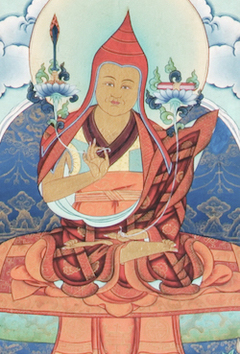
Dodrubchen Jigme Tenpai Nyima, the Third Dodrubchen, was born in 1865 in the sacred Ma valley of Golok, Tibet, into a family deeply rooted in the spiritual lineage of his father, Dudjom Lingpa. From the very beginning, his life was marked by extraordinary recognition, with his teachers and mentors seeing in him the incarnation of profound wisdom. But his journey was not without struggle. As a young boy, he found study difficult, often frustrated to the point of tears. Yet, through perseverance and the support of his teachers, his understanding blossomed, revealing a deep capacity for spiritual insight.
What makes Dodrubchen Jigme Tenpai Nyima so relatable is his humanity. Even as a master of Tibetan Buddhist teachings, he encountered challenges that shaped him into the teacher he became—a man of great compassion, who dedicated his life to training countless students in both Nyingma and Sarma traditions. His accomplishments were vast: he rebuilt his monastery, composed celebrated commentaries, and gave teachings tirelessly. And though he eventually retreated into seclusion due to his failing health, he continued to guide his closest disciples with unwavering dedication. His life, both ordinary and extraordinary, stands as a testament to the power of persistence, humility, and the profound depth of spiritual commitment.
About Lotsawa House
Lotsawa House is a rich and invaluable resource for those seeking authentic Tibetan Buddhist teachings. The website offers an extensive collection of translations from Tibetan texts, including teachings from many great masters such as Dodrubchen Jigme Tenpai Nyima. This is where the teaching “Transforming Suffering and Happiness into Enlightenment” can be found, along with countless other treasures, all freely available for anyone to access.
Whether you are new to Tibetan Buddhism or have been practicing for years, Lotsawa House provides a space to explore the wisdom of these great teachings. The site is dedicated to making the profound texts of Tibetan Buddhism accessible to a global audience, offering translations in English and other languages, so that anyone, regardless of background, can benefit from these ancient spiritual insights. It’s a place where the wisdom of the Tibetan masters is preserved and shared, so that all who seek it may find the path to peace and understanding.
You can explore the full collection of teachings and discover more about the great teachers who brought them to life by visiting Lotsawa House.
Embracing the Eternal Now: Cultivating Spiritual Presence in Daily Life
A Journey Through Mindfulness, Equanimity, and Spiritual Connection
In the whirlwind of our daily lives, it’s easy to become consumed by the relentless pace of duties, responsibilities, and the constant barrage of information. The echoes of the past and the whispers of the future often tug at our attention, leaving us fragmented and seldom at peace. Yet, the present moment holds a profound promise—the promise of true clarity and peace.
Cultivating a relaxed mind not only enhances our ability to navigate everyday challenges with grace but also opens us to deeper insights and a greater connection with our true selves. By learning to inhabit the moment fully, we unlock the potential to transform our entire life’s experience, fostering a state of well-being that radiates outward in our thoughts, actions, and interactions.
How, then, can we cultivate a state of equanimity and truly leave our minds alone? Here are some guiding principles to help us navigate this path.
Don’t Follow the Past
It’s easy to be pulled back into the past. Imagine sitting quietly and suddenly a memory from a past mistake creeps in, clouding your mood and stealing the peace of the current moment. However, dwelling in the past often means missing out on the now—on the opportunity to engage fully with life as it happens. Letting go of the past involves an understanding that every moment is a chance to start anew, to choose differently, and to move forward with a lighter heart.
Practical Tip: Whenever you find yourself anchored to a past memory, gently remind yourself, “This memory is not my current reality.” Allow yourself to feel any emotions associated with it and then visualize setting it adrift down a river, watching it fade with compassion and detachment.
Don’t Anticipate the Future
Similarly, projecting our thoughts into the future can be just as distracting. Consider a scenario where you’re planning a meeting and start to worry excessively about its outcome, which then consumes your thoughts and disrupts your present work. Worrying about what’s yet to come not only breeds anxiety but also prevents us from taking actionable steps in the present that could actually mitigate those concerns.
Practical Tip: Practice grounding exercises when you find your mind darting forward. Focus on your senses—what can you see, hear, touch, taste, and smell right this moment? This practice helps bring you back to the present and reduces anxiety about the future.
Remain in Equanimity
Equanimity is the balanced state where we are not swayed by the highs of joy nor the lows of despair. Imagine receiving news that would typically upset you, but instead of reacting impulsively, you remain calm, reflecting on the situation with a balanced perspective. It is a place of mental stability and composure that allows us to face life’s challenges with a calm and steady mind.
Practical Tip: Develop a daily meditation practice. Even five minutes a day can help you cultivate a neutral mind that approaches all situations with balance and clarity.
Leave Your Mind Alone
At times, the best action is inaction. Consider watching your thoughts during a stressful moment, like observing clouds moving across the sky, without attempting to change their direction or speed. Leaving your mind alone means not meddling with your thoughts as they arise. It’s about observing them without judgment and letting them pass without attachment.
Practical Tip: Engage in mindfulness meditation where the goal is not to empty the mind of thoughts, but to observe them coming and going, like clouds across a vast sky.
Listening for the “Still Small Voice”
For our Christian friends, embracing the present moment can be seen as an opportunity to listen for the “still small voice” of God, as described in 1 Kings 19:12, where Elijah encounters God not in the earthquake or fire, but in a gentle whisper. Taking time each day to let go of our busy, distracted minds to rest in the Holy Spirit allows us to connect with divine guidance and comfort.
Similarly, the story of young Samuel from 1 Samuel 3:1-10 beautifully illustrates the process of becoming attuned to the divine voice. Mistaking the Lord’s call for Eli’s voice, Samuel’s repeated response, “Here I am,” eventually aligns with divine communication when he says, “Speak, Lord, for your servant is listening.” This moment of realization exemplifies the importance of being truly present, ready to receive spiritual guidance.
The Jewish Tradition of Hineni
In the Jewish tradition, the phrase “Hineni” – “I am here,” uttered by prophets like Abraham and Moses, represents a total, undistracted presence to the divine call. This sacred declaration is not just a statement of location but a profound acknowledgment of being fully present—spiritually, mentally, and physically—ready to engage with whatever God asks of them without hesitation.
Why It Matters
Understanding the distinction between simply being present and being spiritually present can transform the practice from a routine exercise to a life-changing discipline. The spiritual practice of presence is not about enduring the present but about uncovering an ever-present peace that enlightens and sustains us. It is here, in this sacred space, that we encounter the divine, the infinite, and the eternal right within our everyday moments.
🙏🕊️🙏
If you’re interested in exploring this transformative approach further, I highly recommend Orgyen Chowang’s book The Pristine Mind. His teachings provide a clear, compassionate path toward uncovering the inherent purity of our mind, offering a source of deep fulfillment and lasting peace.
In the journey of mindfulness and meditation, understanding the nature of the mind is crucial. Two fundamental concepts in this exploration are vrittis and pratyayas. These Sanskrit terms, drawn from ancient yogic and Buddhist teachings, provide insights into the workings of the mind. This guide aims to clarify these concepts, helping you integrate this understanding into your daily life for deeper mindfulness and self-awareness.
What Are Vrittis?
Vrittis are the fluctuations, movements, or activities of the mind. They represent the dynamic nature of mental events that arise and subside. Think of vrittis as the waves on the surface of the ocean; they are ever-changing and reflect the mind’s constant activity.
What Are Pratyayas?
Pratyayas are the specific contents or objects of the vrittis. They are what the mind focuses on or the mental events that arise within these fluctuations. Pratyayas can be thoughts, sensations, emotions, memories, or impulses. Essentially, pratyayas are the specific items carried by the waves of vrittis.
The Relationship Between Vrittis and Pratyayas
To put it simply, vrittis are the general activities or fluctuations of the mind, while pratyayas are the specific objects or content of these activities. When you observe your mind, you notice the vrittis as the background activity and identify the pratyayas as the distinct events within this activity.
Examples of Pratyayas
Understanding pratyayas through examples can help clarify their role in mindfulness:
Sensory Perception:
The sensation of warmth from the sun on your skin.
The sound of birds chirping outside.
The taste of your morning coffee.
2. Emotional Response:
A feeling of joy when thinking about a loved one.
A surge of anxiety before a meeting.
A wave of sadness remembering a past event.
3. Thoughts:
Planning what to cook for dinner.
Remembering a conversation you had yesterday.
Imagining a future vacation.
4. Physical Sensation:
The sensation of your breath moving in and out.
An itch on your arm.
The feeling of your heartbeat.
5. Memories:
Recalling a childhood experience.
Remembering a piece of advice someone gave you.
Visualizing a scene from a past trip.
6. Impulses:
The urge to check your phone.
The impulse to stretch or change your sitting position.
The desire to eat something.
Labeling the Qualities of Vrittis
When observing and labeling vrittis, consider the following qualities:
Stable vs. Unstable:
Stable Vrittis: These are steady and consistent. Your mind remains focused on a single pratyaya for an extended period. For example, a stable vritti might be a prolonged focus on your breath or a continuous feeling of calm.
Unstable Vrittis: These are erratic and scattered. Your mind frequently shifts from one pratyaya to another. An example of unstable vrittis might be a constant jumping from one thought to another, unable to maintain focus.
2. Intense vs. Mild:
Intense Vrittis: These are strong and impactful. They demand significant attention and can dominate your awareness. An intense vritti might be a powerful emotion, like sudden anger or joy, that captures your full attention.
Mild Vrittis: These are gentle and subtle. They are present but do not overwhelm your awareness. A mild vritti might be a faint background sensation or a fleeting thought that doesn’t linger.
3. Frequent vs. Infrequent:
Frequent Vrittis: These arise often, creating a sense of rapid mental activity. For example, recurring worries or repetitive thoughts that come up frequently throughout your day.
Infrequent Vrittis: These appear rarely, leading to more gaps and quiet moments in your mental landscape. An infrequent vritti might be an occasional memory or a rare impulse.
Practical Application
Practical Application
By recognizing vrittis and pratyayas, you can deepen your mindfulness practice. Here’s a simple exercise to get started:
Find a Comfortable Position: Sit or lie down comfortably.
Set a Timer: Choose a manageable duration, such as 10 or 15 minutes.
Breath Awareness: Begin with a few deep breaths to center yourself.
Observe the Mind: Briefly shift your focus to the fluctuations of your mind. Notice thoughts, sensations, and feelings as they arise.
Simply Notice: Briefly notice the overall quality of your mind’s activity. Are the vrittis generally stable or unstable? Observe these qualities without judgment, allowing your awareness to encompass the fluctuations without getting caught up in them.
Identify the Pratyayas: Note the specific content of the vrittis, such as sensations, thoughts, or emotions.
Breath Awareness: Return to the witnessing of your breath, perhaps noticing your belly or chest gently rising and falling.
Repeat as Needed: When you’re ready, go back to briefly observing the vrittis and pratyayas.
Return to Breath: Shift your focus back to a focused awareness of the breath and the open spaciousness of your mind.
Rest: When you’re done, simply rest.
By recognizing vrittis and pratyayas, you can deepen your mindfulness practice. Here’s a simple exercise to get started:
Conclusion
Understanding the interplay between vrittis and pratyayas enhances your mindfulness practice, providing a clearer lens through which to observe the mind. By developing a felt sense of these fluctuations and their contents, you cultivate deeper awareness and equanimity. This practice not only enriches meditation but also brings greater clarity and peace into daily life.
Below is the original source video of the lecture with Swami Parvajika Devyanandaprana, from which these blog posts were inspired. Here you can explore the insightful teachings that have profoundly shaped the content and perspectives shared in this blog.



 Home Page: Inspirations of Love and Hope