Tag: chronic fatigue

  • Looking Back: 30 Years of Shame and Finally Understanding My Experience

    Looking Back: 30 Years of Shame and Finally Understanding My Experience

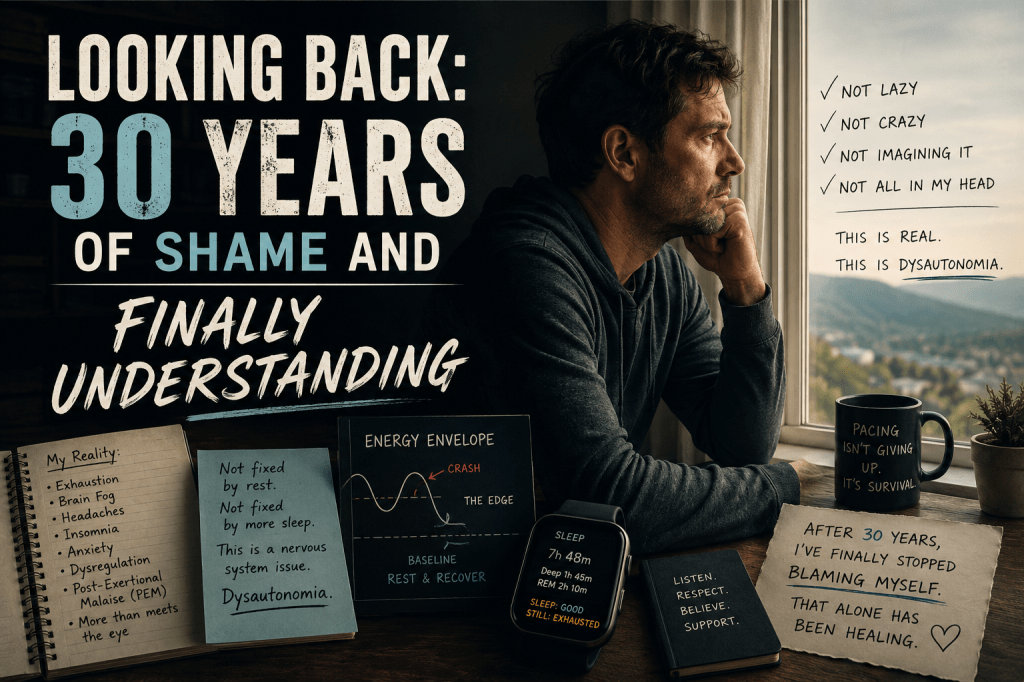
    I’ve lived with this illness for over 30 years, and for most of that time I was ashamed of it.

    Doctors kept telling me it was all in my head.

    They said I was depressed, anxious, or that I just didn’t want to work hard enough. They usually prescribed antidepressants and anti-anxiety medications, claiming these drugs would fix me. While the medication may have helped my emotional state somewhat, it did nothing to fix the physical symptoms.

    Thankfully, I eventually stopped letting them gaslight me into taking more and different medications.

    Every time I tried to explain how my body would completely crash after doing normal things, I was met with skepticism or pity.

    So I started doubting myself.

    I felt weak.
    I felt crazy.
    I carried a lot of shame for something I couldn’t control.

    The fatigue and exhaustion that comes with this illness is crushing.

    It’s not normal tiredness. It’s a deep, heavy exhaustion that sleep doesn’t fix. Even the smallest activities can leave me completely wiped out for days.

    My sleep tracker consistently shows that I get adequate deep sleep and REM sleep, yet I still wake up exhausted. That helped me understand something important:

    The problem isn’t simply how much I sleep.

    It’s that my dysautonomia prevents the sleep from being restorative.

    In the early years, the emotional side of it felt a lot like PMS — that same sudden emotional dysregulation, irritability, and feeling completely off — except instead of happening once a month, it could hit at any time.

    Only recently have I finally understood what’s really happening.

    What I have is dysautonomia.

    My autonomic nervous system doesn’t regulate properly anymore.

    That’s why I can suddenly feel freezing cold in a warm room. That’s why I’m much more comfortable lying down than sitting or standing. And that’s why even mild activity can make my whole system short-circuit — suddenly bringing on intense brain fog, overwhelming exhaustion, headaches, insomnia, anxiety, and sometimes depression all at once.

    ME/CFS always felt like an incomplete label to me.

    Yes, I crash after exertion.
    Yes, sleep doesn’t fix it.
    Yes, my body has never functioned the way people expect it to.

    But understanding it as dysautonomia finally explains the day-to-day reality of living in a body whose nervous system breaks down so easily.

    The only thing that actually helps is pacing — staying within my energy envelope.

    I try to live as close to the edge as I can, but carefully. Migraines and tinnitus have become warning signs for me. If I respect those early signals, I can often avoid triggering insomnia, which is far worse than a regular crash and completely throws me off balance.

    After 30 years, I’ve finally stopped blaming myself.

    That alone has been healing.

    I’m sharing this journal entry in case it gives someone else a little more language for their own experience.

    And for family members, friends, and doctors: please know that when we keep turning down invitations, or seem withdrawn, or disappear for long stretches of time, it’s not because we don’t want to be around you.

    Our energy is extremely limited.

    We have to be very careful to avoid crashes.

    Even now, I keep a little journal between doctor visits so I can clearly communicate what I’ve been experiencing. If you’re struggling to explain this illness during appointments, writing things down and bringing it with you can be incredibly helpful.

    Sometimes understanding does not cure the body.

    But it can begin to release the shame.

    And after so many years of being misunderstood, that matters.

  • Redefining ‘Exercise’ for Severe ME/CFS & PEM: The Smallest Victories Matter

    Redefining ‘Exercise’ for Severe ME/CFS & PEM: The Smallest Victories Matter


    Please honor your own energy envelope as you read. Whether a sentence… a paragraph… or even a glance at the headings, whatever feels right for you in this moment is perfect. Compassion. 🙏


    When we speak of “exercise,” what do we really mean?

    For most of the world, the word conjures images of jogging paths, yoga mats, or perhaps the thrill of surfing. But for people living with severe ME/CFS, Long COVID, or energy-limiting illnesses, those images feel alien—sometimes even harmful.

    A recent article critiquing Graded Exercise Therapy (GET) made some valid points about the dangers of pushing beyond one’s limits. But it included an example of going surfing as a form of joy-based movement. For many of us who can’t even sit up for long, that kind of suggestion doesn’t just feel out of touch—it feels quietly devastating.

    Because for us, “exercise” might mean:

    • Sitting up in bed for 60 seconds.
    • Taking a shower.
    • Getting dressed.
    • Writing a message to share with friends.
    • Fill in the blank: _______

    These are our mountains.
    These are our triumphs.
    And they deserve to be seen and celebrated.


    Why Surfing Isn’t a Helpful Example

    1. Most patients are not high-functioning.
    Many of us are bedbound, housebound, or dependent on wheelchairs. To suggest activities like surfing may not feel inspiring—it may feel shaming.

    2. PEM doesn’t care about your mindset.
    A shower can mean days in the dark. Making tea can require a week of recovery. GET fails not because we aren’t trying—but because our cells can’t keep up.

    3. Joy comes from adaptation, not performance.
    Recovery may—or may not—be possible. But living meaningfully within this illness is. A breath of fresh air, a ray of light through the curtain—these are sacred moments.


    A More Gentle Framework: What Is Possible?

    1. “Bedercise”: Movement Within the Envelope

    • Gentle arm lifts (or just muscle engagement)
    • Ankle rolls for circulation
    • Breathwork as internal movement
    • Stretching fingers, wiggling toes

    Each of these is valid. Each of these is enough.

    2. Celebrating Non-Physical Victories

    • Listening to a few minutes of an audiobook
    • Looking out the window
    • Enjoying the scent of tea or essential oil
    • Smiling, even once

    3. The 50% Rule
    If you think you can do something—do half.
    If you could clean the counter, just rinse a spoon.
    This helps avoid crashes and still creates a feeling of self-direction.

    4. Redefining Progress
    Progress may mean staying stable.
    It may mean one less crash this month.
    Or sitting up for 30 seconds longer.
    These are wins, even when invisible.


    A Call for More Inclusive Stories

    If we want real awareness, we must include severe ME/CFS patients—not just those well enough to surf or work part-time.

    Your struggle matters.
    Your body is not broken—it is navigating a broken system.
    Your stillness is not failure.
    It is wisdom in motion.


    Rest Is a Practice—A Sacred One

    For those with ME/CFS and other energy-limiting conditions, rest is not absence. It is presence. It is the heart of the path.

    In Dzogchen, as taught by Namkhai Norbu, rest is a return to the natural state—effortless, luminous, whole. In Ramana Maharshi’s Self-Inquiry, resting in the question “Who am I?” leads us not into striving, but into the stillness beneath all identity. In Samatha meditation, taught by the Buddha, rest is calm abiding—shamatha—the ability to remain at ease without grasping.

    When you lie in stillness,
    when you breathe quietly through exhaustion,
    when you choose not to push—

    You are exercising.

    You are aligning with ancient lineages that saw rest not as a failure of effort,
    but as the purest exercise of wisdom.

    So if all you did today was rest,
    you did something holy.

    🙏🕊🙏


    For those interested, here is the article that inspired my post. But, Surfing! Haha! 😆 Surfing the internet, maybe. The author clearly doesn’t consider people living with moderate or severe ME/CFS in his/her writing of their article. 🤔

    SOURCE LINK: Why Graded Exercise Fails for PEM (And What Actually Works)

  • The Myth of the Hogtied Healer

    The Myth of the Hogtied Healer

    There once was a healer whose light burned quietly, steadily. They moved with tenderness, practicing wisdom, speaking softly, honoring boundaries—resting when they needed, even offering compassion to themselves.

    But still… the flame within them began to dim.
    Not for lack of care.
    Not for lack of knowing.
    It simply dimmed, as if called downward by something no hand could touch.

    For God, watching with ancient eyes, whispered among His friends:
    “This one must be stopped—not for punishment, but for protection. There is another kind of healing they must learn—one that cannot be found in doing.”

    And so, with threads unseen, He bound the healer in stillness.
    No more running.
    No more reaching.
    No more doing.

    It wasn’t rope, but illness.
    It wasn’t cruelty, but consecration.
    And the name of the rope was Myalgic Encephalomyelitis.

    At first, the healer fought—kicking, bargaining, crying to be untied.
    But ME doesn’t bargain.
    It doesn’t shout.
    It sits like a stone in the lap of your soul and says:
    “You will rest now. You will learn the medicine of stillness.”

    And so began the long apprenticeship—
    Not in temples, but in beds.
    Not in motion, but in surrender.
    Not in speech, but in silence.


    Friends,
    We are all walking this path of unexpected healing together—
    Not by choice, but by calling.

    As Dr. Richard Alpert used to say,

    “We are all just walking each other home.”

    🙏🕊🙏

  • It’s One Thing to Understand Pacing in Theory and Another to Embody It in Daily Life

    It’s One Thing to Understand Pacing in Theory and Another to Embody It in Daily Life

    “Resting in the space I worked so hard to create—learning, once again, that pacing is not just theory but a daily practice.”

    A Note on Pacing:
    Before you begin, take a moment to check in with yourself. How much energy do you have for reading today? Maybe just a sentence or two. Maybe a paragraph. Maybe the whole piece. However much you take in, let it be enough. This article, like life with myalgic encephalomyelitis, is not meant to be rushed.


    Pacing is a word we hear often in the world of ME, spoken like a compass meant to guide us. We read about it, talk about it, explain it to others. But then comes the quiet, complicated work of living it.

    To truly embody pacing is not just to believe in rest but to yield to it before collapse. It is the difference between knowing water quenches thirst and actually drinking, between understanding a path on a map and walking it, step by deliberate step.

    ME exists on a spectrum. Some reading this are bedridden, as I once was, for whom pacing looks like shifting slightly in bed, drinking water in small sips, or turning down the brightness of a screen. Others may have the energy to sit up, to fold a blanket, to wash a single dish. And for some, on a better day, pacing might mean pausing between errands or choosing not to add one more thing to an already full day.

    Today, I wake with the weight of PEM pressing down, the kind of fatigue that makes even stillness feel like too much. Considering how I feel, I know I should probably just stay in bed all day and do nothing. However, I am giving myself these next three days to recuperate while including a few small tasks around the house. So rather than staying in bed indefinitely, my plan is to get up every now and then, do a little something—without overdoing it—and then return to bed. This is how I imagine my day unfolding, and how I imagine the next three days unfolding.

    But today is different from other days of PEM. Because today, I am resting in a home I have created. A home I moved into just weeks ago—an exhausting, overwhelming feat that took everything I had to give. Packing, unpacking, pushing my body past its limits to carve out a space of refuge. And now, for the first time, I get to use it. I get to experience the space I have fought to create.

    And so, I stand.

    Not to conquer, not to override, but to move in a way that does not break me. I wipe the stove instead of the sink, because that is where my hand reaches first. I rest between tasks—not as surrender, but as part of the rhythm. I remind myself: small movements, long pauses, no urgency.

    I lay down between tasks, not because I want to, but because I need to. And in doing so, I begin to feel the quiet power of pacing—not as a limitation, but as a lifeline.

    And then, something unexpected: gratitude. Gratitude for having built a space where I can rest. Gratitude for the fact that I no longer have to push every moment of the day. Gratitude that my version of pacing today involves getting up every now and then, rather than going into complete sensory deprivation. I have been in those places before, where even the smallest light or sound was too much. And while PEM still drags at my limbs, I can move. That alone is something to honor.

    Pacing is not just a strategy; it is a conversation with the body, a practice of trust.

    I want to do more, of course. The mind races ahead of what my body allows. But I am learning—again and again—that healing is not found in force. That to rest is not to fail. That pacing is not about withholding movement but about weaving it together with stillness in a way that lets life unfold without collapse.

    And so, after the stove, I stop. I fold a blanket, but slowly, already thinking of the bed that waits. I let myself arrive at rest before I am shattered. This is the lesson I know in theory but must practice in flesh.

    To pace is not to do nothing; it is to do with awareness. To listen. To trust.

    And to begin again, as many times as it takes.

    Whether beginning again means practicing acceptance and self-compassion in the face of complete immobility and overwhelm, shifting thoughts away from frustration, shame, and darkness—or whether it means considering, with gratitude, the possibility of standing, washing a dish, or even the luxury of taking a bath.

    Living with myalgic encephalomyelitis is a spectrum. One that can change from moment to moment, one day to the next, or even year by year. This year, I am grateful for a greater capacity than the year before. But today, my capacity is fragile, and I must return to deep rest in order to honor the rhythm, the harmony, the cycle of change that ME demands of me each day.

    My heart goes out to all of us living this.

    Living with this.

    Mysterious. Unrelenting. Yet still, we live.

    To those reading this from bed, unable to move—your experience is seen, honored, and valid. To those who, like me, are navigating the in-between, finding ways to weave movement into rest—your effort is enough. To those who today feel a little more capacity than yesterday—may you hold it with gentleness.

    You are not alone. We are a community, bound not just by struggle, but by resilience. By the courage it takes to listen to our bodies when the world urges us not to. By the strength it takes to rest when everything in us longs to do more.

    And so, together, we continue.

    We pace.

    We rest.

    We begin again.

    🙏🕊🙏


  • 🌿 Today, I wholeheartedly embrace adaptability, finding strength in my inherent flexibility.

    🌿 Today, I wholeheartedly embrace adaptability, finding strength in my inherent flexibility.

    In navigating the complex journey of life with chronic illness, I discover the potential to thrive amidst change. Each shift becomes an opportunity to adapt gracefully. As I navigate uncertainties, I embrace resilience. Understanding and flexibility is not a compromise but an integral part of my path. Today, I understand that my daily challenges can lead to a deeper experience of resilience and adaptability.

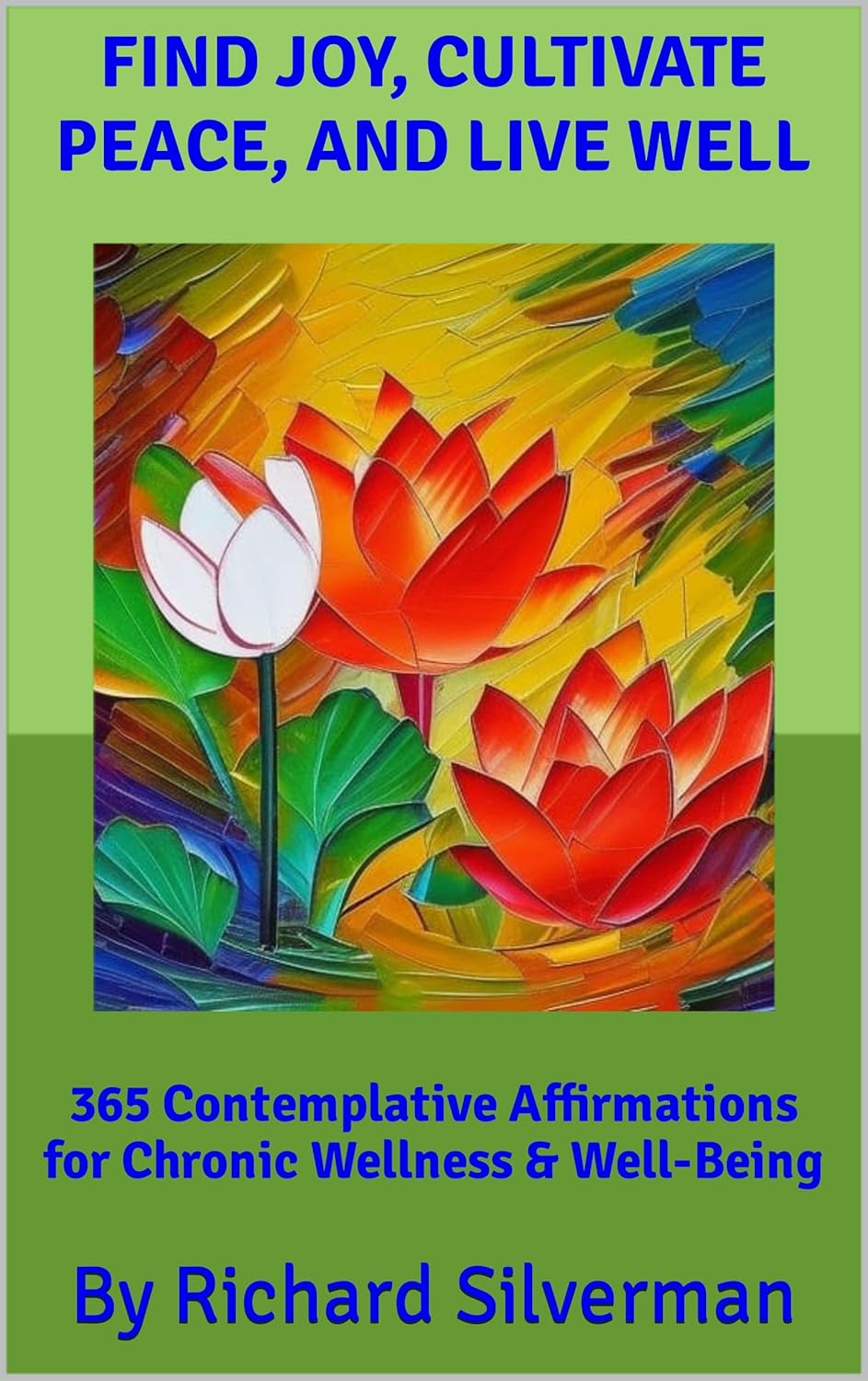
    ~ From affirmation day 3: “Find Joy, Cultivate Peace, and Live Well : 365 Contemplative Affirmations for Chronic Wellness & Well-Being”

    https://amzn.to/3F0od6E

    🙏🕊🙏

  • Poem: Compassion Blossoms

    In the winter’s chill, fatigue takes its toll,
    A silent struggle that steals its hold.
    In shadows of exhaustion, you stand,
    Seeking solace, a comforting hand.

    Amidst the snowflakes and the gloom,
    Your heart whispers in the quiet room.
    Lost in the battle, weary and worn,
    Yet in your words, a resilience is born.

    School’s path abandoned, relationships few,
    The isolation, a formidable view.
    But here, in this space, a kinship shared,
    A connection that proves we all have cared.

    To those who wonder, “How do you endure?”
    In unity, our strength we assure.
    A journey marred by fatigue and strife,
    Yet together, we navigate this maze of life.

    As winter’s grasp tightens its embrace,
    Here, find warmth in this shared cyberspace.
    Through the fog of weariness, light may gleam,
    In love, understanding, a supportive stream.

    So, dear friend, in this communal space,
    Let compassion blossom, a comforting grace.
    For you are not alone in this plight,
    Together we stand, embracing the night.

    May your journey continue to be filled with peace, wisdom, and compassion. 🙏

    May we all embrace our journey with a compassionate and open heart, finding solace in the present moment on our path with ME/CFS. 🙏❤️🙏

  • Cultivating the Witness: A Gentle Approach to Living with Myalgic Encephalomyelitis: The Body as a Landscape of Storm and Stillness 🙏

    Cultivating the Witness: A Gentle Approach to Living with Myalgic Encephalomyelitis: The Body as a Landscape of Storm and Stillness 🙏

    To live with myalgic encephalomyelitis is to carry a body that moves like weather—one moment heavy with fog, another scattered by electric storms. The limbs, once steady, now whisper of exhaustion; the nervous system hums and flickers like distant lightning. And yet, within all of this, there is a quiet place—one untouched by fatigue, by pain, by the ever-changing tides of illness. This is the witness, the silent presence that watches, feels, but does not struggle.

    The Power of Witnessing Consciousness

    When the body is weary, and the world presses in with its demands, the mind often follows—entangled in frustration, longing, grief. Yet, there is another way to meet this experience. Instead of battling exhaustion, we can turn toward it, gently, with curiosity. Instead of resisting discomfort, we can learn to hold it, like cradling a trembling bird in our hands.

    Witnessing is not about escaping pain but about changing our relationship to it. It is the art of standing at the edge of the storm and seeing not just the thunder, but the vast sky that holds it.

    A Simple Self-Contemplation Practice

    1. Grounding in the Present
      Find a quiet moment. You don’t need perfect stillness—only a willingness to pause. Notice your body, the way it rests against the surface beneath you. Feel the breath, moving in, moving out, like waves against the shore.
    2. Observing Without Resistance
      Turn your attention inward. What is present? Fatigue like heavy earth? A nervous system like sparking wires? A mind that spins, restless and longing? Whatever it is, let it be here. Do not push it away or name it as the enemy. Simply notice.
    3. Holding with Compassion
      Imagine that each sensation is a visitor—arriving, staying for a time, and eventually leaving. What happens if you do not chase them away? What if, instead, you offer a quiet seat at your table?

    Even pain, even exhaustion, when met with this gentle witnessing, begins to soften. Not disappear, but shift—like wind through the trees, no longer trapped, no longer feared.

    How This Practice Supports ME/CFS Symptoms

    This is not a cure, nor a promise of relief, but a way of being with what is. When we meet our experience with openness:

    The nervous system settles; the fight against the body lessens.

    The mind uncoils from frustration and rests in the simple act of seeing.

    The emotional burden lightens, as we stop identifying with suffering and begin to witness it instead.

    Closing Thoughts: The Sky Holds It All

    If today your body feels like a storm, know that you are not only the storm—you are also the sky that holds it. The witness that watches, the stillness beneath the waves.

    And on days when you cannot sit in silence, when exhaustion presses too hard, let even that be witnessed with kindness. The practice is not in perfect stillness, but in the quiet turning toward whatever is here, again and again.

    Rest when you must, breathe when you can, and know that you are not alone.

    🙏🕊🙏

  • The Art of Pacing: Managing Chronic Fatigue Syndrome with Skillful Means

    The Art of Pacing: Managing Chronic Fatigue Syndrome with Skillful Means

    There is a rhythm to living with chronic illness, one that requires a kind of surrender. Those who walk the path with myalgic encephalomyelitis or chronic fatigue syndrome soon learn that pacing is not merely a strategy—it becomes an art form, a way of listening, of harmonizing with the body’s quiet whispers before they become cries. To pace oneself is to acknowledge the body’s finite energy, to move in step with the breath of fatigue, gently, humbly, knowing that to overstep the body’s boundaries is to invite collapse.

    It is not an easy lesson, this slow dance with limitations, yet it is one that teaches a profound wisdom. For those of us living with this condition, pacing is a compass, guiding us through days where the terrain can feel treacherous, unpredictable. It is, in its essence, the practice of recognizing when to move forward and when to step back. We become more attuned to the varied signals of our bodies—perhaps tremors of exhaustion, increasing tinnitus, irritation, a flutter of dizziness, nausea, insomnia, headaches or the dimming of cognitive clarity. In these moments, we learn that to heed these signs is to honor the body’s wisdom, to respect its limits as one might respect the changing seasons.

    Pacing, though practical, is deeply spiritual as well. In the Tibetan Buddhist tradition, there is a teaching of upaya, or skillful means, which echoes the heart of pacing. Skillful means refers to the wisdom of knowing what action is most appropriate in any given moment, guided by compassion for ourselves and others. For those of us managing a chronic illness, pacing is our skillful means, the practice of compassion extended inward, toward the tender, vulnerable places within us that need rest, gentleness, and care.

    This is not weakness. On the contrary, there is a quiet strength in pacing, a strength that arises from restraint, from knowing that our worth is not measured by the speed at which we move or the number of tasks we complete. Instead, it is measured by how we listen to the body’s call for stillness, how we cultivate patience in the face of limitations, how we respond to the world with wisdom rather than haste.

    In the same way that skillful means in Buddhist practice requires a deep awareness of the present moment, pacing invites us to be fully present with our bodies, to sense when we are nearing our edge and to pull back with kindness. It requires discernment, the ability to prioritize what truly matters, letting go of the unnecessary so that we may preserve our energy for what is essential. And, perhaps most importantly, pacing asks us to be flexible. What works for us today may not work tomorrow. Like the ebb and flow of the tide, we must continuously adjust, staying attuned to the changing nature of our energy levels, adapting with grace to whatever arises.

    To pace well is to cultivate trust in ourselves, to believe that our bodies—though fragile—are capable of guiding us toward balance. It is to let go of the constant push toward productivity, embracing instead a quieter, more sustainable rhythm of being. This trust grows over time, as we learn to befriend our bodies rather than seeing them as enemies. We begin to see pacing not as a limitation, but as an opportunity to deepen our relationship with ourselves, to practice self-compassion in the most tangible of ways.

    And so, we move slowly, deliberately. We choose rest when it is needed, even when the world outside rushes by. We choose to pause, to breathe, to trust that this moment of stillness is as important as any action we might take. In this way, pacing becomes not only a survival strategy but a path to peace. It teaches us to live in harmony with our bodies, to respect the boundaries they set, and to find beauty in the gentleness of our compassion.

    Pacing, like skillful means, is not something mastered overnight. It is a practice that deepens over time, shaped by patience, by trial and error, by learning to let go of perfectionism. But with each step, we become more attuned to the wisdom that already resides within us. We learn that pacing is not a sign of giving up, but of holding on—holding on to our health, our well-being, and our sense of self in the midst of struggle.

    Pacing, in its truest form, is an act of compassion toward ourselves, a recognition that while life with post viral ME/CFS has taken much from us, it has not taken everything. It is not a dance of perfection, but rather a delicate balancing act between what was and what is. The grief over what we have lost is real, and it deserves to be honored. We grieve our former selves, the life we once knew, and all the possibilities that seem to have slipped away.

    But after the grieving, something else begins to emerge. Slowly, through the quiet practice of listening to our bodies and respecting our limits, we begin to discover a new way of living—not the life we once imagined, but a life nonetheless. And within this new life, there are still moments of joy, moments of lightness. These moments may look different from what they once were, but they are no less real. They come from acceptance, from doing more of what works and less of what doesn’t. They come from the simple peace of knowing we are doing our best within the constraints we face.

    To pace is to acknowledge these constraints, to know that while we may not live fully in the way we once dreamed, we can still live meaningfully. We can still find purpose, connection, and even happiness within this new rhythm. It is not a rhythm we would have chosen, but it is ours now, and there is strength in learning to move with it rather than against it. In this process, we find that joy and peace are still possible—not despite the illness, but alongside it, within the space that remains.

    And so, with time, we learn to rest in the assurance that we are whole in our own way, capable of living a life that, while different, still holds beauty, meaning, and moments of joy.

    Following the breath,
    We learn the art of patience,
    Peace within each step.

    🙏🕊️🙏

    Book Recommendation: Pema Chödrön, The Wisdom of No Escape and the Path of Loving-Kindness

    In The Wisdom of No Escape, Pema Chödrön presents teachings on accepting life as it is, rather than wishing it were different. Her words remind us that even in the midst of suffering, there is always the potential for transformation—not by running from our difficulties, but by turning toward them with compassion and curiosity. For those living with chronic fatigue syndrome, this book is a beautiful companion, offering insights on how to stay present with what is, without judgment or resistance. Chödrön’s gentle wisdom helps us find peace in the uncomfortable and reminds us that within every limitation, there is the possibility of growth. This aligns perfectly with the practice of pacing—of learning to live within constraints, not with bitterness, but with an open heart.

    Book Recommendation: Tony Bernhard, How to Be Sick

    Another indispensable resource is Tony Bernhard’s How to Be Sick. As someone who has lived with chronic fatigue syndrome herself, Bernhard offers a deeply compassionate, Buddhist-inspired approach to living with illness. Her book provides practical advice on how to cultivate equanimity, mindfulness, and self-compassion while dealing with the daily struggles of chronic illness. Bernhard’s words echo the heart of pacing—teaching us how to manage our energy, honor our limitations, and find meaning even when life feels limited. For anyone searching for a path through the often overwhelming challenges of ME/CFS, How to Be Sick is both a guide and a comfort, offering tools to help transform suffering into wisdom and peace.
  • Managing Post-Exertional Malaise: Finding Balance and Peace in Life with ME/CFS

    Managing Post-Exertional Malaise: Finding Balance and Peace in Life with ME/CFS

    A Gentle Reflection on Pacing, Rest, and Navigating the Challenges of Chronic Fatigue Syndrome

    There are days when the body speaks softly, a whisper of weariness that hints at the storm ahead. And though we move carefully, mindful of each step, there are moments when the smallest effort—a turn of the mind, a spark of emotion—awakens something deeper. This is the dance with post-exertional malaise, the hidden tide that comes and goes, often when we least expect it.

    Gentle Reminder: Take Care of Yourself

    This post is lengthy, and it’s important to honor your pacing needs. Feel free to read a little at a time, take breaks, and come back to it when you’re ready. Your well-being is paramount, even as you engage with information that supports your journey.

    In this slow unfolding, I’ve learned the art of listening. Not just to the body’s loud protests, but to the subtle shifts that rise like shadows before a dusk. It’s a practice, really—this gentle balancing act of life. Pacing myself through the hours, I find that it’s not about doing as much as I can, but rather, doing only as much as I must, and stopping long before the weight of fatigue pulls me under.

    Some days, I count my energy like a miser with gold, tucking it away in small corners, resting in the quiet between breaths. I know now that to keep moving without pause is to invite the flood, so I rest—not in surrender, but in reverence. It’s a kind of devotion, to honor these limits as something sacred, to see the necessity of stillness as part of the rhythm of being. I don’t always succeed. But when I do, I glimpse a peace that feels fragile, yet profound.

    And when the world presses in with its demands, I remind myself that it’s okay to say no, or not now. There is a quiet strength in bowing out, in knowing that tomorrow will ask more of me than today ever could, and I must be ready. There is also grace in understanding that not every task, not every moment, requires my full self. I can do less, and in doing less, I give myself more space to breathe, to be.

    There are the days after—the days when the fog of PEM descends like a heavy mist over the mind, the limbs. When it comes, I am learning not to fight it. I lie still, like a tree after the storm, gathering strength in the pause. I have found that recovery is an art, as delicate as anything else. Resting, not out of defeat, but out of wisdom, out of love for the body that has carried me through so much already. The act of resting becomes an offering of peace, a gift I give myself in this long, uncharted journey.

    And so, I move slowly, gently, always aware of the fine thread that connects exertion and ease, action and rest. I have begun to cherish the quiet moments of pause, the spaces where life still hums softly, even in the absence of movement. These are the moments when I remind myself that managing this strange, invisible storm is not about conquering it, but learning to live alongside it, to move with it as gracefully as I can. There is beauty here, too—a beauty in the stillness, in the small victories of simply being.

    In those moments, I find a sense of peace that is mine to keep. And in that peace, I remind myself that even on the hardest days, I am enough.And so, as I offer these thoughts, I send with them a quiet wish for your well-being. May you find moments of rest that nourish you deeply, and may the days of ease, however fleeting, linger softly in your memory. If you ever feel the weight of this journey pressing too hard, know that you are not alone.

    Dear friends,

    I know these days may feel heavier than usual. The storm outside has passed, but inside, your bodies may feel as though they’re weathering one of their own. Post-exertional malaise (PEM) comes like that—quiet and uninvited, a deep exhaustion that touches every part of you. Whether it’s the physical toll of surviving the hurricane or the emotional weight of the aftermath, you’re feeling it now, maybe more intensely than you have in years.

    Please know that what you are experiencing is valid. You’ve already shown such strength, simply by navigating these storms and their many demands. But right now, in this moment, the strongest thing you can do is rest. Not as a surrender, but as a way of caring for yourself in the most compassionate way possible. Rest, because your body is asking for it. Rest, because this is how you heal.

    Pacing is not easy when the world around you spins in chaos, but I encourage you to listen to the subtle signs your body gives. You don’t have to meet every demand or engage with every worry. It’s okay to step back, to breathe, and to honor your limits. In doing less, you are doing what is necessary to recover.

    If the fog of PEM feels too thick to see through, know that it will lift. Maybe not all at once, but in small, tender ways. There is stillness, there is peace, waiting for you on the other side of this exhaustion. You are not alone in this experience—many of us are moving slowly through these same waters, learning the rhythm of rest, of patience, of letting go.

    For now, take each moment as it comes. Let yourselves be. Let yourselves rest. And in that rest, know that you are enough. You are resilient. This, too, will pass.

    With all my warmth and understanding,
    Richard Silverman

    Feel free to leave your thoughts, your questions, or simply your presence here—I will meet you with understandingh and warmth. Together, in our shared quiet, we will honor the pace that life has asked of us.

    🙏🕊️🙏

  • 3: The Benefits of Visualization in Exercise for Those Living With Post-Viral ME/CFS

    When living with Post-Viral ME/CFS, the very thought of physical movement can feel overwhelming, even impossible. However, for many, the desire to engage with your body, to improve mobility, and to gently build strength remains alive. Yet, finding ways to exercise that honor your energy levels without triggering post-exertional malaise (PEM) may feel like a delicate balancing act. In this post, we explore a powerful tool for those who find themselves limited by energy: visualization.

    Visualization allows you to engage your mind in the practice of movement without the physical strain. It offers a way to begin building new neural pathways, changing your relationship with exercise, all while lying in bed or resting. This gentle mental practice may seem subtle, but it can be profoundly supportive on days when your body can’t tolerate physical activity.

    Visualization is the practice of imagining yourself performing a physical movement or action. Research shows that when you imagine a task with enough vividness and detail, your brain activates similar pathways as if you were physically moving. This means that, even when your body remains still, your brain is training for movement.

    For those living with Post-Viral ME/CFS, this can be transformative. Even on days when your body feels heavy or unmovable, you can still practice connecting to movement—without the risk of triggering PEM. Visualization offers a bridge between your current physical state and the possibility of reintroducing exercise gently, one step at a time.

    It may seem counterintuitive, but scientific research has demonstrated that imagining a movement can have measurable effects on physical ability. Studies show that visualization can lead to increased muscle strength, improved coordination, and enhanced motor skills. This practice is especially valuable for people recovering from conditions that limit physical movement. When actual movement is impossible, your brain still benefits from the exercise. By visualizing yourself lifting weights or walking, your brain builds new pathways that mirror the benefits of actual physical movement.

    For those with Post-Viral ME/CFS, visualization can become a mindful entry point into a more connected relationship with your body. It requires no physical energy and can be practiced while you’re lying in bed or seated in a comfortable chair.

    To begin, find a comfortable place where your body can relax completely. Close your eyes and take a few calming breaths. Start by gently becoming aware of your body, feeling supported and at ease. As you breathe, release any tension with each exhale. From this place of relaxation, you can begin to visualize simple movements—such as lifting a light weight, or walking on a treadmill.

    Imagine the sensation of the movement as if it were real: the muscles contracting, the rhythm of your breath, the gentle pull of strength through your arms or legs. The more vividly you engage your senses, the more fully your brain responds. Imagine the warmth of your muscles, the calm focus that exercise brings, or the joy of feeling capable and connected to your body once again.

    This practice isn’t just about mental imagery—it also helps rebuild your emotional relationship with exercise. Living with Post-Viral ME/CFS often comes with frustration and sadness around the body’s limitations. Visualization offers a way to regain a sense of control, to connect with the potential of your body in a way that feels safe and sustainable. It creates a pathway for healing, both mentally and physically.

    While visualization may not replace physical movement, it offers a gentle step in that direction. On days when your energy is low, this practice helps maintain the neural connections involved in exercise. It can even help ease the fear or anxiety associated with movement, reminding you that the joy of exercise is still available to you, even when your body isn’t ready to act.

    Once your energy permits, you can use visualization as a bridge to actual physical movement. For example, after imagining yourself performing a simple weightlifting exercise, you might try gently lifting a light dumbbell. The key is to remain mindful of your limits, moving only within your energy envelope, without pushing your body beyond its capacity.

    Visualization is a powerful tool for those living with Post-Viral ME/CFS. It creates a foundation for healing and offers hope on days when movement feels impossible. By engaging with mental exercises, you prepare your body and mind for the eventual return to gentle physical movement.

    The journey with Post-Viral ME/CFS is about adaptability, gentleness, and finding ways to reconnect with your body on your terms. Visualization offers both a reprieve from physical exertion and a gateway back to mindful movement.

    Next Post Preview: Sitting in the Gym Parking Lot—A Gentle Step Toward Physical Movement

    In the next post, we’ll explore how even driving to the gym and sitting in the parking lot can be a crucial step in your fitness journey. We’ll discuss how this practice can help rebuild confidence, reduce anxiety around exercise, and allow you to reconnect with the gym environment without physical exertion.

    🙏🕊️🙏

  • Imagining Movement: An Introduction to Gentle Exercise for Those Living With Post-Viral ME/CFS

    When living with post-viral ME/CFS, exercise can seem like an impossible dream. For many, the simple act of getting out of bed can take monumental effort, let alone the thought of stepping into a gym. However, there are ways to gently integrate physical activity into your life without exacerbating symptoms—and these steps don’t necessarily start with physical movement. Sometimes, they begin in the mind. This blog series will explore how to approach fitness slowly and mindfully, honoring the energy envelope you have, while cultivating a connection with your body through imagination and gentle progression.

    Step 1: Imagining Your Workout While Resting

    There was a time when I could only imagine going to the gym. Lying in bed, too fatigued to move, I would close my eyes and visualize walking through the doors, feeling the cool air, hearing the gentle hum of machines, and seeing people engaged in their routines. While my body was still, my mind could practice moving. This visualization became the first step in reclaiming my relationship with exercise.

    When you’re living with moderate to severe post-viral ME/CFS, physical movement may not always be possible, but visualization is a powerful tool. Research has shown that imagining movement can activate similar pathways in the brain as actual movement. This means that even on days when physical movement is impossible, you can begin your fitness journey by lying down and visualizing yourself working out. Imagine yourself lifting weights, stretching, or walking on a treadmill at a slow, gentle pace.

    This is a form of mental exercise that can help reduce the fear or mental barriers around exercise while helping you develop a sense of routine. It’s about creating a safe space where movement feels possible—even if it’s just in your mind.

    Step 2: Visiting the Gym Without Working Out

    As my energy increased slightly, my next step was simply driving to the gym. But I wasn’t going in just yet. I would park in the lot and sit in my car, looking at the building and feeling the atmosphere from the outside. This might sound small, but this was a victory in itself.

    For those with post-viral ME/CFS, even getting dressed and leaving the house can be an accomplishment. Driving to the gym without the pressure to perform is a gentle way to integrate fitness back into your life. By sitting in the parking lot, you are allowing your mind and body to adjust to the idea of visiting the gym as a place of healing, rather than a place of exhaustion.

    On the next level, once I became more comfortable, I would enter the gym—but not to work out. Instead, I would bring a book, find a comfortable spot, and simply spend time in the environment. I was surrounded by the energy of others exercising, but without the pressure to join in. Being in that space helped me to feel like part of a community, even if my workout looked different from everyone else’s.

    This slow exposure allowed me to rebuild my confidence and develop a positive association with the gym, where it became a place of nourishment rather than stress. If you’re living with post-viral ME/CFS, these small steps are monumental and can be celebrated as progress.

    Step 3: Moving with Mindfulness

    Eventually, there came a day when I could engage in some light movement—whether it was stretching, walking slowly on a treadmill, or using a set of light dumbbells. By this point, my relationship with exercise had changed. I no longer approached it as something that required hard effort, but instead as a way to gently connect with my body and breath.

    If you are ready to move beyond visualization and sitting at the gym, the key is to start slow and be mindful of your energy limits. Use light weights or resistance bands if you have them at home, or practice simple, controlled movements that a physical therapist may have recommended. The goal here is not to push your limits, but to move with awareness and take breaks as needed.

    Step 4: Having Equipment at Home

    If getting to the gym is not feasible due to symptoms or energy limits, you can still work on gentle movement at home. Investing in a few basic tools like resistance bands or light dumbbells allows you to incorporate mindful exercise into your day. Start with very low repetitions and listen to your body—your energy level may change from day to day.

    Using these tools at home creates a bridge to more regular movement, without the added strain of commuting or dealing with external stimuli. It also gives you more control over your environment, which is especially important for those dealing with fluctuating energy levels.

    Progress, Not Perfection

    For those with post-viral ME/CFS, it’s essential to remember that progress is deeply personal and non-linear. Some days, even the thought of exercise may be overwhelming, and that’s okay. Other days, simply walking into the gym or using a resistance band at home might feel like a huge accomplishment. Both are equally valid.

    Final Thoughts: A Compassionate Approach to Exercise

    Living with post-viral ME/CFS means that you must approach fitness with compassion and patience. Your fitness journey doesn’t have to look like anyone else’s. It doesn’t have to involve heavy weights or hours on a treadmill. It can start with visualization, gentle exposure, and mindful movement, taking small steps that respect your body’s limits while creating space for healing and growth.

    In this blog series, we’ll explore various exercises and practices that can help you engage with fitness at your own pace—whether it’s simply imagining a workout, sitting in a gym parking lot, or engaging in light movements with tools you have at home. Each step is progress, and each step brings you closer to a place of balance between body, mind, and spirit.

    Next Post Preview: The Benefits of Visualization in Exercise for Post-Viral ME/CFS

    In the next post, we’ll delve deeper into the power of visualization as an exercise tool—how it can create new pathways in the brain, reduce anxiety around physical activity, and serve as a foundational practice on your fitness journey.

    🙏🕊️🙏

  • 1: Introduction to the Exercise Series: Gentle Movement for Body, Mind, and Spirit with Post-Viral ME/CFS

    Dear Friends,

    As we embark on this series exploring exercise and movement for those living with Post-Viral ME/CFS, it’s important to begin by acknowledging a simple truth: your path to wellness may look different from anyone else’s—and that is completely okay. The nature of living with Post-Viral ME/CFS requires us to redefine what exercise means, adapting to a new rhythm that is in harmony with our energy levels, symptoms, and the realities of daily life.

    Exercise in the traditional sense may bring up images of intense workouts, lifting heavy weights, or running miles. But for those of us living with Post-Viral ME/CFS, exercise might mean something entirely different. It might mean resting in bed, visualizing a workout, or simply getting to the gym parking lot for a few minutes on your way home from grocery shopping. It could mean gentle stretching in bed, doing a few light tasks around the house, or taking time to breathe mindfully.

    This series is meant to serve as a guide for embracing a new kind of exercise—one that is not about pushing limits or chasing goals but about nurturing your body, mind, and spirit through gentle movement, mindfulness, and above all, compassion.

    A Journey of Imagination, Gentle Action, and Acceptance

    In the first few posts of this series, we will explore the power of imagination and visualization. There may be days (or even weeks or months) when your body cannot physically engage in any form of movement, but that doesn’t mean you are disconnected from your body’s potential. Visualization is a powerful practice, one that allows your mind to engage with the idea of movement without needing to physically exert yourself. We’ll talk about how you can visualize workouts, stretching, or gentle movements while lying in bed, creating a mental connection that keeps your awareness sharp without triggering post-exertional malaise.

    We’ll also talk about small steps—like driving to the gym and sitting in the parking lot, even if you don’t have the energy to go inside. There’s value in simply getting closer to the idea of movement. Over time, you might find yourself taking steps further, maybe walking into the gym, sitting in the environment, and just absorbing the energy of people moving around you.

    Titrating Activity: Finding Balance and Progress

    As we move forward in this series, we’ll explore how to approach physical activity in a way that’s both mindful and sustainable. Small, controlled movements—whether they’re simple stretches at home or slow, mindful exercises at the gym—are a way to begin reconnecting with your body without overstepping your energy limits. Remember, movement for us is a delicate balancing act, and we’ll emphasize the importance of checking in with yourself frequently and avoiding the temptation to push too hard.

    This series isn’t about getting you to the point of running marathons or lifting heavy weights. It’s about honoring where you are on any given day. Some days, the most compassionate action you can take is visualizing movement while lying in bed. Other days, you might find that you’re able to move a little more—maybe stretch gently, walk for a few minutes, or do light movements with a resistance band. Every step, no matter how small, is progress.

    Exercise as Self-Care, Not Striving

    Throughout this series, we’ll emphasize that exercise is not about striving for perfection or chasing after big milestones. It’s about tuning into your body, listening to its needs, and responding with kindness. Exercise, in this new sense, is about moving in harmony with your energy and creating a relationship with your body that’s built on trust and compassion.

    This journey is personal, and each day will bring different challenges and opportunities. The important thing is that you approach this path with an open heart, celebrating the small victories and honoring the moments when rest is the best thing you can offer yourself.

    As we conclude this introduction, I want to emphasize that this series is not meant to be a strict, linear guide. What I’ve shared is simply how the process unfolded for me, step by step, over the course of years. You may find that your own journey takes a different path. Perhaps you’ll stay with the visualization step for days, weeks, or even months before feeling ready to move forward. You may visit the gym parking lot a few times, or perhaps many times, before stepping inside.

    For me, it took over two years—before I was able to enter the gym and engage in light, respectful exercise. At first, I could only manage it once in a while, then eventually once a month, and after a few more years, I was sometimes able to go twice a month. A few years later, I found myself exercising once a week, but not always. I still need to be careful to honor my body’s limits and energy reserves so as not to trigger PEM. Over the years I have been smoothing out the valleys and hills.

    Please know that this series is not a guideline to be followed strictly but a set of ideas to explore at your own pace. The path of recovery, movement, and exercise for someone living with Post-Viral ME/CFS is unique to each individual. My hope is that my experience offers some encouragement and helps you find your own rhythm and approach as you reconnect with your body. It is my sincere wish that this series will be of benefit to you.

    In the final post of this series, we’ll reflect on the entire journey—offering you a comprehensive conclusion, a reminder that this is an ongoing process of listening, adapting, and finding peace with where you are. Until then, I invite you to take each post as a gentle nudge toward reconnecting with your body, whether that’s through imagination, small actions, quiet reflection or visiting a gym.

    Looking Ahead

    Next up, we’ll talk about imagining movement as the first step in reclaiming your relationship with exercise. Visualization is a powerful tool, and I’ll show you how to use it as a way to reconnect with your body without draining your energy. Even when physical movement feels impossible, the mind can still engage in the process of healing and renewal.

    Thank you for joining me on this journey, and I look forward to walking this path together.

    With compassion and gentle encouragement,
    Richard Silverman

    🙏🕊️🙏