Tag: Christian Mysticism

  • The Sacred Shift: From Seeking to Being

    Following the path of meditation can feel like a gradual unraveling of the known—a shedding of what we once held onto, leading us into the mystery of contemplation. As I continue reflecting on the works of St. John of the Cross, this sacred shift from meditation into contemplation becomes clearer. It is not a step we take with effort but a grace that gently unfolds when the time is right.

    St. John speaks of this transition as a call to surrender, but it is not the kind of surrender we can will into existence. Instead, it is a letting go that happens when we stop striving, when we allow ourselves to simply rest in the presence of the Divine. This is where the familiar practices of meditation—focused attention, mental inquiry, or breath awareness—fall away, giving space for something more profound to emerge.

    Today, I felt this shift more deeply, not as an intellectual understanding, but as a living experience. The pratyayas—the thoughts, sensations, and memories that rise and fall—became like whispers, their pull softening in the presence of curiosity. This curiosity is not the kind that seeks answers, but one that witnesses, without needing anything to happen. In that gentle witnessing, something new emerged: a spaciousness, a quiet stillness that felt like home.

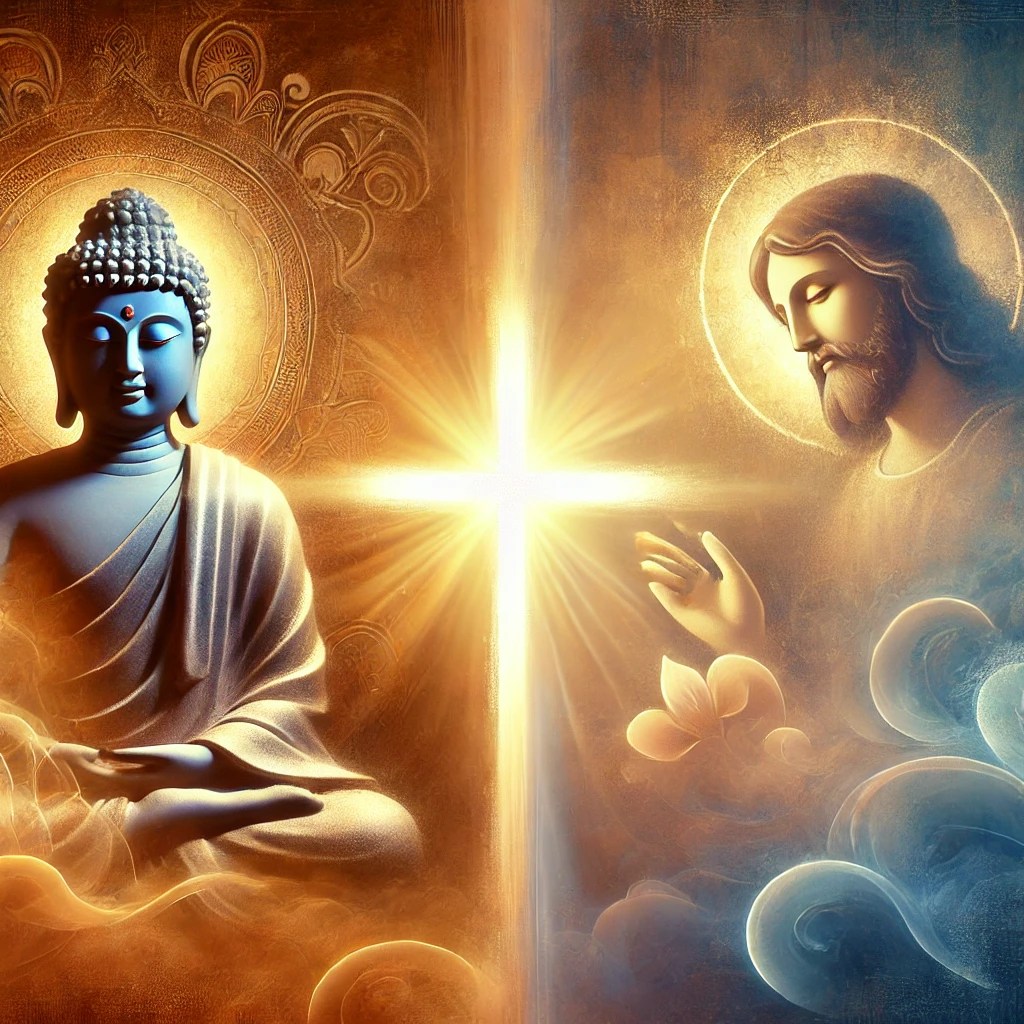
    This experience is not unique to Christian mysticism. In Advaita Vedanta, the practice of self-inquiry often begins with a repetitive questioning—”Who am I?”—an active search for truth. But, as with St. John’s teachings, there comes a time when even the inquiry must dissolve into silence. The seeker steps back, not into a place of knowing, but into a place of being. In that being, all effort falls away, and we are left with the pristine awareness that has always been there.

    In silence, love calls,

    No longer through words or thought,

    But in quiet grace.

    This is the threshold between seeking and being, a place where the Divine does its quiet work in us. It is no longer about striving or yearning for a deeper experience; it is about trusting in the unfolding of love, which asks only that we rest in its presence.

    For those of us on this journey, may we continue to trust this sacred shift—moving from meditation into contemplation, from seeking into being. In this silent surrender, we come closer to the essence of who we truly are.

    🙏🕊️🙏

  • Into the Mystic: Hitbonenut and the Path of Dissolution into the Divine

    Into the Mystic: Hitbonenut and the Path of Dissolution into the Divine

    The Journey Continues

    In the journey of Jewish mysticism, Hitbonenut stands as a gateway to true contemplation, an invitation to move beyond the mind’s grasping and into the silent vastness of divine presence. Unlike traditional meditation, which often focuses on concentration, Hitbonenut opens the heart to experience, not through thinking, but through the quiet surrender of the self. Inspired by my conversations with Rabbi Shmuel Reich, this post explores Hitbonenut as a pathway to Bittul—a dissolving of ego that leads to Ein Sof, the boundless divine.

    Hitbonenut: Beyond Thought, Beyond Self

    Hitbonenut, or contemplation, is more than simply focusing the mind on an idea—it is a practice that prepares the heart and mind to dissolve into the divine through Bittul (self-nullification). Rabbi Shmuel often emphasized that Hitbonenut is not merely meditation as commonly understood but an opening into a vast, boundless state where the self, with all its concepts and boundaries, melts away into Ein Sof, the Infinite. This contemplative state aligns with what Dzogchen calls “pristine awareness” or what Christian mystics like Saint John of the Cross describe as the “dark night” of pure contemplation.

    In the words of the Alter Rebbe, Rabbi Schneur Zalman of Liadi, Hitbonenut involves immersing oneself in the twin sources of divine light—sovev (transcendent) and memale (immanent)—allowing these aspects to penetrate deeply until the boundaries between self and divine dissolve. Rabbi Shmuel echoed this teaching, suggesting that through Hitbonenut, “we let go of the illusion of separation,” arriving at a state where we no longer perceive ourselves as separate entities but as part of the divine unfolding itself.

    A Practice of Letting Go

    For those inspired to explore Hitbonenut, the practice is one of gentle release rather than mental control. Begin by choosing a divine concept or phrase to contemplate—perhaps the boundlessness of Ein Sof itself. Let the mind rest on this concept, but instead of trying to “figure it out,” allow your thoughts to quiet. As thoughts naturally rise and fall, practice letting them pass without clinging to them. Over time, this brings the mind to a non-conceptual stillness, where even the idea of a “self” softens and dissolves.

    Rabbi Shmuel described this process as “training the mind to be calm and quiet, like rabbis of old, who would spend hours in silence before prayer, merging with Ein Sof through Bittul.” In this silence, the ego relaxes, and the self opens into a vast presence, where all notions of “I” and “other” fall away. This is the true heart of Hitbonenut—not a mental exercise, but an invitation to rest in divine unity, beyond words and concepts.

    Explore Further

  • Discovering Mystical Contemplation: The Alter Rebbe’s Practice of Hitbonenut and Bittul

    Discovering Mystical Contemplation: The Alter Rebbe’s Practice of Hitbonenut and Bittul

    Explore the transformative path of Hitbonenut and Bittul in Jewish mysticism, as practiced by the Alter Rebbe, to reach direct experience and divine unity.


    Translation of the Hebrew Text in the Above Image

    “… the esteemed Rabbi Schneur Zalman of Liadi, the great sage and author of the book Tanya, in his later years would immerse himself daily in deep contemplation and focus on achieving Hitbonenut and Bittul, self-nullification, before beginning his prayers. He would sit in a secluded area and enter a state of spiritual readiness, preparing himself to reach closeness to the divine through his meditative practices. Those who observed him would attest to the honor and respect that this revered practice commanded, reflecting his commitment to true divine connection.”


    Discovering the Boundless: The Alter Rebbe’s Practice of Hitbonenut and Bittul

    In the rich tradition of Jewish mysticism, Hitbonenut and Bittul are contemplative practices often approached as meditative paths focused on divine ideas. These practices are frequently interpreted as ways of concentrating on spiritual concepts to deepen one’s understanding. However, the Alter Rebbe, Rabbi Schneur Zalman of Liadi—the founder of Chabad Hasidism—offers us a window into a more profound dimension of these practices, where contemplation moves beyond intellectual meditation and opens into direct experience.

    The Alter Rebbe’s personal practice of Hitbonenut is a cornerstone of Chabad Chassidus. According to tradition, he would spend hours in Hitbonenut before beginning his prayers, not merely analyzing divine concepts but immersing himself in a state of awareness that dissolves the self into the infinite, what Jewish mysticism calls the Ein Sof—the boundless and limitless aspect of the divine.

    In this expansive approach to Hitbonenut, contemplation shifts from thought-focused meditation to an experiential opening, leading to what other traditions describe as the “pristine mind” or “pure contemplation.” By embracing the formless, open nature of awareness, the Alter Rebbe connected to a state beyond the grasp of the ego, inviting direct experience of the divine presence.

    This journey is deepened through Bittul, or self-nullification. Where Hitbonenut opens the door to spacious, boundless awareness, Bittul is the surrender of the self into that awareness. It’s a release of the ego’s hold, a quieting of personal identity that allows a merging with the infinite. This act of surrender is not a negation but an opening—a dissolving of the self to align fully with divine unity.

    For those of us seeking to understand Hitbonenut and Bittul in this way, the Alter Rebbe’s practice offers a reminder that contemplation in its purest form transcends the intellect. It’s not about conceptual analysis but about experiencing divine unity as a living reality. As we explore this path, we step beyond thought, into the boundless.

    In upcoming posts, we’ll further explore the practical steps, reflections, and guidance to cultivate these practices. Hitbonenut and Bittul invite us into the spaciousness of mystical contemplation, guiding us from understanding to a direct encounter with the divine.

    🙏🕊️🙏

    Book Review: Rabbi Schneur Zalman of Liadi: The Philosophy of Chabad by Nisan Mendel

    Nisan Mendel’s Rabbi Schneur Zalman of Liadi: The Philosophy of Chabad is a profound exploration of the life and teachings of one of Jewish mysticism’s most influential figures. Rabbi Schneur Zalman, known as the Alter Rebbe, was the founder of the Chabad movement, and his teachings remain central to Hasidic philosophy and contemplative practice today.

    Through this work, Mendel delves into the essence of Chabad philosophy, particularly its unique approach to Hitbonenut (contemplative meditation) and Bittul (self-nullification). Readers are introduced to the Alter Rebbe’s belief that intellectual understanding can be a pathway to divine experience, bridging the mind and heart to foster a deep connection with God. The book sheds light on the Alter Rebbe’s methods for approaching mystical contemplation, offering practical insights for those looking to incorporate these timeless practices into their own lives.

    Mendel’s accessible writing and thoughtful explanations make complex topics approachable, while his reverence for the subject shines through, bringing Rabbi Schneur Zalman’s teachings to life. This book is especially valuable for readers who wish to understand the spiritual framework of Chabad and its emphasis on meditative thought as a means to reach divine awareness.

    Whether you’re new to the ideas of Hitbonenut and Bittul or are already on a contemplative journey, The Philosophy of Chabad offers a valuable gateway to the Alter Rebbe’s approach to mysticism. By providing both philosophical insights and practical approaches, Mendel encourages readers to go beyond surface understanding and explore the depths of Chabad’s spiritual tradition.

    🙏🕊️🙏

  • Seeking the Kingdom of God: The Paradox of Perfection and Presence

    The mystic journey is one of paradox—seeking that which is already present. Across traditions, whether in Christian teachings about the Kingdom of God or in non-dual philosophies like Advaita Vedanta and Buddhism, the central truth remains: the divine, or perfection, is already here, but it must be realized through spiritual insight. As Jesus said, “The Kingdom of God is within you” (Luke 17:21), yet for most of us, it remains hidden behind the veil of ego and conditioned perception.

    The Spiritual Paradox:

    At the heart of many mystical teachings is the idea of striving for a perfection that we will never attain—because it is not something to attain. It’s not a destination, but a present reality we fail to recognize. This paradox mirrors the Christian teaching of seeking the Kingdom of God, even though it’s already in our midst. In this journey, we are continually asked to refine ourselves, knowing that the striving itself is a tool for unveiling the deeper truth that we are already complete.

    In the words of a friend: “Strive always for perfection, knowing that you will never attain it, and yet you’re as perfect as you will ever be.” This echoes not only in Christian thought but also in the non-dual traditions of the East. Whether it’s Brahman or Buddha-nature, spiritual traditions agree that the ultimate reality is not something the ego-self can grasp or reach.

    Having Eyes to See and Ears to Hear:

    Jesus emphasized that the Kingdom of God is already here for those who have “eyes to see” and “ears to hear.” This teaching parallels the non-dual realization that enlightenment or liberation is not a distant goal, but a shift in awareness. It’s about seeing through the illusion that we are separate from the divine or that the divine is elsewhere.

    In the mystic experience, the ego—the self that seeks—is a pratyaya (a conditioned phenomenon), something that must dissolve for true realization to occur. The ego can never “attain” enlightenment, because the one seeking is part of the illusion. The task, therefore, is to see through this illusion. As Jesus said, those who are spiritually awake can recognize that the Kingdom of God is already here.

    The Practice of Seeking:

    Even though we are already in the Kingdom, we must continue to strive. This striving is not about accumulating spiritual merit or becoming more worthy. It’s about peeling back the layers of ego and illusion to reveal the truth that has always been there. The very act of seeking becomes a practice in humility and surrender, recognizing that the self cannot attain the Kingdom, but that the realization of the Kingdom involves a shift in consciousness—not in achievement.

    In Buddhism, this is the realization of emptiness or shunyata—the recognition that all things, including the self, are empty of inherent existence. In Christianity, it’s the surrender to God’s will and the realization that “it is no longer I who live, but Christ who lives in me” (Galatians 2:20).

    Conclusion:

    The mystical path is one of paradox and deep humility. We strive to seek perfection, knowing that the ego will never attain it, because the perfection we seek is beyond time, space, and the limitations of the mind. We often speak of this perfection as being “present,” yet the present itself is elusive. As we’ve observed, the present moment can never truly be experienced by the senses—by the time we become aware of it, it has already slipped into the past. The perfection we seek is not in the present as we conventionally understand it, but rather beyond time itself, in the timeless reality that transcends the ego.

    This is why enlightenment cannot be made to happen. As Red Anderson said, enlightenment is like an accident—a spontaneous revelation beyond our striving and beyond our ego. And yet, the purpose of practice, whether in Zen, Christian mysticism, or other spiritual traditions, is to make us accident-prone. Practice, mindfulness, and ethical discipline create the conditions for enlightenment or grace to arise, even though we cannot control when or how it will happen.

    In this way, the act of striving itself becomes a form of grace—not because we earn grace through effort, but because our striving prepares us to receive what is already present. Grace, in the spiritual sense, is not something we can control or achieve. Rather, it is a gift that arises when the striving dissolves. Like rain that falls when the soil is ready, grace arrives spontaneously, not as a reward, but as a revelation of the truth that has always been.

    This is why mystics across traditions teach that while we cannot force grace to appear, we can create the conditions for it. Practices like prayer, meditation, or mindfulness soften the ego and open us to receive what is already here. In this sense, grace is the ultimate outcome of our paradoxical journey—not something earned through effort, but something realized when we let go of the need to attain it.

    Thus, as we strive, we also surrender. And when grace arrives, it reveals that the perfection we seek has always been present, beyond time and striving. This recognition dissolves the illusion of separation and resolves the paradox: the Kingdom of God, or enlightenment, was never distant—it was simply waiting to be seen.

    This mirrors the paradox of non-duality in a world of duality: we appear to strive, yet the truth we seek is always here, beyond time and duality. Practice, whether Zen meditation, mindfulness, or prayer, is a way to soften the ego, make us open, and create the conditions for the Kingdom of God, enlightenment, or grace to spontaneously arise. In this sense, we become like a field prepared for rain—we cannot control when the rain will come, but by cultivating the soil, we make ourselves accident-prone to the downpour of grace.

    Thus, in the mystic journey, striving and letting go are not opposites but two parts of the same dance. We strive, knowing we cannot ‘make it happen,’ but in doing so, we prepare the ground for the possibility of grace.

    The beautiful metaphor of becoming “accident-prone” weaves it into the ongoing theme of striving without attachment. It acknowledges the value of practice, even when we know the ego cannot reach enlightenment directly, and creates a sense of the mystical unfolding that happens when conditions are right.

    The mystic experience is ultimately about recognizing that what we seek has always been here, and in this recognition, the striving itself becomes a form of grace.

    🙏🕊️🙏

  • Buddhism and Christianity: Finding Common Ground in Compassion and Ethical Living

    Buddhism and Christianity: Finding Common Ground in Compassion and Ethical Living

    To many, the word Buddhism may conjure images of statues or rituals that seem foreign or difficult to understand, particularly for those from a conservative Christian background. However, at its heart, Buddhism is not about worshiping an idol or a false god, as some might mistakenly believe. Rather, it is a path of inner transformation that shares many core values with Christianity—values like compassion, ethical living, and the sincere effort to become a better person.

    In Buddhism, practitioners turn to the Three Jewels: the Buddha, who represents the potential for awakening within all of us; the Dharma, the teachings that show the way to live with love, wisdom, and peace; and the Sangha, the community of practitioners who support one another in their spiritual journey. In this sense, the Buddha is not a deity to be worshiped but a teacher, much like how Christians might revere the wisdom of Jesus Christ. The focus is not on idol worship, but on following a path that leads to moral and spiritual growth.

    At first glance, the colorful rituals, sacred music, and intricate costumes may seem confusing or overwhelming. Yet these outward forms are simply expressions of an inner practice that remains deeply practical and profound: the training of the mind. Tibetan Buddhism is not a religion in the conventional sense of belief or dogma but rather a transformative path aimed at purifying the mind. Through meditation, visualization, mantra, and ritual, the practice cultivates clarity, compassion, and liberation from egoic tendencies.

    Just as Christians seek to become more like Christ—striving for kindness, humility, and love—Buddhists seek to become the best version of themselves, nurturing virtues such as compassion, patience, and wisdom. To be a Buddhist is to make a commitment to ethical living, to ensure that one’s actions bring benefit rather than harm to others. This mirrors the Christian commandment to “love thy neighbor as thyself.”

    At the heart of both traditions lies a dedication to improving one’s character and living in a way that reflects love and goodness. For Buddhists, this means confronting the mind directly—meeting thoughts and emotions with honesty and care. Instead of avoiding or denying the difficulties of life, Buddhists engage with their minds head-on, seeking to transform fear, anger, or selfishness into peace, kindness, and clarity. This inner work echoes the Christian call to examine one’s heart, repent, and strive for purity in thought and deed.

    In his teachings, Dilgo Khyentse Yangsi Rinpoche offers a striking and relatable metaphor that bridges ancient wisdom with modern technology. He likens the practice of Dharma to the way we sync our wireless earbuds with our phones. Just as the earbuds must be paired and in sync with the phone to receive the signal and work properly, our minds must be aligned with the Dharma to receive its benefits.

    This idea resonates with many spiritual traditions. For Christians, the same concept applies to our relationship with the Holy Spirit or with Christ’s teachings. God is always present within us and around us, but if we are distracted by anger, impatience, or worldly concerns, we lose that vital connection. Simply believing in Jesus’ sacrifice isn’t enough if we are not living in sync with his teachings. By aligning our hearts and minds with Christ’s message of love, forgiveness, and humility, we can fully experience the divine presence and live in harmony with God’s will.

    Far from being a pagan religion, Buddhism is, at its core, a path of deep moral reflection and inner peace. Like Christianity, it calls for a transformation of the heart—one that aligns us with love, compassion, and a life of service. While the outward expressions of these paths may look different, the goal is the same: to become more loving, wise, and true to the divine nature that exists within each of us.

    For Christians who might feel uncertain about Buddhism, it can be helpful to remember that the values of both traditions are not in conflict but in harmony. Whether we call this journey “walking with Christ” or “following the Dharma,” both paths seek the same destination—a life lived with integrity, compassion, and love for others. By finding these common threads, we can open our hearts to one another, honoring the diversity of ways that humans seek truth and goodness.

    I invite you to watch the video below, which served as the inspiration for this post. It offers a beautiful glimpse into the teachings of Dilgo Khyentse Yangsi Rinpoche and the heart of Tibetan Buddhism. This film explores not only the path of mind training but also the deep compassion and wisdom that unite Buddhist and Christian values. Whether you are new to these teachings or have been walking your own spiritual path for years, this video provides an opportunity to reflect on the shared human quest for love, kindness, and awakening.

    🙏🕊️🙏

  • Bob Marley: A Christian Mystic in the Rastafarian Tradition

    Bob Marley: A Christian Mystic in the Rastafarian Tradition

    When we think of Christian mystics, names like St. John of the Cross, Teresa of Avila, and Thomas Merton often come to mind. These individuals, through their writings and lives, embodied a deep and profound connection with the divine, often expressed through personal, mystical experiences of God. However, the notion of Christian mysticism is broader than traditional Catholic or Protestant expressions—it reaches into diverse traditions where Christ’s teachings and spiritual wisdom are central.

    One such figure, who might not immediately be considered a “Christian mystic” in the conventional sense but certainly embodies the spirit of one, is Bob Marley. Known globally as a reggae legend, Marley’s spiritual identity is deeply rooted in the Rastafarian tradition, which, while distinct, is also firmly anchored in Christian theology.

    Rastafarianism: A Spiritual Path with Christian Roots

    Rastafarianism, often simply referred to as Rasta, is a spiritual and social movement that emerged in Jamaica in the 1930s. It was born out of a synthesis of Christian beliefs, African traditions, and a profound sense of connection to the Bible, particularly the Old Testament. Central to Rasta belief is the recognition of Haile Selassie I, the former Emperor of Ethiopia, as the returned messiah and the living God—a figure often equated with the second coming of Christ.

    Bob Marley, as one of the most famous adherents of Rastafarianism, infused his music with these beliefs, blending messages of liberation, love, and faith. His songs are filled with references to biblical themes, the teachings of Christ, and the pursuit of a deeper, more authentic connection with God.

    Bob Marley as a Christian Mystic

    So, why consider Bob Marley a Christian mystic? Mysticism is fundamentally about experiencing the divine in a personal and transformative way. It’s about encountering God not just through doctrine, but through the heart, soul, and life’s journey. Marley’s music and life were testaments to this kind of mystical experience.

    In songs like “Redemption Song” and “One Love,” Marley channels a message of unity, divine love, and spiritual freedom—core tenets of Christian mysticism. His lyrics often speak to a universal spirituality, grounded in the Christian narrative but transcending religious boundaries. He was a prophet in his own right, using music to communicate a vision of God’s kingdom that was inclusive, just, and deeply rooted in love.

    Moreover, Marley’s commitment to living out his spiritual convictions—despite significant challenges and opposition—echoes the path of many Christian mystics who sought to embody their beliefs in every aspect of their lives. His was a spirituality that called for both inner transformation and societal change, a hallmark of true mystical insight.

    The Intersection of Traditions

    While Bob Marley is most often associated with Rastafarianism, placing him within the broader category of Christian mystics allows us to see the rich tapestry of his spiritual journey. It acknowledges that Christian mysticism isn’t confined to one tradition but is a universal experience of the divine that can manifest in many forms.

    For now, Bob Marley can comfortably reside in the Christian mystics category, not as a way of limiting his spiritual legacy, but as a way of recognizing the Christian foundation upon which much of his mysticism was built. In time, as we explore more of his teachings and their roots in the Rasta tradition, a separate category might emerge to honor the unique aspects of Rastafarian spirituality. However, his inclusion in the Christian mystic category speaks to the fluid and expansive nature of spiritual experience, one that transcends labels and denominations.

    Conclusion

    Bob Marley’s legacy as a musician is undeniable, but his role as a spiritual figure—one who bridges the gap between Rastafarianism and Christian mysticism—is equally profound. By considering Marley within the context of Christian mysticism, we can appreciate the depth of his spiritual insights and the ways in which his life and music continue to inspire a deep, mystical connection with the divine.

    In acknowledging Bob Marley as a Christian mystic, we not only honor his contribution to music and culture but also recognize the universal truth that mysticism is a path open to all who seek a direct, transformative relationship with God—regardless of the tradition they follow.

    🙏🕊️🙏

  • Ramayana No. 9: The Dark Night and the Hero’s Journey

    As I delve deeper into the Ramayana, the timeless story continues to reveal layers of wisdom that resonate across spiritual traditions and cultures. One striking parallel that emerges is the connection between the tale of Manthara and the serpent in the Genesis story, both of which serve as catalysts for the hero’s journey—necessary agents of disruption that propel the protagonists from the comfort of innocence into the trials of the world.

    Manthara, like the serpent, whispers deceit into the ears of the righteous, setting off a chain of events that lead to exile, struggle, and ultimately, transformation. In both stories, this act of deception might be viewed as evil, but it is crucial for the unfolding of a greater destiny. Without the fall from Eden, there would be no journey toward redemption. Without Manthara’s insidious counsel, there would be no exile for Rama—a journey that would ultimately reveal his true nature and the essence of dharma.

    This motif is echoed in Joseph Campbell’s The Hero’s Journey, where the hero must leave the familiar world and enter a realm of trials and challenges, often descending into a figurative or literal underworld. It is here, in the depths of darkness, that the hero faces the ultimate test, encountering both inner and outer demons. The journey is perilous, but it is also where the hero discovers their true strength and purpose.

    In the Christian tradition, St. John of the Cross articulated a similar experience in his concept of the Dark Night of the Soul. This dark night is a period of profound spiritual desolation, where the soul feels abandoned, stripped of all earthly and spiritual comforts. Yet, this is not a sign of divine punishment, but rather an essential phase of purification. It is in this crucible of suffering that the soul is refined, prepared for a deeper union with the Divine.

    Rama’s exile in the Ramayana can be seen as his own Dark Night of the Soul, a necessary period of trial and suffering that strips him of his royal status and forces him to confront the raw realities of life. Through this journey, Rama evolves from a prince into an embodiment of dharma, a being whose actions reflect the divine order of the universe.

    This theme of transformation through trial is universal. It speaks to the experience of every soul that seeks to journey from ignorance to wisdom, from ego to enlightenment. Whether it is Adam and Eve expelled from Eden, Rama exiled from Ayodhya, or a soul passing through the Dark Night, the path is one of descent before ascent, of loss before the ultimate gain of spiritual realization.

    As we contemplate these stories, we are invited to see our own lives in their light. The challenges we face, the moments of darkness, are not mere accidents but are woven into the fabric of our spiritual journey. They are the trials that test our resolve, refine our character, and lead us closer to the Divine.

    In this light, the whispers of Manthara, the serpent’s temptation, or the dark nights we endure are not just obstacles; they are invitations—calls to embark on the hero’s journey, to walk the path that leads to a higher truth, and to become more fully who we are meant to be.

    May we find strength and inspiration in these stories, knowing that every trial we face is a step on the path to wisdom, compassion, and ultimately, to the realization of our divine nature.

    🙏🕊️🙏

    You can explore this epic story in the edition of the Ramayana used in this series, written by Valmiki and translated by Suparna Ghosh, on Amazon here

    Alternatively, you can choose from several other versions and translations that are available. Including the William Buck translation available as an abridged audiobook on Audible, narrated by Ram Dass
    here

  • Rapture: An Inner Experience or a Future Event?

    The concept of rapture holds a significant place in many religious traditions, often representing a powerful moment of divine encounter. However, the interpretation of this experience varies widely across spiritual paths. For some, rapture is a future event, a moment of transcendent liberation from the trials of the world. For others, rapture is an immediate, inner experience of union with the Divine, accessible in the present moment. This blog post explores these differing perspectives, inviting readers to consider the possibility that rapture might be both a future hope and a present reality.

    Rapture as a Hoped-for Future Event

    In many Christian communities, the term “rapture” is closely associated with the belief in a future event where believers are taken up to be with Christ. This event is often envisioned as a sudden and dramatic moment where those who have lived faithfully are removed from the tribulations of the world and brought into eternal communion with the divine. This interpretation provides a powerful source of hope, offering assurance of divine rescue and the promise of a heavenly future.

    This understanding of rapture emphasizes an external transformation, a moment when the divine intervenes in human history to gather the faithful and bring them into a new realm of existence. For many, it is a symbol of ultimate redemption, where suffering and struggle are left behind, and believers are welcomed into the fullness of God’s presence.

    Rapture as a Present-Moment Realization of the Divine

    However, there is also another, less spoken about, possibility of rapture. Here, rapture is not something that will happen in the distant future but an experience that can be realized in the here and now. It is a state of being where the soul becomes fully absorbed in the divine presence, transcending the ordinary boundaries of self and the material world.

    This inner rapture is often described as a moment of profound bliss and unity, where the individual self merges with the universal consciousness. Through practices like meditation, prayer, and devotion, one can enter into this state of rapture, experiencing the divine not as a distant reality but as an intimate, present-moment truth.

    Bridging the Perspectives: Rapture as Both Now and Later

    These two interpretations of rapture—the future event and the present realization—need not be mutually exclusive. In fact, they can complement each other, offering a fuller picture of what it means to encounter the divine.

    For those who look forward to the future rapture, there is comfort in the promise of divine intervention and the ultimate transformation of the world. Yet, by also embracing the possibility of rapture as an inner experience, there is an invitation to taste the sweetness of divine union in the present moment, to experience a foretaste of the eternal communion that awaits.

    Likewise, for those who seek rapture in the present, there is value in remembering that spiritual growth often unfolds over time, with moments of profound realization serving as milestones on a longer journey. The hope of a future rapture can inspire deeper commitment to the practices that open the heart to the divine here and now.

    Practical Steps Toward Experiencing Inner Rapture

    If the idea of experiencing rapture as an inner, present-moment encounter with the divine resonates with you, here are some practices suggested by mystics throughout history that can help cultivate this experience:

    Saint Teresa of Avila provides a roadmap for deepening your prayer life through mental prayer and contemplation. She describes the soul’s journey as one of moving inward, from vocal prayers to the stillness of contemplation, where one becomes wholly absorbed in God’s presence. To begin this journey, Saint Teresa suggests setting aside quiet time each day for prayer. Start by meditating on the life of Christ, using passages from the Gospels as focal points for your thoughts. As your prayer deepens, you may find words are no longer necessary. Allow yourself to rest in God’s presence in silence, letting go of the need to articulate your thoughts. Over time, this practice can lead to what Saint Teresa describes as “interior recollection,” where the soul is so absorbed in the divine presence that it forgets itself entirely, consumed by the sweetness of this union. She encourages practicing this recollection not just during designated prayer times but throughout the day, continually bringing your mind back to God, even in the midst of daily activities.

    Saint John of the Cross, another profound mystic, offers guidance on navigating the challenges that often accompany the pursuit of divine union. He speaks of the “dark night of the soul,” a period of spiritual dryness and seeming distance from God, which he interprets as a necessary purification of the soul. John teaches that to reach divine union, one must first pass through this purgation, releasing attachments to worldly desires and false comforts. He suggests regular self-examination to identify these attachments and encourages embracing humility and detachment. During times of spiritual dryness, rather than retreating, he advises pressing deeper into prayer and surrender, trusting that these are the very times when God is working most profoundly within the soul. By surrendering completely to God’s will and allowing Him to purify the soul, one can eventually emerge into the light of divine union, where the soul is intimately united with God.

    Thomas Merton, a modern-day contemplative, offers a pathway into the experience of rapture through the practice of contemplative prayer. Merton emphasizes that true communication with God happens not through words, but in communion—a deep, silent presence with the divine that transcends ordinary communication. To practice this, Merton suggests setting aside regular times for meditation, where you focus on the presence of God within you. Begin by creating an environment of silence and solitude, which Merton believes is essential for hearing God’s voice. As you meditate, let go of the need to verbalize your thoughts or prayers. Instead, simply be present with God, opening your heart to His presence. Over time, this practice of contemplative prayer can lead you into a deeper communion with God, where words fall away and you experience a profound, wordless union.

    Richard Rohr, another contemporary spiritual teacher, encourages living with a continuous awareness of God’s presence in the present moment. Rohr’s approach is rooted in the idea that God is always near, available to us in each breath and every moment of our lives. He suggests starting your day with a prayer of intention, asking to be aware of God’s presence throughout the day. As you go about your daily tasks, practice mindfulness by focusing on your breath, recognizing it as a sign of God’s life-giving presence within you. Rohr also recommends the practice of “practicing the presence of God,” where you continually bring your awareness back to God as you engage in your everyday activities. By cultivating this habit, you can begin to experience moments of rapture throughout your day—small, sacred encounters with the divine that remind you of God’s constant presence.

    Conclusion: An Invitation to Explore

    Whether one views rapture as a future event or a present experience, it remains a powerful symbol of divine encounter. It invites each of us to consider how we might open ourselves more fully to the divine, whether by preparing our hearts for a future moment of transformation or by seeking the presence of the divine in our everyday lives.

    In the end, the experience of rapture may be less about “when” it happens and more about the depth of our openness to the divine. It is a call to live in the awareness that the divine is always near, whether we are waiting for a future moment of glory or opening ourselves to the possibility of experiencing that glory in the here and now.

    Quotes for Reflection:

    The following quotes capture the essence of rapture as an inner experience of divine union that is available to disciples in this very life.

    • Saint Teresa of Avila, The Interior Castle: “The soul is now fully awake to the call of the Beloved, and God grants it the gift of deep contemplation. The soul becomes so absorbed in the divine presence that it forgets itself entirely, consumed by the sweetness of this union.”

    • Saint John of the Cross, The Living Flame of Love: “Oh, how sweet is the light of God that shines within a pure soul! It is so dazzling that the soul is blinded by its brightness and overwhelmed by the fragrance of His presence.”

    • Thomas Merton, New Seeds of Contemplation: “The deepest level of communication is not communication, but communion. It is wordless. It is beyond words, beyond speech, beyond concept.”

    • Richard Rohr, The Naked Now: “God is not far from us; God is with us—precisely in our very breath, in our own existence, and in the here and now.”

    May we each find our own way to rapture, whether by looking to the future with hope or by seeking the divine presence in this very moment.

    🙏🕊️🙏

  • Following Jesus: Abiding in God’s Presence

    Introduction
    Jesus’ invitation to “follow me” is at the heart of Christian life. But what does it really mean to follow Him? Often, we think of it in terms of outward actions—loving others, serving the needy, and living righteously. While all of this is vital, there is a deeper dimension to following Jesus: abiding in God’s presence, as Jesus himself did. Jesus regularly withdrew to pray in stillness, connecting with His Father in quiet communion. This inward focus is just as crucial to following Jesus as our outward actions.

    Jesus’ Example of Stillness
    Throughout the Gospels, we see Jesus taking time to be alone in prayer (Luke 5:16). He wasn’t just teaching us to pray for what we need, but to rest in God’s presence, to listen, and to be still. When Jesus spoke of the kingdom of God being within us (Luke 17:21), He was revealing that God is not distant but present within each of us. To follow Him means not only to love as He loved, but to seek God as He did—by abiding in the presence of the Father.

    Abiding in the Heart: A Call to All Believers
    In John 15:4, Jesus says, “Abide in me, and I in you.” This is not just a poetic metaphor, but a clear instruction. To abide means to remain, to stay rooted in Him. Jesus calls us to experience God’s presence within, in the quiet of our hearts, just as He did. When we take time to be still and know God (Psalm 46:10), we are following Jesus’ example. We are allowing God’s Spirit to work within us, transforming us into His likeness.

    How We Abide in God’s Presence
    Abiding in God’s presence is not about striving or achieving—it’s about surrender and trust. It’s about creating space in our hearts to listen to God, to rest in His love. We don’t need to perform for God or say the right words; we simply need to turn our attention inward, to the presence of the Holy Spirit within us. In this stillness, we are following Jesus, who modeled this quiet communion with God throughout His ministry.

    The Kingdom Within
    When Jesus said, “The kingdom of God is within you,” He wasn’t speaking in riddles. He was revealing a profound truth about where we encounter God. Following Jesus means recognizing that God’s Spirit is not distant, but as close as our own breath. As we follow Jesus, we learn to turn inward, to abide in this truth, and to let God’s peace fill our hearts. In doing so, we come to know Him more deeply, just as Jesus did.

    A Daily Path of Following Jesus
    Following Jesus is not just about what we do for others—it’s about who we are becoming in Christ. As we spend time abiding in God’s presence, we are shaped and formed by His love. Our actions naturally flow from this inner communion with God. The more we follow Jesus in this way, the more we become like Him—living in love, humility, and peace. This inward journey is not reserved for mystics or saints; it is the path that Jesus invites every believer to walk.

    Conclusion
    To follow Jesus means to emulate not only His actions but His way of being. He taught us to love, but He also showed us how to abide in God’s presence. This invitation is open to everyone. As we follow Jesus, we are called to take time to be still, to rest in the heart of God, and to allow His Spirit to work in us. In this way, we truly become followers of Christ—not just in what we do, but in who we are becoming.

    A Simple Practice to Abide in God’s Presence
    For those who wish to deepen their connection with God and experience His peace, here is a simple five-minute practice that you can do first thing in the morning, before bed, or anytime during the day when you need to return to God’s presence.

    Opening Prayer
    “Dear Lord, I come before You now, seeking Your peace and healing presence. As I quiet my mind and heart, I ask to feel Your Holy Spirit within me. Guide me into rest, ease my anxieties, and fill me with Your everlasting peace. Amen.”

    Meditation

    1. Find a comfortable position—either sitting or lying down. Close your eyes gently.
    2. Take a deep breath in through your nose, and slowly exhale through your mouth. Feel the tension melt away as you breathe out.
    3. Begin to notice your breath. No need to change it—just notice the gentle rise and fall of your chest or belly.
    4. As you inhale, silently say to yourself, “Breathing in, I abide in the Holy Spirit.”
    5. As you exhale, silently say to yourself, “Breathing out, I release into God’s peace.”
    6. If your mind wanders, that’s okay. Gently bring your attention back to your breath and these words.
    7. Continue this for five minutes, focusing on the breath and the sense of God’s presence and peace.

    Closing Prayer
    “Gracious God, thank You for Your presence and peace. As I end this time of meditation, I trust in Your love and guidance. Help me carry this sense of stillness and Your Spirit with me throughout the day (or night). May Your peace fill my heart, and may I continue to abide in Your presence in all that I do. Amen.”


    🙏🕊️🙏

  • A Christian Mystic is Also a Yogi: Bridging the Spiritual Traditions

    In the quiet corners of monasteries, amidst the echo of chanting monks, and within the solitude of wilderness hermitages, Christian mystics have, for centuries, sought to experience a profound union with the Divine. They have traveled inward, transcending the boundaries of ego, and have entered into a sacred communion with God. Their journey is one of deep contemplation, marked by an ascetic discipline that reflects a yearning to touch the eternal. Though these mystics arise from the Christian tradition, their spiritual pursuits bear a striking resemblance to those of yogis—a title traditionally reserved for practitioners within the vast spiritual traditions of India.

    At first glance, the practices and language of Christian mysticism and yoga might seem worlds apart. One speaks in the tongue of Christ, the saints, and the Holy Spirit, while the other chants the names of Shiva, Krishna, and the universal Brahman. However, beneath these differing expressions lies a shared journey—a journey toward the ultimate goal of spiritual union, self-realization, and the direct experience of the Divine.

    The Quest for Union

    The essence of yoga is captured in its very name, which means “union.” Traditionally, this union is understood as the merging of the individual soul with the Divine consciousness—a state of oneness where the separation between self and the cosmos dissolves. This echoes the Christian mystic’s pursuit of “divine union,” a state described by luminaries like St. John of the Cross, where the soul is united with God, experiencing a profound and intimate communion that transcends all earthly understanding.

    Both the yogi and the Christian mystic understand that this union is not merely a metaphorical concept but a lived reality, achievable through dedicated practice, surrender, and grace. It is an experience of the heart’s deepest longing fulfilled, where the seeker and the sought become one.

    The Path of Inner Transformation

    To reach this union, both traditions emphasize the necessity of inner transformation. For the yogi, this often involves practices like meditation, breath control, and ethical living, which purify the mind and body, allowing the practitioner to transcend the ego and experience the true Self. Similarly, Christian mystics speak of a transformative journey often described in stages: purgation (the cleansing of the soul), illumination (receiving divine light and insight), and union (the final, blissful merging with God).

    This transformation is not an easy path; it is marked by trials, tests of faith, and the dissolution of old identities. Yet, both the yogi and the Christian mystic embrace these challenges, understanding that they are necessary steps in the journey toward spiritual maturity and enlightenment.

    Contemplation and Stillness

    Central to both yoga and Christian mysticism is the practice of contemplation—a deep, meditative stillness where the divine can be encountered directly. Yogis engage in dhyana, or meditation, as a means of quieting the mind and opening the heart to the infinite. Christian mystics, too, seek this stillness through contemplative prayer, where words fall away, and one rests in the silent presence of God.

    In these moments of stillness, both the yogi and the mystic move beyond the distractions of the world, entering into a space where the divine presence is felt intimately, where God is not a distant figure but a living, breathing reality within.

    The Role of Love

    For both traditions, love is the highest expression of spiritual attainment. In the Christian mystical tradition, figures like St. Teresa of Avila and St. Francis of Assisi exemplify a life overflowing with divine love, a love that embraces all of creation as a reflection of God. This mirrors the path of bhakti yoga, where devotion and love for the divine are seen as the most direct route to spiritual awakening.

    This love is not just a feeling but a transformative force that purifies the heart and mind, drawing the soul closer to its source. It is an all-encompassing love that transcends personal desires, embracing the entirety of existence with compassion and grace.

    A Universal Journey

    The paths of the Christian mystic and the yogi, though outwardly different, converge at their deepest levels. Both seek to transcend the limitations of the ego, to experience the divine presence in its fullness, and to live a life that reflects this profound spiritual truth. Whether through the sacred silence of a monastery or the disciplined practice of asanas, the goal is the same: to know God, to become one with the Divine, and to embody the sacred in every aspect of life.

    In this light, we can see that a Christian mystic is, indeed, a yogi—a practitioner of union, a seeker of divine truth, and a traveler on the path of spiritual awakening. Their journey reminds us that the quest for the divine is a universal one, transcending boundaries of culture and religion, and uniting all seekers in their shared pursuit of the ultimate reality.

    🙏🕊️🙏

  • Deepening Prayer: From Requests to Communion with the Divine

    Experiencing Prayer as a Profound Connection with the Divine

    Introduction

    In many religious traditions, prayer is often perceived as a means of making requests or interceding on behalf of others. Yet, a deeper understanding of prayer reveals it as a profound opportunity for communion with the Divine. This post explores how we can transform our approach to prayer from one of mere requests to a rich, personal connection with God, drawing from various spiritual traditions.

    Exploring Contemplative Practices

    Contemplative prayer, practiced in Christianity and other traditions, focuses on fostering an intimate connection with the Divine. In Christianity, contemplative prayer invites believers into a space of stillness and receptivity. For instance, the use of repetitive phrases like “Maranatha” helps to open one’s heart to God’s presence, moving beyond mere supplications to a deeper, more personal engagement.

    Similarly, in Buddhism, practices such as Shikantaza, or “Just Sitting,” and Shamatha, or “Calm-Abiding,” cultivate mental clarity and a direct experience of the divine in the present moment. Shikantaza encourages a state of pure awareness, where one simply exists without distraction, while Shamatha develops stability and focus, paving the way for a deeper spiritual connection.

    Jewish mystical traditions also contribute to this understanding. Practices like Bittul, the surrender of the ego, and Hitbonenut, profound contemplation, emphasize the experience of God’s presence through the negation of self and deep reflection.

    Scriptural Insights on Personal Communion

    Jesus’s own practices highlight the importance of personal communion with God. His retreat into the desert for 40 days and nights and His frequent solitary prayers illustrate a model for seeking direct connection with the Divine. Jesus’s teachings, such as in John 15:4-5, where He speaks of abiding in Him, suggest a deep, personal relationship with God. Similarly, Matthew 6:6 emphasizes private prayer as a means of engaging intimately with the Divine.

    Jesus used parables to invite personal reflection and insight into God’s kingdom, and His statements about divine unity, like in John 14:20, suggest an intimate, experiential knowledge of God. These elements point to a mystical dimension of prayer, where personal experience and direct connection with the Divine are central.

    Comparison of Intercessional Prayer and Direct Communion Prayer

    Intercessional prayer and direct communion prayer serve distinct purposes in the spiritual journey, each offering unique approaches to connecting with the Divine.

    Intercessional Prayer

    Intercessional prayer focuses on making requests or petitions, often on behalf of others. This type of prayer involves asking God to intervene in specific situations, whether for healing, guidance, or support. It emphasizes the role of prayer as a means of advocating for one’s needs or the needs of others. In many Christian traditions, intercessional prayer is a vital aspect of communal worship and personal devotion, highlighting the belief in a God who responds to our requests and concerns. For example, praying for a friend’s recovery or for peace in the world exemplifies this approach.

    Direct Communion Prayer

    In contrast, direct communion prayer emphasizes a more intimate and experiential connection with the Divine. Rather than focusing on specific requests, this practice seeks to foster a deep, personal relationship with God through stillness, contemplation, and presence. Practices such as contemplative prayer, Shikantaza (Just Sitting), and Bittul aim to transcend the act of asking and enter a space of pure being and direct experience of God’s presence. This approach is less about seeking specific outcomes and more about experiencing a profound union with the Divine. The goal is to immerse oneself in the Divine presence, as seen in the practices of Christian mystics like St. John of the Cross and St. Francis of Assisi, who sought a direct, personal communion with God.

    Historical Context and Institutional Influence

    The Church’s role as an intermediary historically shaped the understanding and practice of prayer. The focus was often on external rituals and mediation, which influenced how individuals experienced and related to the Divine. This approach sometimes overshadowed the potential for personal, direct communion with God.

    However, throughout history, Christian mystics and contemplatives have emphasized direct experience with the Divine. For example:

    • St. John of the Cross explored the “dark night of the soul,” a profound spiritual purification leading to union with God beyond ordinary experiences.
    • Teresa of Avila focused on deep, contemplative prayer and mystical experiences, offering insights into personal connection with the Divine.
    • St. Francis of Assisi exemplified a life of profound spiritual simplicity and deep communion with God, expressed through his love for creation and his radical commitment to poverty. His life was a testament to the possibility of experiencing and embodying divine presence in everyday life.

    These figures highlight a tradition of exploring direct and personal connections with the Divine, which contrasts with more institutionalized approaches that focus on intermediary roles and external forms.

    Conclusion

    Transforming our understanding of prayer from mere requests to a form of communion invites us to deepen our connection with the Divine. By embracing contemplative practices and exploring personal experiences of God, we can enrich our spiritual journey and cultivate a more profound and intimate relationship with the Divine. This journey into mystical prayer and contemplation underscores the value of seeking direct, personal experiences of the Divine, transcending conventional practices to embrace a deeper, more profound spirituality.

    Reflective Questions

    1. How do you currently experience prayer in your spiritual practice? Are there ways you could deepen this experience to foster a more personal connection with the Divine?
    2. In what moments of solitude have you felt a profound sense of communion with God or the Divine? How can you cultivate more of these moments in your daily life?
    3. How do the contemplative practices discussed resonate with your own spiritual journey? Are there specific practices or elements you feel drawn to explore further?
    4. Reflect on a time when a mystical or contemplative experience significantly impacted your understanding of spirituality. What insights or transformations emerged from that experience?
    5. How does the historical context of prayer and mysticism influence your current approach to prayer? Are there any historical figures or practices that inspire you to deepen your spiritual practice?

    Feel free to share your thoughts, experiences, or any questions in the comments section below. I look forward to engaging with your reflections and exploring these ideas further together.

    🙏🕊️🙏

  • Exploring Spiritual Journeys: My Dive into St. John of the Cross and the Teachings of Jesus


    My Spiritual Journey with St. John of the Cross and Jesus Christ

    Hey everyone! I’ve been on a fascinating journey lately, exploring some deep spiritual stuff that’s really been blowing my mind. And, let me tell you—it’s been eye-opening!

    Recently, I stumbled upon this book called “The Dark Night of the Soul” by St. John of the Cross. Sounds intense, right? It totally is! St. John talks about this journey where the soul goes through tough times to find a deeper connection with God. It’s like he’s describing these dark times we all go through, but how they can actually lead to something amazing and spiritual.

    One thing that’s really stuck with me is how he talks about longing for God’s presence. It’s like that feeling when you really miss someone, but instead of a person, it’s this deep spiritual connection you’re longing for. I’ve started to see how even tough times can be part of this journey towards finding peace and purpose.

    And then there’s Jesus. Man, his teachings are mind-blowing. He talks about love, forgiveness, and seeing the Kingdom of God in everything around us. It’s not just about believing; it’s about really living those teachings every day. That’s been a challenge for me, but also super rewarding when I see how it changes how I treat people and handle tough situations.

    And let’s not forget the miracles! Whether it’s Jesus healing someone or just those little everyday miracles, they remind me that there’s something bigger than us out there. It’s like a reminder to keep faith and stay open to the wonder of life.

    So yeah, this journey into spirituality has been a rollercoaster, but in the best way possible. It’s helped me see life in a whole new light and given me tools to navigate the ups and downs. I’m still learning and growing, but isn’t that what life’s all about?

    What about you? Have you ever had moments where you felt a deep spiritual connection or experienced something that made you question everything? I’d love to hear your thoughts and stories too! Let’s keep this conversation going.

    Until next time, stay curious and keep exploring!