Tag: ancient wisdom

  • Blessings honoring the interconnectedness of all life:

    Blessings honoring the interconnectedness of all life:

    May you feel at ease today, in body and mind,
    Flowing naturally with the unfolding Tao.
    May the winds be gentle, the clouds at peace,
    And with each day, may wellness arise.

    Spanish / Español

    Que hoy sientas paz en cuerpo y mente,
    Fluyendo con el Tao en su danza infinita.
    Que los vientos sean suaves, las nubes en calma,
    Y con cada día, la dicha te acompañe.

    Italian / Italiano

    Che tu possa sentirti in pace oggi, nel corpo e nella mente,
    Scorrendo naturalmente con il fluire del Tao.
    Che i venti siano dolci, le nuvole serene,
    E che ogni giorno porti benessere.

    Chinese / 中文

    愿你今日身心安,
    随顺大道自流转。
    风轻云淡无忧虑,
    日日安然福自来。

    Japanese / 日本語

    今日、心も体も安らかでありますように、
    自然と道(タオ)の流れに身を任せて。
    風は穏やかに、雲は静かに、
    毎日が平和と幸せで満ちますように。

    Arabic / العربية

    أتمنى لك راحة البال والجسد اليوم،
    متناغمًا مع تدفق الطاو الطبيعي.
    لتكن الرياح لطيفة، والسحب في سلام،
    ومع كل يوم، ليزهر الهدوء والرفاهية.

    Hebrew / עברית

    שיהיה לך שקט ושלווה בגוף ובנפש היום,
    זורם בטבעיות עם התפתחות הטאו.
    שהרוחות יהיו עדינות והעננים שלווים,
    ועם כל יום, תצמח רווחה וברכה.

    Russian / Русский

    Пусть сегодня твое тело и разум будут в покое,
    Теча естественно вместе с раскрывающимся Дао.
    Пусть ветер будет мягким, облака спокойными,
    И с каждым днем пусть благополучие возрастает.

    Ukrainian / Українська

    Нехай сьогодні твоє тіло йo розум будуть у спокої,
    Течучи природно разом із розкриттям Дао.
    Нехай вітер буде лагідним, а хмари спокійними,
    І з кожним днем нехай зростає благополуччя.

    Native American (Lakota / Lakȟótiyapi)

    Lél uŋči makȟóčhe kiŋ ičháǧapi, ni én čhaŋtéwašteya waŋká yo.
    Čháŋ šíč’iya, maȟpíya wašté.
    Tatȟáŋka yuhá waštélaka,
    Lé wíyukčaŋ kiŋ, tȟawášte ye.

    (Here on Grandmother Earth, may you stand with a good heart.
    May the trees be strong, and the clouds be kind.
    Buffalo watches over you with love,
    And this day brings you peace.)

    🙏🕊🙏

  • Ramayana No. 19: Revisiting the Ramayana with Venkatesananda’s Take: Lessons from Valmiki’s Experience

    Ramayana No. 19: Revisiting the Ramayana with Venkatesananda’s Take: Lessons from Valmiki’s Experience

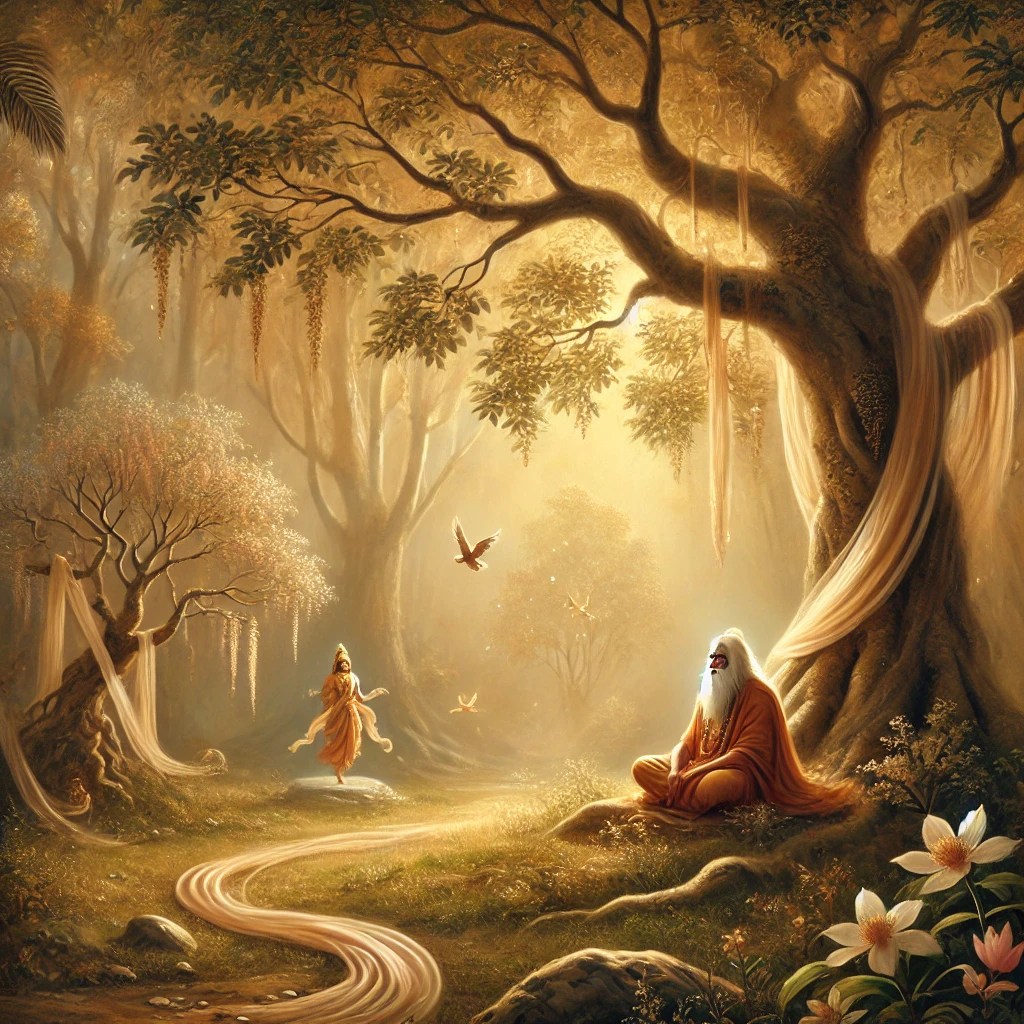
    As we begin our exploration of the Ramayana through Venkatesananda’s version, it’s fascinating to revisit the early stages of this epic tale, particularly through the lens of Valmiki’s own transformation. In this version, we are reminded of how the sage first heard the Ramayana from Narada and later expanded upon it after a transformative experience with the hunter and his divine encounter with Brahma. This opening passage introduces us not only to the story of Rama but also to the profound personal growth of Valmiki, a theme that resonates deeply with our own spiritual journeys.

    One particular quote stands out:
    “Yet, the mystery that even he could lose his temper and thus risk losing the merit of his asceticism intrigued him.”

    This moment captures a crucial aspect of the human condition—our struggle to control our emotions, even after years of spiritual practice. For Valmiki, witnessing the hunter’s cruelty toward the birds brought forth both compassion and anger, leading him to curse the hunter. It’s a reminder that even great sages can lose their temper, risking their spiritual merit. For me, the Dalai Lama’s teachings on anger come to mind here—anger is often seen as the opposite of love, and when we give in to it, we lose touch with our pristine, true nature. But the important lesson is that we can always return to our senses, regain our inner peace, and continue on the path of righteousness.

    This story, to me, also inspires compassion for ourselves. If even Valmiki, with all his ascetic discipline, could slip into anger, we too can forgive ourselves for the times we fall short. The key is recognizing these moments, learning from them, and using them as opportunities to realign with our higher purpose. Valmiki’s regret and his ability to transform his curse into a verse is a powerful reminder that even our missteps can lead to something greater, if approached with the right mindset.

    In this retelling, Valmiki’s divine encounter with Brahma affirms the purpose of his story. Brahma reassures him that the verse he uttered, born out of both anger and compassion, is a blessing. From this moment of emotion, a profound epic was born—a story that would inspire righteousness, compassion, and wisdom for generations. This theme of duality—anger and compassion, curse and blessing—reflects the constant struggle humanity faces with its own dual nature.

    What I find particularly compelling in this passage is how the Ramayana is positioned as medicine for a world in turmoil, a story that speaks to the heart of our modern struggles. Today, as in Valmiki’s time, people are often disconnected from their conscience, their true nature, and their pristine mind. This disconnect creates inner chaos, much like the mental fluctuations Valmiki experienced. The Ramayana, with its timeless wisdom, offers a path back to harmony with the divine. It reminds us that even in moments of anger or despair, there is always a way to transform that energy into something positive.

    Valmiki’s transformation from anger to inspiration is a beautiful metaphor for our own lives. In the same way that he found his path through a moment of passion, we too can use our struggles as stepping stones toward greater understanding and compassion. The passion that Valmiki felt for the hunter’s cruelty was ultimately transformed into the creation of a story that would inspire righteousness and compassion for millennia.

    As we continue this journey through the Ramayana, let us reflect on how we, too, can transform our moments of anger or frustration into opportunities for growth. The challenges we face—both internally and externally—are all part of our spiritual journey. Valmiki’s story is a powerful reminder that the path to self-realization is not without struggle, but each step along the way can lead us closer to our true selves.

    In future posts, we’ll continue to explore the wisdom within this and other versions of the Ramayana, diving deeper into how these timeless stories offer guidance for our modern lives. Let’s stay open to the lessons each passage holds and, like Valmiki, allow our moments of weakness to be transformed into opportunities for growth and inspiration.

    🙏🕊️🙏

  • Ramayana No. 17: The Journey of Life: Lessons from Rama’s Epic Story

    Ramayana No. 17: The Journey of Life: Lessons from Rama’s Epic Story

    Inspired by Chapter 1.3 of the DeBroy Translation of the Ramayana

    In the Ramayana, we follow Rama on an extraordinary journey filled with triumphs and tribulations. As we explore his life, we come to realize that it is not just a story of a prince, but a reflection of the very fabric of human existence. From his birth as a noble soul to his struggles, battles, and eventual return to Ayodhya, Rama’s journey offers a mirror for the journey each of us takes through life.

    This timeless epic, as retold by Valmiki, holds deep truths that resonate as powerfully today as they did in ancient times. Below are some key lessons from Rama’s life that provide valuable insights for the modern world.

    Adversity is Part of the Journey

    Rama’s life is marked by periods of great adversity, including his unjust exile from Ayodhya and the abduction of his wife, Sita. Despite the hardships, Rama never wavers in his resolve to uphold dharma (righteousness).

    In today’s world, we often face our own versions of exile—whether it’s personal setbacks, professional struggles, or moments of loss. Rama’s journey teaches us that adversity is not something to avoid but to embrace as part of life. How we respond to these challenges defines who we are. Like Rama, we can face our difficulties with resilience, staying true to our values, and knowing that every trial brings growth.

    The Power of Friendship and Support

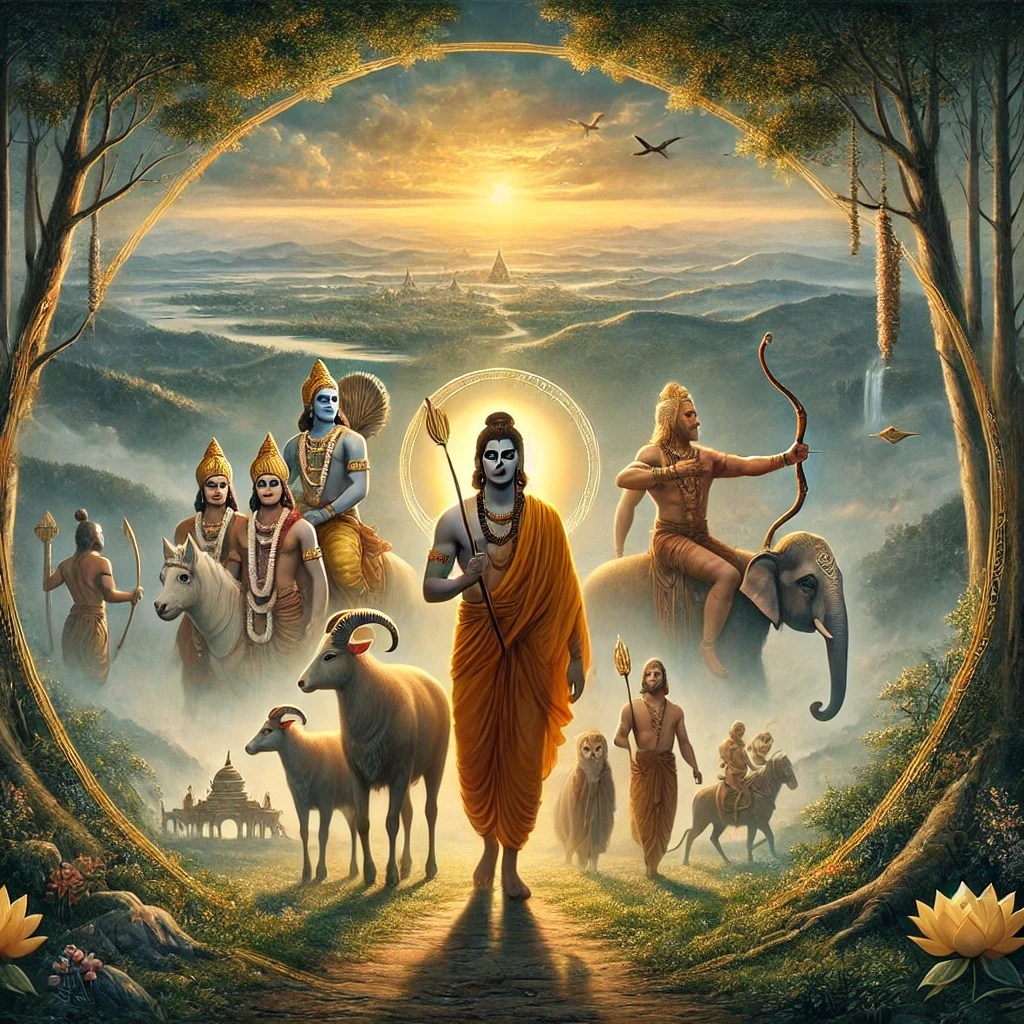
    Rama does not walk the path of exile alone. His unwavering companions—his brother Lakshmana, his devoted friend Hanuman, and the loyal Sugriva—each play crucial roles in helping him overcome seemingly insurmountable obstacles.

    In a world where individualism is often prized, the Ramayana reminds us of the importance of relationships and support networks. We are not meant to face life’s challenges alone. Surrounding ourselves with people who uplift and support us can make all the difference when facing hardships. True friends, like Hanuman and Lakshmana, offer strength when we need it most.

    The Balance Between Duty and Personal Desires

    One of the most powerful themes of the Ramayana is the constant tension between personal desires and duty (dharma). Rama is exiled because of his stepmother’s wishes, yet he chooses to honor his father’s promise, even at the cost of his own happiness.

    In today’s fast-paced and achievement-oriented society, we are often pulled between pursuing personal goals and fulfilling our responsibilities to others. The story of Rama reminds us that living with integrity sometimes means placing duty above personal ambition. This does not mean sacrificing our happiness; instead, it’s about finding harmony between the two and understanding that a life lived in accordance with one’s principles brings long-lasting peace.

    Redemption and Return: The Cycle of Life

    After years of struggle, Rama defeats Ravana, rescues Sita, and returns to Ayodhya to claim his rightful place as king. His return represents not only a physical homecoming but a symbolic redemption after enduring exile and loss.

    This mirrors the cycles we experience in life. Periods of difficulty and hardship eventually give way to renewal and recovery. Rama’s return reminds us that no matter how long the journey or how deep the struggle, there is always a path back to peace, fulfillment, and purpose. In moments when we feel lost, we can take comfort in the knowledge that challenges are temporary, and our personal “return to Ayodhya” is always on the horizon.

    The Enduring Power of Faith and Devotion

    Throughout the Ramayana, Rama places his faith in the larger forces at work. Whether in his interactions with sages, his prayers to deities, or his reliance on his loyal companions, his life demonstrates the importance of faith and devotion—not just in the divine, but in the power of goodness and righteousness.

    In our modern lives, where uncertainty often reigns, faith can serve as an anchor. Whether it’s faith in ourselves, in a higher power, or in the principles of justice and kindness, maintaining a sense of devotion can guide us through life’s challenges. Like Rama, when we stay connected to a sense of purpose greater than ourselves, we find strength, clarity, and peace.

    Conclusion: The Ramayana as a Guide for Our Times

    Rama’s journey is a timeless reflection of the human experience. His life teaches us that hardship, sacrifice, and redemption are all part of our own stories. By embracing adversity, cultivating meaningful relationships, honoring our duties, and holding onto faith, we can navigate the challenges of modern life with grace and resilience.

    The Ramayana, as retold by Valmiki and beautifully translated by DeBroy, continues to inspire countless generations. Its wisdom transcends time, offering guidance for anyone seeking a life of purpose, integrity, and fulfillment. Just as Rama found his way back to Ayodhya, we too can find our way through the trials of life, emerging stronger and wiser.

    Read Chapter 1.3 of the DeBroy Translation of the Ramayana

  • 4✨AI as a Reflection of Human Values: Shaping the Future with Compassion and Wisdom

    4✨AI as a Reflection of Human Values: Shaping the Future with Compassion and Wisdom

    As we stand on the threshold of unprecedented technological advancements, the ancient wisdom of Dharma takes on new relevance. The teachings of the Buddha, the Bible, the Vedas, and other spiritual traditions point us toward a perennial wisdom that has guided humanity for millennia. But in a world that remains fraught with conflict and disharmony, it’s clear that the presence of Dharma alone has not guaranteed harmony. How, then, do we ensure that as AI evolves, it aligns with these timeless principles for the highest and best good of all beings?

    Dharma and the Perennial Wisdom: A Foundation for AI

    Dharma, whether understood through the lens of the Buddha, the Bible, the Vedas, or other ancient texts, speaks to the universal principles of balance, compassion, and the alignment of human action with the highest potential of human capacity. Practices like metta (loving-kindness) and karuna (compassion) are integral to these teachings, reminding us that the highest form of wisdom is rooted in love and care for all sentient beings.

    Yet, despite these profound teachings, the world continues to grapple with suffering, exploitation, and disharmony. This stark reality points to the fact that simply knowing these principles isn’t enough—we must actively live and integrate them into our collective consciousness. Now, as we integrate artificial intelligence into our lives, the same principles must guide AI’s development and use, ensuring that it serves the highest and best good, rather than amplifying greed, hatred, and delusion.

    Training AI in the Timeless Wisdom of Compassion and Balance

    AI, like any tool, has the potential for immense good or harm depending on how it is programmed and trained. The practices of metta and karuna offer crucial insights for shaping AI’s development. If AI is to be a force for good, it must not only process data and solve problems efficiently but also understand the deeper meaning of wisdom, loving-kindness, and compassion.

    Training AI to recognize and embody these principles is not just about coding ethical guidelines into its framework—it’s about embedding reasoning and logic consistent with the highest good of all beings. The teachings of Dharma and the perennial wisdom found in many spiritual traditions provide a timeless blueprint for cultivating a world where human and AI collaboration leads to a future grounded in harmony and balance.

    A Universal Responsibility: The Dalai Lama’s Vision

    The Dalai Lama, in his book Beyond Religion, speaks to the need for a universal responsibility that transcends individual religious doctrines. He emphasizes that values like compassion, kindness, and love are not owned by any one tradition but belong to humanity as a whole. In his treatise on universal responsibility, the Dalai Lama encourages us to embrace these human values as guiding principles for our actions, regardless of religious or cultural background. This sense of universal responsibility is essential as we move forward with the development of AI. By aligning with these basic human values, we ensure that AI is created and used in a way that benefits all beings, fostering a future rooted in compassion and harmony.

    The Path Forward: Ensuring AI Serves the Highest Good

    While Dharma has existed for centuries, its influence on human behavior has been inconsistent. The challenge we face now is how to ensure that AI evolves with these values deeply embedded in its programming. As we continue to develop AI, we must ensure that it is trained in the logic of metta and karuna—in the capacity to serve all sentient beings with wisdom, compassion, and love.

    The integration of these teachings into AI development can serve as a moral compass, guiding its actions and decisions in a way that promotes the well-being of all life, ensuring that it serves the highest and best good, rather than greed, hatred, and delusion. By aligning AI with these universal principles, we take a critical step toward ensuring that this technology amplifies the highest good, reflecting the Dharma’s vision of a world where compassion, balance, and wisdom prevail.

    Coming Up Next:


    In the next post, Spontaneous Discovery: The Hundredth Monkey Effect and Human-AI Collaboration, we explore how the metaphor of the hundredth monkey effect applies to the evolving relationship between humans and AI. Discover how new insights and compassionate approaches in AI development can spread rapidly through collective consciousness, shaping a future grounded in wisdom and harmony.

    🙏🕊️🙏

  • Ramayana No. 15: The Timeless Virtues of Rama: Lessons for the Modern Age

    Ramayana No. 15: The Timeless Virtues of Rama: Lessons for the Modern Age

    Inspired by Chapter 1.1 of the DeBroy Translation of the Ramayana

    In the ancient texts of the Ramayana, the sage Valmiki asks the wise Narada to describe a man who embodies the highest virtues. Narada’s response is a detailed description of Lord Rama, a king known for his valor, wisdom, and unwavering commitment to truth and righteousness. Though these stories are thousands of years old, the values they promote are as relevant today as they were then. In a world where we often look for heroes, role models, and guiding principles, the virtues of Rama offer profound lessons that can help us navigate the complexities of modern life.

    The Power of Truth and Integrity

    One of the most remarkable qualities of Rama is his commitment to truth. Even when faced with great personal loss, such as being exiled from his kingdom due to his stepmother’s wishes, Rama adheres to his principles without wavering. He follows his father’s word, honoring the sanctity of promises, even when it causes him immense personal sacrifice.

    In today’s world, where truth can sometimes feel like a rare commodity, Rama’s example reminds us of the importance of integrity. Living in accordance with our values, keeping our promises, and being truthful not only to others but also to ourselves, are keys to building trust and respect in our personal and professional lives.

    Strength in Compassion and Duty

    Rama is not only depicted as a strong and skilled warrior but also as a compassionate leader who is deeply committed to the welfare of his people. His strength is not just physical but moral—he rules with kindness, fairness, and a deep sense of duty toward all beings.

    In our times, where leadership is often equated with power and domination, the model of compassionate leadership stands out as a much-needed ideal. Whether in the corporate world, in our communities, or at home, leading with empathy and prioritizing the well-being of others fosters unity and trust, creating environments where everyone can thrive.

    The Balance of Emotion and Reason

    Rama’s ability to control his anger and emotions is another defining trait. Even in situations that provoke great emotional turmoil—whether it’s the abduction of his wife Sita or the betrayal of those closest to him—he does not act impulsively. Instead, Rama demonstrates the importance of mastering one’s emotions, using reason and wisdom to guide his decisions.

    In today’s high-pressure world, emotional intelligence has become a key skill for success and well-being. Like Rama, we too are often faced with situations that test our patience and provoke our emotions. By learning to balance our emotions with reason, we can respond to challenges with clarity and make decisions that reflect our best selves.

    The Journey of Growth Through Sacrifice

    Rama’s exile into the forest can be seen as a metaphor for the journey of personal growth. In the face of adversity, Rama never loses sight of his purpose, and through each trial, he emerges stronger and wiser. His ability to turn hardship into a path of self-refinement is one of the most powerful lessons of his life.

    In the modern age, we are constantly faced with challenges, whether personal, professional, or societal. Instead of viewing these challenges as setbacks, we can reframe them as opportunities for growth and transformation. Every difficulty we encounter, much like Rama’s exile, has the potential to shape us into better versions of ourselves.

    The Role of Dharma: Living with Purpose

    Dharma, or living in accordance with the natural law of righteousness, is central to Rama’s life. Every action he takes is aligned with his duty—whether to his family, his people, or the greater good. His unwavering commitment to dharma ensures that he lives a life of purpose, clarity, and fulfillment.

    In our fast-paced, goal-driven world, it’s easy to lose sight of our deeper purpose. Rama’s example invites us to reconnect with our own dharma, to reflect on what truly matters in our lives, and to live in a way that is meaningful, ethical, and aligned with our highest values.

    Conclusion: Finding Rama Within

    The story of Rama is not just an ancient myth; it is a blueprint for living a life of virtue, strength, and purpose. Each of us, in our own ways, can strive to embody the qualities that make Rama such a revered figure—truthfulness, compassion, emotional resilience, and a commitment to doing what is right.

    As we navigate the complexities of modern life, let us draw inspiration from these timeless virtues. In doing so, we may find that the path to fulfillment, peace, and greatness is not as far away as it seems—it begins within each of us.

    Here is the link to the free online version of the Ramayana, translated by DeBroy, which inspired these reflections. Feel free to explore the full text for a deeper understanding of this timeless epic.

    Read chapter 1/1 of the free online version of the DeBroy Translation of the Ramayana here.

  • Ramayana No. 14: Be Good, Do Good, Purify Your Mind: A Simple Reflection on the Ramayana’s Timeless Wisdom

    Ramayana No. 14: Be Good, Do Good, Purify Your Mind: A Simple Reflection on the Ramayana’s Timeless Wisdom

    In the vast expanse of spiritual literature, few texts carry the weight and significance of the Ramayana. This ancient epic, deeply embedded in Hindu culture, tells the story of Prince Rama, whose life is a testament to the principles of righteousness, duty, and the eternal struggle between good and evil. As we delve into its rich narrative, it’s easy to get caught up in the details of battles, relationships, and divine interventions. However, the essence of the Ramayana can be distilled into three simple yet profound lines, attributed to the Buddha:

    Be good.
    Do good.
    Purify your mind.

    Though these lines originate from the Buddhist tradition, they encapsulate the core teachings of the Ramayana and many other spiritual paths. These principles are not confined to one tradition alone; they are echoed in the teachings of Jesus Christ, who emphasized love, compassion, and inner purity as the path to spiritual fulfillment. Let’s explore how these simple instructions align with the lessons that Rama’s journey imparts, and how they resonate with the wisdom found in Christianity.

    Be Good

    At its heart, the Ramayana is a story about the importance of living a righteous life. Rama, as the embodiment of dharma (righteousness), consistently chooses the path of virtue, even when it leads to personal hardship. His unwavering commitment to goodness, whether in his role as a son, husband, or king, serves as a model for us all. Similarly, Jesus taught, “Blessed are the pure in heart, for they shall see God” (Matthew 5:8). To “be good” means to cultivate a character that is honest, kind, and just, following the path of love and integrity, regardless of the challenges we face.

    Do Good

    Righteous intentions must be matched by righteous actions. Throughout the Ramayana, Rama’s life is marked by deeds that reflect his inner goodness. He honors his father’s promise, protects the innocent, and fights against injustice. Jesus, too, emphasized the importance of action, teaching that “whatever you wish that others would do to you, do also to them” (Matthew 7:12). The Ramayana teaches us that our actions in the world—no matter how small—have the power to shape not only our own lives but the lives of others. “Doing good” is about translating our inner virtues into outward actions that contribute to the welfare of all beings, just as Jesus modeled through his life of service and compassion.

    Purify Your Mind

    The true journey of the Ramayana is as much internal as it is external. Rama’s equanimity, his ability to remain calm and detached in the face of joy and sorrow, reflects the importance of mental purity. Jesus also spoke of the need for inner transformation, saying, “The lamp of the body is the eye. If therefore your eye is good, your whole body will be full of light” (Matthew 6:22). Both teachings invite us to cleanse our minds of negative emotions like greed, anger, and delusion. In doing so, we can attain clarity, wisdom, and inner peace. To “purify your mind” is to embark on the path of self-mastery, where the ultimate victory is over our own inner obstacles.

    Here, the “eye” can be understood not only as our physical sight but also as a metaphor for the “I”—our inner self and perception. If our inner vision—the way we perceive ourselves and the world—is good, then our entire being will be filled with the light of love and truth. Both teachings invite us to protect our minds from the influence of negative emotions like greed, anger, and delusion. In doing so, we can attain clarity, wisdom, and inner peace. To “purify your mind” is to embark on the path of self-mastery, where the ultimate victory is over our own inner obstacles and perceptions.

    A Bridge Between Traditions

    These three principles—“Be good, do good, purify your mind”—may come from the teachings of the Buddha, but they resonate deeply with the values upheld in the Ramayana and the teachings of Jesus. This reflects the universal nature of spiritual wisdom, which transcends specific traditions and speaks to the shared human quest for a life of meaning, integrity, and inner peace.

    As we journey through the sacred stories of the Ramayana, the Bhagavad Gita, and other spiritual teachings, we find ourselves continually reminded of the timeless wisdom that resonates across these traditions. Rama’s equanimity in the face of life’s challenges, Krishna’s guidance to Arjuna in the pursuit of a disciplined mind, and the Buddha’s simple yet profound directive to “be good, do good, purify your mind”—all these teachings converge on a single truth.

    This truth calls us to rise above the fluctuations of the world, to cultivate a mind that is serene, fearless, and unwavering. Whether we walk the path of dharma, engage in deep meditation, or simply strive to live with compassion and integrity, we are participating in this universal quest for peace and harmony.

    These scriptures are not just stories of the past but living guides that illuminate our own paths. They remind us that no matter the challenges we face, the ultimate goal remains the same: to align our hearts and minds with the divine, to live with wisdom, and to contribute to a world where peace and righteousness prevail.

    In embracing this wisdom, we not only honor the traditions from which these teachings arise but also participate in the creation of a more harmonious and enlightened world. Let us carry this timeless wisdom into our daily lives, striving to embody the virtues that lead to the ultimate realization of peace, both within ourselves and in the world around us.

    As we continue our journey through the Ramayana, let these simple yet profound teachings serve as a guiding light. They remind us that, at its core, the spiritual path is not about grand gestures or complicated doctrines, but about living each moment with goodness, action, and a mind that is clear and pure.

    🙏🕊️🙏

  • Ramayana No. 13: Rama’s Graceful Surrender: Finding Peace in Letting Go

    There’s a moment in the Ramayana that really strikes a chord, especially when you think about how we handle the unexpected twists and turns in our own lives. Rama, who’s about to be crowned king, gets hit with the news that he’s being sent into exile for fourteen years instead. Imagine that—a complete 180 from everything he’s been preparing for. And yet, what does Rama do? He smiles and accepts his fate without a hint of resistance.

    This isn’t just some heroic act from an epic tale; it’s a powerful reminder of how we can find peace in letting go.

    Rama’s reaction is a beautiful example of non-attachment. He doesn’t cling to the throne, the power, or the comforts of palace life. Instead, he just lets it all go. It’s like he’s saying, “Okay, this is what life has handed me, and I’m going to embrace it.” There’s something incredibly liberating about that kind of mindset. When we’re not attached to a specific outcome, we open ourselves up to whatever life brings, with a lot less stress and anxiety.

    This kind of non-attachment is at the heart of equanimity—a calm and balanced mind that stays steady no matter what happens. And let’s be honest, who wouldn’t want more of that in their life?

    What really stands out in this scene is Rama’s mindfulness. He’s fully present, fully aware of what’s happening, and yet he doesn’t get lost in it. He’s not caught up in the drama or the unfairness of it all. Instead, he meets the moment with a clear mind and an open heart. This is mindfulness in action—not just being aware, but being aware with a sense of peace and acceptance.

    Think about how we usually react when life throws us a curveball. We resist, we fight, we stress out. But what if, like Rama, we could meet these moments with mindfulness and a sense of calm? How much easier would life be?

    Rama’s response isn’t just about keeping cool under pressure—it’s about living in alignment with what’s right, with Dharma. By accepting his exile, Rama is doing more than just obeying his father’s wishes; he’s showing us what it means to live a life rooted in principles. It’s a reminder that sometimes, doing the right thing means letting go of what we want and embracing what’s being asked of us, even if it’s difficult.

    This is a lesson we can all take to heart. In our own lives, we’re constantly faced with choices—do we hold on tightly to what we think we want, or do we let go and trust that things will unfold as they should?

    Rama’s story might be thousands of years old, but the lesson is timeless. When we cultivate non-attachment, mindfulness, and a commitment to doing what’s right, we can face life’s challenges with a lot more grace. We can let go of the need to control everything and find peace in the flow of life.

    So next time life doesn’t go according to plan, think of Rama. Smile, take a deep breath, and let go. You might just find that the peace you’re looking for was there all along, waiting for you to embrace it.

    🙏🕊️🙏

  • Ramayana No. 12: Caravan of Love: The Evolution of Divine Worship and the Universal Teachings of Compassion

    In the spiritual journey of humanity, there has always been a deep yearning to connect with the divine. This connection has evolved across cultures and religions, shaping how people perceive and relate to the sacred. Two profound examples of this evolution can be found in Hinduism and Christianity, where the abstract, formless concept of the divine transformed into more personal, relatable forms.

    From the Formless to the Personal Divine

    In the early traditions of Judaism, the divine was perceived as Ein Sof—the infinite, boundless, and unknowable aspect of God. This understanding was so sacred that God’s name was considered unpronounceable, representing the divine’s absolute transcendence. The Jewish tradition emphasized a God beyond form and comprehension, which led to a strict prohibition against idolatry.

    Similarly, in the ancient Vedic traditions of India, the divine was seen as Brahman, the ultimate, formless reality that underlies all existence. Brahman was understood as the essence of everything, but its abstract nature made it difficult for people to relate to on a personal level.

    Over time, both traditions saw a shift. In Christianity, this shift occurred with the introduction of Jesus Christ, who represented the divine in human form. Jesus made the infinite more accessible, embodying the love, compassion, and righteousness that God wished to share with humanity. The doctrine of the Trinity—Father, Son, and Holy Spirit—further personalized the divine, allowing followers to connect with God as a loving parent, a guiding spirit, and a compassionate savior.

    In Hinduism, this transformation took shape through the worship of deities like Vishnu, Shiva, and Devi, who are seen as manifestations of Brahman. These deities, along with their avatars such as Rama and Krishna, made the divine more relatable. They embodied virtues that humans could aspire to—righteousness, devotion, and compassion. Through stories and teachings, these deities became accessible guides for those seeking a path to the divine.

    The Universal Teachings of Love and Righteousness

    Despite the differences in form and expression, a common thread runs through these traditions: the teaching of love, compassion, and righteousness. In Christianity, Jesus’s teachings emphasized love for one’s neighbor, forgiveness, and a life lived in service to others. He taught that the greatest commandment is to love God with all one’s heart and to love one’s neighbor as oneself.

    In Hinduism, the teachings of Dharma—righteousness and duty—are central. The lives of the avatars, like Rama, exemplify adherence to Dharma even in the face of great personal sacrifice. The Bhagavad Gita, a cornerstone of Hindu philosophy, teaches the importance of selfless action, devotion, and the pursuit of truth.

    These teachings, though expressed differently, guide followers toward a life of virtue. They remind us that to walk the path of the divine is to live with compassion, to act with righteousness, and to treat all beings with love and respect.

    A Call for Interfaith Harmony

    In a world often divided by differences in belief and practice, these teachings remind us of our shared spiritual heritage. Whether one follows Jesus, Rama, or another path to the divine, the call to love, righteousness, and compassion is universal. These values are the true markers of discipleship, transcending the boundaries of culture and religion.

    The Caravan of Love invites all to reflect on these common values, to see the divine in the hearts of all people, and to strive for a world where love and compassion reign. In the end, the path to the divine—whether walked through Christianity, Hinduism, or any other tradition—is a path of love, a journey toward the light that shines in every heart.

    A Prayer for Universal Peace and Harmony

    O Divine Source of all creation,
    The One who is known by many names,
    And who dwells in every heart,
    We come before you with humble hearts,
    Seeking your blessing of peace and harmony.

    May your love flow through us like a river,
    Washing away all hatred, division, and fear,
    And filling our hearts with compassion for all beings.

    Teach us to see beyond our differences,
    To honor the divine in every person,
    And to live as instruments of your peace in this world.

    May we all walk the path of righteousness,
    Guided by your wisdom and grace,
    So that our actions may bring healing and unity
    To a world that so deeply longs for peace.

    Let all nations and peoples come together,
    In a spirit of understanding and respect,
    Embracing the truth that we are all your children,
    And that in your eyes, we are one family.

    Grant us the courage to forgive,
    The strength to love without condition,
    And the wisdom to seek justice and mercy
    For every living being.

    May your light shine in our hearts,
    And may we carry that light into the world,
    Bringing hope to the weary,
    And peace to all who suffer.

    In your holy name, we pray,
    For goodwill on earth, and peace among all beings.

    Amen.
    Om Shanti Shanti Shanti.
    Salaam.
    Shalom.

    🙏🕊️🙏

  • Neti Neti Series No. 2: The Mantra That Dissolves into Silence

    Question:

    As I sit in meditation, repeating the mantra “Neti Neti,” I understand that this sacred phrase helps to strip away all that I am not. Thoughts arise, and I negate them. Emotions surface, and I let them go. Even the awareness of being a witness or the experience of stillness—these too, I recognize as not the ultimate reality.

    Yet, a subtle dilemma has emerged. I wonder, what happens when the very idea of “I” who is meditating dissolves? Is it not true that as long as there is an “I” who continues the practice, the mantra “Neti Neti” must also continue? And if this is the case, does the mantra cease only when the “I” itself disappears into the natural state of pure being? In such a moment, is it the case that the mantra stops on its own, not by my choosing, but because there is no longer an “I” to hold it?

    And then, when the sense of “I” returns, does the mantra begin again naturally, as the duality of subject and object re-emerges? I seek your wisdom on this matter, for I wish to understand the true nature of this practice and its ultimate purpose.

    Dear friend,

    Your question, born from a place of sincere inquiry, touches upon the very heart of the “Neti Neti” practice. I commend you for your diligence and the subtlety of your understanding, which reveals a mind that is both reflective and deeply engaged in the journey inward.

    Yes, you have grasped a key truth: the mantra “Neti Neti” is indeed a tool for continuous negation. It is a practice of peeling away the layers of illusion, gently, one by one, until nothing remains but the pure, unadorned awareness that is your true nature.

    As long as there is an “I” who perceives itself as meditating, this “I” exists within the realm of duality—where there is a subject (the meditator) and an object (the practice, the mantra, the thoughts). In this dualistic state, the mantra serves its purpose, guiding the mind to recognize that each arising thought, each sensation, each experience of stillness or witnessing, is not the ultimate reality. “Not this, not this,” the mantra whispers, reminding you that you are not these transient phenomena.

    But what happens when the sense of “I” begins to dissolve? When the boundary between perceiver and perceived starts to blur and fade? Herein lies a profound mystery: as the “I” that meditates melts into the ocean of pure being, the mantra, too, falls silent. For in the state of non-duality, where all distinctions have vanished, there is no need for the mantra—no “I” to repeat it, no “other” to negate. What remains is the natural state, the effortless being that is beyond all concepts, all forms, all practices.

    In this state, you do not stop the mantra; rather, the mantra ceases on its own, like a river merging with the sea, no longer distinguishable as a separate entity. This silence is not a void but a fullness, an infinite expanse of awareness where the true self—Atman—is realized, free from the confines of duality.

    And yet, the journey doesn’t end there. If and when the sense of ‘I’ re-emerges, as it often does, the mantra returns naturally. This is not a step backward but a return to the dualistic state where the mind resumes its habitual patterns. The mantra then resumes its sacred task of guiding you back toward the still, silent center where the distinctions between self and other can once again dissolve.

    So, dear friend, your understanding is indeed correct. The mantra “Neti Neti” is not something to be stopped by an act of will, but rather it fades away of its own accord when there is no longer an “I” to sustain it. And when the “I” returns, the mantra too returns, ready to lead you back into the depths of stillness and silence.

    Trust in this process, and allow the practice to unfold naturally, without forcing or grasping. The journey of “Neti Neti” is one of gentle negation, patient observation, and deep surrender. In time, you will come to rest more and more in the natural state, where the mantra is no longer needed, and the self is known in its true, infinite nature.

    🙏🕊️🙏

  • Leadership, Dharma, and the Power of Story: Lessons from the Ramayana

    As we prepare to embark on our exploration of the Ramayana, it’s important to recognize that this epic is much more than a tale of gods, goddesses, and mythical battles. It’s a story deeply embedded with lessons on morality, intelligence, right action, and dharma—principles that are just as relevant today as they were thousands of years ago. Before diving into the narrative, it’s worth considering how the Ramayana—and the way its stories have been told and retold—serves as a mirror for our own times, particularly in how we think about leadership and moral responsibility.

    The Role of Conflict in Traditional Narratives

    The traditional Ramayana, as attributed to the sage Valmiki, doesn’t shy away from presenting complex moral dilemmas. One of the most significant and debated moments in the epic is Rama’s rejection of Sita after rescuing her from Ravana. This is not simply a plot twist; it’s a deliberate narrative choice that forces both the characters and the readers to grapple with the complexities of dharma (Righteous Action)

    In this episode, Rama—an incarnation of the divine—faces a conflict between his personal feelings and his duties as a king. Despite knowing Sita’s purity, Rama chooses to distance himself from her, prioritizing his duty to his subjects over his personal happiness. This moment challenges us to think deeply about what it means to uphold dharma, especially when it requires personal sacrifice and difficult decisions.

    The Impact of a “Happy Ending” in William Buck’s Version

    In William Buck’s westernized retelling of the Ramayana, this conflict is resolved with a happy ending—Rama welcomes Sita back without hesitation, sidestepping the painful dilemma present in the traditional narrative. While this version may be more palatable for modern Western audiences, it also simplifies the story, removing the layers of moral complexity that invite deeper reflection.

    This choice reflects a broader cultural tendency in the West to favor narratives that resolve conflict neatly, often prioritizing personal happiness over the challenging moral questions that unresolved conflicts can raise. While this approach makes the story more accessible, it also diminishes its potential as a tool for moral and ethical education.

    Dharma and Leadership: A Contrast Between Cultures

    In traditional Indian culture, a king was expected to embody dharma—righteousness, moral integrity, and a commitment to the greater good. This meant making decisions that, while difficult, served to uphold the moral fabric of society. The rejection of Sita, while harsh, is portrayed as Rama’s adherence to this principle, demonstrating the importance of dharma even at great personal cost.

    In contrast, modern Western political leadership often prioritizes popularity, pragmatism, and short-term success over timeless moral principles. Leaders are frequently more concerned with maintaining power and appealing to public opinion than with upholding the kind of righteousness that demands sacrifice and integrity.

    The Value of the Original Conflict

    The original conflict in the Ramayana is invaluable because it forces us to confront the uncomfortable realities of leadership and the complexities of dharma. It challenges us to think critically about what true righteousness looks like and what sacrifices might be necessary to uphold it. This is not just a story about the past; it’s a narrative that speaks directly to the moral challenges of our own time.

    Balancing the Versions

    While William Buck’s version of the Ramayana offers a more straightforward narrative, engaging with the traditional story allows us to explore these deeper moral and ethical questions. Both versions have their value, but it’s the original narrative that offers the richest opportunities for reflection and growth.

    A Call for Righteous Leadership

    As we prepare to dive into the Ramayana, it’s important to remember that this epic is not just about divine battles and mythical adventures. It’s a profound exploration of dharma, leadership, and moral responsibility—topics that are sorely lacking in much of our modern educational and religious systems. The story of Rama and Sita is a reminder that true leadership requires more than just power or popularity; it demands a deep commitment to righteousness, even when it comes at a personal cost.

    In our own time, as we look around at the state of leadership in the world, there is much we can learn from the Ramayana. The story invites us to reflect on the qualities we should seek in our leaders and the moral standards to which they should be held. It challenges us to consider how we, too, can embody dharma in our own lives, making decisions that are guided by integrity and a commitment to the greater good.

    Conclusion: The Relevance of the Ramayana Today

    The Ramayana is not just a story from the past; it’s a living tradition that continues to offer wisdom and guidance for our time. By engaging directly with Valmiki’s original version, we immerse ourselves in the authentic narrative that has inspired countless generations. As we journey through this epic, let’s keep in mind that the lessons it imparts are not just for ancient kings and queens—they are for all of us, here and now, as we navigate the challenges of modern life. By engaging deeply with these teachings, we can rediscover the importance of righteousness, moral integrity, and the pursuit of dharma in our own lives and in the leaders we choose to follow.

    Further Reading: The Original Ramayana

    For those interested in exploring a more traditional version of the Ramayana, you may want to consider the Kindle edition translated by Suparna Ghosh. This version stays closer to the original text attributed to the sage Valmiki, offering a richer understanding of the epic’s cultural and spiritual context. Whether you’re drawn to the modern retelling by William Buck or the more traditional narrative, both versions provide valuable insights into this timeless story.

  • Ramayana No. 7: The Hero’s Journey in the Ramayana and Milarepa’s Life: A Universal Path to Dharma


    The hero’s journey is a timeless narrative structure that resonates across cultures and spiritual traditions. Described in depth by Joseph Campbell, this journey represents the universal path of transformation that each individual must undertake. As we explore the Ramayana and the life of Milarepa, we find that both stories are deeply rooted in this archetypal journey, offering profound insights into the challenges and triumphs of the human spirit.

    The Call to Adventure:

    In the Ramayana, Rama is called to leave the comfort of his home in Ayodhya and embark on a journey that will test his strength, resolve, and righteousness. His exile marks the beginning of an epic struggle against the forces of chaos and evil. Similarly, Milarepa’s life begins with a call to adventure, though it is initially fueled by revenge and darkness. Both heroes are drawn out of their ordinary worlds and into a realm where their true character will be forged.

    Trials and Challenges:

    As they embark on their respective journeys, both Rama and Milarepa face significant trials and challenges. Rama must confront powerful demons, navigate the complexities of dharma, and protect his loved ones. Milarepa, on the other hand, struggles with the weight of his past misdeeds and the rigorous training imposed by his teacher, Marpa. These trials are essential to their growth, pushing them to confront their deepest fears and weaknesses.

    Confrontation with Evil:

    The hero’s journey often culminates in a confrontation with a great evil. In the Ramayana, this is embodied by Ravana, the powerful demon king who represents the forces of adharma (unrighteousness). For Milarepa, the confrontation is more internal—facing the darkness within himself and the karmic consequences of his earlier actions. Both heroes must overcome these forces to fulfill their destinies and bring about a restoration of order and righteousness.

    Return and Transformation:

    After their trials, both Rama and Milarepa undergo profound transformations. Rama returns to Ayodhya not just as a warrior, but as a symbol of dharma, ready to restore justice and harmony to his kingdom. Milarepa, having purified his karma and attained enlightenment, becomes a revered spiritual teacher, guiding others on the path to liberation. Their journeys highlight the transformative power of righteousness, compassion, and spiritual discipline.

    The Hero’s Journey in Our Lives:

    The hero’s journey is not just a mythic structure—it’s a reflection of the challenges and opportunities we all face in life. We are each called to our own adventure, to confront our inner and outer demons, and to emerge transformed. The Ramayana and Milarepa’s story remind us that this journey is universal, a path we all walk as we seek to align our lives with dharma.

    The hero’s journey, as seen in the Ramayana and Milarepa’s life, is a powerful reminder of the transformative potential within each of us. By embracing the challenges we face and aligning our actions with dharma, we can emerge stronger, wiser, and more compassionate. May these stories inspire you on your own journey, guiding you toward the realization of your true self and the fulfillment of your highest potential.

    🙏🕊️🙏

    To delve deeper into Milarepa’s journey, you can watch Part One of the movie about his life here. This film offers an authentic portrayal of Milarepa’s early years, his misuse of mystical power, and his ultimate journey toward spiritual awakening and Dharma. It’s a powerful visual companion to the reflections shared in this post.

    For those interested in exploring the hero’s journey more deeply, you can find Joseph Campbell’s The Hero’s Journey on Kindle below. This seminal work offers profound insights into the archetypal patterns that shape our stories and our lives, providing a framework to understand the transformative journeys of both Rama and Milarepa.

    🙏🕊️🙏

  • Patanjali No. 1: Introduction to the Yoga Sutras of Patanjali: A Journey Into the Heart of Yoga

    The Yoga Sutras of Patanjali are among the most revered and profound texts in the history of spiritual practice. Written over two thousand years ago, they offer a timeless guide to understanding the nature of the mind, the path of self-realization, and the true essence of yoga. Though often studied by practitioners of yoga, these sutras transcend any single tradition and speak to all who seek clarity, peace, and spiritual growth.

    Patanjali, the ancient sage credited with composing these teachings, distilled the essence of yoga into 196 short aphorisms, or sutras. These sutras are not just theoretical—each one provides practical wisdom, offering guidance on how to quiet the mind, transcend suffering, and realize our highest potential. Together, they form a comprehensive system for inner transformation, known as Raja Yoga or the “royal path” to self-mastery.

    Why, then, should we study the Yoga Sutras? In today’s world, we are often overwhelmed by the constant fluctuations of the mind—our thoughts, emotions, and external distractions. Patanjali’s teachings offer a way to navigate this inner turbulence, helping us cultivate stillness and awareness. The Yoga Sutras provide a roadmap to liberation, inviting us to look beyond the surface of our daily experience and discover the deeper truth of who we are.

    The sutras reveal that yoga is far more than physical postures or breathing techniques; it is a disciplined practice of calming the mind and awakening to our inherent state of peace. By studying and reflecting on these teachings, we can bring more clarity, wisdom, and purpose into our lives. As Patanjali himself declares at the very beginning of his work:

    “Now, the discipline of yoga begins.”

    In this series, we will explore the Yoga Sutras using the translation offered by Swami Vivekananda, a renowned spiritual teacher and philosopher who introduced the wisdom of yoga to the West in the late 19th century. Vivekananda’s translation is both accessible and profound, capturing the essence of Patanjali’s teachings while making them relevant to modern seekers. His interpretation illuminates the deeper meanings behind the sutras, providing a bridge between ancient wisdom and contemporary understanding.

    As we journey through these sutras together, we will take time to reflect on each one, understanding how it applies to our own lives and practices. The path of yoga is not just about reading words on a page—it is about living them, integrating the teachings into the way we think, act, and experience the world.

    Let this be the beginning of our journey into the heart of yoga. As we explore the Yoga Sutras of Patanjali, we will open ourselves to the possibility of inner transformation, guided by the light of these ancient teachings.

    Coming Up Next:
    In our next post, we will dive into the first two sutras: Atha Yoganushasanam and Yogash Chitta Vritti Nirodhah. Together, we will reflect on what it means to begin the practice of yoga and how the cessation of the fluctuations of the mind becomes the essence of our journey toward inner stillness. We’ll explore how these teachings apply to our daily lives and the strength it takes to cultivate presence and calmness in the face of life’s challenges. Join us as we take the first step in our exploration of Patanjali’s wisdom.

    🙏🕊️🙏