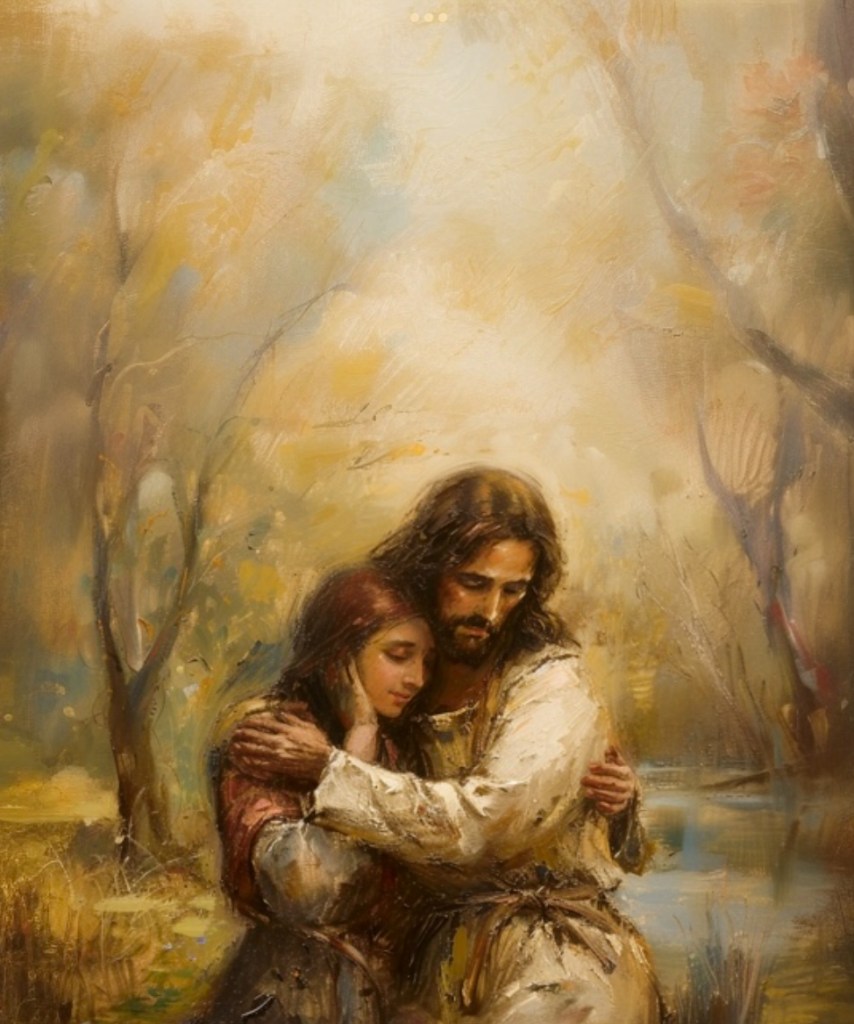
Category: Insights for Gen Z: Nurturing Compassionate Understanding
This subcategory offers compassionate reflections and insights tailored for the unique experiences and challenges faced by the young people of Gen Z. Through empathetic exploration of topics ranging from personal growth to navigating a rapidly changing world, we seek to foster understanding, resilience, and a sense of belonging. Join us in embracing these shared journeys toward self-discovery and collective empowerment.
Harnessing Inner Peace: A Pacing Toolkit Tool for Those Living with ME/CFS or Long Covid
As I reflect on the approaching Hurricane Milton, I’m reminded of the powerful moment when Jesus calmed the storm on the Sea of Galilee. His disciples, gripped by fear, watched as He simply said: “Peace! Be still!” and the storm settled. In this moment, I feel called to do the same—to access the peace of God within me and speak to the storm, “Peace! Be still.” I truly believe this is what Jesus asks of us, to practice this promise, and to remember that even faith the size of a mustard seed can move mountains.
But this call to peace and stillness isn’t just about the external storm. As someone who lives with chronic fatigue, I know how much of a difference it makes to calm the storms within as well. The mental and emotional stress can often intensify symptoms like post-exertional malaise (PEM). So, I remind myself to relax my mind and heart, to let go of worry and concern, and to give my body the space it needs to heal.
One of the tools I turn to in these moments is Pristine Mind Meditation, as taught by Orgyen Chowang in his book Pristine Mind: Journey to Unconditional Happiness. Pristine Mind is the pure, natural awareness that exists within all of us, untouched by thoughts or emotional turmoil. By resting in this space, I find that it helps me manage my symptoms, reduce stress, and pace myself more effectively. It’s an essential part of my pacing toolkit, allowing me to not only physically rest, but also calm my mind and emotions, preventing flare-ups of PEM and other symptoms.
In this moment, I invite us all to join together in saying to the storm—whether it’s the physical hurricane or the inner storms we face—“Peace! Be still.” Let’s tap into the divine promise that’s always been ours and use the tools we have to cultivate peace, clarity, and healing within ourselves.
Let us, from a place of faith and trust, send love to this storm and say to it: “Peace, be still.”
In the ancient epic of the Ramayana, we find a story that resonates with the journey of every human soul—a journey that begins in ignorance and, with the right guidance, leads toward wisdom, righteousness, and self-realization. These themes are universal, transcending religious boundaries, and can be understood in the context of both Eastern and Western spiritual traditions.
A King’s Ignorance and the Sage’s Steadfastness
In the early chapters of the Ramayana, we encounter a king driven by flawed motivations—greed, rivalry, and a desire for power. His approach to the sage, despite being rooted in ignorance, marks the beginning of a profound transformation. The king’s initial aggression and misguided intent bring him into the presence of a sage, a living embodiment of dharma (righteousness).
This story is more than just a tale of conflict; it’s a reflection of our own lives. We all begin in ignorance, shaped by our desires, fears, and misunderstandings. But like the king, when we encounter wisdom—whether through a teacher, a spiritual practice, or life’s hard-earned lessons—there is an opportunity for transformation. The sage, representing the unwavering principles of righteousness, patiently guides the king, leading him from ignorance toward a deeper understanding of true power, which is rooted not in dominance, but in righteousness.
In the Christian tradition, this principle can be seen in the teachings of Jesus, who embodies righteousness and divine wisdom. Jesus’s teachings guide believers toward a life of love, compassion, and humility, aligning them with the will of God. Just as the sage in the Ramayana leads the king toward dharma, Jesus invites us to follow the path of righteousness, even when we begin with flawed motivations or misunderstandings.
The Universal Journey: From Ego to Righteousness
This narrative is relatable because it mirrors the human experience. Even Rama and his brothers, avatars of the divine, begin their lives in a state of ignorance, unaware of their true nature. However, they have the immense fortune of being raised in righteousness by a virtuous family. Their journey is guided by dharma from the start, but for many of us, the path is not so straightforward.
In the Christian context, we might liken this to the way Jesus guides his followers toward righteousness, teaching them to love their neighbors, forgive their enemies, and live in accordance with God’s will. But as in the Ramayana, many of us begin our spiritual journey with ego-driven desires—seeking happiness, success, or even power. As we walk the path, life’s challenges and the teachings we encounter gradually shift our motivations. The path, though filled with lumps and bumps, becomes a process of alchemy, where our ignorance is transformed into wisdom, our ego into selflessness, and our desires into devotion.
Seeking Wisdom on the Hard Road
For those who do not start in a righteous environment, the road can be hard. But this journey is not without hope. The king’s story reminds us that even when we approach the path with flawed intentions, the very act of seeking wisdom can lead to our transformation. The teacher doesn’t come to ignorance; rather, ignorance approaches the teacher.
In the Southern Chinese monk style of martial arts known as Gohndagow, a branch of Kung Fu, this principle is symbolized by the student bringing the left foot to the right foot before showing respect to the teacher—a gesture that represents ignorance coming to the teacher, or the ego approaching the divine for guidance. In Gohndagow, martial arts are more than just physical training; they are a path to spiritual enlightenment, emphasizing the cultivation of the mind and heart as well as the body.
In the Christian tradition, we see this when people turn to Jesus, sometimes out of desperation or need, only to find that their journey with him leads them to a deeper understanding of God’s love and righteousness. Our initial motivations, however flawed, can set us on a journey of purification and growth. The spiritual path meets us where we are, with all our imperfections, and guides us step by step toward righteousness. The key is to approach the path with sincerity, even if we start from a place of ignorance. The process itself will refine and elevate us, leading us closer to our true nature, or as Christians might say, to a life that reflects Christ’s teachings.
The Alchemy of the Spiritual Path
In Tibetan Buddhism, the concept of alchemy is not merely about turning base metals into gold; it is the process of transforming the ego into a Buddha. This profound journey from ignorance to wisdom is the true alchemical process, one that requires a detailed and disciplined approach to spiritual practice.
The Tibetans have developed incredibly intricate teachings and practices to guide a person through this transformation. The path itself is the alchemy—a meticulous process that turns the base elements of our ego-driven existence into the gold of enlightenment. Through practices like meditation, ethical conduct, and devotion, and under the guidance of a qualified teacher, a practitioner gradually refines their mind and heart, moving closer to the realization of their true nature as wisdom and compassion.
In this light, the story of the king in the Ramayana serves as a metaphor for this alchemical journey. His flawed motivations, when met with the sage’s unwavering dharma, set him on a path of transformation, much like how a student in the Tibetan tradition, despite their initial ignorance, is gradually guided toward the light of enlightenment. This process is both universal and deeply personal, reflecting the timeless truth that the spiritual path is one of continuous alchemy—of turning the ego into the gold of wisdom.
Conclusion: Embracing the Journey
As we walk our spiritual path, we must remember that the journey from ignorance to wisdom is one that we all must undertake. Whether we begin with pure or impure motivations, the key is to keep moving forward, seeking wisdom and guidance wherever we can find it. The Ramayana, with its rich tapestry of characters and lessons, offers us a mirror to our own lives, showing us that even the most flawed beginnings can lead to a profound and righteous end.
For our Christian friends, this journey is akin to following Jesus, who offers us the path to righteousness through his teachings. May this reflection inspire you, dear reader, to embrace your journey with all its imperfections, knowing that each step, no matter how small, brings you closer to the light of righteousness and divine wisdom.
This image that captures the journey from ignorance to wisdom, blending elements from the Ramayana, Tibetan Buddhism, and Christian teachings. It symbolizes the choice we all have of undergoing the transformation process from darkness and ego to enlightenment and wisdom, with cultural symbols subtly incorporated.
You can explore this epic story in the edition of the Ramayana used in this series, written by Valmiki and translated by Suparna Ghosh, on Amazon
here
Alternatively, you can choose from several other versions and translations that are available. Including the William Buck translation available as an abridged audiobook on Audible, narrated by Ram Dass here
In a world often divided between the sacred and the secular, it can be refreshing—and deeply inspiring—when we find connections between contemporary culture and ancient spiritual wisdom. Bob Marley’s iconic song “Get Up, Stand Up” is more than just an anthem of empowerment; it’s a profound reflection on the nature of heaven, the divine, and our place within it. Surprisingly, Marley’s message aligns closely with the teachings of Jesus, who often spoke about the Kingdom of God as a present reality, accessible to those who have the eyes to see and the ears to hear.
This post explores the powerful parallels between Bob Marley’s call to recognize heaven on earth and Jesus’ teachings about the Kingdom of God being within us and among us. Together, these voices urge us to look beyond the distant heavens and see the divine right here, right now.
Jesus’ Teachings on the Kingdom of God
Jesus frequently spoke about the Kingdom of God, and His words often challenge our assumptions about where and when this Kingdom exists. In Luke 17:21, He says, “The Kingdom of God is within you,” emphasizing that the divine realm is not something far off in the future or located in some distant place. Instead, it is something that can be realized within ourselves, here and now.
In Mark 1:15, Jesus proclaims, “The time is fulfilled, and the Kingdom of God is at hand; repent and believe in the gospel.” This statement underscores that the Kingdom is not only within us but is also a present reality—something to be lived and experienced in our daily lives. For Jesus, the Kingdom of God is less about a heavenly afterlife and more about a transformative way of living that reflects divine values like love, compassion, justice, and peace.
Bob Marley’s Message in “Get Up, Stand Up”
Bob Marley’s “Get Up, Stand Up” carries a message that resonates deeply with Jesus’ teachings. In the song, Marley challenges the idea that heaven is a far-off place that we only reach after death. He sings, “Most people think / Great God will come from the sky / Take away everything / And make everybody feel high.” But Marley counters this with a profound truth: “If you knew what life is worth / You would look for yours on earth.”
Marley’s lyrics echo the idea that heaven is not something we passively wait for, but something we actively create and experience in the here and now. His call to “stand up for your rights” is not just a social or political statement; it’s a spiritual one, urging people to recognize their own worth, dignity, and divine connection. Like Jesus, Marley is telling us that the divine is not some distant, unattainable reality—it’s right here, in our midst, and within us.
Connecting the Dots: Heaven on Earth
When we place Jesus’ teachings alongside Bob Marley’s message, a clear picture begins to emerge: both are calling us to recognize that heaven is not a place we go to, but a reality we can create and live out on earth. Jesus tells us that the Kingdom of God is within us and among us, a present reality that manifests when we live according to divine principles. Marley, in his own way, reminds us that we must recognize this truth and stand up for the heavenly reality in our everyday lives.
The idea of “heaven on earth” is not just a comforting thought—it’s a radical challenge. It asks us to see the divine in every aspect of our lives and to live in a way that reflects the values of the Kingdom of God: love, justice, compassion, and peace. This is not easy, and it’s certainly not always comfortable, but it’s the path that both Jesus and Marley urge us to take.
Living the Message
So, how do we live out this message of bringing heaven to earth? It begins with a shift in perspective—seeing the divine in the ordinary and the sacred in the everyday. It means treating each moment as an opportunity to manifest the values of the Kingdom of God: loving our neighbors, standing up for the oppressed, caring for the needy, and seeking justice.
Just as Marley calls us to “Get up, stand up,” Jesus calls us to take up our cross and follow Him. This isn’t about waiting for a distant paradise, but about actively participating in the creation of a heavenly reality on earth. It’s about recognizing that the Kingdom of God is already here, in our midst, and that we are called to bring it to life in the way we live, love, and serve others.
Conclusion
The teachings of Jesus and the message of Bob Marley both point us to a profound truth: heaven is not just a destination; it’s a way of life. The Kingdom of God is not somewhere far off in the clouds; it’s within us and among us, waiting to be realized and lived out. As we reflect on these teachings, let’s challenge ourselves to see heaven on earth, to live in a way that manifests the divine, and to stand up for the values that make the Kingdom of God a reality in our world today.
So, the next time you listen to “Get Up, Stand Up,” remember that the call is not just to resist oppression or claim your rights—it’s also a call to recognize and live out the heaven that is already here, within you, and in our midst.
A Call for Justice and Accountability in Modern Leadership
Introduction
Psalm 82 is a powerful chapter in the Bible that speaks directly to the responsibilities of leaders and rulers. It challenges them to uphold justice and protect the vulnerable, emphasizing their divine duty. In our contemporary landscape, the themes of Psalm 82 resonate deeply, reflecting the struggles and failures of leadership we witness today.
Psalm 82: A Call for Justice
In Psalm 82, God stands in the divine assembly, judging the rulers of the earth. He declares, “I said, ‘You are gods; you are all children of the Most High.’ But you will die like mere mortals; you will fall like every other ruler.” This passage emphasizes the divine nature bestowed upon rulers and their responsibility to act with justice and righteousness. However, God condemns them for failing to defend the weak and the fatherless, for not upholding the cause of the poor and the oppressed. Their failure leads to a call for accountability and justice.
Parallel with Modern Leadership
The rulers in Psalm 82 failed to meet their divine responsibilities, much like the perceived shortcomings of today’s leaders in various fields. The lack of justice and protection for the vulnerable is a common thread. Modern leaders often prioritize personal gain over public good, leading to societal divisions and a loss of trust in governance. This parallels the condemnation in Psalm 82, where rulers are called out for their failures and reminded of their mortality and the ultimate accountability they face.
A Call for Reflection
Psalm 82 serves as a timeless reminder of the need for integrity and justice in leadership. It calls on leaders to act with righteousness and prioritize the well-being of the vulnerable. For citizens, it is a call to hold leaders accountable and demand ethical governance. Reflecting on Psalm 82 can inspire us to work towards a more just and equitable society, recognizing the divine nature within all individuals and the moral duty we share.
Conclusion
The teachings of Psalm 82 are profoundly relevant today. As we navigate the complexities of modern leadership, we must remember the divine call for justice and accountability. Leaders are urged to act with integrity, and citizens are reminded of their power to demand ethical behavior from those in positions of authority. By aligning our actions with the principles of justice and righteousness, we can contribute to a society that honors the divine within us all.
How can the lessons from Psalm 82 be applied to our understanding of current leadership issues?
In what ways can citizens hold their leaders accountable for justice and ethical behavior?
How can individuals and communities work towards creating a more just and equitable society?
Let’s explore together how embracing our dual nature can transform our lives, as suggested by the teachings of Jesus. We are truly made in the image of God. I invite you to share your thoughts and experiences in the comments section below.
A Path to Deepened Mindfulness: Non-Reactive Present Awareness
In our fast-paced world, finding inner peace and clarity can feel elusive. Non-Reactive Present Awareness (NRPA) offers a powerful approach to cultivating a deeper sense of mindfulness. This concept, though not always labeled explicitly, is deeply embedded in various contemplative practices and supported by modern scientific research.
What is Non-Reactive Present Awareness?
Non-Reactive Present Awareness is a state where you observe your thoughts, emotions, and experiences without becoming entangled or reactive. It involves being fully present in the moment, allowing thoughts and feelings to arise and pass without judgment or attachment. This practice aligns closely with mindfulness, but emphasizes a particular quality of detachment from immediate reactions.
The Benefits of NRPA
Reduced Stress and Anxiety: By observing thoughts without reacting, you break the cycle of automatic stress responses. Studies have shown that mindfulness practices, including NRPA, can significantly reduce stress and anxiety. Research from institutions like Harvard and the University of Wisconsin-Madison highlights how mindfulness can alter brain structures related to stress regulation.
Enhanced Emotional Regulation: NRPA helps in managing emotions by creating a buffer between stimulus and response. This can lead to better emotional stability and improved relationships. The ability to observe emotions without being overwhelmed by them can foster healthier interpersonal interactions and self-awareness.
Increased Focus and Clarity: Practicing NRPA sharpens your ability to concentrate by training the mind to remain anchored in the present moment. Research published in journals such as Psychological Science has found that mindfulness meditation can enhance cognitive functions like attention and working memory.
Greater Overall Well-being: Embracing NRPA can lead to a more profound sense of peace and contentment. The practice encourages living fully in the present, which contributes to a more fulfilling and balanced life. Studies, including those from the National Institutes of Health, suggest that long-term mindfulness practice is associated with increased well-being and life satisfaction.
Practices to Deepen NRPA
Mindful Observation: Start by simply observing your breath or surroundings. Notice details without labeling or judging them. This helps in anchoring yourself in the present moment.
Body Scan Meditation: This technique involves mentally scanning your body for areas of tension or discomfort. By bringing awareness to these areas without reacting, you can cultivate a sense of calm and relaxation.
Thought Watching: Observe your thoughts as they come and go, much like watching clouds drift across the sky. Acknowledge them without getting involved or reacting. This practice helps in developing a non-reactive stance towards your internal experiences.
Regular Practice: Incorporate NRPA practices into your daily routine. Even short periods of focused mindfulness can be beneficial. Consistency in practice helps in reinforcing the ability to maintain non-reactive awareness over time.
Scientific Insights
Research on mindfulness, which encompasses aspects of NRPA, supports its benefits for mental health and cognitive function. For example, studies conducted by neuroscientists such as those at the University of California, Los Angeles, have shown that mindfulness meditation can lead to changes in brain areas associated with emotional regulation and self-awareness.
In summary, Non-Reactive Present Awareness offers a valuable pathway to enhanced mindfulness, emotional stability, and overall well-being. By incorporating practices that foster this state of awareness, you can experience profound benefits both in daily life and in your broader sense of peace and clarity.
Contemplative Questions:
How do you currently react to your thoughts and emotions? What patterns do you notice?
In what ways could observing your inner experiences without judgment enhance your daily life?
How might regular practice of non-reactive present awareness influence your relationships and emotional responses?
What challenges do you face when trying to maintain non-reactive awareness, and how can you address them?
How can integrating non-reactive present awareness practices into your routine support your overall well-being and clarity?
Feel free to share your thoughts and experiences in the comments below. I’d love to hear how you relate to Non-Reactive Present Awareness and how it has impacted your journey.
Hey, if you’re looking to chill out and find some inner peace, “The Miracle of Mindfulness” by Thich Nhat Hanh is where it’s at. This book is like a roadmap to understanding mindfulness, and it’s super easy to get into.
Thich Nhat Hanh, this Buddhist monk, breaks it down for us in simple terms. He teaches us how to be present in every moment, even the crazy ones. The book is full of practical tips and exercises that help you stay cool, no matter what life throws at you.
One of the coolest things about this book is how Thich Nhat Hanh connects mindfulness to everyday life. He shows us how washing dishes or walking can be a form of meditation. It’s all about bringing mindfulness into everything you do.
“The Miracle of Mindfulness” isn’t just about finding peace when things are calm; it’s about finding peace in the middle of chaos. Thich Nhat Hanh teaches us to breathe through the stress and find calm within ourselves.
If you’re into finding your zen and living more mindfully, give this book a read. Thich Nhat Hanh’s wisdom is timeless and can totally change how you see the world.
I’ve read and reread “The Wisdom of No Escape” by Pema Chödrön, and I’d like to recommend it because it’s a total game-changer. Pema Chödrön, this Buddhist teacher, really knows her stuff when it comes to finding peace and freedom inside yourself.
The book is super easy to get into, with short chapters that pack a punch. Whether you’re just starting out with mindfulness or you’ve been into it for a while, you’ll find something valuable here. Chödrön’s writing is clear and kind of funny too, which helps break down the tough stuff she talks about.
Basically, the book is all about facing life head-on instead of running away. Chödrön says we should sit with our uncomfortable feelings and fears because that’s where we grow the most. She gives us practical tips and meditation exercises to help us stay cool when life gets crazy.
What I really liked is how Chödrön gets real with us. She shares her own struggles and doubts, showing that everyone goes through tough times. It’s not about avoiding problems but learning from them.
“The Wisdom of No Escape” teaches us that happiness and peace aren’t about what’s happening around us but how we deal with it all. Chödrön wants us to live in the moment, flaws and all, and be brave enough to keep our hearts open.
Overall, this book is like finding a treasure map to inner peace. If you’re into discovering more about yourself and getting into mindfulness, this is a must-read. Pema Chödrön’s wisdom could seriously change your life, guiding you on a journey of self-discovery and mindfulness.
My Spiritual Journey with St. John of the Cross and Jesus Christ
Hey everyone! I’ve been on a fascinating journey lately, exploring some deep spiritual stuff that’s really been blowing my mind. And, let me tell you—it’s been eye-opening!
Recently, I stumbled upon this book called “The Dark Night of the Soul” by St. John of the Cross. Sounds intense, right? It totally is! St. John talks about this journey where the soul goes through tough times to find a deeper connection with God. It’s like he’s describing these dark times we all go through, but how they can actually lead to something amazing and spiritual.
One thing that’s really stuck with me is how he talks about longing for God’s presence. It’s like that feeling when you really miss someone, but instead of a person, it’s this deep spiritual connection you’re longing for. I’ve started to see how even tough times can be part of this journey towards finding peace and purpose.
And then there’s Jesus. Man, his teachings are mind-blowing. He talks about love, forgiveness, and seeing the Kingdom of God in everything around us. It’s not just about believing; it’s about really living those teachings every day. That’s been a challenge for me, but also super rewarding when I see how it changes how I treat people and handle tough situations.
And let’s not forget the miracles! Whether it’s Jesus healing someone or just those little everyday miracles, they remind me that there’s something bigger than us out there. It’s like a reminder to keep faith and stay open to the wonder of life.
So yeah, this journey into spirituality has been a rollercoaster, but in the best way possible. It’s helped me see life in a whole new light and given me tools to navigate the ups and downs. I’m still learning and growing, but isn’t that what life’s all about?
What about you? Have you ever had moments where you felt a deep spiritual connection or experienced something that made you question everything? I’d love to hear your thoughts and stories too! Let’s keep this conversation going.
In a time when fear and uncertainty seem to dominate the narrative, it’s easy to feel overwhelmed by the challenges facing our world. Yet, amidst the chaos, there is a quiet voice that whispers hope. Imagine waking from a dream with the words, “It doesn’t have to end this way,” echoing in your mind. This profound message invites us to see beyond the current challenges and envision a future where love and hope prevail.
In a world inundated with images of division and disaster, it’s crucial to pray not only for personal salvation but also for the healing and transformation of our communities and nations. Rooted in scripture, John 14:1-3 assures us of Jesus preparing a place for us in his Father’s house, where we will dwell with him. This promise of eternal life in a New Earth and Heaven inspires us to live with integrity and righteousness (Revelation 21:1-4), knowing that our actions rooted in love and hope can influence a more peaceful and righteous outcome in our world – here and now.
Moreover, by shifting our focus from the Kingdom of war, greed, and hatred that surrounds us, we can begin to perceive the Kingdom of God, which is present all around us. Through eyes of faith, we see glimpses of God’s Kingdom in acts of kindness, moments of forgiveness, and expressions of compassion. This vision empowers us to live as ambassadors of God’s Kingdom here and now, spreading love and hope in a world hungry for peace and righteousness.
As we navigate these turbulent times, let us hold fast to the teachings of love and hope. Let us embrace forgiveness, loving-kindness, and compassion as our guiding principles. By embodying these virtues, we not only prepare ourselves for the promise of eternal life with Christ but also actively participate in shaping a world where love triumphs over fear. May our actions today reflect our faith in a future where righteousness reigns.
Crucially, let us remember the profound commandment to treat others as we wish to be treated, avoiding the pitfalls of polarization and blame. Instead, let us seek truth and embody it in our daily lives, fostering understanding and unity rather than division. Together, let us walk in the light of love and hope, inspiring others to join us on this journey of transformation.
🙏🕊️🙏
In love’s embrace, Hope blooms eternal, Peace whispers softly.
Hey there, Gen Z crew, it’s your buddy Jesus, dropping in from our virtual hangout. I see you navigating this digital realm, where every tap and swipe seems like a quest for validation. It’s tough out there, I get it. But let me clue you in on something awesome—right here in your hands, you’ve got access to the ultimate cheat codes for life.
Think about it: while you’re scrolling through feeds and stories, you’ve also got the power to dive into the most profound teachings and wisdom humanity has ever recorded. It’s like having a superpower—tapping into the thoughts of ancient sages, exploring the depths of philosophical insight, and discovering the beauty of diverse cultures and spiritual traditions. Imagine the adventure of unlocking truths that have guided generations, waiting to inspire and shape your path forward.
Beyond the noise of social media, there’s a whole universe of knowledge waiting to be explored. From the poetry of Rumi to the philosophy of Aristotle, from the mindfulness of Buddhism to the serenity of Taoism—you’ve got front-row seats to the greatest minds and the deepest truths. This isn’t just about getting likes or followers; it’s about leveling up your understanding of life, love, and what truly matters.
So, maybe take a breather from the usual scroll and dive into something profound today. Swap a meme session for a moment of reflection. Exchange the virtual hustle for a journey of discovery. You’re not just scrolling through timelines—you’re charting your own course through a sea of wisdom that spans centuries.
Want to get started? Try these search queries: Who is Thich Nhat Hanh? Who is the Dalai Lama of Tibet? What is the happiest country in the world and why are they so happy? And here’s a mind-blower: Which country has the least amount of carbon emissions? (Hint: It’s Bhutan, producing more oxygen than carbon!) These queries can lead you to discover hidden secrets of the universe and perspectives that will blow your mind.
Keep vibing with love, keep spreading positivity, and keep seeking the real in a world that loves filters. Together, we can turn this digital playground into a place where kindness reigns, where every voice is heard, and where your generation’s spirit shines brighter than any screen glow.
Remember, fam: Love always wins. Stay blessed, stay real, and keep shining your light in this crazy, beautiful world.