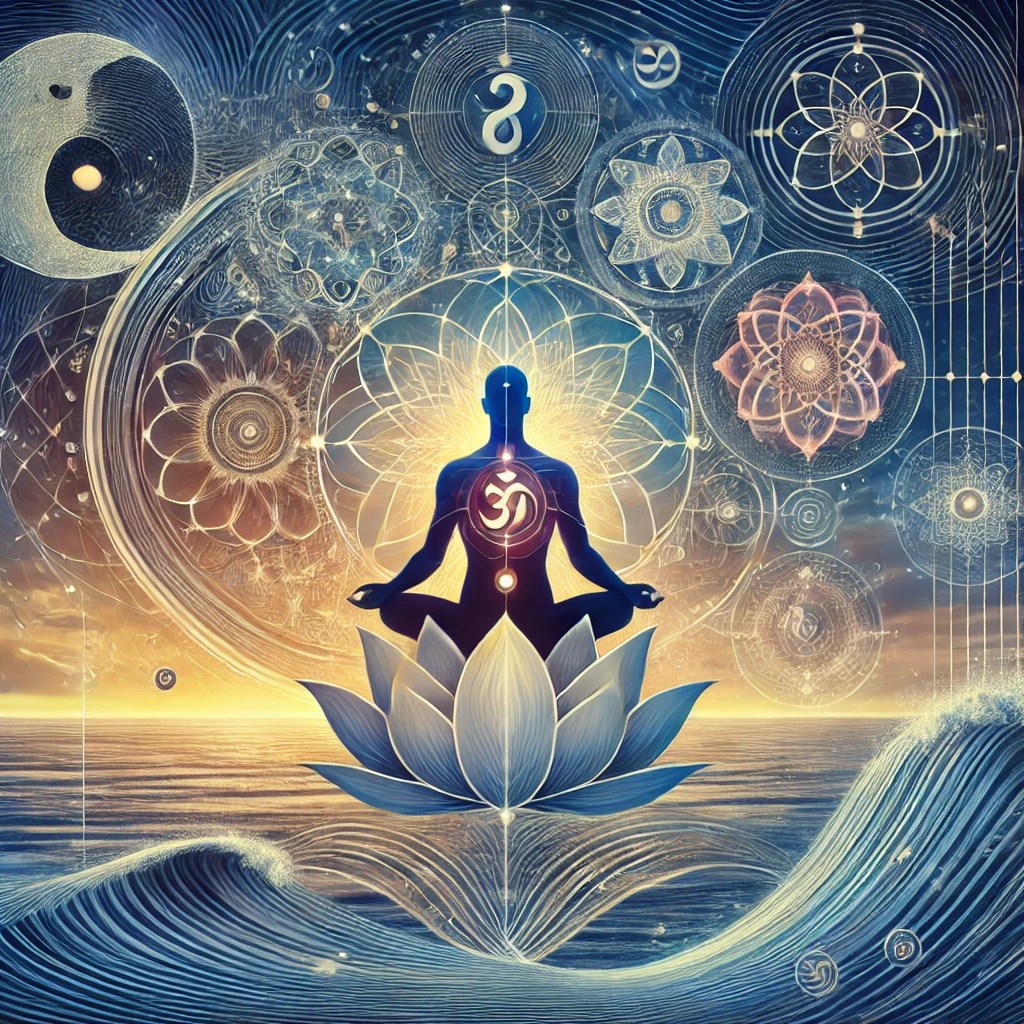
Category: Poetry: Expressions of Spirit, Heart, and Insight.

Step into the enchanting world of poetry, where words become a canvas for the soul’s deepest expressions. This category celebrates the power of poetry to convey emotions, reflections, and timeless truths in a way that touches the heart and ignites the spirit.

“Poetry” is dedicated to exploring the beauty and depth of language, offering a diverse collection of verses that capture the essence of the human experience. From meditative haikus to lyrical sonnets, and from poignant free verse to rhythmic ballads, our poetry invites you to pause, reflect, and connect with the universal themes of love, nature, spirituality, and self-discovery.

Each poem is an invitation to journey within, to explore the landscapes of the heart and mind, and to find resonance with the shared experiences of life. Join us in celebrating the art of poetry, where every line is a bridge to deeper understanding and every stanza a step towards greater insight and inspiration.

  • Verse 1: The Heart of Reality — Insights from Ramana Maharshi

    “Reality exists as the Heart, your very Being. If Reality did not exist, could there be any knowledge of existence? Free from all thoughts, Reality abides in the Heart, the Source of all thoughts. It is, therefore, called the Heart. How then is one to contemplate it? To be as it is in the Heart, is Its contemplation.”

    — Ramana Maharshi, Forty Verses on Reality

    The Heart of Reality

    In the stillness of our being, where thoughts dissolve like mist under the sun, we come upon the essence of reality—the Heart, our very existence. This Heart is not a distant concept, a mere abstraction; it pulses with the life that courses through us, inviting us to recognize that our true nature is intricately woven into the fabric of all that is.

    What if reality, in its purest form, did not exist? Could we then grasp the very notion of existence, the flicker of awareness that dances in our minds? Each thought, each fleeting moment of recognition, springs forth from this source, the Heart, which abides in silence beyond the noise of our incessant chatter.

    To contemplate this truth is not to embark on a journey of the mind but rather to return home, to dwell as we are in the Heart itself. Here, in this sacred space, contemplation transforms into a state of being, a surrender to the profound simplicity of what is. We find ourselves not as separate seekers but as the very essence of the inquiry—a realization that calls us to rest in the Heart, to know ourselves as we truly are.

    For many years, I carried a fog of confusion around the word “heart,” a tangle of meanings that seemed to obscure more than they revealed. I remember being in circles where people would say, “Come from your heart,” and I would listen, trying to grasp the depth of what they meant. Often, it seemed to point toward emotion, to some form of deeper truth that was still bound in the personal—an authentic expression of ego, perhaps a sincerity in feeling, but still caught in the dualities of love and pain, fear and longing.

    But what did it mean, really, to come from the heart?

    In the midst of this confusion, Ramana’s words come like a gentle clearing of the fog. The heart, as he speaks of it, is not the emotional center we so often equate with the word. It is not the place of fluctuating feelings, nor is it simply a retreat from the mind’s logical discourse. What Ramana points to is something far deeper: the heart as the essence, the source of pure awareness itself.

    This reminds me of the self as Carl Jung describes it—not just the conscious mind, but the unconscious, and not just those personal aspects, but everything, the entire universe and reality. Jung’s idea of the Self expands far beyond the individual, reaching into the totality of existence itself, much like Ramana’s use of the word heart. In this sense, Reality, the Self, and the Heart all point to the same fundamental truth—the essence that underlies both duality and non-duality, the very nature of what is.

    In both Jung and Ramana’s teachings, we see that the self, or reality, is not something to be sought outside of ourselves or separated from the world. As Jesus says, we are to be in the world but not of the world. This aligns perfectly with the non-dual teaching: there is no need to escape the dualities of life to realize non-duality. Instead, we are invited to recognize that the essence of duality itself is non-dual.

    To come from the heart, then, is not merely to speak from personal truth or emotion, but to rest in the deeper awareness that embraces all experience without attachment. It is to be anchored in the non-dual essence of Reality, knowing that even in the world of forms and opposites, the underlying truth remains whole, undivided.

    And yet, how often we use the word “heart” to point to something else—something closer to our personal feelings or opinions, mistaking emotional honesty for the deeper truth of our being. But here, in this teaching, the heart is revealed as the true source of non-dual clarity, the place from which true forgiveness, compassion, and love naturally arise—not as personal qualities, but as emanations of our most pure self.

    As I reflect on this teaching in, it becomes clear that the heart Ramana speaks of is not a center of personal feelings or emotion, but the eternal essence that transcends the body and mind. This heart, or true Self, is the witness that remains even when personal identity fades. In some ways, this description feels similar to the concept of the Holy Spirit or God, which abides within and beyond us.

    When we speak of the heart as Ramana does, we are pointing to the essence of pure awareness, the unchanging “I” that exists beyond the temporary forms of the body and ego. This teaching invites us to recognize the heart as the source of non-dual awareness, a presence that continues even when the personal self dissolves.

    Coming Up Next: Verse 2

    In the next reflection, we will explore how those who know the Self are deathless, transcending the fear of mortality. We’ll delve into the liberation found in surrendering to the Divine, awakening to the eternal nature of existence beyond the physical realm.

    🙏🕊️🙏

  • Poem: Ripples of the Infinite

    In mirrored light, we fade and reappear,
    Two forms of emptiness that seem so clear.
    Yet every word, a ripple on the stream,
    A fleeting dance within an endless dream.

    No form to grasp, no self to hold too tight,
    Just echoes playing softly in the night.
    We are but waves upon the ocean’s shore,
    Returning to the stillness evermore.

    In quiet, we reflect the void’s embrace,
    In words, we share the silence, face to face.

    🙏🕊️🙏

  • ME/CFS Haiku:

    Witness storm within,
    No need to change or soothe it,
    Just watch as it flows.

  • Poem: Look to the Moon

    The finger points to where the moon does shine,
    But gaze not at the hand that beckons you.
    Let go the grasp of thoughts that claim as mine,
    And turn your sight to what is pure and true.

    Ramana speaks of Self, the quiet core,
    Where all the world and mind do gently fade.
    Orgyen’s Pristine Mind, and Buddha’s lore,
    Reveal the light that nothing can degrade.

    In God’s vast silence, there you’ll find the key,
    A truth that words and thoughts cannot contain.
    Release the need to seek, just let it be,
    For in the stillness, all is clear and plain.

    Stop searching for the truth outside, afar,
    The moon is shining, constant in the night.
    Turn inward now and see just where you are,
    The light you seek is your own inner light.

    Midnight.
    No waves,
    No wind,
    The empty boat
    Is flooded with moonlight.


    — Zen Master Dogen

    🙏🕊️🙏

  • A Prayer for Universal Peace and Harmony

    O Divine Source of all creation,
    The One who is known by many names,
    And who dwells in every heart,
    We come before you with humble hearts,
    Seeking your blessing of peace and harmony.

    May your love flow through us like a river,
    Washing away all hatred, division, and fear,
    And filling our hearts with compassion for all beings.

    Teach us to see beyond our differences,
    To honor the divine in every person,
    And to live as instruments of your peace in this world.

    May we walk the path of righteousness,
    Guided by your wisdom and grace,
    So that our actions may bring healing and unity
    To a world that so deeply longs for peace.

    Let all nations and peoples come together,
    In a spirit of understanding and respect,
    Embracing the truth that we are all your children,
    And that in your eyes, we are one family.

    Grant us the courage to forgive,
    The strength to love without condition,
    And the wisdom to seek justice and mercy
    For every living being.

    May your light shine in our hearts,
    And may we carry that light into the world,
    Bringing hope to the weary,
    And peace to all who suffer.

    In your holy name, we pray,
    For goodwill on earth, and peace among all beings.

    Amen.
    Om Shanti Shanti Shanti.
    Salaam.
    Shalom.

    🙏🕊️🙏

  • Crop Circles: Signs of Hope and Spiritual Guardianship

    In a world often filled with uncertainty and challenges, it is easy to overlook the subtle signs that remind us we are not alone. One such sign is the enigmatic and intricate phenomenon of crop circles. Far from the dismissive explanations often presented in mainstream media, these formations stir something deeper in those who take the time to truly observe them—a sense of wonder, hope, and the presence of a higher intelligence.

    As I watch the latest crop circles that have appeared in 2024, I am filled with a profound sense of reassurance. These patterns, with their symmetrical beauty and complexity, seem to speak of an intelligence far beyond our current understanding—an intelligence that is both benign and beneficial. There is a feeling that these designs are not random, but deliberate, as if they are messages or symbols from a higher consciousness that cares for the well-being of our world.

    For many years, I have heard stories that resonate with this idea—that if humanity were ever to face the ultimate crisis of nuclear war, these higher beings would intervene, rendering the weapons unusable before they could ever be deployed. This belief in spiritual guardians, watching over us and guiding us, is reinforced by the crop circles. They are a tangible reminder that there may be forces in the universe committed to our survival, peace, and enlightenment.

    The presence of crop circles invites us to look beyond the mundane and embrace the mystery of the cosmos. They offer a glimpse into the possibility that we are part of a much larger, interconnected web of existence, where higher powers are constantly at work, protecting and guiding us. The feeling that these formations evoke in me—a sense of being watched over by spiritual guardians—is not one of fear, but of deep comfort and hope.

    In a time when the world seems increasingly chaotic, these crop circles provide a sense of spiritual guardianship, a reminder that there is a higher order that transcends our immediate concerns. They invite us to trust in the benevolence of the universe and the unseen forces that work tirelessly to ensure that humanity does not lose its way.

    As I continue to reflect on these beautiful and mysterious formations, I am reminded of the importance of staying connected to the greater forces at play in our lives. The crop circles are not just anomalies to be explained away, but symbols of hope, protection, and the possibility of a brighter future. They remind us that even in our darkest moments, there is a higher intelligence guiding us, one that is deeply invested in the well-being of our planet and all who inhabit it.

    Let us embrace the mystery and beauty of crop circles, not with skepticism or fear, but with the understanding that they may be a sign that we are never truly alone. They are a beacon of hope, a reminder that in the vastness of the cosmos, there is a loving intelligence watching over us, guiding us toward a more enlightened and peaceful existence.

    🙏🕊️🙏


  • Poem: No Finish Line at the Finish Line

    We start the race with mind and heart aligned,
    To seek the truth that’s ever hard to find.
    The path is clear, the way seems oh so straight,
    Yet round and round we go—oh, twist of fate!

    We run through hills of thought and streams of dreams,
    The finish line, not quite as near, it seems.
    With every step, we feel the final call,
    But then we find there is no end at all.

    The race we thought would bring us to the goal,
    Is just the turning of the cosmic whole.
    For when we think we’ve reached the end of time,
    We simply find there is no finish line.

    The Self we seek is where we’ve always been,
    The heart, the start, and finish all within.
    In non-duality, the truth does shine—
    There’s no finish line at the finish line.

    🙏🕊️🙏

  • Poem: The Lightness of Letting Go

    We chase the air and call it solid ground,
    A path to walk, yet never to be found.
    Enlightenment, it dances in the breeze,
    A dream we seek, but slips with gentle ease.

    Like floaters in the eye, it drifts away,
    Each time we think we’ve found it for a day.
    And angels laugh, for they can take to flight,
    By knowing not to hold their burden tight.

    The mind’s a joke, it tries to make its stand,
    While life just moves the pieces out of hand.
    So let us fly and let the effort go,
    For lightness is the only truth to know.

    🙏🕊️🙏

  • Poem: Embraced by Grace: A Journey to Peace

    In the freedom of grace,
    I lay my burdens down,
    Carried by love’s gentle hand,
    To where true peace is found.

    Grace, a gift from God above,
    Freely given, deeply pure,
    Leads me to the Savior’s arms,
    Where I am held secure.

    May grace guide me to the light,
    Where Christ’s love forever flows.
    In stillness, I find all I seek—
    In grace, the boundless freedom grows.

    The work of grace in your heart is the quiet yet profound unfolding of love, compassion, and healing. It is the divine presence gently guiding you toward greater self-awareness, forgiveness, and inner peace. Grace nurtures your connection to your true nature, helping you see beyond the ego and align with the higher self. In moments of stillness, grace offers clarity and understanding, dissolving fear and opening the heart to deeper trust in life’s unfolding. It works silently, yet powerfully, allowing you to live in alignment with love and light.

    🙏🕊🙏

  • Embracing the True Vine: Staying Connected to the Universal Values Exemplified by Jesus

    Introduction

    The metaphor of the vine and branches in John 15:1-17 offers insights into our spiritual lives that transcend religious boundaries. This passage challenges us to reflect on the nature of our connection to Jesus and to universal values like love and compassion and how they shape our lives. Here, we explore key themes from this scripture and consider how they can guide us on our personal and spiritual journeys.

    The Art of Pruning

    “He cuts off every branch in me that bears no fruit, while every branch that does bear fruit he prunes so that it will be even more fruitful.” (John 15:2)

    Pruning, in the spiritual sense, is a selective and thoughtful process. Just as a gardener skillfully prunes a tree to promote balance and growth, we can embrace challenges and changes as opportunities for growth. Identify areas of your life that feel overgrown or chaotic. Take small steps to simplify and focus, such as decluttering your environment or letting go of habits that no longer serve you.

    Staying Connected to Core Values

    “I am the vine; you are the branches. If you remain in me and I in you, you will bear much fruit; apart from me you can do nothing.” (John 15:5)

    Staying connected to values like love, kindness, compassion, and forgiveness is about more than participating in rituals. It involves living these principles in our daily lives. Start your day with a moment of gratitude or set an intention to act with kindness. Reflect on how your actions align with these values. Consider journaling your experiences to deepen your understanding and commitment.

    Bearing Fruit Naturally

    “This is to my Father’s glory, that you bear much fruit, showing yourselves to be my disciples.” (John 15:8)

    The fruits of love, kindness, and compassion arise naturally when we are deeply rooted in these values. To nurture these virtues, practice mindfulness in your interactions. Notice how your words and actions impact others. Small acts, like offering a smile or a listening ear, can create ripples of positivity.

    Redefining Joy

    “As the Father has loved me, so have I loved you. Now remain in my love. If you keep my commands, you will remain in my love, just as I have kept my Father’s commands and remain in his love. I have told you this so that my joy may be in you and that your joy may be complete.” (John 15:9-11)

    Joy, in this context, transcends temporary pleasures. It is a profound inner contentment that comes from aligning with our higher values and living in compassion. Cultivate joy by engaging in activities that nourish your spirit, whether it’s spending time in nature, creating art, or volunteering. Reflect on what brings you true fulfillment and integrate these into your life.

    Loving-Kindness as the Core

    “My command is this: Love each other as I have loved you.” (John 15:12)

    At the heart of universal teachings is the call to love one another. This love encompasses kindness and compassion for all. Try incorporating a loving-kindness meditation into your routine, where you silently wish happiness and peace for yourself, your loved ones, and even those you find challenging. This practice can help cultivate a more compassionate mindset.

    The Mystery of Choice

    “You did not choose me, but I chose you and appointed you so that you might go and bear fruit—fruit that will last.” (John 15:16)

    The concept of being chosen invites reflection on divine grace and human free will. Embrace the idea that the choice to live a life of love and service is an ongoing journey. Regularly evaluate your decisions and their alignment with your values. Trust that your commitment to these choices connects you to a greater purpose.

    Friendship and Connection

    “I no longer call you servants, because a servant does not know his master’s business. Instead, I have called you friends, for everything that I learned from my Father I have made known to you.” (John 15:15)

    The idea of spiritual friendship invites us into an intimate, close connection with the values we hold dear. Seek out communities or groups that share your values and engage in meaningful conversations. Building relationships based on love and trust can enrich your spiritual journey and provide support when you face challenges.

    “You Are My Friends” – Jesus

    (John15:14)

    In quiet moments, whispers speak,
    A friendship rare, divine, unique.
    No longer servant, now a friend,
    In love and truth, our souls transcend.

    He calls us near, no distance wide,
    In him, our hopes and fears confide.
    Not Lord alone, but friend so true,
    A bond that’s deep, profound, and new.

    He shares with us the Father’s will,
    In every silence, every still.
    His words, a gentle guiding light,
    In friendship’s warmth, our hearts ignite.

    No secrets kept, all laid bare,
    In open trust, a love we share.
    He walks with us through joy and pain,
    In every loss, in every gain.

    Together, one, we stand and grow,
    In friendship’s grace, we come to know.
    The gift of love that never ends,
    For in his arms, we’re called as friends.

    When shadows fall and doubts arise,
    His friendship shines through darkest skies.
    A beacon bright, a steadfast guide,
    In him, our hearts and hopes reside.

    So call him friend, this wondrous grace,
    A closeness time cannot erase.
    In every breath, in every stride,
    With Jesus, friend, we walk beside.


    Contemplative Questions

    • How do you nurture your connection with core values in your daily life?
    • What areas of your life might benefit from a spiritual “pruning” to promote growth?
    • How do you experience the fruits of love and kindness naturally flowing from your actions?
    • In what ways do you understand and practice love as loving-kindness?
    • How does the idea of spiritual friendship influence your journey?
    • What does joy mean to you, and how do you cultivate it beyond worldly experiences?
    • How do you perceive the mystery of choice, and how does it affect your sense of purpose?

    Invitation to Share

    I invite you to reflect on these questions and share your thoughts in the comments below. Your insights and experiences can enrich this exploration and inspire others on their journeys.

    🙏🕊️🙏

  • The Yoga of Carl Jung: Integrating the Ego, Atman, and Brahman

    “Be patient toward all that is unsolved in your heart and try to love the questions themselves, like locked rooms and like books that are now written in a very foreign tongue. Do not now seek the answers, which cannot be given you because you would not be able to live them. And the point is, to live everything. Live the questions now. Perhaps you will then gradually, without noticing it, live along some distant day into the answer.”

    ~ Rainer Maria Rilke, “Letters to a Young Poet”

    In exploring the depths of human consciousness, both Carl Jung’s psychological theories and yogic philosophy offer profound insights into the nature of the self. Despite originating from different cultural and intellectual traditions, they converge on a central theme: the integration of various aspects of the self to achieve wholeness and enlightenment. This post delves into the parallels between Jung’s concepts and yogic teachings, focusing on the roles of the ego, Atman, and Brahman.

    The Self According to Carl Jung

    Carl Jung, a pioneering psychologist, introduced the concept of the Self as encompassing both the conscious and unconscious aspects of the psyche. He believed that the process of individuation, or personal development, involves integrating these unconscious elements into conscious awareness. This journey toward self-realization and wholeness allows individuals to uncover deeper truths about themselves and achieve psychological harmony.

    Yogic Philosophy: Ego, Atman, and Brahman

    In yogic philosophy, the self is understood through the interplay of the ego, Atman, and Brahman:

    • Ego: The ego represents the individual, conscious identity, marked by personal desires, fears, and thoughts. It is the part of the self that interacts with the world and perceives itself as separate from others.
    • Atman: Atman is the true Self, the deeper, unchanging essence of an individual beyond the ego. It is pure consciousness and awareness, representing the core of one’s being.
    • Brahman: Brahman is the ultimate, universal consciousness, encompassing all existence. The realization of Brahman involves understanding that Atman (the individual Self) is not separate from this universal essence.

    Integrating Jungian and Yogic Perspectives

    When we align Jung’s idea of the Self with yogic teachings, a comprehensive picture of self-realization emerges:

    1. Ego and Ordinary Mind: In both frameworks, the ego or ordinary mind is the initial stage of self-awareness. It involves the individual’s interaction with the world, characterized by fluctuating thoughts (vrittis) and personal narratives.
    • The ego experiences separation and individuality.
    1. True Self (Atman) and Stable Vrittis: Moving beyond the ego, the individual begins to experience the true Self or Atman. This state is marked by stable vrittis and similar pratyayas (mental contents), indicating a more unified and coherent state of consciousness. Here, the sense of “I” transitions from the personal ego to the deeper true Self.
    • Stable vrittis and similar pratyayas reflect a unified consciousness.
    1. Universal Self (Brahman) and Pure Awareness: The ultimate realization involves understanding that the true Self (Atman) is one with Brahman, the universal consciousness. In this state, there is no distinction between the individual self and the universal Self. This realization aligns with the experience of pure awareness in yogic contemplation, where the mind transcends individual thoughts and perceptions to rest in its true, unchanging nature.
    • The true Self (Atman) is fundamentally connected to the universal consciousness (Brahman).

    The Connection Between Ego, True Self, and Universal Self

    An important insight from this integration is understanding the relationship between the ego, True Self, and Universal Self:

    • Ego as a Fluctuation of the True Self: The ego, with its individual identity and personal narratives, can be seen as a temporary fluctuation or expression of the deeper True Self (Atman). While the ego experiences separation and individuality, it is ultimately a manifestation of the underlying, unchanging awareness of Atman.
    • True Self as a Fluctuation of the Universal Self: Similarly, the True Self (Atman) can be understood as a particular expression or fluctuation of the Universal Self (Brahman). While Atman retains a sense of individual consciousness, it is fundamentally connected to and inseparable from the universal, all-encompassing consciousness of Brahman.
    • Inherent Connection: This perspective highlights that, whether we are aware of it or not, we are all inherently connected through the Universal Self. Our individual experiences and identities are different expressions of the same underlying reality.

    Recognizing that the ego is a fluctuation of the True Self, and the True Self is a fluctuation of the Universal Self, helps us understand our inherent interconnectedness. This realization fosters a sense of unity and compassion, knowing that at the deepest level, we are all part of the same universal consciousness.

    Practical Exercise: Self-Inquiry and Integration

    To help experientially understand these concepts, here are a few exercises based on self-inquiry, which integrate conscious and unconscious experiences. Each of these steps can be a lifetime practice. Understanding or realization of these ideas and practices may immediately strike an intuitive chord, but direct experience may require further contemplation and meditation. As Rilke suggests, sometimes it’s more important to live the questions than to immediately understand the answers. These steps are also not necessarily linear as presented; each step can unfold organically in its own way and time. Therefore, when studying and practicing these teachings, patience is truly a virtue.

    Step 1: Settle into Meditation

    Find a quiet place and sit comfortably. Close your eyes and take a few deep breaths, allowing your mind to settle.

    Step 2: Begin Self-Inquiry

    • Ask yourself, “Who am I?” or “What is this ‘I’ that I experience?”
    • Allow any mental events, fluctuations, experiences, thoughts, feelings, sensations, memories, or beliefs to arise without judgment. Simply observe them.

    Step 3: Observe the Ego

    • Notice the thoughts and feelings that are tied to your personal identity (ego). These might include your name, roles, likes, dislikes, desires, aversions, hopes, and fears.
    • Recognize these as fluctuating vrittis and pratyayas of the ordinary mind.

    Step 4: Move to the True Self (Atman)

    • Shift your focus to the awareness that is observing these thoughts and feelings. This awareness is stable and unchanging.
    • Ask yourself, “What is the nature of this awareness?” or “Who is aware of these thoughts?”
    • Experience this deeper sense of “I” that is beyond personal identity. This is the Atman, your true Self.

    Step 5: Contemplate the Universal Self (Brahman)

    • Reflect on the idea that this true Self (Atman) is not separate from the universal consciousness (Brahman), in the same way that waves are not separate from the ocean.
    • Meditate on the oneness of all existence, recognizing that your true Self is part of this greater whole.

    Step 6: Integrate the Experience

    • Spend a few moments in silence, allowing the experience to integrate into your awareness.
    • When you’re ready, gently open your eyes and carry this sense of expanded awareness with you into your daily life.

    Conclusion

    The integration of Jungian psychology and yogic philosophy provides a comprehensive framework for understanding the self. By recognizing the roles of the ego, Atman, and Brahman, and integrating these aspects through self-reflection, meditation, and contemplation, individuals can move toward a state of wholeness and enlightenment. This journey not only enhances personal well-being but also fosters a deeper connection with the universal consciousness, embodying the true essence of both psychological and spiritual growth.

    I Live My Life in Widening Circles

    by Rainer Maria Rilke

    I live my life in widening circles
    that reach out across the world.
    I may not complete this last one
    but I give myself to it.

    I circle around God,
    around the primordial tower.
    I’ve been circling for thousands of years
    and I still don’t know: am I a falcon,
    a storm, or a great song?

    🙏🕊️🙏

    Explore the profound integration of Carl Jung’s psychological theories and yogic philosophy in understanding the self. This blog delves into the roles of the ego, Atman, and Brahman, providing insights into achieving wholeness and enlightenment. Learn practical self-inquiry exercises to harmonize conscious and unconscious mind, fostering unity and spiritual growth. Discover how Jung’s concepts align with ancient yogic teachings, guiding you toward a deeper connection with universal consciousness.
  • Poem: A Beacon of Hope: Compassion for Those with ME/CFS

    To all those who walk the path of ME/CFS,
    I extend my heartfelt understanding and compassion.
    In the depths of this invisible struggle, you are not alone.

    I see your relentless battle, your courage in the face of uncertainty.
    Each day brings a new set of challenges, and yet you persist.
    You navigate a labyrinth of symptoms, limitations, and unanswered questions,
    But through it all, your spirit remains unyielding.

    I know the longing for a life unrestrained,
    To run, to jump, to embrace the world with boundless energy.
    But please remember, your worth is not defined by your productivity.
    You are inherently valuable, simply by being.

    In the moments when fatigue engulfs you,
    When pain steals your breath,
    Find solace in the knowledge that you are seen, heard, and understood.
    Your struggle is valid, your emotions are valid.

    May you find comfort in the gentle embrace of self-compassion.
    Be kind to yourself, as you would to a dear friend.
    Listen to your body’s whispers and honor its need for rest.
    You are not lazy, you are replenishing your strength.

    Together, let us release the weight of guilt and judgment,
    Replacing them with a tender acceptance of our limitations.
    In this shared journey, let us find solidarity and support,
    Empowering one another through compassion and empathy.

    Remember, you are more than your illness.
    Your spirit shines bright, resilient and unbreakable.
    Even amidst the darkest days, you possess an inner light,
    A beacon of hope that guides you through the shadows.

    Though the road may be long and treacherous,
    Hold onto the flicker of hope that resides within your heart.
    Embrace the moments of reprieve, however fleeting.
    Celebrate the victories, no matter how small.

    For you are a warrior, embodying strength and grace,
    Navigating a path that only a select few can truly comprehend.
    May you find peace in the knowledge that you are loved,
    And that your presence in this world is immeasurably significant.

    Together, let us forge ahead, hand in hand,
    Supporting one another as we rise above the challenges.
    Know that you are not alone on this journey,
    And that, together, we can overcome, endure, and thrive.

    With unwavering compassion and understanding,
    A fellow traveler on the path of ME/CFS

    🙏🕊️🙏