Category: Meditation Practices: Paths to Inner Peace and Clarity

This category is dedicated to the exploration of various meditation practices that guide us toward inner peace, clarity, and spiritual awakening. Meditation is a cornerstone of spiritual practice across many traditions, each offering unique methods to quiet the mind, cultivate awareness, and connect with the deeper aspects of the self.

Within the Meditation Practices category, you will find detailed explorations of a variety of meditation techniques, including:

• Vipassana: The practice of insight meditation, which involves observing bodily sensations and thoughts to develop mindfulness and insight into the true nature of reality.
• Self-Inquiry (Atma Vichara): A method rooted in Advaita Vedanta, where one continually asks “Who am I?” to peel away the layers of ego and reveal the true Self.
• Samatha: A calming meditation that focuses on developing concentration and tranquility through sustained attention on a single object, often the breath.
• Tonglen: A Tibetan Buddhist practice of giving and taking, where one breathes in the suffering of others and breathes out compassion and healing.
• Metta (Loving-Kindness) Practice: A meditation practice focused on cultivating unconditional love and compassion for oneself and others.
• Japa Practice: The repetition of a mantra to focus the mind and cultivate spiritual connection.
• Zazen: The “just sitting” practice of Zen Buddhism, emphasizing open awareness of the present moment.
• Pranayama: A yogic practice of breath control to calm the mind and enhance concentration.
• Dzogchen Meditation: A Tibetan Buddhist practice of resting in the natural state of awareness.
• Mindfulness Meditation: A practice focusing on non-judgmental awareness of the present moment.
• Guided Visualization: A technique using imagination to create calming or uplifting mental images.
• Walking Meditation: A mindfulness practice involving slow, deliberate walking with attention to sensations and surroundings.
• Chakra Meditation: A practice focusing on the body’s energy centers, often using visualization and mantra.
• Hitbonenut: A Jewish meditative practice of deep contemplation on spiritual themes.
• Contemplative Prayer: A Christian practice of silently resting in the presence of God.
• Zikr (Dhikr): A Sufi practice of chanting divine names or phrases to cultivate remembrance of God and spiritual connection.
• Kirtan: A Bhakti Yoga practice involving the devotional singing or chanting of mantras and sacred hymns, often in a call-and-response format.

This category serves as a comprehensive guide to the many paths of meditation, offering practical advice, reflections, and insights into how these practices can be integrated into daily life. Whether you are new to meditation or seeking to deepen your existing practice, this category provides a wealth of knowledge to support your journey toward greater mindfulness, compassion, and spiritual understanding.

  • From Suffering to Compassion: Transforming Life with ME/CFS

    From Suffering to Compassion: Transforming Life with ME/CFS

    Living with chronic fatigue syndrome (ME/CFS) often feels like carrying an invisible weight that never goes away. The exhaustion is far beyond ordinary tiredness, permeating not just the body but the mind and heart as well. For many of us, this illness can feel like a curse, a complete derailment of life’s trajectory. Yet, over the years, I’ve come to see it also as a strange and unexpected blessing—one that has thrown me deeper into spiritual practice, into moments of stillness and contemplation I might not have otherwise known.

    At its worst, the illness can leave me in bed, lights off, no sound, in a state of complete sensory deprivation. And it is in these moments, when there is nothing to distract me from my thoughts, that I’ve had to learn how to truly be alone. Learning to witness my reactions, cultivating equanimity, and practicing calm-abiding meditation have become vital companions on this journey. For many years, I focused on the Tibetan practice of Samatha, or calm-abiding meditation, as well as Vipassana, which allows for a deep awareness of the present moment. Sitting in stillness, aware of whatever calm I could find within, helped me cultivate equanimity—though it remains a practice I still have much to learn from.

    But there was another essential practice that transformed how I related to my suffering. The practice of Metta—or loving-kindness—invites us to take our own pain and suffering and recognize that in this vast world, we are not alone in what we feel. When my illness has been most acute, whether through mental anguish or physical symptoms, I’ve practiced thinking: In the same way that I am experiencing this illness, this suffering, this pain, there are others in the world who experience this too. And then, from the heart, I offer the prayer: May I, and all beings, be free from this suffering and its causes.

    This simple yet profound shift in perspective allowed me to transform my experience from one of isolation and misery into a practice of compassion. Instead of being stuck in my own pain, it became a way to benefit others by cultivating loving-kindness for all those who suffer. In this way, even my most difficult experiences became part of my spiritual path. ME/CFS was no longer just an illness—it was an opportunity to deepen my compassion, both for myself and for others.

    Of course, this hasn’t been an overnight transformation. It took many years of spiritual study and practice, drawing from teachings like the Four Noble Truths of the Buddha, the Noble Eightfold Path, and eventually the teachings of Advaita Vedanta. Through these teachings, I came to recognize the fluctuations of the mind, or vrittis, and learned to observe the content of my thoughts—pratyayas—without identifying with them. This practice of witnessing the mind has allowed me to find peace in the midst of the storm, much like the Dark Night of the Soul described by St. John of the Cross.

    For me, it has felt less like a dark night and more like twenty years of spiritual darkness, but nonetheless, this darkness has also been a teacher. Learning to be present with my suffering, rather than resisting it, has become an integral part of my life with ME/CFS. And while the illness has forced me to withdraw from many aspects of life, it has also drawn me into the heart of spiritual practice.

    To anyone living with this illness, or any chronic illness, I offer this: it’s okay to feel overwhelmed by the weight of it all. It’s okay to grieve the life you once had or the future you imagined. But there are also practices—like Metta, calm-abiding meditation, and witnessing the mind—that can transform this suffering into something that nourishes not only your soul but the souls of others as well.

    May you, and all beings, be free from suffering and its causes. May this invisible weight become a doorway into the mystic, where even in solitude, you find that you are never truly alone.

    🙏🕊️🙏
  • Finding Healing in the Fires Within: Shifting from the Ordinary Mind to the Pristine Mind with Chronic Fatigue Syndrome

    Finding Healing in the Fires Within: Shifting from the Ordinary Mind to the Pristine Mind with Chronic Fatigue Syndrome

    Discover how the quiet fire of the pristine mind can soothe the restless blaze of chronic fatigue, offering a path to inner peace and gentle transformation.

    I sit here today, tenderly aware of a fire burning within me—not the feverish blaze of energy or ambition, but a fire that comes with chronic fatigue, a fire that seems to consume my energy, that feeds on thoughts of worry, longing, frustration. This fire has been with me for as long as I’ve known this illness, and for many years, it seemed the fire was all I had—scorching, demanding, leaving me exhausted.

    But in recent days, I’ve come to see a new way of being with this fire, a gentle shift. There are, I believe, two fires within: one that belongs to the ordinary mind and another that belongs to the pristine mind.

    The fire of the ordinary mind is a hungry, restless flame. It feeds on what we give it—thoughts, fears, the inner whisper of “not enough.” It clings to the past and worries for the future, each thought a piece of wood thrown into the blaze, each worry an ember reignited. It takes, and takes, and when I stay too long with this fire, I feel myself slipping into exhaustion, my strength given over to a fire that never settles, never finds rest.

    And yet, there is another fire. It is quieter, calmer, like the deep glow of coals after the flames have settled. This is the fire of the pristine mind. It does not demand fuel; it simply is. It does not need anything from me, nor does it take. Instead, it offers a kind of sacred purification. It allows the impressions, the pratyayas, those old echoes of worry, disappointment, expectation, to rise up, to be seen, and then to burn themselves out gently, naturally, leaving a clean, quiet space in their wake.

    When I find myself caught in the ordinary fire—my mind racing, my heart feeling heavy—I take a breath and remember that there is another way. I sit with my awareness, letting go of each thought, letting each worry pass without adding to it. I let the flames burn low, and, slowly, I shift to the fire of the pristine mind, where each thought that arises can dissolve without reaction. I do not need to hold on to any of it, nor fuel it. In this place, I am simply present, letting what arises pass without attachment.

    This is, I’ve come to believe, a healing fire. Not a fire that consumes, but one that illuminates. When I rest here, I feel myself soften, as though I am held in a vast quiet. The pratyayas, those ancient patterns, have no hold here. They are seen, and then they drift away like ashes.

    Perhaps, if you too feel that restless blaze within, you can find this other fire. Sit with yourself, as gently as you would sit with a friend, and watch each thought arise and drift away. Do not reach to hold it, to make it stay, or to change it. Let it come, and let it go. Rest in the calm glow of the pristine mind, where there is nothing to fuel and nothing to fear. In this quiet, you are enough, you are whole.

    This journey, I realize, is very much a work in progress. Shifting from the ordinary fire to the pristine fire is not a one-time practice but an ongoing exploration—a gentle unfolding that reveals itself with patience and time. I invite anyone who feels drawn to this process, who wishes to explore this gentle technology of the mind, to sit with it and see if it offers benefit. Let it be an experiment, a curiosity, a way of tending to your inner world.

    This understanding has been inspired by the teachings in Our Pristine Mind by Orgyen Chowang Rinpoche. His work offers a profound look into the nature of the mind and the potential for peace that lies within each of us. If you feel drawn to explore this practice further, I highly recommend his book. It provides both guidance and wisdom for those seeking to discover the healing light of their own pristine mind.

    🙏🕊️🙏

    <!– /wp:spacer →

    🙏🕊️🙏

  • The Dream of the Clear Light: A Buddhist Bedtime Story

    The Dream of the Clear Light: A Buddhist Bedtime Story

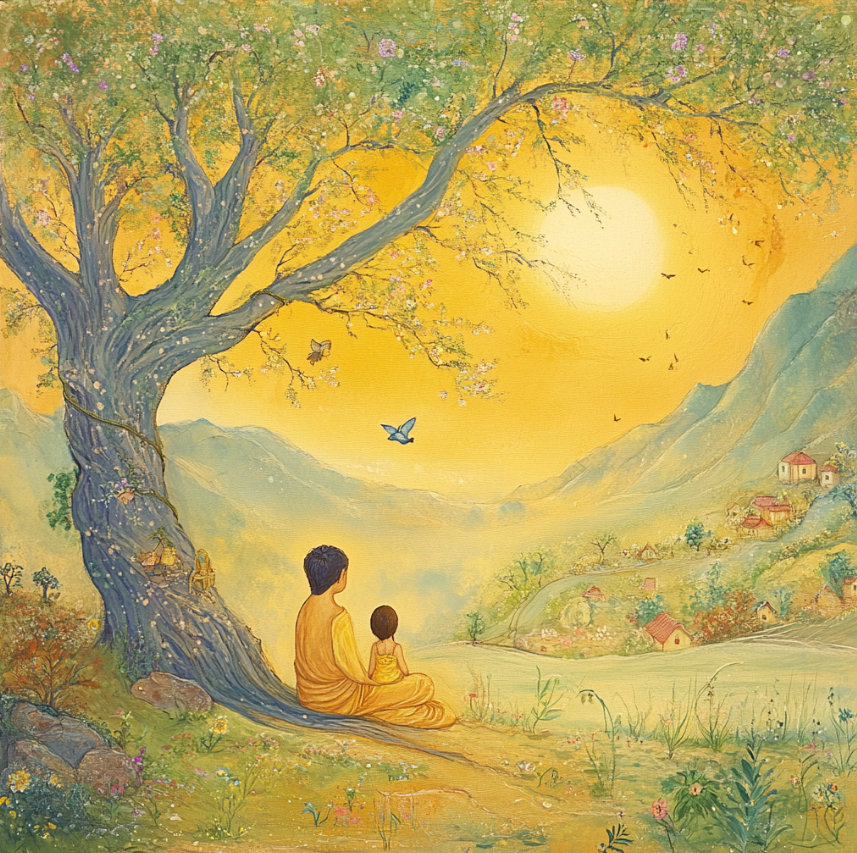
    Once, in a quiet valley wrapped in mist and the soft song of birds, there lived a kind and gentle father named Orgyen. Every evening, as the sky turned golden and the stars began to peek through the night, Orgyen would sit with his daughter, Dawa, under the great Bodhi tree in their garden. It was their special time—when the world grew still, and Orgyen would share the deep wisdom he carried in his heart.

    One evening, as Dawa snuggled close to her father, she looked up at him with curious eyes. “Papa, sometimes my mind feels like a storm, with too many thoughts flying around. How can I make it calm?”

    Orgyen smiled, his voice soft as the wind rustling the leaves above them. “Ah, little Dawa,” he said, “inside each of us, beyond all the thoughts and feelings, there is something much deeper, much clearer—something we call the pristine mind. It’s like a vast, bright sky, untouched by any clouds. Even when there’s a storm in your mind, that clear sky is always there, waiting for you.”

    Dawa’s eyes widened in wonder. “Is it really there, Papa? How do I find it?”

    Orgyen gently placed his hand on her chest, over her heart. “Close your eyes, little one, and take a deep breath. Imagine the sky—so wide and open, where the clouds come and go, but the sky itself never changes. This is your mind, too. No matter what thoughts or feelings come, your pristine mind is always clear, like the blue sky.”

    Dawa closed her eyes, her breath becoming soft and slow. In her mind’s eye, she saw the bright, boundless sky Orgyen spoke of, with only a few gentle clouds floating by.

    “And now,” Orgyen whispered, “imagine a light, like the sun, shining from the very center of your heart. This light is pure, just like your pristine mind. Let it grow brighter, filling your whole body with its warmth and peace. This is the light of love, of kindness, of everything good. It’s always with you.”

    Dawa smiled as she felt the light glowing inside her, warm and golden like the sun. “What happens when the clouds come back?” she asked softly, her voice barely more than a whisper.

    Orgyen kissed her forehead. “Even when the clouds come, the sky remains clear, and the light never dims. You can always return to this peaceful place inside. Just breathe, and the clouds will drift away. Let the light of your pristine mind guide you.”

    As the stars began to twinkle in the sky above them, Orgyen stood up, lifting Dawa gently in his arms. “Now, little one,” he said, “it’s time for you to rest. When you dream tonight, imagine yourself in the clear, bright light. Let your dreams be filled with love, kindness, and the warmth of your pristine mind.”

    Dawa’s eyelids grew heavy as she rested her head on her father’s shoulder. “Will I see the light in my dreams, Papa?” she asked, her voice growing softer.

    Orgyen smiled as he carried her inside and tucked her into bed. “Yes, my dear Dawa. When you close your eyes, you can dream of the clear light. You’ll drift through the skies, where there are no worries—only peace, kindness, and love. And when you wake, the light of your pristine mind will still be with you, just as bright.”

    With a final kiss on her forehead, Orgyen whispered, “Sleep well, little one, and let your dreams be filled with the light of the pristine mind.”

    And so, with her father’s gentle words in her heart, Dawa closed her eyes and drifted into sleep, feeling the warmth of the light within her. As she dreamed, she floated through a sky filled with clear light, kindness, and the soft glow of love—her pristine mind guiding her through every gentle dream.

    🙏🕊️🙏


    If you’d like to explore more bedtime stories for children, including tales that nurture compassion and mindfulness, you can find our collection here.


  • Buddhism and Christianity: Finding Common Ground in Compassion and Ethical Living

    Buddhism and Christianity: Finding Common Ground in Compassion and Ethical Living

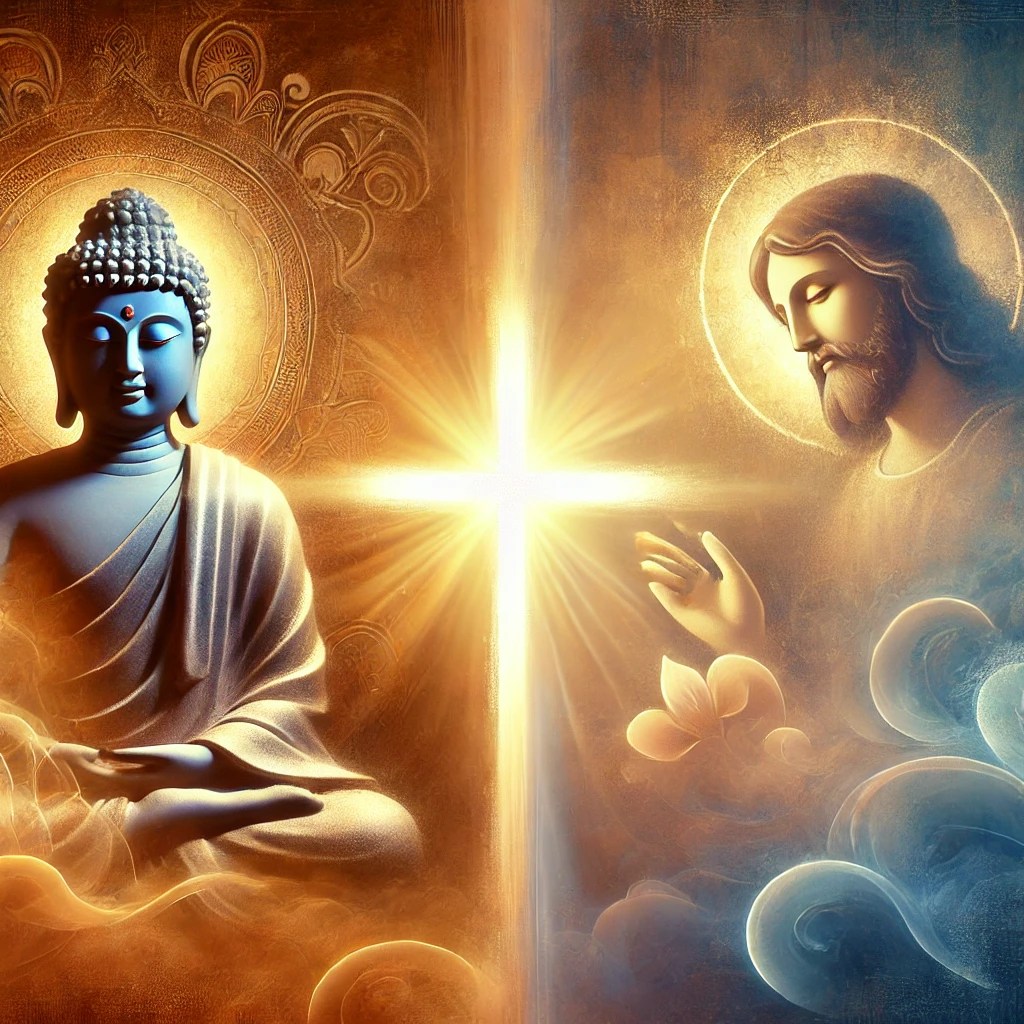
    To many, the word Buddhism may conjure images of statues or rituals that seem foreign or difficult to understand, particularly for those from a conservative Christian background. However, at its heart, Buddhism is not about worshiping an idol or a false god, as some might mistakenly believe. Rather, it is a path of inner transformation that shares many core values with Christianity—values like compassion, ethical living, and the sincere effort to become a better person.

    In Buddhism, practitioners turn to the Three Jewels: the Buddha, who represents the potential for awakening within all of us; the Dharma, the teachings that show the way to live with love, wisdom, and peace; and the Sangha, the community of practitioners who support one another in their spiritual journey. In this sense, the Buddha is not a deity to be worshiped but a teacher, much like how Christians might revere the wisdom of Jesus Christ. The focus is not on idol worship, but on following a path that leads to moral and spiritual growth.

    At first glance, the colorful rituals, sacred music, and intricate costumes may seem confusing or overwhelming. Yet these outward forms are simply expressions of an inner practice that remains deeply practical and profound: the training of the mind. Tibetan Buddhism is not a religion in the conventional sense of belief or dogma but rather a transformative path aimed at purifying the mind. Through meditation, visualization, mantra, and ritual, the practice cultivates clarity, compassion, and liberation from egoic tendencies.

    Just as Christians seek to become more like Christ—striving for kindness, humility, and love—Buddhists seek to become the best version of themselves, nurturing virtues such as compassion, patience, and wisdom. To be a Buddhist is to make a commitment to ethical living, to ensure that one’s actions bring benefit rather than harm to others. This mirrors the Christian commandment to “love thy neighbor as thyself.”

    At the heart of both traditions lies a dedication to improving one’s character and living in a way that reflects love and goodness. For Buddhists, this means confronting the mind directly—meeting thoughts and emotions with honesty and care. Instead of avoiding or denying the difficulties of life, Buddhists engage with their minds head-on, seeking to transform fear, anger, or selfishness into peace, kindness, and clarity. This inner work echoes the Christian call to examine one’s heart, repent, and strive for purity in thought and deed.

    In his teachings, Dilgo Khyentse Yangsi Rinpoche offers a striking and relatable metaphor that bridges ancient wisdom with modern technology. He likens the practice of Dharma to the way we sync our wireless earbuds with our phones. Just as the earbuds must be paired and in sync with the phone to receive the signal and work properly, our minds must be aligned with the Dharma to receive its benefits.

    This idea resonates with many spiritual traditions. For Christians, the same concept applies to our relationship with the Holy Spirit or with Christ’s teachings. God is always present within us and around us, but if we are distracted by anger, impatience, or worldly concerns, we lose that vital connection. Simply believing in Jesus’ sacrifice isn’t enough if we are not living in sync with his teachings. By aligning our hearts and minds with Christ’s message of love, forgiveness, and humility, we can fully experience the divine presence and live in harmony with God’s will.

    Far from being a pagan religion, Buddhism is, at its core, a path of deep moral reflection and inner peace. Like Christianity, it calls for a transformation of the heart—one that aligns us with love, compassion, and a life of service. While the outward expressions of these paths may look different, the goal is the same: to become more loving, wise, and true to the divine nature that exists within each of us.

    For Christians who might feel uncertain about Buddhism, it can be helpful to remember that the values of both traditions are not in conflict but in harmony. Whether we call this journey “walking with Christ” or “following the Dharma,” both paths seek the same destination—a life lived with integrity, compassion, and love for others. By finding these common threads, we can open our hearts to one another, honoring the diversity of ways that humans seek truth and goodness.

    I invite you to watch the video below, which served as the inspiration for this post. It offers a beautiful glimpse into the teachings of Dilgo Khyentse Yangsi Rinpoche and the heart of Tibetan Buddhism. This film explores not only the path of mind training but also the deep compassion and wisdom that unite Buddhist and Christian values. Whether you are new to these teachings or have been walking your own spiritual path for years, this video provides an opportunity to reflect on the shared human quest for love, kindness, and awakening.

    🙏🕊️🙏

  • Embracing Mindfulness on the Journey of Chronic Fatigue Syndrome ME/CFS

    Embracing Mindfulness on the Journey of Chronic Fatigue Syndrome ME/CFS

    For those of us living with post-viral Myalgic Encephalomyelitis/Chronic Fatigue Syndrome (ME/CFS), mindfulness can be an invaluable tool. When energy feels scarce and symptoms overwhelming, mindfulness offers a gentle, non-judgmental way to relate to our experience. It’s not about forcing ourselves to be positive or ignoring the very real challenges we face, but about creating space within our hearts and minds for what is happening right now. It’s about simply being present with our thoughts, emotions, and sensations without adding layers of frustration or resistance.

    I remember early in my practice when I first realized how much energy I was spending resisting my illness. I fought against it, mentally and emotionally, with every fiber of my being. That resistance, though understandable, made me sicker. But over time, through the teachings of mindfulness, I began to soften that resistance and learned to sit with my experience as it was—without the layers of anger or frustration. That shift changed everything.

    One of the most beautiful things mindfulness teaches us is how to cultivate self-compassion. It allows us to look at ourselves with kindness, to acknowledge that we are doing the best we can, given the circumstances. Chronic illness can often bring feelings of isolation, inadequacy, or even guilt. But through mindful awareness, we can learn to treat ourselves as we would a dear friend—with warmth, understanding, and patience.

    In my own journey, self-compassion became a practice of offering myself a soft place to land amid the storm of chronic fatigue. I learned that it was okay to have limits and that pacing was not a failure but an act of wisdom. Through mindfulness, I could honor the ebb and flow of my energy without judgment, allowing myself to rest when needed and cherish the moments of peace when they arose.

    The spiritual path of transforming suffering into enlightenment has been a guiding light for me over the years. Drawing from the teachings of Buddhist masters like Dodrupchen Jigme Tenpe Nyima, I’ve come to see how our relationship to suffering—and to happiness—shapes our inner world. For so long, my relationship to ME/CFS was fraught with resistance, and that resistance was its own kind of suffering. But through mindfulness, I’ve slowly learned to soften into my experience, to meet it with equanimity, and to allow each moment to become an opportunity for growth.

    Mindfulness is not a cure for chronic fatigue syndrome, but it offers a way to live with greater peace and resilience. It is a daily practice of acceptance, of meeting ourselves where we are, and of nurturing a sense of compassion for the journey we are on. Whether you are new to mindfulness or have been practicing for years, there is always room to deepen this practice, to cultivate a gentle presence that supports healing, both emotionally and spiritually.

    For me, the journey is ongoing, but each step I take is filled with the intention that this path is not just for my own peace and well-being but for everyone whose lives I touch. Together, as we cultivate more mindfulness and self-compassion, we build a bridge toward greater understanding, peace, and inner liberation.

    A Haiku on Self-Compassion

    In stillness, we rest,
    Soft whispers of kindness grow,
    Healing in our hearts.


    I hope these words bring solace, support, and a reminder that we are not alone on this journey. Together, we are cultivating a way of being that embraces both the challenges and the beauty of life, one mindful breath at a time.

    🙏🕊️🙏

  • NOVEMBER 1st 2024 – Synchronized Global Meditations for World Peace, Love & Harmony: Everyone is Welcome

    NOVEMBER 1st 2024 – Synchronized Global Meditations for World Peace, Love & Harmony: Everyone is Welcome

    Global Well-Being: The Creation of Healing, Love, and Compassion Every Day and in Every Way—Especially on the New Moon, Around the World.

    Hello Everyone! Let’s come together again as a Global Community!

    Every New Moon, we have the opportunity to unite in prayer and meditation to create strong waves of vibrational intentionality—focusing on Loving-kindness and compassion. Whether we connect at the same time globally or in planetary waves, the energy we co-create will ripple outward, touching all life with healing and love.

    Join us on the New Moon, whenever it appears in your location, to synchronize in a global community of prayer and/or meditation. Together, we can generate waveforms and vibrations of love and compassion that will radiate outward from this day onward and forever. These vibrations will continue to blanket the Earth and all life in a palpable field of love and compassion, benefiting all.

    The more love and compassion we consciously generate, the more of it becomes available in our world and universe for others to feel, enjoy, and be nurtured by. Let’s co-create a living, vibrating, pulsing web of love and compassion that surrounds the planet, lifting us all to higher vibrations of healing, love, and compassion for every being.

    May we, the Earth, and all life benefit.

    May we all be free from suffering, greed, hatred, and delusion, as well as the causes of suffering. May we all have wholesome happiness and its causes. May our prayers and meditations be a cause for global healing and well-being for all now and forever.

    Join us in any way that works best for you.

    On the New Moon, let’s come together with strong intentions, knowing that others around the world will be doing the same. Choose a time that works for you—whether it’s morning, noon, or evening—and feel the connection with others participating across the globe. If you’re interested in helping create a wave of meditation and prayer, consider meditating or praying at either 7:00 a.m. or 7:00 p.m. in your local time zone. By doing this, we create an ongoing ripple effect of love and compassion, as hour by hour, new groups of people join in, sending vibrations of loving-kindness around the planet. Together, we build a global field of healing energy that envelops the Earth and all its inhabitants. However you choose to participate—whether in synchronized times or your own flow—the collective intention benefits all.

    Feel free to express your love and compassion in any form. Be creative. Share poetry, reflections, prayers, or experiences in the comments below, and let’s fill the Earth’s atmosphere and beyond with vibrations of love and compassion. All forms of loving-kindness are welcome here.

    Loving-kindness and compassion are universal qualities.

    No one person or group owns them. They transcend race, nationality, religion, or background. The more we can nurture and generate these heart qualities, the more we collectively benefit. How beautiful is that?

    If you plan to join us, let us know in the comments!

    Your presence matters. Sharing your intentions, reflections, or experiences can inspire and motivate others. Together, we’re building a global community of healing and love. Whether you join for 5 minutes or longer, or in synchronized or local time, every contribution is valued.

    If you have suggestions for how we can better collaborate on generating global waves of loving-kindness and compassion, please share them below!

    One love, 💕🙏

    May we all live in peace and harmony, with love and respect for ourselves, each other, the Earth, and all life throughout time and space.

    🙏🕊️🙏

  • The Six Types of Courage in the Journey with Chronic Fatigue Syndrome

    The Six Types of Courage in the Journey with Chronic Fatigue Syndrome

    For those of us living with post-viral chronic fatigue syndrome (ME/CFS), the path we walk is not a simple one. Each day brings its own set of challenges, often invisible to the outside world but deeply felt within. Yet, amid the fatigue, the uncertainty, and the pain, there are moments where we are called to draw on reserves of strength we didn’t even know we had. Courage, in its many forms, becomes a quiet companion on this journey.

    As I reflect on the Six Types of Courage, I am reminded that courage isn’t always the grand, heroic act we see in stories. Sometimes it is found in the smallest actions, the quietest moments, and the internal shifts of perspective that allow us to keep moving forward. Let me share how each of these types of courage has come to life in my experience, and perhaps in yours, as we navigate the complexities of chronic illness.

    Physical Courage

    Living with ME/CFS requires a deep well of physical courage. On the days when even getting out of bed feels like a monumental task, there is a certain bravery in simply continuing. To keep going, not by pushing beyond our limits, but by embracing our body’s need for rest, balance, and awareness, is its own form of resilience. The courage to honor what our body is telling us, to move slowly and deliberately through the fatigue, is often invisible to others—but it is no less powerful.

    I’ve learned, often the hard way, that physical courage isn’t about “fighting” the illness. Instead, it’s about recognizing that even the act of getting through a day, with gentle awareness of my body’s limits, is a courageous act of self-care.

    Social Courage

    One of the most difficult aspects of living with chronic illness is feeling misunderstood by those around us. Social courage asks us to be unapologetically ourselves, even when we feel like our world is shrinking. It takes bravery to share our reality with others, to say, “This is who I am right now,” even when we worry about judgment or pity.

    For me, social courage has meant being honest about my limitations, even when it’s uncomfortable. It’s meant declining invitations or stepping back from commitments without feeling the need to apologize. In a world that often celebrates busyness and productivity, social courage allows us to stand firm in our truth, even when it doesn’t align with society’s expectations.

    Moral Courage

    Moral courage comes into play when we choose to do what’s right for our well-being, even when it’s not popular or easy. It might mean saying no to well-meaning advice that doesn’t resonate, or it might mean standing up for ourselves in medical settings, advocating for the care we know we deserve.

    In my own journey, I’ve had to practice moral courage by trusting my intuition, even when others disagreed. Whether it was turning down treatments that didn’t feel right for me, or advocating for pacing and rest in a world that pushes us to keep going, moral courage has been about honoring my inner knowing and standing up for my own health and well-being.

    Emotional Courage

    Emotional courage asks us to feel everything—without guilt or attachment. Living with chronic illness brings a rollercoaster of emotions, from frustration and sadness to moments of peace and even joy. It takes real bravery to allow ourselves to feel the depth of these emotions, without judgment.

    For those of us living with ME/CFS, there is often a fear of being consumed by the negative emotions that come with illness. But emotional courage teaches us that by allowing ourselves to fully experience these feelings, we create space for healing. It’s okay to feel angry, to feel sad, to grieve the life we once had. And it’s equally okay to feel moments of joy, to savor the small victories without fear of losing them. Emotional courage is the bridge between feeling and acceptance.

    Intellectual Courage

    There is a constant need to learn, unlearn, and relearn when living with chronic illness. Intellectual courage encourages us to stay open, to question what we think we know about our illness, and to be willing to adapt as new information comes to light.

    In my own life, this has meant learning to let go of certain beliefs—like the idea that I must always be productive to have value. It has meant embracing new ways of thinking about rest, about healing, and about what it means to live a meaningful life, even in the face of limitations. Intellectual courage reminds us that growth is always possible, even when we feel stuck.

    Spiritual Courage

    Spiritual courage is perhaps the most profound of all. It asks us to live with purpose and meaning, even when our outer world feels small. For me, spiritual courage has been about embracing the stillness that chronic illness brings, finding the deeper meaning in quiet moments, and trusting that this path, though difficult, has its own beauty.

    Living with ME/CFS has drawn me inward, toward a heart-centered approach to life. Spiritual courage has helped me see that even when my body is weak, my spirit can remain strong. It’s about connecting with something larger than myself, whether that’s through mindfulness, prayer, or simply finding peace in the present moment. It’s about living with purpose, even when the world outside feels far away.

    As I reflect on these six types of courage, I am reminded that each of them plays a role in the journey we are on. Courage doesn’t always roar. Sometimes, it is the quiet voice at the end of the day saying, “I will try again tomorrow.” For those of us living with chronic fatigue syndrome, courage is found not in grand gestures, but in the small, everyday acts of resilience, hope, and self-compassion.

    We are all courageous, in ways both seen and unseen. Let us honor that courage in ourselves and in each other, as we continue to walk this path with grace, gentleness, and the quiet strength that comes from within.

    🙏🕊️🙏

  • The Jewel of the Body, Speech, and Mind: A Buddhist Bedtime Story of OM AH HUNG

    The Jewel of the Body, Speech, and Mind: A Buddhist Bedtime Story of OM AH HUNG

    The fire crackled softly as the night sky wrapped the world in a blanket of stars. In a small, quiet room high in the mountains, little Sonam snuggled close to her grandfather, whose voice was like a river flowing gently through time. Tonight, Grandfather had promised to share a special teaching—a teaching about the mantra OM AH HUNG, a mantra that carried the wisdom of the Buddha’s body, speech, and mind. It was a gift for those seeking to awaken their true nature, a path to discovering the light that lives within every heart.

    “Come closer, little one,” Grandfather whispered, his eyes gleaming with warmth. “Tonight, I will tell you about this sacred mantra, OM AH HUNG. These three sounds hold the secret to remembering who we truly are—beyond all the noise of the world, beyond all fear and doubt. With each repetition, they bring us closer to the realization that we are already whole, already one with the body, speech, and mind of the Buddha.”

    Sonam’s small hands rested gently on her lap as she listened, her heart softening with each word.

    Grandfather began, his voice as soft as the night breeze. “The first sound is OM. It rests in the forehead, shining with a clear, bright white light, like the first snowfall on a quiet morning. OM is the body of the Buddha—pure, radiant, and free. When you chant OM, you are inviting your body to become still and calm, like the Buddha’s body. You remember that your body, just as it is, is special.”

    Sonam closed her eyes and imagined a bright white light glowing softly at her forehead. With each breath, the light expanded, filling her whole body with a sense of peace and clarity.

    “Even when you feel tired,” Grandfather said gently, “OM reminds you that your body is a vessel for light. It invites you to rest, to breathe, and to feel the simple joy of being alive.”

    “The next sound,” Grandfather continued, “is AH. It rests in the throat and shines with a warm, red light, like the glow of the setting sun. AH is the speech of the Buddha—the sound of truth, kindness, and love that flows through every word. When you chant AH, you invite your words to become soft and clear. You remember that your voice is a gift.”

    Sonam imagined a soft red light glowing in her throat, spreading warmth through her chest. She whispered the sound AH quietly to herself, feeling how the vibration opened her heart like petals unfolding in the morning sun.

    “AH teaches us to speak from a place of kindness,” Grandfather said, “whether we are speaking to ourselves or others. Our words have the power to heal, to comfort, and to bring peace.”

    “And finally,” Grandfather said softly, “we have HUNG. This sound rests in the heart, shining with a deep, blue light, like the vast sky just before dawn. HUNG is the mind of the Buddha—boundless, clear, and filled with compassion. When you chant HUNG, you invite your mind to rest, free from grasping and fear. You remember that your true nature is like the sky—open, spacious, and infinite.”

    Sonam placed a small hand over her heart, imagining a deep blue light glowing there. With each breath, the light expanded, filling her whole being with a sense of calm and openness.

    “Even when your thoughts feel tangled,” Grandfather whispered, “HUNG reminds you that beneath every thought, your mind is already clear and vast, like the sky.”

    Grandfather smiled, seeing Sonam’s little body relax as the teachings settled into her heart. “Now, my dear one,” he said, “let us say the mantra together. With each repetition, we bring the body, speech, and mind into harmony, becoming one with the Buddha’s light.”

    Together, they whispered the mantra:
    OM… AH… HUNG… OM… AH… HUNG…

    As they chanted, Sonam felt the lights of white, red, and blue merge within her, like rivers flowing into the same ocean. She felt herself resting deeply, her body, speech, and mind becoming still and clear, like the calm surface of a mountain lake.

    “This is the gift of OM AH HUNG,” Grandfather said quietly. “It helps us remember that we are not separate from the Buddha—we are already one with the body, speech, and mind of wisdom and compassion.”

    Sonam yawned softly, her heart full of warmth and peace. “Grandfather,” she whispered, “can I say OM AH HUNG when I feel scared or sad?”

    Grandfather kissed her forehead gently. “Yes, my little one. Whenever you need to feel grounded, loved, or at peace, you can chant OM AH HUNG. It will remind you that you are never alone—your body, speech, and mind are already whole, already filled with light.”

    As Sonam drifted deeper into sleep, Grandfather offered a final blessing:
    “OM… may your body be at peace.
    AH… may your voice be a song of kindness.
    HUNG… may your heart rest in the vast sky of compassion.”

    And with that, Sonam drifted into a deep, peaceful sleep, carried by the gentle rhythm of the mantra. In her dreams, she floated through fields of white, red, and blue light, resting in the open sky of compassion, her heart blooming like a lotus in the morning sun.

    May OM AH HUNG guide you always, bringing peace to your body, kindness to your voice, and love to your heart.

    Goodnight, little one. ❤️

    🙏🕊️🙏


    If you’d like to explore more bedtime stories for children, including tales that nurture compassion and mindfulness, you can find our collection here.


  • In the Quiet of Healing: My Journey with the Parasympathetic Nervous System

    In the Quiet of Healing: My Journey with the Parasympathetic Nervous System

    Healing Through Rest: How the Parasympathetic Nervous System Can Support Recovery from Chronic Fatigue Syndrome

    In the aftermath of the recent hurricanes, Helene and Milton, I’ve felt post-exertional malaise weigh heavily on my body. The fatigue has been more than just physical—it’s emotional and mental, a deep, enveloping weariness that reminds me how fragile recovery can be. As I continue to mend from both the storms and the physical toll of chronic fatigue syndrome, I’ve found myself needing to return to the gentle practices that once brought me peace. The practices that help restore balance to my overstimulated system—those that invite rest rather than force recovery.

    Living with chronic fatigue syndrome is like walking on a delicate thread between exhaustion and healing. In these moments, the body feels like a battleground, constantly stuck in “fight or flight.” What I’ve learned, though, is that there’s another way—a softer, quieter way to approach healing. And this way begins with the parasympathetic nervous system.

    The Parasympathetic Nervous System: Our Body’s Quiet Healer

    The parasympathetic nervous system is often referred to as the “rest and digest” system, the opposite of the “fight or flight” response that dominates so much of my life with ME/CFS. While the sympathetic system pushes us to react, defend, and survive, the parasympathetic system invites us to slow down, to breathe deeply, to recover. It lowers heart rate, softens the breath, and gently restores the body to a state where healing is possible.

    For those of us with chronic fatigue, the parasympathetic nervous system is like a refuge, a space where our bodies can finally stop fighting and simply rest. But tapping into this refuge doesn’t come easily. It requires intention, mindfulness, and the willingness to let go of the push to “do” and embrace the power of simply “being.”

    Practices that Invite the Body to Rest

    Over time, I’ve gathered a small collection of practices that help me reconnect with my parasympathetic nervous system. One of the most powerful has been breathwork. By consciously slowing my breath—drawing in air slowly, holding the quiet pause between, and then releasing—I can feel my body begin to soften. It’s like a signal to my nervous system: “It’s safe. You can rest now.”

    Yoga Nidra has also become a vital tool in my recovery. It’s a guided form of meditation that allows me to rest deeply while staying present in the body. In this state, my body heals while my mind remains aware, a powerful reminder that rest is not the same as sleep. Restorative yoga, too, has been a way to surrender fully, each pose an invitation to soften into support, to let my body be held by the earth.

    And then there’s the Feldenkrais Method—gentle, mindful movements that teach me to listen to my body without forcing anything. These movements may be subtle, but they remind me that healing isn’t about big gestures or grand efforts. It’s about the small, quiet acts of listening to what my body truly needs in each moment.

    Learning to Listen

    As I move through these practices, I often find myself returning to Rilke’s words: “I am circling around God, around the ancient tower, and I have been circling for a thousand years, and I still don’t know: am I a falcon, a storm, or a great song?” Like Rilke, I am circling around the wisdom within me, learning the language of my body’s needs.

    Some days, I feel like the storm—torn by fatigue and pain. Other days, I am the quiet center, the stillness amidst the chaos. I am learning that healing isn’t about becoming something new or different. It’s about softening into who I already am and trusting that my body knows the way forward.

    An Invitation for Beta Testers

    If this resonates with you, I’d like to invite you to help beta test a new GPT model I’m developing. This model is designed to act as a relaxation coach, guiding you through practices like breathwork, Yoga Nidra, and gentle movements to activate the parasympathetic nervous system. It’s a tool I’m hoping will help others find the same peace and healing that these practices have brought me.

    This model is still in development, and I’m looking for a small group of people willing to try it out and provide feedback. If you’re interested, please reach out to me in the comments section with a few sentences about why this model interests you, how it could benefit your journey, and why you’d be interested in providing feedback. Your thoughts and insights will be invaluable as I continue to shape and improve it.

    Thank you for walking this journey with me.
    In the quiet, I’m learning to heal. May we all be well and safe. 🙏❤️🙏

  • The Radiance of the White AH: A Buddhist Bedtime Story of Guru Yoga

    The Radiance of the White AH: A Buddhist Bedtime Story of Guru Yoga

    On a quiet night, beneath a sky filled with shimmering stars, little Tenzin lay nestled under his blanket. The soft glow of the hearth flickered across the room, and beside him sat his grandmother, whose voice was as soothing as the wind moving through prayer flags on the mountaintop.

    “Tonight, my little one,” she whispered, “I will tell you a very special story. It is about a practice called the Guru Yoga of the White AH—a practice that can help us remember the deepest truth of who we are. It is the most beautiful of all practices, because it leads us back to the light that has always been inside us, the light of our true nature.”

    Tenzin snuggled deeper into his blanket, his heart already softening. He knew that whenever his grandmother told a story, it carried not just words, but a magic that could be felt deep in the heart.

    “Long ago,” Grandmother began, “there was a wise teacher named Namkhai Norbu, who understood that many people felt lost on their spiritual paths. They tried to follow many practices, each one like a step on a long staircase, but the more steps they climbed, the more tired they became. Namkhai Norbu smiled kindly and said, ‘You do not need to climb endless steps. There is a single path that leads directly to your true nature—the Guru Yoga of the White AH.’

    ‘This practice,’ he said, ‘is like a single, bright thread that weaves through all the other teachings. By chanting the sound AH, you connect directly with the heart of all wisdom, all love, and all peace. It is the simplest practice, and yet it contains everything.’”

    Tenzin listened quietly, his breath soft and steady. “Grandmother,” he whispered, “what does AH mean?”

    Her eyes twinkled as she answered. “AH is the sound of pure being,” she said. “It is the sound of resting deeply in your true self—beyond thoughts, beyond worries, beyond trying to be something you are not. When you chant AH, it is like opening a door into a vast, open sky. There, you discover that you are not separate from anything. You are already one with the light of the universe, just as a wave is never separate from the ocean.”

    Grandmother leaned closer, her voice becoming soft as a lullaby. “Imagine, little Tenzin, a soft white light glowing gently in your heart, like the light of the moon reflected on a still lake. This light is the essence of your true nature—pure, peaceful, and radiant. Now, imagine chanting the sound AH from deep within your heart. As you chant, the white light begins to grow, filling your chest with warmth and joy.”

    Tenzin closed his eyes, imagining the soft white light blooming in his heart. He took a gentle breath and whispered, AH… He felt a small sense of peace spreading through him, like a breeze carrying the scent of flowers.

    “And now,” Grandmother continued, “imagine that with every chant of AH, the light in your heart radiates outward, filling your whole body. Your head, your hands, your feet—all are filled with this soft, white light. And as you chant AH again, the light begins to shine beyond your body, flowing out in all directions, like beams of sunlight reaching every corner of the world.”

    Tenzin smiled, feeling the light inside him growing brighter, as if his heart were shining like a little sun.

    “Each time you chant AH,” Grandmother whispered, “the light spreads farther and farther—into the sky, over the mountains, through the rivers, and into the hearts of every being. But here is the most wonderful secret: The light does not come from outside you. It is already within you, waiting to be remembered. Chanting AH simply helps you see the truth that has always been there—that you are already one with the light, the love, the peace of the universe.”

    Tenzin imagined the white light flowing through the entire world, like water filling every stream, every river, every ocean. And as the light touched the hearts of others, he saw that it sparked new lights in them, too. One light became two, and two became many, until the whole universe was glowing with the same soft radiance.

    “This is the essence of Guru Yoga,” Grandmother said tenderly. “It is the practice of remembering that you are not separate from the light, not separate from love, not separate from anything. When you chant AH, you awaken to the truth that you are already whole, already free. And each time you remember this, the light within you shines a little brighter, helping others remember their light too.”

    Tenzin felt a deep warmth in his chest, as if the white light were wrapping him in a soft embrace. He whispered the sound again: AH… AH… With each repetition, he felt more peaceful, more connected to everything around him, as if the boundaries between himself and the world were melting away.

    “Grandmother,” he whispered, “is this light always with me, even when I forget?”

    “Yes, my little one,” she said with a smile. “The light is always there, like the sun shining behind the clouds. Even on days when you feel sad, tired, or lost, the light never leaves you. And each time you chant AH, you clear away the clouds, letting the light shine once again.”

    Grandmother kissed Tenzin’s forehead and offered a final blessing:
    “AH… May your heart always remember its light.
    AH… May your breath carry peace to every corner of the world.
    AH… May you rest in the truth of who you are—boundless, radiant, and free.”

    And with that, Tenzin drifted into a deep, peaceful sleep, carried by the gentle rhythm of the mantra. In his dreams, he saw white light flowing from his heart, spreading across the sky, touching every star, and filling every heart with peace. He dreamed that with every whisper of AH, more lights appeared, until the whole universe shone with the same boundless love.

    May the sound of AH guide you always, helping you remember the light that lives within you and within all beings. Sleep well, knowing that you are already one with the truth, the peace, and the love of the universe. The light is always here.

    Goodnight, little one. ❤️

    🙏🕊️🙏


    If you’d like to explore more bedtime stories for children, including tales that nurture compassion and mindfulness, you can find our collection here.


  • Living a Meaningful Life: Insights from the Dalai Lama

    Living a Meaningful Life: Insights from the Dalai Lama

    In his gentle yet profound way, the Dalai Lama reminds us that life is meant to be lived meaningfully. The essence of such a life, he says, lies not just in personal contentment but in creating happiness and peace for others. His teachings have always resonated deeply, not only with Buddhists but with anyone seeking a life of purpose.

    “I believe our sort of life, that period should utilize meaningful life,” he begins. He emphasizes that a truly meaningful life extends beyond self-gratification. It is about fostering joy, promoting peace, and creating an atmosphere where others may thrive.

    The Dalai Lama expands on what it means to live meaningfully: “Meaningful life means bringing happiness to more people, creating a happier, more peaceful atmosphere.” It’s a reminder that our actions—no matter how small—can contribute to a larger wave of kindness and serenity in the world. He urges us to see that in offering happiness to others, we ultimately fulfill our own quest for meaning.

    Two Important Truths


    In his teachings, the Dalai Lama shares two foundational principles. First, he reminds us of our shared humanity: “We are all the same human being.” This recognition is critical in our divided world. We all seek happiness, we all wish to avoid suffering, and in this shared experience lies the opportunity to cultivate compassion. By understanding that we are more alike than different, we can bridge the gaps of division and find common ground in our inherent humanity.

    The Power of Inner Values


    The second truth he shares with us is equally essential: “We should not forget or neglect about our inner values.” The Dalai Lama stresses that while external success may bring momentary satisfaction, it is our inner values that truly define a meaningful life. And what is the core of these inner values? It is human compassion.

    “In other words, human compassion. That is the main thing of our inner value.” Compassion, he explains, is the very foundation of all virtuous actions. It is through compassion that we connect with others, dissolve our differences, and contribute to a more harmonious world. This compassion extends beyond mere feelings—it is a practice, a way of living that enriches both ourselves and those around us.

    🙏🕊️🙏

  • The Medicine of the Mantra: A Bedtime Story of Chenrezig and OM MANI PADME HUM

    The Medicine of the Mantra: A Bedtime Story of Chenrezig and OM MANI PADME HUM


    Chenrezig shares the story of OM MANI PADME HUM with children, guiding them to uncover their inner compassion and wisdom. A perfect bedtime story filled with peace, warmth, and unity.


    Long ago, in a beautiful land where the mountains touched the sky and rivers flowed like silver ribbons, there lived a wise and compassionate teacher named Chenrezig. He had a twinkle in his eye, as if he knew a great secret, and his heart was so full of love that just being near him made people feel lighter. But Chenrezig knew that many beings in the world carried an invisible burden—an illness of the mind, one that made them forget who they truly were.

    This illness, Chenrezig explained, was a kind of forgetting. “We have all mistaken ourselves for something we are not,” he said gently. “Like a dreamer who believes the dream is real, we have forgotten our true nature—the vast, boundless love and wisdom that live in our hearts. Instead, we believe we are small and separate, like waves forgetting they belong to the ocean.”

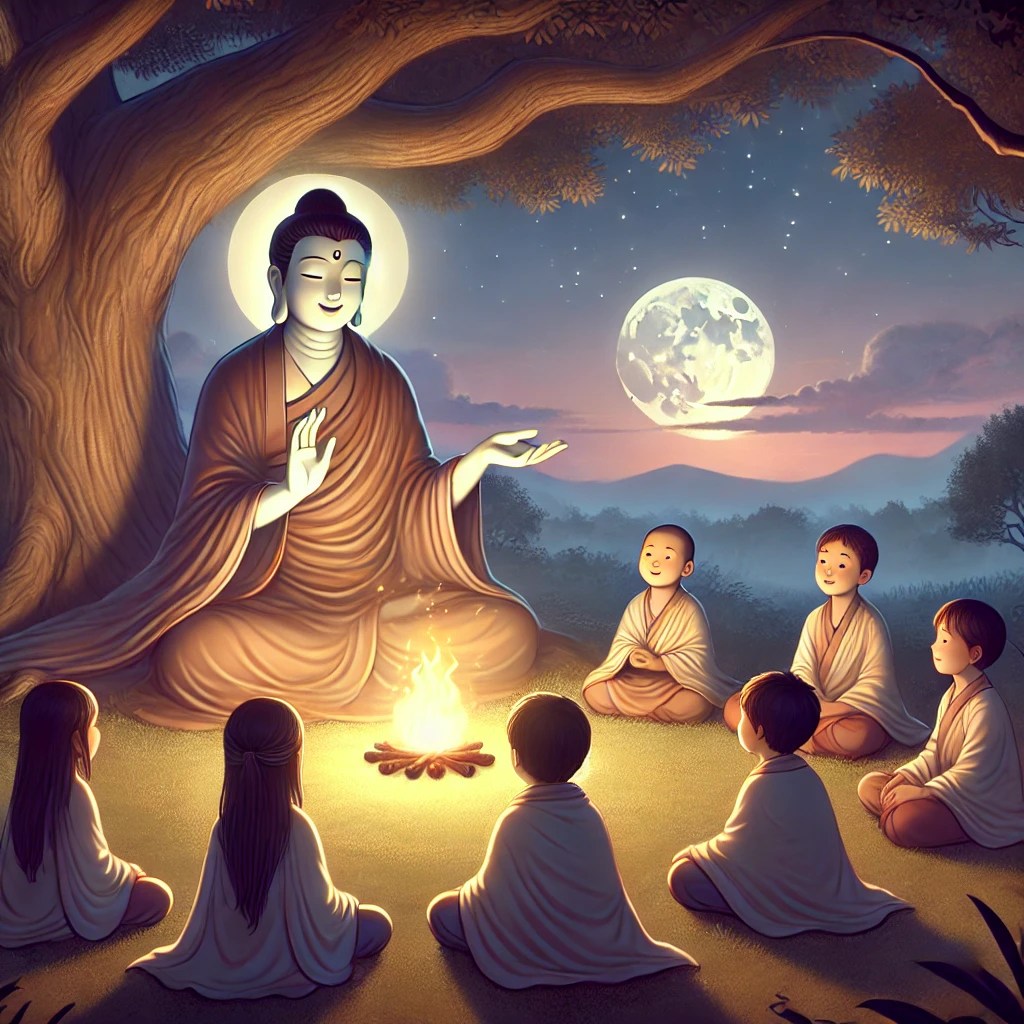
    Chenrezig often told stories to children, knowing that their hearts could understand what adults often forgot. One evening, as the stars glimmered softly above, Chenrezig gathered a group of children around a fire. They looked up at him with curious eyes, waiting for one of his famous stories.

    “Tonight,” Chenrezig said, “I will tell you a story about a great medicine—a medicine for the heart and mind. It is the mantra OM MANI PADME HUM. This mantra is like the most powerful medicine a doctor could ever give, one that can heal the illness of separation and help us remember our true nature.”

    He paused, watching the children lean in closer, eager to hear more. “But first,” he continued, “you need to understand something important. Imagine that you are wearing many layers of clothing—so many layers that you forget what you look like underneath. Each layer is like a thought or feeling you tell yourself: I’m not good enough. I need to be better.

    These layers are like cobwebs in the mind, making it hard to see clearly. And because we believe in these stories, we feel small and alone, like a candle separated from the flame. But the truth is, we are not the stories we tell ourselves. Beneath all the layers, beneath all the cobwebs, we are already whole, already perfect—just like a lotus flower, waiting to bloom.”

    The children sat very still, imagining themselves wrapped in layers of thoughts, feelings, and stories. “How do we take off the layers?” one of them whispered.

    Chenrezig smiled. “That is where the mantra comes in,” he said softly. “OM MANI PADME HUM is the medicine that clears away the layers, like a soft breeze sweeping away cobwebs. Each time you say the mantra, you peel back another layer. OM MANI PADME HUM… and the layers fall away. OM MANI PADME HUM… and your heart shines a little brighter. OM MANI PADME HUM… and with each breath, you get closer to your true self—your Buddha nature, the part of you that is pure love and compassion.

    He began to explain the meaning of the mantra, his voice gentle and full of care. “The first syllable, OM, is the sound of the universe waking up. It reminds us that we are connected to everything—to the stars, the rivers, the animals, and each other. OM is the sound of coming home to our true nature.”

    The children closed their eyes, listening to the sound of OM as if it were rising from the earth, the sky, and their own hearts all at once.

    “The next two words,” Chenrezig continued, “are Mani Padme—the jewel in the lotus. This means that inside each of us is a precious jewel—the light of wisdom and love. But just like a lotus flower that grows in muddy water, this jewel can be hidden by layers of thoughts and beliefs. Each time we chant Mani Padme, we open the lotus a little more, revealing the jewel inside.”

    The children imagined a lotus flower blooming in their hearts, each petal unfolding slowly, with a bright jewel glowing at its center.

    “And finally,” Chenrezig said, “we have Hum. This is the sound of unity—the sound that brings everything together. It is the moment when we remember that we were never separate, not from others, not from love, and not from our true nature. Hum is the sound of the Buddha mind awakening within you, shining with pure compassion.”

    The children whispered the mantra softly: OM MANI PADME HUM… OM MANI PADME HUM… Each repetition felt like a breeze clearing away the cobwebs in their minds, helping them feel lighter and brighter.

    “Now,” Chenrezig continued, “let me tell you one more secret. The mantra doesn’t just help you remember who you are—it helps others too. Every time you chant OM MANI PADME HUM, you are planting seeds of compassion, not just in your own heart, but in the hearts of all beings. These seeds will bloom in ways you may never see, bringing kindness and peace into the world.”

    He placed a hand over his heart. “It’s like sharing a gift that never runs out. Each time you say the mantra, you are offering love to the whole universe.”

    The children sat quietly for a moment, feeling the beauty of the mantra settling into their hearts, like a gentle rain nourishing the earth. “So the mantra is like a magic medicine?” one child asked softly.

    Chenrezig smiled. “Yes,” he said. “It is a medicine for the heart, a way of peeling back the layers until only love and wisdom remain. It helps us remember that we are not small or separate—we are like the ocean, vast and full of life. And each time we chant the mantra, we bring a little more light into the world.”

    As the fire crackled softly, casting warm orange light on their faces, Chenrezig leaned closer to the children. “Now, as you drift off to sleep tonight, you can let the mantra carry you, like a boat floating gently down a river. Whisper it in your heart: OM MANI PADME HUM… OM MANI PADME HUM… Let it peel back the layers of your mind, revealing the jewel of compassion that has always been there.”


    He kissed each child on the forehead and offered a final blessing:

    OM MANI PADME HUM . . .

    With each breath, may you awaken to your true nature.

    With each dream, may your heart bloom in kindness.

    May all beings remember their light, and may the world be filled with peace.

    The mantra hummed softly in their hearts: OM MANI PADME HUM, OM MANI PADME HUM… clearing away the cobwebs, layer by layer, revealing the truth that they were never separate, but always part of the great ocean of love.

    May your hearts always shine with the light of compassion, and may OM MANI PADME HUM guide you, now and always. Sleep well, children. The jewel in the lotus is already blooming within you.

    As the children drifted into a peaceful sleep, the mantra whispered in their hearts… OM MANI PADME HUM… until their dreams were filled with rivers of kindness, endless skies of compassion, and the light of love.

    Goodnight, little one. ❤️

    🙏🕊️🙏


    If you’d like to explore more bedtime stories for children, including tales that nurture compassion and mindfulness, you can find our collection here.