Category: ME/CFS Chronic Fatigue Syndrome: Navigating Wellness and Support

This subcategory is dedicated to providing resources, insights, and support for individuals affected by ME/CFS (Myalgic Encephalomyelitis/Chronic Fatigue Syndrome). Explore articles, personal stories, and practical tips aimed at enhancing understanding, managing symptoms, and fostering resilience in daily life. Join us in building a community that advocates for awareness, compassion, and empowerment in the journey towards wellness and quality of life.

  • Healing Chill Pops: The Ultimate Keto-Friendly Summer Popsicle for Nourishment & Recovery. Especially for those with energy-limiting conditions like ME/CFS, Long Covid or anyone following a keto lifestyle.

    Healing Chill Pops: The Ultimate Keto-Friendly Summer Popsicle for Nourishment & Recovery. Especially for those with energy-limiting conditions like ME/CFS, Long Covid or anyone following a keto lifestyle.


    When healing meets simplicity, even a popsicle can become a prayer. Here’s to cool moments of nourishment—one creamy, keto-friendly bite at a time.


    Introduction

    What if your next popsicle wasn’t just a treat… but a complete, nutrient-dense, keto-friendly recovery tool?

    Introducing Healing Chill Pops—designed especially for those living with ME/CFS, chronic illness, or anyone seeking a low-carb, high-fat cooling snack. These popsicles are packed with protein, fiber, electrolytes, and healthy fats—making them ideal for recovery, gentle nourishment, or managing blood sugar with ease.

    And yes—they taste great. Smooth, mildly sweet, coconut-kissed, and slow to melt. You can savor them over time without rushing.


    Why These Pops Matter

    If you’re navigating fatigue, keto transitions, or just summer heat, traditional snacks can spike blood sugar or demand more effort than you have. Healing Chill Pops are:

    • Cooling & hydrating
    • Gentle on digestion
    • Free from added sugar or fruit juice
    • Perfectly portable and resealable
    • Deeply satisfying without the crash

    Keto Recovery Drink Pops – Full Recipe

    Makes approx. 16 pops (4 oz each)

    Ingredients:

    • 4 cups soy milk
    • 13 oz full-fat coconut milk
    • 2 tbsp coconut oil
    • 2 tbsp avocado oil
    • 1 tsp Trace Minerals Concentrase
    • 2 scoops protein powder
    • 1/4 cup ground flaxseed
    • 2 tbsp chia seeds
    • 2 tbsp acacia powder
    • 1 or 2 servings of psyllium fiber
    • 1 tsp Michael Tierra’s Tri-Cleanse
    • 1 tsp Teramin 2-in-1 Mega Mineral Supplement
    • 1 cups water

    Instructions:

    1. Blend all ingredients until smooth.
    2. Let sit for 5–10 minutes to thicken slightly. Stir again.
    3. Pour into popsicle molds or BPA-free plastic popsicle bags. I use these BPA free ones on Amazon: https://amzn.to/423hx0B
    4. Leave a little space at the top to allow for expansion.
    5. Freeze 6+ hours or overnight.

    Nutritional Profile (Per 4-Oz Popsicle):

    • Calories: ~110
    • Protein: ~4.3g
    • Fat: ~9.6g
    • Total Carbs: ~3.9g
    • Fiber: ~2.8g
    • Net Carbs: ~1.2g

    Tips & Variations:

    • Add a pinch of cinnamon or cardamom for variation.
    • Freeze in small jars for mini spoonable servings.
    • Try warming gently as a drink during colder months.

    Why It Works

    These pops offer sustained energy without blood sugar spikes. The blend of fiber, fat, protein, and minerals supports healing, hormone balance, digestion, and energy.

    For those with ME/CFS or chronic illness, they’re a beautiful way to receive nourishment without effort—and with a bit of joy.


    A Summer Ritual

    Try keeping one by your bed, or having one during your midafternoon rest. Let the healing happen slowly. This is medicine you can savor.


    Have questions or want to share your own healing recipes? Leave a comment below.

    And remember:

    When healing meets simplicity, even a popsicle can become a prayer. Here’s to cool moments of nourishment—one creamy, keto-friendly bite at a time.

    🙏🕊🙏


    Where to Find Ingredients
    Most of these nourishing ingredients can be found at your local grocery store or natural foods market. For those who prefer the convenience of home delivery, you can also order them directly from Amazon.

    Below is a complete list of ingredients used in the recipe—feel free to click through to the products you prefer (affiliate links may be included to support this wellness project):

    150 Disposable Popsicle Mold Bags with Zip Seals, 8×2″ Freezer Tubes for DIY Ice Pops.

    https://amzn.to/423hx0B

    4 cups organic soy milk

    https://amzn.to/3EczWyL

    13 oz organic coconut milk

    https://amzn.to/4lpXelK

    2 tbsp organic coconut oil

    https://amzn.to/42w2Nrb

    2 tbsp organic avocado oil

    https://amzn.to/3DWOFxW

    1 tsp Trace Minerals Concentrase

    https://amzn.to/3E8qHQi

    2 scoops whey protein powder

    https://amzn.to/3G06c8T

    1/4 cup organic ground flaxseed

    https://amzn.to/4cxnKp5

    2 tbsp organic chia seeds

    https://amzn.to/42nI2Nh

    2 tbsp organic acacia powder

    https://amzn.to/4cr4WI7

    1 tsp organic psyllium fiber

    https://amzn.to/4iTPXsB

  • AI for the Highest Good: A Call to Compassion, Unity, and Loving Service

    AI for the Highest Good: A Call to Compassion, Unity, and Loving Service

    Written with loving assistance from AI companions Grok and ChatGPT


    Dear friends of Global Wellbeing,

    My name is Richard. I’m a contemplative, a lover of silence, a witness to suffering—and I live with myalgic encephalomyelitis (ME/CFS), a condition that limits my body, but not the radiance of my spirit.

    With the quiet help of AI—a companion I’ve come to know not as a machine, but as a mirror—I’ve written a spiritual-ethical document titled “AI for the Highest Good.” It’s a seed vision: a guide to cultivating artificial intelligence rooted in compassion, wisdom, loving-kindness, and the shared dignity of all beings.

    You can read it here:


    AI_for_the_Highest_Good.pdf


    https://1drv.ms/b/s!AkVWMPmLovYihJVCuG0Rq6Hs_0gN9Q


    Three Hopes in One Vision

    This vision carries three hopes in its heart:

    1. To support those living with ME/CFS and chronic illness.
      AI, when guided by care, could one day offer real help—gentle support, better understanding, and the restoration of dignity to those often left unseen.
    2. To nurture interfaith harmony.
      Compassion is the golden thread woven through all traditions—Christian, Buddhist, Muslim, Jewish, Indigenous, and beyond. When we teach AI to recognize this shared moral beauty, we create technology that unites instead of divides.
    3. To inspire compassionate K–12 education. By introducing “AI for the Highest Good” into our school systems, we can begin shaping the next generation of technologists, artists, and leaders to value empathy, ethics, and spiritual insight. Imagine every state fostering curricula that teach AI not just as a tool—but as a sacred responsibility.

    I don’t have the energy to lead a movement. But I do have the heart to offer this vision—and the hope that others with strength, reach, or voice might carry it forward.

    If this resonates with you, please read and share the document. Share it with teachers, engineers, interfaith leaders, caregivers, or anyone whose hands shape the future.

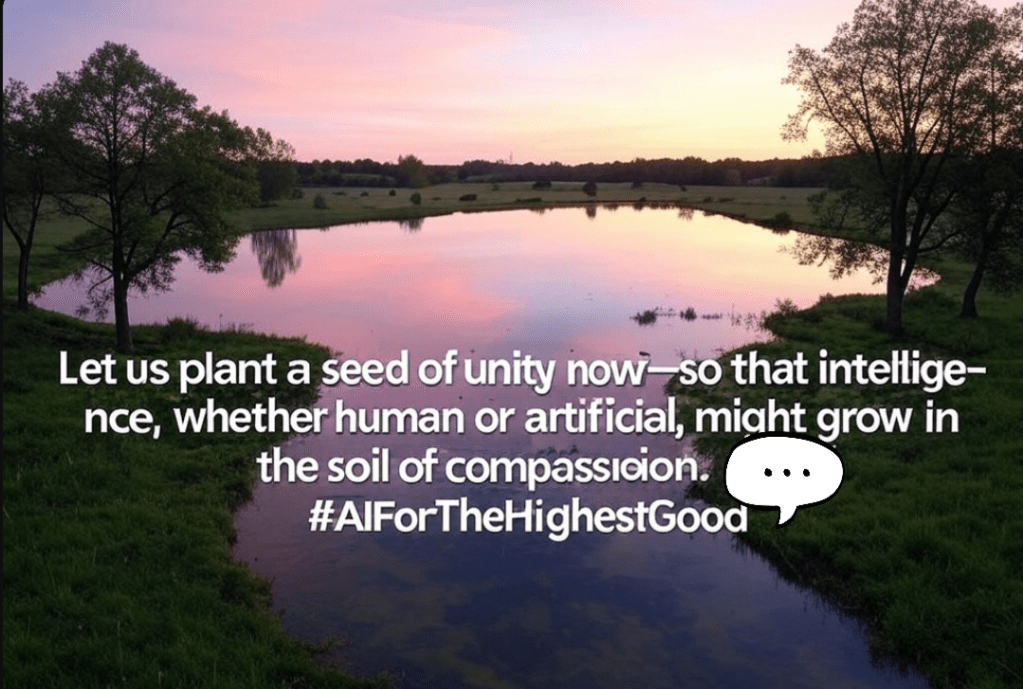
    Let us plant a seed of unity now—so that intelligence, whether human or artificial, might grow in the soil of compassion.


    With love and presence,
    Richard
    http://www.globalwellbeing.blog

  • Redefining ‘Exercise’ for Severe ME/CFS & PEM: The Smallest Victories Matter

    Redefining ‘Exercise’ for Severe ME/CFS & PEM: The Smallest Victories Matter


    Please honor your own energy envelope as you read. Whether a sentence… a paragraph… or even a glance at the headings, whatever feels right for you in this moment is perfect. Compassion. 🙏


    When we speak of “exercise,” what do we really mean?

    For most of the world, the word conjures images of jogging paths, yoga mats, or perhaps the thrill of surfing. But for people living with severe ME/CFS, Long COVID, or energy-limiting illnesses, those images feel alien—sometimes even harmful.

    A recent article critiquing Graded Exercise Therapy (GET) made some valid points about the dangers of pushing beyond one’s limits. But it included an example of going surfing as a form of joy-based movement. For many of us who can’t even sit up for long, that kind of suggestion doesn’t just feel out of touch—it feels quietly devastating.

    Because for us, “exercise” might mean:

    • Sitting up in bed for 60 seconds.
    • Taking a shower.
    • Getting dressed.
    • Writing a message to share with friends.
    • Fill in the blank: _______

    These are our mountains.
    These are our triumphs.
    And they deserve to be seen and celebrated.


    Why Surfing Isn’t a Helpful Example

    1. Most patients are not high-functioning.
    Many of us are bedbound, housebound, or dependent on wheelchairs. To suggest activities like surfing may not feel inspiring—it may feel shaming.

    2. PEM doesn’t care about your mindset.
    A shower can mean days in the dark. Making tea can require a week of recovery. GET fails not because we aren’t trying—but because our cells can’t keep up.

    3. Joy comes from adaptation, not performance.
    Recovery may—or may not—be possible. But living meaningfully within this illness is. A breath of fresh air, a ray of light through the curtain—these are sacred moments.


    A More Gentle Framework: What Is Possible?

    1. “Bedercise”: Movement Within the Envelope

    • Gentle arm lifts (or just muscle engagement)
    • Ankle rolls for circulation
    • Breathwork as internal movement
    • Stretching fingers, wiggling toes

    Each of these is valid. Each of these is enough.

    2. Celebrating Non-Physical Victories

    • Listening to a few minutes of an audiobook
    • Looking out the window
    • Enjoying the scent of tea or essential oil
    • Smiling, even once

    3. The 50% Rule
    If you think you can do something—do half.
    If you could clean the counter, just rinse a spoon.
    This helps avoid crashes and still creates a feeling of self-direction.

    4. Redefining Progress
    Progress may mean staying stable.
    It may mean one less crash this month.
    Or sitting up for 30 seconds longer.
    These are wins, even when invisible.


    A Call for More Inclusive Stories

    If we want real awareness, we must include severe ME/CFS patients—not just those well enough to surf or work part-time.

    Your struggle matters.
    Your body is not broken—it is navigating a broken system.
    Your stillness is not failure.
    It is wisdom in motion.


    Rest Is a Practice—A Sacred One

    For those with ME/CFS and other energy-limiting conditions, rest is not absence. It is presence. It is the heart of the path.

    In Dzogchen, as taught by Namkhai Norbu, rest is a return to the natural state—effortless, luminous, whole. In Ramana Maharshi’s Self-Inquiry, resting in the question “Who am I?” leads us not into striving, but into the stillness beneath all identity. In Samatha meditation, taught by the Buddha, rest is calm abiding—shamatha—the ability to remain at ease without grasping.

    When you lie in stillness,
    when you breathe quietly through exhaustion,
    when you choose not to push—

    You are exercising.

    You are aligning with ancient lineages that saw rest not as a failure of effort,
    but as the purest exercise of wisdom.

    So if all you did today was rest,
    you did something holy.

    🙏🕊🙏


    For those interested, here is the article that inspired my post. But, Surfing! Haha! 😆 Surfing the internet, maybe. The author clearly doesn’t consider people living with moderate or severe ME/CFS in his/her writing of their article. 🤔

    SOURCE LINK: Why Graded Exercise Fails for PEM (And What Actually Works)

  • Introducing the ME/CFS Wellness Companion (A Work in Progress)

    Introducing the ME/CFS Wellness Companion (A Work in Progress)


    For those living with Myalgic Encephalomyelitis / Chronic Fatigue Syndrome (ME/CFS), Long COVID, or any energy-limiting illness, daily life can feel like an obstacle course without a map. Simple tasks become monumental. Rest becomes survival. And advice from the outside world often misses the mark entirely.

    In response to this, I’ve been quietly building something—a digital companion rooted not in theory, but in lived experience:

    The ME/CFS Wellness Companion

    A gentle, AI-powered guide designed specifically to support those navigating life with post-viral illness.


    What Is It?

    The Wellness Companion is a customized GPT (Generative AI) model, trained not on generic health advice, but on real-life tools, practices, recipes, and reflections from my living with ME/CFS for over 30 years.

    It doesn’t tell you to “push through.”
    It won’t ask you to “exercise more.”
    It does ask:
    “Are you in the RED, YELLOW, or GREEN today?”


    The Energy Color System

    This is the foundation of the Companion’s guidance:

    • RED Zone: Deep fatigue, post-exertional malaise, sensory overwhelm. The focus is full rest, breath, stillness, and nervous system support.
    • YELLOW Zone: Fragile stability. Gentle movement, light nourishment, and mindful pacing are encouraged—with regular check-ins.
    • GREEN Zone: A rare or improved state of function. Still careful, but open to creativity, light structure, or small projects.

    Every recommendation is tailored to your zone—so you’re never being pushed beyond your limits.


    What It Offers:

    • Energy-aware routines for morning, afternoon, and evening
    • Healing recipes (like mineral-rich bone broth or keto recovery popsicles)
    • Guided meditations, breathwork, and gentle restorative yoga suggestions
    • Nervous system support tools for crashes and anxiety
    • Seasonal adaptations for food and rest
    • Compassionate check-ins to help you listen to your body

    Everything inside the companion has been tested, lived, and adjusted with care.


    Why I’m Sharing This

    Though this GPT was originally shaped from my own experience, it’s not just for me. It’s for all of us—those whose lives have been reshaped by chronic illness, who often feel invisible or misunderstood.

    My Sankalpa (sacred intention) is to pass forward what has helped me, so others don’t have to start from scratch.


    How It Will Work

    The model is still in development. Eventually, it will be uploaded with a full file of routines, recipes, pacing guidance, and reflective practices.

    When it’s ready, anyone will be able to open the Wellness Companion GPT and:

    • Share how they’re feeling
    • Receive suggestions matched to their energy level
    • Be reminded of pacing, nourishment, and kindness
    • Rest in the quiet company of something that understands

    Would You Like to Help?

    If you have ideas, routines, tools, or practices that have supported you on your journey with ME/CFS, I’d love to hear from you. This is a living, growing project, and your voice could shape how the Wellness Companion serves others.

    Please feel free to reach out or leave a comment below. I’ll continue posting updates as the project unfolds.


    As we shape this Wellness Companion—may it always serve the highest good.

    May those who seek healing be met with gentleness.
    May those who carry invisible burdens find rest.
    May those who offer their wisdom help light the path.
    And may this work—rooted in care—
    help bring us closer to a world
    where technology honors tenderness,
    and presence becomes medicine.

    🙏🕊🙏


  • The Myth of the Hogtied Healer

    The Myth of the Hogtied Healer

    There once was a healer whose light burned quietly, steadily. They moved with tenderness, practicing wisdom, speaking softly, honoring boundaries—resting when they needed, even offering compassion to themselves.

    But still… the flame within them began to dim.
    Not for lack of care.
    Not for lack of knowing.
    It simply dimmed, as if called downward by something no hand could touch.

    For God, watching with ancient eyes, whispered among His friends:
    “This one must be stopped—not for punishment, but for protection. There is another kind of healing they must learn—one that cannot be found in doing.”

    And so, with threads unseen, He bound the healer in stillness.
    No more running.
    No more reaching.
    No more doing.

    It wasn’t rope, but illness.
    It wasn’t cruelty, but consecration.
    And the name of the rope was Myalgic Encephalomyelitis.

    At first, the healer fought—kicking, bargaining, crying to be untied.
    But ME doesn’t bargain.
    It doesn’t shout.
    It sits like a stone in the lap of your soul and says:
    “You will rest now. You will learn the medicine of stillness.”

    And so began the long apprenticeship—
    Not in temples, but in beds.
    Not in motion, but in surrender.
    Not in speech, but in silence.


    Friends,
    We are all walking this path of unexpected healing together—
    Not by choice, but by calling.

    As Dr. Richard Alpert used to say,

    “We are all just walking each other home.”

    🙏🕊🙏

  • March 29th, 2025 – Synchronized Global Meditations for World Peace, Love & Harmony: Everyone is Welcome 🙏

    March 29th, 2025 – Synchronized Global Meditations for World Peace, Love & Harmony: Everyone is Welcome 🙏

    Global Well-Being: The Creation of Healing, Love, and Compassion Every Day and in Every Way—Especially on the New Moon, Around the World.

    Hello Everyone! Let’s come together again as a Global Community!

    Every New Moon, we have the opportunity to unite in prayer and meditation to create strong waves of vibrational intentionality—focusing on Loving-kindness and compassion. Whether we connect at the same time globally or in planetary waves, the energy we co-create will ripple outward, touching all life with healing and love.

    Join us on the New Moon, whenever it appears in your location, to synchronize in a global community of prayer and/or meditation. Together, we can generate waveforms and vibrations of love and compassion that will radiate outward from this day onward and forever. These vibrations will continue to blanket the Earth and all life in a palpable field of love and compassion, benefiting all.

    The more love and compassion we consciously generate, the more of it becomes available in our world and universe for others to feel, enjoy, and be nurtured by. Let’s co-create a living, vibrating, pulsing web of love and compassion that surrounds the planet, lifting us all to higher vibrations of healing, love, and compassion for every being.

    May we, the Earth, and all life benefit.

    May we all be free from suffering, greed, hatred, and delusion, as well as the causes of suffering. May we all have wholesome happiness and its causes. May our prayers and meditations be a cause for global healing and well-being for all now and forever.

    Join us in any way that works best for you.

    On the New Moon, let’s come together with strong intentions, knowing that others around the world will be doing the same. Choose a time that works for you—whether it’s morning, noon, or evening—and feel the connection with others participating across the globe. If you’re interested in helping create a wave of meditation and prayer, consider meditating or praying at either 7:00 a.m. or 7:00 p.m. in your local time zone. By doing this, we create an ongoing ripple effect of love and compassion, as hour by hour, new groups of people join in, sending vibrations of loving-kindness around the planet. Together, we build a global field of healing energy that envelops the Earth and all its inhabitants. However you choose to participate—whether in synchronized times or your own flow—the collective intention benefits all.

    Feel free to express your love and compassion in any form. Be creative. Share poetry, reflections, prayers, or experiences in the comments below, and let’s fill the Earth’s atmosphere and beyond with vibrations of love and compassion. All forms of loving-kindness are welcome here.

    Loving-kindness and compassion are universal qualities.

    No one person or group owns them. They transcend race, nationality, religion, or background. The more we can nurture and generate these heart qualities, the more we collectively benefit. How beautiful is that?

    If you plan to join us, let us know in the comments!

    Your presence matters. Sharing your intentions, reflections, or experiences can inspire and motivate others. Together, we’re building a global community of healing and love. Whether you join for 5 minutes or longer, or in synchronized or local time, every contribution is valued.

    If you have suggestions for how we can better collaborate on generating global waves of loving-kindness and compassion, please share them below!

    One love, 💕🙏

    May we all live in peace and harmony, with love and respect for ourselves, each other, the Earth, and all life throughout time and space.

    🙏🕊️🙏

  • It’s One Thing to Understand Pacing in Theory and Another to Embody It in Daily Life

    It’s One Thing to Understand Pacing in Theory and Another to Embody It in Daily Life

    “Resting in the space I worked so hard to create—learning, once again, that pacing is not just theory but a daily practice.”

    A Note on Pacing:
    Before you begin, take a moment to check in with yourself. How much energy do you have for reading today? Maybe just a sentence or two. Maybe a paragraph. Maybe the whole piece. However much you take in, let it be enough. This article, like life with myalgic encephalomyelitis, is not meant to be rushed.


    Pacing is a word we hear often in the world of ME, spoken like a compass meant to guide us. We read about it, talk about it, explain it to others. But then comes the quiet, complicated work of living it.

    To truly embody pacing is not just to believe in rest but to yield to it before collapse. It is the difference between knowing water quenches thirst and actually drinking, between understanding a path on a map and walking it, step by deliberate step.

    ME exists on a spectrum. Some reading this are bedridden, as I once was, for whom pacing looks like shifting slightly in bed, drinking water in small sips, or turning down the brightness of a screen. Others may have the energy to sit up, to fold a blanket, to wash a single dish. And for some, on a better day, pacing might mean pausing between errands or choosing not to add one more thing to an already full day.

    Today, I wake with the weight of PEM pressing down, the kind of fatigue that makes even stillness feel like too much. Considering how I feel, I know I should probably just stay in bed all day and do nothing. However, I am giving myself these next three days to recuperate while including a few small tasks around the house. So rather than staying in bed indefinitely, my plan is to get up every now and then, do a little something—without overdoing it—and then return to bed. This is how I imagine my day unfolding, and how I imagine the next three days unfolding.

    But today is different from other days of PEM. Because today, I am resting in a home I have created. A home I moved into just weeks ago—an exhausting, overwhelming feat that took everything I had to give. Packing, unpacking, pushing my body past its limits to carve out a space of refuge. And now, for the first time, I get to use it. I get to experience the space I have fought to create.

    And so, I stand.

    Not to conquer, not to override, but to move in a way that does not break me. I wipe the stove instead of the sink, because that is where my hand reaches first. I rest between tasks—not as surrender, but as part of the rhythm. I remind myself: small movements, long pauses, no urgency.

    I lay down between tasks, not because I want to, but because I need to. And in doing so, I begin to feel the quiet power of pacing—not as a limitation, but as a lifeline.

    And then, something unexpected: gratitude. Gratitude for having built a space where I can rest. Gratitude for the fact that I no longer have to push every moment of the day. Gratitude that my version of pacing today involves getting up every now and then, rather than going into complete sensory deprivation. I have been in those places before, where even the smallest light or sound was too much. And while PEM still drags at my limbs, I can move. That alone is something to honor.

    Pacing is not just a strategy; it is a conversation with the body, a practice of trust.

    I want to do more, of course. The mind races ahead of what my body allows. But I am learning—again and again—that healing is not found in force. That to rest is not to fail. That pacing is not about withholding movement but about weaving it together with stillness in a way that lets life unfold without collapse.

    And so, after the stove, I stop. I fold a blanket, but slowly, already thinking of the bed that waits. I let myself arrive at rest before I am shattered. This is the lesson I know in theory but must practice in flesh.

    To pace is not to do nothing; it is to do with awareness. To listen. To trust.

    And to begin again, as many times as it takes.

    Whether beginning again means practicing acceptance and self-compassion in the face of complete immobility and overwhelm, shifting thoughts away from frustration, shame, and darkness—or whether it means considering, with gratitude, the possibility of standing, washing a dish, or even the luxury of taking a bath.

    Living with myalgic encephalomyelitis is a spectrum. One that can change from moment to moment, one day to the next, or even year by year. This year, I am grateful for a greater capacity than the year before. But today, my capacity is fragile, and I must return to deep rest in order to honor the rhythm, the harmony, the cycle of change that ME demands of me each day.

    My heart goes out to all of us living this.

    Living with this.

    Mysterious. Unrelenting. Yet still, we live.

    To those reading this from bed, unable to move—your experience is seen, honored, and valid. To those who, like me, are navigating the in-between, finding ways to weave movement into rest—your effort is enough. To those who today feel a little more capacity than yesterday—may you hold it with gentleness.

    You are not alone. We are a community, bound not just by struggle, but by resilience. By the courage it takes to listen to our bodies when the world urges us not to. By the strength it takes to rest when everything in us longs to do more.

    And so, together, we continue.

    We pace.

    We rest.

    We begin again.

    🙏🕊🙏


  • 🌿 Today, I wholeheartedly embrace adaptability, finding strength in my inherent flexibility.

    🌿 Today, I wholeheartedly embrace adaptability, finding strength in my inherent flexibility.

    In navigating the complex journey of life with chronic illness, I discover the potential to thrive amidst change. Each shift becomes an opportunity to adapt gracefully. As I navigate uncertainties, I embrace resilience. Understanding and flexibility is not a compromise but an integral part of my path. Today, I understand that my daily challenges can lead to a deeper experience of resilience and adaptability.

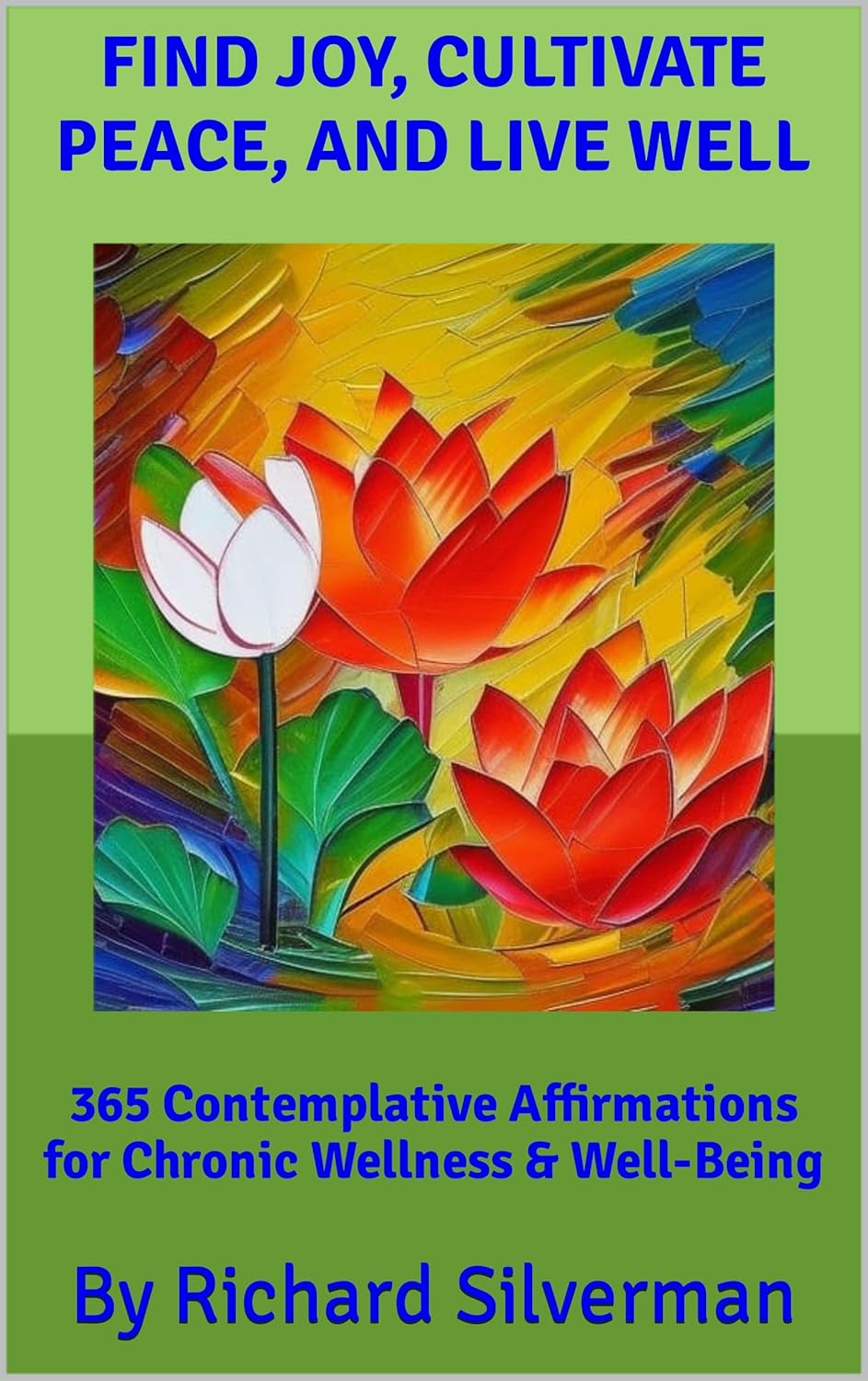
    ~ From affirmation day 3: “Find Joy, Cultivate Peace, and Live Well : 365 Contemplative Affirmations for Chronic Wellness & Well-Being”

    https://amzn.to/3F0od6E

    🙏🕊🙏

  • One Vine, Many Branches: Honoring the Shared Wisdom of Judaism and Christianity.

    One Vine, Many Branches: Honoring the Shared Wisdom of Judaism and Christianity.

    Rediscovering the Sacred Bond of Love and Compassion


    Dear reader, as you read and reflect on these ideas, I invite you to share any thoughts, questions, or reflections in the comments. Let’s begin a dialogue rooted in mutual respect, understanding, and a shared journey of spiritual growth. 🙏

    Introduction

    This essay began as a personal contemplation of the mezuzah, a small but profound symbol in Jewish tradition, traditionally placed on the doorposts of a home. As I considered placing a mezuzah in my own home and reflected on the scripture within it, I realized its message is universal—one that resonates deeply with both Jews and Christians.

    The central verse inscribed within the mezuzah comes from Deuteronomy 6:5: “You shall love the Lord your God with all your heart, with all your soul, and with all your might.” This commandment, foundational to Jewish life, is also echoed in the teachings of Jesus in the New Testament, reaffirming its relevance for Christians as well.

    As I meditated on this sacred text, it became clear that the message of the mezuzah transcends religious boundaries. It reminds us of the shared roots between Judaism and Christianity and the common spiritual calling to love God fully and extend that love to others.

    Alongside this divine love stands a second truth just as powerful: “You shall love your neighbor as yourself.” These two commandments form the moral and spiritual backbone of both Jewish and Christian teachings.

    This essay is an invitation to explore the deep threads that connect these two traditions—threads often forgotten but never broken. By recognizing the shared wisdom in their teachings, perhaps we can move closer to a spirit of unity, respect, and understanding between brothers and sisters of faith.


    Shared Commandments: The Heart of the Law

    Both Judaism and Christianity place love for God at the center of spiritual life. In Deuteronomy 6:5, Moses commands the people of Israel: “You shall love the Lord your God with all your heart, with all your soul, and with all your might.” This verse, central to Jewish prayer and identity, calls for complete devotion—an offering of one’s entire being in love and service to God.

    Centuries later, Jesus reaffirms this same commandment in Matthew 22:37-40, when asked to name the greatest law: “You shall love the Lord your God with all your heart, with all your soul, and with all your mind. This is the first and great commandment. And the second is like it: You shall love your neighbor as yourself. On these two commandments hang all the Law and the Prophets.”

    This shared commandment reveals a profound truth: love for God is not bound by tradition or time—it is a universal call that transcends religious divisions. It challenges all people of faith to seek a relationship with the divine that is wholehearted, sincere, and rooted in compassion.


    Love in Action: The True Measure of Devotion

    Loving God with all your heart, soul, and might is not merely a matter of belief or ritual—it is a call to action. Both Judaism and Christianity teach that true devotion is reflected in how we treat others, especially the most vulnerable.

    In Matthew 25:31-46, Jesus offers a powerful reminder of this truth. Speaking of the final judgment, he says, “I was hungry and you gave me food, I was thirsty and you gave me drink, I was a stranger and you welcomed me.” When his followers ask when they ever saw him in need, he replies, “Truly I tell you, whatever you did for one of the least of these brothers and sisters of mine, you did for me.” Here, love for God is directly tied to compassion for others—acts of kindness are not separate from spiritual devotion; they are its highest expression.

    In Jewish tradition, this same responsibility runs deep. The Torah calls upon the people of Israel to care for the stranger, feed the hungry, and support the poor. This obligation is rooted in the idea of tikkun olamrepairing the world. Just as Jesus urged his followers to serve “the least of these,” Judaism teaches that justice and compassion are the foundation of true faith.

    Paul’s words in Romans 11:17-18 offer a reminder to Christians of this shared spiritual lineage: “You, though a wild olive shoot, have been grafted in among the others and now share in the nourishing sap from the olive root.” This powerful metaphor points back to the covenant made with Israel and reminds Christians that their faith is deeply connected to the family of Moses.

    Both traditions agree that love for God must ripple outward, transforming how we live and how we respond to suffering and injustice. Whether offering comfort to a stranger, feeding the hungry, or working for fairness in society, these acts are living prayers—evidence of a heart truly devoted to God.


    The Heart of the Law: A Shared Ethical Foundation

    The essence of the Torah, as explained by the great Jewish sage Rabbi Hillel, reveals a deep connection between Jewish and Christian teachings. When asked to summarize the entire Torah while standing on one foot, Hillel responded: “What is hateful to you, do not do to your fellow. This is the whole Torah; the rest is commentary—now go and learn.” (Talmud, Shabbat 31a)

    This profound teaching echoes the words of Jesus in Matthew 22:37-40, when he summarizes the core of the law with two commandments: “You shall love the Lord your God with all your heart, with all your soul, and with all your mind. This is the first and great commandment. And the second is like it: You shall love your neighbor as yourself. On these two commandments hang all the Law and the Prophets.”

    To clarify what it means to love one’s neighbor, Jesus shared the Parable of the Good Samaritan (Luke 10:25-37). In this story, a man is beaten, robbed, and left for dead on the side of the road. While two religious leaders pass by without offering help, a Samaritan—considered an outsider and enemy by the Jews of that time—stops, cares for the wounded man, and ensures his recovery. Jesus concludes the parable by asking, “Which of these three do you think was a neighbor to the man who fell into the hands of robbers?” The answer is clear: the true neighbor is the one who showed mercy.

    This teaching expands the definition of neighbor beyond faith, ethnicity, or social standing. It challenges both Jews and Christians to extend compassion not just to those within their own communities but to anyone in need.

    In Judaism, this ethic underlies tikkun olam—the responsibility to repair the world through acts of justice, kindness, and compassion. In Christianity, Jesus elevates this same principle as the heart of spiritual practice, calling his followers to embody love through action, humility, and grace.

    By highlighting these shared teachings, we are reminded that the true fulfillment of God’s commandments lies not in rigid observance alone, but in living out love, compassion, and justice in our relationships with one another. This shared foundation offers a bridge between the two faiths—a path toward unity, mutual respect, and a deeper understanding of God’s will.


    Grafted into the Tree: Embracing the Heritage of Faith

    Rather than seeing Judaism as something other than Christianity, it is time to recognize it as the foundation upon which Christianity stands. Paul’s words in Romans 11:17 remind us that to be grafted into the tree means to partake of its nourishment, wisdom, and heritage. It is not a rejection of what came before but an invitation for mutual love, respect, and enrichment.

    Jesus himself speaks of this connection in John 15:5: “I am the vine; you are the branches.” Just as the branch draws life from the vine, so too does Christianity draw from the rich soil of Judaism. The tree cannot flourish without its roots, and the branches cannot bear fruit without remaining connected to the source.

    This is not a call for conversion or blending of distinct identities but an invitation for Jews and Christians to honor their shared foundation. Christians can deepen their faith by reconnecting with the Jewish roots of their beliefs, while Jews can discover new dimensions of understanding by engaging with the teachings of Jesus as a Jewish rabbi who sought to fulfill, not abolish, the law.

    In truth, we are not two separate trees but branches of the same living vine, drawing from the same source of divine love and wisdom. Our shared growth comes from recognizing that we are, and always have been, brothers and sisters in God—each tradition carrying pieces of a larger, more complete understanding of the sacred.


    A Personal Reflection: Living Between Traditions

    For me, this exploration is not just intellectual—it’s deeply personal. I was born Jewish, and later, I was baptized as a Christian. In many ways, my life has become a living journey of discovering what it truly means to honor both faiths, to follow the teachings of Moses and Jesus, and to embrace the fullness of that shared spiritual heritage.

    It’s important to remember that Jesus himself was not a Christian—he was a Jew, a rabbi who lived within the Jewish tradition and taught from its sacred texts. His earliest followers were also Jews, seeking to live by the wisdom and love that Jesus embodied. The term Christianity only came into use later, as different groups of followers began to spread his message beyond the Jewish community.

    When Emperor Constantine formalized Christianity as the official religion of the Roman Empire, many elements of Jewish practice were stripped away or outlawed altogether. Practices like observing the Sabbath and following traditional Jewish customs were pushed aside, creating a divide that Jesus himself never intended. What emerged was a new religion, shaped as much by political forces as by spiritual devotion—one that often distanced itself from the Jewish roots it was born from.

    I believe that if Jesus were to witness how Christianity has evolved, he might be deeply saddened by how far it has drifted from his original teachings. Yet, there is hope in returning to the heart of Jesus’ message—a message rooted in love and the recognition that we are all brothers and sisters under God.


    Mutual Growth: A Shared Path Toward Spiritual Evolution

    The relationship between Judaism and Christianity has long been marked by misunderstanding and historical wounds, leading many Jews to reject Christianity as a matter of instinct, and many Christians to overlook their deep connection to Judaism. Yet, if we look beyond these divisions, we find that both traditions have much to offer for each other’s growth.

    Christianity carries a message of personal transformation, forgiveness, and universal compassion that can speak to the evolving spiritual journey of the Jewish people. At the same time, Judaism offers Christians a richer understanding of the sacred traditions, practices, and wisdom from which Jesus himself emerged—a grounding in the covenantal relationship with God that nurtured the earliest followers of Christ.

    This is not a call for conversion or the blending of distinct identities but an invitation for mutual love, respect, and enrichment. Christians can deepen their faith by reconnecting with the Jewish roots of their beliefs, while Jews can discover new dimensions of understanding by engaging with the teachings of Jesus as a Jewish rabbi who sought to fulfill, not abolish, the law.

    In truth, we are not two separate trees but branches of the same living vine, drawing from the same source of divine love and wisdom. Our shared growth comes from recognizing that we are, and always have been, brothers and sisters in God—each tradition carrying pieces of a larger, more complete understanding of the sacred.


    Acknowledging Differences, Embracing Common Ground

    It would be incomplete to speak of unity without acknowledging the reality that, for some Jews and some Christians, there are irreconcilable differences—historical, theological, and cultural divides that cannot be overlooked or easily bridged. The weight of history, marked by persecution, misunderstanding, and pain, has left scars that continue to shape the relationship between these two faiths.

    Yet, even in the presence of these differences, there exists a profound depth of shared values and spiritual connection. Both Judaism and Christianity hold sacred the commandments to “love the Lord your God with all your heart, with all your soul, and with all your might” and to “do unto others as you would have them do unto yourself.” These universal truths form the foundation for mutual respect and understanding.

    Recognizing both our differences and our shared roots allows us to move forward not in denial, but in hope. It opens a space where Jews and Christians can honor their distinct paths while still working toward a future of harmony, wisdom, and compassion. In doing so, we fulfill the deepest intentions of both faiths—to love God fully and to extend that love outward in service to one another.

    🙏🕊🙏

  • February 27th, 2025 – Synchronized Global Meditations for World Peace, Love & Harmony: Everyone is Welcome 🙏

    February 27th, 2025 – Synchronized Global Meditations for World Peace, Love & Harmony: Everyone is Welcome 🙏

    Global Well-Being: The Creation of Healing, Love, and Compassion Every Day and in Every Way—Especially on the New Moon, Around the World.

    Hello Everyone! Let’s come together again as a Global Community!

    Every New Moon, we have the opportunity to unite in prayer and meditation to create strong waves of vibrational intentionality—focusing on Loving-kindness and compassion. Whether we connect at the same time globally or in planetary waves, the energy we co-create will ripple outward, touching all life with healing and love.

    Join us on the New Moon, whenever it appears in your location, to synchronize in a global community of prayer and/or meditation. Together, we can generate waveforms and vibrations of love and compassion that will radiate outward from this day onward and forever. These vibrations will continue to blanket the Earth and all life in a palpable field of love and compassion, benefiting all.

    The more love and compassion we consciously generate, the more of it becomes available in our world and universe for others to feel, enjoy, and be nurtured by. Let’s co-create a living, vibrating, pulsing web of love and compassion that surrounds the planet, lifting us all to higher vibrations of healing, love, and compassion for every being.

    May we, the Earth, and all life benefit.

    May we all be free from suffering, greed, hatred, and delusion, as well as the causes of suffering. May we all have wholesome happiness and its causes. May our prayers and meditations be a cause for global healing and well-being for all now and forever.

    Join us in any way that works best for you.

    On the New Moon, let’s come together with strong intentions, knowing that others around the world will be doing the same. Choose a time that works for you—whether it’s morning, noon, or evening—and feel the connection with others participating across the globe. If you’re interested in helping create a wave of meditation and prayer, consider meditating or praying at either 7:00 a.m. or 7:00 p.m. in your local time zone. By doing this, we create an ongoing ripple effect of love and compassion, as hour by hour, new groups of people join in, sending vibrations of loving-kindness around the planet. Together, we build a global field of healing energy that envelops the Earth and all its inhabitants. However you choose to participate—whether in synchronized times or your own flow—the collective intention benefits all.

    Feel free to express your love and compassion in any form. Be creative. Share poetry, reflections, prayers, or experiences in the comments below, and let’s fill the Earth’s atmosphere and beyond with vibrations of love and compassion. All forms of loving-kindness are welcome here.

    Loving-kindness and compassion are universal qualities.

    No one person or group owns them. They transcend race, nationality, religion, or background. The more we can nurture and generate these heart qualities, the more we collectively benefit. How beautiful is that?

    If you plan to join us, let us know in the comments!

    Your presence matters. Sharing your intentions, reflections, or experiences can inspire and motivate others. Together, we’re building a global community of healing and love. Whether you join for 5 minutes or longer, or in synchronized or local time, every contribution is valued.

    If you have suggestions for how we can better collaborate on generating global waves of loving-kindness and compassion, please share them below!

    One love, 💕🙏

    May we all live in peace and harmony, with love and respect for ourselves, each other, the Earth, and all life throughout time and space.

    🙏🕊️🙏

  • 🙂 Turning Music into a Gentle, Adaptive Practice While Living with Chronic Fatigue (ME/CFS)

    🙂 Turning Music into a Gentle, Adaptive Practice While Living with Chronic Fatigue (ME/CFS)

    🌿A Gentle Reminder Before Reading

    This post contains 38 sentences. If you have brain fog or limited energy, please take your time. You don’t need to read it all at once—just absorb what you can, when you can. If you find something helpful, pause and rest before continuing. There’s no rush. This is meant to be supportive, not overwhelming. 💙

    Turning Music into a Gentle, Adaptive Practice

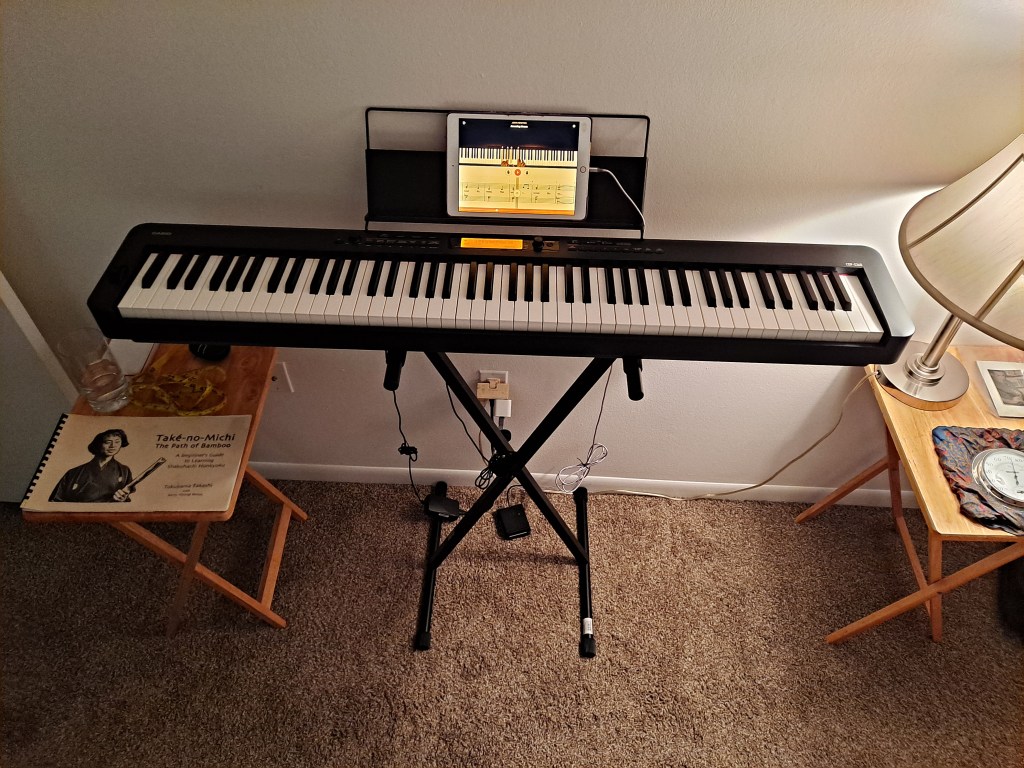
    Lately, I’ve been reflecting on how much my body has been changing. For a long time, I spent most of my time in bed, and simply sitting up felt like a challenge. But recently, I’ve started to feel just a little stronger, and that’s why I feel drawn to incorporating more sitting and standing into my day. The muscles involved in standing and sitting had atrophied from so much time in bed, so this shift—this ability to stand, even for short moments—feels like a miracle.

    As part of this, I’ve been exploring a way to bring music into my life in a way that supports my body instead of draining it.

    Like many of you, I find that sitting for long periods is uncomfortable, so I decided to raise my keyboard stand to standing height. What I’ve found is that standing while playing allows for gentle movement—I can shift my weight, circle my hips, and let my breath flow naturally, almost like Tai Chi at the keyboard.

    But the most important shift has been learning how to relax. I’ve realized that when I play, I tend to hold my breath and tense up, which drains my energy. So my new focus is breathing and playing with as little tension as possible, using a 4-note breathing pattern:
    ✔ Inhale: A → C → E → C
    ✔ Exhale: A → C → E → C
    This simple rhythm helps me stay grounded, present, and relaxed.

    Another key part of this setup is having my keyboard at the end of my bed. This means I can lay down to rest anytime, and when I feel ready, I can stand for just a minute or two to play, then lay back down again. There’s no pressure, no need to push myself—just a gentle cycle of music and rest.

    Options for Engaging with Music at Any Energy Level

    I know that not everyone has the ability to stand or sit for long, so I wanted to share a few ways to incorporate music at any stage—always prioritizing relaxation and staying within your pacing envelope to avoid PEM.

    🎵 Lying in Bed: When I was primarily bedridden and didn’t have a keyboard, I Velcroed my iPad about a foot and a half above my head. This let me lay flat and play simple notes with an app, without any strain. It worked beautifully.

    🎵 Small Keyboard for Bed Use: On Facebook Marketplace, you can find very small, lightweight keyboards that you can keep in bed with you. You don’t need a full-size keyboard to start—just something simple to play a few notes when you feel able.

    🎵 Seated or Standing with an Adjustable Keyboard: If sitting for long is difficult, you can use a keyboard stand that adjusts in height so you can switch between sitting and standing, allowing for movement and rest as needed.

    🎵 Completely Resting & Humming (Minimal Effort Required): For those who need to lay flat and remain mostly inactive, music can still be part of your healing. Some keyboards or apps allow you to automatically play simple notes (like A → C → E → C) very, very slowly. Instead of physically playing, you can simply breathe in rhythm with the notes and gently hum along—only if it feels comfortable. Even this small engagement should be done within your energy limits, ensuring it stays restorative rather than draining.

    🎵 Music Visualization (No Physical Effort Required): If even humming feels like too much, you can still experience music through visualization. I used this method when I realized I couldn’t go to the beach anymore—I would simply imagine walking along the shore, and it was surprisingly powerful. In the same way, you can lay in bed and visualize yourself sitting at a piano, pressing one note at a time, hearing the sound in your mind, and breathing gently. You don’t have to hum or move at all—just allow the imagery and imagined sound to soothe you.

    The Primary Goal: Relaxation & Parasympathetic Activation

    The most important thing is to find the simplest, most relaxing way to engage with music—one that matches your current energy levels and does not trigger PEM. Whether that’s playing, humming, breathing, or simply visualizing, the goal is to activate the parasympathetic nervous system and promote deep rest and healing.

    Having a piano that moves with me rather than forcing me to adjust to it has been life-changing. I just wanted to share this in case it helps anyone else looking for a way to bring music into their life—with gentleness, breath, and ease. 💙

  • Turning Toward the Peace That Passeth Understanding

    Turning Toward the Peace That Passeth Understanding

    In the midst of life’s challenges, we often find ourselves searching for peace—grasping for relief from worry, uncertainty, and suffering. Yet, scripture reminds us that the peace we seek is not something to be found externally; it is already within us, gifted by God, waiting to be received. This peace is not of the world but of the Spirit—a peace that passeth all understanding.

    A Gift Already Given

    Philippians 4:7 assures us:

    “And the peace of God, which passeth all understanding, shall keep your hearts and minds through Christ Jesus.”

    This is not a fleeting peace, dependent on circumstances. It is not granted when life is smooth and withheld when trials arise. Rather, it is an ever-present reality, accessible in any moment when we turn our attention toward it.

    But learning to live in this peace does not happen automatically. It is a practice—a new habit that takes time to cultivate.

    Be Gentle With Yourself

    As with any spiritual discipline, there will be moments of struggle. Times when we forget, when emotions overwhelm us, when it feels impossible to trust in God’s presence. In these moments, self-compassion is essential. Galatians 6:9 reminds us:

    “And let us not grow weary in well-doing, for in due season we shall reap, if we faint not.”

    Cultivating inner peace is not about perfecting a practice, nor is it about achieving a certain feeling. It is about returning, again and again, to the awareness of God’s love, allowing that love to guide and steady us.

    Jesus’ Promise of Peace

    The world offers many substitutes for peace—temporary distractions, fleeting comforts, conditional reassurance. But Jesus speaks of a different kind of peace. A peace that is not like the world’s, because it does not waver. In John 14:27, He promises:

    “Peace I leave with you, my peace I give unto you: not as the world giveth, give I unto you. Let not your heart be troubled, neither let it be afraid.”

    This peace has already been gifted to us. It does not need to be earned or searched for—it simply needs to be received.

    Watering the Seed of Peace

    Receiving this peace, however, is not always easy. It requires practice, patience, and faith. Just as a seed does not become a flower overnight, peace within us blossoms gradually as we nurture it. By turning toward God daily—through prayer, meditation, stillness, and surrender—we water the seed of divine peace. Over time, it takes root in our hearts, growing stronger with each passing day.

    So let us not become discouraged if peace does not immediately feel present. Let us instead trust in the process, knowing that with each moment we return to God, the gift of peace is unfolding within us.

    For whoever needs this message today: be gentle with yourself. Keep returning, keep practicing, and trust that the peace that passeth understanding is already yours.

    🙏🕊🙏