Category: Embracing Forgiveness, Loving-Kindness, and Compassion

  • Renewal in Stillness: The Quiet Strength of Sitting at the Door

    Renewal in Stillness: The Quiet Strength of Sitting at the Door

    In a world that celebrates action, stillness offers a different kind of renewal. Sitting at the door of unknowing—open, patient, and without expectation—allows a subtle yet profound transformation.

    Renewal doesn’t have to mean physical strength or outward achievements. It can be the quiet resilience to face life’s challenges, the emotional peace to let go of striving, and the trust to simply be.

    In this practice, strength is not about doing more but about surrendering more deeply. Renewal arises not from effort but from grace, gently unfolding as you rest in the simplicity of presence.

    Sitting at the door is enough. Renewal comes when we stop chasing it and allow it to find us.

    🙏🕊🙏

  • Into the Mystic: The Journey from Meditation to Contemplation

    As I re-read the works of St. John of the Cross, I have become more attuned to the threshold of transition—the dryness and emptiness that so often precede the invitation to move from meditation into contemplation. This is not unique to St. John; it is something pointed to by many of the great teachers. Whether it’s Namkhai Norbu, Ramana Maharshi, Thich Nhat Hanh, the Dalai Lama, or Orgyen Chowang in Pristine Mind, they all plant the seeds of meditative absorption, which only take root when the time is right. Now, it seems, those seeds are beginning to bloom, not as intellectual concepts, but as a living, unfolding experience.

    Today, I found myself drawn into this quiet transformation. As I lay in stillness, the pratyayas—those passing thoughts, sensations, and memories—began to rise and fall, like waves on a distant shore. Curiosity, that soft and patient witness, guided me deeper, not into understanding but into presence.

    The breath came of its own accord, a deep release from somewhere beyond my conscious will, as if the body itself knew what needed to unfold. And then, an awareness—a spaciousness—arose. It was not something I had summoned, nor could I hold it in place. It was simply there, naked and pure, like a clear blue sky.

    St. John of the Cross speaks of this as a kind of surrender, but not the kind we can choose. It is a grace bestowed, not earned. In the stillness, I realized that my role was not to force this shift but to allow it to happen. To remain as the observer, the witness, as the Divine unfolded in its own time.

    What struck me most deeply was the paradox of this surrender. The very act of trying to let go becomes an obstacle. Instead, it is curiosity that opens the door to pure awareness—curiosity that has no desire, no need for something to happen, but simply observes what is.

    Today, in this unfolding, I realized that even the longing for deeper experience can become a barrier. The path is not one of striving but of witnessing. And in that witness, the Divine does its quiet work, purifying what needs to be released, and bringing us ever closer to the essence of who we truly are.

    As I reflect on my own journey today, it is my hope, and the shared intention (Sankalpa) behind all of this work, that by sharing these reflections, insights, and experiences, they may serve as a guide, a comfort, or a spark of inspiration to those who come across them.

    🙏🕊️🙏

    Book Recommendation: St. John of the Cross, Dark Night of the Soul

    Dark Night of the Soul by St. John of the Cross is a spiritual masterpiece that explores the transformative power of suffering and the journey toward union with the Divine. This work describes the profound spiritual experience of being stripped of all attachments, both inner and outer, as a necessary process for purification and deeper connection with God. For those experiencing a time of spiritual dryness or emptiness, St. John’s words offer hope and guidance through the darkness, illuminating the path to deeper faith and surrender. The Dark Night is not a time of despair, but of ultimate transformation, where we are invited to let go of our limited understanding and trust in the unfolding of the Divine. This book serves as a timeless companion for anyone navigating the challenges of the contemplative path, especially those who feel drawn to the shift from meditation to deeper contemplation.

    Book Recommendation: Orgyen Chowang, Our Pristine Mind

    In The Pristine Mind, Orgyen Chowang offers profound teachings on accessing our natural state of mind—a state of clarity, openness, and peace. He draws from the Dzogchen tradition, emphasizing that our true nature is already pure and perfect, and that through practice, we can return to this unconditioned state. For those on a contemplative journey, Chowang’s words provide a practical path for moving beyond mental noise and distractions, guiding us back to the inherent stillness of the mind. This book is especially helpful for those who wish to deepen their meditation practice or shift from intellectual understanding to living experience. The Pristine Mind invites readers to discover the profound joy and serenity that arises when we rest in the awareness of our true nature.

  • Interfaith Harmony: Ganesha, the Universal Remover of Obstacles

    There is an ancient story, older than memory, that speaks of a gentle presence who stands at the threshold of each journey. He is called Ganesha, the remover of obstacles. In Hindu tradition, he is worshipped as a friend and guardian of beginnings, an embodiment of wisdom and gentle strength. His form is unmistakable—an elephant head, eyes deep with understanding, a body both round and rooted, as though he holds the world’s burdens yet is unburdened himself.

    But look closely, and you’ll see that Ganesha belongs not only to Hinduism, nor merely to any single path. Ganesha, in his role, belongs to all of us, for who has not felt the weight of obstacles pressing upon them? His is a universal invitation, an ancient whisper, to release our inner blocks, to allow wisdom, compassion, and clarity to dissolve the clouds that obscure our view of the divine.

    We often imagine that the obstacles are out there in the world, hidden in life’s hardships or circumstances. But in invoking Ganesha, we are drawn to the deeper realization that these barriers are inward. They are the veils of attachment, fear, confusion, the stubborn illusions of ego. Ganesha, then, is not merely a god of external beginnings, but of spiritual awakening—the remover of all that would obscure our own path to knowing God.

    In this light, Ganesha’s role is universal. His invocation is not unlike the quiet prayer of a Christian asking for guidance, or a Sufi’s yearning for the grace to surrender. To honor Ganesha as an interfaith presence is to understand that all traditions hold this longing for clarity, for wisdom, for the freedom that arises when the spirit is unbound.

    Each tradition has its own language, its own stories, but the heart of each is the same—a call to remove the obstacles that block us from truth. In this spirit, may we see Ganesha as more than a Hindu deity; may we see him as a shared symbol of our journey toward the divine. For in removing these obstacles, we are made ready to experience the peace, the stillness, the God that lives in all.

    🙏🕊️🙏

  • December 1st, 2024 – Synchronized Global Meditations for World Peace, Love & Harmony: Everyone is Welcome 🙏

    December 1st, 2024 – Synchronized Global Meditations for World Peace, Love & Harmony: Everyone is Welcome 🙏

    Global Well-Being: The Creation of Healing, Love, and Compassion Every Day and in Every Way—Especially on the New Moon, Around the World.

    Hello Everyone! Let’s come together again as a Global Community!

    Every New Moon, we have the opportunity to unite in prayer and meditation to create strong waves of vibrational intentionality—focusing on Loving-kindness and compassion. Whether we connect at the same time globally or in planetary waves, the energy we co-create will ripple outward, touching all life with healing and love.

    Join us on the New Moon, whenever it appears in your location, to synchronize in a global community of prayer and/or meditation. Together, we can generate waveforms and vibrations of love and compassion that will radiate outward from this day onward and forever. These vibrations will continue to blanket the Earth and all life in a palpable field of love and compassion, benefiting all.

    The more love and compassion we consciously generate, the more of it becomes available in our world and universe for others to feel, enjoy, and be nurtured by. Let’s co-create a living, vibrating, pulsing web of love and compassion that surrounds the planet, lifting us all to higher vibrations of healing, love, and compassion for every being.

    May we, the Earth, and all life benefit.

    May we all be free from suffering, greed, hatred, and delusion, as well as the causes of suffering. May we all have wholesome happiness and its causes. May our prayers and meditations be a cause for global healing and well-being for all now and forever.

    Join us in any way that works best for you.

    On the New Moon, let’s come together with strong intentions, knowing that others around the world will be doing the same. Choose a time that works for you—whether it’s morning, noon, or evening—and feel the connection with others participating across the globe. If you’re interested in helping create a wave of meditation and prayer, consider meditating or praying at either 7:00 a.m. or 7:00 p.m. in your local time zone. By doing this, we create an ongoing ripple effect of love and compassion, as hour by hour, new groups of people join in, sending vibrations of loving-kindness around the planet. Together, we build a global field of healing energy that envelops the Earth and all its inhabitants. However you choose to participate—whether in synchronized times or your own flow—the collective intention benefits all.

    Feel free to express your love and compassion in any form. Be creative. Share poetry, reflections, prayers, or experiences in the comments below, and let’s fill the Earth’s atmosphere and beyond with vibrations of love and compassion. All forms of loving-kindness are welcome here.

    Loving-kindness and compassion are universal qualities.

    No one person or group owns them. They transcend race, nationality, religion, or background. The more we can nurture and generate these heart qualities, the more we collectively benefit. How beautiful is that?

    If you plan to join us, let us know in the comments!

    Your presence matters. Sharing your intentions, reflections, or experiences can inspire and motivate others. Together, we’re building a global community of healing and love. Whether you join for 5 minutes or longer, or in synchronized or local time, every contribution is valued.

    If you have suggestions for how we can better collaborate on generating global waves of loving-kindness and compassion, please share them below!

    One love, 💕🙏

    May we all live in peace and harmony, with love and respect for ourselves, each other, the Earth, and all life throughout time and space.

    🙏🕊️🙏

  • Discovering Mystical Contemplation: The Alter Rebbe’s Practice of Hitbonenut and Bittul

    Discovering Mystical Contemplation: The Alter Rebbe’s Practice of Hitbonenut and Bittul

    Explore the transformative path of Hitbonenut and Bittul in Jewish mysticism, as practiced by the Alter Rebbe, to reach direct experience and divine unity.


    Translation of the Hebrew Text in the Above Image

    “… the esteemed Rabbi Schneur Zalman of Liadi, the great sage and author of the book Tanya, in his later years would immerse himself daily in deep contemplation and focus on achieving Hitbonenut and Bittul, self-nullification, before beginning his prayers. He would sit in a secluded area and enter a state of spiritual readiness, preparing himself to reach closeness to the divine through his meditative practices. Those who observed him would attest to the honor and respect that this revered practice commanded, reflecting his commitment to true divine connection.”


    Discovering the Boundless: The Alter Rebbe’s Practice of Hitbonenut and Bittul

    In the rich tradition of Jewish mysticism, Hitbonenut and Bittul are contemplative practices often approached as meditative paths focused on divine ideas. These practices are frequently interpreted as ways of concentrating on spiritual concepts to deepen one’s understanding. However, the Alter Rebbe, Rabbi Schneur Zalman of Liadi—the founder of Chabad Hasidism—offers us a window into a more profound dimension of these practices, where contemplation moves beyond intellectual meditation and opens into direct experience.

    The Alter Rebbe’s personal practice of Hitbonenut is a cornerstone of Chabad Chassidus. According to tradition, he would spend hours in Hitbonenut before beginning his prayers, not merely analyzing divine concepts but immersing himself in a state of awareness that dissolves the self into the infinite, what Jewish mysticism calls the Ein Sof—the boundless and limitless aspect of the divine.

    In this expansive approach to Hitbonenut, contemplation shifts from thought-focused meditation to an experiential opening, leading to what other traditions describe as the “pristine mind” or “pure contemplation.” By embracing the formless, open nature of awareness, the Alter Rebbe connected to a state beyond the grasp of the ego, inviting direct experience of the divine presence.

    This journey is deepened through Bittul, or self-nullification. Where Hitbonenut opens the door to spacious, boundless awareness, Bittul is the surrender of the self into that awareness. It’s a release of the ego’s hold, a quieting of personal identity that allows a merging with the infinite. This act of surrender is not a negation but an opening—a dissolving of the self to align fully with divine unity.

    For those of us seeking to understand Hitbonenut and Bittul in this way, the Alter Rebbe’s practice offers a reminder that contemplation in its purest form transcends the intellect. It’s not about conceptual analysis but about experiencing divine unity as a living reality. As we explore this path, we step beyond thought, into the boundless.

    In upcoming posts, we’ll further explore the practical steps, reflections, and guidance to cultivate these practices. Hitbonenut and Bittul invite us into the spaciousness of mystical contemplation, guiding us from understanding to a direct encounter with the divine.

    🙏🕊️🙏

    Book Review: Rabbi Schneur Zalman of Liadi: The Philosophy of Chabad by Nisan Mendel

    Nisan Mendel’s Rabbi Schneur Zalman of Liadi: The Philosophy of Chabad is a profound exploration of the life and teachings of one of Jewish mysticism’s most influential figures. Rabbi Schneur Zalman, known as the Alter Rebbe, was the founder of the Chabad movement, and his teachings remain central to Hasidic philosophy and contemplative practice today.

    Through this work, Mendel delves into the essence of Chabad philosophy, particularly its unique approach to Hitbonenut (contemplative meditation) and Bittul (self-nullification). Readers are introduced to the Alter Rebbe’s belief that intellectual understanding can be a pathway to divine experience, bridging the mind and heart to foster a deep connection with God. The book sheds light on the Alter Rebbe’s methods for approaching mystical contemplation, offering practical insights for those looking to incorporate these timeless practices into their own lives.

    Mendel’s accessible writing and thoughtful explanations make complex topics approachable, while his reverence for the subject shines through, bringing Rabbi Schneur Zalman’s teachings to life. This book is especially valuable for readers who wish to understand the spiritual framework of Chabad and its emphasis on meditative thought as a means to reach divine awareness.

    Whether you’re new to the ideas of Hitbonenut and Bittul or are already on a contemplative journey, The Philosophy of Chabad offers a valuable gateway to the Alter Rebbe’s approach to mysticism. By providing both philosophical insights and practical approaches, Mendel encourages readers to go beyond surface understanding and explore the depths of Chabad’s spiritual tradition.

    🙏🕊️🙏

  • Embracing Forgiveness, Loving-Kindness, and Compassion: A Universal Call to Unity

    Embracing Forgiveness, Loving-Kindness, and Compassion: A Universal Call to Unity

    A Path to Healing and Unity Through Shared Spiritual Values

    In every spiritual tradition, there lies a core message of forgiveness, loving-kindness, and compassion. These virtues, transcending cultural and religious boundaries, unite us in our shared humanity. Whether through the teachings of Buddha, the wisdom of Jesus, or insights from various spiritual paths, the call to embrace these qualities is clear and compelling.

    Forgiveness is a profound act of letting go. It isn’t about condoning wrongdoings but freeing ourselves from the burdens of anger and resentment. As the Dalai Lama teaches, forgiveness is a gift we give to ourselves, a step toward inner peace.

    Loving-Kindness, or “metta” in Buddhist practice, encourages us to extend unconditional love to all beings. Jesus exemplified this through his life, teaching us to love our neighbors as ourselves. In every smile, kind word, and act of generosity, we weave a tapestry of love that can heal and uplift.

    Compassion is the heart’s response to suffering. It compels us to act, to alleviate pain, and offer solace. Teachings from various traditions remind us that compassion is not a passive feeling but an active force for good. Through compassion, we recognize our interconnectedness and our responsibility to care for one another.

    In these challenging times, let’s draw from the wellsprings of our diverse spiritual heritages. Let us embrace forgiveness, loving-kindness, and compassion not just as lofty ideals, but as daily practices that transform our lives and the world around us.

    Together, we can create a world where these universal values form the foundation of our interactions, fostering unity, peace, and understanding among all people.

    🙏🕊️🙏

    #Compassion #LovingKindness

  • The Beauty of the Mind: Who Has the Most Beautiful Minds in America?

    The Beauty of the Mind: Who Has the Most Beautiful Minds in America?

    In a world that often glorifies external beauty—whether through physique, art, or music—what if we shifted our gaze inward? What if we celebrated the beauty of the mind instead?

    This post invites you to pause and consider: What makes a mind beautiful? Who do you believe exemplifies this kind of beauty, and why?

    What Is a Beautiful Mind?

    When we think of a “beautiful mind,” what comes to mind? Perhaps it’s someone whose intellect transforms the way we see the world. Or maybe it’s their creativity, empathy, or ability to inspire others through their words and actions.

    A beautiful mind might be defined by:

       •   A deep curiosity that seeks understanding without judgment.

       •   A creative spirit that brings fresh perspectives to life.

       •   An open heart that connects with others and nurtures kindness.

       •   A wisdom that balances intellect with compassion.

    What qualities would you add to this list? How do you define a beautiful mind?

    Celebrating Beautiful Minds

    This question is not just about philosophers, scientists, artists, or leaders—though it could be. A beautiful mind might belong to someone who quietly shapes the lives of those around them: a teacher, a friend, a family member, or a stranger who touched your life in a meaningful way.

    Who do you know that has a beautiful mind? Perhaps it’s someone whose ideas have inspired you, whose words or actions have stayed with you, or who taught you to see the world in a new way. What about their mind do you find so beautiful?

    Your Turn: Who Do You Nominate?

    We’d love to hear from you. Share your thoughts in the comments:

       •   What does it mean to have a beautiful mind?

       •   Who do you think exemplifies this, and why?

       •   Is there someone in your life—famous or not—whose mind you deeply admire?

    Let’s create a collective celebration of the beauty of thought, creativity, and compassion, one nomination at a time.

    🙏🕊️🙏

  • Tenzin, the Solitary Hermit

    Tenzin, the Solitary Hermit

    A mindful bedtime story of a solitary monk’s journey to inner peace, offering reflections on tranquility, solitude, and the wisdom found in nature’s embrace.

    High in the misty cliffs of the Tibetan mountains lived a monk named Tenzin. He had chosen a life of solitude, making his home in a small cave carved into the rock, far from any village. From the mouth of his cave, he could see the wide valley below, where rivers shimmered, and clouds drifted lazily.

    Though he lived alone, Tenzin never felt lonely. His days were filled with simple practices—meditation, chanting, and tending to the small tasks of life in the mountains. Each morning, he would sit at the opening of his cave, cross-legged, watching the sun rise over the peaks. The golden light touched the snow-capped mountains first, then slowly warmed the valley below. As the light spread, Tenzin felt connected to everything—the mountains, rivers, and the vast sky. Even the distant villages he couldn’t see seemed close to him.

    Tenzin’s practice was to focus on his breath. He felt the breath flow in and out, like the wind through the trees. When his mind wandered, as minds tend to do, he would gently bring it back to the present moment. There was no rush, no goal—just the moment, just being.

    One day, while Tenzin was in deep meditation, the wind outside his cave grew stronger. It howled through the trees, making the air feel sharp and cold. He opened his eyes and saw that dark clouds had gathered in the sky. A storm was approaching. The peaceful valley below had vanished under thick fog.

    But Tenzin didn’t worry. He had learned, over time, that storms—like thoughts and emotions—come and go. Some days were clear, others were cloudy, but nothing lasted forever. He pulled his woolen robe tighter around him, lit a small fire, and returned to his meditation.

    The storm raged on, but Tenzin remained calm. His breath, slow and steady, was his anchor. Inside his cave, there was no storm—only stillness. The walls of his cave sheltered him from the wind, but it was his practice that sheltered him from the restlessness of the world.

    Several days passed, and the storm finally cleared. When Tenzin stepped outside, the valley below was washed clean by the rain, sparkling in the sunlight. Birds sang from the trees, and the air smelled fresh.

    Tenzin smiled to himself. The storm had been fierce, but he hadn’t resisted it. He had simply let it come and go, knowing that everything—like the weather—was temporary. The calm always returned.

    The seasons passed, each one bringing its own beauty. Tenzin never wished for company, for he had found that the quiet, the mountains, and the rhythm of his breath were friends enough. In the deep silence of his cave, Tenzin had discovered the greatest happiness—the peace of simply being.

    🙏🕊️🙏


    If you’d like to explore more bedtime stories for children, including tales that nurture compassion and mindfulness, you can find our collection here.


  • Seeking the Kingdom of God: The Paradox of Perfection and Presence

    The mystic journey is one of paradox—seeking that which is already present. Across traditions, whether in Christian teachings about the Kingdom of God or in non-dual philosophies like Advaita Vedanta and Buddhism, the central truth remains: the divine, or perfection, is already here, but it must be realized through spiritual insight. As Jesus said, “The Kingdom of God is within you” (Luke 17:21), yet for most of us, it remains hidden behind the veil of ego and conditioned perception.

    The Spiritual Paradox:

    At the heart of many mystical teachings is the idea of striving for a perfection that we will never attain—because it is not something to attain. It’s not a destination, but a present reality we fail to recognize. This paradox mirrors the Christian teaching of seeking the Kingdom of God, even though it’s already in our midst. In this journey, we are continually asked to refine ourselves, knowing that the striving itself is a tool for unveiling the deeper truth that we are already complete.

    In the words of a friend: “Strive always for perfection, knowing that you will never attain it, and yet you’re as perfect as you will ever be.” This echoes not only in Christian thought but also in the non-dual traditions of the East. Whether it’s Brahman or Buddha-nature, spiritual traditions agree that the ultimate reality is not something the ego-self can grasp or reach.

    Having Eyes to See and Ears to Hear:

    Jesus emphasized that the Kingdom of God is already here for those who have “eyes to see” and “ears to hear.” This teaching parallels the non-dual realization that enlightenment or liberation is not a distant goal, but a shift in awareness. It’s about seeing through the illusion that we are separate from the divine or that the divine is elsewhere.

    In the mystic experience, the ego—the self that seeks—is a pratyaya (a conditioned phenomenon), something that must dissolve for true realization to occur. The ego can never “attain” enlightenment, because the one seeking is part of the illusion. The task, therefore, is to see through this illusion. As Jesus said, those who are spiritually awake can recognize that the Kingdom of God is already here.

    The Practice of Seeking:

    Even though we are already in the Kingdom, we must continue to strive. This striving is not about accumulating spiritual merit or becoming more worthy. It’s about peeling back the layers of ego and illusion to reveal the truth that has always been there. The very act of seeking becomes a practice in humility and surrender, recognizing that the self cannot attain the Kingdom, but that the realization of the Kingdom involves a shift in consciousness—not in achievement.

    In Buddhism, this is the realization of emptiness or shunyata—the recognition that all things, including the self, are empty of inherent existence. In Christianity, it’s the surrender to God’s will and the realization that “it is no longer I who live, but Christ who lives in me” (Galatians 2:20).

    Conclusion:

    The mystical path is one of paradox and deep humility. We strive to seek perfection, knowing that the ego will never attain it, because the perfection we seek is beyond time, space, and the limitations of the mind. We often speak of this perfection as being “present,” yet the present itself is elusive. As we’ve observed, the present moment can never truly be experienced by the senses—by the time we become aware of it, it has already slipped into the past. The perfection we seek is not in the present as we conventionally understand it, but rather beyond time itself, in the timeless reality that transcends the ego.

    This is why enlightenment cannot be made to happen. As Red Anderson said, enlightenment is like an accident—a spontaneous revelation beyond our striving and beyond our ego. And yet, the purpose of practice, whether in Zen, Christian mysticism, or other spiritual traditions, is to make us accident-prone. Practice, mindfulness, and ethical discipline create the conditions for enlightenment or grace to arise, even though we cannot control when or how it will happen.

    In this way, the act of striving itself becomes a form of grace—not because we earn grace through effort, but because our striving prepares us to receive what is already present. Grace, in the spiritual sense, is not something we can control or achieve. Rather, it is a gift that arises when the striving dissolves. Like rain that falls when the soil is ready, grace arrives spontaneously, not as a reward, but as a revelation of the truth that has always been.

    This is why mystics across traditions teach that while we cannot force grace to appear, we can create the conditions for it. Practices like prayer, meditation, or mindfulness soften the ego and open us to receive what is already here. In this sense, grace is the ultimate outcome of our paradoxical journey—not something earned through effort, but something realized when we let go of the need to attain it.

    Thus, as we strive, we also surrender. And when grace arrives, it reveals that the perfection we seek has always been present, beyond time and striving. This recognition dissolves the illusion of separation and resolves the paradox: the Kingdom of God, or enlightenment, was never distant—it was simply waiting to be seen.

    This mirrors the paradox of non-duality in a world of duality: we appear to strive, yet the truth we seek is always here, beyond time and duality. Practice, whether Zen meditation, mindfulness, or prayer, is a way to soften the ego, make us open, and create the conditions for the Kingdom of God, enlightenment, or grace to spontaneously arise. In this sense, we become like a field prepared for rain—we cannot control when the rain will come, but by cultivating the soil, we make ourselves accident-prone to the downpour of grace.

    Thus, in the mystic journey, striving and letting go are not opposites but two parts of the same dance. We strive, knowing we cannot ‘make it happen,’ but in doing so, we prepare the ground for the possibility of grace.

    The beautiful metaphor of becoming “accident-prone” weaves it into the ongoing theme of striving without attachment. It acknowledges the value of practice, even when we know the ego cannot reach enlightenment directly, and creates a sense of the mystical unfolding that happens when conditions are right.

    The mystic experience is ultimately about recognizing that what we seek has always been here, and in this recognition, the striving itself becomes a form of grace.

    🙏🕊️🙏

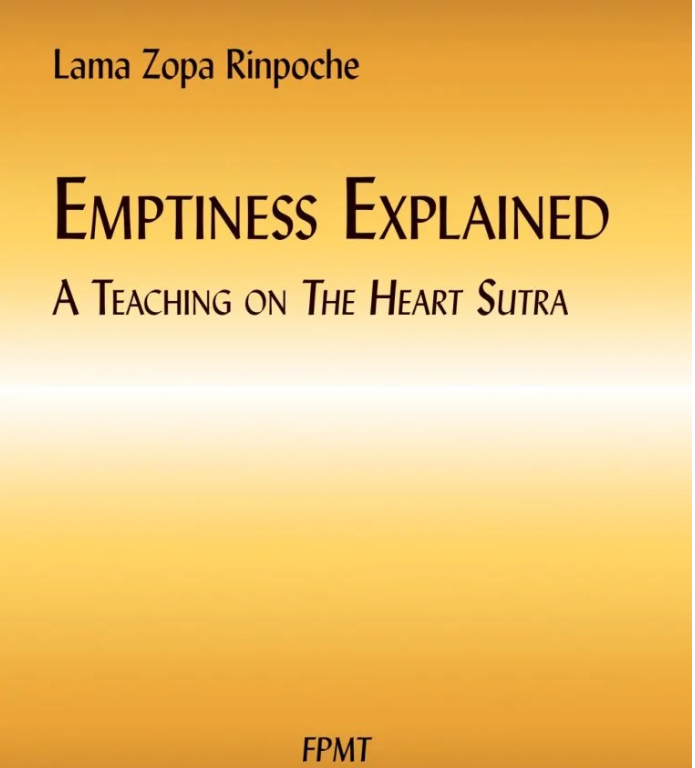
  • Emptiness Explained: Insights from Lama Zopa Rinpoche on the Heart Sutra

    Emptiness Explained: Insights from Lama Zopa Rinpoche on the Heart Sutra

    Transforming Suffering Into Happiness: How the Teachings on Emptiness from the Heart Sutra Support Mental Health and Well-Being

    The Heart Sutra stands as one of the most profound and essential teachings in Buddhism, offering a path to understanding emptiness—the ultimate nature of reality. Lama Zopa Rinpoche’s commentary on this timeless sutra illuminates its teachings, guiding us toward a deeper understanding of how emptiness can transform not only our spiritual practice but also our daily lives.

    In this post, I’ll share key reflections from Rinpoche’s teaching, focusing on the practical wisdom and spiritual inspiration it offers. Whether you’re a seasoned practitioner or simply curious about the philosophy of emptiness, I hope these insights will resonate with your heart.

    What Is Emptiness?

    Lama Zopa Rinpoche explains that emptiness does not mean that things don’t exist—it means that things are empty of inherent existence. All phenomena, including ourselves, arise dependently, shaped by causes, conditions, and labels. This is the essence of the middle way, which avoids the extremes of nihilism (nothing exists) and eternalism (things exist inherently and permanently).

    As the Heart Sutra famously states:

    “Form is emptiness, emptiness is form. Emptiness is not other than form; form is also not other than emptiness.”

    In these words, we see that emptiness and dependent arising are inseparable. While things exist conventionally, their ultimate nature is empty of any independent, fixed essence.

    Practical Ways to Meditate on Emptiness

    Rinpoche offers accessible methods to integrate the understanding of emptiness into both formal meditation and daily life:

    1. Recognizing the Object to Be Refuted

    The first step is identifying the false concept of an independent, inherently existent “I” or object. This is often described as the “I on the I”—the subtle sense that there is a solid self beyond the ever-changing interplay of body and mind. By recognizing this misconception, we can begin to dissolve it.

    2. Meditating on Dependent Arising

    Reflect on how the “I” arises only in dependence on the body, mind, and other aggregates. As Rinpoche teaches, the “I” is merely a label created by the mind. Understanding this dependence helps us see the emptiness of the “I” without negating its conventional existence.

    3. Mindfulness in Daily Life

    Emptiness isn’t confined to sitting meditation. Rinpoche encourages us to bring mindfulness of emptiness into every activity—walking, cooking, working, even shopping. He likens this to recognizing a dream as a dream:

    “While driving a car, see yourself, the car, and the action of driving as hallucinations. They appear solid, but they are not inherently existent. Practicing this awareness is incredibly powerful.”

    Overcoming Fear and Misunderstanding

    The experience of emptiness can sometimes evoke fear, especially the sense of “losing the I.” Rinpoche reminds us that this fear arises from our deep attachment to a false sense of self. However, far from being nihilistic, emptiness reveals the interdependent nature of all things.

    “When bodhisattvas of high intelligence realize emptiness, they experience bliss; for others, deep fear can arise. This fear is a sign of touching the truth of selflessness—it is part of the journey.”

    By grounding our understanding in dependent arising, we can navigate this fear with confidence and clarity.

    Applying Emptiness in Relationships

    Rinpoche’s teaching also provides practical tools for transforming relationships. When we feel hurt or offended, understanding emptiness can soften our reactivity. The other person’s actions—and our own sense of self—are dependently arisen, shaped by countless conditions.

    This awareness allows us to respond with compassion rather than attachment or aversion. As Rinpoche says:

    “Recognize that the ‘I’ that feels hurt is a mental construct. See the other person’s words or actions as arising dependently. This opens the door to greater understanding and kindness.”

    The Transformative Power of Emptiness

    Even the smallest step toward understanding emptiness has profound benefits. Rinpoche explains that simply doubting the solidity of appearances—thinking, “Perhaps things are empty”—can begin to break the chains of samsara.

    “Listening to teachings on emptiness for even a moment plants seeds for liberation. Reflecting on emptiness throughout your day turns ordinary actions into a path to enlightenment.”

    A Living Practice

    The teachings of the Heart Sutra are not just intellectual concepts—they are a living practice. Whether in formal meditation or everyday life, the wisdom of emptiness invites us to see the world with fresh eyes. By letting go of our rigid attachments and false perceptions, we open the door to profound freedom and compassion.

    As Lama Zopa Rinpoche reminds us, we are unbelievably fortunate to encounter these teachings. May we take them to heart and use them to benefit all beings.

    Further Exploration

    To delve deeper into Lama Zopa Rinpoche’s teachings on the Heart Sutra and emptiness, you can download the original PDF here.

    I’d love to hear your thoughts on emptiness and the Heart Sutra! How do these teachings resonate with your own spiritual journey? Feel free to share your reflections in the comments below.

    🙏🕊️🙏

  • Angel Azra’s Gift: A Muslim Bedtime Story of Kindness and Peace

    Angel Azra’s Gift: A Muslim Bedtime Story of Kindness and Peace


    Angel Azra watches over a sleeping child in a peaceful Muslim village, guiding dreams of kindness and love. A heartwarming bedtime story for children about divine protection and inner peace.


    Once upon a time, in a quiet village by the sea, children would gather every night to listen to stories before bed. One evening, as the stars twinkled like diamonds in the sky, a gentle wind swept through the village, carrying the soft whisper of an angel’s wings. This angel was known as Azra, the protector of children’s dreams.

    Azra visited the dreams of kind-hearted children, guiding them toward peace and joy. She would remind them that kindness is a gift from Allah, one that could be given to others through gentle words and loving actions. But tonight, Angel Azra had a special mission. She wanted to help the children of the village understand how to bring peace into their hearts before they slept.

    One little girl named Amina was troubled. Her mind was busy, full of worries from the day. Azra knew that Amina needed comfort. Gently, she appeared at Amina’s bedside in a soft glow, like moonlight through a curtain.

    “Why do you worry, dear one?” Azra asked in a voice so soft, it was like a lullaby.

    “I try to be kind, but sometimes I feel so tired and forget,” Amina whispered, her small hands clasped together. “I want to be good, but my heart feels heavy.”

    Azra smiled warmly. “Even the kindest heart can grow tired, Amina. That is why Allah gives us rest. Tonight, close your eyes and let your heart be light. Imagine your kindness as a glowing star, a light within you. When you are tired, let that star grow brighter, not dimmer. And as you rest, the light will spread, reaching others in your dreams.”

    Amina closed her eyes, breathing deeply as Azra’s soothing words filled her with calm. As she drifted into sleep, her dreams were full of golden light. She saw herself sharing her warmth with others: giving her brother a hug when he was sad, helping a lost kitten find its way home, and smiling at her friends even on difficult days. In the dream, every act of kindness made her star shine brighter.

    The next morning, Amina awoke with a soft smile. Her heart felt light, just as Azra had promised. She knew that being kind was not about always being perfect, but about letting love guide her, even when she felt small.

    Angel Azra visited many children that night, each one dreaming of peaceful moments filled with love and compassion. And as the village slept, the stars above seemed to shine just a little brighter, carrying the hope of those peaceful dreams.

    And so, dear children, whenever your heart feels heavy, remember Angel Azra’s words: Let your kindness be like a shining star, and it will always guide you to peace, in your waking moments and your dreams.

    With those thoughts, the children closed their eyes, feeling safe, knowing that Azra was always near, watching over their sleep, bringing them closer to the beauty of love and kindness.

    As the night deepened, their dreams carried them into fields of light, where every heart could find peace, and every act of kindness grew into something magical.

    Sleep well, little ones, and may your dreams be filled with love. ❤️ 

    🙏🕊️🙏


    If you’d like to explore more bedtime stories for children, including tales that nurture compassion and mindfulness, you can find our collection here.


  • Teachings of Jesus: Reclaiming the Inclusive Message of Christ

    Teachings of Jesus: Reclaiming the Inclusive Message of Christ

    It is said that Jesus once spoke of a way, a truth, a life so profound that it encompassed the very heart of God. “I am the way, and the truth, and the life,” he told his followers. “No one comes to the Father except through me.” These words, layered with mystery and spoken from love, have carried through centuries. And yet, how often they have been misunderstood, repurposed into boundaries rather than bridges, wielded as walls instead of the doors they were meant to open.

    There is a kind of longing in his words—a deep invitation to move beyond the illusions of separation, to find the divine not outside ourselves, but within, as Jesus himself had done. In Jesus’ teaching, this “way” was not a narrow path limited to a chosen few. It was a state of being, a way of love so expansive that it could hold the world. His life was a testament to living in union with the divine, a living call to embody forgiveness, humility, compassion, and boundless love.

    But history, with its tendency to divide, layered his words with exclusivity. Over time, these teachings became more rigid, turning a universal invitation into something that seemed fixed and exclusive. Jesus’ invitation to “follow me” became a doctrine that built walls, casting out rather than gathering in. And yet, if we listen closely, we can hear in his words the open-hearted wisdom of a mystic, inviting everyone to walk the path of inner transformation.

    Imagine Jesus not as a gatekeeper, but as a guide. His invitation was not a declaration of exclusivity, but a call to realize that same divine life he had found—to awaken to the “I am” within each of us, the unifying spirit that he embodied. In this light, Jesus’ teachings stand alongside those of the Buddha, of Krishna, of all those who point to the divine presence within. His “way” is the way of being itself, the universal path of transcending the self, of living from a heart unburdened by the ego’s needs.

    To reclaim the inclusivity of Jesus’ message is to see that he points to a God who is not bound by labels or affiliations, a God who resides in each of us. In this understanding, his words are not a barrier but a bridge, a call to see divinity reflected in every soul, beyond all boundaries of religion or creed. His “way” becomes not the only way but a path that opens us to the vastness of God, a way that invites all, through love, to come home.

    🙏🕊️🙏