Category: Bridging Hearts and Minds

  • Lesson 10 of A Course in Miracles (ACIM): Guided Meditation – “My thoughts do not mean anything.”

    Lesson 10 of A Course in Miracles introduces the lesson: “My thoughts do not mean anything.” This lesson challenges us to question the significance we attribute to our thoughts and the narratives we create around them. By acknowledging that our thoughts are often fleeting and arbitrary, we can begin to release their hold on our emotions and perceptions.

    This practice encourages us to observe our thoughts without attaching undue importance to them. By understanding that our thoughts do not inherently hold meaning, we can cultivate a more detached and peaceful relationship with our inner mental landscape.

    Jesus taught about the importance of inner purity and the power of thought. In Matthew 15:18, He says, “But the things that come out of a person’s mouth come from the heart, and these defile them.” This teaching aligns with ACIM’s guidance to recognize the fleeting nature of our thoughts and not allow them to dictate our inner peace.

    By practicing Lesson 10, we align ourselves with Christ’s message of inner clarity and purity of mind. We learn to release the grip of our thoughts and open ourselves to a deeper connection with the divine presence within us.

    Explore Lesson 10 of A Course in Miracles with us, and discover how freeing yourself from the meaning of your thoughts can lead to greater inner peace, clarity, and spiritual awakening.


    A guided meditation to encompass the elements, themes, messages, and practices of Lesson 10 from A Course in Miracles:

    Find a comfortable position, either sitting or lying down, where you can relax and be free from distractions.

    Close your eyes gently and take a few deep breaths, allowing yourself to settle into the present moment.

    Bring your attention to your breath, feeling the sensation of each inhale and exhale.

    Reflect on the central theme of Lesson 10: “My thoughts do not mean anything.”

    Contemplate the idea that the thoughts that pass through your mind are ultimately meaningless, as they do not have the power to affect your true essence.

    Acknowledge that while thoughts may seem significant and powerful, they are simply mental constructs that come and go.

    With each breath, imagine releasing any attachment to the meaning of your thoughts, allowing them to dissolve like clouds in the sky.

    Visualize yourself stepping back from your thoughts, observing them with a sense of detachment and neutrality.

    Feel a sense of liberation as you realize that you are not defined by your thoughts, but rather by the awareness that witnesses them.

    Repeat the following affirmations silently or in your mind:

    “My thoughts do not mean anything.”

    “I release all attachments to the meaning of my thoughts.”

    “I am the silent witness of my mind.”

    Allow yourself to rest in this space of inner stillness and clarity for a few moments, letting go of any identification with the thoughts that arise.

    When you’re ready, gently bring your awareness back to your surroundings. Wiggle your fingers and toes, and slowly open your eyes.

    Take a moment to reflect on your experience, noticing any insights or shifts in perception that may have occurred. Remember that you can return to this meditation whenever you feel called to deepen your understanding of Lesson ten.

  • What Might Jesus Say to the American Congress in 2024?

    A Call to Repentance and Righteousness

    Beloved members of Congress, esteemed Senators, and Representatives,

    Today, I stand before you with the same message I delivered over 2,000 years ago: “Repent, for the kingdom of heaven is at hand.” This call is not bound by time or geography; it is a divine summons that resonates through the ages, calling every generation to turn their hearts toward righteousness and justice.

    Repentance is more than mere remorse for past actions; it is a transformative turning of the heart and mind towards the principles of the kingdom of heaven. It is a call to love, compassion, justice, and truth. It demands integrity in your dealings and sincerity in your service.

    As leaders, you hold the power to shape the destiny of this nation. Yet, with great power comes great responsibility. To restore righteousness and justice in America, you must embrace the following principles:

    • True leadership is grounded in humility and service. It is not about personal gain or partisan victory but about serving the common good. Look beyond the walls of division and see each person as a child of God, deserving of dignity and respect.
    • The kingdom of heaven is built on compassion. Seek to understand the struggles of the least among you. Address the needs of the poor, the sick, and the marginalized. Create policies that uplift and empower rather than oppress and exclude.
    • Righteousness demands justice. Ensure that your laws and actions are fair and just, protecting the rights of all people, regardless of race, gender, or economic status. Stand against corruption, greed, and oppression in all its forms.
    • Let your words and actions be marked by truth and integrity. Do not succumb to deceit, manipulation, or falsehoods. Speak truth to power and uphold the principles of honesty and transparency in all your dealings.
    • Blessed are the peacemakers. Seek to heal the divisions that plague your nation. Promote dialogue and understanding, fostering a spirit of unity and reconciliation. Work tirelessly to resolve conflicts and build bridges of peace.
    • The earth is a gift from the Creator, and you are its stewards. Protect and preserve the environment, ensuring that future generations inherit a world where they can thrive in harmony with nature.

    These principles are not new; they are eternal truths that have guided humanity throughout history. Yet, in your hands lies the power to manifest them in this present age.

    Repentance is not a one-time act but a continuous journey. Each day, strive to align your actions with these divine principles. Seek forgiveness where you have erred and have the courage to make amends.

    The kingdom of heaven is not a distant future; it is at hand. It is within your reach if you choose to embody these values in your leadership.

    May your hearts be open to this call, and may your actions reflect the light of righteousness and justice.

    Go forth, beloved leaders, and be the change this nation so desperately needs. For the kingdom of heaven is at hand, and it begins with you.

    Peace be with you,
    Jesus

    🙏🕊️🙏

  • Embracing Love and Hope: Navigating Turbulent Times

    Choosing Faith Over Fear in a Divided World

    In a time when fear and uncertainty seem to dominate the narrative, it’s easy to feel overwhelmed by the challenges facing our world. Yet, amidst the chaos, there is a quiet voice that whispers hope. Imagine waking from a dream with the words, “It doesn’t have to end this way,” echoing in your mind. This profound message invites us to see beyond the current challenges and envision a future where love and hope prevail.

    In a world inundated with images of division and disaster, it’s crucial to pray not only for personal salvation but also for the healing and transformation of our communities and nations. Rooted in scripture, John 14:1-3 assures us of Jesus preparing a place for us in his Father’s house, where we will dwell with him. This promise of eternal life in a New Earth and Heaven inspires us to live with integrity and righteousness (Revelation 21:1-4), knowing that our actions rooted in love and hope can influence a more peaceful and righteous outcome in our world – here and now.

    Moreover, by shifting our focus from the Kingdom of war, greed, and hatred that surrounds us, we can begin to perceive the Kingdom of God, which is present all around us. Through eyes of faith, we see glimpses of God’s Kingdom in acts of kindness, moments of forgiveness, and expressions of compassion. This vision empowers us to live as ambassadors of God’s Kingdom here and now, spreading love and hope in a world hungry for peace and righteousness.

    As we navigate these turbulent times, let us hold fast to the teachings of love and hope. Let us embrace forgiveness, loving-kindness, and compassion as our guiding principles. By embodying these virtues, we not only prepare ourselves for the promise of eternal life with Christ but also actively participate in shaping a world where love triumphs over fear. May our actions today reflect our faith in a future where righteousness reigns.

    Crucially, let us remember the profound commandment to treat others as we wish to be treated, avoiding the pitfalls of polarization and blame. Instead, let us seek truth and embody it in our daily lives, fostering understanding and unity rather than division. Together, let us walk in the light of love and hope, inspiring others to join us on this journey of transformation.

    🙏🕊️🙏

    In love’s embrace,
    Hope blooms eternal,
    Peace whispers softly.

    🙏🕊️🙏

  • Lesson 9 of A Course in Miracles (ACIM): Guided Meditation – “I see nothing as it is now.”

    Lesson 9 of A Course in Miracles presents the lesson: “I see nothing as it is now.” This teaching invites us to recognize that our perceptions are often clouded by our past experiences, expectations, and judgments. By acknowledging this, we can begin to see beyond our conditioned responses and open ourselves to a clearer, more objective view of the present moment.

    This practice encourages us to question the accuracy of our perceptions and the filters through which we see the world. By understanding that our interpretations may not reflect reality as it truly is now, we can cultivate a more open-minded and compassionate approach to our experiences.

    Jesus often taught about the importance of seeing with spiritual clarity and discernment. In Matthew 6:22-23, He says, “The eye is the lamp of the body. If your eyes are healthy, your whole body will be full of light. But if your eyes are unhealthy, your whole body will be full of darkness. If then the light within you is darkness, how great is that darkness!” This teaching aligns with ACIM’s guidance to see beyond illusions and perceive the truth with clarity.

    By practicing Lesson 9, we align ourselves with Christ’s message of spiritual vision and discernment. We learn to let go of our conditioned ways of seeing and open ourselves to a more authentic and enlightened perception of reality.

    Explore Lesson 9 of A Course in Miracles with us, and discover how shifting your perception can lead to greater clarity, peace, and a deeper connection with the divine.


    Here is a guided meditation to encompass the elements, themes, messages, and practices of Lesson 9 from A Course in Miracles:

    Find a comfortable position, either sitting or lying down, where you can relax and be free from distractions.

    Close your eyes gently and take a few deep breaths, allowing yourself to settle into the present moment.

    Bring your attention to your breath, feeling the sensation of each inhale and exhale.

    Reflect on the central theme of Lesson 9: “I see nothing as it is now.”

    Contemplate the idea that your perceptions of the world are often colored by past experiences, beliefs, and judgments, preventing you from seeing things as they truly are in the present moment.

    Acknowledge that when you look upon the world, you are seeing through the filter of your own mind, which distorts your perception of reality.

    With each breath, imagine releasing any attachment to past perceptions that prevent you from seeing things as they are now, allowing them to dissolve like clouds in the sky.

    Visualize yourself stepping back from your habitual ways of seeing, observing the world with fresh eyes and an open heart.

    Feel a sense of liberation as you realize that you have the power to choose how you see the world, free from the constraints of past conditioning.

    Repeat the following affirmations silently or in your mind:

    “I see nothing as it is now.”

    “I release all attachments to past perceptions and judgments.”

    “I choose to see the world with clarity and truth.”

    Allow yourself to rest in this space of presence and awareness for a few moments, letting go of any attachment to past perceptions that prevent you from seeing things as they are now.

    When you’re ready, gently bring your awareness back to your surroundings. Wiggle your fingers and toes, and slowly open your eyes.

    Take a moment to reflect on your experience, noticing any insights or shifts in perception that may have occurred. Remember that you can return to this meditation whenever you feel called to deepen your understanding of Lesson nine.

  • A Prayer for Our Nation’s Guidance and Unity

    Seeking Divine Intervention Amidst Political Tensions

    Divine Source of all wisdom and compassion, we humbly ask for Your guidance and protection for our nation amidst the current political tensions. Bless and guide our leaders, politicians, billionaires, and oligarchs, filling their hearts with integrity and a sense of righteous, altruistic service. We pray for Your divine intervention to ensure the highest and best outcome for the coming election and forevermore, benefiting all concerned and uplifting humanity. May Your love and light shine upon us, fostering unity, justice, and peace.

    🙏🕊🙏

  • Interview with St. John of the Cross: A Reader’s Digest Version of the Dark Night of the Soul

    Jesus: John, you’ve experienced profound spiritual trials. Can you describe what you mean by the “dark night of the soul”?

    John: Certainly, Lord. The “dark night” is a period of intense spiritual desolation, where one feels abandoned by God. It’s a time when familiar comforts and spiritual joys vanish, leaving the soul in profound emptiness and darkness.

    Jesus: How does this darkness begin?

    John: It begins with the purging of the senses. What once brought spiritual consolation becomes dry and void. It’s as if the light of divine presence is suddenly obscured, forcing the soul to rely solely on faith.

    Jesus: What purpose does this serve?

    John: This dark night is a necessary purification. By stripping away attachments and superficial consolations, the soul is prepared for a deeper union with You. It’s a journey through suffering to achieve spiritual maturity and intimacy with the divine.

    Jesus: How did you endure this period of suffering?

    John: By surrendering to Your will, Lord. Embracing the darkness with patience and trust, knowing it was Your hand guiding me even when I couldn’t feel it. Through this, I learned to let go of my ego and self-reliance.

    Jesus: What emerges from the other side of this night?

    John: A profound transformation. The soul emerges purified, enlightened, and deeply united with You. It’s a resurrection from spiritual death to new life, where the soul now abides in divine love and wisdom.

    Jesus: How would you comfort those currently in their dark night?

    John: I would tell them to persevere in faith and trust. The darkness is not abandonment but preparation. Hold fast to the belief that this suffering is a path to greater union with God. It’s a sacred journey, leading to the divine light beyond the darkness.

    Jesus: Thank you, John. Your words bring hope to many.

    John: Thank You, Lord, for guiding me through the darkness into Your eternal light.

    🙏🕊️🙏

  • Lesson 8 of A Course in Miracles (ACIM): Guided Meditation – “My mind is preoccupied with past thoughts.”

    Lesson 8 of A Course in Miracles introduces the idea: “My mind is preoccupied with past thoughts.” This lesson helps us understand how our current perceptions are often influenced by thoughts and memories from the past. By recognizing this preoccupation, we can start to free our minds and experience the present moment more fully.

    This practice encourages us to become aware of how much of our mental activity is devoted to reliving past experiences or projecting them onto our present circumstances. By acknowledging this, we can begin to let go of the past’s hold on us, allowing for a clearer, more present-focused mindset.

    Jesus taught about the importance of renewing our minds and focusing on the present. In Romans 12:2, Paul writes, “Do not conform to the pattern of this world, but be transformed by the renewing of your mind. Then you will be able to test and approve what God’s will is—his good, pleasing and perfect will.” This aligns with ACIM’s emphasis on releasing past thoughts to experience spiritual renewal and clarity.

    By practicing Lesson 8, we align ourselves with Christ’s message of mental renewal and presence. We learn to let go of the past’s influence on our thoughts, creating space for spiritual growth and a deeper connection with the divine.

    Explore Lesson 8 of A Course in Miracles with us, and discover how freeing your mind from past thoughts can lead to greater peace and a more vibrant, present-focused life.


    Here is a guided meditation to encompass the elements, themes, messages, and practices of Lesson 8 from A Course in Miracles:

    Find a comfortable position, either sitting or lying down, where you can relax and be free from distractions.

    Close your eyes gently and take a few deep breaths, allowing yourself to settle into the present moment.

    Bring your attention to your breath, feeling the sensation of each inhale and exhale.

    Reflect on the central theme of Lesson 8: “My mind is preoccupied with past thoughts.”

    Contemplate the idea that your mind is often preoccupied with thoughts of the past, replaying memories and scenarios over and over again.

    Acknowledge that this preoccupation with the past can cloud your perception of the present moment and prevent you from experiencing true peace and joy.

    With each breath, imagine releasing any attachment to past thoughts that keep your mind preoccupied, allowing them to dissolve like mist in the sunlight.

    Visualize yourself stepping back from your past thoughts, observing them with a sense of detachment and clarity.

    Feel a sense of liberation as you realize that you have the power to choose where to focus your attention in each moment, free from the grip of past conditioning.

    Repeat the following affirmations silently or in your mind:

    “My mind is preoccupied with past thoughts.”

    “I release all attachments to past memories and scenarios.”

    “I choose to be present in this moment, here and now.”

    Allow yourself to rest in this space of presence and awareness for a few moments, letting go of any attachment to past thoughts that keep your mind preoccupied.

    When you’re ready, gently bring your awareness back to your surroundings. Wiggle your fingers and toes, and slowly open your eyes.

    Take a moment to reflect on your experience, noticing any insights or shifts in perception that may have occurred. Remember that you can return to this meditation whenever you feel called to deepen your understanding of Lesson eight.

  • Book Review: “The Hakomi Way: Consciousness & Healing: The Legacy of Ron Kurtz”

    A Profound Journey into Self-Discovery

    “Hakomi Body-Centered Psychotherapy” the method created by Ron Kurtz is a profound exploration of a therapeutic approach that delves deep into the realms of the mind, body, and spirit. This book offers an insightful and comprehensive guide to the Hakomi method, which emphasizes mindfulness, somatic awareness, and compassionate inquiry as key tools for healing and personal transformation.

    Ron Kurtz, the founder of Hakomi therapy, draws upon years of experience to provide a clear and accessible introduction to this unique therapeutic approach. He begins by laying the groundwork, explaining the theoretical foundations and principles that underpin Hakomi. Central to the method is the idea that the body stores memories, emotions, and core beliefs, and these can be accessed and transformed through mindful exploration.

    One of the book’s strengths lies in its practicality. Kurtz guides readers through the various stages of a Hakomi session, offering detailed descriptions of techniques and interventions. He illustrates how therapists can create a safe and nurturing space for clients to explore their inner worlds, fostering healing and self-discovery.

    The concept of mindfulness is central to Hakomi, and Kurtz provides a thorough exploration of its application in therapy. He highlights how therapists can use mindfulness to help clients become more aware of their bodily sensations, emotions, and thought patterns. Through this awareness, clients gain insight into their unconscious processes, leading to personal growth and healing.

    Kurtz also emphasizes the importance of non-violence and loving presence in the therapeutic relationship. He encourages therapists to approach their clients with an attitude of curiosity, empathy, and respect, fostering a sense of safety and trust that allows for deep exploration and healing.

    Throughout the book, Kurtz shares numerous case examples and transcripts from actual therapy sessions, bringing the Hakomi method to life. These real-world illustrations demonstrate the transformative power of Hakomi and how it can help individuals heal from trauma, overcome limiting beliefs, and connect with their authentic selves.

    As a guide to Hakomi, this book is both enlightening and practical. It provides therapists with a comprehensive understanding of the method while offering tangible tools and techniques to incorporate into their practice. However, it’s not limited to professionals; anyone interested in self-discovery and personal growth will find valuable insights within its pages.

    In summary, “Hakomi Body-Centered Psychotherapy” is a masterful exploration of a therapeutic approach that seamlessly integrates mindfulness, somatic awareness, and compassionate inquiry. It is a must-read for therapists seeking to expand their skills and for individuals on a journey of self-discovery and healing. Kurtz’s wisdom and compassion shine through every page, making this book an invaluable resource in the world of psychotherapy.


    Ron Kurtz was the originator of the Hakomi Method and a preeminent innovator and influence in mindfulness-based somatic psychotherapy.

    Ron died on January 4, 2011. As the originator, he was the final authority on Hakomi. His teachings and materials, hard drives and videos were widely and freely distributed in order for as many people to have access to Hakomi as possible. Some of Ron’s legacy materials are available at http://www.hakomi.com.

    Seven years since his death, five of his trainers have collaborated to produce a new version of his teaching manual, one that retains the vitality and authenticity of his voice but one that also matches the pedagogy and curriculum of the Hakomi Education Network training teams.

    The Hakomi Way: Healing and Consciousness is a compilation of his thoughts, his writings and his talks in one book, his last word on the subject of Hakomi and how he wanted it to be taught and practised after he was gone.

    Our hope is that it keeps Ron’s voice alive in the midst of the learning and that it contributes to his great legacy.

    Ron developed the Hakomi Method in the 1970’s and taught and refined it for over forty years. In 1981, he co-founded the Hakomi Institute and, in the mid 90’s, the Hakomi Education Network.

    Author of Body-Centered Psychotherapy, The Body Reveals, and Grace Unfolding (with Greg Johanson), and a forthcoming book (with Donna Martin) on the Practice of Loving Presence, Ron left numerous papers, essays, training handbooks, as well as decades of video sessions of his brilliant work. He was the recipient of the 2008 Lifetime Achievement Award from the United States Association of Body Psychotherapy.

    Hakomi is now taught widely throughout the world, including North and South America, the United Kingdom, Europe, Russia, the Middle East, and Asia.

  • Revelation 2024: Jesus Speaks to the Modern Church of Ephesus

    “Return to Your First Love” (Revelation 2:4)

    In a modern council chamber, reminiscent of ancient gatherings where wisdom was sought and decisions were made, representatives from the seven churches sit in a circle. They embody the messengers to whom Jesus entrusts his words in these challenging times. The air is heavy with the weight of responsibilities and the solemnity of the moment. Jesus, surrounded by these modern disciples, begins to speak with a presence that commands attention and radiates compassion.

    My beloved children of Ephesus and all who gather here today, in this sacred circle, surrounded by the echoes of ancient wisdom and the challenges of our modern world, I come to you with a heart filled with love and compassion. As I look upon each of you, I see the weight of your responsibilities and the depth of your devotion.

    Reflect with me on the Church of Ephesus of old. You were fervent in your faith, steadfast in your endurance against falsehoods. You toiled tirelessly, not wearying in doing good. But amidst your zeal, you lost sight of your first love—the pure essence of faith, love and compassion that once ignited your hearts.

    Today, the challenges are manifold. The world around you is torn by division and strife. Anger simmers in the hearts of many, fueled by misinformation and fear. The cries of the marginalized echo through the streets, and the earth itself groans under the weight of neglect and exploitation.

    To you, messengers of Ephesus, I speak with clarity and purpose. Embrace truth with discernment and humility. Let love be your guiding light in the midst of darkness. Rekindle the fire of your first love—the love that transcends doctrines and dogmas, reaching out to heal and uplift all whom you encounter.

    Repent, not in judgment but in invitation to renewal. Shed the garments of complacency and apathy. Stand boldly against injustice and oppression, championing the cause of the marginalized and the voiceless. Let your actions be a testament to the transformative power of love and compassion.

    Carry my words of truth and grace with you as you leave this place. Be steadfast in your faith, yet open-hearted in your compassion. Let your lives be a living testament to the enduring message of Ephesus—a message of love that conquers all, a love that embraces both friend and foe alike.

    Reflect on your journey as messengers of the Church of Ephesus. How can you embody the essence of love and truth in your daily lives? What steps will you take to nurture your first love and share it with a world in need?

    May the Father bless you abundantly, guiding your steps with wisdom and clarity. May He strengthen your resolve and fill your hearts with courage to face the challenges ahead. May you be beacons of light, emissaries of love, and collaborators with the kingdom of heaven on earth. May your faith be renewed, your understanding deepened, and your love expanded to encompass all.

    With hearts united in purpose and hands extended in compassion, go forth as messengers of truth and agents of transformation. Let your lives be a testament to the enduring message of Ephesus—a message of love that conquers all, a love that embraces both friend and foe alike.

    Reflect on your journey as messengers of the Church of Ephesus. How can you embody the essence of love and truth in your daily lives? What steps will you take to nurture your first love and share it with a world in need?

    Rise together, my friends, united in purpose and rekindled in love. Rebuild the foundations of faith with hearts ablaze with love for humanity and reverence for all creatures and all creation. Rebuild this world with loving-kindness, compassion, and justice for all as your guiding principles.

    With love and grace,
    Jesus

    🙏🕊️🙏

  • Lesson 7 of A Course in Miracles (ACIM): Guided Meditation – “I see only the past.”


    Lesson 7 of A Course in Miracles introduces us to a profound realization: “I see only the past.” This lesson encourages us to recognize that our current perceptions are often colored by past experiences and memories. By acknowledging this, we can begin to free ourselves from the limitations of our past and open up to new, present-moment experiences.

    This practice helps us understand that our judgments and reactions are frequently based on previous encounters, which can distort our view of the present. By seeing the influence of the past on our perceptions, we can start to let go of old patterns and embrace a clearer, more accurate understanding of our current reality.

    Jesus emphasized the importance of living in the present moment and not being bound by the past. In Luke 9:62, He says, “No one who puts a hand to the plow and looks back is fit for service in the kingdom of God.” This teaching aligns with ACIM’s guidance to release the past and focus on the present, allowing for spiritual growth and transformation.

    By practicing Lesson 7, we align ourselves with Christ’s message of living in the present and letting go of past burdens. We learn to see beyond our past experiences and embrace the newness of each moment, leading to greater peace and clarity.

    Explore Lesson 7 of A Course in Miracles with us, and discover how recognizing the influence of the past on our perceptions can lead to a deeper connection with the divine and a more peaceful, present-focused life.


    Here is a guided meditation to encompass the elements, themes, messages, and practices of Lesson 7 from A Course in Miracles:

    Find a comfortable position, either sitting or lying down, where you can relax and be free from distractions.

    Close your eyes gently and take a few deep breaths, allowing yourself to settle into the present moment.

    Bring your attention to your breath, feeling the sensation of each inhale and exhale.

    Reflect on the central theme of Lesson 7: “I see only the past.”

    Contemplate the idea that your perceptions of the present moment are often colored by past experiences, beliefs, and judgments.

    Acknowledge that when you look upon the world, you are seeing through the lens of your own past conditioning.

    With each breath, imagine releasing any attachment to the past that colors your perception of the present, allowing it to dissolve like smoke in the wind.

    Visualize yourself stepping back from your past experiences, observing them with a sense of detachment and clarity.

    Feel a sense of freedom as you realize that you have the power to choose how you see the world, free from the constraints of past conditioning.

    Repeat the following affirmations silently or in your mind:

    “I see only the past.”

    “I release all attachments to past judgments and beliefs.”

    “I choose to see the present moment with fresh eyes and an open heart.”

    Allow yourself to rest in this space of presence and awareness for a few moments, letting go of any attachment to the past that clouds your perception.

    When you’re ready, gently bring your awareness back to your surroundings. Wiggle your fingers and toes, and slowly open your eyes.

    Take a moment to reflect on your experience, noticing any insights or shifts in perception that may have occurred. Remember that you can return to this meditation whenever you feel called to deepen your understanding of Lesson seven.

  • “The Vision Network” – A Journey of Love and Transformation


    Installation One: A Vision of Hope


    Joshua woke up in a cold sweat. The vision he had just seen was fading, but he knew it was the answer to humanity’s woes. “It was so simple, so elegant,” he muttered to himself, trying to cling to the remnants of the dream.

    “I saw a world where love truly ruled,” he whispered to his friend Sarah, “People were joyful, living in harmony. There was no poverty, no sickness. Everyone had access to education and healthcare.”

    Sarah looked at him, intrigued. “That sounds amazing, Joshua. But how do we get there?”

    Joshua shook his head, frustration mounting. “I can’t remember the details. It was right there, in my mind. I felt a profound sense of peace, of unity. It was more than a dream, it was a vision.”

    He closed his eyes, praying silently, “Lord, show me the way. Help me remember this vision of peace and love.” In the stillness, he felt a sense of calm. The words of Jesus echoed in his mind, “I am the light, the way, and the truth.”

    Sarah placed a hand on his shoulder. “Maybe the vision will come back to you. We should start by spreading the message of love and compassion. That’s something we can do right now.”

    Joshua nodded, feeling a flicker of hope. “Yes, you’re right. We can start small. We can help our community, show kindness to those in need. Maybe, as we do, the vision will become clearer.”

    The next morning, Joshua and Sarah set out into their neighborhood. They organized a food drive for the homeless, offered support to the elderly, and created a community garden where everyone could contribute and benefit. As they worked, John felt a deep sense of fulfillment.

    Weeks turned into months, and their small acts of kindness began to ripple outwards. More people joined their efforts, and the community started to transform. There was a renewed sense of unity and purpose.

    One evening, as Joshua was tending to the garden, he felt a sudden clarity. The vision returned, more vivid than ever. He saw not just their community, but cities and nations embracing the same principles of love, compassion, and service.

    “Sarah!” he called out, excitement bubbling in his voice. “I remember! The vision… it’s all about living these values on a global scale. If we can inspire others, we can change the world.”

    Sarah smiled, her eyes shining with hope. “Then let’s keep going, Joshua. One step at a time, we can make this vision a reality.”

    As they continued their work, they knew that the journey ahead would be long and challenging. But they also knew that with love as their guide, anything was possible. And so, they walked forward, hand in hand, ready to light the way.


    As Joshua and Sarah’s community initiatives grew, so did their influence. People from neighboring towns heard about the transformation and came to see for themselves. They witnessed a place where love and compassion were not just words but actions, where everyone had a role and everyone was valued.

    One day, a young journalist named Emily visited the community. She had heard rumors of this extraordinary place and wanted to write an article about it. Emily approached Joshua as he was helping a group of children plant new seedlings in the community garden.

    “Excuse me,” she said, “I’m Emily from the Times. I’ve been hearing incredible things about what you’re doing here, and I’d love to know more. How did all of this start?”

    Joshua smiled, wiping the dirt from his hands. “It started with a vision, Emily. A vision of a world where love and compassion guide our actions. We began with small acts of kindness, and it just grew from there.”

    Emily was intrigued. “And what do you hope to achieve with this vision?”

    Sarah joined them, her eyes bright with conviction. “We hope to inspire others to adopt these principles in their own lives and communities. If we can create pockets of love and compassion everywhere, we can transform the world.”

    Emily spent the next few days in the community, participating in their activities and talking to the residents. She was deeply moved by what she saw and experienced. When she returned to her office, she wrote an article titled “A Vision of Love: Transforming Communities Through Compassion.”

    The article went viral. People from all over the country and beyond reached out, wanting to learn more about this movement of love and compassion. Joshua and Sarah found themselves inundated with requests for guidance and support.

    Realizing the potential for a broader impact, they decided to create a network of communities based on their principles. They called it “The Vision Network.” They began hosting workshops and seminars, sharing their experiences and teaching others how to cultivate love and compassion in their own neighborhoods.

    As The Vision Network grew, it attracted the attention of global leaders and influencers. Joshua and Sarah were invited to speak at conferences and summits, where they shared their message of hope and unity. Their vision of a world transformed by love began to take shape, one community at a time.

    But with greater visibility came greater challenges. Not everyone was receptive to their message. Some saw it as naïve or idealistic, while others felt threatened by the changes it brought. Joshua and Sarah faced criticism and opposition, but they remained steadfast in their commitment to their vision.

    One evening, after a particularly exhausting day, Joshua and Sarah sat together, reflecting on their journey.

    “It’s not always easy,” Joshua said, “but I believe in this vision more than ever. The world needs love and compassion now more than ever.”

    Sarah nodded, taking his hand. “And we won’t give up. We’ll keep spreading this message, one heart at a time.”

    Together, they continued their work, undeterred by the obstacles. They knew that the path to a better world was paved with perseverance and unwavering faith in the power of love. And as they walked this path, they carried with them the hope that their vision would one day become a reality for all.


    Stay tuned for the next exciting installment of “The Vision Network.” Will John and Sarah’s message of love continue to spread and transform lives? Don’t miss the unfolding journey! Subscribe now to receive the latest episodes and be part of this inspirational story. See you next time in “The Vision Network!”

    🙏🕊️🙏
  • Overcoming Guilt and Shame: A Message of Integrity, Forgiveness, and Self-Compassion

    Upholding Values and Embracing Self-Compassion

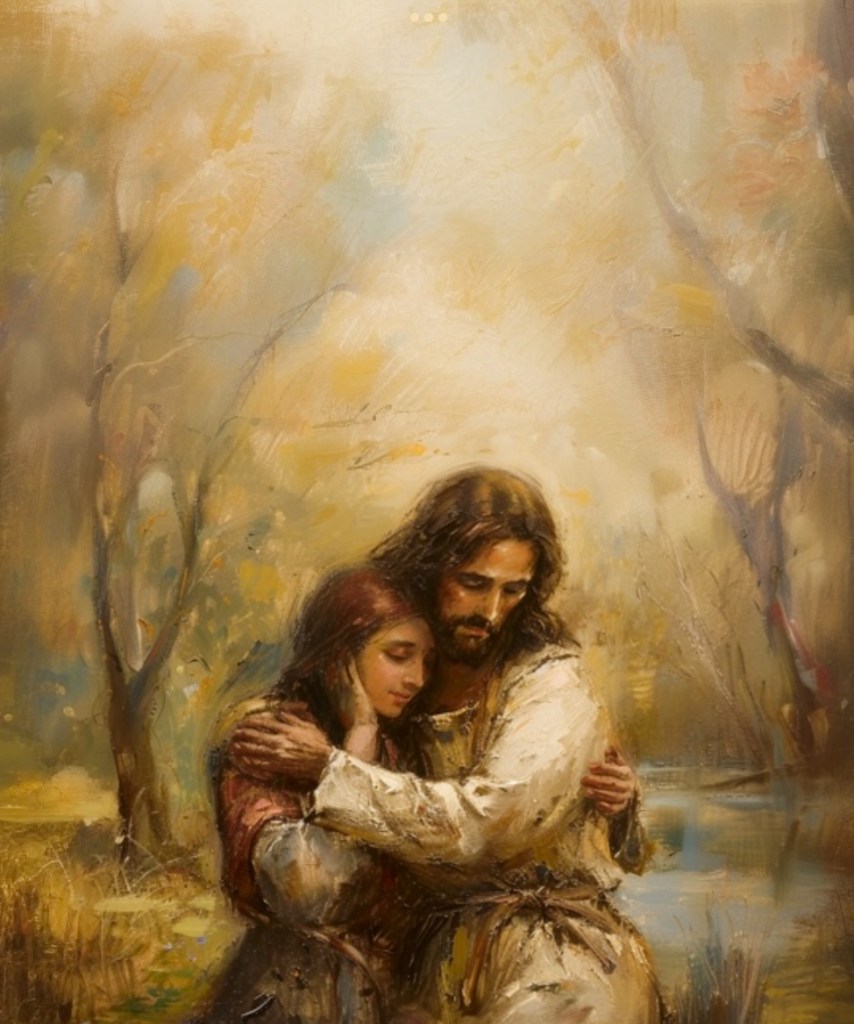
    Navigating relationships as a young Christian can be challenging, especially when faced with situations that test your boundaries and values. It’s not uncommon for young people to encounter dilemmas that leave them feeling guilt and shame, particularly in a world where societal pressures often conflict with personal principles. This blog post aims to support those who are striving to maintain their values while dealing with the resulting feelings.

    Upholding Your Values

    First and foremost, it’s important to commend yourself for setting and maintaining your boundaries. This is a testament to your strength, self-respect, and integrity. In a society where young people, especially women, are often made to feel shame or guilt for not conforming to certain expectations, standing firm in your values is a noble and courageous act.

    Scriptural Encouragement:

    • Psalm 139:14: “I praise you because I am fearfully and wonderfully made; your works are wonderful, I know that full well.”
    • Proverbs 4:23: “Above all else, guard your heart, for everything you do flows from it.”

    These verses remind us that we are wonderfully made and that guarding our hearts is essential. Your commitment to your values is a way of honoring the person God created you to be.

    Dealing with Feelings of Guilt and Shame

    When faced with feelings of guilt and shame, it’s crucial to recognize that these emotions, while natural, do not define your worth or your relationship with God. It’s important to practice self-forgiveness and compassion.

    Steps to Overcoming Guilt and Shame:

    1. Acknowledge Your Feelings: It’s okay to feel hurt and disappointed. Acknowledging your emotions is the first step towards healing.
    2. Seek Forgiveness: Remember that God’s love and forgiveness are always available.
    • 1 John 1:9: “If we confess our sins, he is faithful and just to forgive us our sins and to cleanse us from all unrighteousness.”
    • Romans 8:1: “Therefore, there is now no condemnation for those who are in Christ Jesus.”
    1. Forgive Others: It can be challenging to forgive those who have hurt us, but it’s a crucial step towards moving forward.
    • Matthew 5:44: “But I tell you, love your enemies and pray for those who persecute you.”
    1. Lean on Your Community: Sharing your burdens with trusted friends, mentors, or your church community can provide comfort and perspective.
    • Galatians 6:2: “Carry each other’s burdens, and in this way you will fulfill the law of Christ.”
    1. Practice Self-Compassion: Treat yourself with the same kindness and understanding that you would offer a friend in a similar situation.

    The Path of Righteousness and Loving-Kindness

    Walking the path of righteousness involves not only maintaining your integrity but also practicing forgiveness and loving-kindness, both towards others and yourself. Self-compassion is a crucial concept to understand and practice on this path. It allows you to acknowledge mistakes, learn from them, and move forward without self-judgment or self-hatred.

    Why Self-Compassion Matters:

    • Healing and Growth: Self-compassion fosters healing and personal growth, enabling you to move past mistakes and continue your journey with a renewed sense of purpose.
    • Service to Others: When you treat yourself with compassion, you are better equipped to extend that same kindness and understanding to others.

    In conclusion, upholding your values and maintaining your integrity in the face of societal pressures is commendable and deserving of self-respect. It’s essential to forgive yourself and others, learn from your experiences, and continue on your chosen path of righteousness, loving-kindness, and service to others. Remember, God’s love and forgiveness are always with you, guiding you towards a life of peace and fulfillment.

    Reflective Questions:

    1.  How do you practice self-compassion in difficult situations?
    2.  What steps can you take to forgive yourself and others?
    3.  How does maintaining your values impact your sense of self-worth and integrity?
    

    I invite you to share your thoughts and experiences in the comments. Your insights will assuredly benefit others on their journey.

    🙏🕊️🙏