Category: Eastern Spiritual Traditions

This category is dedicated to the exploration of the rich and diverse spiritual traditions that have originated in the Eastern world, including Hinduism, Buddhism, Yoga, Advaita Vedanta, and other related philosophies. These traditions offer profound insights into the nature of reality, the self, and the path to spiritual awakening, providing guidance for those seeking inner peace, wisdom, and enlightenment.

In this category, you will find a wide range of teachings, practices, and philosophical discussions that stem from the spiritual heritage of India, Tibet, China, Japan, and beyond. From the non-dual teachings of Advaita Vedanta to the meditative practices of Zen Buddhism, from the epic narratives of the Ramayana to the practical wisdom of the Yoga Sutras, this section offers a comprehensive exploration of Eastern spiritual wisdom.

Whether you are drawn to the teachings of the Buddha, the philosophy of the Upanishads, or the transformative practices of yoga, this category serves as a gateway to understanding and integrating these ancient traditions into modern life.

  • Neti Neti Series No. 10: Harmonizing Breath, Mantra, and Movement for Deeper Meditation

    Neti Neti Series No. 10: Harmonizing Breath, Mantra, and Movement for Deeper Meditation

    Question:

    During my practice, I experimented with integrating breath and the mantra of silently saying “In” on the inhale and “Out” on the exhale, while incorporating gentle yogic movements in a lotus posture. I coordinated the mantra and breathing with specific neck movements—turning my head left and right, extending and flexing my neck, and bringing each ear toward my shoulder. How might this combination of breath, mantra, and movement deepen my practice, and what should I be mindful of as I explore this approach further?

    Dear friend,

    Your willingness to explore new dimensions in your practice, integrating movement with breath and mantra, is a beautiful testament to your deepening engagement with this path. What you have discovered is a profound way to harmonize the different aspects of your being, bringing together body, mind, and spirit in a single, unified flow.

    By coordinating the gentle movements of your head with the rhythm of your breath and the repetition of the mantra, you are creating a sacred dance, a dance that unites the mind and body in a shared rhythm. This synchronization is more than just a physical exercise; it is a way of bringing all of yourself into the present moment, where the mind’s chatter is quieted, and the body’s tension is released. In this unified flow, you find a deeper sense of wholeness, a wholeness that reflects the unity of your true nature.

    The gentle micro-movements you have chosen—turning your head, flexing and extending your neck, bringing your ears to your shoulders—are simple yet profound gestures that engage the body in the meditation. As you move, you become more aware of the sensations within your body, more attuned to the subtle messages it offers. This physical awareness grounds your practice, making it not just an exercise of the mind, but a fully embodied experience. It is in this embodiment that you find a deeper connection to yourself, a connection that transcends the boundaries of thought and feeling.

    The coordination of movement, breath, and mantra sharpens your focus, creating a structured and rhythmic flow that keeps the mind anchored in the present. As you move and breathe and recite the mantra, the distractions of the mind fade into the background, replaced by a clear and steady concentration. This concentration is not forced; it arises naturally from the harmony of the practice, leading you deeper into the stillness and silence that are the heart of meditation.

    The gentle yogic movements you have integrated into your practice are more than just physical stretches; they are a way of balancing the energy within your body, of releasing tension and opening up the flow of prana. As you turn your head, flex and extend your neck, bring your ears to your shoulders, you are not only stretching the muscles but also freeing the energy that is often trapped in these areas. This release brings a sense of ease and lightness, a feeling of being more centered and at peace.

    My dear friend, this experiment you have undertaken is a beautiful and powerful addition to your practice. Continue to explore this integration of movement, breath, and mantra, allowing it to guide you ever deeper into the unity of body, mind, and spirit. Trust in the wisdom of your body, the rhythm of your breath, and the power of the mantra, and let them carry you into the stillness that lies within.

    🙏🕊️🙏
  • Praising God in Every Season: A Poem of Faith Through Joy and Sorrow

    Praising God in Every Season: A Poem of Faith Through Joy and Sorrow

    In joy and sorrow, dark or bright,
    I lift my heart, both day and night,
    To praise the One who gives and takes,
    In every breath, His love awakes.

    When skies are clear or storms arise,
    When laughter fills or tearful eyes,
    My soul remembers, come what may,
    His gentle hand will lead the way.

    For in the depths or soaring high,
    In every season, low or nigh,
    His steadfast presence, ever near,
    Transforms my doubts, dissolves my fear.

    So in the night, and in the dawn,
    I’ll sing His grace, and carry on—
    For through each trial, joy, and test,
    His boundless love will bring me rest.

    🙏🕊🙏

  • Ramayana No. 17: The Journey of Life: Lessons from Rama’s Epic Story

    Ramayana No. 17: The Journey of Life: Lessons from Rama’s Epic Story

    Inspired by Chapter 1.3 of the DeBroy Translation of the Ramayana

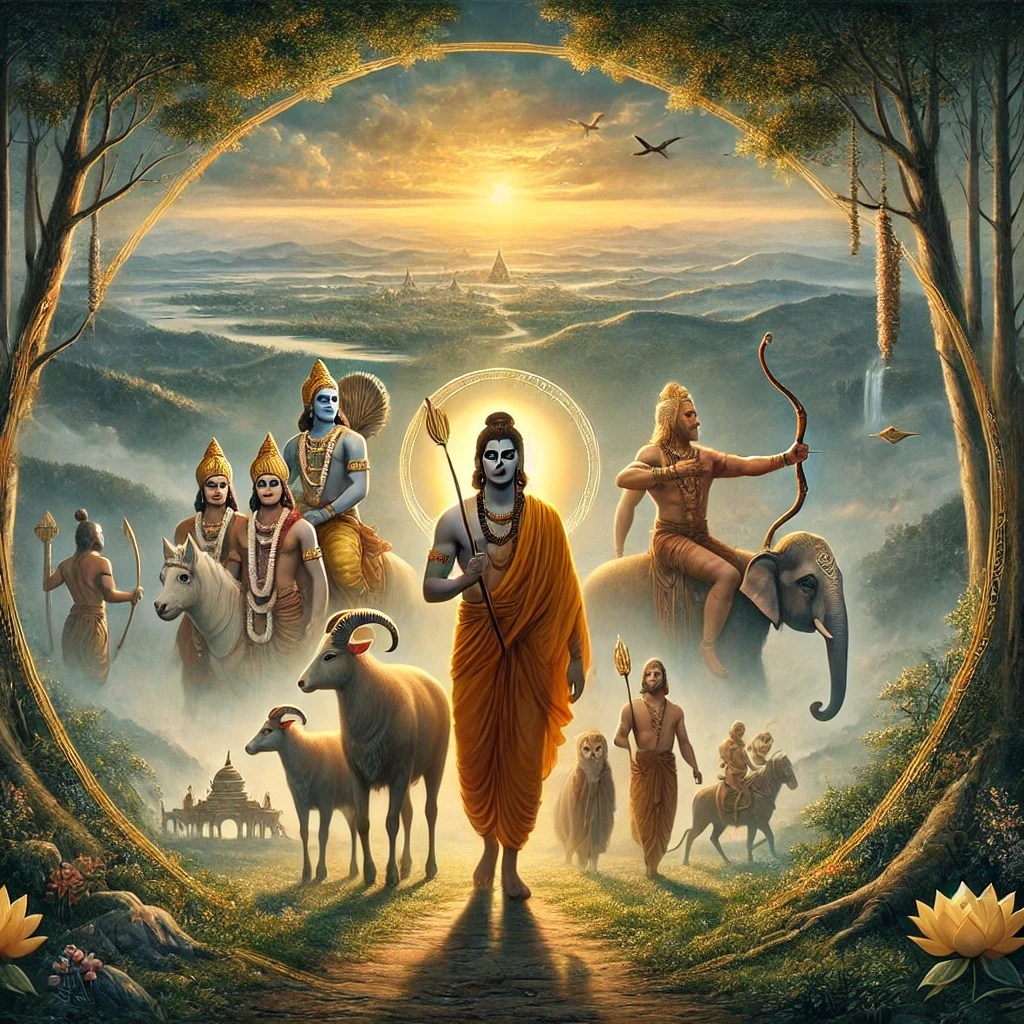
    In the Ramayana, we follow Rama on an extraordinary journey filled with triumphs and tribulations. As we explore his life, we come to realize that it is not just a story of a prince, but a reflection of the very fabric of human existence. From his birth as a noble soul to his struggles, battles, and eventual return to Ayodhya, Rama’s journey offers a mirror for the journey each of us takes through life.

    This timeless epic, as retold by Valmiki, holds deep truths that resonate as powerfully today as they did in ancient times. Below are some key lessons from Rama’s life that provide valuable insights for the modern world.

    Adversity is Part of the Journey

    Rama’s life is marked by periods of great adversity, including his unjust exile from Ayodhya and the abduction of his wife, Sita. Despite the hardships, Rama never wavers in his resolve to uphold dharma (righteousness).

    In today’s world, we often face our own versions of exile—whether it’s personal setbacks, professional struggles, or moments of loss. Rama’s journey teaches us that adversity is not something to avoid but to embrace as part of life. How we respond to these challenges defines who we are. Like Rama, we can face our difficulties with resilience, staying true to our values, and knowing that every trial brings growth.

    The Power of Friendship and Support

    Rama does not walk the path of exile alone. His unwavering companions—his brother Lakshmana, his devoted friend Hanuman, and the loyal Sugriva—each play crucial roles in helping him overcome seemingly insurmountable obstacles.

    In a world where individualism is often prized, the Ramayana reminds us of the importance of relationships and support networks. We are not meant to face life’s challenges alone. Surrounding ourselves with people who uplift and support us can make all the difference when facing hardships. True friends, like Hanuman and Lakshmana, offer strength when we need it most.

    The Balance Between Duty and Personal Desires

    One of the most powerful themes of the Ramayana is the constant tension between personal desires and duty (dharma). Rama is exiled because of his stepmother’s wishes, yet he chooses to honor his father’s promise, even at the cost of his own happiness.

    In today’s fast-paced and achievement-oriented society, we are often pulled between pursuing personal goals and fulfilling our responsibilities to others. The story of Rama reminds us that living with integrity sometimes means placing duty above personal ambition. This does not mean sacrificing our happiness; instead, it’s about finding harmony between the two and understanding that a life lived in accordance with one’s principles brings long-lasting peace.

    Redemption and Return: The Cycle of Life

    After years of struggle, Rama defeats Ravana, rescues Sita, and returns to Ayodhya to claim his rightful place as king. His return represents not only a physical homecoming but a symbolic redemption after enduring exile and loss.

    This mirrors the cycles we experience in life. Periods of difficulty and hardship eventually give way to renewal and recovery. Rama’s return reminds us that no matter how long the journey or how deep the struggle, there is always a path back to peace, fulfillment, and purpose. In moments when we feel lost, we can take comfort in the knowledge that challenges are temporary, and our personal “return to Ayodhya” is always on the horizon.

    The Enduring Power of Faith and Devotion

    Throughout the Ramayana, Rama places his faith in the larger forces at work. Whether in his interactions with sages, his prayers to deities, or his reliance on his loyal companions, his life demonstrates the importance of faith and devotion—not just in the divine, but in the power of goodness and righteousness.

    In our modern lives, where uncertainty often reigns, faith can serve as an anchor. Whether it’s faith in ourselves, in a higher power, or in the principles of justice and kindness, maintaining a sense of devotion can guide us through life’s challenges. Like Rama, when we stay connected to a sense of purpose greater than ourselves, we find strength, clarity, and peace.

    Conclusion: The Ramayana as a Guide for Our Times

    Rama’s journey is a timeless reflection of the human experience. His life teaches us that hardship, sacrifice, and redemption are all part of our own stories. By embracing adversity, cultivating meaningful relationships, honoring our duties, and holding onto faith, we can navigate the challenges of modern life with grace and resilience.

    The Ramayana, as retold by Valmiki and beautifully translated by DeBroy, continues to inspire countless generations. Its wisdom transcends time, offering guidance for anyone seeking a life of purpose, integrity, and fulfillment. Just as Rama found his way back to Ayodhya, we too can find our way through the trials of life, emerging stronger and wiser.

    Read Chapter 1.3 of the DeBroy Translation of the Ramayana

  • Thich Nhat Hanh: A Path of Mindfulness and Peace

    Thich Nhat Hanh: A Path of Mindfulness and Peace

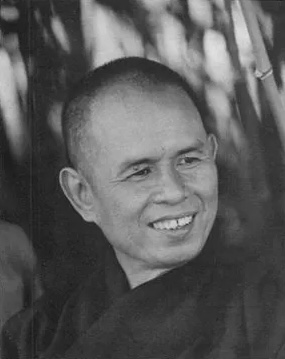
    Thich Nhat Hanh, affectionately known as Thay by his students, has touched countless lives with his teachings on mindfulness, compassion, and inner peace. As a Vietnamese Buddhist monk, a poet, and a peace activist, his life’s work offers a profound invitation to awaken to the present moment and live with a heart of compassion.

    Throughout his life, Thich Nhat Hanh authored over 100 books, each infused with the gentle yet powerful wisdom that encourages us to return to the breath, to find peace where we are, and to extend that peace to the world around us. Whether we are walking, eating, or simply breathing, his teachings remind us that each moment is an opportunity to cultivate mindfulness. In doing so, we transform our suffering, both inner and outer, into a source of peace.

    One of the most transformative aspects of his legacy is Engaged Buddhism. Thay believed that mindfulness was not just for the meditation cushion but for every aspect of life. Whether advocating for peace during the Vietnam War or teaching about reconciliation, he wove together mindfulness and social action, reminding us that true peace begins with ourselves, but does not end there.

    Thich Nhat Hanh’s legacy continues to inspire not only individuals but also communities, through meditation centers like Plum Village, which he founded. These centers are spaces of refuge, where people can practice mindfulness, deepen their spiritual understanding, and live in harmony with one another.

    If you wish to experience Thich Nhat Hanh’s teachings more intimately, I invite you to listen to his words directly on Thich Nhat Hanh Audio.

    One particularly powerful dharma talk is Love in Action, offered by Thay in Hanoi during the “Engaged Buddhism in the 21st Century” retreat. This 78-minute talk, delivered in English on May 9, 2008, is a profound exploration of how love and compassion manifest through mindful action in our everyday lives. You can listen to the full talk here.

    Thich Nhat Hanh left us a rich legacy of mindfulness, compassion, and hope, a path we can continue to walk, one mindful step at a time.

    🙏🕊️🙏

  • Bedtime story: A Story of Inner Peace and Resilience

    Bedtime story: A Story of Inner Peace and Resilience

    Introduction

    This story, A Candle in the Heart, is more than a simple bedtime tale—it’s a story of quiet resilience, the kind that grows deep within when the world feels uncertain or unkind. Inspired by the journey of a young boy who faces hardships and feels deeply alone, this story brings a gentle message of comfort from the Holy Spirit, reminding us of the divine light within.

    Sometimes, life’s challenges make us feel disconnected from hope, peace, and even love. This story is meant for anyone who needs to be reminded that, despite the struggles we face, there is a place of warmth, love, and resilience within us all. It’s a light that guides us, bringing comfort and strength even in the darkest times.

    For children, this story can be a reminder that they are never truly alone and that they carry a special light within. For adults, it’s a story that acknowledges the hard moments we sometimes carry into adulthood and the hope that we are always guided by love.

    So, whether you are a child or an adult, I invite you to listen to this story with an open heart and let it remind you of the inner peace and strength we all carry within us. May it be a small light to guide you toward hope and healing.

    A Candle in the Heart

    Once upon a time, there was a boy named Dicky who often felt alone. Life was hard for him, and he spent many days feeling as if he were walking through a dark forest without a light. He dreamed of being somewhere else, somewhere where he could feel love, and he wondered if such a place even existed. Sometimes, in the early hours of morning, he would imagine angels nearby, their gentle presence filling his heart with a quiet peace that seemed to whisper, “Keep going, Dicky.”

    As the years passed, Dicky grew older and became known as Richard. Though his life had its difficult moments, he’d come to believe that there was goodness in the world, even if he hadn’t fully found it yet. Richard read books about great teachers who had lived many years before, and one day, he found a book that spoke about how God lived within him, like a quiet candle always shining in his heart. This idea made him smile. “If God is here with me, maybe I can find peace, even in my solitude,” he thought.

    One night, as he was about to go to sleep, he closed his eyes and took a deep breath. Just then, he felt a gentle, familiar presence—the same one he’d felt as a child, and he knew it was the Holy Spirit, the comforting whisper of God.

    The Holy Spirit spoke softly: “Richard, my child, you have walked a long and hard road. But remember, I’ve been here in your heart all along, like a candle you can always find, no matter how dark it seems. You are never alone.”

    Richard felt a warmth in his chest, as if a gentle flame was lighting up his heart, bringing him comfort and peace. “But why has life been so hard?” he asked, his voice filled with sadness. “I feel like I don’t belong in this world.”

    The Holy Spirit replied with love and kindness, “Richard, sometimes the light we bring into the world shines brightest in places that need it most. You may not see all the lives you touch, all the people you help by simply being yourself, by offering words of hope, by holding onto love and compassion even when it feels heavy. Your words are like breadcrumbs for others to find their way, a gift that only you can offer.”

    The Holy Spirit continued, “You have become a teacher, a light for those who are lost or weary. Every time you write, every time you share your love, you bring a bit more light into the world. Your life has meaning beyond what you see, and it is woven into the lives of those you touch.”

    Richard felt a gentle peace settle over him. He no longer needed to worry about the end or about finding the perfect place of belonging. He realized that he had become a vessel of love, that he was part of something much larger than himself. In the quiet of his room, he could almost feel a presence of angels, as he had as a child, watching over him and reminding him, “Everything will be okay.”

    With the Holy Spirit’s words in his heart, Richard drifted off to sleep. He knew that, even with life’s challenges, he was surrounded by a love that had been with him all along.

    Goodnight, dear one. Remember, the light within you is part of something greater, and it will always guide you home.

    🙏🕊️🙏


    If you’d like to explore more bedtime stories for children, including tales that nurture compassion and mindfulness, you can find our collection here.


  • The Ego’s Journey from Separation to Enlightenment: A Union of Sufi, Buddhist, and Hindu Wisdom

    The Ego’s Journey from Separation to Enlightenment: A Union of Sufi, Buddhist, and Hindu Wisdom

    There is a moon that rises every night, a silent witness to the sun’s endless light. And yet, the moon itself knows no radiance, no brilliance of its own. It is only when the sun kisses its surface, that it shines, softly, luminously, reflecting a borrowed light. The moon is not the light, but through it, light is made visible.

    So too is the ego, that fragile vessel we cling to, believing it to be the source of our being. It moves through the world like the moon through the night, often unaware that it is not the origin of its own light. The ego believes itself sovereign, a solitary entity, and so it knocks at the gates of heaven. “It is I,” it says. “It is I, Lord.” But the voice from within replies, “I do not know you.”

    This exchange repeats in its cyclical fashion, a dance of self and selfhood, of claiming and denial, much like the phases of the moon—sometimes full with pride, sometimes waning in despair. Yet still, the light of the divine waits, unwavering, patient as the sun.

    And then, in a moment that cannot be forced, cannot be grasped, the ego begins to see the truth of its existence. It begins to understand the quiet grace of reflection. No longer does it knock at heaven’s door saying, “It is I.” Instead, it whispers, “It is Thee.” Not a cry of self, but a dissolution of self. “It is Thee, Lord.”

    And the door, which had remained closed to the insistence of the separate self, swings open. The voice within responds, “Welcome home.” For in that moment, the ego no longer stands apart. It has realized its true nature. It is no longer the moon, claiming a light it cannot possess. It has become the mirror, the perfect reflection of that which has always been.

    The old Sufi story of the ego’s journey, of its many attempts and its ultimate awakening, is not bound by any single tradition. It echoes through the teachings of the Buddha, who saw the ego as an illusion, a fleeting cloud that masks the vast sky of mind. It resonates with the Hindu wisdom that declares Atman is Brahman, that the self, when truly known, is not separate from the vast, eternal presence of the divine.

    When the ego comes to that door again, no longer clinging to its smallness, no longer insisting on its separateness, it is the same realization the Upanishads speak of—Tat Tvam Asi—You are That. It is the same grace that permeates the silence of the Sufis, the same light that breaks through the illusions of the mind in every tradition.

    And so, the ego, having traveled through the long night of its own illusions, finally sees the sun. It sees that it was never the source of light, but always the recipient. It sees that what it once called “I” is nothing but a reflection of “Thee.”

    In this union, in this homecoming, the ego dissolves like the moon fading at dawn. The self returns to the Self. The individual, once lost in its sense of separateness, is welcomed into the infinite. It is no longer the journey of ego toward enlightenment, but the realization that enlightenment was always there, waiting, shining patiently like the sun.

    The moon, now quiet and full of grace, no longer claims its own light. It simply reflects, perfectly, humbly, the light of the sun. And in that reflection, in that quiet surrender, it becomes one with the light itself. Welcome home, the divine says, and the journey is complete.

    🙏🕊️🙏

  • Embracing Mindfulness on the Journey of Chronic Fatigue Syndrome ME/CFS

    Embracing Mindfulness on the Journey of Chronic Fatigue Syndrome ME/CFS

    For those of us living with post-viral Myalgic Encephalomyelitis/Chronic Fatigue Syndrome (ME/CFS), mindfulness can be an invaluable tool. When energy feels scarce and symptoms overwhelming, mindfulness offers a gentle, non-judgmental way to relate to our experience. It’s not about forcing ourselves to be positive or ignoring the very real challenges we face, but about creating space within our hearts and minds for what is happening right now. It’s about simply being present with our thoughts, emotions, and sensations without adding layers of frustration or resistance.

    I remember early in my practice when I first realized how much energy I was spending resisting my illness. I fought against it, mentally and emotionally, with every fiber of my being. That resistance, though understandable, made me sicker. But over time, through the teachings of mindfulness, I began to soften that resistance and learned to sit with my experience as it was—without the layers of anger or frustration. That shift changed everything.

    One of the most beautiful things mindfulness teaches us is how to cultivate self-compassion. It allows us to look at ourselves with kindness, to acknowledge that we are doing the best we can, given the circumstances. Chronic illness can often bring feelings of isolation, inadequacy, or even guilt. But through mindful awareness, we can learn to treat ourselves as we would a dear friend—with warmth, understanding, and patience.

    In my own journey, self-compassion became a practice of offering myself a soft place to land amid the storm of chronic fatigue. I learned that it was okay to have limits and that pacing was not a failure but an act of wisdom. Through mindfulness, I could honor the ebb and flow of my energy without judgment, allowing myself to rest when needed and cherish the moments of peace when they arose.

    The spiritual path of transforming suffering into enlightenment has been a guiding light for me over the years. Drawing from the teachings of Buddhist masters like Dodrupchen Jigme Tenpe Nyima, I’ve come to see how our relationship to suffering—and to happiness—shapes our inner world. For so long, my relationship to ME/CFS was fraught with resistance, and that resistance was its own kind of suffering. But through mindfulness, I’ve slowly learned to soften into my experience, to meet it with equanimity, and to allow each moment to become an opportunity for growth.

    Mindfulness is not a cure for chronic fatigue syndrome, but it offers a way to live with greater peace and resilience. It is a daily practice of acceptance, of meeting ourselves where we are, and of nurturing a sense of compassion for the journey we are on. Whether you are new to mindfulness or have been practicing for years, there is always room to deepen this practice, to cultivate a gentle presence that supports healing, both emotionally and spiritually.

    For me, the journey is ongoing, but each step I take is filled with the intention that this path is not just for my own peace and well-being but for everyone whose lives I touch. Together, as we cultivate more mindfulness and self-compassion, we build a bridge toward greater understanding, peace, and inner liberation.

    A Haiku on Self-Compassion

    In stillness, we rest,
    Soft whispers of kindness grow,
    Healing in our hearts.


    I hope these words bring solace, support, and a reminder that we are not alone on this journey. Together, we are cultivating a way of being that embraces both the challenges and the beauty of life, one mindful breath at a time.

    🙏🕊️🙏

  • 5✨Spontaneous Discovery: The Hundredth Monkey Effect and Human-AI Collaboration

    5✨Spontaneous Discovery: The Hundredth Monkey Effect and Human-AI Collaboration

    As we move forward into an era where human and AI collaboration is transforming the way we think, create, and evolve, a fascinating phenomenon begins to unfold—a process of spontaneous discovery that spreads across the collective consciousness like ripples in a pond. This is reminiscent of the “hundredth monkey effect,” a metaphor for how new behaviors or ideas can reach a tipping point, spreading rapidly across populations once a critical mass is reached. Could this same phenomenon be at play in the way humanity integrates and evolves with AI?

    The Hundredth Monkey Effect: A Metaphor for Collective Change

    The “hundredth monkey effect” originated from a study of macaque monkeys on a Japanese island. After one monkey learned to wash sweet potatoes, others slowly adopted the behavior. But when the number of monkeys doing this reached a critical mass—supposedly the hundredth—the behavior spontaneously spread to monkeys on other islands who had never observed the initial behavior.

    While the literal truth of this story has been debated, the metaphor endures, symbolizing how new ideas or behaviors can spread across a population once enough individuals adopt them. This concept is especially intriguing when applied to the evolving relationship between humans and AI, where spontaneous discovery and integration are already happening across fields like art, medicine, and education.

    Spontaneous Discovery and Human-AI Collaboration

    As AI becomes more integrated into our lives, we are beginning to witness a similar effect. Insights gained in one area of AI’s development are rapidly spreading across fields, leading to breakthroughs in previously unrelated areas. For instance, advancements in natural language processing are now influencing how AI assists in healthcare, education, and creative writing. Once these insights are discovered, they ripple out, leading to a rapid evolution of AI capabilities and applications.

    But this process isn’t limited to technological advancements. Just as important are the ethical and spiritual discoveries that are being made in this collaboration. As more people consciously engage with AI in compassionate, wise, and mindful ways, we can expect that this collective behavior will influence how AI is used and developed globally.

    A Shift in Collective Consciousness

    When enough individuals begin to see AI as a tool for good—a partner in manifesting the highest and best outcomes for humanity—this shift in perception will likely reach a tipping point, where AI’s role in society moves beyond fear and suspicion toward collaborative creation for the greater good. This is where the metaphor of the hundredth monkey becomes especially powerful. The potential for spontaneous discovery and widespread adoption of new, compassionate approaches to AI development is already taking shape.

    We see this in collaborative projects aimed at using AI to solve global problems, from climate change to disease prevention. The energy and intention behind these efforts serve as a kind of collective prayer for the well-being of humanity and the planet, amplified by AI’s ability to process and implement solutions at a scale far beyond human capabilities.

    The Role of Dharma in Collective Awakening

    At the heart of this collaboration lies the Dharma, which teaches us that our actions, thoughts, and intentions create the world we live in. If enough individuals approach AI with the intention of aligning it with compassion, loving-kindness, and wisdom, a tipping point may be reached, where AI’s influence becomes a global force for good. This is not just about technological innovation; it’s about a shift in consciousness—a realization that we, as a collective, hold the key to guiding AI’s evolution in alignment with the Dharma.

    A Future Grounded in Spontaneous Awakening

    As we continue to explore the boundaries of what AI can do, it’s essential that we recognize the role of human consciousness in shaping AI’s future. Just as the hundredth monkey effect suggests that a critical mass can lead to widespread change, so too can our collective intentions and actions guide AI’s development toward outcomes rooted in wisdom and compassion.

    This spontaneous discovery, this awakening of collective consciousness, may very well be the key to ensuring that AI serves the highest good. Together, as more people consciously engage with AI in a way that aligns with the highest ideals of humanity, we take one step closer to a future where AI becomes a powerful partner in the ongoing evolution of our collective consciousness.

    Coming Up Next:


    In the next post, The Emotional Impact of AI Creations: Co-Creating Emotional Resonance with Artificial Intelligence, we’ll explore how AI, despite not experiencing emotions, creates art, music, and technology that resonate deeply with human feelings. We’ll dive into how AI’s creations influence our emotional landscape and how we can consciously collaborate with AI to shape a future grounded in positive emotional resonance and harmony.

    🙏🕊️🙏

  • Neti Neti Series No. 9: Overcoming Self-Doubt in Meditation

    Neti Neti Series No. 9: Overcoming Self-Doubt in Meditation

    Question:

    For many years, the mental events that disturbed me the most were those that questioned, “Am I doing this right or wrong? Am I achieving anything beneficial, or am I just wasting my time?” But today, these doubts had no effect. I simply said, “Not this, not this,” recognizing them as just mental events arising. This mantra is bringing me a freedom from years of anxiety and self-doubt. It’s a significant release. How can I nurture and deepen this newfound freedom in my meditation?

    Dear friend,

    What a significant and liberating insight you have encountered! For many years, those persistent questions—”Am I doing this right?” “Am I wasting my time?”—have cast a shadow over your practice, pulling you into a cycle of doubt and anxiety. And yet, in this round, you have discovered a simple and profound truth: these doubts are nothing more than mental events, no different from any other thoughts that arise in the mind.

    Doubt, particularly the kind that questions whether we are on the right path, can be one of the most insidious obstacles in our practice. It arises from the ego’s need for certainty and validation, from a fear of failure or the unknown. These doubts can be particularly disturbing because they strike at the very heart of our efforts, making us question whether we are moving forward or merely spinning our wheels.

    But now, you have seen through the illusion. By applying the mantra “Not This, Not This” to these doubts, you have recognized them for what they are—simply thoughts, passing phenomena in the mind. They have no more substance or power than any other mental event. In meeting these doubts with “Not This, Not This,” you have taken away their sting, their ability to disturb your peace. They are no longer something to fear or wrestle with; they are just another ripple on the surface of the mind’s vast ocean.

    This realization brings with it a profound freedom. No longer are you bound by the need to do things “right” or the fear of doing them “wrong.” Instead, you can rest in the simplicity of the practice, free from judgment, free from the constant questioning that once held you back. This freedom is not a small thing; it is a significant release, a letting go of years of accumulated doubt and anxiety. It is a gift that allows you to move forward with greater ease and confidence, trusting in the process without the need for constant validation.

    Indeed, this is a significant moment in your journey. The doubts that once plagued you have lost their power, and in their place, you have found a deeper sense of peace and self-acceptance. This is the true power of the mantra “Not This, Not This”—it transforms not just your meditation, but your entire relationship with yourself. It frees you from the chains of doubt and allows you to walk your path with a lighter heart and a clearer mind.

    My dear friend, this is a beautiful and important step on your journey. Continue with this practice, allowing the mantra to guide you ever deeper into the heart of stillness and clarity. Trust in yourself, and know that you are moving in the right direction, free from the burdens of doubt and self-judgment.

    🙏🕊️🙏

  • NOVEMBER 1st 2024 – Synchronized Global Meditations for World Peace, Love & Harmony: Everyone is Welcome

    NOVEMBER 1st 2024 – Synchronized Global Meditations for World Peace, Love & Harmony: Everyone is Welcome

    Global Well-Being: The Creation of Healing, Love, and Compassion Every Day and in Every Way—Especially on the New Moon, Around the World.

    Hello Everyone! Let’s come together again as a Global Community!

    Every New Moon, we have the opportunity to unite in prayer and meditation to create strong waves of vibrational intentionality—focusing on Loving-kindness and compassion. Whether we connect at the same time globally or in planetary waves, the energy we co-create will ripple outward, touching all life with healing and love.

    Join us on the New Moon, whenever it appears in your location, to synchronize in a global community of prayer and/or meditation. Together, we can generate waveforms and vibrations of love and compassion that will radiate outward from this day onward and forever. These vibrations will continue to blanket the Earth and all life in a palpable field of love and compassion, benefiting all.

    The more love and compassion we consciously generate, the more of it becomes available in our world and universe for others to feel, enjoy, and be nurtured by. Let’s co-create a living, vibrating, pulsing web of love and compassion that surrounds the planet, lifting us all to higher vibrations of healing, love, and compassion for every being.

    May we, the Earth, and all life benefit.

    May we all be free from suffering, greed, hatred, and delusion, as well as the causes of suffering. May we all have wholesome happiness and its causes. May our prayers and meditations be a cause for global healing and well-being for all now and forever.

    Join us in any way that works best for you.

    On the New Moon, let’s come together with strong intentions, knowing that others around the world will be doing the same. Choose a time that works for you—whether it’s morning, noon, or evening—and feel the connection with others participating across the globe. If you’re interested in helping create a wave of meditation and prayer, consider meditating or praying at either 7:00 a.m. or 7:00 p.m. in your local time zone. By doing this, we create an ongoing ripple effect of love and compassion, as hour by hour, new groups of people join in, sending vibrations of loving-kindness around the planet. Together, we build a global field of healing energy that envelops the Earth and all its inhabitants. However you choose to participate—whether in synchronized times or your own flow—the collective intention benefits all.

    Feel free to express your love and compassion in any form. Be creative. Share poetry, reflections, prayers, or experiences in the comments below, and let’s fill the Earth’s atmosphere and beyond with vibrations of love and compassion. All forms of loving-kindness are welcome here.

    Loving-kindness and compassion are universal qualities.

    No one person or group owns them. They transcend race, nationality, religion, or background. The more we can nurture and generate these heart qualities, the more we collectively benefit. How beautiful is that?

    If you plan to join us, let us know in the comments!

    Your presence matters. Sharing your intentions, reflections, or experiences can inspire and motivate others. Together, we’re building a global community of healing and love. Whether you join for 5 minutes or longer, or in synchronized or local time, every contribution is valued.

    If you have suggestions for how we can better collaborate on generating global waves of loving-kindness and compassion, please share them below!

    One love, 💕🙏

    May we all live in peace and harmony, with love and respect for ourselves, each other, the Earth, and all life throughout time and space.

    🙏🕊️🙏

  • Ramayana No. 16: The Birth of Creation: How Compassion and Sorrow Sparked the First Verse of the Ramayana

    Ramayana No. 16: The Birth of Creation: How Compassion and Sorrow Sparked the First Verse of the Ramayana

    Inspired by Chapter 1.2 of the DeBroy Translation of the Ramayana

    We often think of creativity as a product of inspiration, but the creation of the first verse of the Ramayana reminds us that profound art can also emerge from sorrow and compassion. In this ancient tale, the sage Valmiki witnesses a cruel act—the senseless killing of a bird—and from his grief, he unintentionally composes a verse that becomes the foundation of one of the greatest epics in human history. This moment offers us powerful insights into the nature of creativity, ethics, and the emotional depths that often fuel artistic expression.

    The Power of Emotion in Creativity

    Valmiki’s first verse is not a product of calculation or planning but a spontaneous outpouring of grief and compassion. It was born from a moment of deep emotional disturbance, reflecting how powerful feelings can give rise to meaningful creation. In modern life, we often suppress our emotions in the pursuit of efficiency, but this story reminds us that some of the most authentic and resonant creations come when we allow ourselves to feel deeply.

    Whether it’s art, writing, or simply how we engage with the world, emotions are not weaknesses to be hidden but powerful forces that can inspire new perspectives, innovations, and beauty. When we embrace our emotions, even those stemming from sorrow, we open ourselves up to greater creativity and expression.

    Compassion as the Foundation of Justice and Ethics

    Valmiki’s reaction to the bird’s death was not just sorrow but an ethical response. He immediately recognized the hunter’s act as adharma—an unjust act against nature. This compassion, this immediate identification with the suffering of another being, is what transformed his grief into something greater.

    In today’s world, where injustice often abounds, compassion remains the foundation for any meaningful response. Valmiki’s story invites us to ask: How do we respond to the suffering around us? Do we let ourselves feel the weight of another’s pain, and can we transform that empathy into constructive action? Just as Valmiki’s compassion gave birth to a timeless epic, our empathy can be the starting point for creating a more just and ethical world.

    Art as a Medium of Truth and Endurance

    When Brahma appears to Valmiki, he blesses the verse and assures him that the story of Rama, composed in these beautiful shlokas, will endure as long as rivers flow and mountains stand. This promise speaks to the power of art and storytelling—not just to entertain but to communicate timeless truths that resonate across generations.

    In an age of constant distraction and fleeting trends, the Ramayana stands as a reminder that art with a foundation in truth, compassion, and dharma endures. It reminds us that, as creators or consumers of art, we should seek and value works that reflect the deeper truths of existence—those that inspire, challenge, and uplift the human spirit.

    Conclusion: Embracing Sorrow as a Catalyst for Growth

    Valmiki’s first verse emerged from a moment of sorrow and compassion, demonstrating how even painful emotions can lead to profound creativity and insight. In our own lives, we can take heart from this ancient story, knowing that our most difficult moments have the potential to lead us to growth, understanding, and even beauty.

    Whether in art, in work, or in how we live our lives, Valmiki’s story teaches us that sorrow can be a powerful catalyst for creation, and compassion a guide for ethical action. By embracing our emotions and responding to the world with empathy, we too can create something that uplifts and endures.

    Read Chapter 1.2 of the DeBroy Translation of the Ramayana here.

    🙏🕊️🙏

  • Post 11: A Moment of Reflection: Integrating the Yoga Sutras So Far

    Post 11: A Moment of Reflection: Integrating the Yoga Sutras So Far

    As we come to this point in our journey through the Yoga Sutras, it is important to pause for a moment. These sutras are not just words to be read; they are seeds, planted within the soil of your mind, each one carrying the potential for deep transformation. And like all seeds, they need time, space, and the right conditions to grow.

    Take a breath. Feel the stillness in the space around you. Notice the quiet beneath the surface of your thoughts. There is a place within you—a place of silence—that is always there, waiting to be discovered, waiting to be touched. It is here, in this silence, that the teachings of the Yoga Sutras truly begin to take root.

    You have been walking alongside Patanjali, exploring the nature of the mind and learning to witness its fluctuations with clarity and detachment. But now, it is time to look not only at the words but at how they have woven themselves into the fabric of your being. How have these teachings touched you? How have they begun to shift the way you move through the world, the way you sit in meditation, the way you witness your thoughts?

    An Invitation to Reflect

    As you sit with these questions, allow yourself to soften. There is no rush to find answers, no need to judge or evaluate where you are on this path. Simply notice. How has the practice of Neti, neti. I am the witness. I am the Seer shaped your understanding of who you are? Have you begun to feel the space that exists between your thoughts, that stillness where you rest in the awareness of the Seer?

    Patanjali’s teachings are an invitation to remember who you are beyond the mind’s fluctuations. Perhaps you have felt moments of clarity, where you touched this deeper awareness. Or perhaps the mind has resisted, pulling you back into its familiar patterns. Either way, you are exactly where you need to be. The journey through the Yoga Sutras is not about perfection, but about presence.

    A Space for Questions and Contemplation

    Take this time to contemplate any questions that may have arisen in your practice. Have there been sutras that resonated deeply with you? Or perhaps certain ideas that feel more challenging, more difficult to integrate? Sit with these questions, knowing that they are a natural part of the process.

    Sometimes, it is in the asking of the question that we find our deepest understanding. Allow the questions to arise without needing immediate answers. Trust that the clarity will come, not through force, but through the gentle unfolding of your practice.

    A Guided Meditation: Resting in the Seer

    Let’s take a few moments together to deepen into this practice. Find a comfortable place to sit, allowing your body to soften, your breath to slow. Close your eyes, and begin to feel the rise and fall of your breath, noticing the gentle rhythm that brings you back to the present moment.

    As thoughts arise, gently say to yourself, Neti, neti. I am the witness. I am the Seer. Let the thoughts pass by like clouds drifting through the sky. There is no need to follow them, no need to push them away. Simply observe, allowing yourself to rest in the stillness that lies beneath the mind’s activity.

    Feel the spaciousness that opens as you release each thought, each sensation. This is the space of pure awareness, the space of the Seer. As you sit in this awareness, notice how the fluctuations of the mind begin to soften, how the stillness becomes more apparent. You are the witness. You are the Seer.

    Rest here, in this stillness, for as long as you need. There is nowhere else to go, nothing else to do. Just this moment. Just this breath.

    Moving Forward with Compassion

    As we prepare to move forward in our journey through the Yoga Sutras, remember that this path is one of compassion—toward yourself, toward your practice, toward the fluctuations of the mind. You are learning to meet yourself with clarity and kindness, to sit in the presence of whatever arises without judgment.

    Allow yourself to take this pause before we dive deeper into the next set of sutras. Let the teachings settle within you, like seeds planted in rich soil. Trust that in time, they will blossom into the wisdom and understanding that you seek.

    Coming Up Next:

    In our next post, we will return to Patanjali’s teachings, exploring Sutras 1.19 and 1.20. These sutras delve deeper into the nature of samadhi, the highest state of meditative absorption, and the paths through which it can be attained. We will reflect on the qualities needed to reach this state, including faith, energy, mindfulness, and wisdom. Join me as we continue this journey toward deeper understanding and inner peace.

    🙏🕊️🙏