Category: Practices of Self-Inquiry (Atma Vichara)

Self-Inquiry, or Atma Vichara, is a central spiritual practice within the tradition of Advaita Vedanta, focused on the direct exploration of the Self and the realization of one’s true nature. Made widely known through the teachings of Sri Ramana Maharshi, Self-Inquiry is a profound method that guides practitioners toward the recognition that the individual self (Atman) is not separate from the ultimate reality (Brahman).

The practice of Self-Inquiry revolves around the fundamental question, “Who am I?” Through sustained and focused contemplation, this question leads the practitioner beyond the layers of thoughts, emotions, and egoic identity, revealing the pure, unchanging awareness that lies at the core of one’s being. This realization dissolves the illusion of separateness and unveils the non-dual truth that is the essence of Advaita Vedanta.

In this subcategory, we explore the principles, techniques, and transformative potential of Self-Inquiry as taught by Ramana Maharshi and other prominent Advaita Vedanta masters. Whether you are new to the practice or seeking to deepen your understanding, this category offers insights, guidance, and reflections on how Self-Inquiry can lead to spiritual awakening and the realization of the Self as one with all of existence.

Through articles, teachings, and practical advice, this section aims to support your journey into the depths of Self-Inquiry, helping you navigate the path toward the ultimate realization of non-dual awareness.

  • Introduction to Jnana Yoga: The Path of Knowledge and Self-Inquiry

    Jnana Yoga is one of the primary paths of yoga, often described as the path of knowledge or wisdom. It is a profound spiritual practice focused on deep inquiry into the nature of the self and the ultimate reality. Through a process of self-examination and discernment, practitioners of Jnana Yoga seek to transcend the illusions of the mind and realize the true, non-dual nature of existence.

    At the heart of Jnana Yoga is the practice of Atma Vichara, or self-inquiry, where the seeker continuously asks, “Who am I?” This inquiry leads to the direct experience of the Self (Atman) as pure consciousness, beyond the layers of thought, emotion, and ego. Jnana Yoga emphasizes the importance of discriminating between the real and the unreal, the eternal and the transient, in order to uncover the unchanging reality that underlies all existence.

    In this blog series, we’ll explore the key principles and practices of Jnana Yoga, and how this path of knowledge can guide us toward self-realization and spiritual liberation.

    As we embark together on this journey of discovery and reflection, I warmly invite you to join me in exploring the depths of these ancient practices and teachings. Let this space be a sanctuary where we meet not just as seekers, but as companions on the path—a place where the wisdom of the ages can gently unfold within our lives.

    If these words and practices speak to something within you, if they stir a quiet longing or bring a sense of peace, I encourage you to subscribe to this blog. By doing so, you’ll be the first to know as new installments of our shared journey are published. It is my hope that each post will resonate with you, offering insights and comfort as we continue to explore these profound teachings together.

    For those interested in a comprehensive introduction to the practices of yoga, I recommend The Sivananda Companion to Yoga: A Complete Guide to the Physical Postures, Breathing Exercises, Diet, Relaxation, and Meditation Techniques of Yoga. This book offers clear guidance on the foundational aspects of yoga, making it an invaluable resource for anyone looking to deepen their understanding and practice. Take a look at this book on Amazon here.

    🙏🕊️🙏

  • Book Review: Forty Verses on Reality by Ramana Maharshi

    Ramana Maharshi, one of the most revered spiritual teachers of modern times, has left an indelible mark on the landscape of non-dual philosophy. Among his profound contributions is a text known as the “Forty Verses on Reality”, or “Ulladu Narpadu”, originally composed in Tamil. These verses are a deep exploration of the nature of existence and the true Self, offering guidance on the direct path to self-realization.

    The “Forty Verses on Reality” are not just poetic expressions but are a concise roadmap to understanding the essence of the Self, as taught by Ramana Maharshi. They delve into the illusion of the ego, the ultimate reality of non-dual existence, and the importance of self-inquiry as the path to realizing one’s true nature.

    In these verses, Ramana Maharshi addresses the central theme of his teachings: the illusion of the ego. He emphasizes that the sense of ‘I’—which we often associate with our thoughts, emotions, and bodily identity—is not the true Self. This ego, or false sense of individuality, creates a veil that obscures the unchanging, eternal reality that is the Self.

    Ramana encourages seekers to engage in self-inquiry, particularly through the practice of asking “Who am I?” This simple yet profound question is designed to lead one back to the source of the ‘I’ thought, tracing it to its origin in pure consciousness. It is in this inquiry that the mind begins to dissolve into the deeper awareness, where the illusory nature of the ego is revealed, and the true Self is recognized.

    The essence of these verses is the understanding that the Self is the only reality, and everything else is transient, merely an appearance in the vast expanse of consciousness. Ramana’s teaching points to the realization that the Self is beyond all dualities, beyond subject and object, beyond mind and matter. The Self is the underlying reality, the substratum upon which all experiences arise and subside.

    For those who are new to Ramana Maharshi’s teachings, the “Forty Verses on Reality” serve as a gateway to understanding his approach to non-duality and the path of self-inquiry. Each verse offers a unique insight into the nature of existence, gently guiding the reader toward a direct experience of the Self.

    Consider, for example, the first verse, where Ramana states: “If Reality did not exist, could there be any knowledge of existence? Free from all thoughts, Reality abides in the Heart, the Source of all thoughts. It is, therefore, called the Heart. How then is one to contemplate It? To be as It is in the Heart, is Its contemplation.” Here, he points to the central truth that Reality—our true nature—is beyond thought and can only be known by abiding as the Self in the Heart, the source of all thoughts.

    Or take verse twenty, where he asks: “By what light do you see? If you say ‘by the light of the sun,’ the moon, etc., then by what light do you see these lights? The light of the eye makes all these lights visible. But the mind makes the eyes shine. The ultimate source of all lights is the Self.” This verse illustrates the idea that all forms of perception ultimately point back to the Self, the pure awareness that illuminates all experiences.

    Perhaps one of the most poignant verses is verse twenty-six: “The body does not say ‘I’. The Self does not say ‘I’. Between the two, something arises, saying ‘I’. This phantom is the ego. Find out where from this arises. Then everything will subside into the Self.” Ramana succinctly captures the essence of self-inquiry here, pointing to the ego as a phantom that dissolves when one traces it back to its origin.

    The “Forty Verses on Reality” provide a rich tapestry of wisdom that can lead seekers to a direct realization of their true nature. These verses are a testament to Ramana Maharshi’s profound understanding of the non-dual reality and offer a timeless guide for those on the spiritual path.

    If you are inspired to delve deeper into these teachings, I encourage you to seek out a complete edition of these verses, where you can explore them in their entirety. Their depth and simplicity offer a powerful tool for self-inquiry and spiritual awakening.

    🙏🕊️🙏

    Richard Clarke’s version of the “Forty Verses on Reality” is a concise and accessible entry point into Ramana Maharshi’s teachings. Spanning just 78 pages, this edition focuses on presenting the verses in a clear and straightforward manner, making it an excellent choice for those who are new to self-inquiry and non-duality. Clarke’s approach is to let the power of Ramana’s words speak for themselves, offering readers a direct and undiluted experience of the teachings.

    The version introduced by Michael James and authored by Sandra Derksen provides an in-depth exploration of the “Forty Verses on Reality”, expanding the text to 422 pages with extensive commentary and analysis. This edition delves deeply into each verse, unpacking the layers of meaning and offering a comprehensive understanding of Ramana Maharshi’s philosophy. Ideal for serious students and those with a deep interest in Advaita Vedanta, this book offers a richly detailed interpretation that guides the reader through the nuances of self-inquiry and non-dual realization.

  • Exploring the Origins of Thought: A Synthesis of Jung, Ramana Maharshi, Kabbalah, and Tibetan Buddhism

    In our journey to understand the nature of thoughts and the Self, we find ourselves drawing from the wisdom of various traditions—Jungian psychology, Vedanta as taught by Ramana Maharshi, the mystical insights of Kabbalah, and the profound teachings of Tibetan Buddhism. These perspectives, though rooted in different cultural and philosophical backgrounds, converge in fascinating ways, offering a profound understanding of where thoughts come from and where they go.

    The Self: A Jungian Perspective

    Carl Jung’s concept of the Self is expansive, encompassing both the conscious and unconscious aspects of the psyche. In Jungian thought, the Self is not just the sum of our conscious awareness but also includes the vast, often hidden, realm of the unconscious. Yet, Jung’s Self goes even further—it includes the totality of our being, which can be seen as connected to the divine. In this view, the Self is also God, the Infinite, the Eternal—encompassing everything, with nothing excluded.

    Ein Sof and the Infinite Source

    In Kabbalistic tradition, this concept of the Infinite is referred to as Ein Sof, meaning “without end.” Ein Sof represents the boundless, formless aspect of God, from which all creation emerges. It is the source of all existence, the primordial void from which thoughts and realities arise.

    When we combine this with Jung’s understanding, we see that thoughts can be considered as arising from Ein Sof—the infinite potential. They emerge from the stillness, the formless void, moving first into the unconscious mind. From there, they bubble up into conscious awareness, manifesting in a way that we can perceive and reflect upon.

    The Vedantic View: Ramana Maharshi on the Self

    Ramana Maharshi’s teachings on the Self resonate deeply with these ideas. He teaches that the true Self is pure awareness, beyond both the conscious and unconscious mind. The thoughts that arise within us, whether they seem to come from the unconscious or are immediately conscious, are all manifestations within this pure awareness.

    In Ramana’s framework, the conscious mind and the unconscious mind are both part of the egoic self—the sense of individual identity that is ultimately an illusion. However, by engaging in self-inquiry, we can trace our thoughts back to their true origin—the pure, infinite awareness that Ramana equates with the Self or Atman. This is the same awareness that Jung might refer to as the totality of the Self, and that Kabbalists understand as arising from Ein Sof.

    The Tibetan Buddhist Perspective: All Phenomena as Ornaments of the Dharmakaya

    Tibetan Buddhism offers a similar understanding but expresses it through the rich metaphor of the Dharmakaya, the truth body of the Buddha. According to these teachings, everything that arises—every thought, every perception, every experience—is an ornament of the Dharmakaya. This means that all phenomena are expressions of the ultimate reality, which is pure, unconditioned awareness or Buddha nature.

    There is a common saying in Tibetan Buddhism: “All phenomena are the ornaments of the Dharmakaya,” or “All sound is the sound of Dharma; all sight is the display of Dharma.” This view suggests that everything we perceive, everything we experience, is not separate from the ultimate reality but is a manifestation of it. Just as thoughts arise from and dissolve back into Ein Sof or the Self, in Tibetan Buddhism, they are seen as temporary displays of the Dharmakaya, arising from the vastness of Buddha nature.

    Buddha’s Enlightenment: Recognizing Mara as the Self

    This understanding is beautifully illustrated in the story of Buddha’s enlightenment under the Bodhi tree. As Siddhartha Gautama sat in deep meditation, Mara—the personification of illusion and desire—appeared to tempt him and distract him from his path to enlightenment. Mara represented all the fears, desires, and illusions that arise within the mind.

    However, instead of engaging with Mara as an external force, the Buddha recognized that Mara was not separate from himself. He famously said to Mara, “I know you. You are a creation of my own mind.” In that moment, by recognizing that Mara was merely a projection of his own thoughts, the Buddha disempowered Mara completely. Mara dissolved, and with that, Siddhartha Gautama achieved enlightenment, becoming the Buddha.

    This moment is a powerful example of self-realization. By recognizing that thoughts, desires, and fears are not external realities but manifestations of the mind, the Buddha transcended them. In the same way, we can see that our thoughts, no matter how powerful they may seem, arise from and dissolve back into the infinite Self, the ultimate reality.

    The Quantum Nature of Thought

    In many ways, this understanding is mirrored in the discoveries of quantum physics. Particles, which seem solid and real, are actually 99.99% empty space. They appear and disappear from the quantum field so rapidly that they seem solid and continuous, much like how thoughts arise and dissolve within our consciousness. The solidity of our thoughts—or indeed our reality—is an illusion, a fleeting manifestation from the infinite potential that is the true Self.

    Practical Application: Self-Inquiry and Meditation

    Understanding thoughts as arising from Ein Sof or as ornaments of the Dharmakaya, and recognizing them as internal projections like Mara, can profoundly inform our practice of self-inquiry and meditation. When a thought arises, we can trace it back, not just through the layers of consciousness and unconsciousness but beyond, into the infinite source. This practice can help us see the impermanence and illusory nature of thoughts and, by extension, of the ego itself.

    Through this inquiry, we can begin to experience the Self not just as a concept but as a living reality—the infinite awareness from which all arises and to which all returns.

    Conclusion

    This synthesis of Jungian psychology, Ramana Maharshi’s Vedanta, Kabbalistic mysticism, Tibetan Buddhism, and the story of Buddha’s enlightenment offers a rich, multifaceted understanding of the nature of thought and the Self. It invites us to see beyond the surface of our thoughts and experiences, recognizing them as temporary manifestations of the infinite. Whether through self-inquiry, meditation, or contemplation of these ideas, we are invited to explore the deeper reality of the Self—an exploration that can lead to profound spiritual awakening and insight.

    🙏🕊️🙏

  • Neti Neti Series No. 1: Embracing the Practice of “Not This, Not This

    Question:

    How should I approach the practice of “Neti Neti” and what can I expect as I continue with it?


    Dear friend,

    “Neti Neti” is a path that is both ancient and profound, one that requires patience, a quiet heart, and a gentle perseverance. I’d like to share with you some thoughts and reflections that may guide you as you journey further into this sacred practice.

    The phrase “Neti Neti” translates simply as “not this, not this.” It is a mantra, yes, but it is also much more than that—it is a doorway to the understanding what lies beyond the confines of our ordinary thoughts and perceptions. When we repeat “Neti Neti,” we are not merely uttering words; we are engaging in a process of negation that strips away the layers of illusion and false identification, leading us closer to the core of our being.

    You may find that as you begin your practice, thoughts arise incessantly, like waves upon the shore. This is natural, my friend, and there is no need for concern. The mind, after all, is accustomed to constant movement. But as you sit in stillness and repeat “Neti Neti,” you are training your awareness to recognize that these thoughts—however persistent they may seem—are not who you are.

    In those moments when the mind is quiet, even for a brief instant, you may feel a sense of peace, a spaciousness that is untouched by the comings and goings of thoughts and emotions. This is the silence in which your true self resides. When you touch this silence, allow yourself to rest in it. Do not seek to hold on to it too tightly, for it is like a delicate breeze—best experienced by simply being present with it.

    And yet, if thoughts begin to stir again—and they often will—there is no need to worry or to chastise yourself. Simply return to the mantra, “Neti Neti,” with the understanding that what you are negating is not just the thought itself, but the identification with it. Each time you say “not this,” you are affirming that your true self is not these fleeting mental activities but something much deeper and more enduring.

    As you continue with this practice, you may begin to notice subtle changes in your inner landscape. The mind, once so restless, may start to settle more easily. You may find that the gaps between thoughts grow wider, and the stillness within you becomes more familiar, like a dear friend who visits often. This is the beginning of a profound transformation.

    In time, my friend, you may come to a place where the need to repeat the mantra diminishes, where silence and stillness are your natural state, and where the mind rests in its true home, free from the distractions that once held it captive. This is not a state to be forced or grasped at—it will come in its own time, as you continue to practice with patience and love.

    Remember, the journey of “Neti Neti” is not about eradicating thoughts or achieving some distant goal. It is about returning, again and again, to the awareness that lies beyond all concepts and forms. It is about recognizing that you are not the thoughts that arise, nor the emotions that ebb and flow. You are the awareness in which all these things occur, and this awareness is vast, infinite, and untouched by the passing of time.

    So, dear friend, as you continue with your practice, I encourage you to approach it with gentleness and an open heart. Trust in the process, even when it feels challenging. Trust in the silence that you find within, and know that this silence is the truest reflection of who you are.

    I look forward to hearing about your experiences as you deepen in this practice. May it bring you the peace and understanding that your soul seeks.

    🙏🕊️🙏

  • Who is Ramana Maharshi?

    Discovering the Self: Ramana Maharshi’s Guide to Self-Inquiry and True Realization

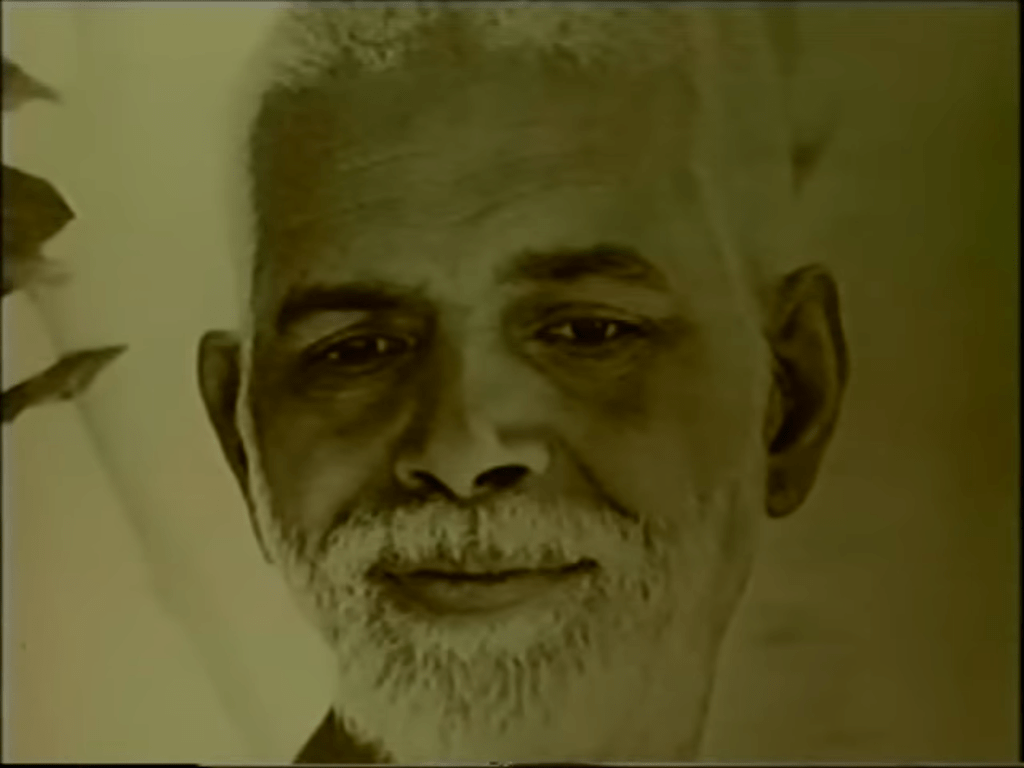
    Ramana Maharshi is one of the most revered spiritual teachers of the 20th century, known for his profound teachings on self-realization and non-duality. Born in 1879 in Tamil Nadu, India, he experienced a spontaneous awakening at the age of 16, during which he became acutely aware of the impermanence of the body and the eternal nature of the Self. Following this experience, he left his home and spent the rest of his life on the sacred mountain of Arunachala, where he became a guiding light for spiritual seekers from around the world.

    Ramana’s teachings are centered around the practice of Atma Vichara, or self-inquiry, which he considered the most direct path to realizing one’s true nature. Unlike other spiritual practices that involve rituals or external observances, Ramana emphasized turning inward to investigate the true nature of the ‘I’—the sense of individual self that we all experience.

    The Essence of Self-Inquiry

    Ramana Maharshi’s core teaching can be encapsulated in the question, “Who am I?” He taught that the sense of ‘I’ or ego, which we often associate with our thoughts, emotions, and bodily identity, is merely a superficial layer that veils our true Self, which is pure consciousness or awareness.

    The process of self-inquiry involves directing your attention inward, asking yourself where this sense of ‘I’ originates. Ramana explained that by persistently asking this question and observing the ‘I’ thought, one can trace it back to its source. This source is the true Self, the unchanging awareness that underlies all experience.

    If One Watches Whence the ‘I’ Arises

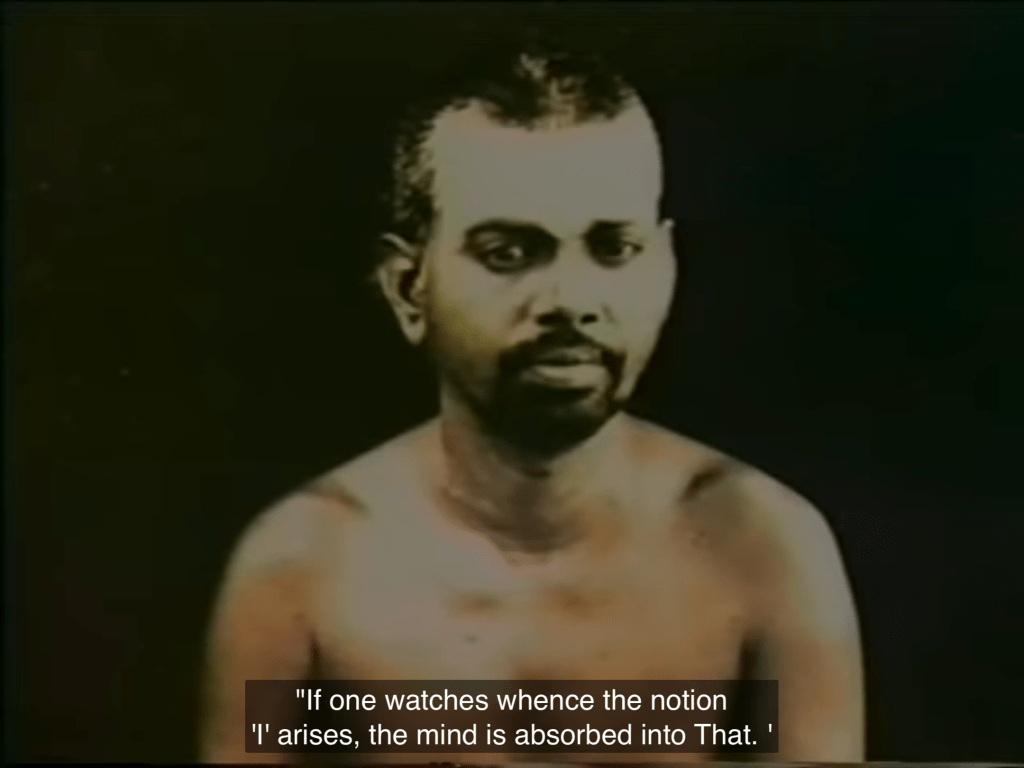
    In one of his teachings, Ramana Maharshi stated, “If one watches whence the notion ‘I’ arises, the mind is absorbed into That.” This teaching points to a subtle yet profound practice. The ‘I’ thought is the root of all mental activity and the sense of individuality. By turning attention to this root, rather than being entangled in the branches of thoughts and feelings, the mind can naturally dissolve into its source—pure awareness, which Ramana refers to as “That.”

    How to Practice Self-Inquiry

    If you find yourself puzzled by this teaching or struggle to sense “That” from which the ‘I’ arises, know that this is a common experience on the path of self-inquiry. The mind, accustomed to focusing outward, finds it challenging to turn inward and settle into stillness.

    Here’s how you can approach this practice:

    1. Sit Quietly: Begin by sitting quietly, with your eyes closed if that feels comfortable. Take a few deep breaths and allow your body and mind to relax.
    2. Turn Inward: Gently bring your attention to the sense of ‘I’. This ‘I’ could be a thought, a feeling, or simply the awareness that you exist.
    3. Ask the Question: Silently ask yourself, “Who am I?” or “Where does this ‘I’ arise from?” Don’t seek an intellectual answer. Instead, let the question be a pointer that guides your awareness inward.
    4. Observe: As you focus on the ‘I’, observe its nature. Does it have a shape, a location? Can you find its origin? Be curious, but not analytical.
    5. Rest in the Awareness: As you continue this enquiry, allow the mind to settle. If thoughts arise, simply notice them and gently bring your attention back to the feeling of ‘I’. Over time, the mind may begin to merge with the deeper awareness that is always present.

    Realizing the Self

    Through persistent practice, you may come to realize that the ‘I’ you have always identified with is not your true Self. The ‘I’ arises and dissolves in the vast expanse of pure awareness—‘That’ which Ramana Maharshi points to. This realization is not something to grasp intellectually, but a direct experience that brings about a profound inner peace and freedom.

    Ramana Maharshi’s teachings are a beacon for those seeking to transcend the ego and discover their true nature. The path of self-inquiry, though simple in its approach, can lead to the ultimate realization of the Self—the awareness that is ever-present, unchanging, and beyond all notions of individuality.

    🙏🕊️🙏

  • Poem: No Finish Line at the Finish Line

    We start the race with mind and heart aligned,
    To seek the truth that’s ever hard to find.
    The path is clear, the way seems oh so straight,
    Yet round and round we go—oh, twist of fate!

    We run through hills of thought and streams of dreams,
    The finish line, not quite as near, it seems.
    With every step, we feel the final call,
    But then we find there is no end at all.

    The race we thought would bring us to the goal,
    Is just the turning of the cosmic whole.
    For when we think we’ve reached the end of time,
    We simply find there is no finish line.

    The Self we seek is where we’ve always been,
    The heart, the start, and finish all within.
    In non-duality, the truth does shine—
    There’s no finish line at the finish line.

    🙏🕊️🙏

  • Ramayana No. 2: Ayodhya—The Unsubdued Kingdom Within

    Rama’s Exile and Our Spiritual Journey: Reclaiming the Pristine Mind


    As I sit with the first chapter of the Ramayana, I find myself drawn to the idea of Ayodhya—the city that cannot be subdued by war. This simple yet profound description speaks to something deeper, something within each of us that remains untouched by the chaos of the world.

    Ayodhya, the capital of King Dasharatha’s kingdom, is not just a physical city, but a symbol—a metaphor for the pristine mind, the true self that resides within us all. Just as Ayodhya stands strong against external threats, so too does our innermost self, the Atman, remain pure and invincible against the storms of life and the fluctuations of our mind.

    In the early pages of the Ramayana, we find ourselves in a kingdom of righteousness, where the people live in harmony under the guidance of a just king. It is a vision of what life can be when we are in tune with our true nature, when the mind is calm and clear, and the heart is aligned with the divine. Ayodhya, in this sense, is our inner sanctuary, a place of peace and stability, untouched by the turmoil of the external world and the inner conflicts of ego and desire.

    But as the story unfolds, we know that Rama, the hero of the epic, is exiled from this idyllic kingdom. He leaves Ayodhya, and with that, he leaves behind the safety and serenity of his home. This exile, I realize, is not just a physical journey, but a reflection of our own experience as we move from the innocence of childhood into the complexities of the world.

    We are all, in a way, exiled from our own Ayodhya. As we grow, we face the trials and tribulations of life, and our minds become cluttered with the noise of the world—the vrittis and pratyayas, the mental fluctuations and impressions that cloud our true nature. The ego begins to take shape, and we lose touch with that pristine mind, that inner Ayodhya where peace and purity reside.

    Rama’s battles during his exile are not just against external enemies, but against the forces that seek to pull him away from his true self. And so it is with us. The challenges we face in life—be they loss, betrayal, or the struggles within our own hearts—are the battles we must fight to reclaim our inner Ayodhya. These are the trials that, if met with courage and wisdom, can lead us back to the realization of who we truly are.

    In this way, the Ramayana is more than just a story; it is a map of the spiritual journey. It teaches us that the path to self-realization is not without struggle, but that each challenge is an opportunity to return to the pristine mind, to reclaim the peace and purity that are our true nature.

    As I read these early chapters, I find inspiration in this metaphor. Ayodhya is not just a city in an ancient epic; it is the capital of our inner kingdom, the seat of our soul, where the divine presence within us reigns. The journey of Rama is our journey—a journey of exile and return, of losing ourselves in the world only to find our way back to the heart of who we are.

    So, as we embark on this exploration of the Ramayana, let us keep in mind this deeper layer of the story. Let us see Ayodhya not just as a distant, mythical city, but as a reflection of our own pristine mind, untouched by the chaos of life. And let us approach each chapter not just as a narrative of ancient battles and heroic deeds, but as a guide to our own spiritual journey, where the ultimate victory is the realization of our true self.

    As we read the Ramayana, and reflect on Ayodhya, the unassailable kingdom within, we may find ourselves drawn to its promise of peace, purity, and unwavering truth. Though we may not yet dwell fully within this sacred space, the very knowledge of its existence and the awareness of its presence within us is a profound gift. To aspire to be a citizen of Ayodhya is to commit to the journey of self-realization, to seek the pristine mind that remains untouched by the world’s chaos and the fluctuations of the ego.

    Let us consider it a great fortune to even know of Ayodhya’s whereabouts, its possibility, and its promise. This awareness is the first step on the path toward reclaiming our true nature. Each day, with every thought, word, and action, we move closer to aligning with this unshakable core of our being.

    May this reflection, and each future post in this series, inspire you, dear reader, to continue on your own journey with a heart full of devotion, wisdom, and love, always keeping the inner Ayodhya in sight. Together, let us aspire to dwell in that place of peace, as we explore the depths of the Ramayana and the timeless wisdom it offers.

    🙏🕊️🙏

    You can find the edition of the Ramayana used in this series, written by Valmiki and translated by Suparna Ghosh, on Amazon here.

    🙏🕊️🙏

  • Harnessing the Power of Attention: Control and Influence

    Recognizing that attention shapes consciousness empowers us to take control of our mental and emotional states. By consciously directing our focus, we can manage stress, enhance our focus, and foster positive changes in our lives. This intentional use of attention can lead to profound personal growth and transformation.

    The Role of Attention in Shaping Experience

    1. Deliberate Focus:
    • Attention is a powerful tool that we can direct consciously. By choosing what to focus on, we influence our perceptions, thoughts, and feelings, shaping our overall experience.

    2. Empowerment Through Awareness:

    • Being aware of where our attention goes allows us to take charge of our mental landscape. This awareness empowers us to make deliberate choices about what we let into our consciousness.

    Managing Stress with Attention

    1. Reducing Cognitive Overload:
    • Stress often arises from cognitive overload, where too many thoughts and stimuli compete for our attention. By focusing on one thing at a time, we can reduce this overload and manage stress more effectively.

    2. Mindful Attention:

    • Mindfulness practices help us direct our attention to the present moment, reducing stress by preventing rumination on past events or worries about the future. This focused attention brings a sense of calm and balance.

    Enhancing Focus and Productivity

    1. Concentration Techniques:
    • Techniques such as time blocking, where we allocate specific periods for focused work, can enhance our productivity. By dedicating undivided attention to tasks, we can accomplish more in less time.

    2. Eliminating Distractions:

    • Reducing distractions in our environment, such as turning off notifications or creating a dedicated workspace, helps maintain focus. This practice allows us to direct our attention more effectively and achieve better results.

    Fostering Positive Change

    1. Positive Affirmations:
    • Using positive affirmations can help redirect our focus from negative self-talk to empowering thoughts. Repeating affirmations regularly can create new mental pathways that support a positive mindset.

    2. Engaging in Positive Activities:

    • Participating in activities that bring joy and fulfillment, such as hobbies, exercise, and spending time with loved ones, naturally draws our focus to positive experiences. These activities help balance our attention and enhance our well-being.

    Conclusion

    Harnessing the power of attention is key to managing stress, enhancing focus, and fostering positive changes. By consciously directing our focus, we can take control of our mental and emotional states, leading to personal growth and transformation. Recognizing the influence of attention empowers us to shape our consciousness deliberately, creating a more fulfilling and balanced life. Embrace the power of attention, and observe how it transforms your experience and enriches your journey.

    Below is the original source video of the lecture with Swami Parvajika Devyanandaprana, from which these blog posts were inspired. Here you can explore the insightful teachings that have profoundly shaped the content and perspectives shared in this blog.

    🙏🕊️🙏

  • Mindfulness and Presence: Anchoring Attention in the Moment

    Mindfulness is the practice of deliberately directing our attention to the present moment. This practice helps us become more aware of our thoughts, emotions, and sensations without being overwhelmed by them. By cultivating mindfulness, we can navigate our inner and outer worlds with greater clarity and purpose.

    The Essence of Mindfulness

    1. Present-Moment Awareness:
    • Mindfulness involves bringing our focus to the here and now. This practice helps us fully engage with our current experience, reducing the tendency to dwell on the past or worry about the future.

    2. Non-Judgmental Observation:

    • A key aspect of mindfulness is observing our thoughts and feelings without judgment. This attitude of acceptance allows us to see things as they are, fostering a sense of inner peace.

    Benefits of Mindfulness

    1. Enhanced Emotional Regulation:
    • Mindfulness helps us become more aware of our emotional responses. By observing our emotions without immediate reaction, we can manage them more effectively and respond to situations with greater composure.

    2. Improved Focus and Concentration:

    • Practicing mindfulness strengthens our ability to concentrate. By regularly bringing our attention back to the present moment, we train our minds to stay focused, which can enhance productivity and reduce distractions.

    3. Stress Reduction:

    • Mindfulness has been shown to reduce stress by promoting relaxation and helping us stay grounded in the present. This practice can lower levels of cortisol, the stress hormone, leading to improved physical and mental health.

    Practical Mindfulness Techniques

    1. Mindful Breathing:
    • Focusing on the breath is a simple yet powerful mindfulness practice. By paying attention to each inhalation and exhalation, we can anchor our awareness in the present moment and cultivate a sense of calm.

    2. Body Scan Meditation:

    • This practice involves directing attention to different parts of the body, observing sensations without judgment. A body scan can help release tension and promote relaxation.

    3. Mindful Walking:

    • Walking mindfully involves paying attention to the sensations of movement and the environment around us. This practice can be a grounding way to incorporate mindfulness into daily activities.

    4. Mindful Listening:

    • Engaging in mindful listening means fully focusing on the sounds around us or the person we are conversing with. This practice enhances our connection with others and deepens our experience of the present moment.

    Conclusion

    Mindfulness and presence are essential for anchoring our attention in the moment. By cultivating mindfulness, we can enhance our emotional regulation, focus, and overall well-being. This practice helps us navigate life with greater clarity and purpose, allowing us to experience each moment fully. Embrace the power of mindfulness, and observe how it transforms your consciousness and enriches your life.

    Below is the original source video of the lecture with Swami Parvajika Devyanandaprana, from which these blog posts were inspired. Here you can explore the insightful teachings that have profoundly shaped the content and perspectives shared in this blog.

    🙏🕊️🙏

  • Balancing Ego and Atman: A Path to Inner Harmony

    In the journey of personal growth and spiritual awakening, one of the most profound challenges we face is understanding the relationship between our ego and Atman. The ego, often seen as the source of our individual identity, is the part of us that interacts with the world, makes decisions, and defines who we think we are. Yet, beneath the surface, there exists a deeper, more authentic aspect of our being—what nondual traditions refer to as Atman.

    Balancing the demands of the ego with the wisdom of Atman is essential for living a life of greater peace, compassion, and fulfillment. In this post, we will explore how to recognize these different aspects of ourselves, the importance of integrating them, and practical steps to harmonize our inner experience.

    Understanding the Ego: A Necessary Part of the Self

    In nondual teachings, the ego is not seen as a false self but as a necessary aspect of our human experience. The ego helps us navigate the world, providing a sense of individuality, self-preservation, and the ability to make decisions. It shapes our identities and our interactions with others.

    However, challenges arise when the ego becomes the sole focus of our identity. When we overly identify with our ego, we may become trapped in patterns of fear, insecurity, and attachment. The ego’s natural desire for control and validation can lead to suffering, as we cling to external circumstances and outcomes for our sense of self-worth.

    By recognizing the ego as an important part of the self, rather than the whole, we can begin to balance it with the deeper wisdom of Atman, the true essence of who we are.

    Rediscovering Atman: The Source of Inner Wisdom

    When we are overly identified with the ego, it’s as though we are living in a trance, confined to a limited sense of self. This identification restricts our awareness, causing us to lose access to the greater resources that are always available to us. Atman, the true essence of our being, represents these untapped resources—the wisdom, peace, and compassion that reside within us.

    By loosening the grip of the ego, we begin to rediscover Atman. This process doesn’t involve rejecting the ego, but rather expanding our awareness to include the deeper layers of our consciousness. As we reconnect with Atman, we find that we are not isolated, limited beings, but part of a vast, interconnected reality. This realization allows us to navigate life with greater wisdom and resilience, drawing upon the innate qualities of Atman.

    Practices like mindfulness, meditation, and self-reflection can help us cultivate this awareness, gently shifting our focus from the narrow confines of the ego to the expansive wisdom of Atman, and ultimately, even beyond Atman. As the Heart Sutra reminds us, we move beyond, beyond, beyond—into the infinite.

    Conclusion: Beyond the Ego and Atman, Into the Infinite

    As we explore the balance between the ego and Atman, we begin to see that our true nature is expansive, infinite, and beyond all definitions. This journey of self-discovery is one of continual unfolding, where we move beyond the limitations of the ego, reconnect with the wisdom of Atman, and ultimately, transcend even that, embracing the boundless nature of existence.

    For a musical reflection on this theme, listen to Van Morrison’s “Into the Mystic,” a song that beautifully captures the spirit of this journey.

    Listen to “Into the Mystic” by Van Morrison

  • Navigating the Challenges of Life with Wisdom and Compassion: Integrating Spirituality and Psychology

    Life is filled with challenges—moments of suffering, uncertainty, and the quest for peace. In these times, we often seek wisdom and guidance, looking for ways to navigate the complexities of life with grace. By integrating the insights from both spirituality and psychology, we can find a balanced approach that not only helps us manage difficulties but also fosters personal growth and inner peace.

    Understanding the Ego in Spiritual and Psychological Contexts

    The ego is a central concept in both spiritual and psychological teachings, though it is understood differently in each context. Psychologically, the ego represents the center of our consciousness—the part of us that interacts with the world, makes decisions, and maintains our sense of individuality. Spiritually, particularly in non-dual traditions, the ego is seen as the sense of individual identity that can obscure our connection to the true self (Atman) and the universal self (Brahman).

    Recognizing that the ego is not the totality of who we are is a crucial step in managing life’s difficulties. When we see the ego as part of a larger, interconnected self, we begin to understand that our experiences, while real and often challenging, are not the whole story. This broader perspective allows us to approach life with greater wisdom and compassion.

    The Role of Wisdom and Compassion

    Wisdom and compassion are essential qualities that can guide us through life’s ups and downs. In spiritual traditions, wisdom often refers to the deep understanding of the nature of reality, including the impermanence of all things and the interconnectedness of life. Compassion, on the other hand, is the response to this understanding—a desire to alleviate suffering in ourselves and others.

    Psychologically, these qualities are equally important. Practices like self-compassion, as taught by Kristin Neff, and the Internal Family Systems (IFS) model, as taught by Dick Schwartz, encourage us to approach our inner parts with understanding and care, offering practical ways to cultivate these qualities in our daily lives.

    By integrating spiritual wisdom with psychological practices, we can create a more compassionate and balanced approach to life. This integration allows us to respond to challenges not from a place of fear or reactivity but from a place of understanding and kindness.

    Living in the Relative and Absolute Realities

    A key aspect of non-dual philosophy is the distinction between relative and absolute realities. The relative reality is the world of the ego, where we experience life’s challenges, emotions, and relationships. The absolute reality, however, is the realm of the true self—an unchanging, eternal essence that is one with all existence.

    Balancing these two realities can be challenging, but it is essential for reducing anxiety and suffering. When we are too focused on the relative reality, we may become overwhelmed by life’s difficulties. However, by cultivating an awareness of the absolute reality, we can bring a sense of peace and equanimity to our everyday experiences.

    Understanding that both realities coexist allows us to navigate life with a sense of grace. We recognize that while our ego may experience suffering, our true self remains untouched, providing a steady foundation of peace and wisdom.

    Practical Applications for Integrating Wisdom and Compassion

    To bring this understanding into daily life, here are some practical exercises that integrate spiritual and psychological approaches:

    1. Mindful Meditation: Begin with a simple meditation practice focused on the breath. As you breathe in and out, remind yourself that while your ego may experience stress or discomfort, your true self remains at peace. Allow this awareness to bring a sense of calm to your mind and body.
    2. Self-Compassion Practice: When facing a challenge, take a moment to practice self-compassion. Acknowledge the difficulty, recognize that suffering is a part of the human experience, and offer yourself kindness and understanding. This can help soften the ego’s reactivity and open up space for more compassionate responses.
    3. Reflective Journaling: Spend time journaling about your experiences, focusing on how you balance the relative and absolute realities in your life. Reflect on moments when you were caught up in the ego’s concerns and how reconnecting with your true self helped you find peace.
    4. Integrating the Shadow: Use Jung’s concept of shadow work to explore the parts of yourself that you may have repressed or denied. By bringing these aspects into the light of awareness, you can reduce their power over you and create a more balanced and integrated self.
    5. Living with Awareness: Throughout your day, practice living with awareness of both the relative and absolute realities. Notice when your ego is reacting to something, and gently remind yourself of the broader perspective. This practice helps you stay grounded in wisdom and compassion, even in challenging situations.

    Conclusion: Embracing the Whole Self

    Integrating spirituality and psychology offers a powerful approach to navigating life’s challenges. By balancing the ego’s experience of the world with the deeper understanding of the true self and universal self, we can move through life with greater peace and fulfillment. This journey is about embracing all aspects of the self—ego, true self, and universal self—and living in a way that reflects wisdom, compassion, and inner harmony.

    🙏🕊️🙏

  • Constructing Your Reality: The Influence of Focus

    Our conscious experience is not merely a passive reflection of the world around us; it is actively constructed by where we direct our attention. The elements we choose to focus on play a crucial role in shaping our perception of reality. Understanding this dynamic can help us create a more fulfilling and balanced life.

    The Nature of Constructed Reality

    1. Selective Attention:
    • Every moment, our brains filter vast amounts of information, prioritizing what seems most relevant. This selective attention allows us to concentrate on specific aspects of our environment, thoughts, or feelings, creating our conscious experience.

    2. Shaping Perception:

    • By focusing on certain elements, we construct our perception of reality. For instance, consistently noticing and appreciating beauty around us can make our world appear more pleasant. On the other hand, focusing on problems and challenges can make life seem more daunting.

    Positive Construction and Well-Being

    1. Building a Positive Perception:
    • Focusing on positive elements, such as acts of kindness, moments of joy, and personal achievements, can foster a sense of well-being. This practice enhances our mood and contributes to a more optimistic outlook on life.

    2. Creating Resilience:

    • A positive focus helps us see opportunities and strengths in ourselves and others. This perspective builds resilience, enabling us to handle life’s challenges more effectively and bounce back from setbacks.

    Negative Construction and Its Consequences

    1. Clouding Our Perspective:
    • If our attention is dominated by negative aspects like worries, failures, or fears, our outlook becomes clouded. This negative focus can lead to increased stress, anxiety, and a pessimistic view of life.

    2. Breaking the Cycle:

    • Dwelling on negative thoughts creates a vicious cycle. The more we focus on negativity, the more entrenched it becomes, making it harder to shift our attention to positive aspects. Breaking this cycle requires conscious effort and mindfulness.

    Strategies for Positive Construction

    1. Mindfulness Practices:
    • Mindfulness helps train the mind to stay present and focus on positive aspects. Regular mindfulness practice can increase our awareness of thought patterns and enable us to choose where to direct our attention more effectively.

    2. Gratitude Journaling:

    • Writing down things we’re grateful for each day reinforces our focus on positive aspects of life. This practice helps nurture a sense of appreciation and contentment, gradually shifting our overall outlook.

    3. Positive Affirmations:

    • Using positive affirmations can help redirect our focus from negative self-talk to empowering thoughts. Repeating affirmations regularly can create new mental pathways that support a positive mindset.

    4. Engaging in Joyful Activities:

    • Participating in activities that bring joy and fulfillment, such as hobbies, exercise, and spending time with loved ones, naturally draws our focus to positive experiences. These activities help balance our attention and enhance our well-being.

    Conclusion

    The influence of focus in constructing reality is profound. By consciously directing our attention, we can shape our perceptions, emotions, and reactions, leading to a more positive and fulfilling life. Recognizing the impact of focus empowers us to make deliberate choices about where to direct our attention, ultimately shaping our experience of reality. Embrace the practice of positive construction, and observe how it transforms your consciousness and enhances your well-being.

    Below is the original source video of the lecture with Swami Parvajika Devyanandaprana, from which these blog posts were inspired. Here you can explore the insightful teachings that have profoundly shaped the content and perspectives shared in this blog.

    🙏🕊️🙏