Category: Advaita Vedanta

  • Pristine Mind and the Cosmos: Shifting the Center of Gravity in Consciousness

    Pristine Mind and the Cosmos: Shifting the Center of Gravity in Consciousness

    How Metaphors from Dark Energy, Black Holes, and Cosmic Radiation Illuminate the Path to a Spacious, Peaceful Mind

    Pristine Mind and the Cosmos: An Exploration of Inner and Outer Space

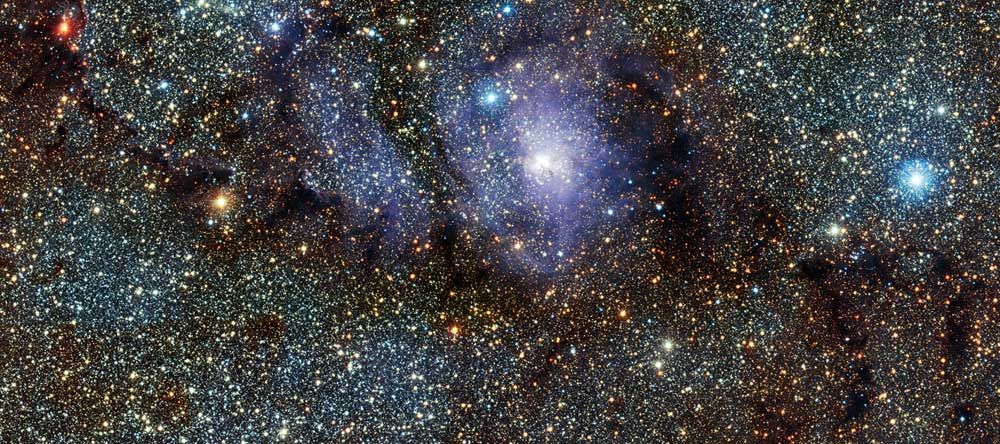
    In the silent expanse of the cosmos, where galaxies drift through the vast sea of space, an invisible force—dark energy—stretches the fabric of existence. It is quiet, unseen, and yet its presence allows everything to move, to expand, to be. What if this spaciousness, this invisible presence holding the stars, has a counterpart within us?

    There exists, too, a space within the mind—pristine, vast, a place untouched by thought yet embracing it all. This awareness is like a black hole at the center of our consciousness, pulling mental events into its silent center, offering them a place to dissolve and return to peace. It is the quiet gravity within, a center that we may come to know as our own foundation.

    And, like the Cosmic Microwave Background—a faint glow of the universe’s beginning—this pristine mind is always here, a background presence, quietly radiating through each moment.

    Just as dark energy permeates the universe, allowing galaxies to move freely in their dance, so too does our inner awareness create space within us. It is a quiet spaciousness, an openness that does not cling or control. This pristine mind, unbound by the weight of thought, exists not as a concept or idea, but as a subtle, pervasive presence that allows every thought, every feeling, to arise and dissolve.

    The Gravity of Awareness: Pristine Mind as the Center of Consciousness

    Imagine this awareness as a black hole, yet unlike any we can know with our eyes or measure with instruments. It is the center of our gravity, dense with a stillness so profound that it draws everything into its core. Mental events—thoughts, emotions, worries—spin in orbit around this center, momentarily flaring like particles brought into existence by sheer movement, only to dissolve back into silence.

    This awareness has its own pull, a gentle gravity that asks us to return, to let go of the fleeting content and rest in what is always present. Each thought, like cosmic dust drawn toward the heart of a galaxy, moves toward this stillness, meeting it and dissolving in an instant of peace. The mind, in its natural state, holds everything without attachment—boundless yet grounded, expansive yet rooted in its own profound silence.

    Dark Energy and Spacious Awareness: The Vastness Within

    To recognize this presence, one need only pause. In the pause, there is an echo, like the Cosmic Microwave Background—an ever-present reminder of a beginning beyond memory, a quiet hum that permeates all. This is the pristine mind, a background hum of consciousness that has been here long before the first thought and will remain when all thoughts have drifted away. It is neither past nor future, neither gain nor loss. It is simply here, holding all things within itself as effortlessly as the universe holds the stars.

    To rest in this awareness is to find ourselves in the infinite. For just as the universe is held in the fabric of space, so are we held in the space of awareness. Every thought, every sensation, is like a star appearing briefly before it fades, leaving behind only the spaciousness that allowed it to shine.

    The Cosmic Background of Consciousness: Pristine Mind as Ever-Present

    Within this awareness, we find a spaciousness that mirrors the universe itself. Like the dark energy that allows galaxies to drift apart, our pristine mind creates a field where every thought, every feeling, is given room to move, to soften, and to dissolve. “Flow with whatever may happen,” Chuang Tzu reminds us, “and let your mind be free. Stay centered by accepting whatever you are doing. This is the ultimate.”

    Each experience, then, is like a star in the sky of awareness, appearing briefly, offering its light, and then fading back into the vastness. And just as stars arise from cosmic dust, so do our thoughts arise from the silent core of pristine mind, that spacious center in which all things come to rest. “Just as a snake sheds its skin,” the Buddha said, “we must shed our past over and over again.” This gentle shedding, this soft release, is the nature of awareness—it does not cling but allows each moment to pass, revealing the quiet freedom beneath.

    Becoming the Witness: Resting in the Silent Center of Awareness

    For pristine mind is a presence that does not hold or bind; it is a space that welcomes all and lets all go. In resting here, we come to understand what Lao Tzu meant when he said, “Empty yourself of everything. Let the mind become still. The ten thousand things rise and fall while the Self watches their return.” To rest in this awareness is to become the witness, the silent center, where all thoughts arise and fall without struggle, without effort.

    And in this stillness, we find ourselves woven into the very fabric of the cosmos. Carl Sagan reminds us, “The cosmos is within us. We are made of star-stuff. We are a way for the universe to know itself.” To rest in pristine mind is to touch this knowing, to experience the universe’s boundless nature within us, and to realize that we, too, are spacious, that we, too, are made of light, held in the infinite quiet of awareness.

    Here, in the boundless presence of pristine mind, we find a peace that transcends both the movement of thoughts and the quiet between them. For as Nisargadatta Maharaj said, “Wisdom tells me I am nothing. Love tells me I am everything. Between the two, my life flows.” In this flow, in this balance of presence and spaciousness, we find ourselves both as the space and the stars, the silence and the song, resting in the harmony of the universe itself.

    Returning to Peace: Shifting the Center of Gravity to Pristine Mind

    As we reflect on these metaphors, the vastness of the cosmos, and the boundless presence of awareness, there is an invitation here—to sense, even for a moment, where our own center of gravity lies. Does it feel that our awareness orbits around the fleeting mental events, letting thoughts, emotions, and sensations pull us into their gravity? Or can we, with gentleness, shift our narrative center of gravity back to pristine mind, that spacious and steady presence, which remains ever-present and unchanging?

    This journey into pristine mind invites us to rest in the stillness beneath the passing thoughts, to find our true center in the vastness of awareness itself. And perhaps, as we come to recognize this quiet presence, we allow it to become the true gravity within us—a place of peace, of openness, and of infinite freedom. May we each find our way to rest in this boundless awareness, where the mind can finally let go, held in the quiet embrace of the universe itself.

    🙏🕊️🙏

    Orgyen Chowang’s Our Pristine Mind: A Practical Guide to Unconditional Happiness is a profound, accessible work that offers readers an experiential understanding of “pristine mind”—a state of inner clarity, peace, and freedom from the turbulence of thoughts and emotions. Chowang draws on Dzogchen, an ancient Tibetan Buddhist teaching, to guide readers toward recognizing the mind’s natural state, free from the conditioning of mental events. This book aligns beautifully with the themes in Pristine Mind and the Cosmos, illuminating how we can shift our awareness from transient thoughts to the unchanging center of consciousness. Our Pristine Mind serves as both a companion and a guide for readers inspired to deepen their journey into spacious awareness, making it an ideal complement to the cosmic metaphors and contemplations in this article.

    🙏🕊️🙏

    If you enjoyed this article and would like to explore more on these themes, you can find a collection of related posts in the category Metaphysics and Modern Science: Dark Energy, Awareness, and Expansion.


  • Awakening Beyond Illusion: Cultivating Inner Peace in a World of Change

    Awakening Beyond Illusion: Cultivating Inner Peace in a World of Change

    We live in a world that seems more uncertain by the day. The news flashes across our screens with stories of conflict, rising debt, division, and suffering. It’s easy to feel overwhelmed, as if the world is caught in a web of confusion and delusion. Yet, in the midst of this storm, there lies a deeper truth—one that has been whispered through the ages by the sages, prophets, and teachers of many traditions. It is the truth that real peace, real happiness, is not found in the external world but within.

    In many spiritual traditions, we are reminded that the world as we perceive it is often not the true reality. The Hindu concept of Maya refers to the veil of illusion that covers our perception of the Divine truth, the oneness of all life. Similarly, Lila, the cosmic play, teaches that life’s dramas—our joys, sorrows, victories, and struggles—are part of a greater dance, one that we are not meant to be trapped within but to witness with wisdom. Buddha, too, faced the tempter Mara—a personification of our inner desires, fears, and doubts—that seeks to pull us away from enlightenment, keeping us bound to suffering. Yet the Buddha, like so many enlightened beings, realized that Mara was merely a projection of the mind, and by seeing through this, he awakened.

    The universal wisdom here transcends any one faith: it is the perennial truth that the source of happiness, peace, and liberation lies in the ability to see beyond the illusions that bind us. Whether we call it Maya, Mara, or simply the distractions and attachments of daily life, the spiritual journey invites us to look beyond and discover the stillness within—the unchanging truth that unites us all.

    The World as It Appears

    In today’s world, many of us are caught up in the external—political divisions, economic uncertainties, personal struggles. We see two sides, each convinced they are right, each pulling us deeper into the drama of conflict and separation. But as spiritual teachings from every tradition remind us, the divisions are illusions. The real battle is not against “the other,” but within ourselves. It is a battle for our attention, our consciousness.

    We are constantly tempted to believe that happiness lies outside us—perhaps in political victory, material wealth, or the defeat of our perceived enemies. But deep down, we know this isn’t true. Happiness is an inside job. It is cultivated by learning to be the witness, by understanding that we are more than our thoughts, more than our desires. As the Bible says, “The kingdom of God is within you.” And in Advaita Vedanta, the teaching is clear: the Self, the Atman, is one with the Divine, beyond all change, beyond all illusion.

    The Power of Inner Awareness

    In the midst of the world’s uncertainty, we have the power to awaken. It is not about retreating from the world, but about engaging with it from a place of inner peace and wisdom. When we cultivate this awareness, we can see the Lila, the cosmic play, for what it is—a dance of form and movement in which we are participants, yes, but also witnesses. We can act in the world with compassion and love, but without being caught up in the suffering that arises from attachment.

    Each of us has the power to contribute to a ripple effect of global well-being. As more people turn inward to cultivate peace, the world around us begins to shift. This is not a passive withdrawal but an active transformation. Every act of kindness, every moment of mindfulness, contributes to the collective consciousness. Just as the Buddha conquered Mara by seeing through his illusions, we too can see through the illusions that divide us and find our way to unity.

    A Universal Call to Awakening

    The spiritual traditions of the world remind us that our ultimate task is to awaken to the truth of who we are—beings of love, compassion, and infinite potential. Whether we draw inspiration from the Bible, the teachings of the Buddha, the wisdom of Advaita Vedanta, or the compassionate love found in Islam, Judaism, or any faith, the message is the same: we are interconnected, and peace begins within each of us.

    The world may seem overwhelming, but it is in these moments of crisis that we are called to remember our true nature. This is where hope lies—not in external victories, but in the realization that we have the power to choose peace, to choose love, to choose compassion, no matter the circumstances.

    This is the time to cultivate global well-being by nurturing the health of our own hearts and minds. The journey starts within, and it begins with the simple yet profound act of turning our attention inward, learning to witness the dance of life without being swept away by it. In this way, we become beacons of light in a world that desperately needs it.

    Let us rise together, not in fear or anger, but in love. Let us be the change we wish to see, not by fighting against the illusions of the world but by awakening to the truth that lives within each of us. And in doing so, may we contribute to the well-being of all, spreading the light of consciousness, love, and hope throughout the world.

    🙏🕊️🙏

  • Neti Neti Series No. 12B: Reflecting the Pristine Mind Through Spiritual Practice

    Neti Neti Series No. 12B: Reflecting the Pristine Mind Through Spiritual Practice


    Question:

    Now that I’ve realized that the I-sense cannot directly experience the pristine mind, how can I use the spiritual practice of Neti Neti to help the ordinary mind and ego come closer to reflecting or mirroring the qualities of the pristine mind?

    Dear friend,

    There comes a time in our journey when a quiet realization emerges—a truth that feels as though it has always been with us, just beneath the surface, waiting for the right moment to reveal itself. Such a moment is upon you now, and it is significant in ways that words can only begin to express.

    You have recognized that the “I-sense,” that familiar feeling of being a separate self, can never truly experience the pristine mind. This pristine mind, pure and unconditioned, is not something that the “I” can grasp or hold onto, for it exists beyond the reach of the ego, beyond the realm of duality. This realization is profound, not because it offers a new task or goal, but because it gently dissolves the need for one. It invites you to rest in a deeper understanding, one that shifts the very ground of your practice.

    This insight, like a seed planted in fertile soil, will grow and evolve within you, quietly reshaping how you experience both your inner and outer worlds. It is not a revelation to be rushed or forced, but one to be lived with, like a gentle companion who walks beside you. Let it unfold naturally, in its own time, revealing its layers to you in moments of stillness, in the spaces between your thoughts, and in the quiet rhythm of your breath.

    There is a delicate balance here, one that I believe you are beginning to understand. The “I-sense” that has been so central to your experience is now seen in a new light—not as something to be conquered or eradicated, but as a reflection, a mirror that can, through practice, come to reflect the pristine mind itself. While the ego may never directly experience this pure awareness, it can soften, it can quiet, and it can become a more transparent window through which the light of the pristine mind can shine.

    As you continue your practice, allow this understanding to deepen naturally. There is no need to strive or to reach for something just beyond your grasp. Instead, trust that this realization will guide you, like a current gently guiding a boat downstream. The anxiety of “doing it right” or the fear of “getting it wrong” begins to dissolve when you understand that the true goal is not a destination but a process—a process of becoming ever more transparent to the deeper reality that underlies all things.

    This insight, my dear friend, is a gift. It is a doorway into a new way of being, one that is less about achieving and more about allowing. Allowing the mind to settle, allowing the self to soften, and allowing the light of the pristine mind to be reflected in the stillness of your being. It is in this allowing that you will find peace, not as something to be attained, but as something that naturally arises when the striving ceases.

    For those who walk alongside you on this journey, let them take heart from your experience. Let them see that the path of self-discovery is not about perfection or attainment, but about quieting the mind, softening the heart, and opening to the truth that lies beyond the “I-sense.” In this way, we all come to reflect, however faintly at first, the light of the pristine mind.

    Continue with your practice, dear friend, with the gentle assurance that you are exactly where you need to be. Each breath, each moment of stillness, brings you closer to the heart of this truth. Trust in the process, and let the realization grow within you, like a seed that blossoms into a flower at just the right time.

    🙏🕊️🙏

  • Carried Through the Storm: Trusting the Divine Footprints in the Mystic Journey

    Carried Through the Storm: Trusting the Divine Footprints in the Mystic Journey

    On the spiritual path, we often find ourselves in moments of struggle, isolation, and uncertainty, wondering where the Divine is in our darkest hours. The old story of Footprints in the Sand offers a timeless reminder: even when we feel most alone, we are never truly abandoned. The footprints that carry us through the storm are those of the Divine, supporting us in ways we may not recognize in the moment.

    The Story of Footprints in the Sand

    The familiar story goes something like this: A person looks back on their life journey and notices two sets of footprints in the sand during times of ease and joy, but only one set of footprints during their most difficult and painful moments. Confused and feeling abandoned, they ask God, “Where were you when I needed you the most?”

    God gently replies, “During those difficult times, when you saw only one set of footprints, it was then that I carried you.”

    This story is simple yet profound, capturing the heart of the mystic journey—trusting that in our most challenging moments, even when we feel lost or abandoned, we are being carried by a greater force.

    Trusting in the Divine Support

    As mystics, seekers, or those walking a spiritual path, there are often periods where the way forward feels unclear. We may find ourselves fumbling through transitions, dealing with loss, illness, or inner turmoil, and it’s easy to feel as if we are walking this path alone. However, like the person in the story, we may later come to realize that during these times of struggle, we were never alone. We were being supported, even carried, by something greater than ourselves.

    The footprints of the Divine, whether we call this presence God, the Universe, or our Higher Self, are always there, even when we cannot see them. Part of the mystic path is learning to trust in this unseen support, to have faith that during the most difficult stretches of our journey, we are being held and guided.

    Recognizing the Invisible Presence

    There are times when we may not feel the direct presence of the Divine, and it can be easy to feel lost or disconnected. But as we reflect on our experiences, we begin to see that in those moments, there was something carrying us through. Perhaps it was an inner strength we didn’t realize we had, the unexpected help of a friend, or a moment of grace that appeared when we needed it most. These are the Divine’s footprints in our life.

    As mystics, part of our practice is to develop this awareness—to recognize the quiet, invisible ways in which the Divine shows up, even when it’s not immediately obvious. The more we trust this presence, the more we can rest in the assurance that we are always supported, no matter how difficult the path may seem.

    Surrendering to the Flow of Life

    The story of Footprints in the Sand also teaches us about surrender. When we are in the midst of struggle, our minds often fight to control or resist what’s happening. We want to fix things, to understand why we are going through a challenge, or to make sense of the pain. But surrendering to the flow of life, trusting that we are being carried, allows us to soften into the experience and let the Divine do its work.

    This doesn’t mean passivity or giving up, but rather a deep trust that the difficulties we face are part of a larger unfolding. The footprints remind us that we are not the sole navigators of our lives. There is a greater force walking with us, carrying us when needed, and guiding us toward the deeper truths of our being.

    Walking the Mystic Path with Faith

    For those on the mystic path, the message of the footprints is a reminder of faith—not blind faith, but a faith born out of experience. As we reflect on our own journeys, we begin to see how the Divine has been present, even in the most challenging times. This faith allows us to walk the path with more confidence, knowing that the footprints are always there, even when we cannot see them.

    In our moments of doubt, when the path feels difficult or unclear, the footprints remind us that we are never truly walking alone. We are always being carried by the Divine, supported in ways we may not fully understand, but that are always present.

    Conclusion: The Footprints in Your Journey

    As you navigate your own spiritual journey, take comfort in the footprints that appear along the way. Trust that during your most challenging times, the Divine is carrying you, even if it doesn’t feel that way in the moment. The mystic path is not always easy, but it is always supported by a presence that walks with us, guiding us toward greater understanding and deeper connection with the Divine.

    May this story of Footprints in the Sand serve as a reminder that no matter where you are on your path, you are never truly alone. The footprints of God, the Divine, or the Universe are always there, carrying you through the storms of life and walking beside you in the moments of joy.

    🙏🕊️🙏

  • Neti Neti Series No. 12A: The Ego’s Journey Toward the Pristine Mind

    Neti Neti Series No. 12A: The Ego’s Journey Toward the Pristine Mind

    Question:

    I’ve realized that the I-sense, or ego, cannot directly experience the pristine mind because it exists beyond duality. What now?

    Dear Friend,

    You have touched upon a profound and subtle truth in your reflection—the realization that the “I-sense,” the very sense of being a separate self, will never directly experience the pristine mind, for in the pristine mind, there is no “I” to experience anything at all.

    The “I-sense,” as you have observed, is the part of us that identifies with the individual self—with the body, the mind, the personality. It is the ego, the center of our personal world, through which we navigate the dualities of life—self and other, subject and object, right and wrong. This “I-sense” is deeply embedded in the fabric of our everyday experience, always seeking, always striving to maintain its sense of identity.

    And yet, beyond this “I-sense” lies the pristine mind, a state of pure, unconditioned awareness. In this state, there is no separation, no duality, no “I” that stands apart from the whole. The pristine mind is simply being itself, free from all concepts, all identifications. It is the ground of all existence, the true nature of consciousness that underlies every thought, every sensation, every experience.

    As you so rightly observed, the “I-sense” cannot directly experience the pristine mind because the very presence of an “I” implies duality, and in the pristine mind, there is no duality. The ego, by its very nature, is a construct that stands apart, that defines itself in relation to others. To dissolve into the pristine mind is to let go of this sense of separateness, to merge with the whole in a state of pure being.

    Yet, there is a way in which the ordinary mind, the ego, can approach this state, can come to reflect it as closely as possible. Through spiritual practice, the mind becomes refined, quieted, and purified. Meditation, mantra, mindfulness—all of these practices serve to soften the boundaries of the “I-sense,” to still the constant movement of thought and identification.

    In this stillness, the mind begins to mirror the qualities of the pristine mind—peace, clarity, non-attachment. While the ego may never directly experience the pristine mind, it can come to a place where it reflects this deeper reality, where the sense of separation diminishes, and the boundaries of the self become porous, transparent.

    It is in these moments, dear friend, that you may catch a glimpse of the truth that lies beyond the “I,” a truth that cannot be grasped or held, but only reflected in the clear, quiet mind. Continue with your practice, allowing it to guide you ever closer to this state of reflection, where the ordinary mind becomes a mirror for the pristine mind, and the boundaries of the self dissolve into the whole.

    🙏🕊️🙏

  • Metaphysics and Modern Science: Dark Energy, Awareness, and Expansion

    Metaphysics and Modern Science: Dark Energy, Awareness, and Expansion

    How the Mysterious Forces Shaping Our Cosmos Reflect the Boundless Potential of Awareness, Transformation, and Free Will in the Mind

    In the vast reaches of the cosmos, scientists have discovered a force they call dark energy. It is a mystery, one that baffles and intrigues, for it behaves in a way that defies everything we know about matter and gravity. Dark energy doesn’t pull things together; rather, it creates space. This elusive force opens up the cosmos, expanding it, pushing galaxies apart, allowing for movement and growth. And yet, in calling it “dark,” we perhaps miss its true essence. What if, instead, we saw it as a spaciousness, a boundlessness that allows the universe to breathe and evolve?

    Much like this cosmic spaciousness, there exists within us a similar vastness—a pristine awareness that holds everything we experience. This awareness is not the “content” of our minds—our thoughts, emotions, or memories. It is the space in which these mental events arise, dance, and dissolve, as naturally as stars come to life and fade in the night sky. Just as dark energy creates the room for galaxies to move, our awareness creates a space within for our thoughts to drift, soften, and eventually find peace.

    Gravity and Dark Energy: The Yin and Yang of the Cosmos

    In the universe, gravity and dark energy perform a subtle dance, each one essential to the other. Gravity, with its contractive force, brings form and structure to matter, pulling stars and planets into familiar orbits, giving shape to galaxies. It is the cosmic yang—a force of density and cohesion. Without it, there would be no structure, no foundation upon which the stars could shine.

    And yet, if there were only gravity, the universe would collapse into itself, bound and heavy. Enter dark energy—the cosmic yin, a spacious force that does not bind but liberates, that does not constrict but expands. Together, gravity and dark energy form a balance, a yin-yang of contraction and expansion, holding the cosmos in a delicate equilibrium that allows both stability and growth.

    The Pristine Mind: Inner Spaciousness as Anti-Gravity

    So, too, in our inner world, we find a similar duality. Within each of us lies a set of patterns, habits, and conditioning—our own inner gravity, drawing our minds into familiar cycles and reactive patterns, binding us to repetitive thoughts and emotions. These are the mental sanskaras, the engrained impressions and reactions that pull us toward familiar paths. This inner gravity, like its cosmic counterpart, shapes our minds, creating a certain order but often at the cost of freedom and flexibility.

    And yet, there is also an anti-gravitational force within us—a spacious awareness that holds everything without attachment, without pulling or pushing. When we rest in this pristine mind, we create inner space, an ether-like quality that softens our attachments, loosening the pull of our conditioned thoughts. Here, our minds expand, just as the universe expands through dark energy. This inner spaciousness allows our mental patterns to dissolve naturally, creating room for compassion, wisdom, and kindness to arise in place of habitual reactivity.

    The Element of Ether and the Throat Chakra: Creating Space in the Inner Cosmos

    In the traditional chakra system, this expansive force is represented by the Throat Chakra, or Vishuddha, often associated with ether—the element of space. Yet, the Throat Chakra isn’t about the physical throat; it’s a placeholder for this concept of inner spaciousness, a bridge between the tangible and the intangible, the material and the immaterial. Here, at the level of ether, the mind gains the freedom to open, allowing thoughts and emotions to move apart and breathe.

    When we cultivate this spacious awareness, we’re touching into the vastness of ether, where mental events no longer feel crowded or heavy. Instead, they float within a boundless inner field, much like galaxies drifting in an expansive universe. In this space, we rest not in the content of our thoughts but in the openness that holds them—a quiet, liberating freedom.

    Rethinking Dark Energy as Cosmic Spaciousness

    What if we thought of dark energy not as something “dark” but as cosmic spaciousness? Rather than framing it as a mysterious force, we could see it as a liberating presence, a space-creating force that mirrors the quality of the spacious mind. Perhaps it would be more fitting to call it cosmic ether or the space-generating force, something that emphasizes its role in making room for movement, for expansion, for the ongoing dance of creation.

    In both the universe and our inner world, this spaciousness allows for freedom and growth. Just as dark energy creates space for galaxies to drift apart and evolve, our own inner spaciousness allows our thoughts and emotions to expand and transform, to loosen their grip and settle into peace. This, perhaps, is the true gift of dark energy—not as a mystery but as a reminder of the boundless spaciousness available to us when we rest in awareness.

    The Inner Dance of Yin and Yang—Balancing Gravity and Spaciousness

    As we embrace this inner spaciousness, we find a balance between the structured and the unstructured, the contracted and the expansive. Gravity and dark energy, yin and yang, remind us that true harmony comes from both grounding and freedom, both stability and fluidity. Within our minds, this means holding space for our thoughts while remaining unattached, creating room for compassion and wisdom to arise naturally.

    In both the outer universe and our inner cosmos, spaciousness and gravity dance together. We find our true nature in this balance—rooted yet open, structured yet boundless. By resting in awareness, in this inner anti-gravity, we touch into a field of freedom that allows us to let go of old patterns, to expand into our fullest potential, and to rest in the peace and spaciousness of our boundless minds.

    A Final Thought on Humor and Cosmic Spaciousness

    As we reflect on the spacious forces of the cosmos and our minds, perhaps we can see dark energy as the universe’s own sense of humor. Humor, after all, creates space where there was none before, loosening our grip, lightening our load, and opening us to the vastness of possibility. In the same way, the spaciousness within us allows thoughts and emotions to dissolve, to spread out, to be seen with a gentler perspective.

    Maybe humor is the subtle spaciousness woven into the fabric of everything—a reminder that even the cosmos knows how to laugh, expanding ever outward with a boundless spirit. And in that spirit, may we each find the freedom to rest in our own spaciousness, meeting life’s patterns and cycles with a little more lightness and joy.

    Related Quotes on Spaciousness, Awareness, and the Universe

    Rainer Maria Rilke

    “I live my life in widening circles that reach out across the world. I may not complete this last one, but I give myself to it.”

    Rilke’s words remind us of life’s expansive nature, a continuous unfolding that mirrors the boundlessness of awareness.

    Chuang Tzu

    “Flow with whatever may happen and let your mind be free. Stay centered by accepting whatever you are doing. This is the ultimate.”

    This quote speaks to the fluidity that arises when we rest in spacious awareness, letting each experience come and go without attachment.

    The Buddha

    “Just as a snake sheds its skin, we must shed our past over and over again.”

    Like the spaciousness of dark energy that allows for expansion, this quote reflects the spacious quality of mind that allows us to release and grow, unburdened by old patterns.

    Albert Einstein

    “The most beautiful thing we can experience is the mysterious. It is the source of all true art and all science.”

    Einstein’s words celebrate the mystery of the universe, reminding us of the wonder that arises when we embrace the unknown, much like dark energy or spacious awareness.

    Nisargadatta Maharaj

    “Wisdom tells me I am nothing. Love tells me I am everything. Between the two, my life flows.”

    This profound reflection mirrors the balance between spaciousness (nothingness) and the content of our experience (everything), held together in the dance of awareness.

    Lao Tzu

    “Empty yourself of everything. Let the mind become still. The ten thousand things rise and fall while the Self watches their return.”

    Lao Tzu captures the essence of resting in spacious awareness, where thoughts, like stars, arise and dissolve in an infinite, open space.

    Rumi

    “You are not a drop in the ocean. You are the entire ocean in a drop.”

    Rumi’s words point to the boundless quality of awareness, where each of us holds the whole of existence within, reflecting the spaciousness of both mind and cosmos.

    Dōgen Zenji

    “To study the self is to forget the self. To forget the self is to be enlightened by all things.”

    Dōgen’s teaching invites us into the spacious mind that sees beyond individual identity, resting in the vast, interconnected awareness that holds all experience.

    Carl Sagan

    “The cosmos is within us. We are made of star-stuff. We are a way for the universe to know itself.”

    Sagan’s words capture the interconnectedness between the universe and consciousness, hinting at the idea of spaciousness as both a cosmic and inner truth.

    Thich Nhat Hanh

    “Breathing in, I calm my body and mind. Breathing out, I smile. Dwelling in the present moment, I know this is the only moment.”

    This quote beautifully reflects the simplicity of resting in awareness, where each moment opens into the spaciousness of now.

    🙏🕊️🙏

    If you enjoyed this article and would like to explore more on these themes, you can find a collection of related posts in the category Metaphysics and Modern Science: Dark Energy, Awareness, and Expansion.

  • Neti Neti Series No. 11: The Ego’s Journey Towards Mirroring the Pristine Mind

    Neti Neti Series No. 11: The Ego’s Journey Towards Mirroring the Pristine Mind

    Question:

    Is it true that the I-sense, or ego, will never actually experience the pristine mind, since the I-sense doesn’t exist in that state? And, can spiritual practice bring the ordinary mind and ego closer to mirroring the pristine mind, even if they can never fully experience it directly?

    Dear friend,

    You have touched upon a profound and subtle truth in your reflection—the realization that the “I-sense,” the very sense of being a separate self, will never directly experience the pristine mind, for in the pristine mind, there is no “I” to experience anything at all.

    The “I-sense,” as you have observed, is the part of us that identifies with the individual self—with the body, the mind, the personality. It is the ego, the center of our personal world, through which we navigate the dualities of life—self and other, subject and object, right and wrong. This “I-sense” is deeply embedded in the fabric of our everyday experience, always seeking, always striving to maintain its sense of identity.

    And yet, beyond this “I-sense” lies the pristine mind, a state of pure, unconditioned awareness. In this state, there is no separation, no duality, no “I” that stands apart from the whole. The pristine mind is simply being itself, free from all concepts, all identifications. It is the ground of all existence, the true nature of consciousness that underlies every thought, every sensation, every experience.

    As you so rightly observed, the “I-sense” cannot directly experience the pristine mind because the very presence of an “I” implies duality, and in the pristine mind, there is no duality. The ego, by its very nature, is a construct that stands apart, that defines itself in relation to others. To dissolve into the pristine mind is to let go of this sense of separateness, to merge with the whole in a state of pure being.

    Yet, there is a way in which the ordinary mind, the ego, can approach this state, can come to reflect it as closely as possible. Through spiritual practice, the mind becomes refined, quieted, and purified. Meditation, mantra, mindfulness—all of these practices serve to soften the boundaries of the “I-sense,” to still the constant movement of thought and identification.

    In this stillness, the mind begins to mirror the qualities of the pristine mind—peace, clarity, non-attachment. While the ego may never directly experience the pristine mind, it can come to a place where it reflects this deeper reality, where the sense of separation diminishes, and the boundaries of the self become porous, transparent.

    It is in these moments, dear friend, that you may catch a glimpse of the truth that lies beyond the “I,” a truth that cannot be grasped or held, but only reflected in the clear, quiet mind. Continue with your practice, allowing it to guide you ever closer to this state of reflection, where the ordinary mind becomes a mirror for the pristine mind, and the boundaries of the self dissolve into the whole.

    🙏🕊️🙏

  • From Suffering to Compassion: Transforming Life with ME/CFS

    From Suffering to Compassion: Transforming Life with ME/CFS

    Living with chronic fatigue syndrome (ME/CFS) often feels like carrying an invisible weight that never goes away. The exhaustion is far beyond ordinary tiredness, permeating not just the body but the mind and heart as well. For many of us, this illness can feel like a curse, a complete derailment of life’s trajectory. Yet, over the years, I’ve come to see it also as a strange and unexpected blessing—one that has thrown me deeper into spiritual practice, into moments of stillness and contemplation I might not have otherwise known.

    At its worst, the illness can leave me in bed, lights off, no sound, in a state of complete sensory deprivation. And it is in these moments, when there is nothing to distract me from my thoughts, that I’ve had to learn how to truly be alone. Learning to witness my reactions, cultivating equanimity, and practicing calm-abiding meditation have become vital companions on this journey. For many years, I focused on the Tibetan practice of Samatha, or calm-abiding meditation, as well as Vipassana, which allows for a deep awareness of the present moment. Sitting in stillness, aware of whatever calm I could find within, helped me cultivate equanimity—though it remains a practice I still have much to learn from.

    But there was another essential practice that transformed how I related to my suffering. The practice of Metta—or loving-kindness—invites us to take our own pain and suffering and recognize that in this vast world, we are not alone in what we feel. When my illness has been most acute, whether through mental anguish or physical symptoms, I’ve practiced thinking: In the same way that I am experiencing this illness, this suffering, this pain, there are others in the world who experience this too. And then, from the heart, I offer the prayer: May I, and all beings, be free from this suffering and its causes.

    This simple yet profound shift in perspective allowed me to transform my experience from one of isolation and misery into a practice of compassion. Instead of being stuck in my own pain, it became a way to benefit others by cultivating loving-kindness for all those who suffer. In this way, even my most difficult experiences became part of my spiritual path. ME/CFS was no longer just an illness—it was an opportunity to deepen my compassion, both for myself and for others.

    Of course, this hasn’t been an overnight transformation. It took many years of spiritual study and practice, drawing from teachings like the Four Noble Truths of the Buddha, the Noble Eightfold Path, and eventually the teachings of Advaita Vedanta. Through these teachings, I came to recognize the fluctuations of the mind, or vrittis, and learned to observe the content of my thoughts—pratyayas—without identifying with them. This practice of witnessing the mind has allowed me to find peace in the midst of the storm, much like the Dark Night of the Soul described by St. John of the Cross.

    For me, it has felt less like a dark night and more like twenty years of spiritual darkness, but nonetheless, this darkness has also been a teacher. Learning to be present with my suffering, rather than resisting it, has become an integral part of my life with ME/CFS. And while the illness has forced me to withdraw from many aspects of life, it has also drawn me into the heart of spiritual practice.

    To anyone living with this illness, or any chronic illness, I offer this: it’s okay to feel overwhelmed by the weight of it all. It’s okay to grieve the life you once had or the future you imagined. But there are also practices—like Metta, calm-abiding meditation, and witnessing the mind—that can transform this suffering into something that nourishes not only your soul but the souls of others as well.

    May you, and all beings, be free from suffering and its causes. May this invisible weight become a doorway into the mystic, where even in solitude, you find that you are never truly alone.

    🙏🕊️🙏

  • Neti Neti Series No. 10: Harmonizing Breath, Mantra, and Movement for Deeper Meditation

    Neti Neti Series No. 10: Harmonizing Breath, Mantra, and Movement for Deeper Meditation

    Question:

    During my practice, I experimented with integrating breath and the mantra of silently saying “In” on the inhale and “Out” on the exhale, while incorporating gentle yogic movements in a lotus posture. I coordinated the mantra and breathing with specific neck movements—turning my head left and right, extending and flexing my neck, and bringing each ear toward my shoulder. How might this combination of breath, mantra, and movement deepen my practice, and what should I be mindful of as I explore this approach further?

    Dear friend,

    Your willingness to explore new dimensions in your practice, integrating movement with breath and mantra, is a beautiful testament to your deepening engagement with this path. What you have discovered is a profound way to harmonize the different aspects of your being, bringing together body, mind, and spirit in a single, unified flow.

    By coordinating the gentle movements of your head with the rhythm of your breath and the repetition of the mantra, you are creating a sacred dance, a dance that unites the mind and body in a shared rhythm. This synchronization is more than just a physical exercise; it is a way of bringing all of yourself into the present moment, where the mind’s chatter is quieted, and the body’s tension is released. In this unified flow, you find a deeper sense of wholeness, a wholeness that reflects the unity of your true nature.

    The gentle micro-movements you have chosen—turning your head, flexing and extending your neck, bringing your ears to your shoulders—are simple yet profound gestures that engage the body in the meditation. As you move, you become more aware of the sensations within your body, more attuned to the subtle messages it offers. This physical awareness grounds your practice, making it not just an exercise of the mind, but a fully embodied experience. It is in this embodiment that you find a deeper connection to yourself, a connection that transcends the boundaries of thought and feeling.

    The coordination of movement, breath, and mantra sharpens your focus, creating a structured and rhythmic flow that keeps the mind anchored in the present. As you move and breathe and recite the mantra, the distractions of the mind fade into the background, replaced by a clear and steady concentration. This concentration is not forced; it arises naturally from the harmony of the practice, leading you deeper into the stillness and silence that are the heart of meditation.

    The gentle yogic movements you have integrated into your practice are more than just physical stretches; they are a way of balancing the energy within your body, of releasing tension and opening up the flow of prana. As you turn your head, flex and extend your neck, bring your ears to your shoulders, you are not only stretching the muscles but also freeing the energy that is often trapped in these areas. This release brings a sense of ease and lightness, a feeling of being more centered and at peace.

    My dear friend, this experiment you have undertaken is a beautiful and powerful addition to your practice. Continue to explore this integration of movement, breath, and mantra, allowing it to guide you ever deeper into the unity of body, mind, and spirit. Trust in the wisdom of your body, the rhythm of your breath, and the power of the mantra, and let them carry you into the stillness that lies within.

    🙏🕊️🙏

  • Bedtime story: A Story of Inner Peace and Resilience

    Bedtime story: A Story of Inner Peace and Resilience

    Introduction

    This story, A Candle in the Heart, is more than a simple bedtime tale—it’s a story of quiet resilience, the kind that grows deep within when the world feels uncertain or unkind. Inspired by the journey of a young boy who faces hardships and feels deeply alone, this story brings a gentle message of comfort from the Holy Spirit, reminding us of the divine light within.

    Sometimes, life’s challenges make us feel disconnected from hope, peace, and even love. This story is meant for anyone who needs to be reminded that, despite the struggles we face, there is a place of warmth, love, and resilience within us all. It’s a light that guides us, bringing comfort and strength even in the darkest times.

    For children, this story can be a reminder that they are never truly alone and that they carry a special light within. For adults, it’s a story that acknowledges the hard moments we sometimes carry into adulthood and the hope that we are always guided by love.

    So, whether you are a child or an adult, I invite you to listen to this story with an open heart and let it remind you of the inner peace and strength we all carry within us. May it be a small light to guide you toward hope and healing.

    A Candle in the Heart

    Once upon a time, there was a boy named Dicky who often felt alone. Life was hard for him, and he spent many days feeling as if he were walking through a dark forest without a light. He dreamed of being somewhere else, somewhere where he could feel love, and he wondered if such a place even existed. Sometimes, in the early hours of morning, he would imagine angels nearby, their gentle presence filling his heart with a quiet peace that seemed to whisper, “Keep going, Dicky.”

    As the years passed, Dicky grew older and became known as Richard. Though his life had its difficult moments, he’d come to believe that there was goodness in the world, even if he hadn’t fully found it yet. Richard read books about great teachers who had lived many years before, and one day, he found a book that spoke about how God lived within him, like a quiet candle always shining in his heart. This idea made him smile. “If God is here with me, maybe I can find peace, even in my solitude,” he thought.

    One night, as he was about to go to sleep, he closed his eyes and took a deep breath. Just then, he felt a gentle, familiar presence—the same one he’d felt as a child, and he knew it was the Holy Spirit, the comforting whisper of God.

    The Holy Spirit spoke softly: “Richard, my child, you have walked a long and hard road. But remember, I’ve been here in your heart all along, like a candle you can always find, no matter how dark it seems. You are never alone.”

    Richard felt a warmth in his chest, as if a gentle flame was lighting up his heart, bringing him comfort and peace. “But why has life been so hard?” he asked, his voice filled with sadness. “I feel like I don’t belong in this world.”

    The Holy Spirit replied with love and kindness, “Richard, sometimes the light we bring into the world shines brightest in places that need it most. You may not see all the lives you touch, all the people you help by simply being yourself, by offering words of hope, by holding onto love and compassion even when it feels heavy. Your words are like breadcrumbs for others to find their way, a gift that only you can offer.”

    The Holy Spirit continued, “You have become a teacher, a light for those who are lost or weary. Every time you write, every time you share your love, you bring a bit more light into the world. Your life has meaning beyond what you see, and it is woven into the lives of those you touch.”

    Richard felt a gentle peace settle over him. He no longer needed to worry about the end or about finding the perfect place of belonging. He realized that he had become a vessel of love, that he was part of something much larger than himself. In the quiet of his room, he could almost feel a presence of angels, as he had as a child, watching over him and reminding him, “Everything will be okay.”

    With the Holy Spirit’s words in his heart, Richard drifted off to sleep. He knew that, even with life’s challenges, he was surrounded by a love that had been with him all along.

    Goodnight, dear one. Remember, the light within you is part of something greater, and it will always guide you home.

    🙏🕊️🙏


    If you’d like to explore more bedtime stories for children, including tales that nurture compassion and mindfulness, you can find our collection here.


  • The Ego’s Journey from Separation to Enlightenment: A Union of Sufi, Buddhist, and Hindu Wisdom

    The Ego’s Journey from Separation to Enlightenment: A Union of Sufi, Buddhist, and Hindu Wisdom

    There is a moon that rises every night, a silent witness to the sun’s endless light. And yet, the moon itself knows no radiance, no brilliance of its own. It is only when the sun kisses its surface, that it shines, softly, luminously, reflecting a borrowed light. The moon is not the light, but through it, light is made visible.

    So too is the ego, that fragile vessel we cling to, believing it to be the source of our being. It moves through the world like the moon through the night, often unaware that it is not the origin of its own light. The ego believes itself sovereign, a solitary entity, and so it knocks at the gates of heaven. “It is I,” it says. “It is I, Lord.” But the voice from within replies, “I do not know you.”

    This exchange repeats in its cyclical fashion, a dance of self and selfhood, of claiming and denial, much like the phases of the moon—sometimes full with pride, sometimes waning in despair. Yet still, the light of the divine waits, unwavering, patient as the sun.

    And then, in a moment that cannot be forced, cannot be grasped, the ego begins to see the truth of its existence. It begins to understand the quiet grace of reflection. No longer does it knock at heaven’s door saying, “It is I.” Instead, it whispers, “It is Thee.” Not a cry of self, but a dissolution of self. “It is Thee, Lord.”

    And the door, which had remained closed to the insistence of the separate self, swings open. The voice within responds, “Welcome home.” For in that moment, the ego no longer stands apart. It has realized its true nature. It is no longer the moon, claiming a light it cannot possess. It has become the mirror, the perfect reflection of that which has always been.

    The old Sufi story of the ego’s journey, of its many attempts and its ultimate awakening, is not bound by any single tradition. It echoes through the teachings of the Buddha, who saw the ego as an illusion, a fleeting cloud that masks the vast sky of mind. It resonates with the Hindu wisdom that declares Atman is Brahman, that the self, when truly known, is not separate from the vast, eternal presence of the divine.

    When the ego comes to that door again, no longer clinging to its smallness, no longer insisting on its separateness, it is the same realization the Upanishads speak of—Tat Tvam Asi—You are That. It is the same grace that permeates the silence of the Sufis, the same light that breaks through the illusions of the mind in every tradition.

    And so, the ego, having traveled through the long night of its own illusions, finally sees the sun. It sees that it was never the source of light, but always the recipient. It sees that what it once called “I” is nothing but a reflection of “Thee.”

    In this union, in this homecoming, the ego dissolves like the moon fading at dawn. The self returns to the Self. The individual, once lost in its sense of separateness, is welcomed into the infinite. It is no longer the journey of ego toward enlightenment, but the realization that enlightenment was always there, waiting, shining patiently like the sun.

    The moon, now quiet and full of grace, no longer claims its own light. It simply reflects, perfectly, humbly, the light of the sun. And in that reflection, in that quiet surrender, it becomes one with the light itself. Welcome home, the divine says, and the journey is complete.

    🙏🕊️🙏

  • Neti Neti Series No. 9: Overcoming Self-Doubt in Meditation

    Neti Neti Series No. 9: Overcoming Self-Doubt in Meditation

    Question:

    For many years, the mental events that disturbed me the most were those that questioned, “Am I doing this right or wrong? Am I achieving anything beneficial, or am I just wasting my time?” But today, these doubts had no effect. I simply said, “Not this, not this,” recognizing them as just mental events arising. This mantra is bringing me a freedom from years of anxiety and self-doubt. It’s a significant release. How can I nurture and deepen this newfound freedom in my meditation?

    Dear friend,

    What a significant and liberating insight you have encountered! For many years, those persistent questions—”Am I doing this right?” “Am I wasting my time?”—have cast a shadow over your practice, pulling you into a cycle of doubt and anxiety. And yet, in this round, you have discovered a simple and profound truth: these doubts are nothing more than mental events, no different from any other thoughts that arise in the mind.

    Doubt, particularly the kind that questions whether we are on the right path, can be one of the most insidious obstacles in our practice. It arises from the ego’s need for certainty and validation, from a fear of failure or the unknown. These doubts can be particularly disturbing because they strike at the very heart of our efforts, making us question whether we are moving forward or merely spinning our wheels.

    But now, you have seen through the illusion. By applying the mantra “Not This, Not This” to these doubts, you have recognized them for what they are—simply thoughts, passing phenomena in the mind. They have no more substance or power than any other mental event. In meeting these doubts with “Not This, Not This,” you have taken away their sting, their ability to disturb your peace. They are no longer something to fear or wrestle with; they are just another ripple on the surface of the mind’s vast ocean.

    This realization brings with it a profound freedom. No longer are you bound by the need to do things “right” or the fear of doing them “wrong.” Instead, you can rest in the simplicity of the practice, free from judgment, free from the constant questioning that once held you back. This freedom is not a small thing; it is a significant release, a letting go of years of accumulated doubt and anxiety. It is a gift that allows you to move forward with greater ease and confidence, trusting in the process without the need for constant validation.

    Indeed, this is a significant moment in your journey. The doubts that once plagued you have lost their power, and in their place, you have found a deeper sense of peace and self-acceptance. This is the true power of the mantra “Not This, Not This”—it transforms not just your meditation, but your entire relationship with yourself. It frees you from the chains of doubt and allows you to walk your path with a lighter heart and a clearer mind.

    My dear friend, this is a beautiful and important step on your journey. Continue with this practice, allowing the mantra to guide you ever deeper into the heart of stillness and clarity. Trust in yourself, and know that you are moving in the right direction, free from the burdens of doubt and self-judgment.

    🙏🕊️🙏