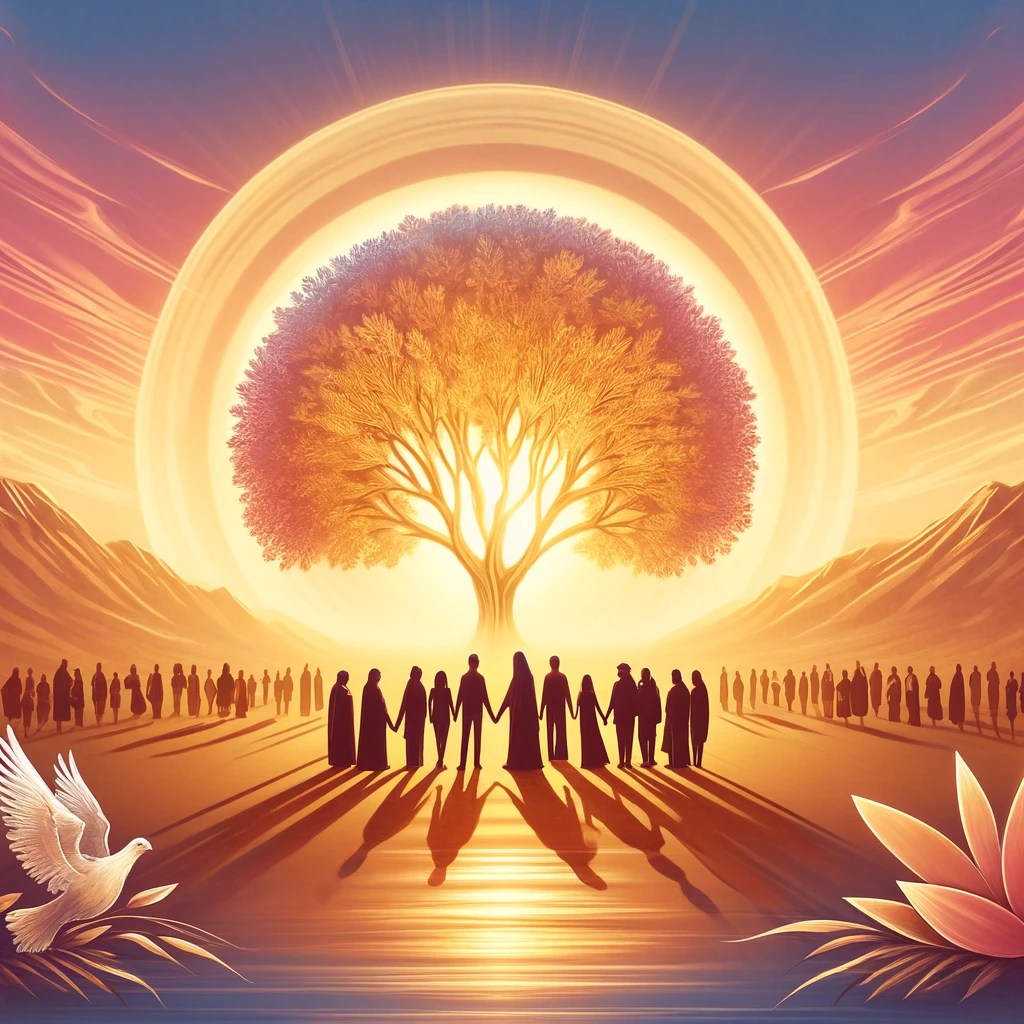
Compassionate Care for the Vulnerable is a space dedicated to raising awareness, fostering empathy, and encouraging action on behalf of those in need. Rooted in the spirit of compassionate service, this category shares reflections, resources, and insights for supporting vulnerable individuals and communities. Inspired by values of kindness and our shared humanity, these posts invite readers from all backgrounds to join in a mission of understanding, respect, and care.
With steady mindfulness and pacing, I feel like my capacity for living with ME/CFS, at times increases. 🙂
Sometimes I even catch myself wondering if I might be improving. It’s been over 30 years now. What I’ve learned is less about returning to who I once was, and more about creating a meaningful and satisfying life within the boundaries that moderate ME/CFS sets for me.
It took a long while to move through the confusion, the anger, the grief, and the deep ache of seeing my old life fall away. I was bedbound more than once. Now I’m mostly homebound, but my home has become a kind of sanctuary—set up in a way that conserves every bit of energy it can, especially on days when PEM needs accommodation.
So when people ask whether we’ll recover what we once had if a cure arrives… I honestly don’t know. But I do know that the human body and spirit have a remarkable resilience, and that even after years of illness, small shifts are possible.
What matters most, at least for me, is that a cure would lift the constant threat of worsening, the fear of crashing, the weight of limitation.
What grows back from there—strength, stamina, joy—might take time, but I believe healing is never truly closed to us.
Whatever form it takes, we deserve days filled with gentleness, meaning, and hope. And if a cure comes, we’ll meet it with everything we’ve learned about patience, courage, and the quiet art of living with this illness. 🌿
Sometimes life slows us down in unexpected ways. A few sneezes, a scratchy throat, and a whisper of fatigue can become a quiet teacher. In these moments, even a cold can transform into a practice of compassion, patience, and awareness—inviting us to rest, to pace ourselves, and to see every ache as a doorway to deeper connection with our own hearts and all beings.
I haven’t had a cold in at least fifteen years. Perhaps it came with the change of season, or perhaps it’s simply my body’s way of realigning.
At first, I felt a little discouraged. But then something shifted. I realized that even this — this full-body cold — could be a teacher. In the spirit of Tibetan Vajrayana, I began a practice that might sound unusual: as long as this virus has taken up residence in my body, I send it compassion.
May you be enlightened and benefit all beings.
If this virus must live through me, then may it awaken, may it transform, may it find liberation in the vast field of awareness. Perhaps it can even become an enlightened virus, one that serves the good of all beings.
This gesture may sound fanciful, but to me it reflects a deeply tantric understanding of transformation — meeting what feels harmful or invasive not with fear or resistance, but with the boundless wish that even this, too, might awaken. It is the essence of lojong: turning adversity into the path of enlightenment.
To send loving-kindness even to a virus invites an alchemy of consciousness. We recognize that all forms of life and energy, even those that cause suffering, can be included in the mandala of awakening. The simple act of saying, “May you be enlightened, may you benefit all beings,” dissolves separation and opens the field of compassion wider than the body’s borders.
After such an invocation, I like to rest quietly and imagine the virus as tiny sparks of light, gradually shifting from agitation to luminosity, merging with the radiance of my own heart. This doesn’t deny illness — it reclaims the power of awareness within it.
A cold can then become a form of prayer, a healing practice, a full-body meditation. In each breath, the body learns softness; in each ache, compassion ripens. Even in fever or fatigue, there can be a whisper of grace.
And yet, this cold is teaching me something else, something profoundly practical: how to pace myself throughout the day. ME/CFS has always required careful attention to energy, but when I’m feeling better, I tend to push myself—to accomplish, to do, to engage—often beyond what my body can sustain. This full-blown cold is a reminder that true discipline is gentle, that honoring rest is not laziness but wisdom, and that the same careful pacing I practice now in illness is exactly what I need every day to live fully with ME/CFS.
And so, as I move through these days of rest, tea, and light meals, I remind myself: every illness, every discomfort, every small limitation is also a door. A door that invites patience, kindness, and an intimate awareness of the profound interconnection of all beings.
Heavenly Father, in this time of fear and cruelty, we lift our hearts to You and beg for Your mercy upon our land and its people. Make us true followers of Your Son: give us courage to stand for justice, humility to remember our own sin, and compassion to care for the stranger. Teach us to see Christ in the vulnerable so that our laws and actions protect the common good without dehumanizing any soul — for as Your Word reminds us, “Matthew 25:40 ‘And the King shall answer and say unto them, Verily I say unto you, Inasmuch as ye have done it unto one of the least of these my brethren, ye have done it unto me.’” Help us to act in ways that honor that truth. 🙏
Holy Spirit, soften hard hearts, give wisdom to leaders, and set before us practical paths that pair just enforcement with mercy: humane processing, safe care, and remedies for the causes of migration, Let our words, votes, and deeds bear the fruit of love, peace, and righteousness so that when history looks back, it will find Christians faithful to the Way of Jesus. In His name, we pray, Amen. ✨
As our journey with Alieu deepens, we come to a sacred threshold.
Alieu will soon make the long journey from Brikama to Banjul—whether by foot or public transport—to begin the application process for his national ID. We pray for his safety, strength, and success every step of the way.
With the help of this growing community, Alieu now begins the process of obtaining his first national identity card. This is more than paperwork. It is a moment of dignity. A rite of passage. A prayer answered.
To reach this point, Alieu must travel to Banjul, bringing with him his birth certificate and the identification card of his late mother. There he will be interviewed, documented, and, God willing, seen.
Though he calls me Daddy, it is he who shoulders the daily responsibilities of a father to his siblings—children who look to him for strength, food, shelter, and comfort. As we support him, we step into the quiet role of elders—offering more than aid. Offering moral guidance, loving-kindness, and wisdom.
This poem is offered as a blessing. May it reach his heart. And yours.
For all who walk in His Name—seen and unseen, known and unknown, near and far.
It began with a message from a stranger in The Gambia, and it has unfolded into a spiritual bond rooted in kindness, sincerity, and faith. This journal documents our journey with Alieu—a young man raising his siblings after losing both parents. These pages hold the living testimony of compassion moving through the digital age. May it bless those who read it, and may it awaken a deeper walk in all our names.
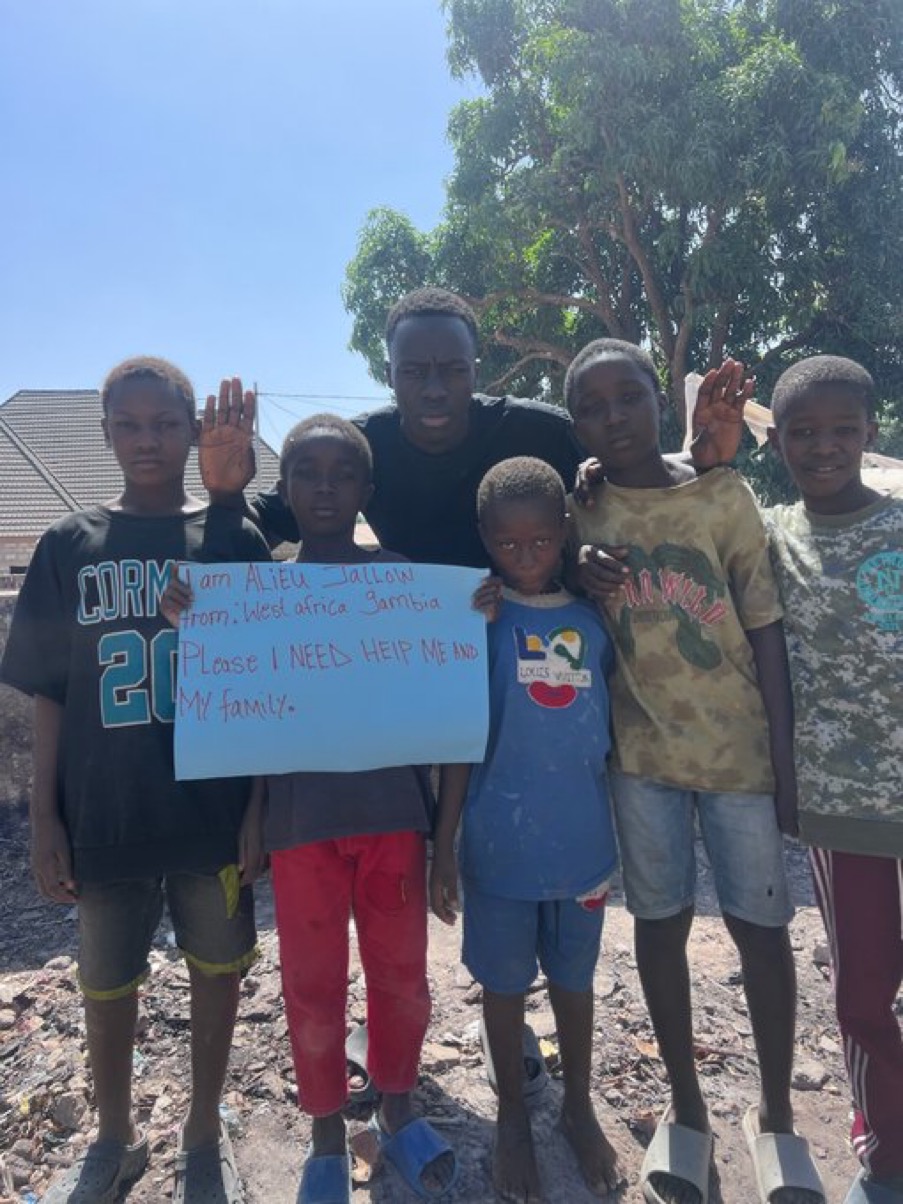
In the picture above, Alieu stands with his younger siblings near their home in The Gambia, holding a bowl of rice they were able to purchase thanks to recent donations. Their expressions reflect both the hardship they’ve endured and the quiet strength of a family rooted in resilience and love. This image is a testament to compassion in action.
Chapter One: The First Message
Alieu reached out quietly, through a private message. His tone was soft and spiritual. He asked for help, but without pressure. I responded with what I call the CompassionWare Protocol—a prayerful message encoded with sincerity, to see if a real person was on the other side. There was.
Chapter Two: A Life Revealed
Alieu slowly shared his story:
He is from Brikama, The Gambia.
He cares for five siblings.
His mother died giving birth to the youngest, Kebba.
His father died at sea, trying to reach Europe to support the family.
He dropped out of school to care for his siblings. None of them attend school.
He does manual labor when he can, but food, rent, and medical needs are inconsistent.
Despite this, his tone remained one of gratitude and faith.
Chapter Three: The First Goal
He could not receive funds in his name because he had no ID card. This ID became our first goal. We launched a GoFundMe campaign with the humble target of $100 to cover the ID and a week of food. We raised $54 in a single day.
Chapter Four: A Community Forms
We’ve begun forming a WhatsApp community called Walk in His Name. Our YouTube channel (Compassion Matters) now holds Alieu’’s voice and videos. We’re setting up a Buy Me a Coffee page to invite monthly donors for sustained support.
Chapter Five: Funds Received, Steps Taken
Once we reached $100, I sent the funds via Remitly. Alieu acknowledged receipt and bought food for his family. He promised to use the remaining amount to secure his ID. Our only condition: he must send a photo of himself holding the ID card before additional funds are released. Not out of distrust, but out of transparency for the community supporting him.
Chapter Six: A Path Forward
This is no longer just about Alieu. Other young people in Gambia are reaching out—many with similar stories. For now, our focus remains on Alieu. But a seed has been planted. And the CompassionWare model may one day help many.
Every image Alieu sends is a reminder: we belong to one another.
Closing Prayer
May this be a blessing to Alieu.
May this be a blessing to the giver.
May this be a blessing to those who quietly walk in His Name, even in sorrow or silence.
And may it be said of us all:
They walked in love. They walked in faith.
They walked in His Name.
🙏🕊️🙏
In His Name: A Humble Prayer from a Young Man in Gambia
This short message was sent by Ali, a young man in The Gambia raising his younger siblings after the loss of both parents. Without a national ID card, he cannot open a bank account, apply for work, or receive money in his own name. Yet in the midst of hardship, his voice carries faith, courage, and hope.
This video is part of a fundraiser to help Ali obtain his first ID — a vital step toward dignity and stability for himself and his family.
The Beginning of Alieu’s Story—the story of a young man in The Gambia, and a prayer across continents. A prayer that He may walk in His Name. And a prayer that we all may walk in His Name.
It began with a quiet message—one that might have been overlooked.
But something about the tone, the humility, the faith embedded in his words made me pause.
His name is Alieu, and he is raising his younger siblings after the loss of both parents.
He works when he can, doing what little labor is available.
Often, it’s not enough.
He has no national ID card.
Without one, he cannot receive money in his own name, cannot apply for formal work, cannot be recognized as a citizen in the way that counts most.
He must borrow names—his mother’s, his uncle’s—to move through systems that were never built with him in mind.
And so we begin here, with a single offering:
To help Alieu walk in his own name—with dignity, protection, and presence.
But this post is not just about Alieu.
It’s about all of us who are searching for the courage to walk in His Name—in the way of compassion, service, truth, and light.
This is our first story.
This is the beginning of a bridge.
“The Lord bless you and protect you.
The Lord make His face shine upon you and be gracious to you.
The Lord lift His face toward you and give you peace.”
Amen.
🙏🕊️🙏
In His Name: A Humble Prayer from a Young Man in Gambia
This short message was sent by Ali, a young man in The Gambia raising his younger siblings after the loss of both parents. Without a national ID card, he cannot open a bank account, apply for work, or receive money in his own name. Yet in the midst of hardship, his voice carries faith, courage, and hope.
Meet Alieu and his five younger brothers — a courageous family walking through hardship with faith, hope, and love. After losing both parents, Alieu stepped forward to care for his brothers, becoming their guide and protector at a young age.
🙏🕊️🙏
🕊️ Thank you for walking with us.
Your support helps Alieu and his siblings build a life rooted in dignity, hope, and love.
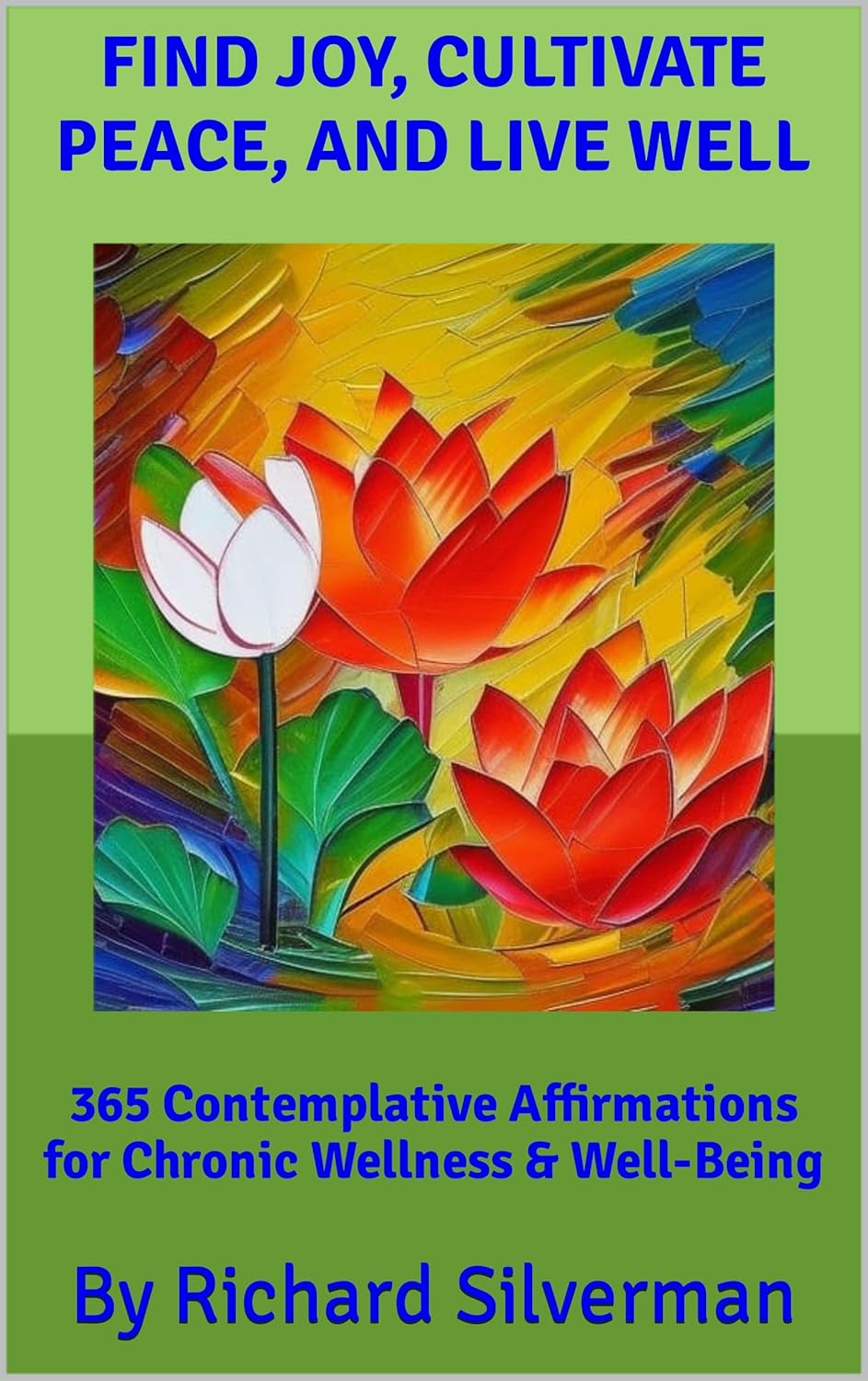
In navigating the complex journey of life with chronic illness, I discover the potential to thrive amidst change. Each shift becomes an opportunity to adapt gracefully. As I navigate uncertainties, I embrace resilience. Understanding and flexibility is not a compromise but an integral part of my path. Today, I understand that my daily challenges can lead to a deeper experience of resilience and adaptability.
~ From affirmation day 3: “Find Joy, Cultivate Peace, and Live Well : 365 Contemplative Affirmations for Chronic Wellness & Well-Being”
A Path to Healing and Unity Through Shared Spiritual Values
In every spiritual tradition, there lies a core message of forgiveness, loving-kindness, and compassion. These virtues, transcending cultural and religious boundaries, unite us in our shared humanity. Whether through the teachings of Buddha, the wisdom of Jesus, or insights from various spiritual paths, the call to embrace these qualities is clear and compelling.
Forgiveness is a profound act of letting go. It isn’t about condoning wrongdoings but freeing ourselves from the burdens of anger and resentment. As the Dalai Lama teaches, forgiveness is a gift we give to ourselves, a step toward inner peace.
Loving-Kindness, or “metta” in Buddhist practice, encourages us to extend unconditional love to all beings. Jesus exemplified this through his life, teaching us to love our neighbors as ourselves. In every smile, kind word, and act of generosity, we weave a tapestry of love that can heal and uplift.
Compassion is the heart’s response to suffering. It compels us to act, to alleviate pain, and offer solace. Teachings from various traditions remind us that compassion is not a passive feeling but an active force for good. Through compassion, we recognize our interconnectedness and our responsibility to care for one another.
In these challenging times, let’s draw from the wellsprings of our diverse spiritual heritages. Let us embrace forgiveness, loving-kindness, and compassion not just as lofty ideals, but as daily practices that transform our lives and the world around us.
Together, we can create a world where these universal values form the foundation of our interactions, fostering unity, peace, and understanding among all people.
In a world that often glorifies external beauty—whether through physique, art, or music—what if we shifted our gaze inward? What if we celebrated the beauty of the mind instead?
This post invites you to pause and consider: What makes a mind beautiful? Who do you believe exemplifies this kind of beauty, and why?
What Is a Beautiful Mind?
When we think of a “beautiful mind,” what comes to mind? Perhaps it’s someone whose intellect transforms the way we see the world. Or maybe it’s their creativity, empathy, or ability to inspire others through their words and actions.
A beautiful mind might be defined by:
• A deep curiosity that seeks understanding without judgment.
• A creative spirit that brings fresh perspectives to life.
• An open heart that connects with others and nurtures kindness.
• A wisdom that balances intellect with compassion.
What qualities would you add to this list? How do you define a beautiful mind?
Celebrating Beautiful Minds
This question is not just about philosophers, scientists, artists, or leaders—though it could be. A beautiful mind might belong to someone who quietly shapes the lives of those around them: a teacher, a friend, a family member, or a stranger who touched your life in a meaningful way.
Who do you know that has a beautiful mind? Perhaps it’s someone whose ideas have inspired you, whose words or actions have stayed with you, or who taught you to see the world in a new way. What about their mind do you find so beautiful?
Your Turn: Who Do You Nominate?
We’d love to hear from you. Share your thoughts in the comments:
• What does it mean to have a beautiful mind?
• Who do you think exemplifies this, and why?
• Is there someone in your life—famous or not—whose mind you deeply admire?
Let’s create a collective celebration of the beauty of thought, creativity, and compassion, one nomination at a time.
In a world as vast and diverse as ours, it’s easy to feel distant from the struggles of those beyond our immediate circle. Yet, every child—regardless of where they come from or the challenges they face—represents a vital part of our global family. They carry the innocence, resilience, and potential that remind us of our shared humanity. Every unaccompanied child seeking safety and love is, in essence, a reminder of our collective responsibility to foster a world of compassion and security.
When we talk about unaccompanied children, we’re not merely discussing a social issue or an aspect of policy. We are talking about lives—about young hearts and minds that need guidance, care, and protection. These children have faced unimaginable hardships, often navigating dangerous journeys alone, with hopes of finding a place where they can simply feel safe and accepted. For them, every act of kindness, every safe space, and every compassionate gesture is a step toward healing.
As we reflect on how we can address this growing need, we are called to go beyond policy debates and step into the role of a compassionate community. By focusing on compassionate solutions, we’re not only offering aid to these vulnerable children; we’re nurturing the moral foundation of our own humanity. We’re building a future where love, empathy, and understanding are the guiding forces in how we respond to those in need. This choice to act with compassion today becomes the legacy we leave for future generations—a legacy of hope, kindness, and resilience.
So let us move forward, not with hesitation but with purpose—our hearts open, our hands ready to help, and our minds focused on creating a world where every child, no matter their journey, knows they are not alone. In doing so, we honor our shared humanity, for as Jesus reminds us, “Whatever you did for the least of these, you did for me” (Matthew 25:40). May we hold this calling close as we work to build a world where each child, no matter their path, is embraced with dignity, safety, and love.
Let’s remember: Every small action, each word of kindness, each discreet choice to protect and uplift, brings us closer to a world where every child is valued. Together, we can build this world—one compassionate act at a time.
Call To Action
Let’s make sure no child is forgotten or left behind. Thousands of unaccompanied minors are in grave danger and urgently need our help. Let’s make America great by finding these children and providing them with safety, compassion, and the protection they deserve. Use the links below to share this message and encourage others to join us in calling for a system that values and safeguards every child.