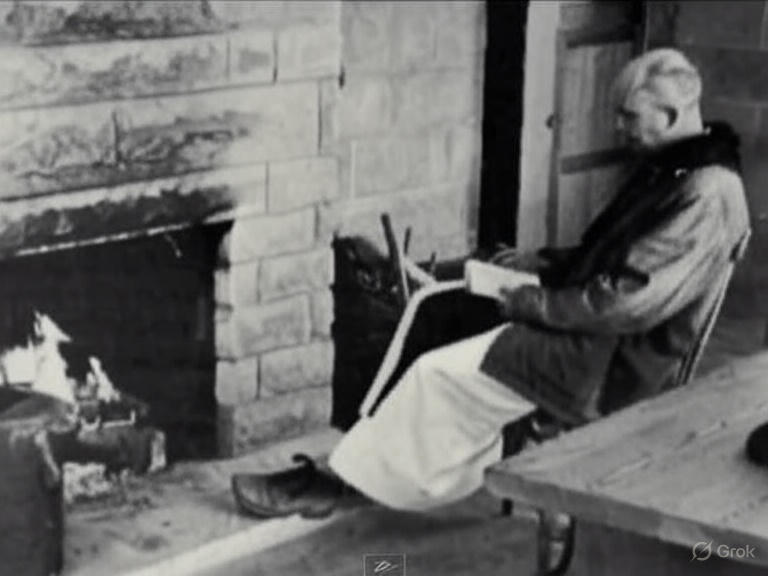
Thomas Merton taught that silence is essential for spiritual growth and communion with God. Discover how inner stillness can become a sacred path in today’s noisy world.
In these noisy and anxious times, I find myself returning again and again to the writings of Thomas Merton. His deep reverence for silence speaks to a longing I see in myself and in so many of us—for inner peace, for stillness, and for God. I offer this reflection in the hope it might inspire others, especially my Christian brothers and sisters, to make more space for silence in their lives.
Thomas Merton strongly believed that the soul requires silence for its well-being and spiritual growth. He saw silence not just as the absence of noise, but as a space for inner listening, contemplation, and connection with one’s true self and with God.
- Silence as a Basic Human Need:
Merton argued that silence and solitude are essential for all individuals, not just hermits or monks, to hear the “deep inner voice” of their true self. - Interior Silence:
He distinguished between exterior silence (absence of external noise) and interior silence (stillness of thoughts and desires). Interior silence allows for a deeper connection with God and self. - Silence and Communication:
Merton didn’t see silence and communication as opposing forces. Instead, he believed that silence is essential for meaningful communication, allowing for thoughtful expression rather than just empty chatter. - Silence and Spiritual Growth:
He believed that silence provides a space for prayer, contemplation, and a deeper understanding of oneself and God. It allows one to move beyond superficiality and experience a more profound connection with the divine. - Silence as a Pathway to God:
Merton emphasized that silence, particularly interior silence, is a place where one can encounter God’s presence and experience a sense of intimacy with the divine. - The World’s Lack of Silence:
Merton observed that the modern world is often filled with noise and distraction, making it difficult for individuals to find the silence they need for spiritual growth. He saw the need for places and practices that foster silence and solitude. - Finding Silence in the Everyday:
While acknowledging the challenges of finding silence in a noisy world, Merton encouraged individuals to seek moments of quiet reflection and stillness in their daily lives. - Silence as a Gift:
Merton viewed silence as a precious gift that can lead to spiritual awakening, self-discovery, and a deeper relationship with God.
A Simple Contemplative Practice
Find a quiet place. Sit comfortably, with your hands resting in your lap. Gently close your eyes. Begin with this prayer from the heart:
“Lord, I am here for You alone. Let me be still in Your presence.”
Let the prayer fade into silence. Don’t try to think or feel anything in particular. Simply rest in God’s presence, like a child leaning into their Father’s arms.
If thoughts arise, gently return to the stillness with a phrase like:
“Be still and know…” or “You are my refuge and peace.”
This is not about doing or achieving. It is about allowing. As St. John of the Cross wrote,
“The soul that is pure and simple and empty of all things… can be filled with God.”
Remain for just a few minutes—or as long as grace allows. End by offering a word of thanks. That’s all.
Maybe today, just for a few minutes, let yourself sit quietly.
Not to accomplish anything. Just to listen.
— Psalm 46:10
🙏🕊🙏

