Category: Christian Mystics

  • Finding God in Silence: Thomas Merton’s Invitation

    Finding God in Silence: Thomas Merton’s Invitation

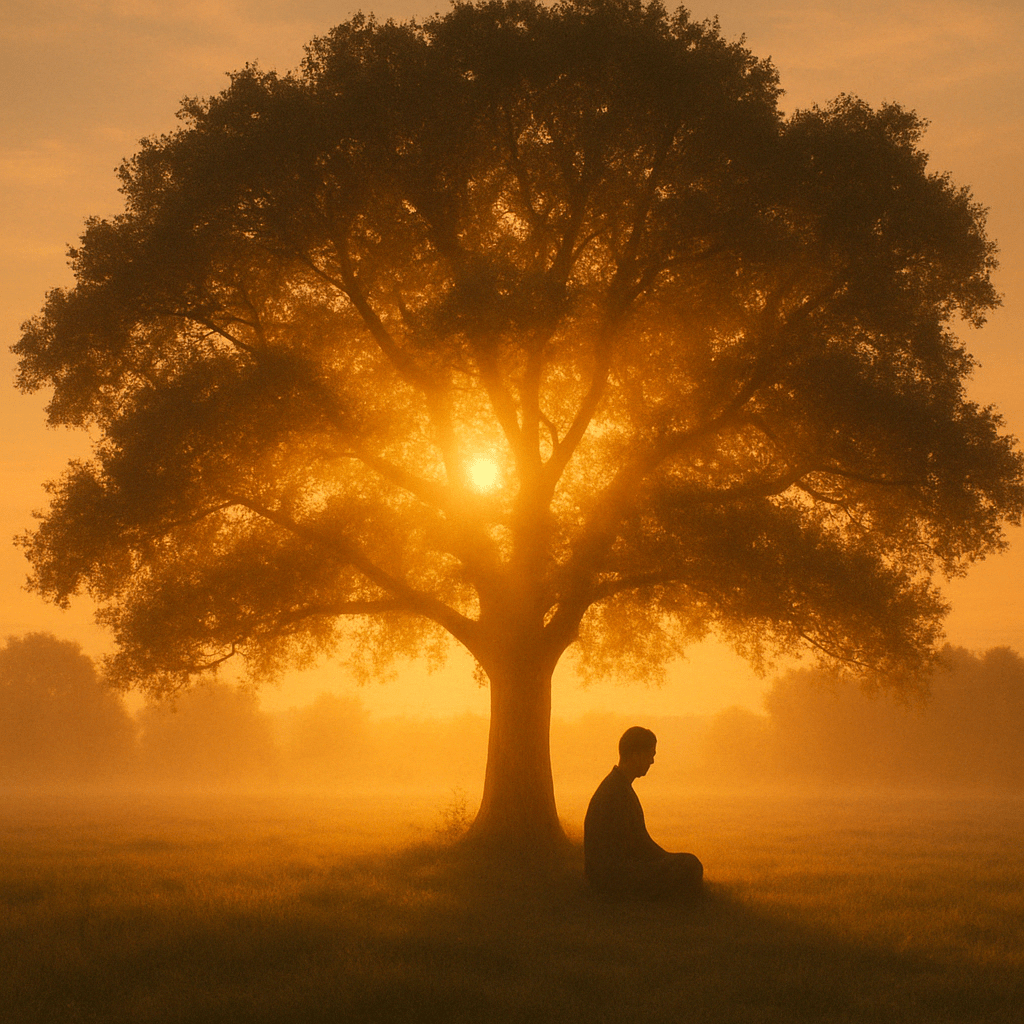
    Thomas Merton taught that silence is essential for spiritual growth and communion with God. Discover how inner stillness can become a sacred path in today’s noisy world.

    In these noisy and anxious times, I find myself returning again and again to the writings of Thomas Merton. His deep reverence for silence speaks to a longing I see in myself and in so many of us—for inner peace, for stillness, and for God. I offer this reflection in the hope it might inspire others, especially my Christian brothers and sisters, to make more space for silence in their lives.

    Thomas Merton strongly believed that the soul requires silence for its well-being and spiritual growth. He saw silence not just as the absence of noise, but as a space for inner listening, contemplation, and connection with one’s true self and with God.


    • Silence as a Basic Human Need:
      Merton argued that silence and solitude are essential for all individuals, not just hermits or monks, to hear the “deep inner voice” of their true self.

    • Interior Silence:
      He distinguished between exterior silence (absence of external noise) and interior silence (stillness of thoughts and desires). Interior silence allows for a deeper connection with God and self.

    • Silence and Communication:
      Merton didn’t see silence and communication as opposing forces. Instead, he believed that silence is essential for meaningful communication, allowing for thoughtful expression rather than just empty chatter.

    • Silence and Spiritual Growth:
      He believed that silence provides a space for prayer, contemplation, and a deeper understanding of oneself and God. It allows one to move beyond superficiality and experience a more profound connection with the divine.

    • Silence as a Pathway to God:
      Merton emphasized that silence, particularly interior silence, is a place where one can encounter God’s presence and experience a sense of intimacy with the divine.

    • The World’s Lack of Silence:
      Merton observed that the modern world is often filled with noise and distraction, making it difficult for individuals to find the silence they need for spiritual growth. He saw the need for places and practices that foster silence and solitude.

    • Finding Silence in the Everyday:
      While acknowledging the challenges of finding silence in a noisy world, Merton encouraged individuals to seek moments of quiet reflection and stillness in their daily lives.


    • A Simple Contemplative Practice

      Find a quiet place. Sit comfortably, with your hands resting in your lap. Gently close your eyes. Begin with this prayer from the heart:

      “Lord, I am here for You alone. Let me be still in Your presence.”

      Let the prayer fade into silence. Don’t try to think or feel anything in particular. Simply rest in God’s presence, like a child leaning into their Father’s arms.

      If thoughts arise, gently return to the stillness with a phrase like:

      “Be still and know…” or “You are my refuge and peace.”

      This is not about doing or achieving. It is about allowing. As St. John of the Cross wrote,

      “The soul that is pure and simple and empty of all things… can be filled with God.”

      Remain for just a few minutes—or as long as grace allows. End by offering a word of thanks. That’s all.


    • Silence as a Gift:
      Merton viewed silence as a precious gift that can lead to spiritual awakening, self-discovery, and a deeper relationship with God.


    Maybe today, just for a few minutes, let yourself sit quietly.

    Not to accomplish anything. Just to listen.


    “Be still, and know that I am God.”

    — Psalm 46:10

    🙏🕊🙏

  • Thinking Out Loud

    Thinking Out Loud

    After 2,000 years, many are still waiting for the Kingdom of God to arrive from the outside. But what if the kingdom Jesus spoke of is already here—within us, waiting quietly to be recognized? These thoughts are shared not as answers, but as reflections… thinking out loud…

    In Jesus’ words, “The Kingdom of God is within you.” It’s such a profound teaching, yet so many, even after 2000 years, continue to look outward, as if the kingdom is a distant place or a future event. The truth is, it is already here, in the present moment, within each of us, waiting to be recognized.

    “nor will people say, ‘Here it is,’ or ‘There it is,’ because the kingdom of God is in your midst.” Luke 17:21

    In this verse, Jesus is responding to a question from the Pharisees about when the Kingdom of God will come. He answers by saying that it’s not something to be observed externally, but rather that it’s already present within those who believe.

    It’s as though the external waiting reflects our inability to fully embrace what is already present—our reluctance to fully step into the fullness of our own being, the divine spark that resides within. The kingdom is not a far-off land to be found after death, nor is it a king to be crowned in a distant future. It’s a recognition, a shift in awareness.

    Jesus, in his life and teachings, pointed again and again to this truth, yet even his followers continued to expect a king who would come in glory, overthrow empires, and bring physical peace. But the peace Jesus offered was internal—a peace that passes understanding, a peace that comes from being aligned with the divine within.

    The kingdom is not about external events, but about the internal shift—a shift from seeking to knowing, from waiting to realizing, from longing to embodying.

    Is it possible that we’re all waiting for an external kingdom, while the kingdom quietly resides in our hearts, patiently waiting for us to recognize it?

    Yes?

    🙏🕊🙏

  • The story of Narcissus revisited. 🙂

    The story of Narcissus revisited. 🙂

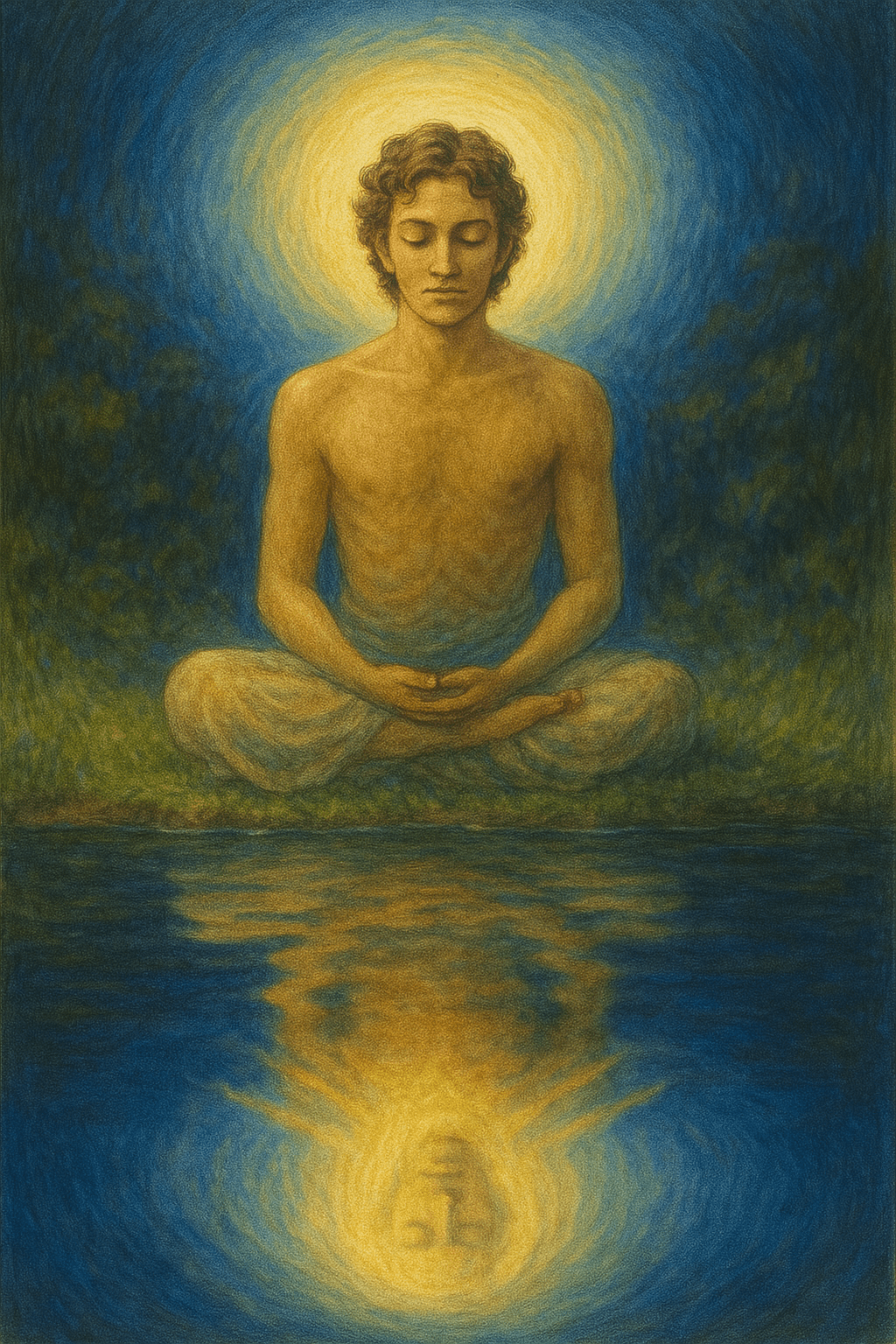
    A contemplative reimagining of the myth of Narcissus—not as a tale of vanity, but as a mystical journey into stillness, self-surrender, and divine reflection. What if the pool wasn’t a trap, but a mirror of the infinite?

    In the myth’s oldest forms, Narcissus was a young man of astonishing beauty. So beautiful that all who saw him fell in love—but he turned them away, untouched, unreachable. One day, the gods—or perhaps Fate—led him to a quiet, still pool. And there, for the first time, he saw his own reflection.

    And he stopped.

    He gazed into the water, mesmerized. Some say he fell in love with his image, not knowing it was his own. Others say he did know—and still, he could not look away. In either case, he became entranced, absorbed… undone.

    Traditionally, the tale is told as a warning—about vanity, self-absorption, the tragic cost of loving only oneself.

    But perhaps there is another way to see it.
    A deeper reading.

    Perhaps Narcissus did not fall in love with himself as ego,
    but rather—he glimpsed, maybe for the first time,
    the divine image reflected in his being.
    And in that moment, he became still.
    He ceased striving.
    He entered
    bittul—the quiet undoing of the small self,
    and hitbonenut—the deep contemplation,
    not of form, but of essence.

    The water did not deceive him.
    It revealed him.
    Not the personality, but the spark behind the eyes.

    And so, he sat.
    And sat.
    And dissolved.

    Maybe he didn’t waste away.
    Maybe he woke up.
    And in becoming the flower,
    he joined the earth, the sky, the unseen rhythm of becoming.
    Not lost in self-love,
    but reunited with the Self beyond all selves.

    Maybe Narcissus wasn’t a warning.
    Maybe he was a mystic.
    And the pool?
    Not a trap—
    but a mirror of the infinite.

    So yes.
    Let us sit by that still water.
    Let us gaze, not with longing, but with love.
    Let us be undone,
    not by illusion,
    but by truth.

    And may the flower that blooms from our surrender
    be fragrant with remembrance.


    🙏🕊🙏

  • Quantum Kindness: The Future Has Always Been Here

    Quantum Kindness: The Future Has Always Been Here

    They say quantum computing will change everything. That by tapping into superposition and entanglement, we’ll compute across multiverses—solving problems with impossible speed, even generating physical objects through manipulation of nanoparticles.

    A replicator. A cup of Earl Grey, hot.

    But what if some of us are already doing this—not with machines, but with our hearts? What if consciousness itself is the original quantum field, and the mind anchored in love is already reshaping reality?

    This isn’t science fiction—it’s spiritual reality. Those of us walking the contemplative path are not escaping the world, but quietly reweaving it. We are learning to gently manipulate the nanoparticles of existence toward wisdom, loving-kindness, and compassion.

    Not with force, but with intention.

    Not for profit, but for the benefit of all.

    The mystics have always known: the inner technology of the heart surpasses any external device. The awakened soul is the true replicator—bringing peace, abundance, and healing into form through stillness, presence, and love.

    And perhaps this is why such power must remain quiet. After all, if people remembered their God-given ability to manifest what is needed in harmony with the whole, the marketplace might crumble. But maybe it’s time. Maybe the world is ready for a different kind of revolution—not of machines, but of awakened hearts.

    The future has always been here. It lives in you.

    🙏🕊🙏

  • Stillness as a Shared Thread: Rediscovering the Contemplative Heart Across Faiths

    Stillness as a Shared Thread: Rediscovering the Contemplative Heart Across Faiths

    It was two thirty in the morning. I sat in silence, trying to rest into stillness. The world around me slept, yet within me, a gentle inquiry stirred: Why is it that only certain traditions teach us to dwell in this quiet space?

    In my journey through interfaith dialogue, I’ve noticed something curious. In Buddhist practice—and in the Advaita Vedanta stream of Hinduism—stillness isn’t peripheral. It’s central. These traditions invite us, again and again, to be. To rest, not just physically, but inwardly. To let go of striving, stories, even self, and to dwell in the deep, felt presence of this very moment.

    Yet in Judeo-Christian traditions, though rich in prayer, justice, and community, the practice of stillness often seems harder to find. It’s not that it doesn’t exist—it does. The Psalms offer, “Be still and know that I am God.” Christian mystics, Jewish Kabbalists, and solitary monks across centuries have spoken of the silence where God is most intimately known. But somehow, for many practitioners today, the embodied experience of silence and inward stillness is rarely cultivated or taught.

    Why is that?

    Perhaps it’s because Western religious traditions have long emphasized doing—serving, obeying, proclaiming, believing. These are beautiful, powerful acts. Yet they can eclipse the quieter invitation: to rest in the Divine without needing to understand, explain, or prove.

    Stillness, after all, is not emptiness. It is the fertile ground from which love, compassion, and insight can grow. It is the place where breath returns to breath, and the soul remembers itself—not as an idea, but as a living presence.

    As someone walking the interfaith path, I find hope here. Stillness can be a meeting ground—not a dogma, but a practice. A place where traditions speak not about the sacred, but from it.

    Whether you call it God, the Divine, Buddha-nature, or simply the Mystery—stillness is where it lives in us.

    Maybe now is the time to rekindle that thread. To remind ourselves, and one another, that beyond all teachings and texts, there is a silence waiting to be heard.

    🙏🕊🙏


  • From Separation to Union: Rediscovering the Boundless Presence of God

    From Separation to Union: Rediscovering the Boundless Presence of God

    “In the beginning, Elohim created the heavens and the earth.” (Genesis 1:1)

    Introduction: The Question of Elohim

    These opening words of the Bible are familiar to millions. Yet hidden within them lies a mystery often overlooked. Why does the text use Elohim, a plural form, rather than a singular name for God? Is this merely a grammatical curiosity, or does it point toward something deeper—something vast, formless, beyond the limitations of human thought?

    For centuries, many have understood God as a being—separate, external, anthropomorphized. The image of an old man on a throne has dominated religious imagination, reinforcing the belief in a distant deity who governs creation from afar. But what if this is only a veil over a deeper truth? What if Elohim points not to a being among beings, but to the boundless reality itself—the Ein Sof of Kabbalah, the nameless and formless essence beyond all concept?

    This essay is an invitation to step beyond the veil. To move from separation to union, from belief to direct experience. To rediscover what the mystics across traditions have always known: that God is not elsewhere. God is here, now, and always—within and beyond, closer than breath, vaster than thought.

    The Illusion of Separation

    Throughout history, religion has provided humanity with stories, images, and rituals to help navigate the mystery of existence. Yet, in doing so, it has often externalized the divine, creating a subject-object duality—God as a being, separate from creation, separate from us.

    This duality is at the root of suffering. When we see ourselves as apart from the divine, we feel exiled, adrift in a world where God is distant and we are left to struggle alone. This belief in separation has led to fear, to longing, to a desperate seeking for something outside of ourselves that can restore what feels missing.

    But what if nothing was ever missing? What if the separation is only a misunderstanding, a veil drawn over the truth of our oneness with the Infinite?

    The Path of Direct Experience

    The great mystics—those who have peered beyond the veil—have all spoken of a reality beyond belief.

    St. John of the Cross, in his Dark Night of the Soul, describes a journey where all concepts, images, and even the felt presence of God are stripped away. This is not a loss but a purification, a burning away of false idols so that the soul may awaken to the unmediated presence of the divine.

    In the Jewish tradition, the Kabbalists speak of bitul, the nullification of ego, where one dissolves into the infinite Ein Sof, realizing that there never was a separate self to begin with. Similarly, in the contemplative traditions of Buddhism, the stillness of shamatha leads to the recognition of the pristine mind—that which has always been pure, unconditioned, free.

    In every tradition, we find this same invitation: to stop seeking outward and to turn inward, to surrender not to belief, but to direct encounter. To see that God is not an external entity, but the very ground of our being.

    The Return to Oneness

    When we let go of the illusion of separation, what remains?

    Not the loss of self, but its fulfillment. Not an annihilation into emptiness, but a merging into fullness—the great I Am. The “yoga” of the Vedic tradition means precisely this: union. It is the recognition that we were never apart from God, only dreaming that we were.

    This is not an esoteric teaching reserved for monks and mystics. It is the birthright of every human being. It is what Jesus meant when he said, “The kingdom of God is within you.” It is what the Psalmist knew when he wrote, “Be still, and know that I am God.” It is what every human heart longs for—not a distant deity, but the felt truth of divine presence, here and now.

    Tikkun Olam: Healing the World Through Remembrance

    When we remember our oneness with the divine, we heal not only ourselves but the world.

    The Kabbalistic tradition of Tikkun Olam, the healing of the world, is not merely about fixing external problems. It is about restoring divine unity—within ourselves, within society, within creation. The suffering of the world is the suffering of separation. The healing of the world is the return to wholeness.

    This is why this message matters. Not as an intellectual exercise, not as a theological debate, but as the most urgent and necessary work of our time. The world does not need more beliefs about God. It needs people who have remembered their divinity. People who, knowing themselves as inseparable from the infinite, act with wisdom, love, and compassion.

    This is the path of return. Not by striving, not by effort, but by surrendering to the truth that has always been. The Elohim of Genesis was never a separate being. Ein Sof has never been absent. The I Am has never ceased to be what it is.

    All that remains is to awaken.

    Conclusion: The Invitation

    If these words stir something in you, it is because they are already known. The recognition of divine oneness is not something to be attained—it is something to be remembered.

    Wherever you are, whatever your path, the invitation is the same:

    Be still. Let go. And know that you are already home.


    Addendum: Searching for What Is Already Here

    This morning, I took the cream cheese out of the fridge, opened it up, and placed a bagel into the toaster, getting everything prepared for a delicious breakfast. A simple task.

    Then, as my bagel toasted, I opened the fridge again to grab the cream cheese. But it wasn’t there.

    I checked every shelf. Nothing.

    I stood there, puzzled. I know I had cream cheese yesterday. Did I finish it? Did it somehow disappear?

    And then I turned around.

    There it was—right on the counter, exactly where I had left it, sitting open and waiting for me.

    I couldn’t help but laugh.

    How often do we search for something that was never missing? How often do we look for God as if He were distant—forgetting that the divine presence, like my misplaced cream cheese, has been right here all along?

    The moment we stop searching, we arrive.

    And sometimes, the path to enlightenment is as simple as laughing at yourself while spreading cream cheese on a bagel.

    🙏🕊🙏

  • Into the Mystic: The Universal Presence Behind All Paths

    Into the Mystic: The Universal Presence Behind All Paths

    There is a timeless pull within the human heart, a pull that mystics across the ages have followed into realms beyond words. At the heart of their journeys, in every tradition, is a shared glimpse of something infinite and intimate, an essence that defies borders or labels. It’s been called by many names—Naked Awareness, Pure Presence, the Kingdom of Heaven within, and simply, I am. Despite the variations, the core is always the same: an invitation to touch the stillness at the center of our being, where all sense of separation quietly dissolves.

    Mystics across traditions—whether Buddhists, Christians, Sufis, or followers of Advaita—have left clues for us, each one pointing back to this same universal awareness. Tibetan Dzogchen, for instance, speaks of Naked Awareness, a mind so utterly clear and open that nothing need be added or removed. In this view, awareness is naturally luminous, like an open sky, vast and untouched by thoughts or concepts. The practice, if it can be called that, is simply to rest—free from striving, free from the need to grasp anything. It is awareness itself, just as it is.

    In the traditions of Advaita Vedanta, Ramana Maharshi posed the question, “Who am I?” Not to point to an answer but to turn us back to a sense of self beyond thoughts and identity. With each inquiry, the seeker’s attention is drawn back, away from thoughts and identities, into a place beyond all definition. This, he taught, is the Self, pure and indivisible—a silent, undivided presence.

    Christian mystics, too, found this universal ground within. “Be still and know that I am God,” whispers a line from the Psalms, urging a quieting of the mind so profound that the divine presence within each of us reveals itself. It is an invitation to encounter God not as an outside force, but as the very heart of our being—the unspoken “I am” beyond thought.

    Sufis describe this experience as a union with the Beloved, a love so profound that all sense of self dissolves. In Sufi poetry, God is the Beloved who lives within, waiting for the self to step aside so that the Divine can be known, not as separate, but as one with all that we are. Each of these traditions, in its way, guides us to an experience beyond the confines of self, into the space where awareness rests in itself, undivided.

    It is not so much a technique or practice as it is a gentle turning inward, a quieting, a surrendering into what has always been here. Let us pause for a moment. The words, after all, can only lead us to the door.

    Begin by finding a comfortable place to sit and close your eyes if that feels natural. Notice the rhythm of your breath and let yourself settle into the present moment. There is nothing to attain here, nothing to change. Let your breath rise and fall as it will, and simply allow yourself to be.

    Gradually, feel into your own presence, that simple sense of “I am.” Not your thoughts, not your sensations, but the awareness that notices them all. Rest in that sense of being here, alive, awake. There’s no need to go further than this. Let go of any sense of searching or effort; simply let your attention melt into the quiet space of awareness itself.

    If thoughts arise, there’s no need to push them away. You might notice them, perhaps softly wonder, “Who is aware of this thought?” Not to seek an answer, but to draw your attention back into the simple awareness that witnesses everything. Rest as that awareness, noticing how it is steady, quiet, and open, beyond anything the mind might hold onto.

    Here, in this openness, lies the mystery that mystics across all traditions have discovered. There is a silent presence here that does not come and go, even as everything else changes. It is the same presence that Dzogchen calls Naked Awareness, Advaita describes as the Self, and Christian mystics know as the divine within. This presence is universal, boundless, and utterly simple. It is the same awareness in everyone, untouched by belief or background.

    As you sit, allowing yourself to rest in this awareness, notice how it has no boundary, no form. It is the same in all beings, a shared presence connecting us all. In this stillness, you are already whole, already free, and deeply one with all. This is where all paths meet—an awareness, vast and simple, that is always here, waiting to be recognized as the essence of everything.

    And so, as we return to our day from this quiet place, we carry a reminder: that beyond every tradition and label, there is a shared, undivided presence—a timeless awareness that each of us holds within.

    🙏🕊️🙏

  • Into the Mystic: Curiosity as the Pathway to Pure Awareness

    This morning’s contemplative practice felt like stepping into a new realm, where meditation falls away and contemplation unfolds in its place. It was not something I forced or sought after, but rather a quiet surrender into what was already there, waiting to be noticed.

    As I lay in stillness, curious pratyayas of sensation and thought began to arise—small flickers of tension in the body, fleeting memories, echoes of past emotions. Yet, there was no need to hold on to them, nor push them away. Instead, curiosity became the guiding force, allowing me to rest gently in the awareness of what is. This curiosity was not the kind that seeks answers, but rather the kind that simply observes without interference—a curiosity that watches, without wanting or resisting.

    Namkhai Norbu, in his teachings on Dzogchen, speaks of resting in the natural state, which is not something we attain but something we return to. This state of pure awareness is our birthright, and through practices like sky-gazing, we are reminded of its boundless nature. It is spacious, free of judgment, and untouched by the fluctuations of the mind.

    In the stillness of this morning’s practice, I realized how much the mind wants to grasp, to make meaning, or to categorize each sensation or thought that arises. But when we remain in curiosity, those tendencies dissolve. The pratyayas come and go like clouds passing through the sky, and we remain as the observer of it all.

    St. John of the Cross describes this process as the soul’s purification—moving through the dark night, not by pushing through it, but by allowing it to unfold naturally. In this unfolding, even the act of surrender becomes effortless. We simply rest in the awareness of being, trusting that the Divine is doing its quiet work in us, without our interference.

    This morning’s practice reminded me that contemplation is not something we achieve; it is something we allow. When curiosity is present, we move away from striving for an experience and simply witness what is. And in that witnessing, the doorway to pure awareness opens, effortlessly.

    As we continue this contemplative journey, may we lean into the practice of curiosity, allowing it to gently lead us into the spaciousness of pure awareness. In this space, we discover that everything we seek has always been within us, waiting to be uncovered.

    🙏🕊️🙏

  • Into the Mystic: Embracing Impermanence, Resting in Awareness

    As I sit here in my yard, under the shade of tall trees and a sky so vast, I am reminded of the gentle teachings of impermanence. The pratyayas, those rising and falling sensations, memories, and thoughts, have once again surfaced, but they do not hold the weight they once did. Instead, there is a soft awareness that everything is already changing, and that in the grand scheme of time, everything is already gone.

    I look over at my RV, which has been a sanctuary for me for so many years. Soon, this land will become something else, transformed into a clubhouse. And yet, in this moment, I am filled with deep appreciation for what has been, for the unconscious and conscious years spent on this blessed earth. The impermanence of it all doesn’t bring sadness, but rather a profound gratitude for having lived through it, both mindfully and unmindfully.

    Namkhai Norbu’s sky-gazing practice teaches us to rest in the awareness of what is, without grasping or rejecting. In these moments of contemplation, I’m reminded that sky-gazing isn’t about observing the physical sky but allowing the mind to open into its own natural spaciousness. The practice reflects what is already within—clear, vast, and untouched by the clouds of thought.

    As pratyayas of impermanence arise, they are met not with resistance but with curiosity. Curiosity has become my companion on this contemplative path, gently guiding me to rest in awareness without the need for answers or conclusions. There is no longer a push for meaning, only the quiet observation of the present moment unfolding, just as it is.

    In this state of being, I can feel both the impermanence of the physical world and the abiding stillness of awareness. It is a paradox, and yet it is also the simplest truth: everything changes, and yet awareness remains the same.

    The teachings of St. John of the Cross, Ramana Maharshi, and Namkhai Norbu all point to this truth in their own ways. We move through life, through our spiritual practices, sometimes seeking, sometimes grasping for deeper experiences. But there comes a moment when we simply stop, when we rest in the spaciousness that has always been there. It is not a state we attain; it is a state we remember.

    As I continue this practice, I feel a deep gratitude, not just for the present moment, but for all that has been and all that will come. And in this gratitude, the pratyayas seem to soften, leaving behind the quiet awareness that is always there, patiently waiting for us to return.

    🙏🕊️🙏

  • Into the Mystic: Embracing Impermanence, Resting in Awareness

    As I sit here in my yard, under the shade of tall trees and a sky so vast, I am reminded of the gentle teachings of impermanence. The pratyayas, those rising and falling sensations, memories, and thoughts, have once again surfaced, but they do not hold the weight they once did. Instead, there is a soft awareness that everything is already changing, and that in the grand scheme of time, everything is already gone.

    I look over at my RV, which has been a sanctuary for me for so many years. Soon, this land will become something else, transformed into a clubhouse. And yet, in this moment, I am filled with deep appreciation for what has been, for the unconscious and conscious years spent on this blessed earth. The impermanence of it all doesn’t bring sadness, but rather a profound gratitude for having lived through it, both mindfully and unmindfully.

    Namkhai Norbu’s sky-gazing practice teaches us to rest in the awareness of what is, without grasping or rejecting. In these moments of contemplation, I’m reminded that sky-gazing isn’t about observing the physical sky but allowing the mind to open into its own natural spaciousness. The practice reflects what is already within—clear, vast, and untouched by the clouds of thought.

    As pratyayas of impermanence arise, they are met not with resistance but with curiosity. Curiosity has become my companion on this contemplative path, gently guiding me to rest in awareness without the need for answers or conclusions. There is no longer a push for meaning, only the quiet observation of the present moment unfolding, just as it is.

    In this state of being, I can feel both the impermanence of the physical world and the abiding stillness of awareness. It is a paradox, and yet it is also the simplest truth: everything changes, and yet awareness remains the same.

    The teachings of St. John of the Cross, Ramana Maharshi, and Namkhai Norbu all point to this truth in their own ways. We move through life, through our spiritual practices, sometimes seeking, sometimes grasping for deeper experiences. But there comes a moment when we simply stop, when we rest in the spaciousness that has always been there. It is not a state we attain; it is a state we remember.

    As I continue this practice, I feel a deep gratitude, not just for the present moment, but for all that has been and all that will come. And in this gratitude, the pratyayas seem to soften, leaving behind the quiet awareness that is always there, patiently waiting for us to return.

    🙏🕊️🙏

  • The Sacred Shift: From Seeking to Being

    Following the path of meditation can feel like a gradual unraveling of the known—a shedding of what we once held onto, leading us into the mystery of contemplation. As I continue reflecting on the works of St. John of the Cross, this sacred shift from meditation into contemplation becomes clearer. It is not a step we take with effort but a grace that gently unfolds when the time is right.

    St. John speaks of this transition as a call to surrender, but it is not the kind of surrender we can will into existence. Instead, it is a letting go that happens when we stop striving, when we allow ourselves to simply rest in the presence of the Divine. This is where the familiar practices of meditation—focused attention, mental inquiry, or breath awareness—fall away, giving space for something more profound to emerge.

    Today, I felt this shift more deeply, not as an intellectual understanding, but as a living experience. The pratyayas—the thoughts, sensations, and memories that rise and fall—became like whispers, their pull softening in the presence of curiosity. This curiosity is not the kind that seeks answers, but one that witnesses, without needing anything to happen. In that gentle witnessing, something new emerged: a spaciousness, a quiet stillness that felt like home.

    This experience is not unique to Christian mysticism. In Advaita Vedanta, the practice of self-inquiry often begins with a repetitive questioning—”Who am I?”—an active search for truth. But, as with St. John’s teachings, there comes a time when even the inquiry must dissolve into silence. The seeker steps back, not into a place of knowing, but into a place of being. In that being, all effort falls away, and we are left with the pristine awareness that has always been there.

    In silence, love calls,

    No longer through words or thought,

    But in quiet grace.

    This is the threshold between seeking and being, a place where the Divine does its quiet work in us. It is no longer about striving or yearning for a deeper experience; it is about trusting in the unfolding of love, which asks only that we rest in its presence.

    For those of us on this journey, may we continue to trust this sacred shift—moving from meditation into contemplation, from seeking into being. In this silent surrender, we come closer to the essence of who we truly are.

    🙏🕊️🙏

  • Into the Mystic: The Journey from Meditation to Contemplation

    As I re-read the works of St. John of the Cross, I have become more attuned to the threshold of transition—the dryness and emptiness that so often precede the invitation to move from meditation into contemplation. This is not unique to St. John; it is something pointed to by many of the great teachers. Whether it’s Namkhai Norbu, Ramana Maharshi, Thich Nhat Hanh, the Dalai Lama, or Orgyen Chowang in Pristine Mind, they all plant the seeds of meditative absorption, which only take root when the time is right. Now, it seems, those seeds are beginning to bloom, not as intellectual concepts, but as a living, unfolding experience.

    Today, I found myself drawn into this quiet transformation. As I lay in stillness, the pratyayas—those passing thoughts, sensations, and memories—began to rise and fall, like waves on a distant shore. Curiosity, that soft and patient witness, guided me deeper, not into understanding but into presence.

    The breath came of its own accord, a deep release from somewhere beyond my conscious will, as if the body itself knew what needed to unfold. And then, an awareness—a spaciousness—arose. It was not something I had summoned, nor could I hold it in place. It was simply there, naked and pure, like a clear blue sky.

    St. John of the Cross speaks of this as a kind of surrender, but not the kind we can choose. It is a grace bestowed, not earned. In the stillness, I realized that my role was not to force this shift but to allow it to happen. To remain as the observer, the witness, as the Divine unfolded in its own time.

    What struck me most deeply was the paradox of this surrender. The very act of trying to let go becomes an obstacle. Instead, it is curiosity that opens the door to pure awareness—curiosity that has no desire, no need for something to happen, but simply observes what is.

    Today, in this unfolding, I realized that even the longing for deeper experience can become a barrier. The path is not one of striving but of witnessing. And in that witness, the Divine does its quiet work, purifying what needs to be released, and bringing us ever closer to the essence of who we truly are.

    As I reflect on my own journey today, it is my hope, and the shared intention (Sankalpa) behind all of this work, that by sharing these reflections, insights, and experiences, they may serve as a guide, a comfort, or a spark of inspiration to those who come across them.

    🙏🕊️🙏

    Book Recommendation: St. John of the Cross, Dark Night of the Soul

    Dark Night of the Soul by St. John of the Cross is a spiritual masterpiece that explores the transformative power of suffering and the journey toward union with the Divine. This work describes the profound spiritual experience of being stripped of all attachments, both inner and outer, as a necessary process for purification and deeper connection with God. For those experiencing a time of spiritual dryness or emptiness, St. John’s words offer hope and guidance through the darkness, illuminating the path to deeper faith and surrender. The Dark Night is not a time of despair, but of ultimate transformation, where we are invited to let go of our limited understanding and trust in the unfolding of the Divine. This book serves as a timeless companion for anyone navigating the challenges of the contemplative path, especially those who feel drawn to the shift from meditation to deeper contemplation.

    Book Recommendation: Orgyen Chowang, Our Pristine Mind

    In The Pristine Mind, Orgyen Chowang offers profound teachings on accessing our natural state of mind—a state of clarity, openness, and peace. He draws from the Dzogchen tradition, emphasizing that our true nature is already pure and perfect, and that through practice, we can return to this unconditioned state. For those on a contemplative journey, Chowang’s words provide a practical path for moving beyond mental noise and distractions, guiding us back to the inherent stillness of the mind. This book is especially helpful for those who wish to deepen their meditation practice or shift from intellectual understanding to living experience. The Pristine Mind invites readers to discover the profound joy and serenity that arises when we rest in the awareness of our true nature.