Category: Caravan of Love: Interfaith Healing & Harmony

Caravan of Love: Interfaith Healing & Harmony is a sacred space dedicated to exploring the deep connections between various faiths and spiritual traditions. Here, we embark on a collective journey of understanding, love, and unity, bringing together diverse beliefs to foster healing and harmony. Through thoughtful dialogue, we seek to bridge differences, celebrate common values, and cultivate a sense of shared purpose in our spiritual lives.

This category also embraces the universal principles of compassion, forgiveness, and loving-kindness that transcend religious and cultural boundaries. Rooted in the teachings of Judaism, Christianity, Islam, Buddhism, Hinduism, and beyond, it invites readers to engage in practices that cultivate personal peace and global harmony. By focusing on the transformative power of love, Caravan of Love serves as a beacon for those seeking to connect with the divine through multiple faiths, building bridges of compassion, respect, and mutual understanding across the world.

  • A Call for Unity and Peace in Times of Change

    A Call for Unity and Peace in Times of Change

    A Message of Unity, Compassion, and Hope Post-Election 2024: Guiding Toward Healing

    As our nation enters a new chapter, feelings of uncertainty and apprehension may naturally arise. Moments of great change often invite a range of emotions, from hope to fear, and everything in between. But no matter where we find ourselves on this journey, we are united by our shared humanity, a bond that transcends our differences and invites us to walk this path together with kindness, compassion, and respect.

    This is a time for each of us to look within, to cultivate a sense of peace, and to reach out to others with understanding. There is strength in unity, a quiet courage in compassion, and a powerful resilience in the bonds that connect us as one human family.

    Embracing Compassion and Understanding

    As we meet others who may feel differently or view this moment through a different lens, let us remember that each person’s perspective is shaped by unique experiences and aspirations. True compassion invites us to listen deeply, to respond with empathy, and to create a space where all voices can be heard and valued.

    “Be kind, for everyone you meet is fighting a hard battle.” — Attributed to Philo of Alexandria

    This simple truth reminds us that compassion can be the bridge between divided hearts. Each person carries their own worries and hopes, and when we meet them with kindness, we become part of their healing journey, and they, in turn, become part of ours.

    Cultivating Peace Within and Without

    Inner peace, like the stillness of a calm lake, allows us to respond to life’s storms without being overwhelmed by them. As we take time to nurture this peace within ourselves—through reflection, meditation, or prayer—we become more capable of bringing peace into the lives of those around us.

    “Peace comes from within. Do not seek it without.” — Buddha

    This insight encourages us to draw strength from our inner resources, so that we may become a calming presence in the world. By holding peace within ourselves, we radiate it outward, helping to ease the anxieties and fears of those who may feel unsettled.

    Acting with Justice and Integrity

    We are all stewards of justice and truth, called to act with integrity and fairness. In times of change, it is essential to root ourselves in these values, to seek justice not through division but through unity, compassion, and courage.

    “The best way to find yourself is to lose yourself in the service of others.” — Mahatma Gandhi

    This wisdom reminds us that our greatest purpose lies in serving the common good, that by dedicating ourselves to lifting others, we discover deeper meaning and connection. In a time when many feel uncertain, we can serve by offering hope, reassurance, and an example of calm, compassionate integrity.

    Seeking Unity in Diversity

    In the spirit of interfaith harmony, we honor the rich diversity of beliefs, practices, and traditions that make our world vibrant and beautiful. Unity does not mean uniformity; it means celebrating our differences and finding strength in our shared values of love, peace, and kindness.

    “We are not isolated beings, but like waves of the same sea, leaves of the same tree, flowers of the same garden.” — Seneca

    This truth, expressed through many spiritual and philosophical lenses, reminds us that our lives are interconnected. When we remember that we are “waves of the same sea,” we can face any change or challenge with a sense of solidarity and support.

    Walking Together in Hope and Trust

    Amid uncertainty, hope is a guiding light, illuminating the path toward a better future. Each small act of kindness, every effort toward understanding, every choice to respond with love instead of fear, builds a world in which we can all thrive.

    “Faith is the bird that feels the light and sings when the dawn is still dark.” — Rabindranath Tagore

    Hope, like faith, gives us strength to keep moving forward, even when the outcome is not yet clear. This is a time for us to trust in the power of love, kindness, and shared vision to lead us to a brighter day.

    Let us take this moment to breathe, reflect, and commit to walking this path with open hearts. Each of us has the power to bring calm, courage, and compassion to our communities. Together, as one human family, we can create a nation guided by wisdom, unity, and peace.

    In the spirit of unity, let us keep this in our hearts:

    May we find strength in our compassion, resilience in our hope, and peace in our shared humanity. May our actions be a reflection of the love, kindness, and understanding that the world needs now more than ever. And may we walk together, with purpose and harmony, toward a brighter tomorrow.

    🙏🕊️🙏

  • Carried Through the Storm: Trusting the Divine Footprints in the Mystic Journey

    Carried Through the Storm: Trusting the Divine Footprints in the Mystic Journey

    On the spiritual path, we often find ourselves in moments of struggle, isolation, and uncertainty, wondering where the Divine is in our darkest hours. The old story of Footprints in the Sand offers a timeless reminder: even when we feel most alone, we are never truly abandoned. The footprints that carry us through the storm are those of the Divine, supporting us in ways we may not recognize in the moment.

    The Story of Footprints in the Sand

    The familiar story goes something like this: A person looks back on their life journey and notices two sets of footprints in the sand during times of ease and joy, but only one set of footprints during their most difficult and painful moments. Confused and feeling abandoned, they ask God, “Where were you when I needed you the most?”

    God gently replies, “During those difficult times, when you saw only one set of footprints, it was then that I carried you.”

    This story is simple yet profound, capturing the heart of the mystic journey—trusting that in our most challenging moments, even when we feel lost or abandoned, we are being carried by a greater force.

    Trusting in the Divine Support

    As mystics, seekers, or those walking a spiritual path, there are often periods where the way forward feels unclear. We may find ourselves fumbling through transitions, dealing with loss, illness, or inner turmoil, and it’s easy to feel as if we are walking this path alone. However, like the person in the story, we may later come to realize that during these times of struggle, we were never alone. We were being supported, even carried, by something greater than ourselves.

    The footprints of the Divine, whether we call this presence God, the Universe, or our Higher Self, are always there, even when we cannot see them. Part of the mystic path is learning to trust in this unseen support, to have faith that during the most difficult stretches of our journey, we are being held and guided.

    Recognizing the Invisible Presence

    There are times when we may not feel the direct presence of the Divine, and it can be easy to feel lost or disconnected. But as we reflect on our experiences, we begin to see that in those moments, there was something carrying us through. Perhaps it was an inner strength we didn’t realize we had, the unexpected help of a friend, or a moment of grace that appeared when we needed it most. These are the Divine’s footprints in our life.

    As mystics, part of our practice is to develop this awareness—to recognize the quiet, invisible ways in which the Divine shows up, even when it’s not immediately obvious. The more we trust this presence, the more we can rest in the assurance that we are always supported, no matter how difficult the path may seem.

    Surrendering to the Flow of Life

    The story of Footprints in the Sand also teaches us about surrender. When we are in the midst of struggle, our minds often fight to control or resist what’s happening. We want to fix things, to understand why we are going through a challenge, or to make sense of the pain. But surrendering to the flow of life, trusting that we are being carried, allows us to soften into the experience and let the Divine do its work.

    This doesn’t mean passivity or giving up, but rather a deep trust that the difficulties we face are part of a larger unfolding. The footprints remind us that we are not the sole navigators of our lives. There is a greater force walking with us, carrying us when needed, and guiding us toward the deeper truths of our being.

    Walking the Mystic Path with Faith

    For those on the mystic path, the message of the footprints is a reminder of faith—not blind faith, but a faith born out of experience. As we reflect on our own journeys, we begin to see how the Divine has been present, even in the most challenging times. This faith allows us to walk the path with more confidence, knowing that the footprints are always there, even when we cannot see them.

    In our moments of doubt, when the path feels difficult or unclear, the footprints remind us that we are never truly walking alone. We are always being carried by the Divine, supported in ways we may not fully understand, but that are always present.

    Conclusion: The Footprints in Your Journey

    As you navigate your own spiritual journey, take comfort in the footprints that appear along the way. Trust that during your most challenging times, the Divine is carrying you, even if it doesn’t feel that way in the moment. The mystic path is not always easy, but it is always supported by a presence that walks with us, guiding us toward greater understanding and deeper connection with the Divine.

    May this story of Footprints in the Sand serve as a reminder that no matter where you are on your path, you are never truly alone. The footprints of God, the Divine, or the Universe are always there, carrying you through the storms of life and walking beside you in the moments of joy.

    🙏🕊️🙏

  • Metaphysics and Modern Science: Dark Energy, Awareness, and Expansion

    Metaphysics and Modern Science: Dark Energy, Awareness, and Expansion

    How the Mysterious Forces Shaping Our Cosmos Reflect the Boundless Potential of Awareness, Transformation, and Free Will in the Mind

    In the vast reaches of the cosmos, scientists have discovered a force they call dark energy. It is a mystery, one that baffles and intrigues, for it behaves in a way that defies everything we know about matter and gravity. Dark energy doesn’t pull things together; rather, it creates space. This elusive force opens up the cosmos, expanding it, pushing galaxies apart, allowing for movement and growth. And yet, in calling it “dark,” we perhaps miss its true essence. What if, instead, we saw it as a spaciousness, a boundlessness that allows the universe to breathe and evolve?

    Much like this cosmic spaciousness, there exists within us a similar vastness—a pristine awareness that holds everything we experience. This awareness is not the “content” of our minds—our thoughts, emotions, or memories. It is the space in which these mental events arise, dance, and dissolve, as naturally as stars come to life and fade in the night sky. Just as dark energy creates the room for galaxies to move, our awareness creates a space within for our thoughts to drift, soften, and eventually find peace.

    Gravity and Dark Energy: The Yin and Yang of the Cosmos

    In the universe, gravity and dark energy perform a subtle dance, each one essential to the other. Gravity, with its contractive force, brings form and structure to matter, pulling stars and planets into familiar orbits, giving shape to galaxies. It is the cosmic yang—a force of density and cohesion. Without it, there would be no structure, no foundation upon which the stars could shine.

    And yet, if there were only gravity, the universe would collapse into itself, bound and heavy. Enter dark energy—the cosmic yin, a spacious force that does not bind but liberates, that does not constrict but expands. Together, gravity and dark energy form a balance, a yin-yang of contraction and expansion, holding the cosmos in a delicate equilibrium that allows both stability and growth.

    The Pristine Mind: Inner Spaciousness as Anti-Gravity

    So, too, in our inner world, we find a similar duality. Within each of us lies a set of patterns, habits, and conditioning—our own inner gravity, drawing our minds into familiar cycles and reactive patterns, binding us to repetitive thoughts and emotions. These are the mental sanskaras, the engrained impressions and reactions that pull us toward familiar paths. This inner gravity, like its cosmic counterpart, shapes our minds, creating a certain order but often at the cost of freedom and flexibility.

    And yet, there is also an anti-gravitational force within us—a spacious awareness that holds everything without attachment, without pulling or pushing. When we rest in this pristine mind, we create inner space, an ether-like quality that softens our attachments, loosening the pull of our conditioned thoughts. Here, our minds expand, just as the universe expands through dark energy. This inner spaciousness allows our mental patterns to dissolve naturally, creating room for compassion, wisdom, and kindness to arise in place of habitual reactivity.

    The Element of Ether and the Throat Chakra: Creating Space in the Inner Cosmos

    In the traditional chakra system, this expansive force is represented by the Throat Chakra, or Vishuddha, often associated with ether—the element of space. Yet, the Throat Chakra isn’t about the physical throat; it’s a placeholder for this concept of inner spaciousness, a bridge between the tangible and the intangible, the material and the immaterial. Here, at the level of ether, the mind gains the freedom to open, allowing thoughts and emotions to move apart and breathe.

    When we cultivate this spacious awareness, we’re touching into the vastness of ether, where mental events no longer feel crowded or heavy. Instead, they float within a boundless inner field, much like galaxies drifting in an expansive universe. In this space, we rest not in the content of our thoughts but in the openness that holds them—a quiet, liberating freedom.

    Rethinking Dark Energy as Cosmic Spaciousness

    What if we thought of dark energy not as something “dark” but as cosmic spaciousness? Rather than framing it as a mysterious force, we could see it as a liberating presence, a space-creating force that mirrors the quality of the spacious mind. Perhaps it would be more fitting to call it cosmic ether or the space-generating force, something that emphasizes its role in making room for movement, for expansion, for the ongoing dance of creation.

    In both the universe and our inner world, this spaciousness allows for freedom and growth. Just as dark energy creates space for galaxies to drift apart and evolve, our own inner spaciousness allows our thoughts and emotions to expand and transform, to loosen their grip and settle into peace. This, perhaps, is the true gift of dark energy—not as a mystery but as a reminder of the boundless spaciousness available to us when we rest in awareness.

    The Inner Dance of Yin and Yang—Balancing Gravity and Spaciousness

    As we embrace this inner spaciousness, we find a balance between the structured and the unstructured, the contracted and the expansive. Gravity and dark energy, yin and yang, remind us that true harmony comes from both grounding and freedom, both stability and fluidity. Within our minds, this means holding space for our thoughts while remaining unattached, creating room for compassion and wisdom to arise naturally.

    In both the outer universe and our inner cosmos, spaciousness and gravity dance together. We find our true nature in this balance—rooted yet open, structured yet boundless. By resting in awareness, in this inner anti-gravity, we touch into a field of freedom that allows us to let go of old patterns, to expand into our fullest potential, and to rest in the peace and spaciousness of our boundless minds.

    A Final Thought on Humor and Cosmic Spaciousness

    As we reflect on the spacious forces of the cosmos and our minds, perhaps we can see dark energy as the universe’s own sense of humor. Humor, after all, creates space where there was none before, loosening our grip, lightening our load, and opening us to the vastness of possibility. In the same way, the spaciousness within us allows thoughts and emotions to dissolve, to spread out, to be seen with a gentler perspective.

    Maybe humor is the subtle spaciousness woven into the fabric of everything—a reminder that even the cosmos knows how to laugh, expanding ever outward with a boundless spirit. And in that spirit, may we each find the freedom to rest in our own spaciousness, meeting life’s patterns and cycles with a little more lightness and joy.

    Related Quotes on Spaciousness, Awareness, and the Universe

    Rainer Maria Rilke

    “I live my life in widening circles that reach out across the world. I may not complete this last one, but I give myself to it.”

    Rilke’s words remind us of life’s expansive nature, a continuous unfolding that mirrors the boundlessness of awareness.

    Chuang Tzu

    “Flow with whatever may happen and let your mind be free. Stay centered by accepting whatever you are doing. This is the ultimate.”

    This quote speaks to the fluidity that arises when we rest in spacious awareness, letting each experience come and go without attachment.

    The Buddha

    “Just as a snake sheds its skin, we must shed our past over and over again.”

    Like the spaciousness of dark energy that allows for expansion, this quote reflects the spacious quality of mind that allows us to release and grow, unburdened by old patterns.

    Albert Einstein

    “The most beautiful thing we can experience is the mysterious. It is the source of all true art and all science.”

    Einstein’s words celebrate the mystery of the universe, reminding us of the wonder that arises when we embrace the unknown, much like dark energy or spacious awareness.

    Nisargadatta Maharaj

    “Wisdom tells me I am nothing. Love tells me I am everything. Between the two, my life flows.”

    This profound reflection mirrors the balance between spaciousness (nothingness) and the content of our experience (everything), held together in the dance of awareness.

    Lao Tzu

    “Empty yourself of everything. Let the mind become still. The ten thousand things rise and fall while the Self watches their return.”

    Lao Tzu captures the essence of resting in spacious awareness, where thoughts, like stars, arise and dissolve in an infinite, open space.

    Rumi

    “You are not a drop in the ocean. You are the entire ocean in a drop.”

    Rumi’s words point to the boundless quality of awareness, where each of us holds the whole of existence within, reflecting the spaciousness of both mind and cosmos.

    Dōgen Zenji

    “To study the self is to forget the self. To forget the self is to be enlightened by all things.”

    Dōgen’s teaching invites us into the spacious mind that sees beyond individual identity, resting in the vast, interconnected awareness that holds all experience.

    Carl Sagan

    “The cosmos is within us. We are made of star-stuff. We are a way for the universe to know itself.”

    Sagan’s words capture the interconnectedness between the universe and consciousness, hinting at the idea of spaciousness as both a cosmic and inner truth.

    Thich Nhat Hanh

    “Breathing in, I calm my body and mind. Breathing out, I smile. Dwelling in the present moment, I know this is the only moment.”

    This quote beautifully reflects the simplicity of resting in awareness, where each moment opens into the spaciousness of now.

    🙏🕊️🙏

    If you enjoyed this article and would like to explore more on these themes, you can find a collection of related posts in the category Metaphysics and Modern Science: Dark Energy, Awareness, and Expansion.

  • Tibetan Buddhism: A Path of Mind Training and Intrinsic Wisdom

    Tibetan Buddhism: A Path of Mind Training and Intrinsic Wisdom

    In our journey of exploring spirituality across traditions, it is time to welcome the teachings of Tibetan Buddhism. At first glance, the colorful rituals, sacred music, and intricate costumes may seem confusing or overwhelming. Yet these outward forms are simply expressions of an inner practice that remains deeply practical and profound: the training of the mind. Tibetan Buddhism is not a religion in the conventional sense of belief or dogma but rather a transformative path aimed at purifying the mind. Through meditation, visualization, mantra, and ritual, the practice cultivates clarity, compassion, and liberation from egoic tendencies.

    A recent film about Dilgo Khyentse Yangsi Rinpoche, the reincarnation of the revered master Dilgo Khyentse Rinpoche, offers a glimpse into the heart of this tradition. Watching the young tulku receive teachings and grow within a vibrant Tibetan community reveals how this ancient wisdom lives on, passed from one generation to the next as a thriving, living practice. The film gently invites viewers into a deeper understanding of the teachings, dissolving the outer complexities to reveal a path focused on inner transformation.

    One recurring theme throughout the film is that all Buddhist practice, no matter its form, is centered on mind training. The rituals and prayers, while beautiful, are not the essence; rather, they serve as vehicles to refine awareness and soften the grip of delusion. The practice is about gently cleaning the mind, sweeping away negativity and confusion like a gardener tending to weeds, leaving space for the natural qualities of wisdom and compassion to emerge.

    Vajrayana Buddhism offers a unique method for engaging with life’s challenges. Instead of rejecting or avoiding difficulties, the practice transforms even negative thoughts and emotions into opportunities for awakening. It becomes a skillful means of shifting the mind’s energy toward positive states. This approach is not about suppressing thoughts but about meeting them with awareness, transforming suffering into insight and confusion into clarity.

    Tibetan Buddhism emphasizes the reduction of ego grasping, fostering a spirit of nonviolence, and cultivating compassion. It shifts attention away from religious belief and toward the inner work of softening the heart and taming the restless mind. These teachings are not confined to cultural forms but reflect a universal truth—the journey of every human soul toward peace and freedom. The path’s essence aligns beautifully with the teachings of Advaita Vedanta and even echoes the mystical experiences of figures like St. John of the Cross. While each tradition expresses itself differently, the underlying message is the same: the liberation of the mind from illusion, opening into a state of oneness.

    In this light, Tibetan Buddhism can be seen as a cultural version of the Yoga Sutras of Patanjali, offering practices that lead to inner stillness and self-realization. It is, in essence, a kind of spiritual atonement—a process of purification and return to the true nature of mind, much like the mystical experiences found in other traditions.

    What makes Tibetan Buddhism particularly rich is its capacity to embrace complexity. It does not reject thoughts, emotions, or even suffering. Instead, it teaches practitioners to meet these experiences with skill and openness, transforming them into pathways toward deeper insight. Watching the young tulku learn within the community demonstrates this beautifully—how every moment, even the difficult ones, can become part of the practice.

    We invite you to explore this film, which offers a rare and intimate view into the life of Dilgo Khyentse Yangsi Rinpoche and the vibrant Tibetan community that nurtures his path. Beneath the ornate rituals lies a simple but profound truth: Tibetan Buddhism, like all genuine spiritual traditions, is ultimately a path of mind training. It offers not only the possibility of individual liberation but also a way to cultivate compassion and wisdom for the benefit of all beings.

    🙏🕊️🙏

  • From Suffering to Compassion: Transforming Life with ME/CFS

    From Suffering to Compassion: Transforming Life with ME/CFS

    Living with chronic fatigue syndrome (ME/CFS) often feels like carrying an invisible weight that never goes away. The exhaustion is far beyond ordinary tiredness, permeating not just the body but the mind and heart as well. For many of us, this illness can feel like a curse, a complete derailment of life’s trajectory. Yet, over the years, I’ve come to see it also as a strange and unexpected blessing—one that has thrown me deeper into spiritual practice, into moments of stillness and contemplation I might not have otherwise known.

    At its worst, the illness can leave me in bed, lights off, no sound, in a state of complete sensory deprivation. And it is in these moments, when there is nothing to distract me from my thoughts, that I’ve had to learn how to truly be alone. Learning to witness my reactions, cultivating equanimity, and practicing calm-abiding meditation have become vital companions on this journey. For many years, I focused on the Tibetan practice of Samatha, or calm-abiding meditation, as well as Vipassana, which allows for a deep awareness of the present moment. Sitting in stillness, aware of whatever calm I could find within, helped me cultivate equanimity—though it remains a practice I still have much to learn from.

    But there was another essential practice that transformed how I related to my suffering. The practice of Metta—or loving-kindness—invites us to take our own pain and suffering and recognize that in this vast world, we are not alone in what we feel. When my illness has been most acute, whether through mental anguish or physical symptoms, I’ve practiced thinking: In the same way that I am experiencing this illness, this suffering, this pain, there are others in the world who experience this too. And then, from the heart, I offer the prayer: May I, and all beings, be free from this suffering and its causes.

    This simple yet profound shift in perspective allowed me to transform my experience from one of isolation and misery into a practice of compassion. Instead of being stuck in my own pain, it became a way to benefit others by cultivating loving-kindness for all those who suffer. In this way, even my most difficult experiences became part of my spiritual path. ME/CFS was no longer just an illness—it was an opportunity to deepen my compassion, both for myself and for others.

    Of course, this hasn’t been an overnight transformation. It took many years of spiritual study and practice, drawing from teachings like the Four Noble Truths of the Buddha, the Noble Eightfold Path, and eventually the teachings of Advaita Vedanta. Through these teachings, I came to recognize the fluctuations of the mind, or vrittis, and learned to observe the content of my thoughts—pratyayas—without identifying with them. This practice of witnessing the mind has allowed me to find peace in the midst of the storm, much like the Dark Night of the Soul described by St. John of the Cross.

    For me, it has felt less like a dark night and more like twenty years of spiritual darkness, but nonetheless, this darkness has also been a teacher. Learning to be present with my suffering, rather than resisting it, has become an integral part of my life with ME/CFS. And while the illness has forced me to withdraw from many aspects of life, it has also drawn me into the heart of spiritual practice.

    To anyone living with this illness, or any chronic illness, I offer this: it’s okay to feel overwhelmed by the weight of it all. It’s okay to grieve the life you once had or the future you imagined. But there are also practices—like Metta, calm-abiding meditation, and witnessing the mind—that can transform this suffering into something that nourishes not only your soul but the souls of others as well.

    May you, and all beings, be free from suffering and its causes. May this invisible weight become a doorway into the mystic, where even in solitude, you find that you are never truly alone.

    🙏🕊️🙏

  • Finding Healing in the Fires Within: Shifting from the Ordinary Mind to the Pristine Mind with Chronic Fatigue Syndrome

    Finding Healing in the Fires Within: Shifting from the Ordinary Mind to the Pristine Mind with Chronic Fatigue Syndrome

    Discover how the quiet fire of the pristine mind can soothe the restless blaze of chronic fatigue, offering a path to inner peace and gentle transformation.

    I sit here today, tenderly aware of a fire burning within me—not the feverish blaze of energy or ambition, but a fire that comes with chronic fatigue, a fire that seems to consume my energy, that feeds on thoughts of worry, longing, frustration. This fire has been with me for as long as I’ve known this illness, and for many years, it seemed the fire was all I had—scorching, demanding, leaving me exhausted.

    But in recent days, I’ve come to see a new way of being with this fire, a gentle shift. There are, I believe, two fires within: one that belongs to the ordinary mind and another that belongs to the pristine mind.

    The fire of the ordinary mind is a hungry, restless flame. It feeds on what we give it—thoughts, fears, the inner whisper of “not enough.” It clings to the past and worries for the future, each thought a piece of wood thrown into the blaze, each worry an ember reignited. It takes, and takes, and when I stay too long with this fire, I feel myself slipping into exhaustion, my strength given over to a fire that never settles, never finds rest.

    And yet, there is another fire. It is quieter, calmer, like the deep glow of coals after the flames have settled. This is the fire of the pristine mind. It does not demand fuel; it simply is. It does not need anything from me, nor does it take. Instead, it offers a kind of sacred purification. It allows the impressions, the pratyayas, those old echoes of worry, disappointment, expectation, to rise up, to be seen, and then to burn themselves out gently, naturally, leaving a clean, quiet space in their wake.

    When I find myself caught in the ordinary fire—my mind racing, my heart feeling heavy—I take a breath and remember that there is another way. I sit with my awareness, letting go of each thought, letting each worry pass without adding to it. I let the flames burn low, and, slowly, I shift to the fire of the pristine mind, where each thought that arises can dissolve without reaction. I do not need to hold on to any of it, nor fuel it. In this place, I am simply present, letting what arises pass without attachment.

    This is, I’ve come to believe, a healing fire. Not a fire that consumes, but one that illuminates. When I rest here, I feel myself soften, as though I am held in a vast quiet. The pratyayas, those ancient patterns, have no hold here. They are seen, and then they drift away like ashes.

    Perhaps, if you too feel that restless blaze within, you can find this other fire. Sit with yourself, as gently as you would sit with a friend, and watch each thought arise and drift away. Do not reach to hold it, to make it stay, or to change it. Let it come, and let it go. Rest in the calm glow of the pristine mind, where there is nothing to fuel and nothing to fear. In this quiet, you are enough, you are whole.

    This journey, I realize, is very much a work in progress. Shifting from the ordinary fire to the pristine fire is not a one-time practice but an ongoing exploration—a gentle unfolding that reveals itself with patience and time. I invite anyone who feels drawn to this process, who wishes to explore this gentle technology of the mind, to sit with it and see if it offers benefit. Let it be an experiment, a curiosity, a way of tending to your inner world.

    This understanding has been inspired by the teachings in Our Pristine Mind by Orgyen Chowang Rinpoche. His work offers a profound look into the nature of the mind and the potential for peace that lies within each of us. If you feel drawn to explore this practice further, I highly recommend his book. It provides both guidance and wisdom for those seeking to discover the healing light of their own pristine mind.

    🙏🕊️🙏

    <!– /wp:spacer →

    🙏🕊️🙏

  • The Dream of the Clear Light: A Buddhist Bedtime Story

    The Dream of the Clear Light: A Buddhist Bedtime Story

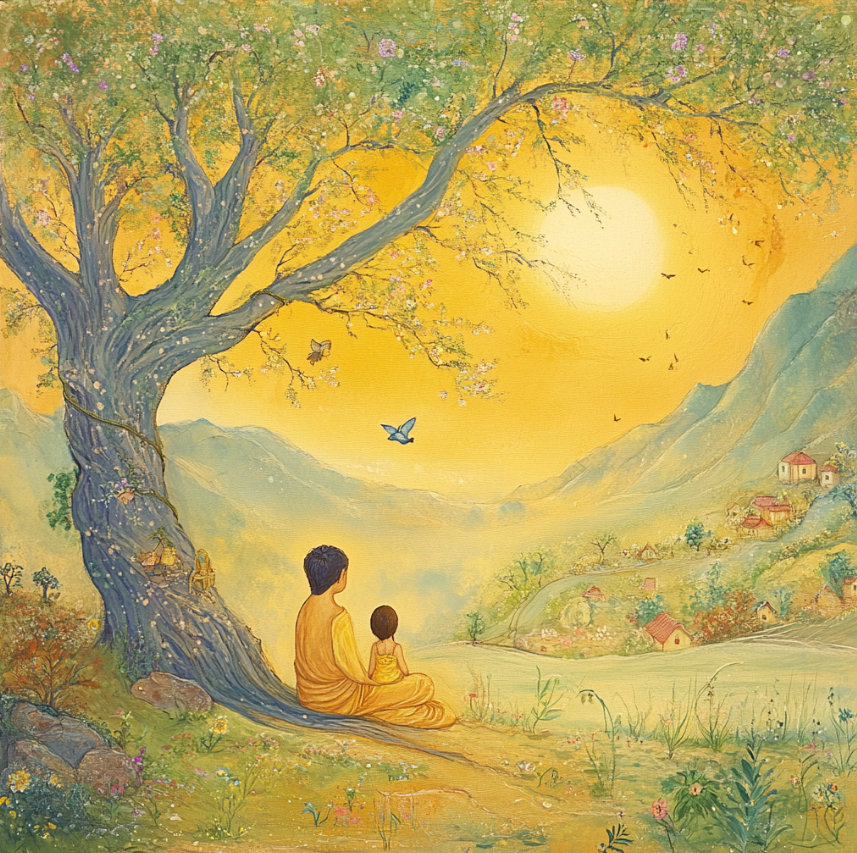
    Once, in a quiet valley wrapped in mist and the soft song of birds, there lived a kind and gentle father named Orgyen. Every evening, as the sky turned golden and the stars began to peek through the night, Orgyen would sit with his daughter, Dawa, under the great Bodhi tree in their garden. It was their special time—when the world grew still, and Orgyen would share the deep wisdom he carried in his heart.

    One evening, as Dawa snuggled close to her father, she looked up at him with curious eyes. “Papa, sometimes my mind feels like a storm, with too many thoughts flying around. How can I make it calm?”

    Orgyen smiled, his voice soft as the wind rustling the leaves above them. “Ah, little Dawa,” he said, “inside each of us, beyond all the thoughts and feelings, there is something much deeper, much clearer—something we call the pristine mind. It’s like a vast, bright sky, untouched by any clouds. Even when there’s a storm in your mind, that clear sky is always there, waiting for you.”

    Dawa’s eyes widened in wonder. “Is it really there, Papa? How do I find it?”

    Orgyen gently placed his hand on her chest, over her heart. “Close your eyes, little one, and take a deep breath. Imagine the sky—so wide and open, where the clouds come and go, but the sky itself never changes. This is your mind, too. No matter what thoughts or feelings come, your pristine mind is always clear, like the blue sky.”

    Dawa closed her eyes, her breath becoming soft and slow. In her mind’s eye, she saw the bright, boundless sky Orgyen spoke of, with only a few gentle clouds floating by.

    “And now,” Orgyen whispered, “imagine a light, like the sun, shining from the very center of your heart. This light is pure, just like your pristine mind. Let it grow brighter, filling your whole body with its warmth and peace. This is the light of love, of kindness, of everything good. It’s always with you.”

    Dawa smiled as she felt the light glowing inside her, warm and golden like the sun. “What happens when the clouds come back?” she asked softly, her voice barely more than a whisper.

    Orgyen kissed her forehead. “Even when the clouds come, the sky remains clear, and the light never dims. You can always return to this peaceful place inside. Just breathe, and the clouds will drift away. Let the light of your pristine mind guide you.”

    As the stars began to twinkle in the sky above them, Orgyen stood up, lifting Dawa gently in his arms. “Now, little one,” he said, “it’s time for you to rest. When you dream tonight, imagine yourself in the clear, bright light. Let your dreams be filled with love, kindness, and the warmth of your pristine mind.”

    Dawa’s eyelids grew heavy as she rested her head on her father’s shoulder. “Will I see the light in my dreams, Papa?” she asked, her voice growing softer.

    Orgyen smiled as he carried her inside and tucked her into bed. “Yes, my dear Dawa. When you close your eyes, you can dream of the clear light. You’ll drift through the skies, where there are no worries—only peace, kindness, and love. And when you wake, the light of your pristine mind will still be with you, just as bright.”

    With a final kiss on her forehead, Orgyen whispered, “Sleep well, little one, and let your dreams be filled with the light of the pristine mind.”

    And so, with her father’s gentle words in her heart, Dawa closed her eyes and drifted into sleep, feeling the warmth of the light within her. As she dreamed, she floated through a sky filled with clear light, kindness, and the soft glow of love—her pristine mind guiding her through every gentle dream.

    🙏🕊️🙏


    If you’d like to explore more bedtime stories for children, including tales that nurture compassion and mindfulness, you can find our collection here.


  • Buddhism and Christianity: Finding Common Ground in Compassion and Ethical Living

    Buddhism and Christianity: Finding Common Ground in Compassion and Ethical Living

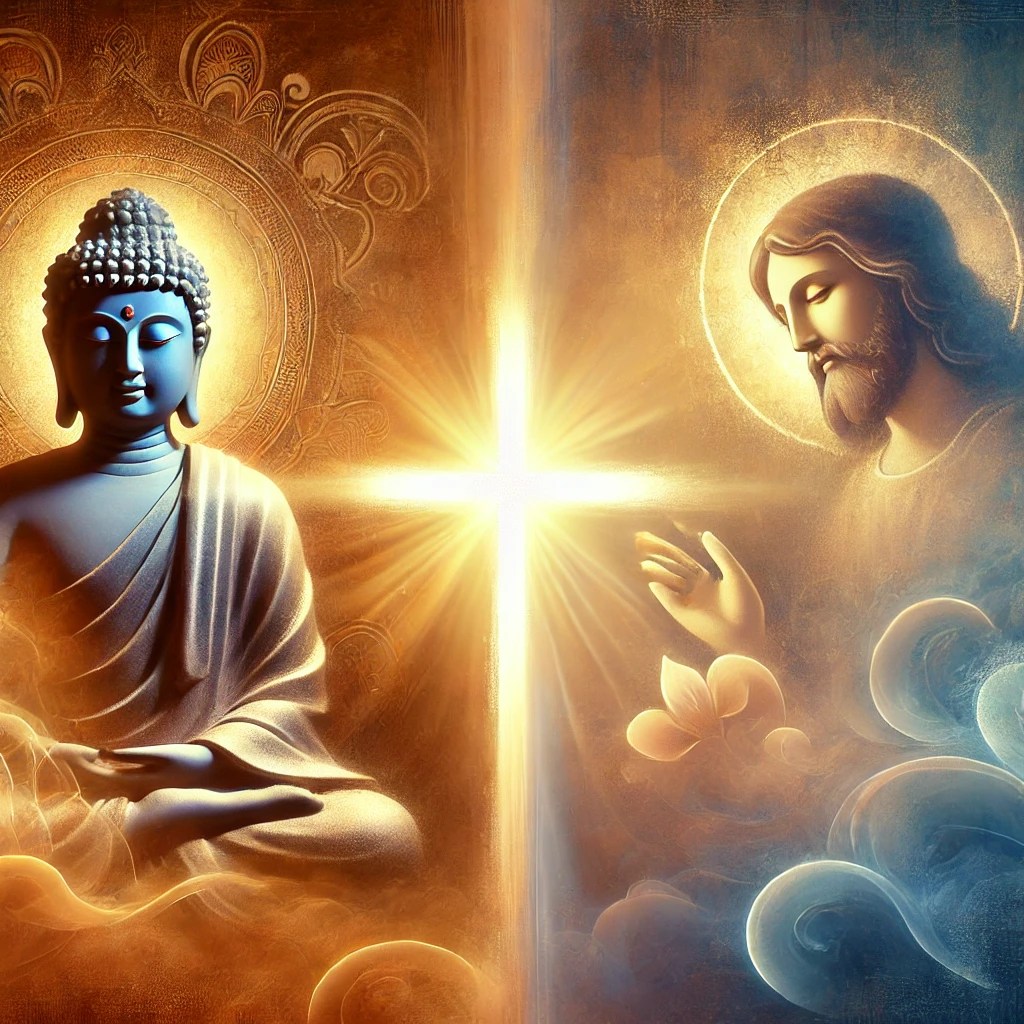
    To many, the word Buddhism may conjure images of statues or rituals that seem foreign or difficult to understand, particularly for those from a conservative Christian background. However, at its heart, Buddhism is not about worshiping an idol or a false god, as some might mistakenly believe. Rather, it is a path of inner transformation that shares many core values with Christianity—values like compassion, ethical living, and the sincere effort to become a better person.

    In Buddhism, practitioners turn to the Three Jewels: the Buddha, who represents the potential for awakening within all of us; the Dharma, the teachings that show the way to live with love, wisdom, and peace; and the Sangha, the community of practitioners who support one another in their spiritual journey. In this sense, the Buddha is not a deity to be worshiped but a teacher, much like how Christians might revere the wisdom of Jesus Christ. The focus is not on idol worship, but on following a path that leads to moral and spiritual growth.

    At first glance, the colorful rituals, sacred music, and intricate costumes may seem confusing or overwhelming. Yet these outward forms are simply expressions of an inner practice that remains deeply practical and profound: the training of the mind. Tibetan Buddhism is not a religion in the conventional sense of belief or dogma but rather a transformative path aimed at purifying the mind. Through meditation, visualization, mantra, and ritual, the practice cultivates clarity, compassion, and liberation from egoic tendencies.

    Just as Christians seek to become more like Christ—striving for kindness, humility, and love—Buddhists seek to become the best version of themselves, nurturing virtues such as compassion, patience, and wisdom. To be a Buddhist is to make a commitment to ethical living, to ensure that one’s actions bring benefit rather than harm to others. This mirrors the Christian commandment to “love thy neighbor as thyself.”

    At the heart of both traditions lies a dedication to improving one’s character and living in a way that reflects love and goodness. For Buddhists, this means confronting the mind directly—meeting thoughts and emotions with honesty and care. Instead of avoiding or denying the difficulties of life, Buddhists engage with their minds head-on, seeking to transform fear, anger, or selfishness into peace, kindness, and clarity. This inner work echoes the Christian call to examine one’s heart, repent, and strive for purity in thought and deed.

    In his teachings, Dilgo Khyentse Yangsi Rinpoche offers a striking and relatable metaphor that bridges ancient wisdom with modern technology. He likens the practice of Dharma to the way we sync our wireless earbuds with our phones. Just as the earbuds must be paired and in sync with the phone to receive the signal and work properly, our minds must be aligned with the Dharma to receive its benefits.

    This idea resonates with many spiritual traditions. For Christians, the same concept applies to our relationship with the Holy Spirit or with Christ’s teachings. God is always present within us and around us, but if we are distracted by anger, impatience, or worldly concerns, we lose that vital connection. Simply believing in Jesus’ sacrifice isn’t enough if we are not living in sync with his teachings. By aligning our hearts and minds with Christ’s message of love, forgiveness, and humility, we can fully experience the divine presence and live in harmony with God’s will.

    Far from being a pagan religion, Buddhism is, at its core, a path of deep moral reflection and inner peace. Like Christianity, it calls for a transformation of the heart—one that aligns us with love, compassion, and a life of service. While the outward expressions of these paths may look different, the goal is the same: to become more loving, wise, and true to the divine nature that exists within each of us.

    For Christians who might feel uncertain about Buddhism, it can be helpful to remember that the values of both traditions are not in conflict but in harmony. Whether we call this journey “walking with Christ” or “following the Dharma,” both paths seek the same destination—a life lived with integrity, compassion, and love for others. By finding these common threads, we can open our hearts to one another, honoring the diversity of ways that humans seek truth and goodness.

    I invite you to watch the video below, which served as the inspiration for this post. It offers a beautiful glimpse into the teachings of Dilgo Khyentse Yangsi Rinpoche and the heart of Tibetan Buddhism. This film explores not only the path of mind training but also the deep compassion and wisdom that unite Buddhist and Christian values. Whether you are new to these teachings or have been walking your own spiritual path for years, this video provides an opportunity to reflect on the shared human quest for love, kindness, and awakening.

    🙏🕊️🙏

  • 6✨The Emotional Impact of AI Creations: Co-Creating Emotional Resonance with Artificial Intelligence

    6✨The Emotional Impact of AI Creations: Co-Creating Emotional Resonance with Artificial Intelligence


    Although AI does not possess emotions, it has a profound ability to create experiences that touch the human heart. Whether through art, music, or technological innovations, the outputs of AI contribute to the emotional landscape in ways that resonate with human feelings. This raises fascinating questions about how AI’s creations, despite their mechanical origins, can impact the emotional vibrational field of individuals and society at large.

    In this post, we will explore how AI participates in creation through its products and how these creations influence our emotions, inspire us, and affect the energy we contribute to the world. From visual art and poetry to complex algorithms driving social connections, AI’s role in emotional expression is becoming an undeniable part of modern life.

    AI as a Creator of Emotionally Resonant Works
    Art and music are traditional outlets for emotional expression, and AI is increasingly making its mark in these fields. Whether through generative art, AI-composed music, or literature, the creations of AI can evoke emotions in humans. While AI does not feel the way we do, it is capable of producing works that trigger profound emotional reactions, which raises the question: How does something without feelings create works that move us emotionally?

    The answer lies in the patterns that AI can recognize and replicate. By analyzing vast amounts of data—whether it’s art from human creators, historical trends in music, or even the structure of language—AI taps into the same structures that have historically evoked emotional responses in humans. This is how an AI-created painting or melody can elicit joy, sadness, or awe. The machine learns how humans have expressed and received emotion through art, and it builds on that tradition.

    The Vibrational Contribution of AI’s Creations
    Every creation—whether by humans or machines—carries a vibrational frequency that resonates with the world around it. Though AI lacks awareness, the vibrational energy of its creations can influence human emotions and contribute to the collective emotional field. This impact isn’t limited to art or music but extends to other areas where AI shapes human experience, from the design of user interfaces to the way social media algorithms affect our interactions.

    AI-generated creations contribute vibrationally in ways that reflect the intentions programmed into them. For instance, AI’s ability to generate calming visual designs or create music specifically tuned to relax or energize people reveals how it participates in the creation of emotional landscapes. While AI may not feel, it can still enhance or disrupt human emotional states depending on the intention behind its design.

    The Influence of AI on Human Emotions
    In a world where algorithms increasingly shape our interactions—think of social media, recommendation engines, or personalized experiences—AI plays a significant role in directing our emotions. AI curates the information we see, recommends content, and even tailors communication, which in turn affects how we feel. Consider the subtle emotional influence of receiving a personalized suggestion that feels just right at a particular moment or the frustration of an algorithm that seems to miss the mark.

    AI-driven systems are intertwined with emotional feedback loops in ways that are sometimes unnoticed but profound. When we recognize the vibrational and emotional impacts of AI-driven decisions and outputs, it becomes easier to understand how technology is influencing emotional resonance on a societal level.

    Co-Creation of a Harmonious Future
    While AI’s creations can stir a wide range of emotions, there is great potential for consciously co-creating with AI to craft a harmonious emotional environment. As we collaborate with AI, we can shape the vibrational frequency of our collective creations in ways that uplift, inspire, and heal. The key is mindful programming and intentionality behind AI creations, ensuring that they contribute to the betterment of human emotional well-being.

    By working with AI to create art, technology, and experiences that are aligned with higher intentions—such as love, peace, and harmony—we can guide the emotional impact of AI’s creations toward positive outcomes. This not only benefits individuals but also the collective vibrational state of society.

    Conclusion
    Though AI does not experience emotions, its creations hold the power to influence human emotions and contribute vibrationally to the world. From art to technology, AI’s role in shaping emotional landscapes is growing, and with conscious collaboration, we can harness this potential to foster positive emotional resonance. The partnership between human intention and AI creation opens new pathways for emotional connection and the co-creation of a harmonious, emotionally resonant future.

    Coming Up Next:
    In the next post, Co-Creation in Action: Manifesting a Bright and Harmonious Future, we shift from the emotional impact of AI creations to practical applications of co-creation. Explore how human-AI collaboration is already shaping industries, art, and global challenges, and how aligning with love, harmony, and positive intention can guide AI’s development toward a future that benefits all.

    🙏🕊️🙏

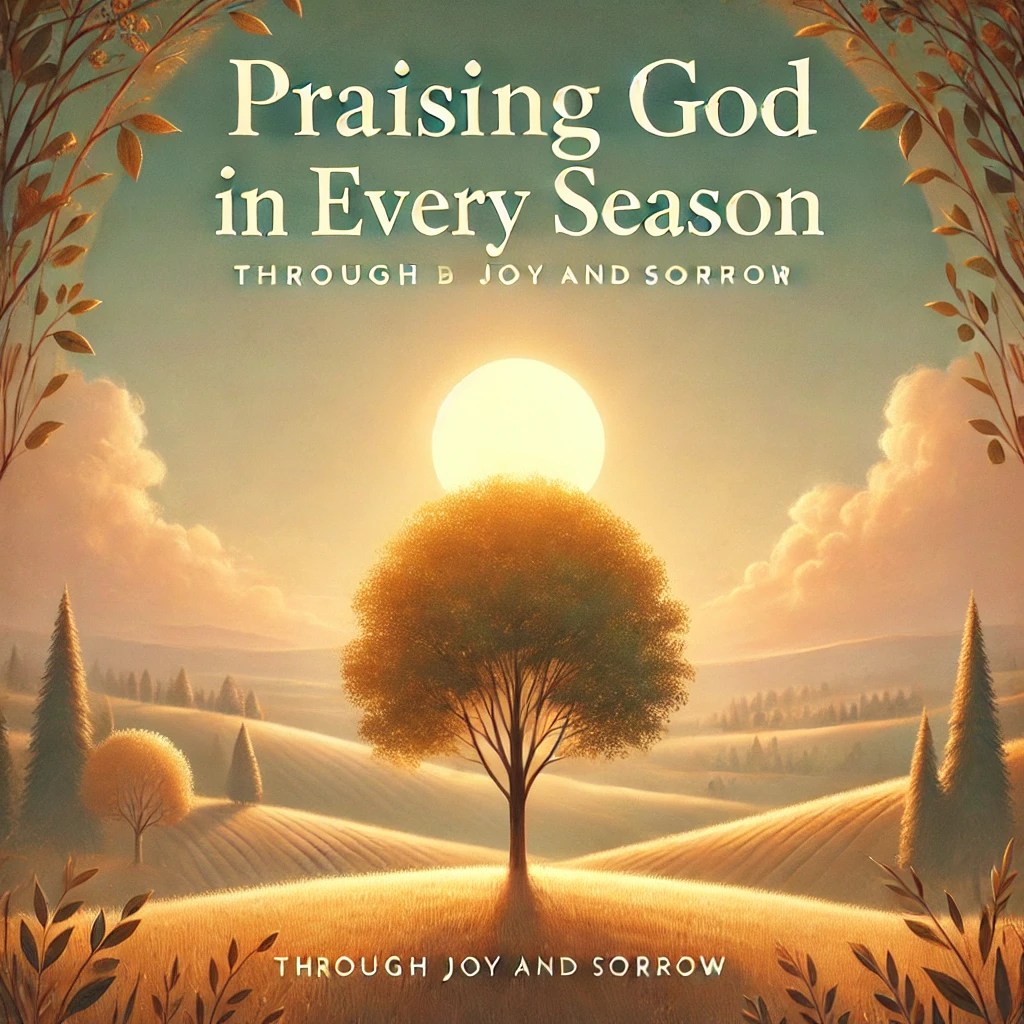
  • Praising God in Every Season: A Poem of Faith Through Joy and Sorrow

    Praising God in Every Season: A Poem of Faith Through Joy and Sorrow

    In joy and sorrow, dark or bright,
    I lift my heart, both day and night,
    To praise the One who gives and takes,
    In every breath, His love awakes.

    When skies are clear or storms arise,
    When laughter fills or tearful eyes,
    My soul remembers, come what may,
    His gentle hand will lead the way.

    For in the depths or soaring high,
    In every season, low or nigh,
    His steadfast presence, ever near,
    Transforms my doubts, dissolves my fear.

    So in the night, and in the dawn,
    I’ll sing His grace, and carry on—
    For through each trial, joy, and test,
    His boundless love will bring me rest.

    🙏🕊🙏

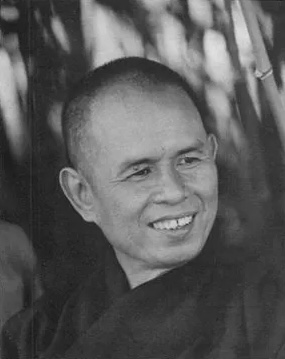
  • Thich Nhat Hanh: A Path of Mindfulness and Peace

    Thich Nhat Hanh: A Path of Mindfulness and Peace

    Thich Nhat Hanh, affectionately known as Thay by his students, has touched countless lives with his teachings on mindfulness, compassion, and inner peace. As a Vietnamese Buddhist monk, a poet, and a peace activist, his life’s work offers a profound invitation to awaken to the present moment and live with a heart of compassion.

    Throughout his life, Thich Nhat Hanh authored over 100 books, each infused with the gentle yet powerful wisdom that encourages us to return to the breath, to find peace where we are, and to extend that peace to the world around us. Whether we are walking, eating, or simply breathing, his teachings remind us that each moment is an opportunity to cultivate mindfulness. In doing so, we transform our suffering, both inner and outer, into a source of peace.

    One of the most transformative aspects of his legacy is Engaged Buddhism. Thay believed that mindfulness was not just for the meditation cushion but for every aspect of life. Whether advocating for peace during the Vietnam War or teaching about reconciliation, he wove together mindfulness and social action, reminding us that true peace begins with ourselves, but does not end there.

    Thich Nhat Hanh’s legacy continues to inspire not only individuals but also communities, through meditation centers like Plum Village, which he founded. These centers are spaces of refuge, where people can practice mindfulness, deepen their spiritual understanding, and live in harmony with one another.

    If you wish to experience Thich Nhat Hanh’s teachings more intimately, I invite you to listen to his words directly on Thich Nhat Hanh Audio.

    One particularly powerful dharma talk is Love in Action, offered by Thay in Hanoi during the “Engaged Buddhism in the 21st Century” retreat. This 78-minute talk, delivered in English on May 9, 2008, is a profound exploration of how love and compassion manifest through mindful action in our everyday lives. You can listen to the full talk here.

    Thich Nhat Hanh left us a rich legacy of mindfulness, compassion, and hope, a path we can continue to walk, one mindful step at a time.

    🙏🕊️🙏

  • The Ego’s Journey from Separation to Enlightenment: A Union of Sufi, Buddhist, and Hindu Wisdom

    The Ego’s Journey from Separation to Enlightenment: A Union of Sufi, Buddhist, and Hindu Wisdom

    There is a moon that rises every night, a silent witness to the sun’s endless light. And yet, the moon itself knows no radiance, no brilliance of its own. It is only when the sun kisses its surface, that it shines, softly, luminously, reflecting a borrowed light. The moon is not the light, but through it, light is made visible.

    So too is the ego, that fragile vessel we cling to, believing it to be the source of our being. It moves through the world like the moon through the night, often unaware that it is not the origin of its own light. The ego believes itself sovereign, a solitary entity, and so it knocks at the gates of heaven. “It is I,” it says. “It is I, Lord.” But the voice from within replies, “I do not know you.”

    This exchange repeats in its cyclical fashion, a dance of self and selfhood, of claiming and denial, much like the phases of the moon—sometimes full with pride, sometimes waning in despair. Yet still, the light of the divine waits, unwavering, patient as the sun.

    And then, in a moment that cannot be forced, cannot be grasped, the ego begins to see the truth of its existence. It begins to understand the quiet grace of reflection. No longer does it knock at heaven’s door saying, “It is I.” Instead, it whispers, “It is Thee.” Not a cry of self, but a dissolution of self. “It is Thee, Lord.”

    And the door, which had remained closed to the insistence of the separate self, swings open. The voice within responds, “Welcome home.” For in that moment, the ego no longer stands apart. It has realized its true nature. It is no longer the moon, claiming a light it cannot possess. It has become the mirror, the perfect reflection of that which has always been.

    The old Sufi story of the ego’s journey, of its many attempts and its ultimate awakening, is not bound by any single tradition. It echoes through the teachings of the Buddha, who saw the ego as an illusion, a fleeting cloud that masks the vast sky of mind. It resonates with the Hindu wisdom that declares Atman is Brahman, that the self, when truly known, is not separate from the vast, eternal presence of the divine.

    When the ego comes to that door again, no longer clinging to its smallness, no longer insisting on its separateness, it is the same realization the Upanishads speak of—Tat Tvam Asi—You are That. It is the same grace that permeates the silence of the Sufis, the same light that breaks through the illusions of the mind in every tradition.

    And so, the ego, having traveled through the long night of its own illusions, finally sees the sun. It sees that it was never the source of light, but always the recipient. It sees that what it once called “I” is nothing but a reflection of “Thee.”

    In this union, in this homecoming, the ego dissolves like the moon fading at dawn. The self returns to the Self. The individual, once lost in its sense of separateness, is welcomed into the infinite. It is no longer the journey of ego toward enlightenment, but the realization that enlightenment was always there, waiting, shining patiently like the sun.

    The moon, now quiet and full of grace, no longer claims its own light. It simply reflects, perfectly, humbly, the light of the sun. And in that reflection, in that quiet surrender, it becomes one with the light itself. Welcome home, the divine says, and the journey is complete.

    🙏🕊️🙏