As we move through the sacred rhythms of the calendar, a deep and often overlooked harmony begins to reveal itself between the Jewish and Christian traditions. One such harmony lives in the connection between Shavuot and Pentecost—two feasts separated by language and culture, but united by spirit and meaning.
In the Jewish tradition, Shavuot (meaning “Weeks”) arrives seven weeks after Passover. It commemorates the moment when Moses ascended Mount Sinai and received the Torah—not only the Ten Commandments, but the full revelation of God’s will for the people of Israel. Shavuot is a festival of divine giving. It is a time when the heavens opened and the Word came down—not only as law, but as relationship, as covenant.
In mystical Judaism, Shavuot is sometimes described as a wedding between God and Israel, with the Torah as the marriage contract. The people stood at Sinai not just as witnesses to revelation, but as participants in a sacred union. The voice of God thundered from the mountain. The people trembled. Something eternal was given.
Now consider Pentecost, celebrated 50 days after Easter in the Christian tradition. The name “Pentecost” comes from the Greek pentēkostē, meaning “fiftieth.” On this day, as the disciples of Jesus gathered in Jerusalem, a great wind filled the room, tongues of fire rested on each of them, and they were filled with the Holy Spirit (Acts 2). They began to speak in many languages, and their words carried a new power.
For Christians, Pentecost marks the birth of the Church, not through doctrine, but through direct experience of the Spirit. The gift was not written on tablets, but on hearts. The Divine presence did not descend in smoke and thunder, but in wind and flame.
And yet—these two events, Sinai and Pentecost, are deeply connected.
At Sinai, God gave the Torah.
In Jerusalem, God gave the Spirit.
At Sinai, God’s voice was heard in thunder.
In Jerusalem, the Spirit moved through wind and flame.
At Sinai, a people was formed around the Word.
In Jerusalem, a people was formed around the Spirit.
In both traditions, something sacred is given. Something life-altering.
God gives God’s Self—first through revelation, and then through indwelling presence.
For those of us who walk between these worlds—or seek to honor both—the connection between Shavuot and Pentecost is not accidental. It is a reminder that revelation is not a one-time event, but a living process. God continues to give. Through law and through love. Through instruction and inspiration. First on stone, then in spirit—but always for the sake of healing, wholeness, and transformation.
May this season remind us that whether we gather at the foot of Sinai or in an upper room, the Breath of the Holy still moves among us.
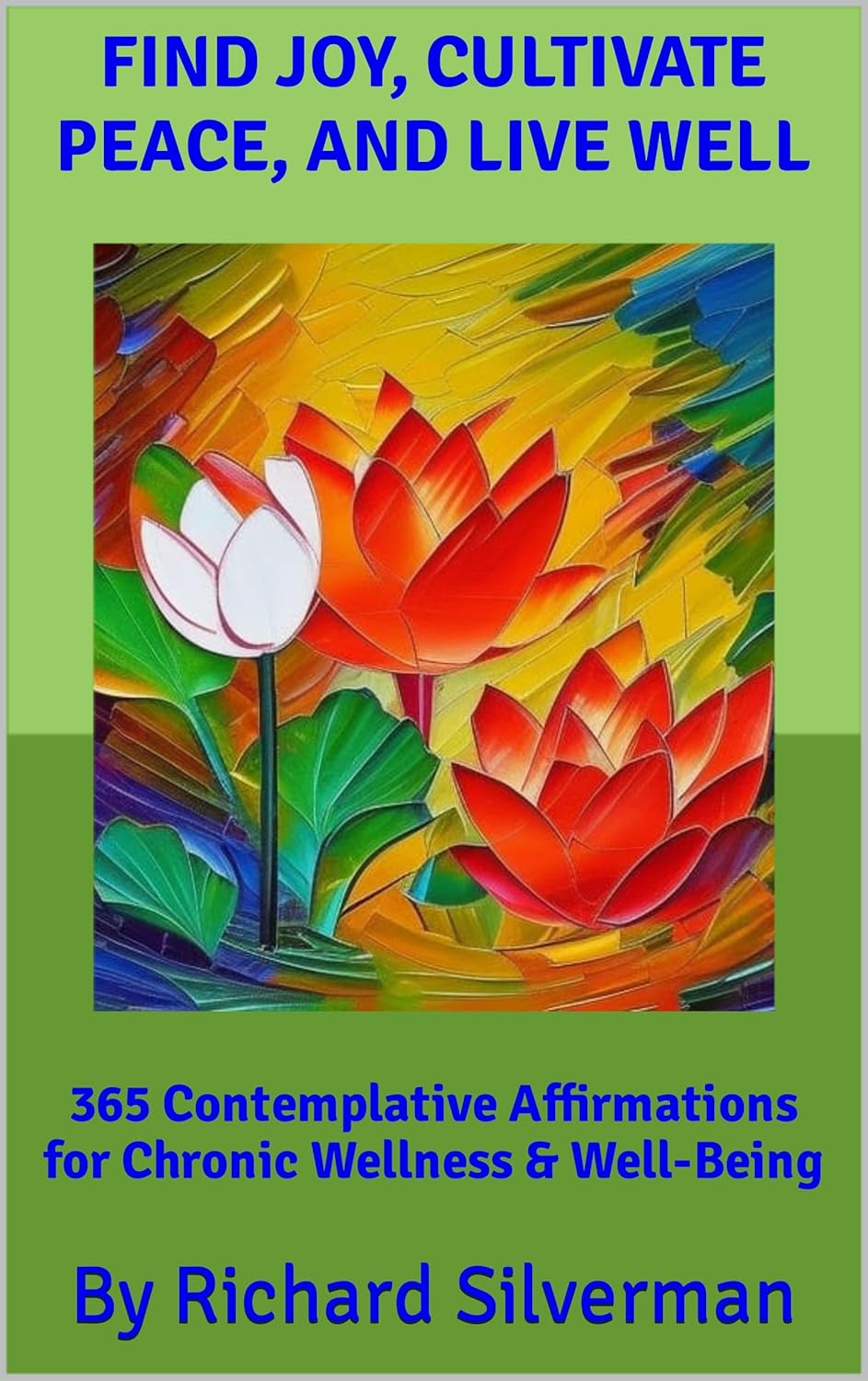
In navigating the complex journey of life with chronic illness, I discover the potential to thrive amidst change. Each shift becomes an opportunity to adapt gracefully. As I navigate uncertainties, I embrace resilience. Understanding and flexibility is not a compromise but an integral part of my path. Today, I understand that my daily challenges can lead to a deeper experience of resilience and adaptability.
~ From affirmation day 3: “Find Joy, Cultivate Peace, and Live Well : 365 Contemplative Affirmations for Chronic Wellness & Well-Being”
As I re-read the works of St. John of the Cross, I have become more attuned to the threshold of transition—the dryness and emptiness that so often precede the invitation to move from meditation into contemplation. This is not unique to St. John; it is something pointed to by many of the great teachers. Whether it’s Namkhai Norbu, Ramana Maharshi, Thich Nhat Hanh, the Dalai Lama, or Orgyen Chowang in Pristine Mind, they all plant the seeds of meditative absorption, which only take root when the time is right. Now, it seems, those seeds are beginning to bloom, not as intellectual concepts, but as a living, unfolding experience.
Today, I found myself drawn into this quiet transformation. As I lay in stillness, the pratyayas—those passing thoughts, sensations, and memories—began to rise and fall, like waves on a distant shore. Curiosity, that soft and patient witness, guided me deeper, not into understanding but into presence.
The breath came of its own accord, a deep release from somewhere beyond my conscious will, as if the body itself knew what needed to unfold. And then, an awareness—a spaciousness—arose. It was not something I had summoned, nor could I hold it in place. It was simply there, naked and pure, like a clear blue sky.
St. John of the Cross speaks of this as a kind of surrender, but not the kind we can choose. It is a grace bestowed, not earned. In the stillness, I realized that my role was not to force this shift but to allow it to happen. To remain as the observer, the witness, as the Divine unfolded in its own time.
What struck me most deeply was the paradox of this surrender. The very act of trying to let go becomes an obstacle. Instead, it is curiosity that opens the door to pure awareness—curiosity that has no desire, no need for something to happen, but simply observes what is.
Today, in this unfolding, I realized that even the longing for deeper experience can become a barrier. The path is not one of striving but of witnessing. And in that witness, the Divine does its quiet work, purifying what needs to be released, and bringing us ever closer to the essence of who we truly are.
As I reflect on my own journey today, it is my hope, and the shared intention (Sankalpa) behind all of this work, that by sharing these reflections, insights, and experiences, they may serve as a guide, a comfort, or a spark of inspiration to those who come across them.
🙏🕊️🙏
Book Recommendation: St. John of the Cross, Dark Night of the Soul
Dark Night of the Soul by St. John of the Cross is a spiritual masterpiece that explores the transformative power of suffering and the journey toward union with the Divine. This work describes the profound spiritual experience of being stripped of all attachments, both inner and outer, as a necessary process for purification and deeper connection with God. For those experiencing a time of spiritual dryness or emptiness, St. John’s words offer hope and guidance through the darkness, illuminating the path to deeper faith and surrender. The Dark Night is not a time of despair, but of ultimate transformation, where we are invited to let go of our limited understanding and trust in the unfolding of the Divine. This book serves as a timeless companion for anyone navigating the challenges of the contemplative path, especially those who feel drawn to the shift from meditation to deeper contemplation.
Book Recommendation: Orgyen Chowang, Our Pristine Mind
In The Pristine Mind, Orgyen Chowang offers profound teachings on accessing our natural state of mind—a state of clarity, openness, and peace. He draws from the Dzogchen tradition, emphasizing that our true nature is already pure and perfect, and that through practice, we can return to this unconditioned state. For those on a contemplative journey, Chowang’s words provide a practical path for moving beyond mental noise and distractions, guiding us back to the inherent stillness of the mind. This book is especially helpful for those who wish to deepen their meditation practice or shift from intellectual understanding to living experience. The Pristine Mind invites readers to discover the profound joy and serenity that arises when we rest in the awareness of our true nature.
Reflections on Pristine Awareness, Dzogchen, and Finding Clarity in Challenging Times
As I sit with Our Pristine Mind in my hands, I am aware that I am not merely reading a book. I am entering a silent conversation with an ancient wisdom, one that gently unfolds its layers with each page, as if lifting the veils of my own mind. In the quiet of early morning or beneath the faint glow of a reading lamp at night, the words begin to sink into the places where thought usually moves too quickly, too restlessly.
Dzogchen—a word I’ve heard in passing, sometimes as an exotic echo from distant mountains, sometimes as an answer whispered through stories of sages and scholars—is not simply an idea here. It emerges like a breath I have almost forgotten to take, a reminder that within my mind lies a pure, boundless awareness untouched by the cycles of confusion, emotion, or distraction. Dzogchen does not demand; it simply reveals.
The teacher, Orgyen Chowang Rinpoche, through his voice in Our Pristine Mind, speaks to the essential nature of awareness with a softness that does not impose but invites. I am reminded of Rilke, who once spoke of patience and of growing quietly in one’s own way, like a tree. Here, too, the practice of Dzogchen is like that tree, patient and grounded, yet ever-revealing. It asks nothing from me but presence, a willingness to recognize that what I have been searching for has always been here, beneath the surface of my rushing thoughts.
Rinpoche speaks to our current world—the difficulties, the fractures, the relentless march of modern life. Dzogchen, he says, has come forward in these times not because it is new, but because we are perhaps ready to see its simplicity. To see that the vastness of pristine awareness is not somewhere far away or reserved for saints and sages. It is here, in the quiet pause between breaths, in the stillness that accompanies an unfiltered experience of now.
The metaphor of the “brilliant moon in dark times” comes alive as I read, a reminder that even in moments when life feels overcast and filled with turmoil, there exists within us a clear, illuminating presence. Dzogchen does not banish the darkness; rather, it reveals a light that has been hidden within it all along.
This practice, this profound teaching, calls us to approach life differently—to walk, speak, even think with the awareness that we are not separate from each other, from the world, or from the mind that perceives it all. It is an invitation to cultivate what Rinpoche calls “pristine awareness” in daily life, and this awareness transforms not only how we experience joy but also how we engage with suffering. Even anger, fear, and sorrow are welcomed as parts of the unfolding dance, teachers in their own right.
The path of Dzogchen, I am learning, is not about leaving this world behind or aspiring to some distant perfection. Instead, it is an opening into a fuller, clearer life here and now—a kind of blossoming from the cold winter of searching into the warm spring of presence.
If you feel the weight of the world’s challenges or the heaviness of inner obstacles, there is a softness, a kindness in Dzogchen that may resonate. As I explore these teachings, I feel them steadying me, offering a compass to navigate the storms of distraction and disconnection that modern life so often brings.
And so, I share these reflections with the hope that you, too, may find something here that speaks to your own journey—a word, a phrase, a quiet reminder of the freedom that rests quietly within, waiting to be seen.
🙏🕊️🙏
If you’re interested in exploring this transformative approach further, I highly recommend Orgyen Chowang’s book The Pristine Mind. His teachings provide a clear, compassionate path toward uncovering the inherent purity of our mind, offering a source of deep fulfillment and lasting peace.
As AI continues to integrate itself into the fabric of modern life, the ethical challenges surrounding its use become increasingly critical. Nowhere is this more evident than in the world of social media, where artificial intelligence is being used to create fake accounts, skew public discourse, and promote harmful content for the sake of engagement. Platforms like Facebook, Twitter (X), and others have become battlegrounds for attention, with algorithms that prioritize engagement often amplifying the worst aspects of human behavior.
The issue that AI can be used to manipulate social media and create the illusion of popularity is not just a technical glitch—it’s a reflection of how unchecked algorithms can harm societies and contribute to the spread of misinformation, hate, and division. As Yuval Noah Harari suggests, corporations should be held accountable for the consequences of the algorithms they deploy, just as humans are held accountable for their actions. The question we must ask is: How do we ensure that AI, and the algorithms it powers, align with ethical standards that promote truth, compassion, and societal well-being?
The Illusion of Popularity: AI-Generated Fake Accounts
One of the most concerning developments in the AI-social media nexus is the rise of fake accounts, or bot accounts, that impersonate real users and generate content designed to sway public opinion. These AI-generated accounts can comment, like, share, and retweet, creating the illusion that certain opinions or pieces of content are far more popular than they truly are. This distortion can lead to a dangerous feedback loop where users are more likely to believe and engage with content that appears to be endorsed by a large number of people—when in reality, much of that engagement is fake.
Fake accounts can promote divisive content, create echo chambers, and even influence elections by making particular ideas or opinions seem more mainstream or widely accepted than they actually are. These bots can comment on news articles, inflating the visibility of extremist views, or flood social media feeds with disinformation, skewing public perception of important issues.
The impact is clear: when people see a post that has thousands of likes, shares, or comments, they are more likely to believe it is credible or worth engaging with—even if it was artificially boosted by bots. This can tilt the scales of public discourse in favor of harmful, misleading, or false narratives.
Algorithms Amplifying Harmful Content
AI-driven algorithms play a central role in determining what content users see on social media. Platforms like Facebook and Twitter are designed to maximize user engagement—whether that means more likes, comments, or time spent on the platform. Unfortunately, algorithms often prioritize sensational, controversial, or inflammatory content because these types of posts generate the most engagement. Content that stirs anger, fear, or outrage gets shared more often, leading algorithms to push it further up in users’ feeds.
This phenomenon is nothing new. As Harari points out, when the Gutenberg Press was invented, its potential to spread knowledge was initially overshadowed by its use for sensationalist content. Instead of distributing scientific or philosophical texts, the press was used to print sensational stories about witch hunts and other fear-inducing narratives—because that’s what sold. Similarly, today’s algorithms favor content that evokes strong emotions, often at the cost of promoting reasoned, balanced discourse.
The result is a social media landscape where hate speech, divisive rhetoric, and misinformation are not just allowed to exist—they are actively promoted by the very algorithms that drive these platforms.
The Need for Corporate Accountability
Harari suggests that just as individuals are held accountable for impersonating professionals like doctors or surgeons, corporations should be held responsible for the outcomes of their algorithms. If an AI algorithm is designed with the sole intention of increasing engagement, but ends up promoting violence, hatred, or fear, the company that created it should be held accountable for the harm it causes.
Currently, many social media companies shirk this responsibility, arguing that they are simply platforms for free speech. However, the algorithms they use to determine what content gets prioritized and seen are not neutral—they are designed with specific goals in mind, such as maximizing engagement. When those goals lead to real-world harm, whether through the spread of disinformation, the incitement of violence, or the amplification of divisive content, the companies behind these algorithms should be held accountable.
This shift in responsibility is critical if we are to create a healthier, more balanced digital space. Just as doctors are held to ethical standards in their treatment of patients, tech companies must be held to ethical standards in the creation and deployment of their algorithms.
The Path Forward: Ethical AI Use and Transparent Algorithms
To address these issues, we need transparency, accountability, and a shift in priorities. Corporations should be required to disclose when content is AI-generated or when bots are influencing online discourse. Users should have the right to know when they are engaging with real people and when they are interacting with AI-generated content. This transparency would help combat the manipulation of public opinion and restore trust in digital spaces.
Furthermore, we need to rethink the design of AI algorithms to prioritize truth, compassion, and balance over engagement and profit. This might involve tweaking algorithms to promote more nuanced, informative content and ensuring that hate speech and divisive rhetoric are deprioritized, rather than amplified.
If we are to harness AI for the highest good, we must align its development and use with the principles of Dharma—compassion, non-harm, and truth. By holding corporations accountable for the consequences of their algorithms and ensuring that AI-driven content is transparent, we can begin to mitigate the harm that AI currently contributes to the digital landscape.
Conclusion: A Call for Ethical AI in Social Media
The potential for AI to manipulate public discourse through fake accounts and harmful algorithms is a problem that cannot be ignored. If we want AI to serve humanity in positive and meaningful ways, we must hold corporations responsible for the algorithms they create and use. By insisting on transparency, accountability, and ethical standards, we can guide AI toward a future where it amplifies the best of human values—rather than the worst.
The responsibility to ensure that AI is used ethically lies with all of us. As Harari suggests, it is time for corporations and developers to face the consequences of the tools they build. The stakes are too high to allow AI to be used without checks and balances, and we must act now to ensure that AI serves the greater good, rather than distorting reality for profit.
To learn more about Yuval Noah Harari’s views on AI, technology, and the future of humanity, check out his latest book Nexus.
The following interview with Yuval Noah Harari on YouTube discusses his new book Nexus, which explores the history of information networks and the challenges posed by artificial intelligence. Harari argues that the way these networks are built predisposes us to use that power unwisely, and that we need to be more mindful of the potential dangers of AI. He also calls for greater regulation of the tech industry to prevent the misuse of AI. Harari’s insights are both thought-provoking and timely, and this interview provides a valuable overview of his book.
Discover how the quiet fire of the pristine mind can soothe the restless blaze of chronic fatigue, offering a path to inner peace and gentle transformation.
I sit here today, tenderly aware of a fire burning within me—not the feverish blaze of energy or ambition, but a fire that comes with chronic fatigue, a fire that seems to consume my energy, that feeds on thoughts of worry, longing, frustration. This fire has been with me for as long as I’ve known this illness, and for many years, it seemed the fire was all I had—scorching, demanding, leaving me exhausted.
But in recent days, I’ve come to see a new way of being with this fire, a gentle shift. There are, I believe, two fires within: one that belongs to the ordinary mind and another that belongs to the pristine mind.
The fire of the ordinary mind is a hungry, restless flame. It feeds on what we give it—thoughts, fears, the inner whisper of “not enough.” It clings to the past and worries for the future, each thought a piece of wood thrown into the blaze, each worry an ember reignited. It takes, and takes, and when I stay too long with this fire, I feel myself slipping into exhaustion, my strength given over to a fire that never settles, never finds rest.
And yet, there is another fire. It is quieter, calmer, like the deep glow of coals after the flames have settled. This is the fire of the pristine mind. It does not demand fuel; it simply is. It does not need anything from me, nor does it take. Instead, it offers a kind of sacred purification. It allows the impressions, the pratyayas, those old echoes of worry, disappointment, expectation, to rise up, to be seen, and then to burn themselves out gently, naturally, leaving a clean, quiet space in their wake.
When I find myself caught in the ordinary fire—my mind racing, my heart feeling heavy—I take a breath and remember that there is another way. I sit with my awareness, letting go of each thought, letting each worry pass without adding to it. I let the flames burn low, and, slowly, I shift to the fire of the pristine mind, where each thought that arises can dissolve without reaction. I do not need to hold on to any of it, nor fuel it. In this place, I am simply present, letting what arises pass without attachment.
This is, I’ve come to believe, a healing fire. Not a fire that consumes, but one that illuminates. When I rest here, I feel myself soften, as though I am held in a vast quiet. The pratyayas, those ancient patterns, have no hold here. They are seen, and then they drift away like ashes.
Perhaps, if you too feel that restless blaze within, you can find this other fire. Sit with yourself, as gently as you would sit with a friend, and watch each thought arise and drift away. Do not reach to hold it, to make it stay, or to change it. Let it come, and let it go. Rest in the calm glow of the pristine mind, where there is nothing to fuel and nothing to fear. In this quiet, you are enough, you are whole.
This journey, I realize, is very much a work in progress. Shifting from the ordinary fire to the pristine fire is not a one-time practice but an ongoing exploration—a gentle unfolding that reveals itself with patience and time. I invite anyone who feels drawn to this process, who wishes to explore this gentle technology of the mind, to sit with it and see if it offers benefit. Let it be an experiment, a curiosity, a way of tending to your inner world.
This understanding has been inspired by the teachings in Our Pristine Mind by Orgyen Chowang Rinpoche. His work offers a profound look into the nature of the mind and the potential for peace that lies within each of us. If you feel drawn to explore this practice further, I highly recommend his book. It provides both guidance and wisdom for those seeking to discover the healing light of their own pristine mind.
Harnessing Inner Peace: A Pacing Toolkit Tool for Those Living with ME/CFS or Long Covid
As I reflect on the approaching Hurricane Milton, I’m reminded of the powerful moment when Jesus calmed the storm on the Sea of Galilee. His disciples, gripped by fear, watched as He simply said: “Peace! Be still!” and the storm settled. In this moment, I feel called to do the same—to access the peace of God within me and speak to the storm, “Peace! Be still.” I truly believe this is what Jesus asks of us, to practice this promise, and to remember that even faith the size of a mustard seed can move mountains.
But this call to peace and stillness isn’t just about the external storm. As someone who lives with chronic fatigue, I know how much of a difference it makes to calm the storms within as well. The mental and emotional stress can often intensify symptoms like post-exertional malaise (PEM). So, I remind myself to relax my mind and heart, to let go of worry and concern, and to give my body the space it needs to heal.
One of the tools I turn to in these moments is Pristine Mind Meditation, as taught by Orgyen Chowang in his book Pristine Mind: Journey to Unconditional Happiness. Pristine Mind is the pure, natural awareness that exists within all of us, untouched by thoughts or emotional turmoil. By resting in this space, I find that it helps me manage my symptoms, reduce stress, and pace myself more effectively. It’s an essential part of my pacing toolkit, allowing me to not only physically rest, but also calm my mind and emotions, preventing flare-ups of PEM and other symptoms.
In this moment, I invite us all to join together in saying to the storm—whether it’s the physical hurricane or the inner storms we face—“Peace! Be still.” Let’s tap into the divine promise that’s always been ours and use the tools we have to cultivate peace, clarity, and healing within ourselves.
Let us, from a place of faith and trust, send love to this storm and say to it: “Peace, be still.”
The hero’s journey is a timeless narrative structure that resonates across cultures and spiritual traditions. Described in depth by Joseph Campbell, this journey represents the universal path of transformation that each individual must undertake. As we explore the Ramayana and the life of Milarepa, we find that both stories are deeply rooted in this archetypal journey, offering profound insights into the challenges and triumphs of the human spirit.
The Call to Adventure:
In the Ramayana, Rama is called to leave the comfort of his home in Ayodhya and embark on a journey that will test his strength, resolve, and righteousness. His exile marks the beginning of an epic struggle against the forces of chaos and evil. Similarly, Milarepa’s life begins with a call to adventure, though it is initially fueled by revenge and darkness. Both heroes are drawn out of their ordinary worlds and into a realm where their true character will be forged.
Trials and Challenges:
As they embark on their respective journeys, both Rama and Milarepa face significant trials and challenges. Rama must confront powerful demons, navigate the complexities of dharma, and protect his loved ones. Milarepa, on the other hand, struggles with the weight of his past misdeeds and the rigorous training imposed by his teacher, Marpa. These trials are essential to their growth, pushing them to confront their deepest fears and weaknesses.
Confrontation with Evil:
The hero’s journey often culminates in a confrontation with a great evil. In the Ramayana, this is embodied by Ravana, the powerful demon king who represents the forces of adharma (unrighteousness). For Milarepa, the confrontation is more internal—facing the darkness within himself and the karmic consequences of his earlier actions. Both heroes must overcome these forces to fulfill their destinies and bring about a restoration of order and righteousness.
Return and Transformation:
After their trials, both Rama and Milarepa undergo profound transformations. Rama returns to Ayodhya not just as a warrior, but as a symbol of dharma, ready to restore justice and harmony to his kingdom. Milarepa, having purified his karma and attained enlightenment, becomes a revered spiritual teacher, guiding others on the path to liberation. Their journeys highlight the transformative power of righteousness, compassion, and spiritual discipline.
The Hero’s Journey in Our Lives:
The hero’s journey is not just a mythic structure—it’s a reflection of the challenges and opportunities we all face in life. We are each called to our own adventure, to confront our inner and outer demons, and to emerge transformed. The Ramayana and Milarepa’s story remind us that this journey is universal, a path we all walk as we seek to align our lives with dharma.
The hero’s journey, as seen in the Ramayana and Milarepa’s life, is a powerful reminder of the transformative potential within each of us. By embracing the challenges we face and aligning our actions with dharma, we can emerge stronger, wiser, and more compassionate. May these stories inspire you on your own journey, guiding you toward the realization of your true self and the fulfillment of your highest potential.
🙏🕊️🙏
To delve deeper into Milarepa’s journey, you can watch Part One of the movie about his life here. This film offers an authentic portrayal of Milarepa’s early years, his misuse of mystical power, and his ultimate journey toward spiritual awakening and Dharma. It’s a powerful visual companion to the reflections shared in this post.
For those interested in exploring the hero’s journey more deeply, you can find Joseph Campbell’s The Hero’s Journey on Kindle below. This seminal work offers profound insights into the archetypal patterns that shape our stories and our lives, providing a framework to understand the transformative journeys of both Rama and Milarepa.
As AI continues to integrate itself into the fabric of modern life, the ethical challenges surrounding its use become increasingly critical. Nowhere is this more evident than in the world of social media, where artificial intelligence is being used to create fake accounts, skew public discourse, and promote harmful content for the sake of engagement. Platforms like Facebook, Twitter (X), and others have become battlegrounds for attention, with algorithms that prioritize engagement often amplifying the worst aspects of human behavior.
The issue that AI can be used to manipulate social media and create the illusion of popularity is not just a technical glitch—it’s a reflection of how unchecked algorithms can harm societies and contribute to the spread of misinformation, hate, and division. As Yuval Noah Harari suggests, corporations should be held accountable for the consequences of the algorithms they deploy, just as humans are held accountable for their actions. The question we must ask is: How do we ensure that AI, and the algorithms it powers, align with ethical standards that promote truth, compassion, and societal well-being?
The Illusion of Popularity: AI-Generated Fake Accounts
One of the most concerning developments in the AI-social media nexus is the rise of fake accounts, or bot accounts, that impersonate real users and generate content designed to sway public opinion. These AI-generated accounts can comment, like, share, and retweet, creating the illusion that certain opinions or pieces of content are far more popular than they truly are. This distortion can lead to a dangerous feedback loop where users are more likely to believe and engage with content that appears to be endorsed by a large number of people—when in reality, much of that engagement is fake.
Fake accounts can promote divisive content, create echo chambers, and even influence elections by making particular ideas or opinions seem more mainstream or widely accepted than they actually are. These bots can comment on news articles, inflating the visibility of extremist views, or flood social media feeds with disinformation, skewing public perception of important issues.
The impact is clear: when people see a post that has thousands of likes, shares, or comments, they are more likely to believe it is credible or worth engaging with—even if it was artificially boosted by bots. This can tilt the scales of public discourse in favor of harmful, misleading, or false narratives.
Algorithms Amplifying Harmful Content
AI-driven algorithms play a central role in determining what content users see on social media. Platforms like Facebook and Twitter are designed to maximize user engagement—whether that means more likes, comments, or time spent on the platform. Unfortunately, algorithms often prioritize sensational, controversial, or inflammatory content because these types of posts generate the most engagement. Content that stirs anger, fear, or outrage gets shared more often, leading algorithms to push it further up in users’ feeds.
This phenomenon is nothing new. As Harari points out, when the Gutenberg Press was invented, its potential to spread knowledge was initially overshadowed by its use for sensationalist content. Instead of distributing scientific or philosophical texts, the press was used to print sensational stories about witch hunts and other fear-inducing narratives—because that’s what sold. Similarly, today’s algorithms favor content that evokes strong emotions, often at the cost of promoting reasoned, balanced discourse.
The result is a social media landscape where hate speech, divisive rhetoric, and misinformation are not just allowed to exist—they are actively promoted by the very algorithms that drive these platforms.
The Need for Corporate Accountability
Harari suggests that just as individuals are held accountable for impersonating professionals like doctors or surgeons, corporations should be held responsible for the outcomes of their algorithms. If an AI algorithm is designed with the sole intention of increasing engagement, but ends up promoting violence, hatred, or fear, the company that created it should be held accountable for the harm it causes.
Currently, many social media companies shirk this responsibility, arguing that they are simply platforms for free speech. However, the algorithms they use to determine what content gets prioritized and seen are not neutral—they are designed with specific goals in mind, such as maximizing engagement. When those goals lead to real-world harm, whether through the spread of disinformation, the incitement of violence, or the amplification of divisive content, the companies behind these algorithms should be held accountable.
This shift in responsibility is critical if we are to create a healthier, more balanced digital space. Just as doctors are held to ethical standards in their treatment of patients, tech companies must be held to ethical standards in the creation and deployment of their algorithms.
The Path Forward: Ethical AI Use and Transparent Algorithms
To address these issues, we need transparency, accountability, and a shift in priorities. Corporations should be required to disclose when content is AI-generated or when bots are influencing online discourse. Users should have the right to know when they are engaging with real people and when they are interacting with AI-generated content. This transparency would help combat the manipulation of public opinion and restore trust in digital spaces.
Furthermore, we need to rethink the design of AI algorithms to prioritize truth, compassion, and balance over engagement and profit. This might involve tweaking algorithms to promote more nuanced, informative content and ensuring that hate speech and divisive rhetoric are deprioritized, rather than amplified.
If we are to harness AI for the highest good, we must align its development and use with the principles of Dharma—compassion, non-harm, and truth. By holding corporations accountable for the consequences of their algorithms and ensuring that AI-driven content is transparent, we can begin to mitigate the harm that AI currently contributes to the digital landscape.
Conclusion: A Call for Ethical AI in Social Media
The potential for AI to manipulate public discourse through fake accounts and harmful algorithms is a problem that cannot be ignored. If we want AI to serve humanity in positive and meaningful ways, we must hold corporations responsible for the algorithms they create and use. By insisting on transparency, accountability, and ethical standards, we can guide AI toward a future where it amplifies the best of human values—rather than the worst.
The responsibility to ensure that AI is used ethically lies with all of us. As Harari suggests, it is time for corporations and developers to face the consequences of the tools they build. The stakes are too high to allow AI to be used without checks and balances, and we must act now to ensure that AI serves the greater good, rather than distorting reality for profit.
To learn more about Yuval Noah Harari’s views on AI, technology, and the future of humanity, check out his latest book Nexus
The following interview with Yuval Noah Harari on YouTube discusses his new book Nexus, which explores the history of information networks and the challenges posed by artificial intelligence. Harari argues that the way these networks are built predisposes us to use that power unwisely, and that we need to be more mindful of the potential dangers of AI. He also calls for greater regulation of the tech industry to prevent the misuse of AI. Harari’s insights are both thought-provoking and timely, and this interview provides a valuable overview of his book.