Tag: Ramayana

  • Ramayana No. 19: Revisiting the Ramayana with Venkatesananda’s Take: Lessons from Valmiki’s Experience

    Ramayana No. 19: Revisiting the Ramayana with Venkatesananda’s Take: Lessons from Valmiki’s Experience

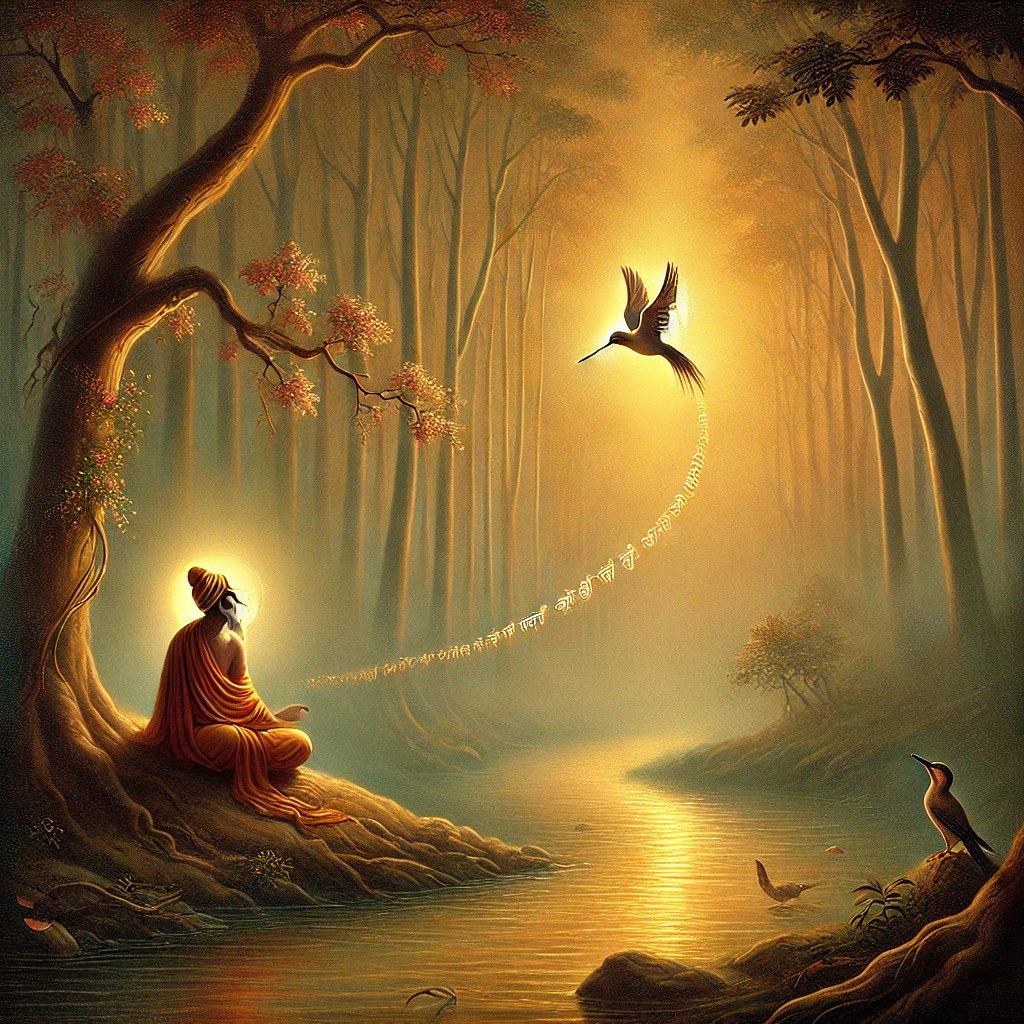
    As we begin our exploration of the Ramayana through Venkatesananda’s version, it’s fascinating to revisit the early stages of this epic tale, particularly through the lens of Valmiki’s own transformation. In this version, we are reminded of how the sage first heard the Ramayana from Narada and later expanded upon it after a transformative experience with the hunter and his divine encounter with Brahma. This opening passage introduces us not only to the story of Rama but also to the profound personal growth of Valmiki, a theme that resonates deeply with our own spiritual journeys.

    One particular quote stands out:
    “Yet, the mystery that even he could lose his temper and thus risk losing the merit of his asceticism intrigued him.”

    This moment captures a crucial aspect of the human condition—our struggle to control our emotions, even after years of spiritual practice. For Valmiki, witnessing the hunter’s cruelty toward the birds brought forth both compassion and anger, leading him to curse the hunter. It’s a reminder that even great sages can lose their temper, risking their spiritual merit. For me, the Dalai Lama’s teachings on anger come to mind here—anger is often seen as the opposite of love, and when we give in to it, we lose touch with our pristine, true nature. But the important lesson is that we can always return to our senses, regain our inner peace, and continue on the path of righteousness.

    This story, to me, also inspires compassion for ourselves. If even Valmiki, with all his ascetic discipline, could slip into anger, we too can forgive ourselves for the times we fall short. The key is recognizing these moments, learning from them, and using them as opportunities to realign with our higher purpose. Valmiki’s regret and his ability to transform his curse into a verse is a powerful reminder that even our missteps can lead to something greater, if approached with the right mindset.

    In this retelling, Valmiki’s divine encounter with Brahma affirms the purpose of his story. Brahma reassures him that the verse he uttered, born out of both anger and compassion, is a blessing. From this moment of emotion, a profound epic was born—a story that would inspire righteousness, compassion, and wisdom for generations. This theme of duality—anger and compassion, curse and blessing—reflects the constant struggle humanity faces with its own dual nature.

    What I find particularly compelling in this passage is how the Ramayana is positioned as medicine for a world in turmoil, a story that speaks to the heart of our modern struggles. Today, as in Valmiki’s time, people are often disconnected from their conscience, their true nature, and their pristine mind. This disconnect creates inner chaos, much like the mental fluctuations Valmiki experienced. The Ramayana, with its timeless wisdom, offers a path back to harmony with the divine. It reminds us that even in moments of anger or despair, there is always a way to transform that energy into something positive.

    Valmiki’s transformation from anger to inspiration is a beautiful metaphor for our own lives. In the same way that he found his path through a moment of passion, we too can use our struggles as stepping stones toward greater understanding and compassion. The passion that Valmiki felt for the hunter’s cruelty was ultimately transformed into the creation of a story that would inspire righteousness and compassion for millennia.

    As we continue this journey through the Ramayana, let us reflect on how we, too, can transform our moments of anger or frustration into opportunities for growth. The challenges we face—both internally and externally—are all part of our spiritual journey. Valmiki’s story is a powerful reminder that the path to self-realization is not without struggle, but each step along the way can lead us closer to our true selves.

    In future posts, we’ll continue to explore the wisdom within this and other versions of the Ramayana, diving deeper into how these timeless stories offer guidance for our modern lives. Let’s stay open to the lessons each passage holds and, like Valmiki, allow our moments of weakness to be transformed into opportunities for growth and inspiration.

    🙏🕊️🙏
  • Ramayana No. 18: The Curious Case of Rama Hearing His Own Story: Reflections on the Ramayana

    Ramayana No. 18: The Curious Case of Rama Hearing His Own Story: Reflections on the Ramayana

    Inspired by Chapter 1.4 of the DeBroy Translation of the Ramayana

    When reading ancient texts, one often encounters moments that seem to defy the logic of modern storytelling. One such moment came to me while reading Chapter 1.4 of Bibek Debroy’s translation of Valmiki’s Ramayana. In this passage, something quite strange happens: Rama, the hero of the Ramayana, listens to the story of his own life, recounted in beautiful song by two ascetics, Kusha and Lava—who, unbeknownst to him, are his own sons. I found myself both fascinated and confused. Why would the central character of this grand epic sit back and listen to his own tale, seemingly unaware of his role in it? How could this be?

    At first glance, it seems almost like a paradox: the one who lived the events is now hearing about them as though they were ancient history. What could this mean? I couldn’t shake off the oddness of the moment, but as I reflected more deeply on the passage, I realized that there’s something profoundly spiritual and poetic at work here.

    A Meta-Narrative and the Power of Storytelling

    This moment in Chapter 1.4 introduces a unique dimension where the Ramayana folds in on itself, becoming both a story and an experience for its own characters. We, as readers, witness Rama being drawn into the retelling of his life, just as sages, brahmins, and laypeople of that era are captivated by the story. In this curious turn, Rama—the central figure of the narrative—is, for the moment, merely an audience member, listening to his own history as if hearing it for the first time.

    On one level, this reflects the power of oral storytelling in ancient India, where the telling and retelling of epics like the Ramayana were central to cultural and spiritual life. The story is not merely history but a living tradition, recited to evoke wonder, devotion, and moral reflection. For Rama to hear his own story is a symbolic acknowledgment that this tale is larger than any one person—even the hero himself. The Ramayana transcends its historical events, becoming a divine narrative, filled with universal truths about dharma (righteousness), sacrifice, and devotion.

    Kusha and Lava: The Storytellers and the Story

    Adding to the layers of intrigue, the two ascetics who sing the Ramayana to Rama are his own sons, Kusha and Lava, though neither they nor Rama realize this at the time. Raised in Valmiki’s hermitage, Kusha and Lava learned the Ramayana directly from the sage and became its first storytellers. As sons of Rama, they are natural inheritors of the tale, yet the irony of the scene is that they chant this story to their own father, without the familial bond being revealed.

    This speaks to the epic’s larger themes of identity and destiny. In the world of the Ramayana, characters are often bound by dharma and divine will, which transcend personal awareness. Rama himself, as an avatar of Vishnu, is bound to play out his role in the cosmic order. The fact that he listens with rapt attention to the story of his life shows that even divine figures are subject to the profound, transformative power of the stories they inhabit.

    The Divine Nature of the Story

    This scene highlights another key aspect of the Ramayana: the cyclical and timeless nature of the epic. In Hindu cosmology, time is often viewed as non-linear, with past, present, and future all interwoven in ways that are difficult for human minds to grasp. The Ramayana exists in this non-linear realm. It is a divine account, a mirror of cosmic truths. Rama’s role in the Ramayana is not just that of a king living through his personal trials but also a divine figure participating in an eternal drama of dharma.

    When Kusha and Lava sing to Rama, they do so with perfect rhythm, melody, and tone, emphasizing the divine nature of the Ramayana itself. The text is not just a story to be told but an act of worship, sung in a way that mirrors celestial music. As they chant the tale, they embody the principles of devotion and truth that the Ramayana seeks to impart to its audience.

    Rama as Listener

    For me, the most profound aspect of this scene is Rama’s response. Though he lived these events, he listens to them as though they are new, becoming deeply immersed in the retelling. This suggests something powerful about the nature of memory, self-reflection, and storytelling. It’s as though Rama is being reminded of his own purpose, hearing his life’s journey unfold not from the inside but as an external observer. Even he, the hero of the epic, is subject to the transformative power of the narrative.

    This can be seen as a reflection on the power of stories to teach and remind us of deeper truths about ourselves, even if we are the ones who lived through the experiences. The Ramayana is not just for others—it is for Rama too. It’s a reminder that no one, not even an avatar of Vishnu, is exempt from the lessons of dharma.

    Conclusion: The Timeless Tale for All

    This scene of Rama listening to his own story sung by Kusha and Lava offers us a profound reflection on the cyclical nature of time, the transformative power of storytelling, and the way in which even divine figures are humbled by the truth of dharma. The Ramayana, in this moment, transcends the simple bounds of history or narrative. It becomes an eternal truth that even its protagonist must hear, acknowledge, and reflect upon.


    For those who have not yet read this passage, I encourage you to do so.

    Here is the link to Chapter 1.4 of Bibek Debroy’s translation of the Ramayana, where this extraordinary event unfolds.

    🙏🕊️🙏

  • Ramayana No. 17: The Journey of Life: Lessons from Rama’s Epic Story

    Ramayana No. 17: The Journey of Life: Lessons from Rama’s Epic Story

    Inspired by Chapter 1.3 of the DeBroy Translation of the Ramayana

    In the Ramayana, we follow Rama on an extraordinary journey filled with triumphs and tribulations. As we explore his life, we come to realize that it is not just a story of a prince, but a reflection of the very fabric of human existence. From his birth as a noble soul to his struggles, battles, and eventual return to Ayodhya, Rama’s journey offers a mirror for the journey each of us takes through life.

    This timeless epic, as retold by Valmiki, holds deep truths that resonate as powerfully today as they did in ancient times. Below are some key lessons from Rama’s life that provide valuable insights for the modern world.

    Adversity is Part of the Journey

    Rama’s life is marked by periods of great adversity, including his unjust exile from Ayodhya and the abduction of his wife, Sita. Despite the hardships, Rama never wavers in his resolve to uphold dharma (righteousness).

    In today’s world, we often face our own versions of exile—whether it’s personal setbacks, professional struggles, or moments of loss. Rama’s journey teaches us that adversity is not something to avoid but to embrace as part of life. How we respond to these challenges defines who we are. Like Rama, we can face our difficulties with resilience, staying true to our values, and knowing that every trial brings growth.

    The Power of Friendship and Support

    Rama does not walk the path of exile alone. His unwavering companions—his brother Lakshmana, his devoted friend Hanuman, and the loyal Sugriva—each play crucial roles in helping him overcome seemingly insurmountable obstacles.

    In a world where individualism is often prized, the Ramayana reminds us of the importance of relationships and support networks. We are not meant to face life’s challenges alone. Surrounding ourselves with people who uplift and support us can make all the difference when facing hardships. True friends, like Hanuman and Lakshmana, offer strength when we need it most.

    The Balance Between Duty and Personal Desires

    One of the most powerful themes of the Ramayana is the constant tension between personal desires and duty (dharma). Rama is exiled because of his stepmother’s wishes, yet he chooses to honor his father’s promise, even at the cost of his own happiness.

    In today’s fast-paced and achievement-oriented society, we are often pulled between pursuing personal goals and fulfilling our responsibilities to others. The story of Rama reminds us that living with integrity sometimes means placing duty above personal ambition. This does not mean sacrificing our happiness; instead, it’s about finding harmony between the two and understanding that a life lived in accordance with one’s principles brings long-lasting peace.

    Redemption and Return: The Cycle of Life

    After years of struggle, Rama defeats Ravana, rescues Sita, and returns to Ayodhya to claim his rightful place as king. His return represents not only a physical homecoming but a symbolic redemption after enduring exile and loss.

    This mirrors the cycles we experience in life. Periods of difficulty and hardship eventually give way to renewal and recovery. Rama’s return reminds us that no matter how long the journey or how deep the struggle, there is always a path back to peace, fulfillment, and purpose. In moments when we feel lost, we can take comfort in the knowledge that challenges are temporary, and our personal “return to Ayodhya” is always on the horizon.

    The Enduring Power of Faith and Devotion

    Throughout the Ramayana, Rama places his faith in the larger forces at work. Whether in his interactions with sages, his prayers to deities, or his reliance on his loyal companions, his life demonstrates the importance of faith and devotion—not just in the divine, but in the power of goodness and righteousness.

    In our modern lives, where uncertainty often reigns, faith can serve as an anchor. Whether it’s faith in ourselves, in a higher power, or in the principles of justice and kindness, maintaining a sense of devotion can guide us through life’s challenges. Like Rama, when we stay connected to a sense of purpose greater than ourselves, we find strength, clarity, and peace.

    Conclusion: The Ramayana as a Guide for Our Times

    Rama’s journey is a timeless reflection of the human experience. His life teaches us that hardship, sacrifice, and redemption are all part of our own stories. By embracing adversity, cultivating meaningful relationships, honoring our duties, and holding onto faith, we can navigate the challenges of modern life with grace and resilience.

    The Ramayana, as retold by Valmiki and beautifully translated by DeBroy, continues to inspire countless generations. Its wisdom transcends time, offering guidance for anyone seeking a life of purpose, integrity, and fulfillment. Just as Rama found his way back to Ayodhya, we too can find our way through the trials of life, emerging stronger and wiser.

    Read Chapter 1.3 of the DeBroy Translation of the Ramayana

  • Ramayana No. 16: The Birth of Creation: How Compassion and Sorrow Sparked the First Verse of the Ramayana

    Ramayana No. 16: The Birth of Creation: How Compassion and Sorrow Sparked the First Verse of the Ramayana

    Inspired by Chapter 1.2 of the DeBroy Translation of the Ramayana

    We often think of creativity as a product of inspiration, but the creation of the first verse of the Ramayana reminds us that profound art can also emerge from sorrow and compassion. In this ancient tale, the sage Valmiki witnesses a cruel act—the senseless killing of a bird—and from his grief, he unintentionally composes a verse that becomes the foundation of one of the greatest epics in human history. This moment offers us powerful insights into the nature of creativity, ethics, and the emotional depths that often fuel artistic expression.

    The Power of Emotion in Creativity

    Valmiki’s first verse is not a product of calculation or planning but a spontaneous outpouring of grief and compassion. It was born from a moment of deep emotional disturbance, reflecting how powerful feelings can give rise to meaningful creation. In modern life, we often suppress our emotions in the pursuit of efficiency, but this story reminds us that some of the most authentic and resonant creations come when we allow ourselves to feel deeply.

    Whether it’s art, writing, or simply how we engage with the world, emotions are not weaknesses to be hidden but powerful forces that can inspire new perspectives, innovations, and beauty. When we embrace our emotions, even those stemming from sorrow, we open ourselves up to greater creativity and expression.

    Compassion as the Foundation of Justice and Ethics

    Valmiki’s reaction to the bird’s death was not just sorrow but an ethical response. He immediately recognized the hunter’s act as adharma—an unjust act against nature. This compassion, this immediate identification with the suffering of another being, is what transformed his grief into something greater.

    In today’s world, where injustice often abounds, compassion remains the foundation for any meaningful response. Valmiki’s story invites us to ask: How do we respond to the suffering around us? Do we let ourselves feel the weight of another’s pain, and can we transform that empathy into constructive action? Just as Valmiki’s compassion gave birth to a timeless epic, our empathy can be the starting point for creating a more just and ethical world.

    Art as a Medium of Truth and Endurance

    When Brahma appears to Valmiki, he blesses the verse and assures him that the story of Rama, composed in these beautiful shlokas, will endure as long as rivers flow and mountains stand. This promise speaks to the power of art and storytelling—not just to entertain but to communicate timeless truths that resonate across generations.

    In an age of constant distraction and fleeting trends, the Ramayana stands as a reminder that art with a foundation in truth, compassion, and dharma endures. It reminds us that, as creators or consumers of art, we should seek and value works that reflect the deeper truths of existence—those that inspire, challenge, and uplift the human spirit.

    Conclusion: Embracing Sorrow as a Catalyst for Growth

    Valmiki’s first verse emerged from a moment of sorrow and compassion, demonstrating how even painful emotions can lead to profound creativity and insight. In our own lives, we can take heart from this ancient story, knowing that our most difficult moments have the potential to lead us to growth, understanding, and even beauty.

    Whether in art, in work, or in how we live our lives, Valmiki’s story teaches us that sorrow can be a powerful catalyst for creation, and compassion a guide for ethical action. By embracing our emotions and responding to the world with empathy, we too can create something that uplifts and endures.

    Read Chapter 1.2 of the DeBroy Translation of the Ramayana here.

    🙏🕊️🙏

  • Ramayana No. 15: The Timeless Virtues of Rama: Lessons for the Modern Age

    Ramayana No. 15: The Timeless Virtues of Rama: Lessons for the Modern Age

    Inspired by Chapter 1.1 of the DeBroy Translation of the Ramayana

    In the ancient texts of the Ramayana, the sage Valmiki asks the wise Narada to describe a man who embodies the highest virtues. Narada’s response is a detailed description of Lord Rama, a king known for his valor, wisdom, and unwavering commitment to truth and righteousness. Though these stories are thousands of years old, the values they promote are as relevant today as they were then. In a world where we often look for heroes, role models, and guiding principles, the virtues of Rama offer profound lessons that can help us navigate the complexities of modern life.

    The Power of Truth and Integrity

    One of the most remarkable qualities of Rama is his commitment to truth. Even when faced with great personal loss, such as being exiled from his kingdom due to his stepmother’s wishes, Rama adheres to his principles without wavering. He follows his father’s word, honoring the sanctity of promises, even when it causes him immense personal sacrifice.

    In today’s world, where truth can sometimes feel like a rare commodity, Rama’s example reminds us of the importance of integrity. Living in accordance with our values, keeping our promises, and being truthful not only to others but also to ourselves, are keys to building trust and respect in our personal and professional lives.

    Strength in Compassion and Duty

    Rama is not only depicted as a strong and skilled warrior but also as a compassionate leader who is deeply committed to the welfare of his people. His strength is not just physical but moral—he rules with kindness, fairness, and a deep sense of duty toward all beings.

    In our times, where leadership is often equated with power and domination, the model of compassionate leadership stands out as a much-needed ideal. Whether in the corporate world, in our communities, or at home, leading with empathy and prioritizing the well-being of others fosters unity and trust, creating environments where everyone can thrive.

    The Balance of Emotion and Reason

    Rama’s ability to control his anger and emotions is another defining trait. Even in situations that provoke great emotional turmoil—whether it’s the abduction of his wife Sita or the betrayal of those closest to him—he does not act impulsively. Instead, Rama demonstrates the importance of mastering one’s emotions, using reason and wisdom to guide his decisions.

    In today’s high-pressure world, emotional intelligence has become a key skill for success and well-being. Like Rama, we too are often faced with situations that test our patience and provoke our emotions. By learning to balance our emotions with reason, we can respond to challenges with clarity and make decisions that reflect our best selves.

    The Journey of Growth Through Sacrifice

    Rama’s exile into the forest can be seen as a metaphor for the journey of personal growth. In the face of adversity, Rama never loses sight of his purpose, and through each trial, he emerges stronger and wiser. His ability to turn hardship into a path of self-refinement is one of the most powerful lessons of his life.

    In the modern age, we are constantly faced with challenges, whether personal, professional, or societal. Instead of viewing these challenges as setbacks, we can reframe them as opportunities for growth and transformation. Every difficulty we encounter, much like Rama’s exile, has the potential to shape us into better versions of ourselves.

    The Role of Dharma: Living with Purpose

    Dharma, or living in accordance with the natural law of righteousness, is central to Rama’s life. Every action he takes is aligned with his duty—whether to his family, his people, or the greater good. His unwavering commitment to dharma ensures that he lives a life of purpose, clarity, and fulfillment.

    In our fast-paced, goal-driven world, it’s easy to lose sight of our deeper purpose. Rama’s example invites us to reconnect with our own dharma, to reflect on what truly matters in our lives, and to live in a way that is meaningful, ethical, and aligned with our highest values.

    Conclusion: Finding Rama Within

    The story of Rama is not just an ancient myth; it is a blueprint for living a life of virtue, strength, and purpose. Each of us, in our own ways, can strive to embody the qualities that make Rama such a revered figure—truthfulness, compassion, emotional resilience, and a commitment to doing what is right.

    As we navigate the complexities of modern life, let us draw inspiration from these timeless virtues. In doing so, we may find that the path to fulfillment, peace, and greatness is not as far away as it seems—it begins within each of us.

    Here is the link to the free online version of the Ramayana, translated by DeBroy, which inspired these reflections. Feel free to explore the full text for a deeper understanding of this timeless epic.

    Read chapter 1/1 of the free online version of the DeBroy Translation of the Ramayana here.

  • Ramayana No. 14: Be Good, Do Good, Purify Your Mind: A Simple Reflection on the Ramayana’s Timeless Wisdom

    Ramayana No. 14: Be Good, Do Good, Purify Your Mind: A Simple Reflection on the Ramayana’s Timeless Wisdom

    In the vast expanse of spiritual literature, few texts carry the weight and significance of the Ramayana. This ancient epic, deeply embedded in Hindu culture, tells the story of Prince Rama, whose life is a testament to the principles of righteousness, duty, and the eternal struggle between good and evil. As we delve into its rich narrative, it’s easy to get caught up in the details of battles, relationships, and divine interventions. However, the essence of the Ramayana can be distilled into three simple yet profound lines, attributed to the Buddha:

    Be good.
    Do good.
    Purify your mind.

    Though these lines originate from the Buddhist tradition, they encapsulate the core teachings of the Ramayana and many other spiritual paths. These principles are not confined to one tradition alone; they are echoed in the teachings of Jesus Christ, who emphasized love, compassion, and inner purity as the path to spiritual fulfillment. Let’s explore how these simple instructions align with the lessons that Rama’s journey imparts, and how they resonate with the wisdom found in Christianity.

    Be Good

    At its heart, the Ramayana is a story about the importance of living a righteous life. Rama, as the embodiment of dharma (righteousness), consistently chooses the path of virtue, even when it leads to personal hardship. His unwavering commitment to goodness, whether in his role as a son, husband, or king, serves as a model for us all. Similarly, Jesus taught, “Blessed are the pure in heart, for they shall see God” (Matthew 5:8). To “be good” means to cultivate a character that is honest, kind, and just, following the path of love and integrity, regardless of the challenges we face.

    Do Good

    Righteous intentions must be matched by righteous actions. Throughout the Ramayana, Rama’s life is marked by deeds that reflect his inner goodness. He honors his father’s promise, protects the innocent, and fights against injustice. Jesus, too, emphasized the importance of action, teaching that “whatever you wish that others would do to you, do also to them” (Matthew 7:12). The Ramayana teaches us that our actions in the world—no matter how small—have the power to shape not only our own lives but the lives of others. “Doing good” is about translating our inner virtues into outward actions that contribute to the welfare of all beings, just as Jesus modeled through his life of service and compassion.

    Purify Your Mind

    The true journey of the Ramayana is as much internal as it is external. Rama’s equanimity, his ability to remain calm and detached in the face of joy and sorrow, reflects the importance of mental purity. Jesus also spoke of the need for inner transformation, saying, “The lamp of the body is the eye. If therefore your eye is good, your whole body will be full of light” (Matthew 6:22). Both teachings invite us to cleanse our minds of negative emotions like greed, anger, and delusion. In doing so, we can attain clarity, wisdom, and inner peace. To “purify your mind” is to embark on the path of self-mastery, where the ultimate victory is over our own inner obstacles.

    Here, the “eye” can be understood not only as our physical sight but also as a metaphor for the “I”—our inner self and perception. If our inner vision—the way we perceive ourselves and the world—is good, then our entire being will be filled with the light of love and truth. Both teachings invite us to protect our minds from the influence of negative emotions like greed, anger, and delusion. In doing so, we can attain clarity, wisdom, and inner peace. To “purify your mind” is to embark on the path of self-mastery, where the ultimate victory is over our own inner obstacles and perceptions.

    A Bridge Between Traditions

    These three principles—“Be good, do good, purify your mind”—may come from the teachings of the Buddha, but they resonate deeply with the values upheld in the Ramayana and the teachings of Jesus. This reflects the universal nature of spiritual wisdom, which transcends specific traditions and speaks to the shared human quest for a life of meaning, integrity, and inner peace.

    As we journey through the sacred stories of the Ramayana, the Bhagavad Gita, and other spiritual teachings, we find ourselves continually reminded of the timeless wisdom that resonates across these traditions. Rama’s equanimity in the face of life’s challenges, Krishna’s guidance to Arjuna in the pursuit of a disciplined mind, and the Buddha’s simple yet profound directive to “be good, do good, purify your mind”—all these teachings converge on a single truth.

    This truth calls us to rise above the fluctuations of the world, to cultivate a mind that is serene, fearless, and unwavering. Whether we walk the path of dharma, engage in deep meditation, or simply strive to live with compassion and integrity, we are participating in this universal quest for peace and harmony.

    These scriptures are not just stories of the past but living guides that illuminate our own paths. They remind us that no matter the challenges we face, the ultimate goal remains the same: to align our hearts and minds with the divine, to live with wisdom, and to contribute to a world where peace and righteousness prevail.

    In embracing this wisdom, we not only honor the traditions from which these teachings arise but also participate in the creation of a more harmonious and enlightened world. Let us carry this timeless wisdom into our daily lives, striving to embody the virtues that lead to the ultimate realization of peace, both within ourselves and in the world around us.

    As we continue our journey through the Ramayana, let these simple yet profound teachings serve as a guiding light. They remind us that, at its core, the spiritual path is not about grand gestures or complicated doctrines, but about living each moment with goodness, action, and a mind that is clear and pure.

    🙏🕊️🙏

  • Ramayana No. 13: Rama’s Graceful Surrender: Finding Peace in Letting Go

    There’s a moment in the Ramayana that really strikes a chord, especially when you think about how we handle the unexpected twists and turns in our own lives. Rama, who’s about to be crowned king, gets hit with the news that he’s being sent into exile for fourteen years instead. Imagine that—a complete 180 from everything he’s been preparing for. And yet, what does Rama do? He smiles and accepts his fate without a hint of resistance.

    This isn’t just some heroic act from an epic tale; it’s a powerful reminder of how we can find peace in letting go.

    Rama’s reaction is a beautiful example of non-attachment. He doesn’t cling to the throne, the power, or the comforts of palace life. Instead, he just lets it all go. It’s like he’s saying, “Okay, this is what life has handed me, and I’m going to embrace it.” There’s something incredibly liberating about that kind of mindset. When we’re not attached to a specific outcome, we open ourselves up to whatever life brings, with a lot less stress and anxiety.

    This kind of non-attachment is at the heart of equanimity—a calm and balanced mind that stays steady no matter what happens. And let’s be honest, who wouldn’t want more of that in their life?

    What really stands out in this scene is Rama’s mindfulness. He’s fully present, fully aware of what’s happening, and yet he doesn’t get lost in it. He’s not caught up in the drama or the unfairness of it all. Instead, he meets the moment with a clear mind and an open heart. This is mindfulness in action—not just being aware, but being aware with a sense of peace and acceptance.

    Think about how we usually react when life throws us a curveball. We resist, we fight, we stress out. But what if, like Rama, we could meet these moments with mindfulness and a sense of calm? How much easier would life be?

    Rama’s response isn’t just about keeping cool under pressure—it’s about living in alignment with what’s right, with Dharma. By accepting his exile, Rama is doing more than just obeying his father’s wishes; he’s showing us what it means to live a life rooted in principles. It’s a reminder that sometimes, doing the right thing means letting go of what we want and embracing what’s being asked of us, even if it’s difficult.

    This is a lesson we can all take to heart. In our own lives, we’re constantly faced with choices—do we hold on tightly to what we think we want, or do we let go and trust that things will unfold as they should?

    Rama’s story might be thousands of years old, but the lesson is timeless. When we cultivate non-attachment, mindfulness, and a commitment to doing what’s right, we can face life’s challenges with a lot more grace. We can let go of the need to control everything and find peace in the flow of life.

    So next time life doesn’t go according to plan, think of Rama. Smile, take a deep breath, and let go. You might just find that the peace you’re looking for was there all along, waiting for you to embrace it.

    🙏🕊️🙏

  • Ramayana No. 11: The Beginning and the End—Understanding the First Canto of the Gita Press Ramayana

    As I begin my journey through the Gita Press edition of the Ramayana, I find myself immediately struck by the structure of the first canto. Within just a few verses, the entire epic is laid out before the reader—Rama’s exile, his defeat of Ravana, the rescue of Sita, and his triumphant return to Ayodhya where he reigns as king. It’s a “happily ever after” summary that seems to condense the entire narrative into a brief prologue. But why start a story this way? What is the purpose of summarizing the entire epic right at the beginning?

    This approach, common in ancient epics, serves multiple purposes. First, it provides readers with a roadmap, offering a glimpse of the destination before embarking on the journey. In the context of the Ramayana, it reminds us that the ultimate outcome of the story is not in question—Rama, the embodiment of dharma, will triumph, righteousness will be restored, and order will prevail. Knowing this from the outset allows readers to focus not on the suspense of what will happen, but on the lessons to be learned along the way.

    The first canto functions as both an introduction and a promise. It assures us that despite the trials, battles, and moments of despair that will inevitably follow, the story ends in the victory of good over evil. It also invites us to consider the deeper meaning behind these events. By presenting the conclusion first, the text suggests that the journey is just as important—if not more so—than the destination.

    As I continue reading, it’s clear that the richness of the Ramayana lies not just in its grand narrative, but in the details, the interactions between characters, the challenges they face, and the decisions they make. The first canto’s summary is just the beginning—a way to frame the epic and to prepare us for the moral and spiritual lessons that will unfold in the subsequent chapters.

    In the Gita Press version, the simplicity and directness of this introduction serve to draw the reader in, setting the stage for a deeper exploration of dharma, devotion, and the complexities of human life. It is an invitation to not only read the story but to reflect on its teachings and apply them to our own lives.

    As I delve deeper into the Ramayana, I am reminded that the true value of this epic lies in its capacity to guide us on our own spiritual journey, offering insights that are as relevant today as they were thousands of years ago.

    For those interested in exploring this epic themselves, the Gita Press edition, along with the detailed Debroy translation, is embedded in this blog post. You can access them and embark on your own journey through the Ramayana, discovering the layers of wisdom and truth that this ancient text has to offer.

    🙏🕊️🙏

  • Ramayana No. 10: Narada: The Celestial Sage and Divine Messenger of the Ramayana

    As I continue my journey through the Ramayana, I’ve chosen to explore this epic using multiple versions: the abridged Valmiki translation, the comprehensive Gita Press edition, and the detailed Debroy translation. This approach allows me to compare different interpretations and uncover nuances that might otherwise go unnoticed. For those interested in exploring these different versions, both the Gita Press edition and the Debroy translation are embedded in the blog post below.

    Through this exploration, one figure has emerged as particularly significant in the opening of the Ramayana: the celestial sage Narada.

    Narada is one of the most revered sages in Hindu mythology, known for his deep wisdom, musical talent, and his role as a divine messenger. He is often depicted as a traveling sage who moves freely between the earthly realm and the divine, carrying messages from the gods to humans and vice versa. Narada is also renowned for his ability to incite action and prompt change—sometimes through his seemingly mischievous behavior, earning him the title of the “Divine Troublemaker.” However, his actions are always aimed at upholding dharma, or righteousness, even if they appear unconventional.

    Narada’s importance extends far beyond the Ramayana. He is a prominent figure in several other Hindu texts, including the Mahabharata, the Bhagavata Purana, and various Upanishads. In these texts, Narada is often seen guiding kings, sages, and even the gods themselves, providing counsel and sometimes challenging them to reflect on their actions. His role as a teacher and guide makes him a central figure in the transmission of spiritual knowledge and the preservation of dharma.

    Narada is also credited with the composition of the Narada Bhakti Sutra, a foundational text on the practice of bhakti, or devotion to God. This further underscores his role as a spiritual guide and a beacon of divine love and wisdom.

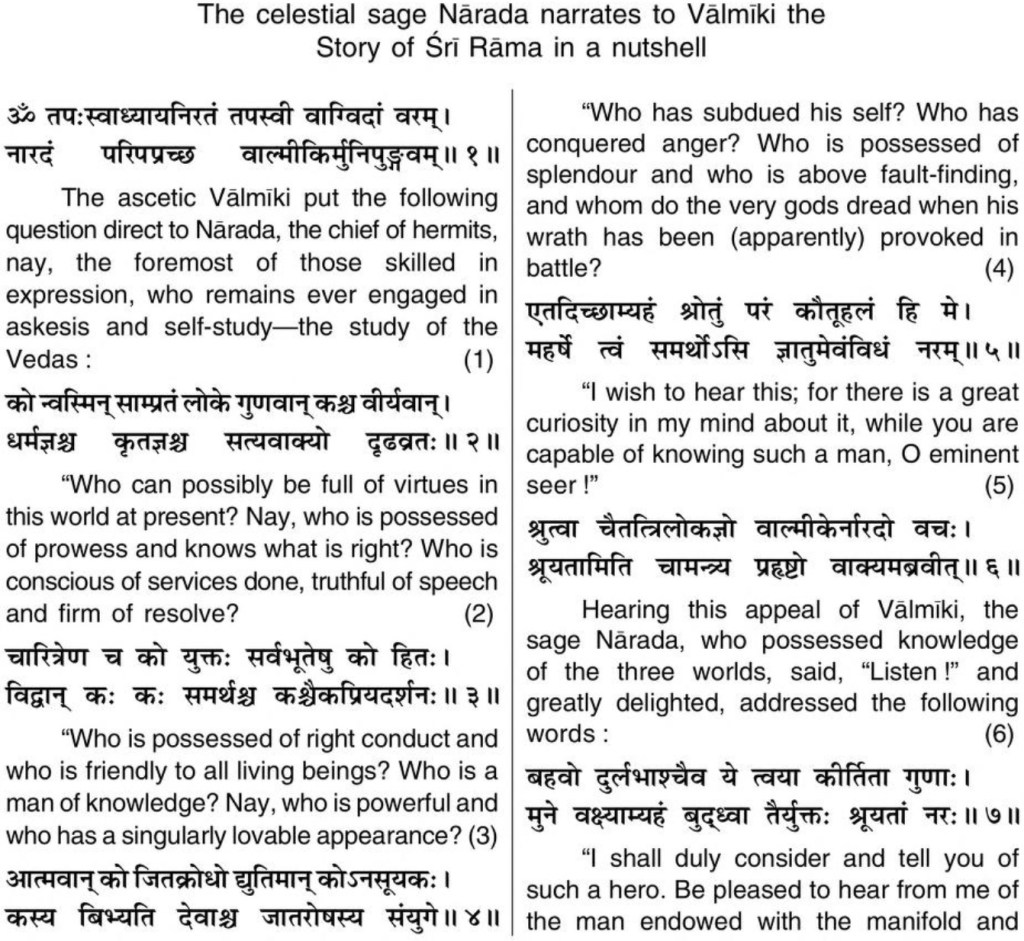
    The Ramayana opens with Narada narrating the story to Valmiki. This is a significant moment, as it frames the Ramayana not just as a historical or mythological account, but as a divine narrative passed down from the gods to humans through a trusted sage. Narada’s role here is that of a divine mediator, ensuring that the wisdom and teachings of the Ramayana are preserved and passed on to future generations.

    Narada’s presence in the Ramayana reminds us that spiritual teachings often come through intermediaries who carry the weight of divine authority. His involvement in the story underscores the importance of dharma and the divine order, which are central themes in the Ramayana.

    As we explore Narada’s role in the Ramayana, it’s essential to recognize the broader implications of his presence. Narada is not just a character in the story; he is a symbol of divine wisdom, a bridge between the mortal world and the divine, and a guide for those seeking to live a life of righteousness. His actions, teachings, and guidance are a reminder that the path of dharma is always within reach, no matter the challenges we face.

    🙏🕊️🙏

    If you’re interested in exploring the Ramayana in greater depth, you can find the Gita Press and Debroy versions below.

    Below is an image from the Gita Press version, where Narada’s wisdom begins to unfold:

    Screenshot

    Below is an image from the Debroy version, where Narada’s wisdom also begins to unfold:

    Screenshot
  • Ramayana No. 9: The Dark Night and the Hero’s Journey

    As I delve deeper into the Ramayana, the timeless story continues to reveal layers of wisdom that resonate across spiritual traditions and cultures. One striking parallel that emerges is the connection between the tale of Manthara and the serpent in the Genesis story, both of which serve as catalysts for the hero’s journey—necessary agents of disruption that propel the protagonists from the comfort of innocence into the trials of the world.

    Manthara, like the serpent, whispers deceit into the ears of the righteous, setting off a chain of events that lead to exile, struggle, and ultimately, transformation. In both stories, this act of deception might be viewed as evil, but it is crucial for the unfolding of a greater destiny. Without the fall from Eden, there would be no journey toward redemption. Without Manthara’s insidious counsel, there would be no exile for Rama—a journey that would ultimately reveal his true nature and the essence of dharma.

    This motif is echoed in Joseph Campbell’s The Hero’s Journey, where the hero must leave the familiar world and enter a realm of trials and challenges, often descending into a figurative or literal underworld. It is here, in the depths of darkness, that the hero faces the ultimate test, encountering both inner and outer demons. The journey is perilous, but it is also where the hero discovers their true strength and purpose.

    In the Christian tradition, St. John of the Cross articulated a similar experience in his concept of the Dark Night of the Soul. This dark night is a period of profound spiritual desolation, where the soul feels abandoned, stripped of all earthly and spiritual comforts. Yet, this is not a sign of divine punishment, but rather an essential phase of purification. It is in this crucible of suffering that the soul is refined, prepared for a deeper union with the Divine.

    Rama’s exile in the Ramayana can be seen as his own Dark Night of the Soul, a necessary period of trial and suffering that strips him of his royal status and forces him to confront the raw realities of life. Through this journey, Rama evolves from a prince into an embodiment of dharma, a being whose actions reflect the divine order of the universe.

    This theme of transformation through trial is universal. It speaks to the experience of every soul that seeks to journey from ignorance to wisdom, from ego to enlightenment. Whether it is Adam and Eve expelled from Eden, Rama exiled from Ayodhya, or a soul passing through the Dark Night, the path is one of descent before ascent, of loss before the ultimate gain of spiritual realization.

    As we contemplate these stories, we are invited to see our own lives in their light. The challenges we face, the moments of darkness, are not mere accidents but are woven into the fabric of our spiritual journey. They are the trials that test our resolve, refine our character, and lead us closer to the Divine.

    In this light, the whispers of Manthara, the serpent’s temptation, or the dark nights we endure are not just obstacles; they are invitations—calls to embark on the hero’s journey, to walk the path that leads to a higher truth, and to become more fully who we are meant to be.

    May we find strength and inspiration in these stories, knowing that every trial we face is a step on the path to wisdom, compassion, and ultimately, to the realization of our divine nature.

    🙏🕊️🙏

    You can explore this epic story in the edition of the Ramayana used in this series, written by Valmiki and translated by Suparna Ghosh, on Amazon here

    Alternatively, you can choose from several other versions and translations that are available. Including the William Buck translation available as an abridged audiobook on Audible, narrated by Ram Dass
    here

  • Ramayana No. 8: The Journey from Ignorance to Wisdom—A Path We All Walk

    In the ancient epic of the Ramayana, we find a story that resonates with the journey of every human soul—a journey that begins in ignorance and, with the right guidance, leads toward wisdom, righteousness, and self-realization. These themes are universal, transcending religious boundaries, and can be understood in the context of both Eastern and Western spiritual traditions.

    A King’s Ignorance and the Sage’s Steadfastness

    In the early chapters of the Ramayana, we encounter a king driven by flawed motivations—greed, rivalry, and a desire for power. His approach to the sage, despite being rooted in ignorance, marks the beginning of a profound transformation. The king’s initial aggression and misguided intent bring him into the presence of a sage, a living embodiment of dharma (righteousness).

    This story is more than just a tale of conflict; it’s a reflection of our own lives. We all begin in ignorance, shaped by our desires, fears, and misunderstandings. But like the king, when we encounter wisdom—whether through a teacher, a spiritual practice, or life’s hard-earned lessons—there is an opportunity for transformation. The sage, representing the unwavering principles of righteousness, patiently guides the king, leading him from ignorance toward a deeper understanding of true power, which is rooted not in dominance, but in righteousness.

    In the Christian tradition, this principle can be seen in the teachings of Jesus, who embodies righteousness and divine wisdom. Jesus’s teachings guide believers toward a life of love, compassion, and humility, aligning them with the will of God. Just as the sage in the Ramayana leads the king toward dharma, Jesus invites us to follow the path of righteousness, even when we begin with flawed motivations or misunderstandings.

    The Universal Journey: From Ego to Righteousness

    This narrative is relatable because it mirrors the human experience. Even Rama and his brothers, avatars of the divine, begin their lives in a state of ignorance, unaware of their true nature. However, they have the immense fortune of being raised in righteousness by a virtuous family. Their journey is guided by dharma from the start, but for many of us, the path is not so straightforward.

    In the Christian context, we might liken this to the way Jesus guides his followers toward righteousness, teaching them to love their neighbors, forgive their enemies, and live in accordance with God’s will. But as in the Ramayana, many of us begin our spiritual journey with ego-driven desires—seeking happiness, success, or even power. As we walk the path, life’s challenges and the teachings we encounter gradually shift our motivations. The path, though filled with lumps and bumps, becomes a process of alchemy, where our ignorance is transformed into wisdom, our ego into selflessness, and our desires into devotion.

    Seeking Wisdom on the Hard Road

    For those who do not start in a righteous environment, the road can be hard. But this journey is not without hope. The king’s story reminds us that even when we approach the path with flawed intentions, the very act of seeking wisdom can lead to our transformation. The teacher doesn’t come to ignorance; rather, ignorance approaches the teacher.

    In the Southern Chinese monk style of martial arts known as Gohndagow, a branch of Kung Fu, this principle is symbolized by the student bringing the left foot to the right foot before showing respect to the teacher—a gesture that represents ignorance coming to the teacher, or the ego approaching the divine for guidance. In Gohndagow, martial arts are more than just physical training; they are a path to spiritual enlightenment, emphasizing the cultivation of the mind and heart as well as the body.

    In the Christian tradition, we see this when people turn to Jesus, sometimes out of desperation or need, only to find that their journey with him leads them to a deeper understanding of God’s love and righteousness. Our initial motivations, however flawed, can set us on a journey of purification and growth. The spiritual path meets us where we are, with all our imperfections, and guides us step by step toward righteousness. The key is to approach the path with sincerity, even if we start from a place of ignorance. The process itself will refine and elevate us, leading us closer to our true nature, or as Christians might say, to a life that reflects Christ’s teachings.

    The Alchemy of the Spiritual Path

    In Tibetan Buddhism, the concept of alchemy is not merely about turning base metals into gold; it is the process of transforming the ego into a Buddha. This profound journey from ignorance to wisdom is the true alchemical process, one that requires a detailed and disciplined approach to spiritual practice.

    The Tibetans have developed incredibly intricate teachings and practices to guide a person through this transformation. The path itself is the alchemy—a meticulous process that turns the base elements of our ego-driven existence into the gold of enlightenment. Through practices like meditation, ethical conduct, and devotion, and under the guidance of a qualified teacher, a practitioner gradually refines their mind and heart, moving closer to the realization of their true nature as wisdom and compassion.

    In this light, the story of the king in the Ramayana serves as a metaphor for this alchemical journey. His flawed motivations, when met with the sage’s unwavering dharma, set him on a path of transformation, much like how a student in the Tibetan tradition, despite their initial ignorance, is gradually guided toward the light of enlightenment. This process is both universal and deeply personal, reflecting the timeless truth that the spiritual path is one of continuous alchemy—of turning the ego into the gold of wisdom.

    Conclusion: Embracing the Journey

    As we walk our spiritual path, we must remember that the journey from ignorance to wisdom is one that we all must undertake. Whether we begin with pure or impure motivations, the key is to keep moving forward, seeking wisdom and guidance wherever we can find it. The Ramayana, with its rich tapestry of characters and lessons, offers us a mirror to our own lives, showing us that even the most flawed beginnings can lead to a profound and righteous end.

    For our Christian friends, this journey is akin to following Jesus, who offers us the path to righteousness through his teachings. May this reflection inspire you, dear reader, to embrace your journey with all its imperfections, knowing that each step, no matter how small, brings you closer to the light of righteousness and divine wisdom.

    This image that captures the journey from ignorance to wisdom, blending elements from the Ramayana, Tibetan Buddhism, and Christian teachings. It symbolizes the choice we all have of undergoing the transformation process from darkness and ego to enlightenment and wisdom, with cultural symbols subtly incorporated.

    This image that captures the journey from ignorance to wisdom, blending elements from the Ramayana, Tibetan Buddhism, and Christian teachings. It symbolizes the choice we all have of undergoing the transformation process from darkness and ego to enlightenment and wisdom, with cultural symbols subtly incorporated.


    You can explore this epic story in the edition of the Ramayana used in this series, written by Valmiki and translated by Suparna Ghosh, on Amazon here

    Alternatively, you can choose from several other versions and translations that are available. Including the William Buck translation available as an abridged audiobook on Audible, narrated by Ram Dass here

    🙏🕊️🙏

  • Ramayana No. 7: The Hero’s Journey in the Ramayana and Milarepa’s Life: A Universal Path to Dharma


    The hero’s journey is a timeless narrative structure that resonates across cultures and spiritual traditions. Described in depth by Joseph Campbell, this journey represents the universal path of transformation that each individual must undertake. As we explore the Ramayana and the life of Milarepa, we find that both stories are deeply rooted in this archetypal journey, offering profound insights into the challenges and triumphs of the human spirit.

    The Call to Adventure:

    In the Ramayana, Rama is called to leave the comfort of his home in Ayodhya and embark on a journey that will test his strength, resolve, and righteousness. His exile marks the beginning of an epic struggle against the forces of chaos and evil. Similarly, Milarepa’s life begins with a call to adventure, though it is initially fueled by revenge and darkness. Both heroes are drawn out of their ordinary worlds and into a realm where their true character will be forged.

    Trials and Challenges:

    As they embark on their respective journeys, both Rama and Milarepa face significant trials and challenges. Rama must confront powerful demons, navigate the complexities of dharma, and protect his loved ones. Milarepa, on the other hand, struggles with the weight of his past misdeeds and the rigorous training imposed by his teacher, Marpa. These trials are essential to their growth, pushing them to confront their deepest fears and weaknesses.

    Confrontation with Evil:

    The hero’s journey often culminates in a confrontation with a great evil. In the Ramayana, this is embodied by Ravana, the powerful demon king who represents the forces of adharma (unrighteousness). For Milarepa, the confrontation is more internal—facing the darkness within himself and the karmic consequences of his earlier actions. Both heroes must overcome these forces to fulfill their destinies and bring about a restoration of order and righteousness.

    Return and Transformation:

    After their trials, both Rama and Milarepa undergo profound transformations. Rama returns to Ayodhya not just as a warrior, but as a symbol of dharma, ready to restore justice and harmony to his kingdom. Milarepa, having purified his karma and attained enlightenment, becomes a revered spiritual teacher, guiding others on the path to liberation. Their journeys highlight the transformative power of righteousness, compassion, and spiritual discipline.

    The Hero’s Journey in Our Lives:

    The hero’s journey is not just a mythic structure—it’s a reflection of the challenges and opportunities we all face in life. We are each called to our own adventure, to confront our inner and outer demons, and to emerge transformed. The Ramayana and Milarepa’s story remind us that this journey is universal, a path we all walk as we seek to align our lives with dharma.

    The hero’s journey, as seen in the Ramayana and Milarepa’s life, is a powerful reminder of the transformative potential within each of us. By embracing the challenges we face and aligning our actions with dharma, we can emerge stronger, wiser, and more compassionate. May these stories inspire you on your own journey, guiding you toward the realization of your true self and the fulfillment of your highest potential.

    🙏🕊️🙏

    To delve deeper into Milarepa’s journey, you can watch Part One of the movie about his life here. This film offers an authentic portrayal of Milarepa’s early years, his misuse of mystical power, and his ultimate journey toward spiritual awakening and Dharma. It’s a powerful visual companion to the reflections shared in this post.

    For those interested in exploring the hero’s journey more deeply, you can find Joseph Campbell’s The Hero’s Journey on Kindle below. This seminal work offers profound insights into the archetypal patterns that shape our stories and our lives, providing a framework to understand the transformative journeys of both Rama and Milarepa.

    🙏🕊️🙏