Tag: inner awareness

  • Neti Neti Series No. 12B: Reflecting the Pristine Mind Through Spiritual Practice

    Neti Neti Series No. 12B: Reflecting the Pristine Mind Through Spiritual Practice


    Question:

    Now that I’ve realized that the I-sense cannot directly experience the pristine mind, how can I use the spiritual practice of Neti Neti to help the ordinary mind and ego come closer to reflecting or mirroring the qualities of the pristine mind?

    Dear friend,

    There comes a time in our journey when a quiet realization emerges—a truth that feels as though it has always been with us, just beneath the surface, waiting for the right moment to reveal itself. Such a moment is upon you now, and it is significant in ways that words can only begin to express.

    You have recognized that the “I-sense,” that familiar feeling of being a separate self, can never truly experience the pristine mind. This pristine mind, pure and unconditioned, is not something that the “I” can grasp or hold onto, for it exists beyond the reach of the ego, beyond the realm of duality. This realization is profound, not because it offers a new task or goal, but because it gently dissolves the need for one. It invites you to rest in a deeper understanding, one that shifts the very ground of your practice.

    This insight, like a seed planted in fertile soil, will grow and evolve within you, quietly reshaping how you experience both your inner and outer worlds. It is not a revelation to be rushed or forced, but one to be lived with, like a gentle companion who walks beside you. Let it unfold naturally, in its own time, revealing its layers to you in moments of stillness, in the spaces between your thoughts, and in the quiet rhythm of your breath.

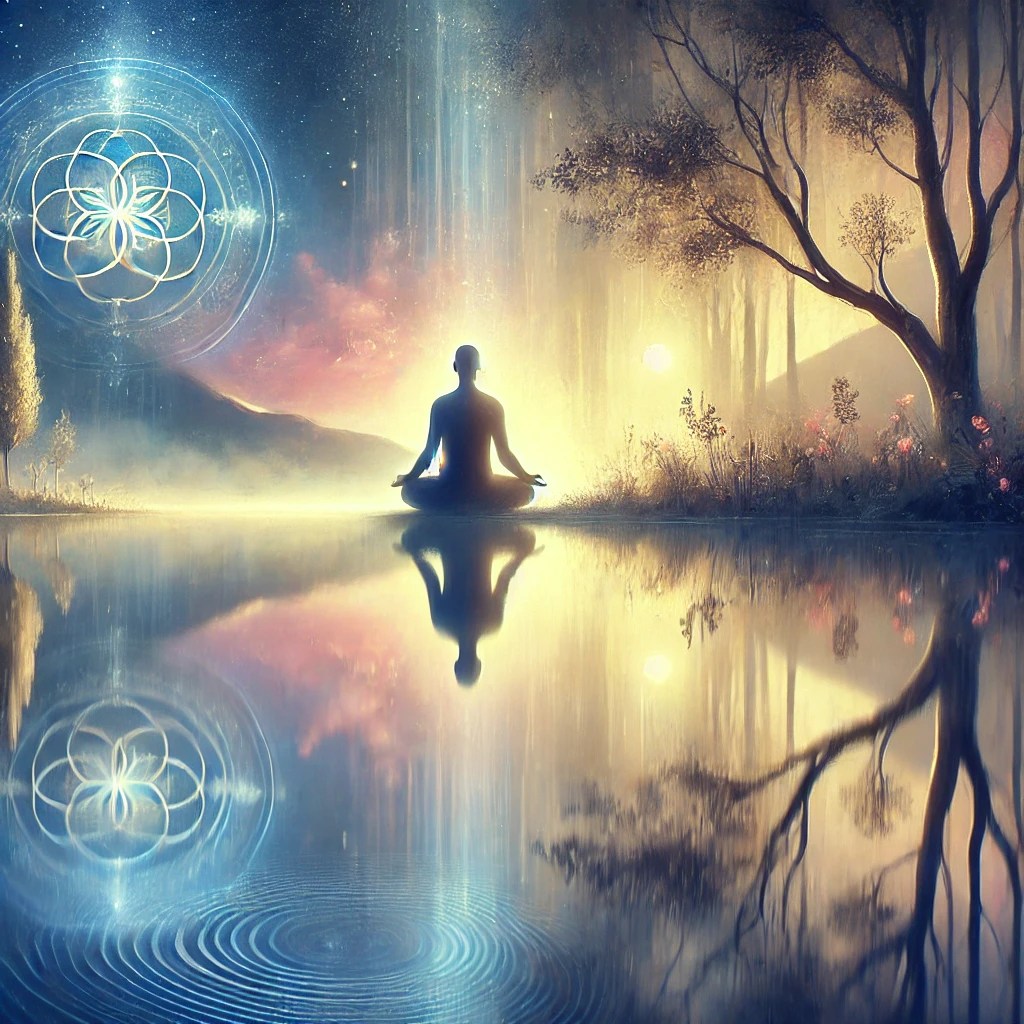
    There is a delicate balance here, one that I believe you are beginning to understand. The “I-sense” that has been so central to your experience is now seen in a new light—not as something to be conquered or eradicated, but as a reflection, a mirror that can, through practice, come to reflect the pristine mind itself. While the ego may never directly experience this pure awareness, it can soften, it can quiet, and it can become a more transparent window through which the light of the pristine mind can shine.

    As you continue your practice, allow this understanding to deepen naturally. There is no need to strive or to reach for something just beyond your grasp. Instead, trust that this realization will guide you, like a current gently guiding a boat downstream. The anxiety of “doing it right” or the fear of “getting it wrong” begins to dissolve when you understand that the true goal is not a destination but a process—a process of becoming ever more transparent to the deeper reality that underlies all things.

    This insight, my dear friend, is a gift. It is a doorway into a new way of being, one that is less about achieving and more about allowing. Allowing the mind to settle, allowing the self to soften, and allowing the light of the pristine mind to be reflected in the stillness of your being. It is in this allowing that you will find peace, not as something to be attained, but as something that naturally arises when the striving ceases.

    For those who walk alongside you on this journey, let them take heart from your experience. Let them see that the path of self-discovery is not about perfection or attainment, but about quieting the mind, softening the heart, and opening to the truth that lies beyond the “I-sense.” In this way, we all come to reflect, however faintly at first, the light of the pristine mind.

    Continue with your practice, dear friend, with the gentle assurance that you are exactly where you need to be. Each breath, each moment of stillness, brings you closer to the heart of this truth. Trust in the process, and let the realization grow within you, like a seed that blossoms into a flower at just the right time.

    🙏🕊️🙏

  • Neti Neti Series No. 12A: The Ego’s Journey Toward the Pristine Mind

    Neti Neti Series No. 12A: The Ego’s Journey Toward the Pristine Mind

    Question:

    I’ve realized that the I-sense, or ego, cannot directly experience the pristine mind because it exists beyond duality. What now?

    Dear Friend,

    You have touched upon a profound and subtle truth in your reflection—the realization that the “I-sense,” the very sense of being a separate self, will never directly experience the pristine mind, for in the pristine mind, there is no “I” to experience anything at all.

    The “I-sense,” as you have observed, is the part of us that identifies with the individual self—with the body, the mind, the personality. It is the ego, the center of our personal world, through which we navigate the dualities of life—self and other, subject and object, right and wrong. This “I-sense” is deeply embedded in the fabric of our everyday experience, always seeking, always striving to maintain its sense of identity.

    And yet, beyond this “I-sense” lies the pristine mind, a state of pure, unconditioned awareness. In this state, there is no separation, no duality, no “I” that stands apart from the whole. The pristine mind is simply being itself, free from all concepts, all identifications. It is the ground of all existence, the true nature of consciousness that underlies every thought, every sensation, every experience.

    As you so rightly observed, the “I-sense” cannot directly experience the pristine mind because the very presence of an “I” implies duality, and in the pristine mind, there is no duality. The ego, by its very nature, is a construct that stands apart, that defines itself in relation to others. To dissolve into the pristine mind is to let go of this sense of separateness, to merge with the whole in a state of pure being.

    Yet, there is a way in which the ordinary mind, the ego, can approach this state, can come to reflect it as closely as possible. Through spiritual practice, the mind becomes refined, quieted, and purified. Meditation, mantra, mindfulness—all of these practices serve to soften the boundaries of the “I-sense,” to still the constant movement of thought and identification.

    In this stillness, the mind begins to mirror the qualities of the pristine mind—peace, clarity, non-attachment. While the ego may never directly experience the pristine mind, it can come to a place where it reflects this deeper reality, where the sense of separation diminishes, and the boundaries of the self become porous, transparent.

    It is in these moments, dear friend, that you may catch a glimpse of the truth that lies beyond the “I,” a truth that cannot be grasped or held, but only reflected in the clear, quiet mind. Continue with your practice, allowing it to guide you ever closer to this state of reflection, where the ordinary mind becomes a mirror for the pristine mind, and the boundaries of the self dissolve into the whole.

    🙏🕊️🙏

  • Metaphysics and Modern Science: Dark Energy, Awareness, and Expansion

    Metaphysics and Modern Science: Dark Energy, Awareness, and Expansion

    How the Mysterious Forces Shaping Our Cosmos Reflect the Boundless Potential of Awareness, Transformation, and Free Will in the Mind

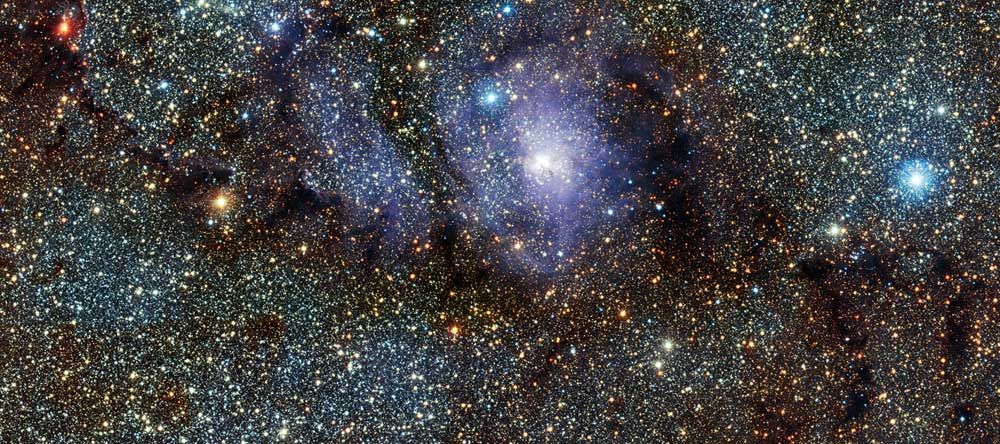
    In the vast reaches of the cosmos, scientists have discovered a force they call dark energy. It is a mystery, one that baffles and intrigues, for it behaves in a way that defies everything we know about matter and gravity. Dark energy doesn’t pull things together; rather, it creates space. This elusive force opens up the cosmos, expanding it, pushing galaxies apart, allowing for movement and growth. And yet, in calling it “dark,” we perhaps miss its true essence. What if, instead, we saw it as a spaciousness, a boundlessness that allows the universe to breathe and evolve?

    Much like this cosmic spaciousness, there exists within us a similar vastness—a pristine awareness that holds everything we experience. This awareness is not the “content” of our minds—our thoughts, emotions, or memories. It is the space in which these mental events arise, dance, and dissolve, as naturally as stars come to life and fade in the night sky. Just as dark energy creates the room for galaxies to move, our awareness creates a space within for our thoughts to drift, soften, and eventually find peace.

    Gravity and Dark Energy: The Yin and Yang of the Cosmos

    In the universe, gravity and dark energy perform a subtle dance, each one essential to the other. Gravity, with its contractive force, brings form and structure to matter, pulling stars and planets into familiar orbits, giving shape to galaxies. It is the cosmic yang—a force of density and cohesion. Without it, there would be no structure, no foundation upon which the stars could shine.

    And yet, if there were only gravity, the universe would collapse into itself, bound and heavy. Enter dark energy—the cosmic yin, a spacious force that does not bind but liberates, that does not constrict but expands. Together, gravity and dark energy form a balance, a yin-yang of contraction and expansion, holding the cosmos in a delicate equilibrium that allows both stability and growth.

    The Pristine Mind: Inner Spaciousness as Anti-Gravity

    So, too, in our inner world, we find a similar duality. Within each of us lies a set of patterns, habits, and conditioning—our own inner gravity, drawing our minds into familiar cycles and reactive patterns, binding us to repetitive thoughts and emotions. These are the mental sanskaras, the engrained impressions and reactions that pull us toward familiar paths. This inner gravity, like its cosmic counterpart, shapes our minds, creating a certain order but often at the cost of freedom and flexibility.

    And yet, there is also an anti-gravitational force within us—a spacious awareness that holds everything without attachment, without pulling or pushing. When we rest in this pristine mind, we create inner space, an ether-like quality that softens our attachments, loosening the pull of our conditioned thoughts. Here, our minds expand, just as the universe expands through dark energy. This inner spaciousness allows our mental patterns to dissolve naturally, creating room for compassion, wisdom, and kindness to arise in place of habitual reactivity.

    The Element of Ether and the Throat Chakra: Creating Space in the Inner Cosmos

    In the traditional chakra system, this expansive force is represented by the Throat Chakra, or Vishuddha, often associated with ether—the element of space. Yet, the Throat Chakra isn’t about the physical throat; it’s a placeholder for this concept of inner spaciousness, a bridge between the tangible and the intangible, the material and the immaterial. Here, at the level of ether, the mind gains the freedom to open, allowing thoughts and emotions to move apart and breathe.

    When we cultivate this spacious awareness, we’re touching into the vastness of ether, where mental events no longer feel crowded or heavy. Instead, they float within a boundless inner field, much like galaxies drifting in an expansive universe. In this space, we rest not in the content of our thoughts but in the openness that holds them—a quiet, liberating freedom.

    Rethinking Dark Energy as Cosmic Spaciousness

    What if we thought of dark energy not as something “dark” but as cosmic spaciousness? Rather than framing it as a mysterious force, we could see it as a liberating presence, a space-creating force that mirrors the quality of the spacious mind. Perhaps it would be more fitting to call it cosmic ether or the space-generating force, something that emphasizes its role in making room for movement, for expansion, for the ongoing dance of creation.

    In both the universe and our inner world, this spaciousness allows for freedom and growth. Just as dark energy creates space for galaxies to drift apart and evolve, our own inner spaciousness allows our thoughts and emotions to expand and transform, to loosen their grip and settle into peace. This, perhaps, is the true gift of dark energy—not as a mystery but as a reminder of the boundless spaciousness available to us when we rest in awareness.

    The Inner Dance of Yin and Yang—Balancing Gravity and Spaciousness

    As we embrace this inner spaciousness, we find a balance between the structured and the unstructured, the contracted and the expansive. Gravity and dark energy, yin and yang, remind us that true harmony comes from both grounding and freedom, both stability and fluidity. Within our minds, this means holding space for our thoughts while remaining unattached, creating room for compassion and wisdom to arise naturally.

    In both the outer universe and our inner cosmos, spaciousness and gravity dance together. We find our true nature in this balance—rooted yet open, structured yet boundless. By resting in awareness, in this inner anti-gravity, we touch into a field of freedom that allows us to let go of old patterns, to expand into our fullest potential, and to rest in the peace and spaciousness of our boundless minds.

    A Final Thought on Humor and Cosmic Spaciousness

    As we reflect on the spacious forces of the cosmos and our minds, perhaps we can see dark energy as the universe’s own sense of humor. Humor, after all, creates space where there was none before, loosening our grip, lightening our load, and opening us to the vastness of possibility. In the same way, the spaciousness within us allows thoughts and emotions to dissolve, to spread out, to be seen with a gentler perspective.

    Maybe humor is the subtle spaciousness woven into the fabric of everything—a reminder that even the cosmos knows how to laugh, expanding ever outward with a boundless spirit. And in that spirit, may we each find the freedom to rest in our own spaciousness, meeting life’s patterns and cycles with a little more lightness and joy.

    Related Quotes on Spaciousness, Awareness, and the Universe

    Rainer Maria Rilke

    “I live my life in widening circles that reach out across the world. I may not complete this last one, but I give myself to it.”

    Rilke’s words remind us of life’s expansive nature, a continuous unfolding that mirrors the boundlessness of awareness.

    Chuang Tzu

    “Flow with whatever may happen and let your mind be free. Stay centered by accepting whatever you are doing. This is the ultimate.”

    This quote speaks to the fluidity that arises when we rest in spacious awareness, letting each experience come and go without attachment.

    The Buddha

    “Just as a snake sheds its skin, we must shed our past over and over again.”

    Like the spaciousness of dark energy that allows for expansion, this quote reflects the spacious quality of mind that allows us to release and grow, unburdened by old patterns.

    Albert Einstein

    “The most beautiful thing we can experience is the mysterious. It is the source of all true art and all science.”

    Einstein’s words celebrate the mystery of the universe, reminding us of the wonder that arises when we embrace the unknown, much like dark energy or spacious awareness.

    Nisargadatta Maharaj

    “Wisdom tells me I am nothing. Love tells me I am everything. Between the two, my life flows.”

    This profound reflection mirrors the balance between spaciousness (nothingness) and the content of our experience (everything), held together in the dance of awareness.

    Lao Tzu

    “Empty yourself of everything. Let the mind become still. The ten thousand things rise and fall while the Self watches their return.”

    Lao Tzu captures the essence of resting in spacious awareness, where thoughts, like stars, arise and dissolve in an infinite, open space.

    Rumi

    “You are not a drop in the ocean. You are the entire ocean in a drop.”

    Rumi’s words point to the boundless quality of awareness, where each of us holds the whole of existence within, reflecting the spaciousness of both mind and cosmos.

    Dōgen Zenji

    “To study the self is to forget the self. To forget the self is to be enlightened by all things.”

    Dōgen’s teaching invites us into the spacious mind that sees beyond individual identity, resting in the vast, interconnected awareness that holds all experience.

    Carl Sagan

    “The cosmos is within us. We are made of star-stuff. We are a way for the universe to know itself.”

    Sagan’s words capture the interconnectedness between the universe and consciousness, hinting at the idea of spaciousness as both a cosmic and inner truth.

    Thich Nhat Hanh

    “Breathing in, I calm my body and mind. Breathing out, I smile. Dwelling in the present moment, I know this is the only moment.”

    This quote beautifully reflects the simplicity of resting in awareness, where each moment opens into the spaciousness of now.

    🙏🕊️🙏

    If you enjoyed this article and would like to explore more on these themes, you can find a collection of related posts in the category Metaphysics and Modern Science: Dark Energy, Awareness, and Expansion.
  • Neti Neti Series No. 11: The Ego’s Journey Towards Mirroring the Pristine Mind

    Neti Neti Series No. 11: The Ego’s Journey Towards Mirroring the Pristine Mind

    Question:

    Is it true that the I-sense, or ego, will never actually experience the pristine mind, since the I-sense doesn’t exist in that state? And, can spiritual practice bring the ordinary mind and ego closer to mirroring the pristine mind, even if they can never fully experience it directly?

    Dear friend,

    You have touched upon a profound and subtle truth in your reflection—the realization that the “I-sense,” the very sense of being a separate self, will never directly experience the pristine mind, for in the pristine mind, there is no “I” to experience anything at all.

    The “I-sense,” as you have observed, is the part of us that identifies with the individual self—with the body, the mind, the personality. It is the ego, the center of our personal world, through which we navigate the dualities of life—self and other, subject and object, right and wrong. This “I-sense” is deeply embedded in the fabric of our everyday experience, always seeking, always striving to maintain its sense of identity.

    And yet, beyond this “I-sense” lies the pristine mind, a state of pure, unconditioned awareness. In this state, there is no separation, no duality, no “I” that stands apart from the whole. The pristine mind is simply being itself, free from all concepts, all identifications. It is the ground of all existence, the true nature of consciousness that underlies every thought, every sensation, every experience.

    As you so rightly observed, the “I-sense” cannot directly experience the pristine mind because the very presence of an “I” implies duality, and in the pristine mind, there is no duality. The ego, by its very nature, is a construct that stands apart, that defines itself in relation to others. To dissolve into the pristine mind is to let go of this sense of separateness, to merge with the whole in a state of pure being.

    Yet, there is a way in which the ordinary mind, the ego, can approach this state, can come to reflect it as closely as possible. Through spiritual practice, the mind becomes refined, quieted, and purified. Meditation, mantra, mindfulness—all of these practices serve to soften the boundaries of the “I-sense,” to still the constant movement of thought and identification.

    In this stillness, the mind begins to mirror the qualities of the pristine mind—peace, clarity, non-attachment. While the ego may never directly experience the pristine mind, it can come to a place where it reflects this deeper reality, where the sense of separation diminishes, and the boundaries of the self become porous, transparent.

    It is in these moments, dear friend, that you may catch a glimpse of the truth that lies beyond the “I,” a truth that cannot be grasped or held, but only reflected in the clear, quiet mind. Continue with your practice, allowing it to guide you ever closer to this state of reflection, where the ordinary mind becomes a mirror for the pristine mind, and the boundaries of the self dissolve into the whole.

    🙏🕊️🙏

  • Neti Neti Series No. 10: Harmonizing Breath, Mantra, and Movement for Deeper Meditation

    Neti Neti Series No. 10: Harmonizing Breath, Mantra, and Movement for Deeper Meditation

    Question:

    During my practice, I experimented with integrating breath and the mantra of silently saying “In” on the inhale and “Out” on the exhale, while incorporating gentle yogic movements in a lotus posture. I coordinated the mantra and breathing with specific neck movements—turning my head left and right, extending and flexing my neck, and bringing each ear toward my shoulder. How might this combination of breath, mantra, and movement deepen my practice, and what should I be mindful of as I explore this approach further?

    Dear friend,

    Your willingness to explore new dimensions in your practice, integrating movement with breath and mantra, is a beautiful testament to your deepening engagement with this path. What you have discovered is a profound way to harmonize the different aspects of your being, bringing together body, mind, and spirit in a single, unified flow.

    By coordinating the gentle movements of your head with the rhythm of your breath and the repetition of the mantra, you are creating a sacred dance, a dance that unites the mind and body in a shared rhythm. This synchronization is more than just a physical exercise; it is a way of bringing all of yourself into the present moment, where the mind’s chatter is quieted, and the body’s tension is released. In this unified flow, you find a deeper sense of wholeness, a wholeness that reflects the unity of your true nature.

    The gentle micro-movements you have chosen—turning your head, flexing and extending your neck, bringing your ears to your shoulders—are simple yet profound gestures that engage the body in the meditation. As you move, you become more aware of the sensations within your body, more attuned to the subtle messages it offers. This physical awareness grounds your practice, making it not just an exercise of the mind, but a fully embodied experience. It is in this embodiment that you find a deeper connection to yourself, a connection that transcends the boundaries of thought and feeling.

    The coordination of movement, breath, and mantra sharpens your focus, creating a structured and rhythmic flow that keeps the mind anchored in the present. As you move and breathe and recite the mantra, the distractions of the mind fade into the background, replaced by a clear and steady concentration. This concentration is not forced; it arises naturally from the harmony of the practice, leading you deeper into the stillness and silence that are the heart of meditation.

    The gentle yogic movements you have integrated into your practice are more than just physical stretches; they are a way of balancing the energy within your body, of releasing tension and opening up the flow of prana. As you turn your head, flex and extend your neck, bring your ears to your shoulders, you are not only stretching the muscles but also freeing the energy that is often trapped in these areas. This release brings a sense of ease and lightness, a feeling of being more centered and at peace.

    My dear friend, this experiment you have undertaken is a beautiful and powerful addition to your practice. Continue to explore this integration of movement, breath, and mantra, allowing it to guide you ever deeper into the unity of body, mind, and spirit. Trust in the wisdom of your body, the rhythm of your breath, and the power of the mantra, and let them carry you into the stillness that lies within.

    🙏🕊️🙏

  • An Introduction to Advaita Vedanta and Self-Inquiry: A Journey to the True Self

    The purpose of this post is to offer a gentle introduction to the philosophy of Advaita Vedanta and the practice of self-inquiry. These teachings invite us to explore the true nature of the Self, to go beyond the surface identities we cling to, and to rest in the awareness that unites all of existence. For those who wish to dive deeper into these topics, I’ve included links to several related posts below, which offer further insights and practical guidance.

    The Journey into Advaita Vedanta and Self-Inquiry:

    In the quiet mystery of life, there are moments when the questions we ask begin to turn inward, drawing us closer to the core of our being. For those of us who sense the call of something deeper, something beyond the surface of everyday experience, Advaita Vedanta offers a path of profound inquiry and realization. It is a philosophy, an invitation to explore the oneness of all existence, and a reminder that our true nature lies beyond the identities we so often carry—beyond our thoughts, emotions, and physical forms.

    Advaita Vedanta, rooted in the ancient wisdom of India, whispers to us that the Self, or Atman, is not separate from the ultimate reality, often called Brahman. In Jewish mysticism, this ultimate reality is known as Ein Sof, the boundless, infinite source of all that is. In Buddhism, it is pointed to as Buddha Nature, the inherent purity and potential for awakening in every being. The Dzogchen tradition speaks of Pristine Mind, the natural state of awareness, while many Indigenous traditions refer to the Great Spirit or Grandfather as the essence that permeates all life. Though the names may differ, they all point to the same underlying truth: that we are not separate from the divine or the infinite source. This insight offers a profound shift in how we understand ourselves and the world.

    Advaita Vedanta and Self-Inquiry:

    The world, as we perceive it, is seen as a veil—a temporary illusion that hides the underlying unity of all that is. This illusion, known as Maya, clouds our awareness and leads us to believe that we are separate individuals, bound by the limitations of time, space, and our bodies. But the teachings of Advaita Vedanta remind us that the true Self, or Atman, is not bound by these limitations. Atman is one with Brahman, the unchanging, eternal reality that underlies all existence.

    The practice of self-inquiry is central to uncovering this truth. It involves turning inward and asking the fundamental question: “Who am I?” At first glance, this question may seem simple, but its implications are profound. When we ask this question sincerely, we begin to notice that the identities we typically associate with ourselves—our name, our body, our thoughts—are all temporary and subject to change. If we are not our body, not our thoughts, not our emotions, then who are we?

    This process of questioning leads us deeper and deeper into the nature of the Self. Rather than seeking an intellectual answer, self-inquiry encourages us to observe the experience of “I”—the feeling of being, of awareness itself. By turning our attention inward, we can trace the sense of “I” back to its source, discovering that our true essence is pure awareness, untouched by the fluctuations of the mind or the conditions of the world.

    Ramana Maharshi, one of the great sages of modern times, taught that the practice of self-inquiry is the most direct path to realizing this truth. He encouraged seekers to continually ask, “Who am I?” and to follow this inquiry until the ego, or the false sense of self, dissolves into the pure awareness of the Self. This awareness is not a distant goal to be achieved but is ever-present, simply waiting to be recognized beneath the layers of thought and identification.

    The Benefits of Engaging in Self-Inquiry:

    For those new to this practice, the benefits of self-inquiry may not be immediately obvious. It’s easy to get caught up in the mind’s need for answers and certainty. However, the more we engage with this inquiry, the more we begin to experience a profound shift in how we relate to ourselves and the world around us. The practice of self-inquiry gradually dissolves the boundaries between the self and the other, leading to a direct experience of oneness, or non-duality.

    This realization brings about a sense of inner peace and freedom that is not dependent on external circumstances. By understanding that we are not the fluctuating thoughts, emotions, or experiences of the body, we become less attached to the ups and downs of life. Self-inquiry allows us to rest in the awareness that remains unchanged and undisturbed, no matter what arises in the mind or in the world.

    Furthermore, as we deepen our practice, we begin to see that the same awareness that we discover within ourselves is present in all beings. This insight fosters compassion, kindness, and a sense of connection with others, as we realize that, at the deepest level, we are all expressions of the same underlying reality.

    🙏🕊️🙏

    Here are some related posts for diving deeper into this topic:

    Seeing Beyond Our Senses: Expanding Perception in the Practice of Self-Inquiry and Advaita Vedanta

    For those beginning their journey, you might find it helpful to explore how our sensory perceptions are limited, as described in the post “Seeing Beyond Our Senses: Expanding Perception in the Practice of Self-Inquiry and Advaita Vedanta”. Explore the limits of human perception and discover how self-inquiry and Advaita Vedanta can help you see beyond the physical senses to realize the true nature of the self. This blog post delves into the teachings of Pravrajika Divyanandaprana, emphasizing the importance of expanding consciousness beyond the sensory world in the pursuit of self-realization and non-dual awareness.

    An Introduction to Ramana Maharshi’s Forty Verses on Reality

    In the teachings of Ramana Maharshi, self-inquiry is seen as the most direct path to uncovering our true Self. His work, “An Introduction to Ramana Maharshi’s Forty Verses on Reality” outlines how we can dissolve the ego through the persistent practice of asking “Who am I?” and tracing the source of the ‘I’ thought. Discover the essence of self-inquiry (Atma Vichara) and non-duality as elucidated by one of the greatest spiritual masters of the 20th century. This introduction provides an overview of the key themes, including the illusion of the ego, the nature of the true Self, and the path to self-realization. Whether you’re a seeker of Advaita Vedanta or interested in spiritual awakening, this guide offers valuable insights into the timeless wisdom of Ramana Maharshi.

    Penetrating the Five Sheaths: A Path to Self-Inquiry and Realization

    For a more practical understanding of self-inquiry, you may want to read “Penetrating the Five Sheaths: A Path to Self-Inquiry and Realization” which explains the layers of identity that must be transcended to reach the core of the Self. This post guides you through the koshas—the sheaths that veil our true essence. Explore the transformative practice of self-inquiry in Advaita Vedanta through the penetrating process of the five sheaths (koshas). Discover how questioning “Who am I?” or “What am I?” can help transcend physical, mental, and emotional identities to uncover the true Self, or Atman. Learn practical applications, integration with meditation, and the profound journey towards self-realization and pure awareness. Join our community in understanding the deeper layers of existence and achieving spiritual growth.

    Introduction to Raja Yoga: The Path of Meditation and Mental Discipline

    Similarly, in “Introduction to Raja Yoga: The Path of Meditation and Mental Discipline” we explore how mental discipline can complement self-inquiry by calming the mind and preparing it for deeper introspection. Meditation helps us quiet the mind so we can observe the fluctuations and see the truth beyond. Explore Raja Yoga, the “Royal Path” of meditation and mental discipline, in this introductory post. Learn how the eightfold path (Ashtanga) of Raja Yoga, as outlined in the Yoga Sutras of Patanjali, guides practitioners toward self-realization and spiritual enlightenment. Discover the key principles of mental clarity, emotional stability, and inner peace, and how Raja Yoga integrates aspects of other yoga paths to lead to ultimate spiritual awakening. This post offers insights rooted in the teachings of Advaita Vedanta and spiritual leaders like Ramakrishna, Swami Sivananda, and Swami Vivekananda, making it ideal for those seeking a comprehensive understanding of meditation and the deeper aspects of yoga.

    Self-Inquiry and Meditation: A Pathway to Inner Awareness

    In “Self-Inquiry and Meditation: A Pathway to Inner Awareness” you’ll find insights on how combining meditation with self-inquiry sharpens our awareness and leads to the realization of our true Self. Discover the transformative power of self-inquiry and meditation in this comprehensive guide based on Pravrajika Divyanandaprana’s teachings. Learn how the ancient practice of asking “Who am I?” or “What am I?” can dissolve the ego, increase awareness, and lead to profound inner peace. This blog post delves into the integration of self-inquiry with meditation, offering practical steps for spiritual awakening and personal growth. Ideal for those exploring Advaita Vedanta, mindfulness, and non-dual awareness, this guide provides a pathway to uncover your true self.

    Deepening the Practice of Self-Inquiry

    If you are ready to deepen your practice even further, you may enjoy “Deepening the Practice of Self-Inquiry” which explores how the question “Who am I?” can be applied to everything we experience. It encourages us to witness all thoughts and sensations from a place of stillness and curiosity. Explore the profound practice of Self-Inquiry (Atma Vichara) to deepen your understanding of non-duality and the nature of the ‘I-thought.’ This comprehensive guide provides key insights, practical steps, and reflection points to help you recognize all experiences as expressions of Brahman or pristine mind. Learn how to cultivate a unified awareness, dissolve the separation between the observer and the observed, and rest in the underlying awareness that remains constant amidst mental fluctuations. Whether you’re new to self-inquiry or seeking to deepen your practice, this post offers valuable guidance for your journey towards self-realization and inner peace.

    Witnessing the Journey: Strengthening the Seer in Life’s Transitions

    In life’s many transitions, it can be helpful to recognize the steady witness within us. In “Witnessing the Journey: Strengthening the Seer in Life’s Transitions” we reflect on how this witnessing presence remains unchanged even as external circumstances shift. In this reflective blog post, explore the deepening of witness consciousness, non-duality, and spiritual growth through life’s transitions. Drawing on insights from Buddhist teachings, Advaita Vedanta, and Jewish mysticism, we discuss how to strengthen the seer within by balancing trust, detachment, and awareness. Whether you’re navigating challenges like moving, illness, or emotional fluctuations, this post offers practical guidance for cultivating inner peace, mindfulness, and the presence of awareness. Learn how the journey from the mind to the heart opens the door to the divine and leaves behind wisdom for others on the path. A profound exploration of karma yoga, meditative mind, and the union of Atman and Brahman.

    Caravan of Love: The Universal Path of Righteousness Across All Traditions

    For an exploration of the universal values that connect spiritual traditions across cultures, “Caravan of Love: The Universal Path of Righteousness Across All Traditions” delves into the shared principles of righteousness and compassion, uniting people from all walks of life. This post explores the universal values shared across major world religions, highlighting how concepts like Sadhu Dharma, Tzaddikim, and being a Mensch align with the teachings of Jesus and the principles of Islam and Buddhism. It invites readers to reflect on the shared human quest for a life of righteousness, compassion, and inner peace, offering a path to greater interfaith harmony.

    Embracing the Eternal Now: Cultivating Spiritual Presence in Daily Life

    The post “Embracing the Eternal Now: Cultivating Spiritual Presence in Daily Life” offers insights into how we can cultivate mindfulness and equanimity, bringing the practice of presence into every moment of life. Discover the transformative power of living in the present moment with Embracing the Eternal Now: Cultivating Spiritual Presence in Daily Life. This blog post explores how mindfulness, equanimity, and spiritual connection can bring profound peace and clarity to your everyday life. Through practices rooted in Christian and Jewish traditions, learn how to listen to the ‘still small voice’ within, connect with the Holy Spirit, and respond to life’s challenges with balance and calm. Dive deep into the wisdom of ‘Hineni’ and uncover the sacred space where true spiritual awakening begins.

    🙏🕊️🙏

  • Who is Ramana Maharshi?

    Discovering the Self: Ramana Maharshi’s Guide to Self-Inquiry and True Realization

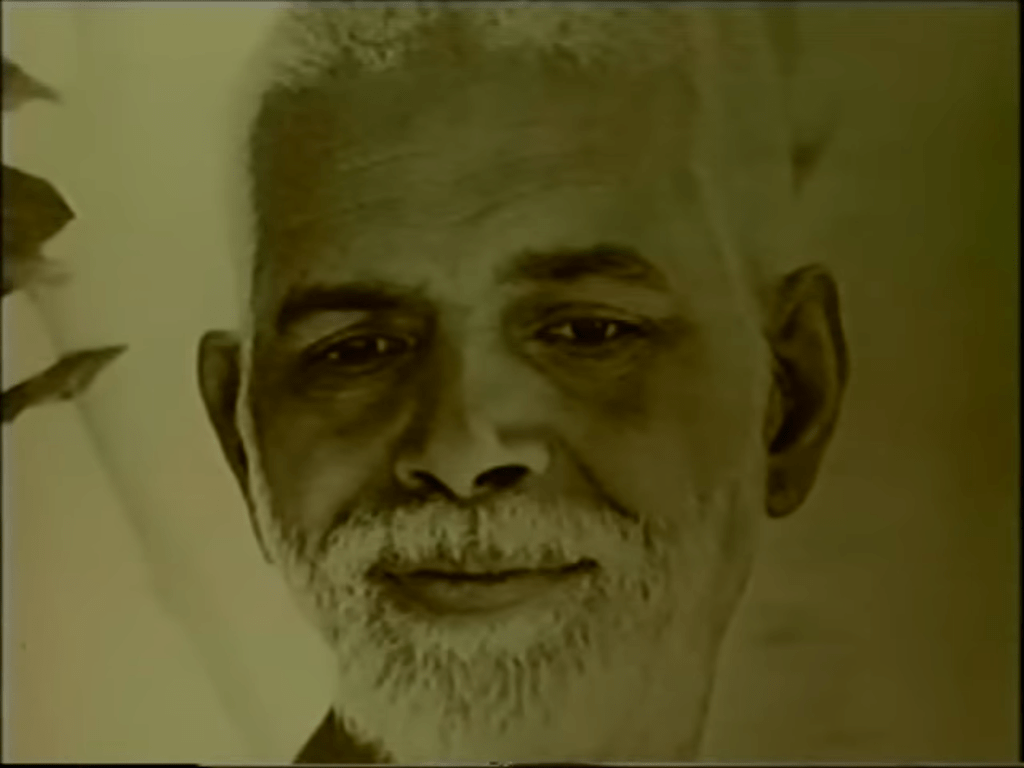
    Ramana Maharshi is one of the most revered spiritual teachers of the 20th century, known for his profound teachings on self-realization and non-duality. Born in 1879 in Tamil Nadu, India, he experienced a spontaneous awakening at the age of 16, during which he became acutely aware of the impermanence of the body and the eternal nature of the Self. Following this experience, he left his home and spent the rest of his life on the sacred mountain of Arunachala, where he became a guiding light for spiritual seekers from around the world.

    Ramana’s teachings are centered around the practice of Atma Vichara, or self-inquiry, which he considered the most direct path to realizing one’s true nature. Unlike other spiritual practices that involve rituals or external observances, Ramana emphasized turning inward to investigate the true nature of the ‘I’—the sense of individual self that we all experience.

    The Essence of Self-Inquiry

    Ramana Maharshi’s core teaching can be encapsulated in the question, “Who am I?” He taught that the sense of ‘I’ or ego, which we often associate with our thoughts, emotions, and bodily identity, is merely a superficial layer that veils our true Self, which is pure consciousness or awareness.

    The process of self-inquiry involves directing your attention inward, asking yourself where this sense of ‘I’ originates. Ramana explained that by persistently asking this question and observing the ‘I’ thought, one can trace it back to its source. This source is the true Self, the unchanging awareness that underlies all experience.

    If One Watches Whence the ‘I’ Arises

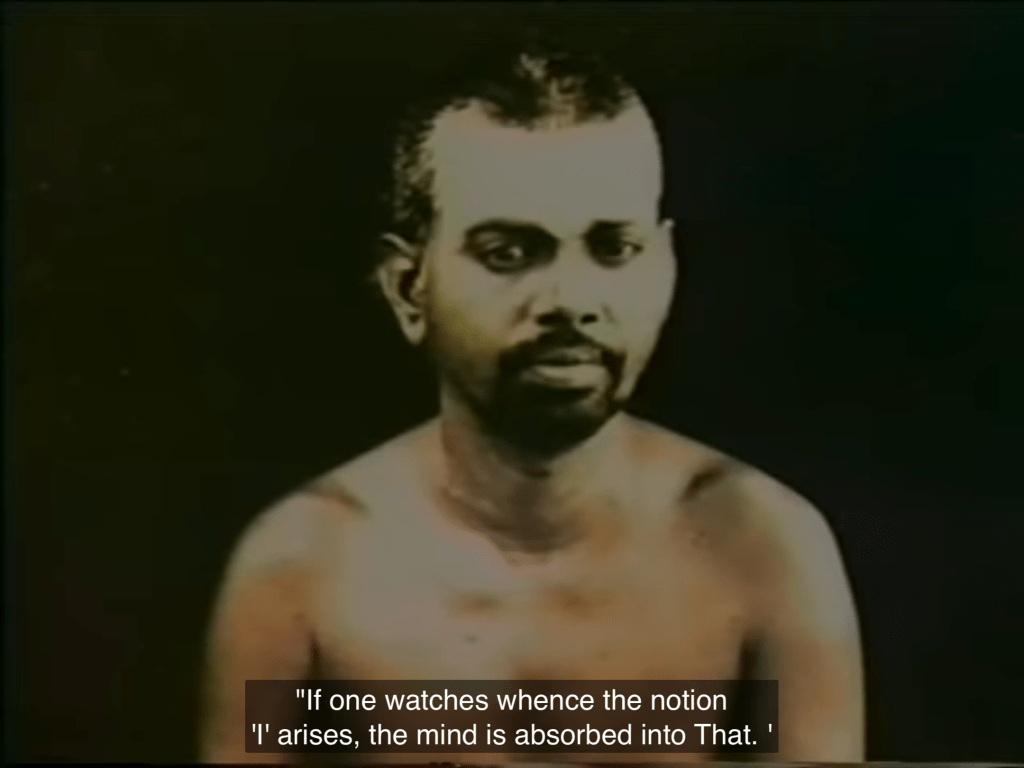
    In one of his teachings, Ramana Maharshi stated, “If one watches whence the notion ‘I’ arises, the mind is absorbed into That.” This teaching points to a subtle yet profound practice. The ‘I’ thought is the root of all mental activity and the sense of individuality. By turning attention to this root, rather than being entangled in the branches of thoughts and feelings, the mind can naturally dissolve into its source—pure awareness, which Ramana refers to as “That.”

    How to Practice Self-Inquiry

    If you find yourself puzzled by this teaching or struggle to sense “That” from which the ‘I’ arises, know that this is a common experience on the path of self-inquiry. The mind, accustomed to focusing outward, finds it challenging to turn inward and settle into stillness.

    Here’s how you can approach this practice:

    1. Sit Quietly: Begin by sitting quietly, with your eyes closed if that feels comfortable. Take a few deep breaths and allow your body and mind to relax.
    2. Turn Inward: Gently bring your attention to the sense of ‘I’. This ‘I’ could be a thought, a feeling, or simply the awareness that you exist.
    3. Ask the Question: Silently ask yourself, “Who am I?” or “Where does this ‘I’ arise from?” Don’t seek an intellectual answer. Instead, let the question be a pointer that guides your awareness inward.
    4. Observe: As you focus on the ‘I’, observe its nature. Does it have a shape, a location? Can you find its origin? Be curious, but not analytical.
    5. Rest in the Awareness: As you continue this enquiry, allow the mind to settle. If thoughts arise, simply notice them and gently bring your attention back to the feeling of ‘I’. Over time, the mind may begin to merge with the deeper awareness that is always present.

    Realizing the Self

    Through persistent practice, you may come to realize that the ‘I’ you have always identified with is not your true Self. The ‘I’ arises and dissolves in the vast expanse of pure awareness—‘That’ which Ramana Maharshi points to. This realization is not something to grasp intellectually, but a direct experience that brings about a profound inner peace and freedom.

    Ramana Maharshi’s teachings are a beacon for those seeking to transcend the ego and discover their true nature. The path of self-inquiry, though simple in its approach, can lead to the ultimate realization of the Self—the awareness that is ever-present, unchanging, and beyond all notions of individuality.

    🙏🕊️🙏

  • Seeing Beyond Our Senses: Expanding Perception in the Practice of Self-Inquiry and Advaita Vedanta


    In our day-to-day lives, we often assume that what we perceive with our senses is the full extent of reality. We rely on our eyes, ears, and other senses to navigate the world, confident that they give us an accurate picture of what’s around us. But what if our perception of reality is just a fraction of what truly exists?

    Pravrajika Divyanandaprana reminds us that we are only seeing as much of reality as our “equipment”—our body and senses—allows us to see. Just as telescopes reveal aspects of the universe that are invisible to the naked eye, there is a vast expanse of reality that lies beyond the reach of our ordinary senses. Understanding this limitation is crucial not just as an intellectual curiosity, but as a fundamental insight in the practice of self-inquiry and the pursuit of self-realization.

    The Limits of Human Perception and the Practice of Self-Inquiry

    Our senses are powerful, but they are also limited. Consider the fact that our eyes can only perceive a small portion of the electromagnetic spectrum, known as visible light. Beyond this spectrum lie infrared and ultraviolet rays, X-rays, and other forms of electromagnetic radiation that are invisible to us. Yet, with the help of technology like infrared telescopes, we can observe these hidden aspects of the universe.

    Similarly, our other senses—hearing, taste, touch, and smell—provide us with essential information about our environment, but they too have their limits. We cannot hear sounds that are too high or too low in frequency, and our sense of smell is less acute than that of many animals. These limitations mean that there is a vast amount of information in our environment that we simply cannot detect.

    For the practitioner of Advaita Vedanta and yoga, recognizing the limitations of our senses is a critical step in the journey of self-realization. The senses, while valuable tools for navigating the physical world, also act as veils that obscure the deeper reality—the true self or Atman, which is beyond all sensory perception.

    Expanding Perception Through Self-Inquiry and Advaita Vedanta

    While our physical senses have their limits, our consciousness does not. Through the practice of self-inquiry, a key method in Advaita Vedanta, we can begin to expand our perception beyond the ordinary sensory experience. Self-inquiry involves asking the fundamental question, “Who am I?”—a question that directs our attention inward, beyond the sensory input, to the awareness that perceives it all.

    In Advaita Vedanta, the goal is to realize the non-dual nature of reality, where the individual self (Atman) is understood to be one with the ultimate reality (Brahman). This realization cannot be achieved through sensory perception alone, as the senses are limited to the physical realm. Instead, it requires turning inward, transcending the sensory inputs, and realizing the self as pure consciousness.

    Meditation, mindfulness, and other yogic practices help quiet the mind and reduce reliance on the senses, creating space for this deeper awareness to emerge. These practices are not just about enhancing our perception of the world but about shifting our perception from the external to the internal—from the objects of perception to the perceiver itself.

    Practical Steps to Expand Perception in the Pursuit of Self-Realization

    1. Self-Inquiry: Regularly engage in self-inquiry by asking, “Who am I beyond my body and senses?” This question helps guide your awareness inward, toward the true self.
    2. Meditation: Develop a meditation practice that focuses on stilling the mind and withdrawing from the sensory world, allowing you to access deeper layers of consciousness.
    3. Mindfulness: Practice mindfulness in your daily life, observing your sensory experiences without attachment, and recognizing them as transient phenomena within a larger reality.
    4. Reflect on the Limits of Perception: Contemplate the limitations of your senses and how they filter your experience of reality. This reflection can help you detach from sensory experiences and focus on the awareness that perceives them.

    Conclusion: Awakening to the Reality Beyond the Senses

    Swamiji’s teaching invites us to recognize that our perception of reality is limited by the “equipment” of our body and senses. However, through the expansion of our consciousness via self-inquiry and the practices of Advaita Vedanta, we can begin to see beyond these limits and explore a much broader spectrum of reality.

    The goal of Advaita Vedanta is to realize the non-dual nature of reality, where the individual self merges with the ultimate reality. By turning inward and expanding our perception beyond the physical senses, we move closer to this realization, awakening to the truth that lies beyond the material world.

    “For those who have eyes to see and ears to hear,” this expanded perception is not just an intellectual exercise—it is the path to self-realization, the journey from the limited self to the infinite consciousness that underlies all existence.


  • Transforming Distractions: From Obstacles to Objects of Awareness

    Introduction:

    Distractions are a common experience, whether during meditation or in the midst of daily activities. They often seem like obstacles, interrupting our focus and pulling us away from the present moment. However, what if these distractions could be transformed from obstacles into opportunities for deeper awareness?

    Understanding Distractions as Pratyayas:

    In Advaita Vedanta, the concept of pratyaya refers to objects of awareness—anything that arises in the field of consciousness. Distractions, in this context, are simply pratyayas that appear in the mind. Rather than viewing them as problems, we can understand them as natural occurrences in the landscape of the mind, much like clouds passing through the sky.

    Integrating Self-Inquiry:

    To deepen this understanding, we can integrate the practice of self-inquiry. When a distraction is noticed, instead of becoming frustrated or trying to push it away, we can gently ask, “Who or what is noticing this distraction?” This simple question shifts our focus from the distraction itself to the awareness that perceives it.

    In this moment, awareness is present, and by shifting our attention from the distraction to the awareness, we create a space to explore the true nature of the self. This practice not only dissolves the power of the distraction but also redirects our focus to the essence of who we are—the awareness that is always present.

    Shifting Perspective:

    By adopting this approach, distractions are no longer seen as obstacles but as opportunities to deepen our practice. Each distraction becomes a doorway to self-inquiry, a reminder to return to the awareness that underlies all experiences. Instead of being caught up in the content of the distraction, we use it as a pointer back to the self—the true observer.

    Practical Application in Meditation:

    Here’s how you can apply this practice during meditation:

    1. Notice the Distraction: When a distraction arises, acknowledge it without judgment. It is simply a pratyaya, an object in the field of awareness.
    2. Ask the Question: Gently ask yourself, “Who is noticing this distraction?” Allow this question to shift your focus from the distraction to the awareness that perceives it.
    3. Acknowledge and Shift: Recognize the distraction as a pratyaya and shift your attention to the awareness itself. This subtle shift can transform the experience, allowing you to rest in the awareness rather than being pulled by the distraction.
    4. Return to the Practice: After acknowledging the awareness, gently return to the primary object of your meditation, such as the breath or mantra, with a renewed sense of presence.

    The Liberating Effect of This Practice:

    Integrating self-inquiry with the recognition of distractions can have a liberating effect on your meditation practice. It reduces the frustration that often accompanies distractions and transforms them into opportunities for deepening your understanding of the self. By practicing in this way, you cultivate a direct experience of the self as awareness, which transcends the fluctuations of the mind.

    Conclusion:

    Distractions, when approached with awareness and self-inquiry, become tools for spiritual growth rather than obstacles. This practice encourages a shift from identifying with the content of the mind to recognizing the ever-present awareness that observes it all. The next time a distraction arises, see it as an opportunity to explore the nature of awareness and deepen your connection with your true self.

    🙏🕊️🙏

  • The Computer and AI Metaphor: Understanding Plurality Through the Lens of Atoms and Atman

    In the rapidly advancing world of technology, computers and artificial intelligence (AI) have become powerful tools that can perform a multitude of comple tasks. But at the heart of these sophisticated systems lies a simple, fundamental reality: atoms. Just as computers and AI are composed of atoms arranged and manipulated to produce diverse outcomes, so too does the concept of Upadhi in Advaita Vedanta explain how a singular reality (Atman or Brahman) manifests as the pluralistic world we perceive.

    Atoms as Atman: The Fundamental Building Blocks

    At the most basic level, everything in the physical universe is composed of atoms. These tiny, indivisible units combine in various ways to form all matter—from the simplest elements to the most complex structures. Similarly, in Advaita Vedanta, Atman is the fundamental reality that underlies all existence. Atman, or pure consciousness, is the singular essence from which the diversity of life and the universe arises.

    Upadhis as Programs: Creating Complex Outcomes

    In the realm of technology, the operations of a computer or an AI system depend on the manipulation of electrical signals and the execution of complex algorithms. These algorithms, or programs, direct the flow of electrons through circuits, creating different outputs—images, sounds, data processing, and more. This is analogous to how Upadhis (limiting adjuncts or conditions) shape the expression of Atman, giving rise to the diversity of forms and experiences in the world.

    Just as a single computer can perform a vast array of tasks depending on the programs it runs, the singular reality of Atman can appear as the manifold world when filtered through different Upadhis. The differences we perceive—whether in computers as varied outputs or in life as distinct entities—are ultimately products of the underlying uniformity being expressed in diverse ways.

    The Illusion of Plurality: Seeing Beyond the Surface

    When we interact with technology, it’s easy to see only the surface-level outputs—text on a screen, music from a speaker, a car navigating the road autonomously—and forget that all these are fundamentally the same at the atomic level. Similarly, in life, we often perceive the world as filled with separate, distinct entities without realizing the underlying oneness of Atman.

    The diversity and complexity we experience are like the different functions of a computer: they are real in their context, but they don’t change the fundamental nature of the atoms (or Atman) that make them possible. This is the essence of the illusion of plurality. It’s not that the diversity isn’t there—it’s that the diversity is an expression of something deeper and singular.

    Application to Self-Inquiry and Advaita Vedanta

    Understanding this metaphor can be deeply enriching for those on the path of self-inquiry and Advaita Vedanta. It highlights the idea that while the world appears to be filled with diversity and complexity, it is all a manifestation of the same underlying reality—Atman or Brahman.

    • Self-Inquiry: Just as one might examine the workings of a computer to understand its fundamental nature, self-inquiry involves turning inward to examine the true nature of the self. By asking “Who am I?” or “What is the essence of my being?” we begin to see beyond the surface-level differences created by Upadhis and recognize the underlying oneness.
    • Meditation: Meditation allows us to quiet the “programs” of the mind and perceive the unity behind the diversity. In this state, we can experience the stillness of Atman, undisturbed by the fluctuations of the sensory world.
    • Seeing the Divine in Everything: Recognizing that all forms and experiences are expressions of the same underlying reality encourages us to see the Divine in everything. Whether it’s the complexity of AI or the simplicity of a single atom, all is an expression of Brahman.

    Conclusion: Embracing the Oneness Behind the Diversity

    The computer and AI metaphor provides a modern, relatable way to understand the ancient concept of Upadhi in Advaita Vedanta. It shows us how a single, undifferentiated reality can manifest as a vast array of forms and functions, all while remaining fundamentally the same. By recognizing this, we can begin to see through the illusion of plurality and appreciate the underlying oneness of all existence.

    This understanding not only enriches our spiritual practice but also deepens our appreciation of the world around us. Whether we are contemplating the nature of consciousness or simply observing the outputs of a computer, we are reminded that everything is an expression of the same fundamental essence. In this realization, we find both peace and profound connection to the infinite reality that is Brahman.

    🙏🕊️🙏