Tag: Ramayana translation

  • Ramayana No. 17: The Journey of Life: Lessons from Rama’s Epic Story

    Ramayana No. 17: The Journey of Life: Lessons from Rama’s Epic Story

    Inspired by Chapter 1.3 of the DeBroy Translation of the Ramayana

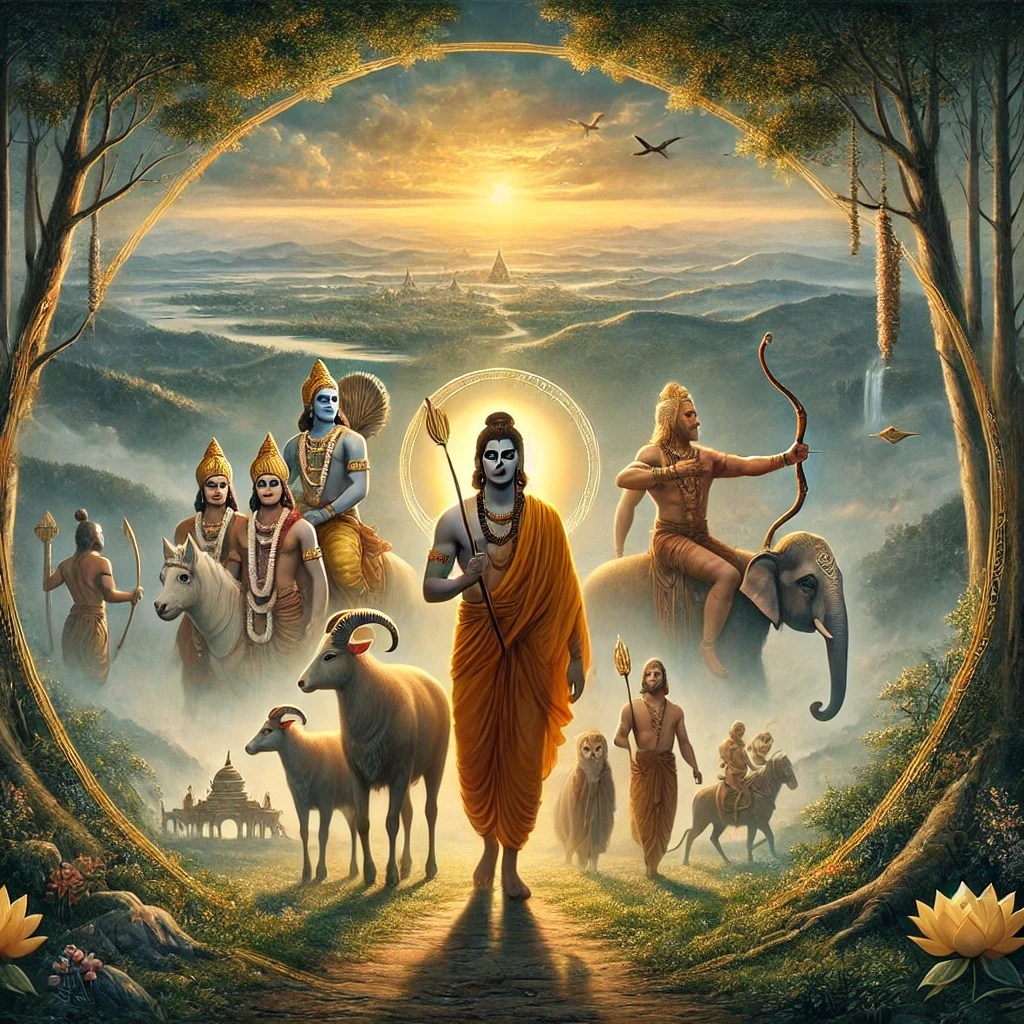
    In the Ramayana, we follow Rama on an extraordinary journey filled with triumphs and tribulations. As we explore his life, we come to realize that it is not just a story of a prince, but a reflection of the very fabric of human existence. From his birth as a noble soul to his struggles, battles, and eventual return to Ayodhya, Rama’s journey offers a mirror for the journey each of us takes through life.

    This timeless epic, as retold by Valmiki, holds deep truths that resonate as powerfully today as they did in ancient times. Below are some key lessons from Rama’s life that provide valuable insights for the modern world.

    Adversity is Part of the Journey

    Rama’s life is marked by periods of great adversity, including his unjust exile from Ayodhya and the abduction of his wife, Sita. Despite the hardships, Rama never wavers in his resolve to uphold dharma (righteousness).

    In today’s world, we often face our own versions of exile—whether it’s personal setbacks, professional struggles, or moments of loss. Rama’s journey teaches us that adversity is not something to avoid but to embrace as part of life. How we respond to these challenges defines who we are. Like Rama, we can face our difficulties with resilience, staying true to our values, and knowing that every trial brings growth.

    The Power of Friendship and Support

    Rama does not walk the path of exile alone. His unwavering companions—his brother Lakshmana, his devoted friend Hanuman, and the loyal Sugriva—each play crucial roles in helping him overcome seemingly insurmountable obstacles.

    In a world where individualism is often prized, the Ramayana reminds us of the importance of relationships and support networks. We are not meant to face life’s challenges alone. Surrounding ourselves with people who uplift and support us can make all the difference when facing hardships. True friends, like Hanuman and Lakshmana, offer strength when we need it most.

    The Balance Between Duty and Personal Desires

    One of the most powerful themes of the Ramayana is the constant tension between personal desires and duty (dharma). Rama is exiled because of his stepmother’s wishes, yet he chooses to honor his father’s promise, even at the cost of his own happiness.

    In today’s fast-paced and achievement-oriented society, we are often pulled between pursuing personal goals and fulfilling our responsibilities to others. The story of Rama reminds us that living with integrity sometimes means placing duty above personal ambition. This does not mean sacrificing our happiness; instead, it’s about finding harmony between the two and understanding that a life lived in accordance with one’s principles brings long-lasting peace.

    Redemption and Return: The Cycle of Life

    After years of struggle, Rama defeats Ravana, rescues Sita, and returns to Ayodhya to claim his rightful place as king. His return represents not only a physical homecoming but a symbolic redemption after enduring exile and loss.

    This mirrors the cycles we experience in life. Periods of difficulty and hardship eventually give way to renewal and recovery. Rama’s return reminds us that no matter how long the journey or how deep the struggle, there is always a path back to peace, fulfillment, and purpose. In moments when we feel lost, we can take comfort in the knowledge that challenges are temporary, and our personal “return to Ayodhya” is always on the horizon.

    The Enduring Power of Faith and Devotion

    Throughout the Ramayana, Rama places his faith in the larger forces at work. Whether in his interactions with sages, his prayers to deities, or his reliance on his loyal companions, his life demonstrates the importance of faith and devotion—not just in the divine, but in the power of goodness and righteousness.

    In our modern lives, where uncertainty often reigns, faith can serve as an anchor. Whether it’s faith in ourselves, in a higher power, or in the principles of justice and kindness, maintaining a sense of devotion can guide us through life’s challenges. Like Rama, when we stay connected to a sense of purpose greater than ourselves, we find strength, clarity, and peace.

    Conclusion: The Ramayana as a Guide for Our Times

    Rama’s journey is a timeless reflection of the human experience. His life teaches us that hardship, sacrifice, and redemption are all part of our own stories. By embracing adversity, cultivating meaningful relationships, honoring our duties, and holding onto faith, we can navigate the challenges of modern life with grace and resilience.

    The Ramayana, as retold by Valmiki and beautifully translated by DeBroy, continues to inspire countless generations. Its wisdom transcends time, offering guidance for anyone seeking a life of purpose, integrity, and fulfillment. Just as Rama found his way back to Ayodhya, we too can find our way through the trials of life, emerging stronger and wiser.
    Read Chapter 1.3 of the DeBroy Translation of the Ramayana

  • Ramayana No. 16: The Birth of Creation: How Compassion and Sorrow Sparked the First Verse of the Ramayana

    Ramayana No. 16: The Birth of Creation: How Compassion and Sorrow Sparked the First Verse of the Ramayana

    Inspired by Chapter 1.2 of the DeBroy Translation of the Ramayana

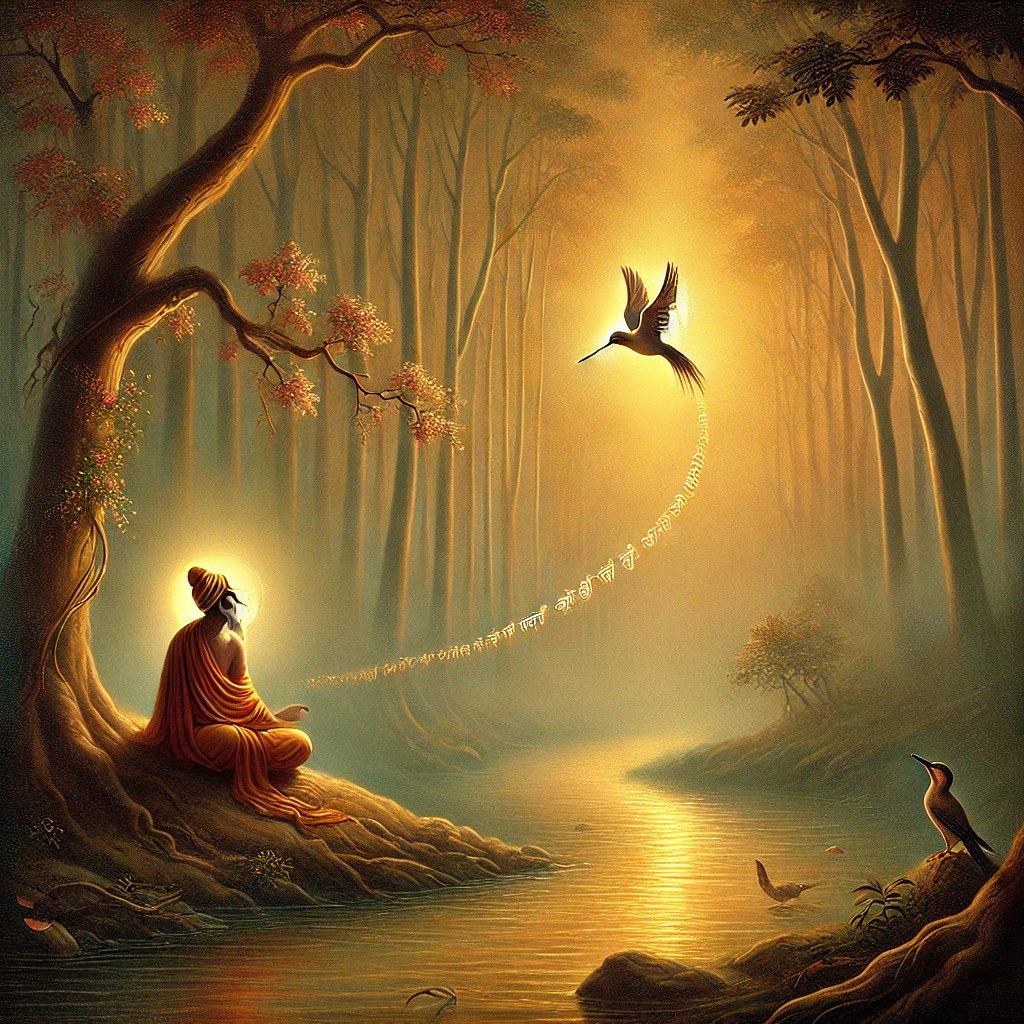
    We often think of creativity as a product of inspiration, but the creation of the first verse of the Ramayana reminds us that profound art can also emerge from sorrow and compassion. In this ancient tale, the sage Valmiki witnesses a cruel act—the senseless killing of a bird—and from his grief, he unintentionally composes a verse that becomes the foundation of one of the greatest epics in human history. This moment offers us powerful insights into the nature of creativity, ethics, and the emotional depths that often fuel artistic expression.

    The Power of Emotion in Creativity

    Valmiki’s first verse is not a product of calculation or planning but a spontaneous outpouring of grief and compassion. It was born from a moment of deep emotional disturbance, reflecting how powerful feelings can give rise to meaningful creation. In modern life, we often suppress our emotions in the pursuit of efficiency, but this story reminds us that some of the most authentic and resonant creations come when we allow ourselves to feel deeply.

    Whether it’s art, writing, or simply how we engage with the world, emotions are not weaknesses to be hidden but powerful forces that can inspire new perspectives, innovations, and beauty. When we embrace our emotions, even those stemming from sorrow, we open ourselves up to greater creativity and expression.

    Compassion as the Foundation of Justice and Ethics

    Valmiki’s reaction to the bird’s death was not just sorrow but an ethical response. He immediately recognized the hunter’s act as adharma—an unjust act against nature. This compassion, this immediate identification with the suffering of another being, is what transformed his grief into something greater.

    In today’s world, where injustice often abounds, compassion remains the foundation for any meaningful response. Valmiki’s story invites us to ask: How do we respond to the suffering around us? Do we let ourselves feel the weight of another’s pain, and can we transform that empathy into constructive action? Just as Valmiki’s compassion gave birth to a timeless epic, our empathy can be the starting point for creating a more just and ethical world.

    Art as a Medium of Truth and Endurance

    When Brahma appears to Valmiki, he blesses the verse and assures him that the story of Rama, composed in these beautiful shlokas, will endure as long as rivers flow and mountains stand. This promise speaks to the power of art and storytelling—not just to entertain but to communicate timeless truths that resonate across generations.

    In an age of constant distraction and fleeting trends, the Ramayana stands as a reminder that art with a foundation in truth, compassion, and dharma endures. It reminds us that, as creators or consumers of art, we should seek and value works that reflect the deeper truths of existence—those that inspire, challenge, and uplift the human spirit.

    Conclusion: Embracing Sorrow as a Catalyst for Growth

    Valmiki’s first verse emerged from a moment of sorrow and compassion, demonstrating how even painful emotions can lead to profound creativity and insight. In our own lives, we can take heart from this ancient story, knowing that our most difficult moments have the potential to lead us to growth, understanding, and even beauty.

    Whether in art, in work, or in how we live our lives, Valmiki’s story teaches us that sorrow can be a powerful catalyst for creation, and compassion a guide for ethical action. By embracing our emotions and responding to the world with empathy, we too can create something that uplifts and endures.

    Read Chapter 1.2 of the DeBroy Translation of the Ramayana here.

    🙏🕊️🙏

  • Ramayana No. 15: The Timeless Virtues of Rama: Lessons for the Modern Age

    Ramayana No. 15: The Timeless Virtues of Rama: Lessons for the Modern Age

    Inspired by Chapter 1.1 of the DeBroy Translation of the Ramayana

    In the ancient texts of the Ramayana, the sage Valmiki asks the wise Narada to describe a man who embodies the highest virtues. Narada’s response is a detailed description of Lord Rama, a king known for his valor, wisdom, and unwavering commitment to truth and righteousness. Though these stories are thousands of years old, the values they promote are as relevant today as they were then. In a world where we often look for heroes, role models, and guiding principles, the virtues of Rama offer profound lessons that can help us navigate the complexities of modern life.

    The Power of Truth and Integrity

    One of the most remarkable qualities of Rama is his commitment to truth. Even when faced with great personal loss, such as being exiled from his kingdom due to his stepmother’s wishes, Rama adheres to his principles without wavering. He follows his father’s word, honoring the sanctity of promises, even when it causes him immense personal sacrifice.

    In today’s world, where truth can sometimes feel like a rare commodity, Rama’s example reminds us of the importance of integrity. Living in accordance with our values, keeping our promises, and being truthful not only to others but also to ourselves, are keys to building trust and respect in our personal and professional lives.

    Strength in Compassion and Duty

    Rama is not only depicted as a strong and skilled warrior but also as a compassionate leader who is deeply committed to the welfare of his people. His strength is not just physical but moral—he rules with kindness, fairness, and a deep sense of duty toward all beings.

    In our times, where leadership is often equated with power and domination, the model of compassionate leadership stands out as a much-needed ideal. Whether in the corporate world, in our communities, or at home, leading with empathy and prioritizing the well-being of others fosters unity and trust, creating environments where everyone can thrive.

    The Balance of Emotion and Reason

    Rama’s ability to control his anger and emotions is another defining trait. Even in situations that provoke great emotional turmoil—whether it’s the abduction of his wife Sita or the betrayal of those closest to him—he does not act impulsively. Instead, Rama demonstrates the importance of mastering one’s emotions, using reason and wisdom to guide his decisions.

    In today’s high-pressure world, emotional intelligence has become a key skill for success and well-being. Like Rama, we too are often faced with situations that test our patience and provoke our emotions. By learning to balance our emotions with reason, we can respond to challenges with clarity and make decisions that reflect our best selves.

    The Journey of Growth Through Sacrifice

    Rama’s exile into the forest can be seen as a metaphor for the journey of personal growth. In the face of adversity, Rama never loses sight of his purpose, and through each trial, he emerges stronger and wiser. His ability to turn hardship into a path of self-refinement is one of the most powerful lessons of his life.

    In the modern age, we are constantly faced with challenges, whether personal, professional, or societal. Instead of viewing these challenges as setbacks, we can reframe them as opportunities for growth and transformation. Every difficulty we encounter, much like Rama’s exile, has the potential to shape us into better versions of ourselves.

    The Role of Dharma: Living with Purpose

    Dharma, or living in accordance with the natural law of righteousness, is central to Rama’s life. Every action he takes is aligned with his duty—whether to his family, his people, or the greater good. His unwavering commitment to dharma ensures that he lives a life of purpose, clarity, and fulfillment.

    In our fast-paced, goal-driven world, it’s easy to lose sight of our deeper purpose. Rama’s example invites us to reconnect with our own dharma, to reflect on what truly matters in our lives, and to live in a way that is meaningful, ethical, and aligned with our highest values.

    Conclusion: Finding Rama Within

    The story of Rama is not just an ancient myth; it is a blueprint for living a life of virtue, strength, and purpose. Each of us, in our own ways, can strive to embody the qualities that make Rama such a revered figure—truthfulness, compassion, emotional resilience, and a commitment to doing what is right.

    As we navigate the complexities of modern life, let us draw inspiration from these timeless virtues. In doing so, we may find that the path to fulfillment, peace, and greatness is not as far away as it seems—it begins within each of us.

    Here is the link to the free online version of the Ramayana, translated by DeBroy, which inspired these reflections. Feel free to explore the full text for a deeper understanding of this timeless epic.

    Read chapter 1/1 of the free online version of the DeBroy Translation of the Ramayana here.