Tag: Jungian psychology

  • Exploring the Origins of Thought: A Synthesis of Jung, Ramana Maharshi, Kabbalah, and Tibetan Buddhism

    In our journey to understand the nature of thoughts and the Self, we find ourselves drawing from the wisdom of various traditions—Jungian psychology, Vedanta as taught by Ramana Maharshi, the mystical insights of Kabbalah, and the profound teachings of Tibetan Buddhism. These perspectives, though rooted in different cultural and philosophical backgrounds, converge in fascinating ways, offering a profound understanding of where thoughts come from and where they go.

    The Self: A Jungian Perspective

    Carl Jung’s concept of the Self is expansive, encompassing both the conscious and unconscious aspects of the psyche. In Jungian thought, the Self is not just the sum of our conscious awareness but also includes the vast, often hidden, realm of the unconscious. Yet, Jung’s Self goes even further—it includes the totality of our being, which can be seen as connected to the divine. In this view, the Self is also God, the Infinite, the Eternal—encompassing everything, with nothing excluded.

    Ein Sof and the Infinite Source

    In Kabbalistic tradition, this concept of the Infinite is referred to as Ein Sof, meaning “without end.” Ein Sof represents the boundless, formless aspect of God, from which all creation emerges. It is the source of all existence, the primordial void from which thoughts and realities arise.

    When we combine this with Jung’s understanding, we see that thoughts can be considered as arising from Ein Sof—the infinite potential. They emerge from the stillness, the formless void, moving first into the unconscious mind. From there, they bubble up into conscious awareness, manifesting in a way that we can perceive and reflect upon.

    The Vedantic View: Ramana Maharshi on the Self

    Ramana Maharshi’s teachings on the Self resonate deeply with these ideas. He teaches that the true Self is pure awareness, beyond both the conscious and unconscious mind. The thoughts that arise within us, whether they seem to come from the unconscious or are immediately conscious, are all manifestations within this pure awareness.

    In Ramana’s framework, the conscious mind and the unconscious mind are both part of the egoic self—the sense of individual identity that is ultimately an illusion. However, by engaging in self-inquiry, we can trace our thoughts back to their true origin—the pure, infinite awareness that Ramana equates with the Self or Atman. This is the same awareness that Jung might refer to as the totality of the Self, and that Kabbalists understand as arising from Ein Sof.

    The Tibetan Buddhist Perspective: All Phenomena as Ornaments of the Dharmakaya

    Tibetan Buddhism offers a similar understanding but expresses it through the rich metaphor of the Dharmakaya, the truth body of the Buddha. According to these teachings, everything that arises—every thought, every perception, every experience—is an ornament of the Dharmakaya. This means that all phenomena are expressions of the ultimate reality, which is pure, unconditioned awareness or Buddha nature.

    There is a common saying in Tibetan Buddhism: “All phenomena are the ornaments of the Dharmakaya,” or “All sound is the sound of Dharma; all sight is the display of Dharma.” This view suggests that everything we perceive, everything we experience, is not separate from the ultimate reality but is a manifestation of it. Just as thoughts arise from and dissolve back into Ein Sof or the Self, in Tibetan Buddhism, they are seen as temporary displays of the Dharmakaya, arising from the vastness of Buddha nature.

    Buddha’s Enlightenment: Recognizing Mara as the Self

    This understanding is beautifully illustrated in the story of Buddha’s enlightenment under the Bodhi tree. As Siddhartha Gautama sat in deep meditation, Mara—the personification of illusion and desire—appeared to tempt him and distract him from his path to enlightenment. Mara represented all the fears, desires, and illusions that arise within the mind.

    However, instead of engaging with Mara as an external force, the Buddha recognized that Mara was not separate from himself. He famously said to Mara, “I know you. You are a creation of my own mind.” In that moment, by recognizing that Mara was merely a projection of his own thoughts, the Buddha disempowered Mara completely. Mara dissolved, and with that, Siddhartha Gautama achieved enlightenment, becoming the Buddha.

    This moment is a powerful example of self-realization. By recognizing that thoughts, desires, and fears are not external realities but manifestations of the mind, the Buddha transcended them. In the same way, we can see that our thoughts, no matter how powerful they may seem, arise from and dissolve back into the infinite Self, the ultimate reality.

    The Quantum Nature of Thought

    In many ways, this understanding is mirrored in the discoveries of quantum physics. Particles, which seem solid and real, are actually 99.99% empty space. They appear and disappear from the quantum field so rapidly that they seem solid and continuous, much like how thoughts arise and dissolve within our consciousness. The solidity of our thoughts—or indeed our reality—is an illusion, a fleeting manifestation from the infinite potential that is the true Self.

    Practical Application: Self-Inquiry and Meditation

    Understanding thoughts as arising from Ein Sof or as ornaments of the Dharmakaya, and recognizing them as internal projections like Mara, can profoundly inform our practice of self-inquiry and meditation. When a thought arises, we can trace it back, not just through the layers of consciousness and unconsciousness but beyond, into the infinite source. This practice can help us see the impermanence and illusory nature of thoughts and, by extension, of the ego itself.

    Through this inquiry, we can begin to experience the Self not just as a concept but as a living reality—the infinite awareness from which all arises and to which all returns.

    Conclusion

    This synthesis of Jungian psychology, Ramana Maharshi’s Vedanta, Kabbalistic mysticism, Tibetan Buddhism, and the story of Buddha’s enlightenment offers a rich, multifaceted understanding of the nature of thought and the Self. It invites us to see beyond the surface of our thoughts and experiences, recognizing them as temporary manifestations of the infinite. Whether through self-inquiry, meditation, or contemplation of these ideas, we are invited to explore the deeper reality of the Self—an exploration that can lead to profound spiritual awakening and insight.

    🙏🕊️🙏
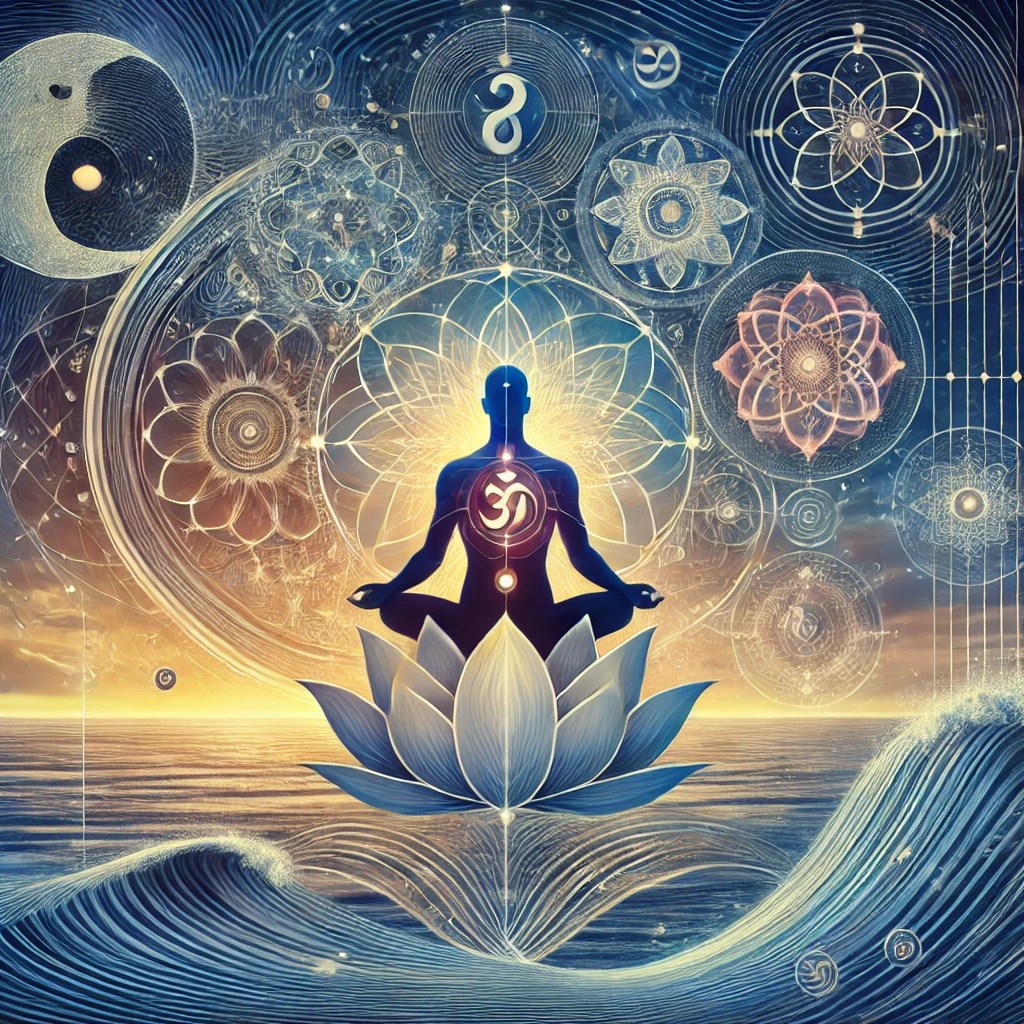
  • Navigating the Challenges of Life with Wisdom and Compassion: Integrating Spirituality and Psychology

    Life is filled with challenges—moments of suffering, uncertainty, and the quest for peace. In these times, we often seek wisdom and guidance, looking for ways to navigate the complexities of life with grace. By integrating the insights from both spirituality and psychology, we can find a balanced approach that not only helps us manage difficulties but also fosters personal growth and inner peace.

    Understanding the Ego in Spiritual and Psychological Contexts

    The ego is a central concept in both spiritual and psychological teachings, though it is understood differently in each context. Psychologically, the ego represents the center of our consciousness—the part of us that interacts with the world, makes decisions, and maintains our sense of individuality. Spiritually, particularly in non-dual traditions, the ego is seen as the sense of individual identity that can obscure our connection to the true self (Atman) and the universal self (Brahman).

    Recognizing that the ego is not the totality of who we are is a crucial step in managing life’s difficulties. When we see the ego as part of a larger, interconnected self, we begin to understand that our experiences, while real and often challenging, are not the whole story. This broader perspective allows us to approach life with greater wisdom and compassion.

    The Role of Wisdom and Compassion

    Wisdom and compassion are essential qualities that can guide us through life’s ups and downs. In spiritual traditions, wisdom often refers to the deep understanding of the nature of reality, including the impermanence of all things and the interconnectedness of life. Compassion, on the other hand, is the response to this understanding—a desire to alleviate suffering in ourselves and others.

    Psychologically, these qualities are equally important. Practices like self-compassion, as taught by Kristin Neff, and the Internal Family Systems (IFS) model, as taught by Dick Schwartz, encourage us to approach our inner parts with understanding and care, offering practical ways to cultivate these qualities in our daily lives.

    By integrating spiritual wisdom with psychological practices, we can create a more compassionate and balanced approach to life. This integration allows us to respond to challenges not from a place of fear or reactivity but from a place of understanding and kindness.

    Living in the Relative and Absolute Realities

    A key aspect of non-dual philosophy is the distinction between relative and absolute realities. The relative reality is the world of the ego, where we experience life’s challenges, emotions, and relationships. The absolute reality, however, is the realm of the true self—an unchanging, eternal essence that is one with all existence.

    Balancing these two realities can be challenging, but it is essential for reducing anxiety and suffering. When we are too focused on the relative reality, we may become overwhelmed by life’s difficulties. However, by cultivating an awareness of the absolute reality, we can bring a sense of peace and equanimity to our everyday experiences.

    Understanding that both realities coexist allows us to navigate life with a sense of grace. We recognize that while our ego may experience suffering, our true self remains untouched, providing a steady foundation of peace and wisdom.

    Practical Applications for Integrating Wisdom and Compassion

    To bring this understanding into daily life, here are some practical exercises that integrate spiritual and psychological approaches:

    1. Mindful Meditation: Begin with a simple meditation practice focused on the breath. As you breathe in and out, remind yourself that while your ego may experience stress or discomfort, your true self remains at peace. Allow this awareness to bring a sense of calm to your mind and body.
    2. Self-Compassion Practice: When facing a challenge, take a moment to practice self-compassion. Acknowledge the difficulty, recognize that suffering is a part of the human experience, and offer yourself kindness and understanding. This can help soften the ego’s reactivity and open up space for more compassionate responses.
    3. Reflective Journaling: Spend time journaling about your experiences, focusing on how you balance the relative and absolute realities in your life. Reflect on moments when you were caught up in the ego’s concerns and how reconnecting with your true self helped you find peace.
    4. Integrating the Shadow: Use Jung’s concept of shadow work to explore the parts of yourself that you may have repressed or denied. By bringing these aspects into the light of awareness, you can reduce their power over you and create a more balanced and integrated self.
    5. Living with Awareness: Throughout your day, practice living with awareness of both the relative and absolute realities. Notice when your ego is reacting to something, and gently remind yourself of the broader perspective. This practice helps you stay grounded in wisdom and compassion, even in challenging situations.

    Conclusion: Embracing the Whole Self

    Integrating spirituality and psychology offers a powerful approach to navigating life’s challenges. By balancing the ego’s experience of the world with the deeper understanding of the true self and universal self, we can move through life with greater peace and fulfillment. This journey is about embracing all aspects of the self—ego, true self, and universal self—and living in a way that reflects wisdom, compassion, and inner harmony.

    🙏🕊️🙏

  • Individuation and Non-Duality: Integrating the Self for Greater Peace and Fulfillment

    In our quest for self-understanding and spiritual growth, two profound concepts offer a pathway to deeper fulfillment and inner peace: Jung’s idea of individuation and the philosophy of non-duality. While they arise from different traditions, these concepts intersect in a way that can lead to a more integrated, harmonious experience of life.

    Understanding the Self

    The self is a complex, multi-layered concept. In Jungian psychology, the self encompasses both the conscious and unconscious aspects of our being, including the ego, shadow, anima/animus, and the higher self. In non-dual philosophy, the self is seen as encompassing not only the individual ego but also the true self (Atman) and the universal self (Brahman), which represents the oneness of all existence.

    Individuation: The Path to Wholeness

    Carl Jung described individuation as the process of integrating the various parts of the self into a harmonious whole. It’s a journey toward self-realization, where the ego comes to understand that it is not the totality of the self but a part of a larger, interconnected system. This process involves recognizing and integrating unconscious aspects of the psyche, including the shadow—those parts of ourselves that we may deny or repress.

    As the ego begins to recognize its place within the larger self, it becomes less reactive and more aligned with the true self and universal self. This alignment leads to a more balanced, compassionate, and fulfilling life.

    Non-Duality: The Unity of All Experience

    Non-duality teaches that the ego, true self, and universal self are not separate entities but interconnected aspects of the same underlying reality. In this view, the self is both everything and nothing—it is the individual consciousness (ego), the deeper essence (true self), and the oneness with all that is (universal self).

    The practice of non-duality involves recognizing the illusions of separation and realizing the inherent unity of all existence. This understanding brings a sense of peace and liberation, as we begin to see that the suffering and challenges of the ego are part of a larger play of life, known in some traditions as lila.

    Integration of Ego, True Self, and Universal Self

    The process of individuation, when viewed through the lens of non-duality, is about integrating these different aspects of the self into a cohesive whole. It’s not about rejecting the ego or transcending it in favor of a higher state, but about recognizing the interconnectedness of all parts of the self.

    • Ego as a Part of the Whole: The ego is the part of us that interacts with the world, helps us navigate daily life, and ensures our survival. It’s a necessary and valuable aspect of our being.
    • True Self: The true self, or Atman, connects us to our deeper essence, the part of us that is unchanging and eternal. It is the source of wisdom, compassion, and inner peace.
    • Universal Self: The universal self, or Brahman, represents the realization that all beings and things are interconnected, that we are not separate from the world but a part of a greater whole.

    Practical Steps for Integration

    The journey of individuation and non-duality involves several practical steps:

    1. Self-Reflection and Meditation: Spend time in self-reflection and meditation to become aware of the different parts of yourself. Notice how the ego operates, what it fears, what it desires, and how it interacts with the true self and universal self.
    2. Embrace All Parts: Practice embracing all parts of yourself—your strengths, weaknesses, desires, and fears. Understand that they are all part of the totality of who you are. This acceptance is key to integrating the self.
    3. Integrate the Shadow: Bring the shadow aspects of yourself into awareness. These are the parts of yourself that you might deny or ignore, such as fears, insecurities, or desires. By integrating these aspects, you reduce their power over you and create a more balanced self.
    4. Balance Inner and Outer Life: Apply your inner work to your outer life. Notice how your understanding of the self influences your actions, relationships, and decisions. The goal is to live in a way that reflects your integrated self.

    Living from the True Self

    As you progress in this journey, you’ll find that your actions become more aligned with the true self and universal self. You’ll experience less reactivity, more peace, and a deeper sense of connection with the world around you. The ego, while still a part of your experience, becomes a more harmonious and less dominant aspect of your being.

    Conclusion: Embracing the Whole Self

    The integration of ego, true self, and universal self is a path toward wholeness and harmony. By recognizing and embracing all aspects of the self, you can live a life guided by wisdom, compassion, and inner peace. This journey of individuation and non-duality offers a profound way to understand and navigate the complexities of human experience, leading to a more fulfilling and connected life.

    🙏🕊️🙏

  • The Yoga of Carl Jung: Integrating the Ego, Atman, and Brahman

    “Be patient toward all that is unsolved in your heart and try to love the questions themselves, like locked rooms and like books that are now written in a very foreign tongue. Do not now seek the answers, which cannot be given you because you would not be able to live them. And the point is, to live everything. Live the questions now. Perhaps you will then gradually, without noticing it, live along some distant day into the answer.”

    ~ Rainer Maria Rilke, “Letters to a Young Poet”

    In exploring the depths of human consciousness, both Carl Jung’s psychological theories and yogic philosophy offer profound insights into the nature of the self. Despite originating from different cultural and intellectual traditions, they converge on a central theme: the integration of various aspects of the self to achieve wholeness and enlightenment. This post delves into the parallels between Jung’s concepts and yogic teachings, focusing on the roles of the ego, Atman, and Brahman.

    The Self According to Carl Jung

    Carl Jung, a pioneering psychologist, introduced the concept of the Self as encompassing both the conscious and unconscious aspects of the psyche. He believed that the process of individuation, or personal development, involves integrating these unconscious elements into conscious awareness. This journey toward self-realization and wholeness allows individuals to uncover deeper truths about themselves and achieve psychological harmony.

    Yogic Philosophy: Ego, Atman, and Brahman

    In yogic philosophy, the self is understood through the interplay of the ego, Atman, and Brahman:

    • Ego: The ego represents the individual, conscious identity, marked by personal desires, fears, and thoughts. It is the part of the self that interacts with the world and perceives itself as separate from others.
    • Atman: Atman is the true Self, the deeper, unchanging essence of an individual beyond the ego. It is pure consciousness and awareness, representing the core of one’s being.
    • Brahman: Brahman is the ultimate, universal consciousness, encompassing all existence. The realization of Brahman involves understanding that Atman (the individual Self) is not separate from this universal essence.

    Integrating Jungian and Yogic Perspectives

    When we align Jung’s idea of the Self with yogic teachings, a comprehensive picture of self-realization emerges:

    1. Ego and Ordinary Mind: In both frameworks, the ego or ordinary mind is the initial stage of self-awareness. It involves the individual’s interaction with the world, characterized by fluctuating thoughts (vrittis) and personal narratives.
    • The ego experiences separation and individuality.
    1. True Self (Atman) and Stable Vrittis: Moving beyond the ego, the individual begins to experience the true Self or Atman. This state is marked by stable vrittis and similar pratyayas (mental contents), indicating a more unified and coherent state of consciousness. Here, the sense of “I” transitions from the personal ego to the deeper true Self.
    • Stable vrittis and similar pratyayas reflect a unified consciousness.
    1. Universal Self (Brahman) and Pure Awareness: The ultimate realization involves understanding that the true Self (Atman) is one with Brahman, the universal consciousness. In this state, there is no distinction between the individual self and the universal Self. This realization aligns with the experience of pure awareness in yogic contemplation, where the mind transcends individual thoughts and perceptions to rest in its true, unchanging nature.
    • The true Self (Atman) is fundamentally connected to the universal consciousness (Brahman).

    The Connection Between Ego, True Self, and Universal Self

    An important insight from this integration is understanding the relationship between the ego, True Self, and Universal Self:

    • Ego as a Fluctuation of the True Self: The ego, with its individual identity and personal narratives, can be seen as a temporary fluctuation or expression of the deeper True Self (Atman). While the ego experiences separation and individuality, it is ultimately a manifestation of the underlying, unchanging awareness of Atman.
    • True Self as a Fluctuation of the Universal Self: Similarly, the True Self (Atman) can be understood as a particular expression or fluctuation of the Universal Self (Brahman). While Atman retains a sense of individual consciousness, it is fundamentally connected to and inseparable from the universal, all-encompassing consciousness of Brahman.
    • Inherent Connection: This perspective highlights that, whether we are aware of it or not, we are all inherently connected through the Universal Self. Our individual experiences and identities are different expressions of the same underlying reality.

    Recognizing that the ego is a fluctuation of the True Self, and the True Self is a fluctuation of the Universal Self, helps us understand our inherent interconnectedness. This realization fosters a sense of unity and compassion, knowing that at the deepest level, we are all part of the same universal consciousness.

    Practical Exercise: Self-Inquiry and Integration

    To help experientially understand these concepts, here are a few exercises based on self-inquiry, which integrate conscious and unconscious experiences. Each of these steps can be a lifetime practice. Understanding or realization of these ideas and practices may immediately strike an intuitive chord, but direct experience may require further contemplation and meditation. As Rilke suggests, sometimes it’s more important to live the questions than to immediately understand the answers. These steps are also not necessarily linear as presented; each step can unfold organically in its own way and time. Therefore, when studying and practicing these teachings, patience is truly a virtue.

    Step 1: Settle into Meditation

    Find a quiet place and sit comfortably. Close your eyes and take a few deep breaths, allowing your mind to settle.

    Step 2: Begin Self-Inquiry

    • Ask yourself, “Who am I?” or “What is this ‘I’ that I experience?”
    • Allow any mental events, fluctuations, experiences, thoughts, feelings, sensations, memories, or beliefs to arise without judgment. Simply observe them.

    Step 3: Observe the Ego

    • Notice the thoughts and feelings that are tied to your personal identity (ego). These might include your name, roles, likes, dislikes, desires, aversions, hopes, and fears.
    • Recognize these as fluctuating vrittis and pratyayas of the ordinary mind.

    Step 4: Move to the True Self (Atman)

    • Shift your focus to the awareness that is observing these thoughts and feelings. This awareness is stable and unchanging.
    • Ask yourself, “What is the nature of this awareness?” or “Who is aware of these thoughts?”
    • Experience this deeper sense of “I” that is beyond personal identity. This is the Atman, your true Self.

    Step 5: Contemplate the Universal Self (Brahman)

    • Reflect on the idea that this true Self (Atman) is not separate from the universal consciousness (Brahman), in the same way that waves are not separate from the ocean.
    • Meditate on the oneness of all existence, recognizing that your true Self is part of this greater whole.

    Step 6: Integrate the Experience

    • Spend a few moments in silence, allowing the experience to integrate into your awareness.
    • When you’re ready, gently open your eyes and carry this sense of expanded awareness with you into your daily life.

    Conclusion

    The integration of Jungian psychology and yogic philosophy provides a comprehensive framework for understanding the self. By recognizing the roles of the ego, Atman, and Brahman, and integrating these aspects through self-reflection, meditation, and contemplation, individuals can move toward a state of wholeness and enlightenment. This journey not only enhances personal well-being but also fosters a deeper connection with the universal consciousness, embodying the true essence of both psychological and spiritual growth.

    I Live My Life in Widening Circles

    by Rainer Maria Rilke

    I live my life in widening circles
    that reach out across the world.
    I may not complete this last one
    but I give myself to it.

    I circle around God,
    around the primordial tower.
    I’ve been circling for thousands of years
    and I still don’t know: am I a falcon,
    a storm, or a great song?

    🙏🕊️🙏

    Explore the profound integration of Carl Jung’s psychological theories and yogic philosophy in understanding the self. This blog delves into the roles of the ego, Atman, and Brahman, providing insights into achieving wholeness and enlightenment. Learn practical self-inquiry exercises to harmonize conscious and unconscious mind, fostering unity and spiritual growth. Discover how Jung’s concepts align with ancient yogic teachings, guiding you toward a deeper connection with universal consciousness.