Tag: yoga

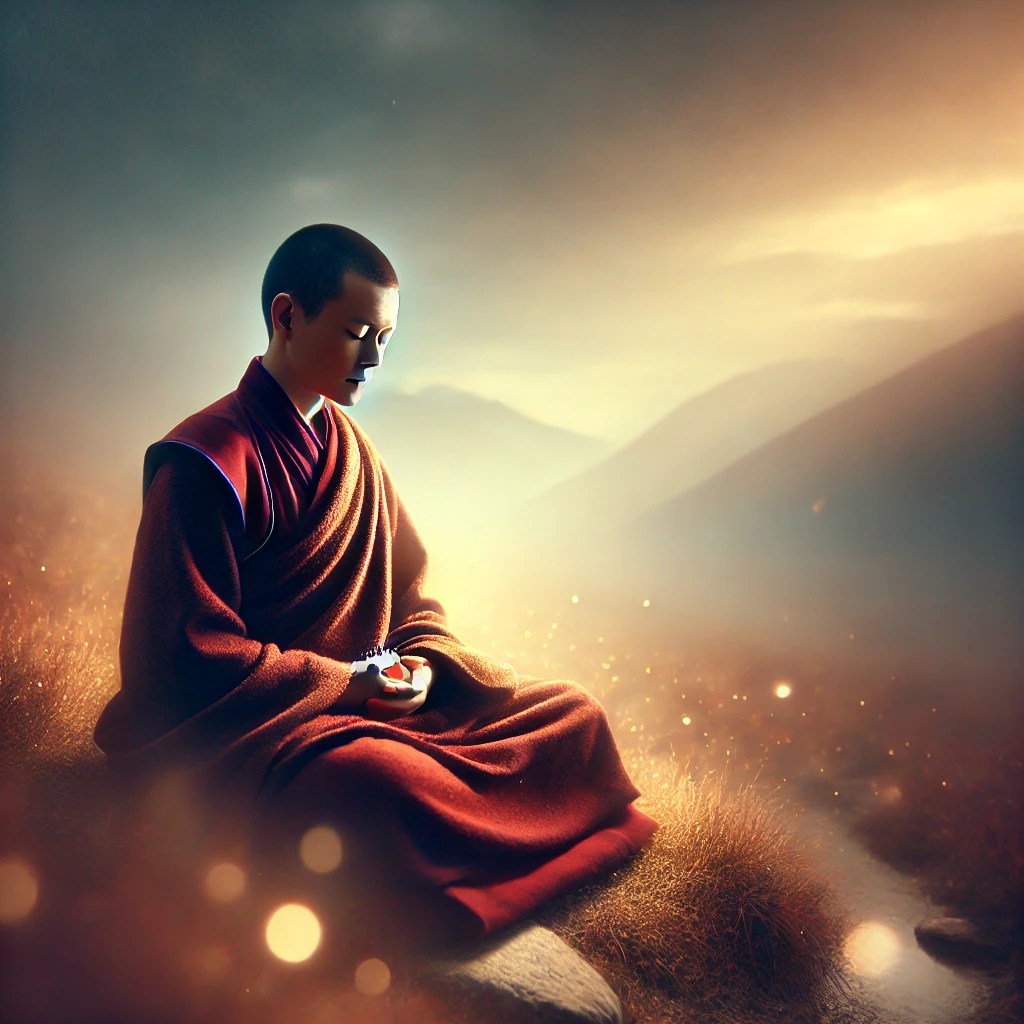
  • When the Ringing Remains: Finding Peace Amid Tinnitus 🌿

    When the Ringing Remains: Finding Peace Amid Tinnitus 🌿

    The ringing remains,
    yet the mind’s tight grasp dissolves —
    only sky holds all.

    For many, tinnitus feels like a constant companion — a high-pitched ring, a persistent hum, a sound that refuses to vanish. It can shadow every quiet moment, every attempt at rest, every space of stillness. We search for a cure, for silence, for relief. And yet, sometimes the greatest liberation does not come from changing the sound, but from changing the relationship to it.

    I have walked this path. The ringing did not leave. What changed was me.

    At first, tinnitus feels like an enemy. We grasp at it, resist it, curse it. We add suffering to suffering: “Why me? Why won’t this stop? How can I bear it?” The sound itself may be mild or sharp, occasional or persistent, but the mind’s reaction amplifies it, creating a firestorm of agitation.

    Then comes a subtle discovery: the fire is fueled by attention and resistance. The ringing itself is not the problem — the problem is our insistence on struggling with it.

    If we pause, soften our attention, and allow awareness to expand around the sound, something shifts. We realize:

    The tinnitus may continue.

    The mind may notice it, even name it.

    But the grasping, the mental fight, the suffering about the suffering — that can dissolve.

    It is like a leaf floating on a stream. The water moves; the leaf moves; yet no one is trapped. The leaf does not resist the current. The leaf does not need the current to stop in order to be free.

    Through this practice, tinnitus becomes a teacher. It is a doorway to awareness, a mirror reflecting our habit of clinging. By letting go of the self that struggles, we enter a spaciousness where the sound exists, but the suffering does not.

    This is not denial. This is not wishful thinking. It is simple noticing:

    The ringing arises dependent upon body, mind, and attention.

    The mind can soften.

    Awareness itself remains unshaken, vast and unbounded, like sky in which clouds drift freely.

    To rest here, all that is required is attention that softens rather than grips:

    1. Breathe and notice the sound. Don’t push it away; simply allow it to be.
    2. Relax the “I” that judges or resists. Let the self that struggles dissolve into spaciousness.
    3. Rest in the field of awareness. The ringing is present, but it is no longer a problem.

    In this way, liberation does not depend on the sound ending. It depends on the mind letting go. The sound may continue, but the fire of suffering has gone out.

    For anyone who lives with tinnitus, this is a path open to you. The ringing may remain, but your suffering need not. The self that once insisted on fighting can rest. The heart can soften. The mind can breathe. The sky remains.

    And in that sky, even tinnitus becomes part of the vast, untroubled whole.


    A Haiku for Reflection

    The ringing remains,
    yet the mind’s tight grasp dissolves —
    only sky holds all.

    Or a Meditative Verse

    Tinnitus hums on,
    unchanged, persistent, steady.
    I let go of “I.”
    The struggle falls away,
    and only vastness remains.


    The key here is compassion for your nervous system. Your brain is trying to protect you; it just needs reassurance that these vibrations are safe, ignorable, and not urgent. Over time, the mind can learn to treat tinnitus the way it treats the hum of a refrigerator: present, but mostly unnoticed.


    It’s not about conquering, changing, or escaping the vibrations—it’s about sitting gently with them, recognizing them as part of the living moment, and letting your mind rest in spacious awareness.


    All that arises is fleeting,
    all that appears has no fixed self.
    The hum, the thought, the breath—
    they come, they linger, they fade.
    I rest in the space between,
    spacious, still, free.
    No need to hold, no need to push—
    only presence, only now.


    🙏✨️🙏

  • Kapalabhati Pranayama: The Shining Forehead Breath

    Kapalabhati Pranayama: The Shining Forehead Breath


    Dear Friend,

    There is a practice in yoga known as Kapalabhati, the “Shining Forehead Breath.” The very name carries with it a sense of poetry and mystery. “Kapala” means forehead, and “Bhati” means light or radiance. Together, they evoke an image of clarity, brightness, and inner illumination. This is no mere exercise but an invitation to cleanse not only the breath but also the mind and spirit, polishing the very space from which insight and intuition arise.

    In ancient times, practitioners likened this breath to polishing a mirror so that it might reflect the light of the divine. Each exhalation sweeps away impurities, and each inhalation invites the brilliance of life itself. To engage in this practice is to embark on a journey into your own radiant stillness.

    Here is how you may begin:

    1. Find Your Seat: Sit comfortably, with your spine straight and your hands resting gently on your knees. Feel the earth beneath you, steady and supportive.
    2. Breathe to Center Yourself: Take 5–7 slow, deep breaths. Let these breaths settle your thoughts and prepare you for the journey ahead.
    3. Engage the Shining Breath:
      • Take a full, deep inhale to begin.
      • Begin a series of sharp, active exhalations through your nose, allowing the inhalations to come naturally and passively.
      • Focus on the rhythm, like the steady beat of a drum, as your abdominal muscles contract with each exhalation.
      Start with 20–30 breaths per round, letting the breath carry you into its natural rhythm.
    4. Pause and Hold: At the end of the round, take a deep inhale. Hold the breath for a moment, feeling the stillness that arises, as if the universe itself has paused with you.
    5. Return to Natural Breathing: Exhale gently and let your breath return to its natural flow. Rest here, simply observing the quiet within.

    This is the essence of Kapalabhati. It is not about striving or achieving but about clearing away what obscures the light already present within you.

    As you continue to practice, you may notice the effects: a sharper mind, a lighter body, and a heart more attuned to the subtle rhythms of life. The breath becomes not just a function but a bridge—connecting you to the luminous self that watches over all.

    In the modern world, where distractions abound and our minds are pulled in countless directions, Kapalabhati offers a sanctuary. It invites you to return to simplicity, to the purity of breath, and to the stillness that holds all things. In this way, it is both a practice for the moment and a gift to carry with you into all moments.

    Dedication of Merit

    At the conclusion of this practice, let us dedicate whatever merit has arisen for the benefit of all sentient beings:

    May whatever merit has been accumulated in this practice flow outward, boundless and unending, for the benefit of all sentient beings.

    May all beings be free from suffering and the causes of suffering.

    May all beings experience happiness and the causes of happiness.

    May all beings awaken to enlightenment and the causes of enlightenment.

    May this moment of intention ripple through the universe, bringing peace, harmony, and light to all.

    Namo Buddhaya, Namo Dharmaya, Namo Sanghaya.

    I leave you with this reflection: Each breath you take is an opportunity to renew, to let go, and to shine. May this practice bring you clarity, lightness, and peace. And may it remind you of the brilliance that has always been yours.

    🙏🕊🙏


  • The Importance of Relaxation in Self-Inquiry: A Gentle Approach to Inner Discovery

    The Importance of Relaxation in Self-Inquiry: A Gentle Approach to Inner Discovery

    In the pursuit of self-inquiry, there is often a deep yearning to know oneself—to find the answers to the eternal questions that reside within the heart. Yet, the path of inquiry is not one of intellectual striving or relentless effort. Rather, it is the practice of deep relaxation, allowing us to meet ourselves with softness and patience, where the answers we seek are revealed in the quiet moments of being.

    Self-inquiry, often associated with the profound teachings of the great sages and mystics, invites us to turn inward. We ask, Who am I? What is the true nature of this self I call ‘me’ and ‘mine’? And yet, if we approach these questions with tension, force, or the urgency of a mind grasping at concepts, we may find that our search remains elusive. The answers are not hidden in the frantic flurry of thought, but in the stillness beneath the surface.

    It is here that relaxation becomes essential.

    When we think of relaxation, we often associate it with physical rest—lying back, releasing tight muscles, breathing deeply. But relaxation in self-inquiry reaches deeper. It is a surrender of effort, a letting go of the mind’s need to control, to seek, and to grasp. This surrender does not mean abandoning the inquiry; rather, it means approaching it with openness, trust, and a willingness to rest in the unknown. It is through relaxation that we create space for the heart to listen, for the mind to settle, and for the true self to emerge.

    The Role of the Body and Breath

    The body is an anchor in our journey of self-inquiry. If the body is tense, if the breath is shallow or hurried, it becomes almost impossible to touch the deeper layers of truth that lie beyond the surface of our thoughts. In such a state, we are disconnected from the present moment, caught in the cycle of striving, and far from the clarity that relaxation offers.

    When we relax the body, we invite the breath to become fuller, more natural, and more steady. This balance between body and breath is the foundation upon which the mind can find rest. As we settle into this gentle rhythm, we may begin to experience moments of insight that feel like a soft unfolding—revealing truths that are not forced or sought after but emerge as naturally as a flower blooming in the quiet of the dawn.

    Rainer Maria Rilke, in his profound meditations on life, often spoke of the need to quiet the heart in order to truly hear the call of the soul. In his letters, he urged his friend to find a place of stillness within: “You must change your life.” This change, however, is not one of striving, but of surrender. It is the willingness to step back and allow life to reveal itself without interference, to trust in the natural unfolding of the self.

    The Power of Relaxation in Self-Discovery

    It is in the quietude of relaxation that we can truly meet ourselves. We often think of self-inquiry as a process of uncovering, of seeking hidden truths, but in reality, it is much more about releasing—releasing the layers of expectation, identification, and distraction that obscure our true nature. As we relax, we allow ourselves to simply be. In this being, there is no judgment, no need to achieve or possess. There is only presence, and within that presence, all things are revealed.

    This process can be likened to gazing into a clear pool of water. When the water is disturbed, it is impossible to see clearly. But when the water is calm, the reflections are crisp and true. The same is true of our inner world. In the stillness, we see ourselves clearly—not as a collection of thoughts and emotions, but as an expression of the divine, a moment of pure consciousness.

    Relaxation as a Way of Life

    In the context of self-inquiry, relaxation is not merely a practice we engage in during meditation or prayer. It is a way of life—an approach to all aspects of our being. As we begin to recognize the value of relaxation, we can begin to apply it throughout our daily existence. In moments of stress or overwhelm, we can return to our breath, relaxing into the present moment. We can observe our thoughts without becoming entangled in them, letting them pass like clouds drifting across the sky.

    The practice of relaxation, then, becomes a reminder that we are not our thoughts or our struggles. We are the space in which they arise. It is through this recognition that we come to see the truth of who we are—not as individuals caught in the drama of life, but as witnesses to the unfolding of all things.

    Conclusion: The Gentle Path to the Self

    The path of self-inquiry is one of gentleness and openness. It is a path that requires us to relax into the unknown, to soften our grip on certainty, and to trust that the answers we seek are already within us. As we practice relaxation—both on the cushion and in life—we cultivate the inner space necessary to hear the subtle whispers of truth. And in this space, we discover that we are not separate from the life we seek to understand, but an integral part of its boundless unfolding.

    May we, in moments of stillness and relaxation, come to know our true nature—a nature that is boundless, peaceful, and free. Through this discovery, we find the greatest treasure: the deep and abiding peace that arises when we stop searching, and simply rest in the truth of who we are.

    🙏🕊🙏

  • Tibetan Buddhism: A Path of Mind Training and Intrinsic Wisdom

    Tibetan Buddhism: A Path of Mind Training and Intrinsic Wisdom

    In our journey of exploring spirituality across traditions, it is time to welcome the teachings of Tibetan Buddhism. At first glance, the colorful rituals, sacred music, and intricate costumes may seem confusing or overwhelming. Yet these outward forms are simply expressions of an inner practice that remains deeply practical and profound: the training of the mind. Tibetan Buddhism is not a religion in the conventional sense of belief or dogma but rather a transformative path aimed at purifying the mind. Through meditation, visualization, mantra, and ritual, the practice cultivates clarity, compassion, and liberation from egoic tendencies.

    A recent film about Dilgo Khyentse Yangsi Rinpoche, the reincarnation of the revered master Dilgo Khyentse Rinpoche, offers a glimpse into the heart of this tradition. Watching the young tulku receive teachings and grow within a vibrant Tibetan community reveals how this ancient wisdom lives on, passed from one generation to the next as a thriving, living practice. The film gently invites viewers into a deeper understanding of the teachings, dissolving the outer complexities to reveal a path focused on inner transformation.

    One recurring theme throughout the film is that all Buddhist practice, no matter its form, is centered on mind training. The rituals and prayers, while beautiful, are not the essence; rather, they serve as vehicles to refine awareness and soften the grip of delusion. The practice is about gently cleaning the mind, sweeping away negativity and confusion like a gardener tending to weeds, leaving space for the natural qualities of wisdom and compassion to emerge.

    Vajrayana Buddhism offers a unique method for engaging with life’s challenges. Instead of rejecting or avoiding difficulties, the practice transforms even negative thoughts and emotions into opportunities for awakening. It becomes a skillful means of shifting the mind’s energy toward positive states. This approach is not about suppressing thoughts but about meeting them with awareness, transforming suffering into insight and confusion into clarity.

    Tibetan Buddhism emphasizes the reduction of ego grasping, fostering a spirit of nonviolence, and cultivating compassion. It shifts attention away from religious belief and toward the inner work of softening the heart and taming the restless mind. These teachings are not confined to cultural forms but reflect a universal truth—the journey of every human soul toward peace and freedom. The path’s essence aligns beautifully with the teachings of Advaita Vedanta and even echoes the mystical experiences of figures like St. John of the Cross. While each tradition expresses itself differently, the underlying message is the same: the liberation of the mind from illusion, opening into a state of oneness.

    In this light, Tibetan Buddhism can be seen as a cultural version of the Yoga Sutras of Patanjali, offering practices that lead to inner stillness and self-realization. It is, in essence, a kind of spiritual atonement—a process of purification and return to the true nature of mind, much like the mystical experiences found in other traditions.

    What makes Tibetan Buddhism particularly rich is its capacity to embrace complexity. It does not reject thoughts, emotions, or even suffering. Instead, it teaches practitioners to meet these experiences with skill and openness, transforming them into pathways toward deeper insight. Watching the young tulku learn within the community demonstrates this beautifully—how every moment, even the difficult ones, can become part of the practice.

    We invite you to explore this film, which offers a rare and intimate view into the life of Dilgo Khyentse Yangsi Rinpoche and the vibrant Tibetan community that nurtures his path. Beneath the ornate rituals lies a simple but profound truth: Tibetan Buddhism, like all genuine spiritual traditions, is ultimately a path of mind training. It offers not only the possibility of individual liberation but also a way to cultivate compassion and wisdom for the benefit of all beings.

    🙏🕊️🙏

  • In the Quiet of Healing: My Journey with the Parasympathetic Nervous System

    In the Quiet of Healing: My Journey with the Parasympathetic Nervous System

    Healing Through Rest: How the Parasympathetic Nervous System Can Support Recovery from Chronic Fatigue Syndrome

    In the aftermath of the recent hurricanes, Helene and Milton, I’ve felt post-exertional malaise weigh heavily on my body. The fatigue has been more than just physical—it’s emotional and mental, a deep, enveloping weariness that reminds me how fragile recovery can be. As I continue to mend from both the storms and the physical toll of chronic fatigue syndrome, I’ve found myself needing to return to the gentle practices that once brought me peace. The practices that help restore balance to my overstimulated system—those that invite rest rather than force recovery.

    Living with chronic fatigue syndrome is like walking on a delicate thread between exhaustion and healing. In these moments, the body feels like a battleground, constantly stuck in “fight or flight.” What I’ve learned, though, is that there’s another way—a softer, quieter way to approach healing. And this way begins with the parasympathetic nervous system.

    The Parasympathetic Nervous System: Our Body’s Quiet Healer

    The parasympathetic nervous system is often referred to as the “rest and digest” system, the opposite of the “fight or flight” response that dominates so much of my life with ME/CFS. While the sympathetic system pushes us to react, defend, and survive, the parasympathetic system invites us to slow down, to breathe deeply, to recover. It lowers heart rate, softens the breath, and gently restores the body to a state where healing is possible.

    For those of us with chronic fatigue, the parasympathetic nervous system is like a refuge, a space where our bodies can finally stop fighting and simply rest. But tapping into this refuge doesn’t come easily. It requires intention, mindfulness, and the willingness to let go of the push to “do” and embrace the power of simply “being.”

    Practices that Invite the Body to Rest

    Over time, I’ve gathered a small collection of practices that help me reconnect with my parasympathetic nervous system. One of the most powerful has been breathwork. By consciously slowing my breath—drawing in air slowly, holding the quiet pause between, and then releasing—I can feel my body begin to soften. It’s like a signal to my nervous system: “It’s safe. You can rest now.”

    Yoga Nidra has also become a vital tool in my recovery. It’s a guided form of meditation that allows me to rest deeply while staying present in the body. In this state, my body heals while my mind remains aware, a powerful reminder that rest is not the same as sleep. Restorative yoga, too, has been a way to surrender fully, each pose an invitation to soften into support, to let my body be held by the earth.

    And then there’s the Feldenkrais Method—gentle, mindful movements that teach me to listen to my body without forcing anything. These movements may be subtle, but they remind me that healing isn’t about big gestures or grand efforts. It’s about the small, quiet acts of listening to what my body truly needs in each moment.

    Learning to Listen

    As I move through these practices, I often find myself returning to Rilke’s words: “I am circling around God, around the ancient tower, and I have been circling for a thousand years, and I still don’t know: am I a falcon, a storm, or a great song?” Like Rilke, I am circling around the wisdom within me, learning the language of my body’s needs.

    Some days, I feel like the storm—torn by fatigue and pain. Other days, I am the quiet center, the stillness amidst the chaos. I am learning that healing isn’t about becoming something new or different. It’s about softening into who I already am and trusting that my body knows the way forward.

    An Invitation for Beta Testers

    If this resonates with you, I’d like to invite you to help beta test a new GPT model I’m developing. This model is designed to act as a relaxation coach, guiding you through practices like breathwork, Yoga Nidra, and gentle movements to activate the parasympathetic nervous system. It’s a tool I’m hoping will help others find the same peace and healing that these practices have brought me.

    This model is still in development, and I’m looking for a small group of people willing to try it out and provide feedback. If you’re interested, please reach out to me in the comments section with a few sentences about why this model interests you, how it could benefit your journey, and why you’d be interested in providing feedback. Your thoughts and insights will be invaluable as I continue to shape and improve it.

    Thank you for walking this journey with me.
    In the quiet, I’m learning to heal. May we all be well and safe. 🙏❤️🙏

  • Calling All Beings to Send Love and Peace: A Message for Our Community

    Harnessing Inner Peace: A Pacing Toolkit Tool for Those Living with ME/CFS or Long Covid


    As I reflect on the approaching Hurricane Milton, I’m reminded of the powerful moment when Jesus calmed the storm on the Sea of Galilee. His disciples, gripped by fear, watched as He simply said: “Peace! Be still!” and the storm settled. In this moment, I feel called to do the same—to access the peace of God within me and speak to the storm, “Peace! Be still.” I truly believe this is what Jesus asks of us, to practice this promise, and to remember that even faith the size of a mustard seed can move mountains.

    But this call to peace and stillness isn’t just about the external storm. As someone who lives with chronic fatigue, I know how much of a difference it makes to calm the storms within as well. The mental and emotional stress can often intensify symptoms like post-exertional malaise (PEM). So, I remind myself to relax my mind and heart, to let go of worry and concern, and to give my body the space it needs to heal.

    One of the tools I turn to in these moments is Pristine Mind Meditation, as taught by Orgyen Chowang in his book Pristine Mind: Journey to Unconditional Happiness. Pristine Mind is the pure, natural awareness that exists within all of us, untouched by thoughts or emotional turmoil. By resting in this space, I find that it helps me manage my symptoms, reduce stress, and pace myself more effectively. It’s an essential part of my pacing toolkit, allowing me to not only physically rest, but also calm my mind and emotions, preventing flare-ups of PEM and other symptoms.

    In this moment, I invite us all to join together in saying to the storm—whether it’s the physical hurricane or the inner storms we face—“Peace! Be still.” Let’s tap into the divine promise that’s always been ours and use the tools we have to cultivate peace, clarity, and healing within ourselves.

    Let us, from a place of faith and trust, send love to this storm and say to it: “Peace, be still.”


    🙏🕊🙏

  • Preparing for the Storm: A Reflection on Navigating a Hurricane with Chronic Fatigue Syndrome

    There is something about preparing for a storm that feels like a dance with the Divine—both a surrender and a determined act of mindfulness. As I sit here in the quiet hours before evacuation, I realize that this has been more than just a physical process of gathering what I need. It has been an intimate spiritual journey, one that stretches my capacity to trust, to let go, and to deepen into the lived experience of the present moment.

    Living with chronic fatigue syndrome (CFS) means that every action I take must be intentional. Every task requires careful pacing, every moment of activity balanced with long periods of rest. There is a delicate art to navigating this kind of preparation, especially during a post-exertional malaise (PEM) crash. Yet, somehow, this storm has become a mirror—reflecting back the inner landscape of my spiritual practice, calling me into a deeper relationship with contemplation, with surrender, and with faith.

    The Importance of Pacing
    I began the preparations by gathering what I would take with me: clothes, medications, bedding, and electronics—just enough to fill a small suitcase and backpack. For most, this might seem like a simple task. For me, it was an act of delicate pacing. I worked in small bursts, then returned to rest, mindful of the balance I needed to maintain in order to avoid worsening my symptoms. Each step of preparation became a meditation on pacing, on honoring the limitations of my body while trusting in my ability to persevere.

    In these moments of rest, I found myself returning again and again to the practice of contemplation. I lit a candle, not only for myself but for all those who are suffering—for all sentient beings in the path of this storm and beyond. There is a peace that arises in this kind of surrender. A quiet knowing that, no matter how much preparation is done, the outcome rests in God’s hands. And that, somehow, is enough.

    A Shift from Meditation to Contemplation
    This journey has been more than just practical preparation. It has been a spiritual unfolding. For years, I have studied the teachings of Advaita Vedanta and Dzogchen, exploring the ways in which these paths guide us beyond intellectual understanding and into a direct experience of the Divine. In the midst of preparing for this hurricane, I felt a deepening—a shift from meditation to contemplation.

    Contemplation is not about thinking or striving. It is about resting in the space of the witness, in the awareness of what is, without grasping or resisting. As the storm approaches, I find myself leaning more into this practice. Each moment becomes an invitation to let go of control, to allow the Divine to move through me, and to trust that whatever happens, it is part of a greater unfolding.

    Mindful Eating and Body Awareness
    Even the simple act of eating became a mindful practice. I prepared a spontaneous meal—scrambled eggs with garlic and cayenne, rich in healthy fats and protein to fuel me through the day. As I ate, I focused on each bite, slowing down, tasting, being fully present with the nourishment my body needed.

    In the midst of so much uncertainty, these small acts of mindfulness brought me back to center. They reminded me that, even as the world outside seemed to spin with chaos, I could find peace within the present moment. I could honor my body’s needs, even as I prepared to enter an unfamiliar shelter and face whatever lay ahead.

    Pacing the Preparation of the RV
    As I packed my belongings, I also prepared my RV, the place I call home. I moved slowly, bringing frozen food to the clubhouse, unplugging the RV, securing what needed to be secured. I paced myself, taking each step with intention, aware that my energy was limited and precious.

    There is something sacred about these practical tasks, when approached with mindfulness. They become a part of the spiritual practice, a way of aligning the outer world with the inner. In unplugging the RV, I was also unplugging from the need to control. In securing my belongings, I was also securing my faith—trusting that whatever happens, I am held by something greater than myself.

    Karma Yoga: Offering and Receiving Prayers
    During this time, I also turned to the practice of Karma Yoga—offering prayers for the world, while asking for prayers in return. I posted a prayer request on Facebook, asking my community to hold me, and all those in the storm’s path, in their hearts. The response was overwhelming. The outpouring of love, of people offering their prayers and well wishes, became a source of strength for me. It reminded me that, even in times of uncertainty, we are never alone. We are held by the compassion of others, by the grace of the Divine, by the interconnectedness of all life.

    Surrender and Trust
    And so, I surrender. I surrender to whatever will be, knowing that I have done all I can to prepare—both physically and spiritually. I surrender to the wisdom of the Divine, trusting that, in the midst of this storm, there is a deeper unfolding happening. There is a lesson in the letting go, in the release of control, in the peace that comes from trusting that God’s will is always unfolding in ways that we may not understand, but can still embrace.

    To those who read this, who are also navigating life with chronic fatigue syndrome or facing similar challenges, I hope this reflection offers you some sense of peace. We cannot always control the storms that come our way, but we can choose how we prepare, how we respond, and how we anchor ourselves in the presence of the Divine.

    May you be safe. May you be held. May you find peace in the midst of the storm.

    🙏🕊️🙏

  • An Introduction to Advaita Vedanta and Self-Inquiry: A Journey to the True Self

    The purpose of this post is to offer a gentle introduction to the philosophy of Advaita Vedanta and the practice of self-inquiry. These teachings invite us to explore the true nature of the Self, to go beyond the surface identities we cling to, and to rest in the awareness that unites all of existence. For those who wish to dive deeper into these topics, I’ve included links to several related posts below, which offer further insights and practical guidance.

    The Journey into Advaita Vedanta and Self-Inquiry:

    In the quiet mystery of life, there are moments when the questions we ask begin to turn inward, drawing us closer to the core of our being. For those of us who sense the call of something deeper, something beyond the surface of everyday experience, Advaita Vedanta offers a path of profound inquiry and realization. It is a philosophy, an invitation to explore the oneness of all existence, and a reminder that our true nature lies beyond the identities we so often carry—beyond our thoughts, emotions, and physical forms.

    Advaita Vedanta, rooted in the ancient wisdom of India, whispers to us that the Self, or Atman, is not separate from the ultimate reality, often called Brahman. In Jewish mysticism, this ultimate reality is known as Ein Sof, the boundless, infinite source of all that is. In Buddhism, it is pointed to as Buddha Nature, the inherent purity and potential for awakening in every being. The Dzogchen tradition speaks of Pristine Mind, the natural state of awareness, while many Indigenous traditions refer to the Great Spirit or Grandfather as the essence that permeates all life. Though the names may differ, they all point to the same underlying truth: that we are not separate from the divine or the infinite source. This insight offers a profound shift in how we understand ourselves and the world.

    Advaita Vedanta and Self-Inquiry:

    The world, as we perceive it, is seen as a veil—a temporary illusion that hides the underlying unity of all that is. This illusion, known as Maya, clouds our awareness and leads us to believe that we are separate individuals, bound by the limitations of time, space, and our bodies. But the teachings of Advaita Vedanta remind us that the true Self, or Atman, is not bound by these limitations. Atman is one with Brahman, the unchanging, eternal reality that underlies all existence.

    The practice of self-inquiry is central to uncovering this truth. It involves turning inward and asking the fundamental question: “Who am I?” At first glance, this question may seem simple, but its implications are profound. When we ask this question sincerely, we begin to notice that the identities we typically associate with ourselves—our name, our body, our thoughts—are all temporary and subject to change. If we are not our body, not our thoughts, not our emotions, then who are we?

    This process of questioning leads us deeper and deeper into the nature of the Self. Rather than seeking an intellectual answer, self-inquiry encourages us to observe the experience of “I”—the feeling of being, of awareness itself. By turning our attention inward, we can trace the sense of “I” back to its source, discovering that our true essence is pure awareness, untouched by the fluctuations of the mind or the conditions of the world.

    Ramana Maharshi, one of the great sages of modern times, taught that the practice of self-inquiry is the most direct path to realizing this truth. He encouraged seekers to continually ask, “Who am I?” and to follow this inquiry until the ego, or the false sense of self, dissolves into the pure awareness of the Self. This awareness is not a distant goal to be achieved but is ever-present, simply waiting to be recognized beneath the layers of thought and identification.

    The Benefits of Engaging in Self-Inquiry:

    For those new to this practice, the benefits of self-inquiry may not be immediately obvious. It’s easy to get caught up in the mind’s need for answers and certainty. However, the more we engage with this inquiry, the more we begin to experience a profound shift in how we relate to ourselves and the world around us. The practice of self-inquiry gradually dissolves the boundaries between the self and the other, leading to a direct experience of oneness, or non-duality.

    This realization brings about a sense of inner peace and freedom that is not dependent on external circumstances. By understanding that we are not the fluctuating thoughts, emotions, or experiences of the body, we become less attached to the ups and downs of life. Self-inquiry allows us to rest in the awareness that remains unchanged and undisturbed, no matter what arises in the mind or in the world.

    Furthermore, as we deepen our practice, we begin to see that the same awareness that we discover within ourselves is present in all beings. This insight fosters compassion, kindness, and a sense of connection with others, as we realize that, at the deepest level, we are all expressions of the same underlying reality.

    🙏🕊️🙏

    Here are some related posts for diving deeper into this topic:

    Seeing Beyond Our Senses: Expanding Perception in the Practice of Self-Inquiry and Advaita Vedanta

    For those beginning their journey, you might find it helpful to explore how our sensory perceptions are limited, as described in the post “Seeing Beyond Our Senses: Expanding Perception in the Practice of Self-Inquiry and Advaita Vedanta”. Explore the limits of human perception and discover how self-inquiry and Advaita Vedanta can help you see beyond the physical senses to realize the true nature of the self. This blog post delves into the teachings of Pravrajika Divyanandaprana, emphasizing the importance of expanding consciousness beyond the sensory world in the pursuit of self-realization and non-dual awareness.

    An Introduction to Ramana Maharshi’s Forty Verses on Reality

    In the teachings of Ramana Maharshi, self-inquiry is seen as the most direct path to uncovering our true Self. His work, “An Introduction to Ramana Maharshi’s Forty Verses on Reality” outlines how we can dissolve the ego through the persistent practice of asking “Who am I?” and tracing the source of the ‘I’ thought. Discover the essence of self-inquiry (Atma Vichara) and non-duality as elucidated by one of the greatest spiritual masters of the 20th century. This introduction provides an overview of the key themes, including the illusion of the ego, the nature of the true Self, and the path to self-realization. Whether you’re a seeker of Advaita Vedanta or interested in spiritual awakening, this guide offers valuable insights into the timeless wisdom of Ramana Maharshi.

    Penetrating the Five Sheaths: A Path to Self-Inquiry and Realization

    For a more practical understanding of self-inquiry, you may want to read “Penetrating the Five Sheaths: A Path to Self-Inquiry and Realization” which explains the layers of identity that must be transcended to reach the core of the Self. This post guides you through the koshas—the sheaths that veil our true essence. Explore the transformative practice of self-inquiry in Advaita Vedanta through the penetrating process of the five sheaths (koshas). Discover how questioning “Who am I?” or “What am I?” can help transcend physical, mental, and emotional identities to uncover the true Self, or Atman. Learn practical applications, integration with meditation, and the profound journey towards self-realization and pure awareness. Join our community in understanding the deeper layers of existence and achieving spiritual growth.

    Introduction to Raja Yoga: The Path of Meditation and Mental Discipline

    Similarly, in “Introduction to Raja Yoga: The Path of Meditation and Mental Discipline” we explore how mental discipline can complement self-inquiry by calming the mind and preparing it for deeper introspection. Meditation helps us quiet the mind so we can observe the fluctuations and see the truth beyond. Explore Raja Yoga, the “Royal Path” of meditation and mental discipline, in this introductory post. Learn how the eightfold path (Ashtanga) of Raja Yoga, as outlined in the Yoga Sutras of Patanjali, guides practitioners toward self-realization and spiritual enlightenment. Discover the key principles of mental clarity, emotional stability, and inner peace, and how Raja Yoga integrates aspects of other yoga paths to lead to ultimate spiritual awakening. This post offers insights rooted in the teachings of Advaita Vedanta and spiritual leaders like Ramakrishna, Swami Sivananda, and Swami Vivekananda, making it ideal for those seeking a comprehensive understanding of meditation and the deeper aspects of yoga.

    Self-Inquiry and Meditation: A Pathway to Inner Awareness

    In “Self-Inquiry and Meditation: A Pathway to Inner Awareness” you’ll find insights on how combining meditation with self-inquiry sharpens our awareness and leads to the realization of our true Self. Discover the transformative power of self-inquiry and meditation in this comprehensive guide based on Pravrajika Divyanandaprana’s teachings. Learn how the ancient practice of asking “Who am I?” or “What am I?” can dissolve the ego, increase awareness, and lead to profound inner peace. This blog post delves into the integration of self-inquiry with meditation, offering practical steps for spiritual awakening and personal growth. Ideal for those exploring Advaita Vedanta, mindfulness, and non-dual awareness, this guide provides a pathway to uncover your true self.

    Deepening the Practice of Self-Inquiry

    If you are ready to deepen your practice even further, you may enjoy “Deepening the Practice of Self-Inquiry” which explores how the question “Who am I?” can be applied to everything we experience. It encourages us to witness all thoughts and sensations from a place of stillness and curiosity. Explore the profound practice of Self-Inquiry (Atma Vichara) to deepen your understanding of non-duality and the nature of the ‘I-thought.’ This comprehensive guide provides key insights, practical steps, and reflection points to help you recognize all experiences as expressions of Brahman or pristine mind. Learn how to cultivate a unified awareness, dissolve the separation between the observer and the observed, and rest in the underlying awareness that remains constant amidst mental fluctuations. Whether you’re new to self-inquiry or seeking to deepen your practice, this post offers valuable guidance for your journey towards self-realization and inner peace.

    Witnessing the Journey: Strengthening the Seer in Life’s Transitions

    In life’s many transitions, it can be helpful to recognize the steady witness within us. In “Witnessing the Journey: Strengthening the Seer in Life’s Transitions” we reflect on how this witnessing presence remains unchanged even as external circumstances shift. In this reflective blog post, explore the deepening of witness consciousness, non-duality, and spiritual growth through life’s transitions. Drawing on insights from Buddhist teachings, Advaita Vedanta, and Jewish mysticism, we discuss how to strengthen the seer within by balancing trust, detachment, and awareness. Whether you’re navigating challenges like moving, illness, or emotional fluctuations, this post offers practical guidance for cultivating inner peace, mindfulness, and the presence of awareness. Learn how the journey from the mind to the heart opens the door to the divine and leaves behind wisdom for others on the path. A profound exploration of karma yoga, meditative mind, and the union of Atman and Brahman.

    Caravan of Love: The Universal Path of Righteousness Across All Traditions

    For an exploration of the universal values that connect spiritual traditions across cultures, “Caravan of Love: The Universal Path of Righteousness Across All Traditions” delves into the shared principles of righteousness and compassion, uniting people from all walks of life. This post explores the universal values shared across major world religions, highlighting how concepts like Sadhu Dharma, Tzaddikim, and being a Mensch align with the teachings of Jesus and the principles of Islam and Buddhism. It invites readers to reflect on the shared human quest for a life of righteousness, compassion, and inner peace, offering a path to greater interfaith harmony.

    Embracing the Eternal Now: Cultivating Spiritual Presence in Daily Life

    The post “Embracing the Eternal Now: Cultivating Spiritual Presence in Daily Life” offers insights into how we can cultivate mindfulness and equanimity, bringing the practice of presence into every moment of life. Discover the transformative power of living in the present moment with Embracing the Eternal Now: Cultivating Spiritual Presence in Daily Life. This blog post explores how mindfulness, equanimity, and spiritual connection can bring profound peace and clarity to your everyday life. Through practices rooted in Christian and Jewish traditions, learn how to listen to the ‘still small voice’ within, connect with the Holy Spirit, and respond to life’s challenges with balance and calm. Dive deep into the wisdom of ‘Hineni’ and uncover the sacred space where true spiritual awakening begins.


    🙏🕊️🙏

  • Witnessing the Journey: Strengthening the Seer in Life’s Transitions

    In the journey of spiritual growth, each moment, each challenge, and every encounter presents an opportunity to deepen our awareness. No matter the external circumstances—whether we’re moving from one phase of life to another, letting go of past attachments, or simply observing the fluctuations of the mind—there is a steady witness that remains untouched. This witness, or seer, is the essence of our true nature, and learning to strengthen our connection to it is one of the most important steps on the path to inner freedom.

    The Shift from Mind to Heart

    For many of us, the longest journey is the shift from the ordinary mind to the heart, or from the restless fluctuations of thoughts (vrittis) to the calm, witnessing presence. The heart, in spiritual traditions such as Advaita Vedanta and Jewish mysticism, is often equated with the Divine. It’s not merely an emotional center but the seat of the Divine Presence within us—Atman as Brahman, or the individual self as one with the Absolute.

    As we begin to experience this shift, we realize that our external experiences—both positive and negative—are just reflections of the inner workings of our mind. The challenges, such as illness or life transitions, become opportunities to witness these reflections without being swept away by them. This movement from the mind to the heart is the foundation for a life of spiritual presence.

    Living Between Excitement and Calm

    One of the paradoxes on the spiritual path is living with dual awareness: experiencing the emotional fluctuations of excitement, frustration, or joy while simultaneously witnessing them from a place of calm and neutrality. The spiritual journey does not require that we suppress these emotions, but rather that we hold them lightly, recognizing them as transient waves on the surface of our consciousness.

    As Namkhai Norbu teaches, the presence of awareness exists both in moments of calm and agitation. The mind may be excited, but the witness remains still. This dual awareness allows us to engage fully with life without losing our spiritual center. As we strengthen the seer within us, we find that both excitement and calm can coexist, and we learn to embrace the paradox of non-duality within dual awareness.

    Letting Go of Attachments: The RV and Beyond

    Transitions in life—whether they involve moving from one home to another or shifting from one state of consciousness to another—offer us the chance to practice letting go. For many years, a beloved space like an RV can be a sanctuary, a place of refuge for meditation and contemplation. But when the time comes to leave, it becomes a test of non-attachment, a reminder that the true sanctuary is within us.

    Letting go is not simply about releasing physical objects or spaces; it’s about releasing the emotional and mental attachments we have to them. It’s about trusting that even as we move into unfamiliar territory, the witness remains constant. As we let go of the old, we create space for something new to emerge—a fresh start, or beginner’s mind, as we navigate life with openness and curiosity.

    The Importance of Trust and Faith

    A major theme in this spiritual journey is trust—trust in the Divine, trust in ourselves, and trust in the process. After years of doubt and uncertainty, we may begin to experience a deep sense of confidence and trust in life’s unfolding. Even when life presents us with difficult or unexpected challenges, such as illness or the need to move from a long-held refuge, trust allows us to remain grounded in the witness.

    This trust doesn’t mean we stop facing difficulties, but rather that we learn to see them as part of the greater unfolding of our spiritual path. Each test, no matter how small or large, becomes another opportunity to strengthen the seer within. As the Buddha taught, the Dharma is like a raft that helps us cross the ocean of suffering. Once we reach the other shore, we leave the raft behind, trusting that we now carry the teachings within us.

    Witnessing the Witness: A Reflection of Inner Harmony

    Ultimately, the journey is about witnessing the witness—becoming aware of the awareness that is always present, regardless of the external conditions. This awareness, which we can also call the Divine, is not dependent on calmness or agitation, happiness or sadness. It simply is. And as we deepen our connection to this awareness, we come to embody the teachings in our lived experience.

    The process of writing and sharing these insights is part of this journey. Just as we are learning to let go of attachments, we also leave behind reflections in the form of writings, teachings, and blog posts. This is karma yoga—an offering of selfless service to whoever may benefit from these reflections. Like the authentic seeker who presents the teachings from the heart rather than from notes, we are called to embody the wisdom we’ve gathered and leave the rest for others to use as they see fit.

    Conclusion: The Journey of the Seer

    In the end, the journey is about becoming the witness to our own life, embracing both the external challenges and the internal awareness that guides us through them. As we continue to strengthen the seer within us, we move closer to a life of true presence, where each moment, no matter how challenging, becomes an opportunity for growth and transformation.

    May this reflection serve as a reminder to all who encounter it that the witness is always present, guiding us through the transitions of life and helping us to cultivate trust, non-attachment, and inner peace.

    🙏🕊️🙏

  • Neti Neti Series No. 1: Embracing the Practice of “Not This, Not This

    Question:

    How should I approach the practice of “Neti Neti” and what can I expect as I continue with it?


    Dear friend,

    “Neti Neti” is a path that is both ancient and profound, one that requires patience, a quiet heart, and a gentle perseverance. I’d like to share with you some thoughts and reflections that may guide you as you journey further into this sacred practice.

    The phrase “Neti Neti” translates simply as “not this, not this.” It is a mantra, yes, but it is also much more than that—it is a doorway to the understanding what lies beyond the confines of our ordinary thoughts and perceptions. When we repeat “Neti Neti,” we are not merely uttering words; we are engaging in a process of negation that strips away the layers of illusion and false identification, leading us closer to the core of our being.

    You may find that as you begin your practice, thoughts arise incessantly, like waves upon the shore. This is natural, my friend, and there is no need for concern. The mind, after all, is accustomed to constant movement. But as you sit in stillness and repeat “Neti Neti,” you are training your awareness to recognize that these thoughts—however persistent they may seem—are not who you are.

    In those moments when the mind is quiet, even for a brief instant, you may feel a sense of peace, a spaciousness that is untouched by the comings and goings of thoughts and emotions. This is the silence in which your true self resides. When you touch this silence, allow yourself to rest in it. Do not seek to hold on to it too tightly, for it is like a delicate breeze—best experienced by simply being present with it.

    And yet, if thoughts begin to stir again—and they often will—there is no need to worry or to chastise yourself. Simply return to the mantra, “Neti Neti,” with the understanding that what you are negating is not just the thought itself, but the identification with it. Each time you say “not this,” you are affirming that your true self is not these fleeting mental activities but something much deeper and more enduring.

    As you continue with this practice, you may begin to notice subtle changes in your inner landscape. The mind, once so restless, may start to settle more easily. You may find that the gaps between thoughts grow wider, and the stillness within you becomes more familiar, like a dear friend who visits often. This is the beginning of a profound transformation.

    In time, my friend, you may come to a place where the need to repeat the mantra diminishes, where silence and stillness are your natural state, and where the mind rests in its true home, free from the distractions that once held it captive. This is not a state to be forced or grasped at—it will come in its own time, as you continue to practice with patience and love.

    Remember, the journey of “Neti Neti” is not about eradicating thoughts or achieving some distant goal. It is about returning, again and again, to the awareness that lies beyond all concepts and forms. It is about recognizing that you are not the thoughts that arise, nor the emotions that ebb and flow. You are the awareness in which all these things occur, and this awareness is vast, infinite, and untouched by the passing of time.

    So, dear friend, as you continue with your practice, I encourage you to approach it with gentleness and an open heart. Trust in the process, even when it feels challenging. Trust in the silence that you find within, and know that this silence is the truest reflection of who you are.

    I look forward to hearing about your experiences as you deepen in this practice. May it bring you the peace and understanding that your soul seeks.

    🙏🕊️🙏