Tag: asceticism

  • Ramayana No. 19: Revisiting the Ramayana with Venkatesananda’s Take: Lessons from Valmiki’s Experience

    Ramayana No. 19: Revisiting the Ramayana with Venkatesananda’s Take: Lessons from Valmiki’s Experience

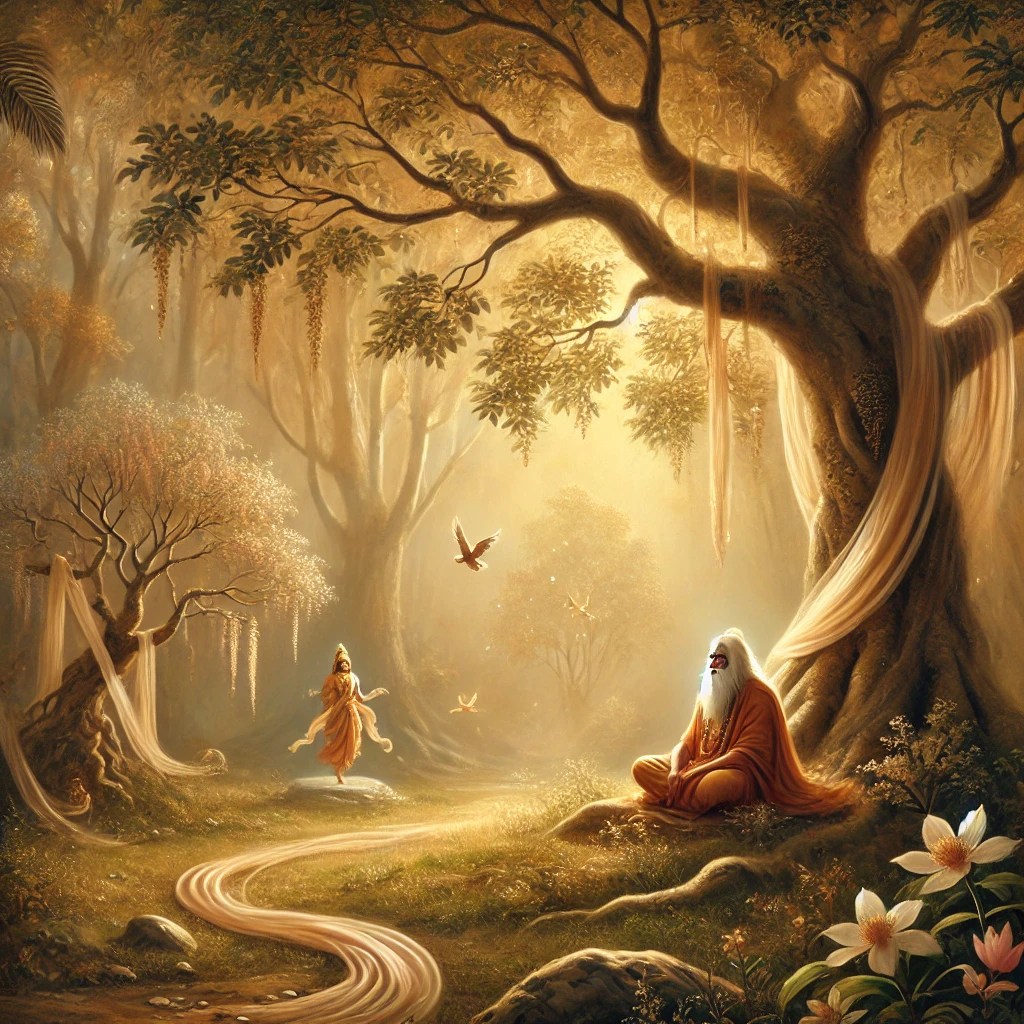
    As we begin our exploration of the Ramayana through Venkatesananda’s version, it’s fascinating to revisit the early stages of this epic tale, particularly through the lens of Valmiki’s own transformation. In this version, we are reminded of how the sage first heard the Ramayana from Narada and later expanded upon it after a transformative experience with the hunter and his divine encounter with Brahma. This opening passage introduces us not only to the story of Rama but also to the profound personal growth of Valmiki, a theme that resonates deeply with our own spiritual journeys.

    One particular quote stands out:
    “Yet, the mystery that even he could lose his temper and thus risk losing the merit of his asceticism intrigued him.”

    This moment captures a crucial aspect of the human condition—our struggle to control our emotions, even after years of spiritual practice. For Valmiki, witnessing the hunter’s cruelty toward the birds brought forth both compassion and anger, leading him to curse the hunter. It’s a reminder that even great sages can lose their temper, risking their spiritual merit. For me, the Dalai Lama’s teachings on anger come to mind here—anger is often seen as the opposite of love, and when we give in to it, we lose touch with our pristine, true nature. But the important lesson is that we can always return to our senses, regain our inner peace, and continue on the path of righteousness.

    This story, to me, also inspires compassion for ourselves. If even Valmiki, with all his ascetic discipline, could slip into anger, we too can forgive ourselves for the times we fall short. The key is recognizing these moments, learning from them, and using them as opportunities to realign with our higher purpose. Valmiki’s regret and his ability to transform his curse into a verse is a powerful reminder that even our missteps can lead to something greater, if approached with the right mindset.

    In this retelling, Valmiki’s divine encounter with Brahma affirms the purpose of his story. Brahma reassures him that the verse he uttered, born out of both anger and compassion, is a blessing. From this moment of emotion, a profound epic was born—a story that would inspire righteousness, compassion, and wisdom for generations. This theme of duality—anger and compassion, curse and blessing—reflects the constant struggle humanity faces with its own dual nature.

    What I find particularly compelling in this passage is how the Ramayana is positioned as medicine for a world in turmoil, a story that speaks to the heart of our modern struggles. Today, as in Valmiki’s time, people are often disconnected from their conscience, their true nature, and their pristine mind. This disconnect creates inner chaos, much like the mental fluctuations Valmiki experienced. The Ramayana, with its timeless wisdom, offers a path back to harmony with the divine. It reminds us that even in moments of anger or despair, there is always a way to transform that energy into something positive.

    Valmiki’s transformation from anger to inspiration is a beautiful metaphor for our own lives. In the same way that he found his path through a moment of passion, we too can use our struggles as stepping stones toward greater understanding and compassion. The passion that Valmiki felt for the hunter’s cruelty was ultimately transformed into the creation of a story that would inspire righteousness and compassion for millennia.

    As we continue this journey through the Ramayana, let us reflect on how we, too, can transform our moments of anger or frustration into opportunities for growth. The challenges we face—both internally and externally—are all part of our spiritual journey. Valmiki’s story is a powerful reminder that the path to self-realization is not without struggle, but each step along the way can lead us closer to our true selves.

    In future posts, we’ll continue to explore the wisdom within this and other versions of the Ramayana, diving deeper into how these timeless stories offer guidance for our modern lives. Let’s stay open to the lessons each passage holds and, like Valmiki, allow our moments of weakness to be transformed into opportunities for growth and inspiration.

    🙏🕊️🙏

  • A Christian Mystic is Also a Yogi: Bridging the Spiritual Traditions

    In the quiet corners of monasteries, amidst the echo of chanting monks, and within the solitude of wilderness hermitages, Christian mystics have, for centuries, sought to experience a profound union with the Divine. They have traveled inward, transcending the boundaries of ego, and have entered into a sacred communion with God. Their journey is one of deep contemplation, marked by an ascetic discipline that reflects a yearning to touch the eternal. Though these mystics arise from the Christian tradition, their spiritual pursuits bear a striking resemblance to those of yogis—a title traditionally reserved for practitioners within the vast spiritual traditions of India.

    At first glance, the practices and language of Christian mysticism and yoga might seem worlds apart. One speaks in the tongue of Christ, the saints, and the Holy Spirit, while the other chants the names of Shiva, Krishna, and the universal Brahman. However, beneath these differing expressions lies a shared journey—a journey toward the ultimate goal of spiritual union, self-realization, and the direct experience of the Divine.

    The Quest for Union

    The essence of yoga is captured in its very name, which means “union.” Traditionally, this union is understood as the merging of the individual soul with the Divine consciousness—a state of oneness where the separation between self and the cosmos dissolves. This echoes the Christian mystic’s pursuit of “divine union,” a state described by luminaries like St. John of the Cross, where the soul is united with God, experiencing a profound and intimate communion that transcends all earthly understanding.

    Both the yogi and the Christian mystic understand that this union is not merely a metaphorical concept but a lived reality, achievable through dedicated practice, surrender, and grace. It is an experience of the heart’s deepest longing fulfilled, where the seeker and the sought become one.

    The Path of Inner Transformation

    To reach this union, both traditions emphasize the necessity of inner transformation. For the yogi, this often involves practices like meditation, breath control, and ethical living, which purify the mind and body, allowing the practitioner to transcend the ego and experience the true Self. Similarly, Christian mystics speak of a transformative journey often described in stages: purgation (the cleansing of the soul), illumination (receiving divine light and insight), and union (the final, blissful merging with God).

    This transformation is not an easy path; it is marked by trials, tests of faith, and the dissolution of old identities. Yet, both the yogi and the Christian mystic embrace these challenges, understanding that they are necessary steps in the journey toward spiritual maturity and enlightenment.

    Contemplation and Stillness

    Central to both yoga and Christian mysticism is the practice of contemplation—a deep, meditative stillness where the divine can be encountered directly. Yogis engage in dhyana, or meditation, as a means of quieting the mind and opening the heart to the infinite. Christian mystics, too, seek this stillness through contemplative prayer, where words fall away, and one rests in the silent presence of God.

    In these moments of stillness, both the yogi and the mystic move beyond the distractions of the world, entering into a space where the divine presence is felt intimately, where God is not a distant figure but a living, breathing reality within.

    The Role of Love

    For both traditions, love is the highest expression of spiritual attainment. In the Christian mystical tradition, figures like St. Teresa of Avila and St. Francis of Assisi exemplify a life overflowing with divine love, a love that embraces all of creation as a reflection of God. This mirrors the path of bhakti yoga, where devotion and love for the divine are seen as the most direct route to spiritual awakening.

    This love is not just a feeling but a transformative force that purifies the heart and mind, drawing the soul closer to its source. It is an all-encompassing love that transcends personal desires, embracing the entirety of existence with compassion and grace.

    A Universal Journey

    The paths of the Christian mystic and the yogi, though outwardly different, converge at their deepest levels. Both seek to transcend the limitations of the ego, to experience the divine presence in its fullness, and to live a life that reflects this profound spiritual truth. Whether through the sacred silence of a monastery or the disciplined practice of asanas, the goal is the same: to know God, to become one with the Divine, and to embody the sacred in every aspect of life.

    In this light, we can see that a Christian mystic is, indeed, a yogi—a practitioner of union, a seeker of divine truth, and a traveler on the path of spiritual awakening. Their journey reminds us that the quest for the divine is a universal one, transcending boundaries of culture and religion, and uniting all seekers in their shared pursuit of the ultimate reality.

    🙏🕊️🙏