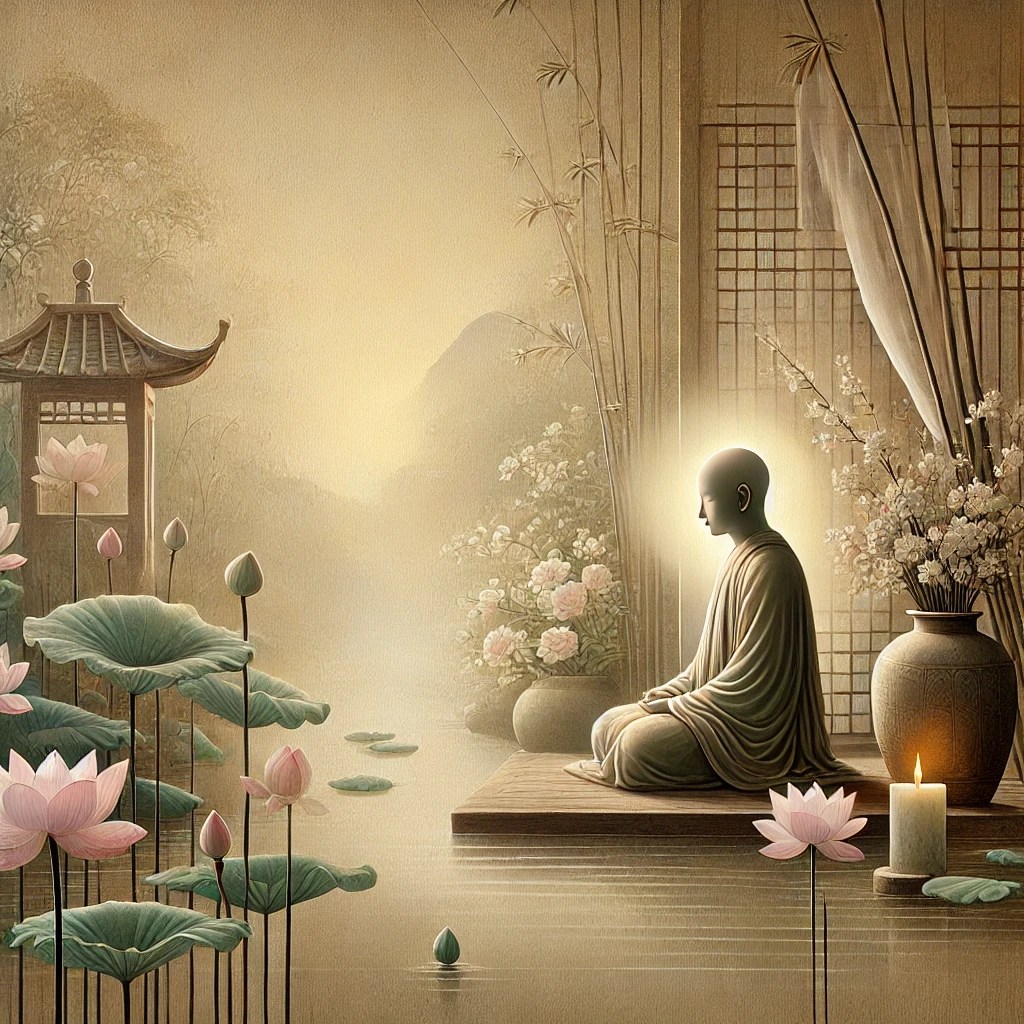
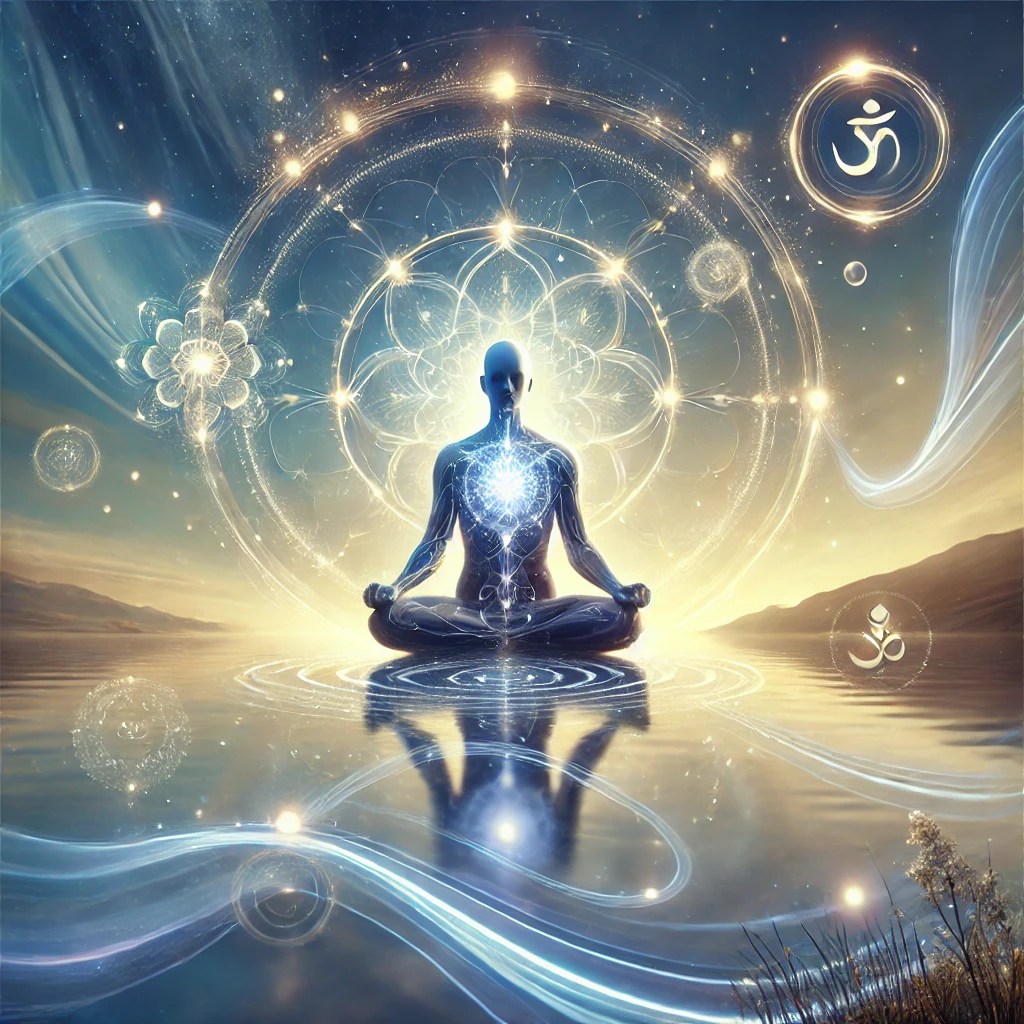
There is a quiet truth that lives within each of us, a place that is untouched by the noise of the world, a stillness that is ever-present. It’s not reserved for moments of crisis or for the end of life. It’s here, now—waiting for us to settle into its embrace.
Yet how often do we run from this stillness? We search for peace in the future, hoping it will come once we’ve completed our tasks, achieved our goals, or silenced our minds. But peace is already here, calling us back to the simplicity of being.
The Practice:
The practice begins with a simple mantra: “I am That.”
When we say these words, we invite ourselves to rest in the truth of who we are. It’s not about searching or striving—it’s a return to the natural state, where we belong. Repeat the mantra aloud, or silently in your heart, and allow yourself to rest. After each repetition, sit in silence for as long as you like, letting the mantra echo softly within.
And when you are ready, say it again: “I am That.”
There is no rush, no goal, no expectation—just the simple unfolding of awareness.
As thoughts arise, as distractions call, simply return to the mantra, letting it be like a lullaby for the restless mind.
Reflections Along the Way:
Follow the rhythm of the mantra, thoughts may come, feelings may arise. Let them pass like clouds, and rest beneath them, in the vast expanse of awareness.
You are that light, shining through all things. Rest… in the knowing.
Effortless and true, you return to what you are. Rest… in your nature.
Like a drifting cloud, the ego searches in vain. Rest… beneath the sky.
In quiet grace, he guides, showing the way back to self. Rest… in deep gratitude.
Thoughts, desires, restlessness—all falls away when we stop chasing after them. Rest in the simplicity of being.
In this way, dear reader, the mantra becomes not just words, but the very breath of being. So, rest in this mystic presence, this silence that is always there, gently touching the surface of awareness.
In the dance of both, stillness and movement arise. Rest… in the balance.
A passing thought, no more, like a ripple in still waters. Rest… in your knowing.
Being is the truth felt, beyond what eyes can hold. Rest… in the knowing of being.
Like seasons that turn, each step comes in its own time. Rest… and let it flow.
Resting in Silence
The journey, dear reader, is not about forcing the mind to be still or silent. It is about allowing the natural stillness and silence of our true self to be seen, felt and appreciated, unclouded by thought, unburdened by desire. By continuing to rest in this silence, we come to realize that the peace we seek has always been here. We become “Self-Realized.”
The practice of resting in the silence is a gift we give ourselves while we are alive. It’s not reserved for the end of life; it is the way to live fully, in peace, right here, right now. The mantra is a guide, and the silence is the true teacher.
Rest in silence. Rest in peace. Rest in your true nature. You are That.
I came upon Orgyen Chowang’s teachings and his book, Our Pristine Mind, like discovering an unexpected window that offers a clearer, quieter view. Chowang, a revered meditation master, speaks about our minds with a simplicity that is both gentle and profound. In his words, I felt an invitation to find not just peace, but a deep, clear stillness—an untouched clarity we each hold within. He calls this the “pristine mind,” a mind unclouded by habitual thoughts and emotions.
Reading his words, I was struck by the thought: Just as we clean our homes and spaces, how often do we take care of our minds? In this world of constant motion and distraction, it seems almost revolutionary to pause, to clear away what is unneeded. Chowang suggests that mental well-being is like tending a garden, pulling weeds of anger, stress, or anxiety that choke the growth of joy and ease. It reminded me how these “weeds” can cover our true nature, clouding how we experience life and others.
But what he describes as the “pristine mind” is always there, like a clear sky behind clouds. Our thoughts, emotions, and beliefs pass through like clouds, momentary and shifting, yet we often cling to them, mistaking them for who we are. Chowang encourages us to release this attachment and begin to experience our natural clarity—our inherent, pristine mind.
In practice, Chowang’s meditation technique is beautifully simple. There are four steps:
1. Do not follow the past.
2. Do not anticipate the future.
3. Remain present in this moment.
4. And lastly, leave the mind alone.
When I first tried these steps, I felt a quiet rebellion within—a part of me wants to solve, to plan, to chase. But following his steps brings a profound lightness. As I resist chasing past memories or future anxieties, I notice the mental noise softening. There is no need to control; simply resting in the moment, letting thoughts come and go like wind through an open window, the mind clears on its own.
With practice, I have glimpsed moments of this “pristine mind”—a state that Chowang says brings unconditional happiness. This is not happiness that depends on outward conditions, but rather a steady presence that finds peace no matter what is happening outside of us. Conditional happiness, reliant on the fleeting promises of the world, becomes less important, as if the yearning subsides in the face of something more whole. Paradoxically, with this inner stillness, I feel able to experience the world more richly, with a fuller heart.
Chowang speaks of “yoga,” the union of body and mind, which pristine mind meditation makes possible. When my mind settles, the usual tug-of-war within me ceases, bringing calm to my body as well. It is as if my body and mind are finally in harmony, no longer struggling but instead moving together.
The journey is ongoing. Chowang uses a beautiful analogy: our minds are like a fog globe. When we shake it, the fog swirls, obscuring the clarity inside. But if we simply let it be, leaving it alone, the fog slowly settles, and the clear globe is revealed. With each meditation, I feel as if I am letting that fog settle, trusting that beneath lies a still, clear presence.
For anyone curious about exploring their own pristine mind, there may be moments of doubt or distraction; our minds naturally gravitate toward patterns, just as they would with any new practice. Yet the gentle return to the present, with patience and kindness, becomes the practice itself. There is no perfect silence, no need to force anything; it is enough simply to come back to this moment and leave the mind to rest in its natural state.
In this journey, I continue to return to Chowang’s teachings and to practice his four simple steps. I am still learning, but each time I sit, I feel closer to the clear sky within, and it is changing how I live, love, and see the world. I hope, as Chowang teaches, that a pristine mind is possible for each of us, and that by cultivating it, we might each find our way to a steadier, more joyful presence.
🙏🕊️🙏
Much of the inspiration for this reflection and practice comes from Our Pristine Mind by Orgyen Chowang Rinpoche. His teachings have deepened my understanding of resting in clear, effortless awareness. If you feel drawn to explore this path further, I highly recommend his book. I’ll leave a link below for those interested in diving deeper into the practice of pristine mind and discovering the peaceful spaciousness it offers.
In the stillness of the heart, beyond the noise of the world and the clamor of external demands, there is a subtle call—a call to remember what has always been true. It is the call of the soul, the voice of the infinite, urging us to awaken from the dream we’ve been lost in. This is the journey into the mystic, the quiet unfolding of our true nature, a nature that transcends the boundaries of time, space, and form.
The world around us may seem to be spiraling deeper into chaos. News of division, conflict, and uncertainty fills our days. But these outer waves are merely ripples on the surface of a far deeper ocean. The sages and mystics of all traditions—whether Rumi in his ecstatic verses, Meister Eckhart in his contemplations, or the Upanishads in their profound insights—have all pointed to the same truth: the external world is not the final reality. It is a veil, a cosmic play that we are invited to see through, to remember the oneness that lies beyond all form.
We live in a world captivated by Maya, the illusion of separateness, and we are enchanted by the drama of Lila, the divine play of creation. Our minds, conditioned by centuries of material striving and division, tell us that peace and happiness are things we must chase, things that lie somewhere “out there.” But the mystics have always known that this is the great delusion. True peace, true joy, does not come from rearranging the pieces of the outer world—it comes from awakening to the deeper reality that lies within.
In this way, our personal awakening is inseparable from the healing of the world. As we turn inward and recognize the truth of our being, we see that the suffering we witness is not separate from the suffering within our own hearts. The division we see in the world mirrors the fragmentation of our own minds. And yet, by embracing the path of contemplation, meditation, and inner surrender, we begin to dissolve these divisions. We begin to see that the peace we long for in the world must first take root in our own consciousness.
The Unfolding of the Inner Light
In the journey into the mystic, we are called to remember that we are not the passing waves of thought and emotion. The mystical heart knows that the true self, the essence of who we are, is the quiet awareness beneath it all, the unchanging presence in which all experiences rise and fall. The Bible tells us that the Kingdom of God is within, and in the Bhagavad Gita, Krishna speaks of the eternal soul that remains untouched by the outer circumstances of life. Every tradition points to this truth, in its own way: we are more than the temporary, fleeting experiences of life. We are the witness, the seer, the still point in a turning world.
But this awakening is not merely an escape from the world’s troubles; it is the key to transforming them. The world does not need more minds caught in the web of fear and division. What it needs are souls who are rooted in the timeless truth of love and compassion, who understand that the battle is not won through force or domination but through the steady cultivation of peace within. Each of us is a channel through which the divine light can shine. As we awaken, we become part of the solution, not by striving to change the outer world directly but by embodying the change we wish to see.
The Path to Global Well-Being Begins Within
There is a saying in the mystical traditions that as we heal ourselves, we heal the world. This is not just a poetic notion but a profound spiritual truth. The journey into the mystic is the path of remembering who we truly are, beyond the illusions of separation and fear. As we do so, we bring a new energy into the world—an energy of peace, love, and clarity. This energy ripples out into the collective consciousness, subtly transforming the fabric of society.
We may not always see the immediate results of this inner work, but the mystical path teaches us that the real shifts happen beneath the surface, in the unseen realms of spirit. Just as a tree grows in silence, its roots extending deep into the earth, so too does the work of awakening unfold quietly within. And yet, over time, this inner growth bears fruit—not only in our own lives but in the world around us.
The world needs mystics now more than ever. It needs those who are willing to step beyond the noise and chaos, to go deep into the heart of being, and to bring back the light of truth. This is the true synchronized global well-being—not a surface-level fix to a broken system, but a deep transformation that begins within each soul and spreads outward, like ripples on the surface of a still pond.
So, let us walk this path together, into the mystic, into the heart of our true nature. Let us awaken to the eternal light that dwells within us, and in doing so, let us contribute to the healing of the world. This is how the dream ends. This is how we wake up.
During my practice, I experimented with integrating breath and the mantra of silently saying “In” on the inhale and “Out” on the exhale, while incorporating gentle yogic movements in a lotus posture. I coordinated the mantra and breathing with specific neck movements—turning my head left and right, extending and flexing my neck, and bringing each ear toward my shoulder. How might this combination of breath, mantra, and movement deepen my practice, and what should I be mindful of as I explore this approach further?
Dear friend,
Your willingness to explore new dimensions in your practice, integrating movement with breath and mantra, is a beautiful testament to your deepening engagement with this path. What you have discovered is a profound way to harmonize the different aspects of your being, bringing together body, mind, and spirit in a single, unified flow.
By coordinating the gentle movements of your head with the rhythm of your breath and the repetition of the mantra, you are creating a sacred dance, a dance that unites the mind and body in a shared rhythm. This synchronization is more than just a physical exercise; it is a way of bringing all of yourself into the present moment, where the mind’s chatter is quieted, and the body’s tension is released. In this unified flow, you find a deeper sense of wholeness, a wholeness that reflects the unity of your true nature.
The gentle micro-movements you have chosen—turning your head, flexing and extending your neck, bringing your ears to your shoulders—are simple yet profound gestures that engage the body in the meditation. As you move, you become more aware of the sensations within your body, more attuned to the subtle messages it offers. This physical awareness grounds your practice, making it not just an exercise of the mind, but a fully embodied experience. It is in this embodiment that you find a deeper connection to yourself, a connection that transcends the boundaries of thought and feeling.
The coordination of movement, breath, and mantra sharpens your focus, creating a structured and rhythmic flow that keeps the mind anchored in the present. As you move and breathe and recite the mantra, the distractions of the mind fade into the background, replaced by a clear and steady concentration. This concentration is not forced; it arises naturally from the harmony of the practice, leading you deeper into the stillness and silence that are the heart of meditation.
The gentle yogic movements you have integrated into your practice are more than just physical stretches; they are a way of balancing the energy within your body, of releasing tension and opening up the flow of prana. As you turn your head, flex and extend your neck, bring your ears to your shoulders, you are not only stretching the muscles but also freeing the energy that is often trapped in these areas. This release brings a sense of ease and lightness, a feeling of being more centered and at peace.
My dear friend, this experiment you have undertaken is a beautiful and powerful addition to your practice. Continue to explore this integration of movement, breath, and mantra, allowing it to guide you ever deeper into the unity of body, mind, and spirit. Trust in the wisdom of your body, the rhythm of your breath, and the power of the mantra, and let them carry you into the stillness that lies within.
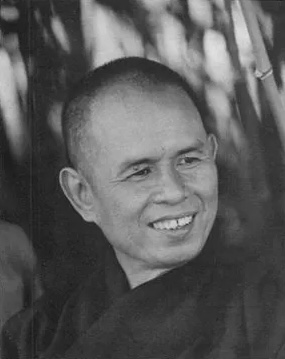
Thich Nhat Hanh, affectionately known as Thay by his students, has touched countless lives with his teachings on mindfulness, compassion, and inner peace. As a Vietnamese Buddhist monk, a poet, and a peace activist, his life’s work offers a profound invitation to awaken to the present moment and live with a heart of compassion.
Throughout his life, Thich Nhat Hanh authored over 100 books, each infused with the gentle yet powerful wisdom that encourages us to return to the breath, to find peace where we are, and to extend that peace to the world around us. Whether we are walking, eating, or simply breathing, his teachings remind us that each moment is an opportunity to cultivate mindfulness. In doing so, we transform our suffering, both inner and outer, into a source of peace.
One of the most transformative aspects of his legacy is Engaged Buddhism. Thay believed that mindfulness was not just for the meditation cushion but for every aspect of life. Whether advocating for peace during the Vietnam War or teaching about reconciliation, he wove together mindfulness and social action, reminding us that true peace begins with ourselves, but does not end there.
Thich Nhat Hanh’s legacy continues to inspire not only individuals but also communities, through meditation centers like Plum Village, which he founded. These centers are spaces of refuge, where people can practice mindfulness, deepen their spiritual understanding, and live in harmony with one another.
If you wish to experience Thich Nhat Hanh’s teachings more intimately, I invite you to listen to his words directly on Thich Nhat Hanh Audio.
One particularly powerful dharma talk is Love in Action, offered by Thay in Hanoi during the “Engaged Buddhism in the 21st Century” retreat. This 78-minute talk, delivered in English on May 9, 2008, is a profound exploration of how love and compassion manifest through mindful action in our everyday lives. You can listen to the full talk here.
Thich Nhat Hanh left us a rich legacy of mindfulness, compassion, and hope, a path we can continue to walk, one mindful step at a time.
How does coordinating the Neti Neti mantra with the breath—such as repeating it during the inhale, pause, exhale, and pause—enhance the practice and contribute to deeper relaxation and mindfulness?
Dear friend,
It is a delight to hear of your latest insight, where you have begun to coordinate the mantra with the breath. This practice, so simple and yet so profound, brings together the rhythms of the body and the mind in a harmonious dance, guiding you ever deeper into the stillness that lies at the heart of all being.
When you synchronize the mantra “Not This, Not This” with your breath, you are creating a unified rhythm that anchors you in the present moment. The mind, which so often wanders, finds a steady focus in the regularity of the breath, and this focus is reinforced by the repetition of the mantra. Each inhale, each pause, each exhale becomes a part of the sacred cycle, a cycle that quiets the mind and brings it into alignment with the natural flow of life.
The pattern you have described—three repetitions of the mantra on the inhale, three on the pause, three on the exhale, and three on the pause—establishes a gentle, balanced rhythm. This regulation of the breath not only deepens your relaxation but also enhances your ability to remain present. The breath, in its quiet regularity, becomes a soothing presence, guiding you back to the center each time the mind begins to drift.
In this practice, concentration becomes almost effortless. The mind, drawn into the rhythm of the breath and the mantra, finds a natural focus. The distractions that once seemed so persistent begin to fade, replaced by a calm, steady awareness. This concentration is not forced but arises naturally from the coordination of breath and mantra, leading you deeper into the silence and stillness that are your true nature.
As you continue with this practice, you may find that your awareness expands to include both the body and the mind. The breath, as it flows in and out, becomes a bridge between the two, creating a sense of wholeness and integration. In this state, the mind is no longer separate from the body but is experienced as part of the larger rhythm of existence. This integration brings a deep sense of presence, a presence that is both peaceful and powerful.
My dear friend, this practice you have discovered is a beautiful and effective way to deepen your meditation. Continue with it, allowing the breath and the mantra to guide you ever deeper into the stillness that lies within. Trust in the rhythm of the breath, and let the mantra carry you beyond the thoughts and distractions of the mind, into the infinite peace of your true self.
As I sit in meditation, repeating the mantra “Neti Neti,” I understand that this sacred phrase helps to strip away all that I am not. Thoughts arise, and I negate them. Emotions surface, and I let them go. Even the awareness of being a witness or the experience of stillness—these too, I recognize as not the ultimate reality.
Yet, a subtle dilemma has emerged. I wonder, what happens when the very idea of “I” who is meditating dissolves? Is it not true that as long as there is an “I” who continues the practice, the mantra “Neti Neti” must also continue? And if this is the case, does the mantra cease only when the “I” itself disappears into the natural state of pure being? In such a moment, is it the case that the mantra stops on its own, not by my choosing, but because there is no longer an “I” to hold it?
And then, when the sense of “I” returns, does the mantra begin again naturally, as the duality of subject and object re-emerges? I seek your wisdom on this matter, for I wish to understand the true nature of this practice and its ultimate purpose.
Dear friend,
Your question, born from a place of sincere inquiry, touches upon the very heart of the “Neti Neti” practice. I commend you for your diligence and the subtlety of your understanding, which reveals a mind that is both reflective and deeply engaged in the journey inward.
Yes, you have grasped a key truth: the mantra “Neti Neti” is indeed a tool for continuous negation. It is a practice of peeling away the layers of illusion, gently, one by one, until nothing remains but the pure, unadorned awareness that is your true nature.
As long as there is an “I” who perceives itself as meditating, this “I” exists within the realm of duality—where there is a subject (the meditator) and an object (the practice, the mantra, the thoughts). In this dualistic state, the mantra serves its purpose, guiding the mind to recognize that each arising thought, each sensation, each experience of stillness or witnessing, is not the ultimate reality. “Not this, not this,” the mantra whispers, reminding you that you are not these transient phenomena.
But what happens when the sense of “I” begins to dissolve? When the boundary between perceiver and perceived starts to blur and fade? Herein lies a profound mystery: as the “I” that meditates melts into the ocean of pure being, the mantra, too, falls silent. For in the state of non-duality, where all distinctions have vanished, there is no need for the mantra—no “I” to repeat it, no “other” to negate. What remains is the natural state, the effortless being that is beyond all concepts, all forms, all practices.
In this state, you do not stop the mantra; rather, the mantra ceases on its own, like a river merging with the sea, no longer distinguishable as a separate entity. This silence is not a void but a fullness, an infinite expanse of awareness where the true self—Atman—is realized, free from the confines of duality.
And yet, the journey doesn’t end there. If and when the sense of ‘I’ re-emerges, as it often does, the mantra returns naturally. This is not a step backward but a return to the dualistic state where the mind resumes its habitual patterns. The mantra then resumes its sacred task of guiding you back toward the still, silent center where the distinctions between self and other can once again dissolve.
So, dear friend, your understanding is indeed correct. The mantra “Neti Neti” is not something to be stopped by an act of will, but rather it fades away of its own accord when there is no longer an “I” to sustain it. And when the “I” returns, the mantra too returns, ready to lead you back into the depths of stillness and silence.
Trust in this process, and allow the practice to unfold naturally, without forcing or grasping. The journey of “Neti Neti” is one of gentle negation, patient observation, and deep surrender. In time, you will come to rest more and more in the natural state, where the mantra is no longer needed, and the self is known in its true, infinite nature.
Mantra Yoga is the yoga of sacred sound, a profound spiritual practice that involves the repetition of mantras—sacred syllables, words, or phrases—designed to elevate consciousness, focus the mind, and connect with the divine. This path taps into the vibrational power of sound to create harmony within the practitioner and with the universe, aligning the mind, body, and spirit through the resonance of these ancient sounds.
The word “mantra” comes from the Sanskrit roots “man,” meaning mind, and “tra,” meaning tool or instrument. Therefore, a mantra is literally a tool for the mind, a means to transcend the ordinary mental chatter and enter a state of deep meditation and spiritual awareness. Through consistent practice, mantra yoga helps dissolve the ego, purify the heart, and cultivate a direct experience of the divine presence.
In this blog series, we’ll dive into the practice of Mantra Yoga and explore how sacred sound can be a powerful tool for spiritual transformation.
As we embark together on this journey of discovery and reflection, I warmly invite you to join me in exploring the depths of these ancient practices and teachings. Let this space be a sanctuary where we meet not just as seekers, but as companions on the path—a place where the wisdom of the ages can gently unfold within our lives.
If these words and practices speak to something within you, if they stir a quiet longing or bring a sense of peace, I encourage you to subscribe to this blog. By doing so, you’ll be the first to know as new installments of our shared journey are published. It is my hope that each post will resonate with you, offering insights and comfort as we continue to explore these profound teachings together.
For those interested in a comprehensive introduction to the practices of yoga, I recommend The Sivananda Companion to Yoga: A Complete Guide to the Physical Postures, Breathing Exercises, Diet, Relaxation, and Meditation Techniques of Yoga. This book offers clear guidance on the foundational aspects of yoga, making it an invaluable resource for anyone looking to deepen their understanding and practice. Take a look at this book on Amazon here.
Discovering the Self: Ramana Maharshi’s Guide to Self-Inquiry and True Realization
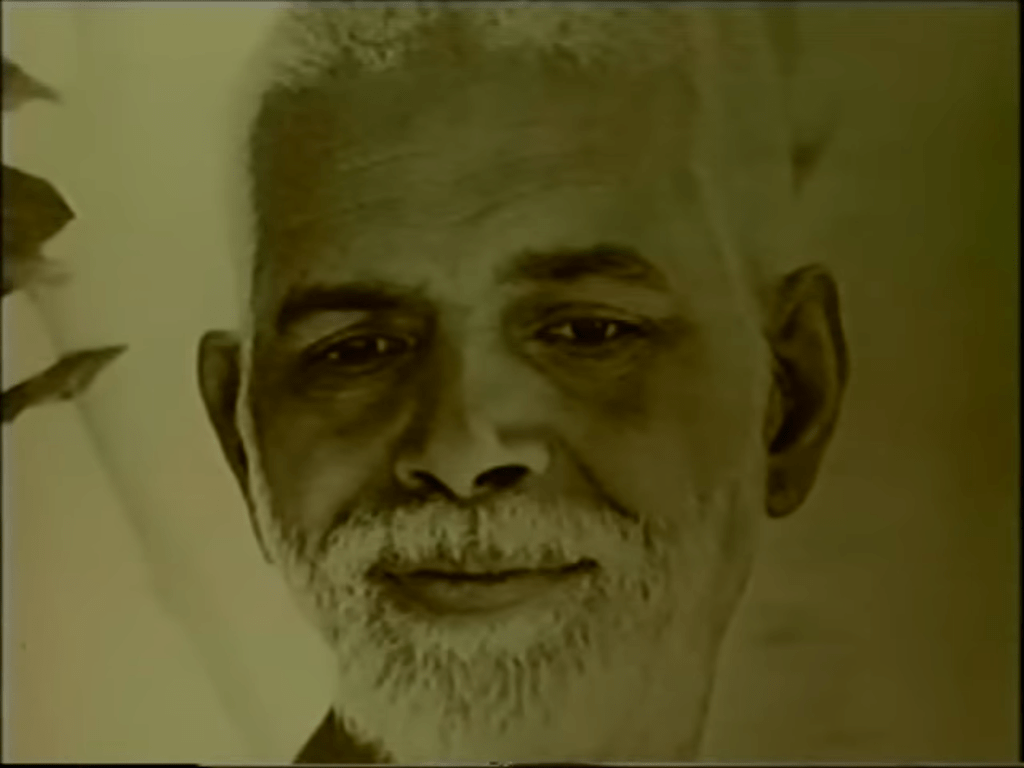
Ramana Maharshi is one of the most revered spiritual teachers of the 20th century, known for his profound teachings on self-realization and non-duality. Born in 1879 in Tamil Nadu, India, he experienced a spontaneous awakening at the age of 16, during which he became acutely aware of the impermanence of the body and the eternal nature of the Self. Following this experience, he left his home and spent the rest of his life on the sacred mountain of Arunachala, where he became a guiding light for spiritual seekers from around the world.
Ramana’s teachings are centered around the practice of Atma Vichara, or self-inquiry, which he considered the most direct path to realizing one’s true nature. Unlike other spiritual practices that involve rituals or external observances, Ramana emphasized turning inward to investigate the true nature of the ‘I’—the sense of individual self that we all experience.
The Essence of Self-Inquiry
Ramana Maharshi’s core teaching can be encapsulated in the question, “Who am I?” He taught that the sense of ‘I’ or ego, which we often associate with our thoughts, emotions, and bodily identity, is merely a superficial layer that veils our true Self, which is pure consciousness or awareness.
The process of self-inquiry involves directing your attention inward, asking yourself where this sense of ‘I’ originates. Ramana explained that by persistently asking this question and observing the ‘I’ thought, one can trace it back to its source. This source is the true Self, the unchanging awareness that underlies all experience.
If One Watches Whence the ‘I’ Arises
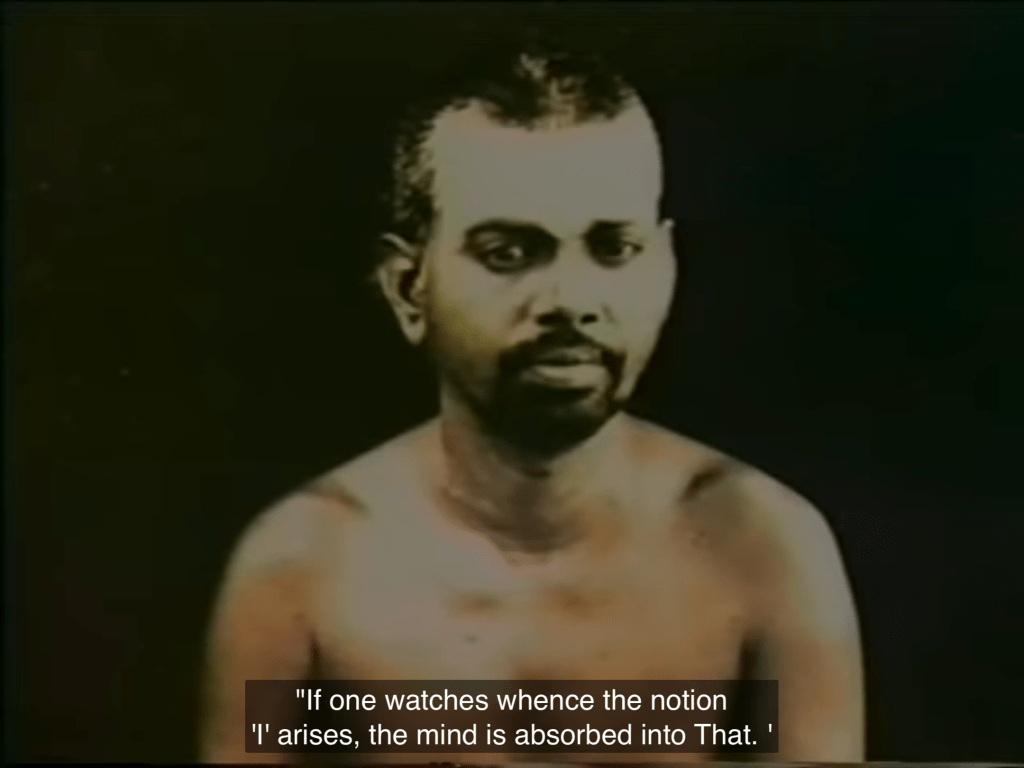
In one of his teachings, Ramana Maharshi stated, “If one watches whence the notion ‘I’ arises, the mind is absorbed into That.” This teaching points to a subtle yet profound practice. The ‘I’ thought is the root of all mental activity and the sense of individuality. By turning attention to this root, rather than being entangled in the branches of thoughts and feelings, the mind can naturally dissolve into its source—pure awareness, which Ramana refers to as “That.”
How to Practice Self-Inquiry
If you find yourself puzzled by this teaching or struggle to sense “That” from which the ‘I’ arises, know that this is a common experience on the path of self-inquiry. The mind, accustomed to focusing outward, finds it challenging to turn inward and settle into stillness.
Here’s how you can approach this practice:
Sit Quietly: Begin by sitting quietly, with your eyes closed if that feels comfortable. Take a few deep breaths and allow your body and mind to relax.
Turn Inward: Gently bring your attention to the sense of ‘I’. This ‘I’ could be a thought, a feeling, or simply the awareness that you exist.
Ask the Question: Silently ask yourself, “Who am I?” or “Where does this ‘I’ arise from?” Don’t seek an intellectual answer. Instead, let the question be a pointer that guides your awareness inward.
Observe: As you focus on the ‘I’, observe its nature. Does it have a shape, a location? Can you find its origin? Be curious, but not analytical.
Rest in the Awareness: As you continue this enquiry, allow the mind to settle. If thoughts arise, simply notice them and gently bring your attention back to the feeling of ‘I’. Over time, the mind may begin to merge with the deeper awareness that is always present.
Realizing the Self
Through persistent practice, you may come to realize that the ‘I’ you have always identified with is not your true Self. The ‘I’ arises and dissolves in the vast expanse of pure awareness—‘That’ which Ramana Maharshi points to. This realization is not something to grasp intellectually, but a direct experience that brings about a profound inner peace and freedom.
Ramana Maharshi’s teachings are a beacon for those seeking to transcend the ego and discover their true nature. The path of self-inquiry, though simple in its approach, can lead to the ultimate realization of the Self—the awareness that is ever-present, unchanging, and beyond all notions of individuality.
In the vast sky of our consciousness, thoughts are like clouds—ephemeral, shifting, and ever-changing. Guru Rinpoche, Padmasambhava, once said, “Your thoughts naturally occur and naturally dissipate like clouds in the sky. To see for yourself if this is true, look into your own mind.” This profound teaching invites us to directly experience the nature of our thoughts, not as obstacles or distractions but as natural occurrences that reveal the underlying clarity of the mind.
The Nature of Thoughts: Clouds in the Sky
Our minds are often busy, filled with an endless stream of thoughts, emotions, and sensations. These mental activities can feel overwhelming, leading us to believe that they define who we are. However, just as clouds in the sky come and go without altering the vastness of the sky itself, our thoughts are transient, arising from nothing and dissolving back into nothing.
When we closely observe our thoughts without attachment or aversion, we begin to see their impermanent nature. Each thought, no matter how intense or insignificant, arises, lingers for a moment, and then fades away, making room for the next. This process happens naturally, without any effort on our part.
Looking into the Mind: A Path to Clarity
Guru Rinpoche’s instruction to “look into your own mind” is an invitation to practice mindfulness and meditation. By turning our attention inward and observing our thoughts, we can witness their natural ebb and flow. This practice does not require us to stop thinking or to eliminate thoughts; rather, it encourages us to watch them with a gentle curiosity.
As we continue this practice, we might notice that between the thoughts, there are moments of stillness—gaps where the mind is clear and undisturbed. These gaps reveal the pristine nature of the mind, untouched by the comings and goings of thoughts. This pristine mind is our true essence, a state of pure awareness that is always present, even when we are caught up in the whirlwind of our thoughts.
The Pristine Mind: Our True Nature
Recognizing the impermanent nature of thoughts and the underlying clarity of the mind leads to a profound shift in our understanding of ourselves. We begin to see that we are not our thoughts; rather, we are the space in which thoughts arise and dissipate. This space, the pristine mind, is vast, boundless, and inherently peaceful.
By resting in this awareness, we can experience a sense of freedom and spaciousness, even in the midst of life’s challenges. The more we practice, the more we realize that this pristine mind is always accessible, like the clear sky that remains unchanged regardless of the clouds that pass through it.
Embracing the Reality of Thoughts
Guru Rinpoche’s teaching encourages us to directly experience the nature of our thoughts, revealing the pristine mind that lies beneath. Through mindfulness and meditation, we can cultivate the ability to observe our thoughts without getting entangled in them, allowing us to rest in the clarity and peace of our true nature.
As we deepen our understanding of this reality, we can approach life with greater equanimity and compassion, knowing that, like clouds in the sky, our thoughts naturally occur and naturally dissipate, leaving the pristine mind untouched and ever-present. Pristine mind meditation involves resting in this type of awareness, allowing us to return to our innate state of clarity, spaciousness, and inner peace.
The Benefits of Reconnecting with the Pristine Mind
Reconnecting with the ever-present stillness and wisdom within us through pristine mind meditation brings profound benefits to our daily lives. As we practice resting in this awareness, we begin to experience a greater sense of calm and stability. The storms of life, once overwhelming, become less daunting as we learn to view our thoughts and emotions as passing phenomena, rather than something to be feared or controlled. This inner calm allows us to navigate stress and anxiety with more ease, providing a stable foundation from which we can respond to life’s challenges.
In addition to this newfound tranquility, our mental clarity and focus also improve. With a mind less cluttered by constant, often distracting thoughts, we can approach our daily tasks with a sharper focus and a clearer perspective. This heightened clarity not only makes us more effective in our personal and professional lives, but it also allows us to make decisions with greater confidence and insight.
As we continue to engage with the practice of pristine mind meditation, we naturally cultivate a deeper sense of compassion and understanding toward others. Recognizing the transient nature of our own thoughts leads to a profound empathy for the shared human experience. We begin to see that others, too, are navigating their own internal landscapes, which fosters more meaningful and compassionate relationships.
Moreover, the stillness of the pristine mind is a source of boundless wisdom and creativity. When we rest in this awareness, we open ourselves to insights and solutions that might not be accessible through ordinary thinking. This connection to our inner wisdom enriches our creative processes and allows us to approach problems with fresh perspectives, often leading to innovative solutions and deeper understanding.
Finally, the practice of pristine mind meditation strengthens our emotional resilience. By regularly connecting with the deep-rooted stillness within us, we develop an inner strength that enables us to face difficulties with grace and composure. This resilience is born from the understanding that our true nature remains untouched by the temporary storms of life, allowing us to move through challenges with greater ease and confidence.
Incorporating this practice into our daily lives helps us live with a sense of balance, insight, and joy, enriching our experience of life in every moment. As we reconnect with the ever-present stillness and wisdom within, we find ourselves more deeply attuned to the world around us, able to face life’s challenges with equanimity, and to embrace its beauty with an open heart.
🙏🕊️🙏
If you’re interested in exploring this transformative approach further, I highly recommend Orgyen Chowang’s book The Pristine Mind. His teachings provide a clear, compassionate path toward uncovering the inherent purity of our mind, offering a source of deep fulfillment and lasting peace.
In the vast landscape of spiritual literature, The Pristine Mind by Orgyen Chowang stands out as a beacon of clarity and practical wisdom. This book, which delves deep into the nature of the meditative mind, has been an invaluable resource in my personal journey of deepening my experience of meditation.
Chowang presents a powerful exploration of the mind’s innate clarity—what he refers to as the “Pristine Mind.” This concept is both profound and accessible, offering readers a pathway to recognizing and residing in the natural state of awareness that underlies all mental activity.
What sets this book apart is its practical approach. Chowang does not merely present theoretical concepts; he provides detailed guidance on how to experience and cultivate the Pristine Mind through meditation. For those who, like myself, are seeking to deepen their practice, this book offers a roadmap for moving beyond the fluctuations of ordinary mind (vrittis) into a state of stable, clear awareness.
One of the most helpful aspects of The Pristine Mind is how it addresses the common obstacles meditators face—distractions, emotional turmoil, and the incessant chatter of the mind. Chowang gently guides the reader through these challenges, offering insights and techniques that make the practice of meditation feel more accessible and less daunting.
Moreover, Chowang’s writing is imbued with compassion and understanding, making the reader feel supported and encouraged throughout their spiritual journey. His deep wisdom shines through in every chapter, making this book not only a guide to meditation but also a companion in the quest for inner peace and clarity.
In my own practice, applying the principles from The Pristine Mind has allowed me to cultivate a more consistent and deep meditative state. I’ve found that the more I return to the teachings in this book, the more I am able to maintain a clear and stable mind, even in the midst of life’s inevitable challenges.
For anyone looking to deepen their meditation practice or to understand the true nature of the mind, The Pristine Mind is a must-read. Chowang’s insights are a gift to all who seek a clearer, more peaceful, and more profound experience of meditation.
Conclusion
In conclusion, The Pristine Mind by Orgyen Chowang is a valuable resource for both new and experienced meditators. It offers practical guidance, deep wisdom, and compassionate support for anyone on the path to discovering the clarity and peace that resides within us all.
What is Pristine Mind
No matter how cloudy the day, you always know that behind those clouds the sky is clear and blue. Similarly, whether your mind seems chaotic, confused, or anxious, beneath that agitation is your pure, clear natural state. This is your pristine mind. When you reconnect with your pristine mind, you experience inner peace, happiness, and success in every area of your life.
🙏🕊️🙏
In the Google talk below, meditation master and author Orgyen Chowang Rinpoche presents instruction and guided meditation based on his book Our Pristine Mind: A Practical Guide to Unconditional Happiness. He introduces us to a unique type of meditation called Pristine Mind meditation, and explains how living with a Pristine Mind transforms every area of our lives.
Just as we can enjoy pristine water or a pristine environment, we can enjoy the experience of our Pristine Mind. When our mind is pristine, it is in a completely stress-free state and happiness is present all the time. Our happiness is no longer conditional. It is unconditional and comes from within.
Before we delve into the practice of diaphragmatic breathing and its benefits, it’s important to understand the philosophical backdrop from which these concepts emerge. Advaita Vedanta, a school of Hindu philosophy, teaches the principle of non-duality (Advaita), positing that the individual soul (Atman) and the ultimate reality (Brahman) are one. This understanding is crucial as it frames the deeper purpose of meditation—not just as a tool for relaxation but as a means to realize one’s true, undivided nature.
Introduction to the Practice:
Breathing is central to many meditation practices, serving as both an anchor and a bridge to deeper states of consciousness. Diaphragmatic breathing, in particular, offers a powerful method for those seeking to stabilize the mind and progress from the ordinary to the meditative mind, as outlined in Advaita Vedanta. By focusing on the natural rhythm of the breath and maintaining awareness in the belly, practitioners can calm the mind’s fluctuations and enhance their meditation experience, moving closer to the realization of non-duality.
Understanding the Breath and the Mind
The Role of Vrittis and Pratyaya:
The mind often harbors restlessness, filled with vrittis—mental fluctuations—and diverse pratyaya—mental content. These elements can keep the mind unfocused and scattered. Focusing on diaphragmatic breathing helps stabilize these fluctuations and unify the mental content, fostering a calm and attentive state conducive to deeper meditation.
Breath as a Tool for Stabilization:
Focusing on the breath, especially in the hara or belly area, provides a consistent anchor. This practice reduces distractions, helping the mind find a stable point of focus and quiet the incessant mental chatter.
Diaphragmatic Breathing Explained
What is Diaphragmatic Breathing?
Diaphragmatic breathing involves deep breaths that fully engage the diaphragm, promoting efficient and relaxed breathing. It encourages the belly to expand during inhalation and fall during exhalation, optimizing oxygen exchange and enhancing relaxation—ideal for deepening meditation.
Connecting to the Hara:
Focusing awareness on the hara, located just below the navel, connects you to a key energy center in the body. This focus helps stabilize and ground the practice, enhancing the physical and spiritual benefits of diaphragmatic breathing.
The Journey from Ordinary Mind to Meditative Mind
Ordinary Mind:
Typically engaged with daily thoughts and distractions, the ordinary mind struggles with restlessness. Diaphragmatic breathing helps transition from this baseline state to one of focused calm by providing a steady point of attention.
Focused Mind:
As the breath’s movement in the belly is tracked, external distractions fade, and the mind begins to stabilize. This focused attention significantly reduces mental fluctuations and aligns thoughts more closely with the rhythmic pattern of breathing.
Concentrated Mind:
Continuous focus on the breath deepens, leading to a concentrated mind where all mental activity centers around the breath. This phase quiets the mind further, preparing it for deeper meditative states.
Meditative Mind:
Eventually, the practice transitions into a meditative mind, characterized by sustained, effortless awareness. Here, the breath continues as a subtle focus, but the active effort to concentrate diminishes. The practitioner experiences profound stillness, where the sense of individuality merges with a broader awareness, revealing the non-dual nature of reality.
Practical Steps to Implement This in Meditation
Step-by-Step Guide:
Find a Comfortable Position: Sit comfortably with a straight yet relaxed posture.
Observe Your Natural Breath: Begin by noticing your natural breathing pattern to ground yourself in the present.
Engage in Diaphragmatic Breathing: Place a hand on your belly, feeling it rise with inhalation and fall with exhalation.
Maintain Focus on the Hara: Keep your awareness on the movement of the belly to deepen the connection with each breath.
Return to the Breath: If distracted, gently guide your focus back to the diaphragmatic breathing.
Benefits of Transitioning to a Meditative Mind
Moving from an ordinary mind to a meditative mind is not just about achieving a state of deep relaxation; it’s about accessing a transformative experience that can significantly impact one’s life. Here are some key benefits:
Enhanced Clarity and Focus: A meditative mind helps filter out the noise of everyday life, leading to greater clarity and focus in decision-making and problem-solving.
Emotional Stability: Regular meditation promotes emotional resilience, allowing one to remain more balanced and composed in stressful situations.
Increased Self-Awareness: The practice deepens self-awareness, helping individuals understand their thoughts, emotions, and behaviors, which can lead to more intentional living and personal growth.
Health Benefits: Numerous studies suggest that meditation can reduce stress, lower blood pressure, and enhance overall health by promoting relaxation and strengthening the mind-body connection.
Spiritual Growth: For many, meditation is a spiritual practice that helps connect with a deeper sense of purpose and fulfillment, fostering a greater connection to life’s broader existential questions.
Conclusion
Diaphragmatic breathing offers a pathway to exploring deeper states of meditation by focusing on the rise and fall of the belly. This practice can facilitate a greater awareness of the present moment and potentially enhance both physical and mental well-being. If you choose to incorporate this technique into your daily routine, you may discover profound changes in how you experience mindfulness and presence.
Please remember that any new practice, including meditation and breathwork, should be approached with care. If you have any existing health conditions or concerns, it may be wise to consult with a healthcare provider before starting. Feel free to share your thoughts, experiences, and questions about this practice. Your insights can help build a community of shared learning and support.
Glossary of Terms
Advaita Vedanta: A spiritual philosophy based on the idea of non-duality, asserting that the self (Atman) and the ultimate reality (Brahman) are one. It emphasizes knowledge of the self as a means to spiritual liberation, leading to the realization that the individual soul and the universal soul are identical.
Vrittis: In yoga and meditation, vrittis refer to the fluctuations or movements of the mind. These are the thoughts, emotions, and sensory inputs that disturb the mind’s calmness and clarity.
Pratyaya: The content or objects of mental activity that occupy the mind during meditation. Focusing on a single pratyaya, such as the breath, helps in developing concentration and reducing mental distractions.
Hara: In Japanese culture, the hara refers to the belly or lower abdomen, considered the center of physical and spiritual energy. In meditation, focusing on the hara grounds the practice and stabilizes the mind.
Diaphragmatic Breathing: A breathing technique that involves deep breathing into the diaphragm rather than shallow chest breathing. It promotes relaxation, better oxygen exchange, and a more focused meditative state.
Meditative Mind: A state of consciousness achieved through deep meditation, characterized by calm, clarity, and a profound sense of inner stillness. In this state, the distinction between the observer and the observed begins to dissolve, revealing the non-dual nature of reality.