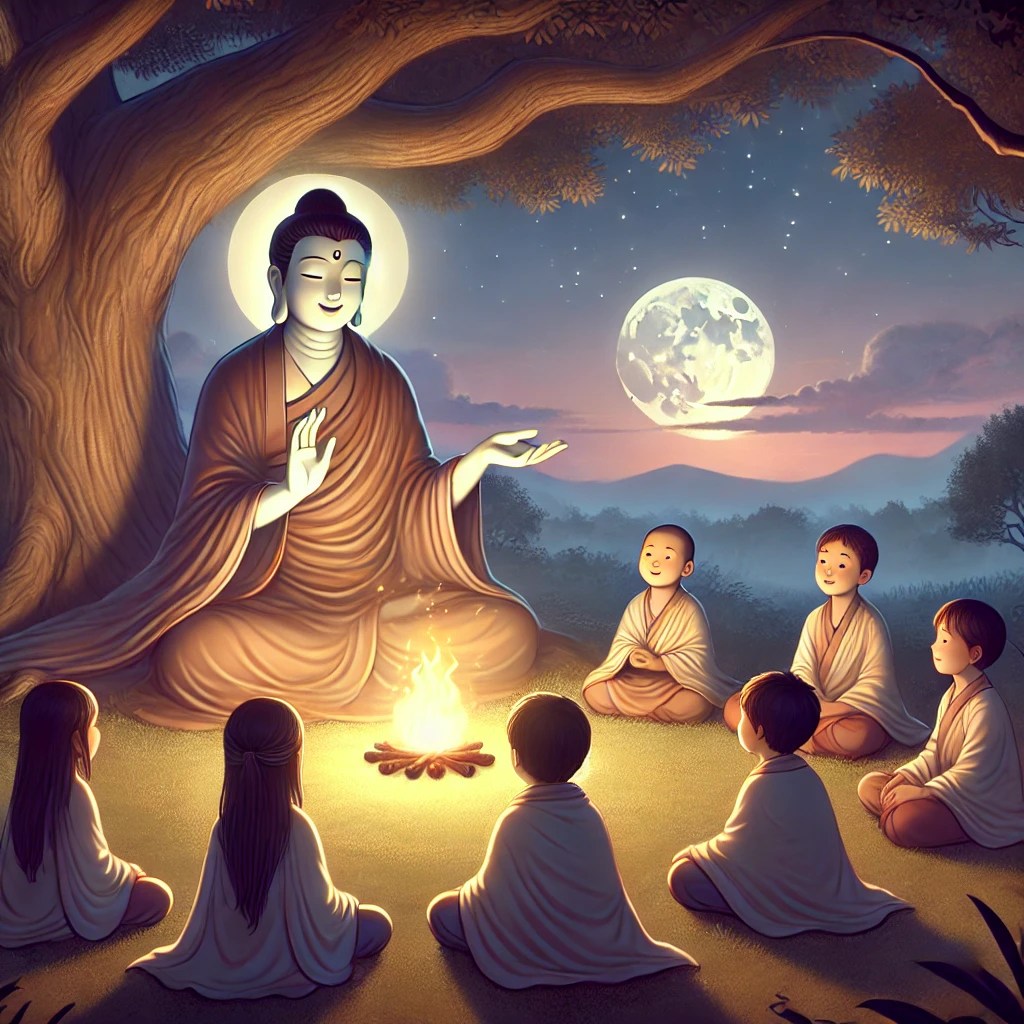
Tag: Buddha Nature

  • A Refuge That’s Never Truly Out of Reach

    A Refuge That’s Never Truly Out of Reach

    For those of us living with chronic fatigue syndrome (ME/CFS), finding peace can often feel like an elusive dream. The body aches, the mind fogs, and even the simple act of resting can feel like a challenge.

    But beneath the surface of our struggles—beneath the exhaustion, frustration, and the endless cycle of unfinished stories—there is a refuge that has never left us. A place within that remains untouched, waiting patiently to be noticed.

    Across traditions, this inner sanctuary is described in many ways. In Christianity, it is the peace that passeth understanding, the quiet presence of the Holy Spirit that calms the heart. In Buddhism, it is our Buddha nature, the still, pristine mind that shines beneath our thoughts. In Jewish practice, Shabbat offers a sacred pause from the world’s demands, a time to rest in the presence of the I AM. Whether through Vipassana’s gentle observation, Samatha’s calming focus, or the surrender of “Let go and let God,” the invitation is the same: to rest in the peace that is always there, even if just for a moment.

    But here’s the truth that many of us don’t expect—when we set the intention to relax, to find that peace, it’s common for our minds to do the exact opposite. The very moment we try to slow down, all the unsettled thoughts, worries, and frustrations rise to the surface. It’s like sitting down to meditate and suddenly realizing just how noisy the mind really is. For those of us with ME/CFS, this can feel especially overwhelming. Our bodies are already weighed down by fatigue, and now our minds seem unwilling to give us the rest we crave.

    But this isn’t a sign of failure—it’s part of the process. Just as clouds drift across the sky without altering the vastness behind them, our thoughts come and go without touching the deeper peace within us. The key is not to fight these thoughts, not to grow frustrated or discouraged, but to witness them with gentle curiosity. To let them rise and fall, trusting that underneath the noise, the stillness remains.

    This practice takes more than just patience—it requires self-compassion. We have to be kind to ourselves, especially when the mind feels restless or when peace feels far away. Forgiveness becomes a part of the journey: forgiving ourselves for not feeling better, for being frustrated, for wishing things were different. And most of all, it requires surrender. To let go of the need to control how or when peace arrives, and to trust that it will reveal itself in its own time.

    Over the past month, I’ve faced one challenge after another—the sale of my RV, packing up a home that had been my refuge for over 30 years, and the physical demands of moving into a new apartment. Each step of the process required me to push beyond my body’s natural limits, triggering post-exertional malaise. There were moments I had to override the signals of fatigue just to get through the next task, knowing full well the cost it would bring later. And yet, I approached it as mindfully as I could, listening when possible, resting when needed, and trusting that I would eventually return to the gentle rhythm of proper pacing.

    Now, as I settle into this new space, I look forward to reclaiming that mindful practice of pacing—of finding the balance between effort and rest, between doing and simply being. Even though my body is still recovering, I know that the peace I’m seeking is not dependent on my circumstances. It’s always there, beneath the surface, waiting for me to slow down, to breathe, and to notice.

    And so, I offer this to you—whether you live with ME/CFS, face chronic challenges, or are simply navigating the complexities of life. The path to peace isn’t always smooth, and the mind may resist at first. But beneath the noise, the frustration, and the exhaustion, there is a refuge that has never left you. It’s not something you have to create or chase—it’s already there, waiting to be noticed.

    Let go. Be kind to yourself. Trust the process.

    And when you least expect it, that peace—the one that passeth understanding, that shines with the light of your Buddha nature, that whispers with the breath of the Holy Spirit—will rise to meet you.

    Because the truth is, that refuge is never truly out of reach.

    🙏🕊🙏

  • Neti Neti Series No. 16: Exploring the Relationship Between Atman and Brahman

    Question:

    In Advaita Vedanta, we often hear that Atman is Brahman. But considering that Atman might be seen as a purified reflection of Brahman—similar to how the Buddha is an emanation of the Dharmakaya—would it be more accurate to say that Atman is an expression of Brahman rather than being Brahman itself?

    Dear friend,

    Your reflections on the relationship between Atman and Brahman in Advaita Vedanta, and how it might be understood in light of the Buddha’s relationship with the Dharmakaya, open up a rich field of contemplation. You have touched upon a subtle aspect of the teaching that invites us to explore the nature of the self and the ultimate reality in a deeper and more nuanced way.

    In Advaita Vedanta, the teaching that “Atman is Brahman” seeks to convey the profound truth that the individual self and the ultimate reality are not two separate entities but are, in essence, one and the same. This realization of non-duality (Advaita) is the heart of the teaching, where all distinctions between self and other, between the individual and the absolute, dissolve into the unity of pure awareness.

    And yet, your suggestion that Atman might also be seen as an “expression” or “reflection” of Brahman resonates with a certain truth. Just as the Buddha is an emanation of the Dharmakaya, so too can we understand Atman as the individual manifestation of Brahman within the world of forms and experiences. This view allows us to appreciate the functional relationship between the individual self and the universal reality, while still holding to the ultimate truth of their non-difference.

    Consider, if you will, the metaphor of reflection—a mirror that reflects the light of the sun. In this metaphor, Atman, when purified and free from the distortions of ignorance, reflects the light of Brahman, revealing the true nature of the self as non-different from the absolute. Until this purification occurs, the mind perceives itself as separate, much like seeing many reflections of the same sun in different bodies of water.

    In this way, Atman can be understood as a perfect reflection of Brahman, a reflection that becomes clearer and more accurate as the mind becomes more purified, more aligned with the truth of its own nature. This does not negate the teaching that Atman is Brahman but rather enriches it, providing a way to understand the process of realization as one of aligning the individual self with the universal reality it reflects.

    And yet, in the ultimate sense, the teaching of Advaita Vedanta invites us to move beyond all distinctions, beyond all metaphors, to the direct experience of unity. In this experience, the individual self dissolves into the infinite, and what is realized is that Atman and Brahman are not two, but one. The idea of expression or reflection fades away, leaving only the undivided awareness that is the true nature of all things.

    Dear friend, your reflections invite us to dwell in the mystery of this teaching, to explore the nuances of what it means to realize that “Atman is Brahman.” It is a realization that goes beyond words, beyond concepts, into the heart of what is real and true. Continue to contemplate this truth, and let it guide you ever deeper into the understanding of your own true nature.

    🙏🕊️🙏

  • The Infinite Dance: Uniting God, Spirituality, and the Mystery of Existence

    The Infinite Dance: Uniting God, Spirituality, and the Mystery of Existence

    “In the twilight of life, God will not judge us on our earthly possessions and human successes, but rather on how much we have loved.”


    — St. John of the Cross

    There is a current of truth that runs beneath all the fragmented voices of humanity. From the sacred texts of ancient traditions to the discoveries of modern science, we find ourselves drawn again and again toward the same mystery, a nameless and formless reality that underlies all things. It is the silent presence in which every being, every atom, and every thought is held. We have called it by many names: God, Hashem, YHVH, Allah, Brahman, Ein Sof, Tao, the Implicate Order, and the Field to name just a few. Yet, no name can truly capture the infinite, formless source from which all that is arises.

    In the stillness of Jewish mysticism, Ein Sof—the ungraspable, infinite One—calls to mind the same ineffability as the Tao in the East, the “way” that is beyond words, yet ever-present. In the traditions of the Vedas, Brahman echoes this eternal truth, a limitless ocean of being from which all forms emerge and into which they dissolve. It is a truth that cannot be contained by the human mind, but which the heart longs to know, to touch, and to become one with.

    Modern science, too, peers into the depths of this mystery, sometimes not even realizing it. The discovery of the Higgs boson, the so-called God particle, though a triumph of physics, is only a step closer to understanding the field that makes existence possible. And what of the dark matter and dark energy that account for most of the universe’s substance, yet remain unseen? These forces remind us that what we know is but a glimmer of the vast, unmanifest reality that lies just beyond the limits of our senses.

    There is a profound resonance here, a common ground where mysticism and science converge. In the hidden recesses of the quantum field, in the Implicate Order that David Bohm spoke of, we begin to glimpse the same boundless reality that the sages and poets have spoken of for millennia. The Pristine Mind of Buddhist thought, the Buddha Nature that resides in each of us, reveals this same underlying truth: that beneath the flux of the manifest world, there is a stillness, a wholeness, from which all arises.

    We are all connected to this vast, unknowable field, whether we call it God, Brahman, or simply the mystery. The words and symbols we use are mere pointers, trying to evoke something beyond form and beyond thought. It is the source of all that was, is, and ever will be—the field from which life unfurls like a blossom and into which it returns.

    And here is where our deepest unity lies. Whether you stand in the cool silence of a temple, gazing at the stars, or contemplating the equations of quantum physics, you are connected to this same reality. It binds all faiths and traditions, all discoveries and philosophies, not in opposition, but in harmony. The Tetra­grammaton of Jewish mysticism—the ineffable name of God—is no different from the Brahman of Vedanta, which is no different from the Field in quantum theory. All of them point to the same ineffable mystery that gives rise to all things.

    This is our shared ground, our common truth. We, as human beings, as seekers, as scientists, and as spiritual practitioners, all live in the radiance of this same underlying reality. It is within us, and around us. It is the thread that ties together the Tao of the East, the Ein Sof of Kabbalah, the Great Spirit of indigenous traditions, and the Unified Field that physicists pursue.

    In our hearts, we know this. The boundaries we construct between religions, between science and spirituality, between self and other, are but veils drawn over the face of the infinite. If we could still ourselves for a moment, if we could release the need to name and categorize, we might catch a glimpse of this truth, shimmering just beneath the surface.

    We are all made of the same cosmic dust, woven from the same quantum fabric, and bathed in the same mystery. Beneath the dualities that define our everyday lives, there is a oneness that holds us all—Brahman, Ein Sof, the Implicate Order, the Field. We need not divide ourselves over the different names we use for this reality. The divine is beyond name, beyond form, beyond comprehension, yet it permeates every aspect of existence. It is the space in which we unfold, and it is the silence that calls us home.

    In recognizing this, we can come together—not just in tolerance, but in celebration. We can acknowledge the beauty and depth of every tradition, every path that points to the same infinite source. Whether you come from a place of prayer or from the study of the stars, whether you seek through silence or through science, we are all reaching toward the same truth. This truth is not distant. It is as close as your breath, as intimate as your own heartbeat. It is, in fact, what you are.

    So, let us stand in awe of this great mystery. Let us honor the many ways it reveals itself to us—through science, through scripture, through silence. And let us know, deep in our hearts, that we are all bound together in this great unfolding. In this realization, we find the possibility for true interfaith harmony, for an enduring sense of unity, not just with one another, but with the entire fabric of existence.

    For in the end, what is all this but a dance of the formless into form, of the infinite into the finite, of Brahman into the world—and back again? We are the expressions of this great mystery, each one of us a note in the song of creation, a ripple in the vast, timeless ocean. And in recognizing this, we are free.

    🙏🕊️🙏

    “The kingdom of God is within you.”
    — Luke 17:21

    “Be still and know that I am God.”
    — Psalm 46:10

    “God is the center of my soul. He is so profoundly hidden that I can neither see Him nor touch Him. But the closer we approach Him, the more He expands in us.”
    — St. John of the Cross

    “It is love alone that gives worth to all things.”
    — St. Teresa of Avila

    “At the center of our being is a point of nothingness which is untouched by sin and by illusion, a point of pure truth. This little point is the pure glory of God in us.”
    — Thomas Merton

    “The infinite is concealed from all the living. It is not attained by the intellect, nor by any created thing, but only by the soul’s journey into the unknown.”
    — Kabbalistic Saying

    “Wherever you turn, there is the face of God.”
    — Quran 2:115

    “In some sense, man is a microcosm of the universe; therefore, what man is, is a clue to the universe. We are all in this together.”
    — David Bohm

    “The Supreme Reality is beyond both the unmanifest and the manifest. It is eternal and all-pervading. Knowing this, the wise understand their true nature as the same.”
    — Bhagavad-Gita 8:20

    “Your own Self-Realization is the greatest service you can render the world. The deeper you go into the Self, the more the world and the ego disappear, leaving only the formless reality.”
    — Ramana Maharshi

    “There is only one truth—God. All the rest is a fleeting shadow. Fix your mind on the highest, and let the world go.”
    — Swami Sivananda

    “You realize your true nature by casting off the little self and recognizing yourself as the vast Spirit, free from all limitations of form, thought, and time.”
    — Swami Paramahansa Yogananda

    “What we think, we become. All that we are arises with our thoughts. With our thoughts, we make the world.”
    — The Buddha

    “We are here to awaken from the illusion of our separateness.”
    — Thich Nhat Hanh

    “Out beyond ideas of wrongdoing and rightdoing, there is a field. I’ll meet you there. When the soul lies down in that grass, the world is too full to talk about.”
    — Rumi

    “The Tao that can be told is not the eternal Tao; the name that can be named is not the eternal name.”
    — Lao Tzu, Tao Te Ching

    “The Great Spirit is in all things: he is in the air we breathe. The Great Spirit is our Father, but the Earth is our Mother. She nourishes us; that which we put into the ground, she returns to us.”
    — Big Thunder (Bedagi), Wabanaki Algonquin

    These quotes bring together voices from various traditions, adding depth to the contemplation of unity and the infinite mystery that runs through the heart of existence.

    🙏🕊️🙏

  • The Medicine of the Mantra: A Bedtime Story of Chenrezig and OM MANI PADME HUM

    The Medicine of the Mantra: A Bedtime Story of Chenrezig and OM MANI PADME HUM


    Chenrezig shares the story of OM MANI PADME HUM with children, guiding them to uncover their inner compassion and wisdom. A perfect bedtime story filled with peace, warmth, and unity.


    Long ago, in a beautiful land where the mountains touched the sky and rivers flowed like silver ribbons, there lived a wise and compassionate teacher named Chenrezig. He had a twinkle in his eye, as if he knew a great secret, and his heart was so full of love that just being near him made people feel lighter. But Chenrezig knew that many beings in the world carried an invisible burden—an illness of the mind, one that made them forget who they truly were.

    This illness, Chenrezig explained, was a kind of forgetting. “We have all mistaken ourselves for something we are not,” he said gently. “Like a dreamer who believes the dream is real, we have forgotten our true nature—the vast, boundless love and wisdom that live in our hearts. Instead, we believe we are small and separate, like waves forgetting they belong to the ocean.”

    Chenrezig often told stories to children, knowing that their hearts could understand what adults often forgot. One evening, as the stars glimmered softly above, Chenrezig gathered a group of children around a fire. They looked up at him with curious eyes, waiting for one of his famous stories.

    “Tonight,” Chenrezig said, “I will tell you a story about a great medicine—a medicine for the heart and mind. It is the mantra OM MANI PADME HUM. This mantra is like the most powerful medicine a doctor could ever give, one that can heal the illness of separation and help us remember our true nature.”

    He paused, watching the children lean in closer, eager to hear more. “But first,” he continued, “you need to understand something important. Imagine that you are wearing many layers of clothing—so many layers that you forget what you look like underneath. Each layer is like a thought or feeling you tell yourself: I’m not good enough. I need to be better.

    These layers are like cobwebs in the mind, making it hard to see clearly. And because we believe in these stories, we feel small and alone, like a candle separated from the flame. But the truth is, we are not the stories we tell ourselves. Beneath all the layers, beneath all the cobwebs, we are already whole, already perfect—just like a lotus flower, waiting to bloom.”

    The children sat very still, imagining themselves wrapped in layers of thoughts, feelings, and stories. “How do we take off the layers?” one of them whispered.

    Chenrezig smiled. “That is where the mantra comes in,” he said softly. “OM MANI PADME HUM is the medicine that clears away the layers, like a soft breeze sweeping away cobwebs. Each time you say the mantra, you peel back another layer. OM MANI PADME HUM… and the layers fall away. OM MANI PADME HUM… and your heart shines a little brighter. OM MANI PADME HUM… and with each breath, you get closer to your true self—your Buddha nature, the part of you that is pure love and compassion.

    He began to explain the meaning of the mantra, his voice gentle and full of care. “The first syllable, OM, is the sound of the universe waking up. It reminds us that we are connected to everything—to the stars, the rivers, the animals, and each other. OM is the sound of coming home to our true nature.”

    The children closed their eyes, listening to the sound of OM as if it were rising from the earth, the sky, and their own hearts all at once.

    “The next two words,” Chenrezig continued, “are Mani Padme—the jewel in the lotus. This means that inside each of us is a precious jewel—the light of wisdom and love. But just like a lotus flower that grows in muddy water, this jewel can be hidden by layers of thoughts and beliefs. Each time we chant Mani Padme, we open the lotus a little more, revealing the jewel inside.”

    The children imagined a lotus flower blooming in their hearts, each petal unfolding slowly, with a bright jewel glowing at its center.

    “And finally,” Chenrezig said, “we have Hum. This is the sound of unity—the sound that brings everything together. It is the moment when we remember that we were never separate, not from others, not from love, and not from our true nature. Hum is the sound of the Buddha mind awakening within you, shining with pure compassion.”

    The children whispered the mantra softly: OM MANI PADME HUM… OM MANI PADME HUM… Each repetition felt like a breeze clearing away the cobwebs in their minds, helping them feel lighter and brighter.

    “Now,” Chenrezig continued, “let me tell you one more secret. The mantra doesn’t just help you remember who you are—it helps others too. Every time you chant OM MANI PADME HUM, you are planting seeds of compassion, not just in your own heart, but in the hearts of all beings. These seeds will bloom in ways you may never see, bringing kindness and peace into the world.”

    He placed a hand over his heart. “It’s like sharing a gift that never runs out. Each time you say the mantra, you are offering love to the whole universe.”

    The children sat quietly for a moment, feeling the beauty of the mantra settling into their hearts, like a gentle rain nourishing the earth. “So the mantra is like a magic medicine?” one child asked softly.

    Chenrezig smiled. “Yes,” he said. “It is a medicine for the heart, a way of peeling back the layers until only love and wisdom remain. It helps us remember that we are not small or separate—we are like the ocean, vast and full of life. And each time we chant the mantra, we bring a little more light into the world.”

    As the fire crackled softly, casting warm orange light on their faces, Chenrezig leaned closer to the children. “Now, as you drift off to sleep tonight, you can let the mantra carry you, like a boat floating gently down a river. Whisper it in your heart: OM MANI PADME HUM… OM MANI PADME HUM… Let it peel back the layers of your mind, revealing the jewel of compassion that has always been there.”


    He kissed each child on the forehead and offered a final blessing:

    OM MANI PADME HUM . . .

    With each breath, may you awaken to your true nature.

    With each dream, may your heart bloom in kindness.

    May all beings remember their light, and may the world be filled with peace.

    The mantra hummed softly in their hearts: OM MANI PADME HUM, OM MANI PADME HUM… clearing away the cobwebs, layer by layer, revealing the truth that they were never separate, but always part of the great ocean of love.

    May your hearts always shine with the light of compassion, and may OM MANI PADME HUM guide you, now and always. Sleep well, children. The jewel in the lotus is already blooming within you.

    As the children drifted into a peaceful sleep, the mantra whispered in their hearts… OM MANI PADME HUM… until their dreams were filled with rivers of kindness, endless skies of compassion, and the light of love.

    Goodnight, little one. ❤️

    🙏🕊️🙏


    If you’d like to explore more bedtime stories for children, including tales that nurture compassion and mindfulness, you can find our collection here.


  • An Introduction to Advaita Vedanta and Self-Inquiry: A Journey to the True Self

    The purpose of this post is to offer a gentle introduction to the philosophy of Advaita Vedanta and the practice of self-inquiry. These teachings invite us to explore the true nature of the Self, to go beyond the surface identities we cling to, and to rest in the awareness that unites all of existence. For those who wish to dive deeper into these topics, I’ve included links to several related posts below, which offer further insights and practical guidance.

    The Journey into Advaita Vedanta and Self-Inquiry:

    In the quiet mystery of life, there are moments when the questions we ask begin to turn inward, drawing us closer to the core of our being. For those of us who sense the call of something deeper, something beyond the surface of everyday experience, Advaita Vedanta offers a path of profound inquiry and realization. It is a philosophy, an invitation to explore the oneness of all existence, and a reminder that our true nature lies beyond the identities we so often carry—beyond our thoughts, emotions, and physical forms.

    Advaita Vedanta, rooted in the ancient wisdom of India, whispers to us that the Self, or Atman, is not separate from the ultimate reality, often called Brahman. In Jewish mysticism, this ultimate reality is known as Ein Sof, the boundless, infinite source of all that is. In Buddhism, it is pointed to as Buddha Nature, the inherent purity and potential for awakening in every being. The Dzogchen tradition speaks of Pristine Mind, the natural state of awareness, while many Indigenous traditions refer to the Great Spirit or Grandfather as the essence that permeates all life. Though the names may differ, they all point to the same underlying truth: that we are not separate from the divine or the infinite source. This insight offers a profound shift in how we understand ourselves and the world.

    Advaita Vedanta and Self-Inquiry:

    The world, as we perceive it, is seen as a veil—a temporary illusion that hides the underlying unity of all that is. This illusion, known as Maya, clouds our awareness and leads us to believe that we are separate individuals, bound by the limitations of time, space, and our bodies. But the teachings of Advaita Vedanta remind us that the true Self, or Atman, is not bound by these limitations. Atman is one with Brahman, the unchanging, eternal reality that underlies all existence.

    The practice of self-inquiry is central to uncovering this truth. It involves turning inward and asking the fundamental question: “Who am I?” At first glance, this question may seem simple, but its implications are profound. When we ask this question sincerely, we begin to notice that the identities we typically associate with ourselves—our name, our body, our thoughts—are all temporary and subject to change. If we are not our body, not our thoughts, not our emotions, then who are we?

    This process of questioning leads us deeper and deeper into the nature of the Self. Rather than seeking an intellectual answer, self-inquiry encourages us to observe the experience of “I”—the feeling of being, of awareness itself. By turning our attention inward, we can trace the sense of “I” back to its source, discovering that our true essence is pure awareness, untouched by the fluctuations of the mind or the conditions of the world.

    Ramana Maharshi, one of the great sages of modern times, taught that the practice of self-inquiry is the most direct path to realizing this truth. He encouraged seekers to continually ask, “Who am I?” and to follow this inquiry until the ego, or the false sense of self, dissolves into the pure awareness of the Self. This awareness is not a distant goal to be achieved but is ever-present, simply waiting to be recognized beneath the layers of thought and identification.

    The Benefits of Engaging in Self-Inquiry:

    For those new to this practice, the benefits of self-inquiry may not be immediately obvious. It’s easy to get caught up in the mind’s need for answers and certainty. However, the more we engage with this inquiry, the more we begin to experience a profound shift in how we relate to ourselves and the world around us. The practice of self-inquiry gradually dissolves the boundaries between the self and the other, leading to a direct experience of oneness, or non-duality.

    This realization brings about a sense of inner peace and freedom that is not dependent on external circumstances. By understanding that we are not the fluctuating thoughts, emotions, or experiences of the body, we become less attached to the ups and downs of life. Self-inquiry allows us to rest in the awareness that remains unchanged and undisturbed, no matter what arises in the mind or in the world.

    Furthermore, as we deepen our practice, we begin to see that the same awareness that we discover within ourselves is present in all beings. This insight fosters compassion, kindness, and a sense of connection with others, as we realize that, at the deepest level, we are all expressions of the same underlying reality.

    🙏🕊️🙏

    Here are some related posts for diving deeper into this topic:

    Seeing Beyond Our Senses: Expanding Perception in the Practice of Self-Inquiry and Advaita Vedanta

    For those beginning their journey, you might find it helpful to explore how our sensory perceptions are limited, as described in the post “Seeing Beyond Our Senses: Expanding Perception in the Practice of Self-Inquiry and Advaita Vedanta”. Explore the limits of human perception and discover how self-inquiry and Advaita Vedanta can help you see beyond the physical senses to realize the true nature of the self. This blog post delves into the teachings of Pravrajika Divyanandaprana, emphasizing the importance of expanding consciousness beyond the sensory world in the pursuit of self-realization and non-dual awareness.

    An Introduction to Ramana Maharshi’s Forty Verses on Reality

    In the teachings of Ramana Maharshi, self-inquiry is seen as the most direct path to uncovering our true Self. His work, “An Introduction to Ramana Maharshi’s Forty Verses on Reality” outlines how we can dissolve the ego through the persistent practice of asking “Who am I?” and tracing the source of the ‘I’ thought. Discover the essence of self-inquiry (Atma Vichara) and non-duality as elucidated by one of the greatest spiritual masters of the 20th century. This introduction provides an overview of the key themes, including the illusion of the ego, the nature of the true Self, and the path to self-realization. Whether you’re a seeker of Advaita Vedanta or interested in spiritual awakening, this guide offers valuable insights into the timeless wisdom of Ramana Maharshi.

    Penetrating the Five Sheaths: A Path to Self-Inquiry and Realization

    For a more practical understanding of self-inquiry, you may want to read “Penetrating the Five Sheaths: A Path to Self-Inquiry and Realization” which explains the layers of identity that must be transcended to reach the core of the Self. This post guides you through the koshas—the sheaths that veil our true essence. Explore the transformative practice of self-inquiry in Advaita Vedanta through the penetrating process of the five sheaths (koshas). Discover how questioning “Who am I?” or “What am I?” can help transcend physical, mental, and emotional identities to uncover the true Self, or Atman. Learn practical applications, integration with meditation, and the profound journey towards self-realization and pure awareness. Join our community in understanding the deeper layers of existence and achieving spiritual growth.

    Introduction to Raja Yoga: The Path of Meditation and Mental Discipline

    Similarly, in “Introduction to Raja Yoga: The Path of Meditation and Mental Discipline” we explore how mental discipline can complement self-inquiry by calming the mind and preparing it for deeper introspection. Meditation helps us quiet the mind so we can observe the fluctuations and see the truth beyond. Explore Raja Yoga, the “Royal Path” of meditation and mental discipline, in this introductory post. Learn how the eightfold path (Ashtanga) of Raja Yoga, as outlined in the Yoga Sutras of Patanjali, guides practitioners toward self-realization and spiritual enlightenment. Discover the key principles of mental clarity, emotional stability, and inner peace, and how Raja Yoga integrates aspects of other yoga paths to lead to ultimate spiritual awakening. This post offers insights rooted in the teachings of Advaita Vedanta and spiritual leaders like Ramakrishna, Swami Sivananda, and Swami Vivekananda, making it ideal for those seeking a comprehensive understanding of meditation and the deeper aspects of yoga.

    Self-Inquiry and Meditation: A Pathway to Inner Awareness

    In “Self-Inquiry and Meditation: A Pathway to Inner Awareness” you’ll find insights on how combining meditation with self-inquiry sharpens our awareness and leads to the realization of our true Self. Discover the transformative power of self-inquiry and meditation in this comprehensive guide based on Pravrajika Divyanandaprana’s teachings. Learn how the ancient practice of asking “Who am I?” or “What am I?” can dissolve the ego, increase awareness, and lead to profound inner peace. This blog post delves into the integration of self-inquiry with meditation, offering practical steps for spiritual awakening and personal growth. Ideal for those exploring Advaita Vedanta, mindfulness, and non-dual awareness, this guide provides a pathway to uncover your true self.

    Deepening the Practice of Self-Inquiry

    If you are ready to deepen your practice even further, you may enjoy “Deepening the Practice of Self-Inquiry” which explores how the question “Who am I?” can be applied to everything we experience. It encourages us to witness all thoughts and sensations from a place of stillness and curiosity. Explore the profound practice of Self-Inquiry (Atma Vichara) to deepen your understanding of non-duality and the nature of the ‘I-thought.’ This comprehensive guide provides key insights, practical steps, and reflection points to help you recognize all experiences as expressions of Brahman or pristine mind. Learn how to cultivate a unified awareness, dissolve the separation between the observer and the observed, and rest in the underlying awareness that remains constant amidst mental fluctuations. Whether you’re new to self-inquiry or seeking to deepen your practice, this post offers valuable guidance for your journey towards self-realization and inner peace.

    Witnessing the Journey: Strengthening the Seer in Life’s Transitions

    In life’s many transitions, it can be helpful to recognize the steady witness within us. In “Witnessing the Journey: Strengthening the Seer in Life’s Transitions” we reflect on how this witnessing presence remains unchanged even as external circumstances shift. In this reflective blog post, explore the deepening of witness consciousness, non-duality, and spiritual growth through life’s transitions. Drawing on insights from Buddhist teachings, Advaita Vedanta, and Jewish mysticism, we discuss how to strengthen the seer within by balancing trust, detachment, and awareness. Whether you’re navigating challenges like moving, illness, or emotional fluctuations, this post offers practical guidance for cultivating inner peace, mindfulness, and the presence of awareness. Learn how the journey from the mind to the heart opens the door to the divine and leaves behind wisdom for others on the path. A profound exploration of karma yoga, meditative mind, and the union of Atman and Brahman.

    Caravan of Love: The Universal Path of Righteousness Across All Traditions

    For an exploration of the universal values that connect spiritual traditions across cultures, “Caravan of Love: The Universal Path of Righteousness Across All Traditions” delves into the shared principles of righteousness and compassion, uniting people from all walks of life. This post explores the universal values shared across major world religions, highlighting how concepts like Sadhu Dharma, Tzaddikim, and being a Mensch align with the teachings of Jesus and the principles of Islam and Buddhism. It invites readers to reflect on the shared human quest for a life of righteousness, compassion, and inner peace, offering a path to greater interfaith harmony.

    Embracing the Eternal Now: Cultivating Spiritual Presence in Daily Life

    The post “Embracing the Eternal Now: Cultivating Spiritual Presence in Daily Life” offers insights into how we can cultivate mindfulness and equanimity, bringing the practice of presence into every moment of life. Discover the transformative power of living in the present moment with Embracing the Eternal Now: Cultivating Spiritual Presence in Daily Life. This blog post explores how mindfulness, equanimity, and spiritual connection can bring profound peace and clarity to your everyday life. Through practices rooted in Christian and Jewish traditions, learn how to listen to the ‘still small voice’ within, connect with the Holy Spirit, and respond to life’s challenges with balance and calm. Dive deep into the wisdom of ‘Hineni’ and uncover the sacred space where true spiritual awakening begins.

    🙏🕊️🙏

  • Poem: Look to the Moon

    The finger points to where the moon does shine,
    But gaze not at the hand that beckons you.
    Let go the grasp of thoughts that claim as mine,
    And turn your sight to what is pure and true.

    Ramana speaks of Self, the quiet core,
    Where all the world and mind do gently fade.
    Orgyen’s Pristine Mind, and Buddha’s lore,
    Reveal the light that nothing can degrade.

    In God’s vast silence, there you’ll find the key,
    A truth that words and thoughts cannot contain.
    Release the need to seek, just let it be,
    For in the stillness, all is clear and plain.

    Stop searching for the truth outside, afar,
    The moon is shining, constant in the night.
    Turn inward now and see just where you are,
    The light you seek is your own inner light.

    Midnight.
    No waves,
    No wind,
    The empty boat
    Is flooded with moonlight.


    — Zen Master Dogen

    🙏🕊️🙏