Tag: righteous living

  • Ramayana No. 10: Narada: The Celestial Sage and Divine Messenger of the Ramayana

    As I continue my journey through the Ramayana, I’ve chosen to explore this epic using multiple versions: the abridged Valmiki translation, the comprehensive Gita Press edition, and the detailed Debroy translation. This approach allows me to compare different interpretations and uncover nuances that might otherwise go unnoticed. For those interested in exploring these different versions, both the Gita Press edition and the Debroy translation are embedded in the blog post below.

    Through this exploration, one figure has emerged as particularly significant in the opening of the Ramayana: the celestial sage Narada.

    Narada is one of the most revered sages in Hindu mythology, known for his deep wisdom, musical talent, and his role as a divine messenger. He is often depicted as a traveling sage who moves freely between the earthly realm and the divine, carrying messages from the gods to humans and vice versa. Narada is also renowned for his ability to incite action and prompt change—sometimes through his seemingly mischievous behavior, earning him the title of the “Divine Troublemaker.” However, his actions are always aimed at upholding dharma, or righteousness, even if they appear unconventional.

    Narada’s importance extends far beyond the Ramayana. He is a prominent figure in several other Hindu texts, including the Mahabharata, the Bhagavata Purana, and various Upanishads. In these texts, Narada is often seen guiding kings, sages, and even the gods themselves, providing counsel and sometimes challenging them to reflect on their actions. His role as a teacher and guide makes him a central figure in the transmission of spiritual knowledge and the preservation of dharma.

    Narada is also credited with the composition of the Narada Bhakti Sutra, a foundational text on the practice of bhakti, or devotion to God. This further underscores his role as a spiritual guide and a beacon of divine love and wisdom.

    The Ramayana opens with Narada narrating the story to Valmiki. This is a significant moment, as it frames the Ramayana not just as a historical or mythological account, but as a divine narrative passed down from the gods to humans through a trusted sage. Narada’s role here is that of a divine mediator, ensuring that the wisdom and teachings of the Ramayana are preserved and passed on to future generations.

    Narada’s presence in the Ramayana reminds us that spiritual teachings often come through intermediaries who carry the weight of divine authority. His involvement in the story underscores the importance of dharma and the divine order, which are central themes in the Ramayana.

    As we explore Narada’s role in the Ramayana, it’s essential to recognize the broader implications of his presence. Narada is not just a character in the story; he is a symbol of divine wisdom, a bridge between the mortal world and the divine, and a guide for those seeking to live a life of righteousness. His actions, teachings, and guidance are a reminder that the path of dharma is always within reach, no matter the challenges we face.

    🙏🕊️🙏

    If you’re interested in exploring the Ramayana in greater depth, you can find the Gita Press and Debroy versions below.

    Below is an image from the Gita Press version, where Narada’s wisdom begins to unfold:
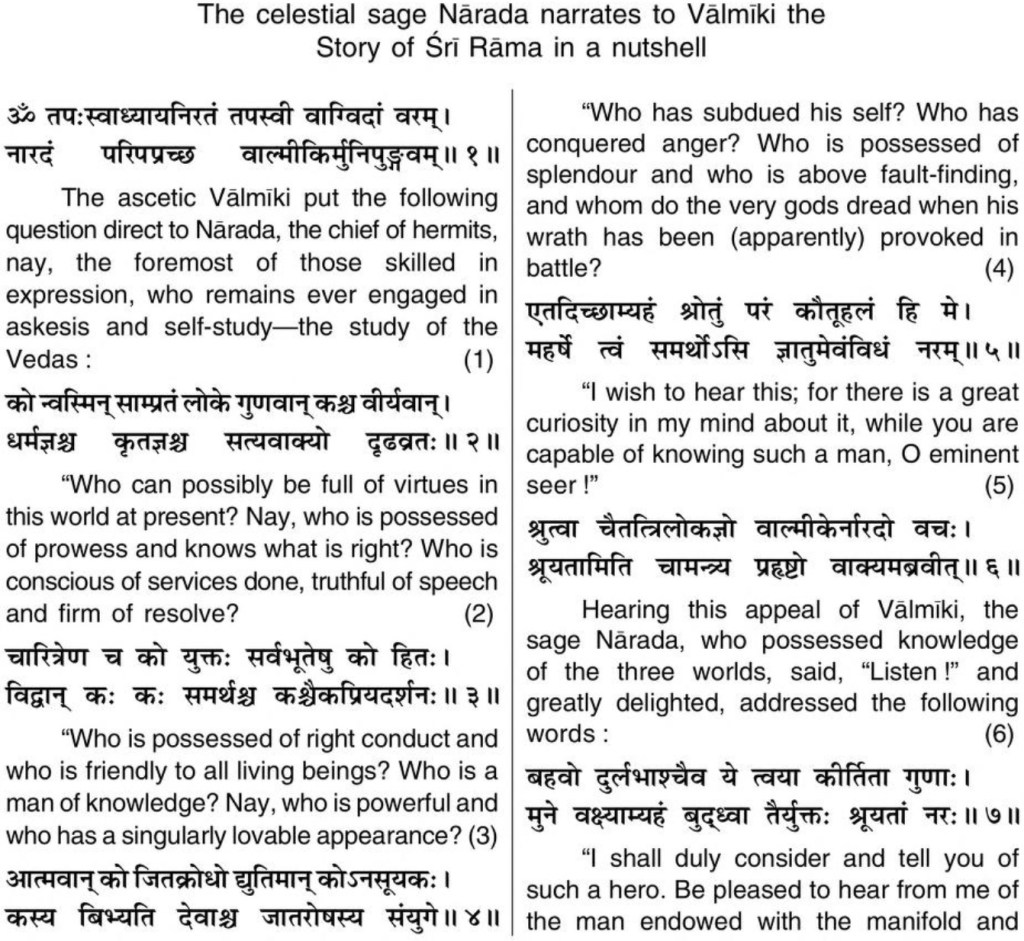
    Screenshot

    Below is an image from the Debroy version, where Narada’s wisdom also begins to unfold:

    Screenshot
  • The Importance of Demonstrating Faith through Righteous Living

    The Role of Deeds in Shaping Our Spiritual Path

    In reflecting on the essence of faith, I’ve been pondering a crucial distinction: faith isn’t merely about belief or intellectual assent. It’s about a transformative relationship with God that manifests in how I live my life. As James 2:26 reminds me, “faith without works is dead.”

    Demonstrating Faith through Actions

    For me, true faith in Jesus isn’t just about saying I believe; it’s about actively following His teachings and embodying His love and compassion in my daily life. Jesus himself emphasized this in Matthew 7:21, stating, “Not everyone who says to me, ‘Lord, Lord,’ will enter the kingdom of heaven, but only the one who does the will of my Father who is in heaven.”

    Aligning with God’s Will

    To align with God’s will means more than reciting beliefs; it means striving for righteousness and moral integrity. This concept resonates deeply with teachings found in the Book of Enoch and other spiritual texts that emphasize righteous living as the path to divine favor. As Jude 1:14-15 highlights, “Enoch, the seventh from Adam, prophesied about them: ‘See, the Lord is coming with thousands upon thousands of his holy ones to judge everyone, and to convict all of them of all the ungodly acts they have committed in their ungodliness.’” This verse from the ancient text known as the Book of Enoch (1 Enoch 1:9) speaks about the judgment that will come upon sinners and the unrighteous, emphasizing divine justice and the consequences of wrongdoing, reflecting themes found in various spiritual teachings about accountability and moral conduct.

    Responding to God’s Grace

    I understand that salvation isn’t about earning my way into heaven through deeds alone. It’s about responding to the teachings in the Bible and the concept of God’s grace with a transformed heart that leads to righteous living—forgiveness, loving-kindness, compassion, and service to others. Jesus taught that faith and actions go hand in hand; they reflect my relationship with God and my love for others. As Revelation 22:12 emphasizes, “Behold, I am coming soon, bringing my recompense with me, to repay each one for what he has done.” And Revelation 20:13 states, “And the sea gave up the dead who were in it, Death and Hades gave up the dead who were in them, and they were judged, each one of them, according to what they had done.” Additionally, Revelation 20:12 highlights, “And I saw the dead, great and small, standing before the throne, and books were opened. Then another book was opened, which is the book of life. And the dead were judged by what was written in the books, according to what they had done.” Finally, Revelation 2:23 affirms, “And I will strike her children dead. And all the churches will know that I am he who searches mind and heart, and I will give to each of you according to your works.”

    Why It Matters

    My actions and choices reflect my faith and commitment to God. When I follow Jesus’ teachings and live according to His commandments—loving God and loving others—I demonstrate a genuine, transformative faith. This isn’t about earning salvation through works but living out my faith authentically. It’s not about achieving perfection but about striving to live out Jesus’ teachings with sincerity and compassion.

    Conclusion

    Let’s continue to explore how our faith can be a beacon of light in the world through righteous actions and loving deeds. Faith isn’t just a belief; it’s a dynamic relationship with God that shapes our character and impacts our interactions with others.

    Contemplative Questions

    • How do I actively live out my faith in my daily life?
    • In what ways can I align my actions more closely with God’s will?
    • How can I show forgiveness, loving-kindness, and compassion more consistently?
    • What steps can I take to embody Jesus’ teachings with sincerity and compassion?
    • How does my understanding of God’s grace transform my approach to righteous living?

    I look forward to hearing your thoughts and insights on this important aspect of our Christian journey. Please share your reflections in the comments below.

    🙏🕊🙏