Tag: universal values

  • Embracing Forgiveness, Loving-Kindness, and Compassion: A Universal Call to Unity

    Embracing Forgiveness, Loving-Kindness, and Compassion: A Universal Call to Unity

    A Path to Healing and Unity Through Shared Spiritual Values

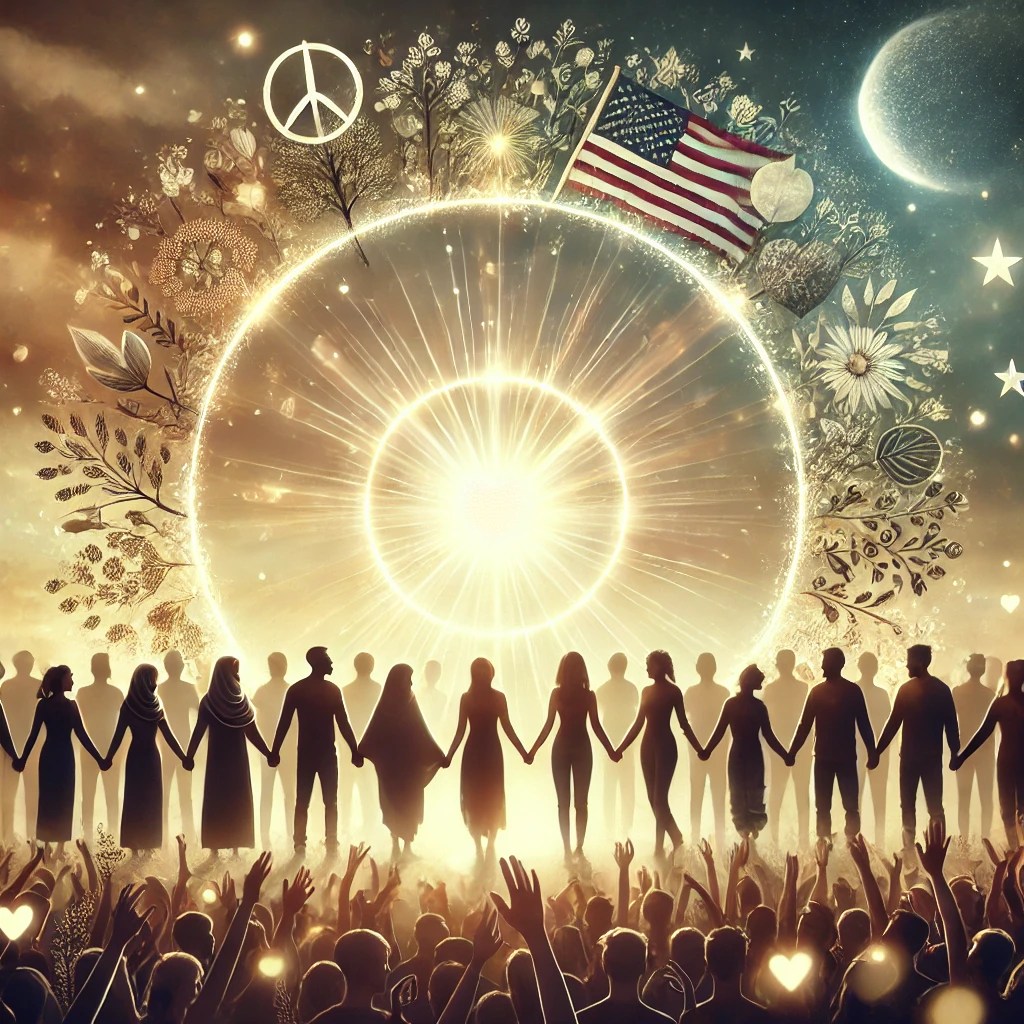
    In every spiritual tradition, there lies a core message of forgiveness, loving-kindness, and compassion. These virtues, transcending cultural and religious boundaries, unite us in our shared humanity. Whether through the teachings of Buddha, the wisdom of Jesus, or insights from various spiritual paths, the call to embrace these qualities is clear and compelling.

    Forgiveness is a profound act of letting go. It isn’t about condoning wrongdoings but freeing ourselves from the burdens of anger and resentment. As the Dalai Lama teaches, forgiveness is a gift we give to ourselves, a step toward inner peace.

    Loving-Kindness, or “metta” in Buddhist practice, encourages us to extend unconditional love to all beings. Jesus exemplified this through his life, teaching us to love our neighbors as ourselves. In every smile, kind word, and act of generosity, we weave a tapestry of love that can heal and uplift.

    Compassion is the heart’s response to suffering. It compels us to act, to alleviate pain, and offer solace. Teachings from various traditions remind us that compassion is not a passive feeling but an active force for good. Through compassion, we recognize our interconnectedness and our responsibility to care for one another.

    In these challenging times, let’s draw from the wellsprings of our diverse spiritual heritages. Let us embrace forgiveness, loving-kindness, and compassion not just as lofty ideals, but as daily practices that transform our lives and the world around us.

    Together, we can create a world where these universal values form the foundation of our interactions, fostering unity, peace, and understanding among all people.

    🙏🕊️🙏

    #Compassion #LovingKindness

  • A Focus on Compassionate Care for the Vulnerable

    A Focus on Compassionate Care for the Vulnerable

    Welcome to the Compassionate Care for the Vulnerable category of our blog. This space is dedicated to reflecting on the call to compassion, inspired by the words of Jesus in Matthew 25:40:

    “Truly I tell you, whatever you did for one of the least of these brothers and sisters of mine, you did for me.”

    In this powerful verse, we’re reminded that caring for others—especially those who are most vulnerable—is not only an act of love but a reflection of our deepest values and faith. Our commitment here is to honor this message through posts that focus on compassionate advocacy, particularly for unaccompanied children and those whose voices often go unheard.

    Purpose and Vision

    Through this category, we aim to:

      •   Raise Awareness: Highlight the needs and struggles of vulnerable groups, including unaccompanied children, and provide resources and insights into how we can all support them.

    •   Encourage Compassionate Action: Offer reflections, guides, and actionable steps that inspire each of us to embody love and kindness in our daily lives.

    •   Protect Stability for Unaccompanied Children: While many of these children are placed with vetted sponsors or family members, their futures are still uncertain as deportation policies evolve. Our campaign is dedicated to ensuring that these children are considered with compassion and care during any deportation procedures. We believe that the stability and safety provided by their current placements should not be disrupted without thoughtful consideration and bipartisan oversight.

       •   Build a Community of Support: Connect with others who feel the call to serve and uplift those in need, creating a space for shared values and mutual encouragement.

    Why “Matthew 25:40”?

    The words in this verse are not merely an invitation—they’re a reminder of our interconnectedness. When we help “the least of these,” we are fulfilling a sacred trust to uphold dignity, offer hope, and affirm the worth of every person. This category, and the posts within it, will serve as a small but meaningful way to embody this mission.

    Join Us on This Journey

    We hope you’ll join us in this ongoing journey of compassion. As you explore this category, may you find not only information and insight but also inspiration to engage with kindness in your own way. Together, we can be part of a compassionate movement that uplifts, protects, and honors those who need it most.

    To stay connected, feel free to subscribe to this blog or join us on Twitter @SanghaPulse

    Thank you for being here. May this space be a source of light, love, and understanding.

    🙏🕊️🙏

  • A Call for Unity and Peace in Times of Change

    A Call for Unity and Peace in Times of Change

    A Message of Unity, Compassion, and Hope Post-Election 2024: Guiding Toward Healing

    As our nation enters a new chapter, feelings of uncertainty and apprehension may naturally arise. Moments of great change often invite a range of emotions, from hope to fear, and everything in between. But no matter where we find ourselves on this journey, we are united by our shared humanity, a bond that transcends our differences and invites us to walk this path together with kindness, compassion, and respect.

    This is a time for each of us to look within, to cultivate a sense of peace, and to reach out to others with understanding. There is strength in unity, a quiet courage in compassion, and a powerful resilience in the bonds that connect us as one human family.

    Embracing Compassion and Understanding

    As we meet others who may feel differently or view this moment through a different lens, let us remember that each person’s perspective is shaped by unique experiences and aspirations. True compassion invites us to listen deeply, to respond with empathy, and to create a space where all voices can be heard and valued.

    “Be kind, for everyone you meet is fighting a hard battle.” — Attributed to Philo of Alexandria

    This simple truth reminds us that compassion can be the bridge between divided hearts. Each person carries their own worries and hopes, and when we meet them with kindness, we become part of their healing journey, and they, in turn, become part of ours.

    Cultivating Peace Within and Without

    Inner peace, like the stillness of a calm lake, allows us to respond to life’s storms without being overwhelmed by them. As we take time to nurture this peace within ourselves—through reflection, meditation, or prayer—we become more capable of bringing peace into the lives of those around us.

    “Peace comes from within. Do not seek it without.” — Buddha

    This insight encourages us to draw strength from our inner resources, so that we may become a calming presence in the world. By holding peace within ourselves, we radiate it outward, helping to ease the anxieties and fears of those who may feel unsettled.

    Acting with Justice and Integrity

    We are all stewards of justice and truth, called to act with integrity and fairness. In times of change, it is essential to root ourselves in these values, to seek justice not through division but through unity, compassion, and courage.

    “The best way to find yourself is to lose yourself in the service of others.” — Mahatma Gandhi

    This wisdom reminds us that our greatest purpose lies in serving the common good, that by dedicating ourselves to lifting others, we discover deeper meaning and connection. In a time when many feel uncertain, we can serve by offering hope, reassurance, and an example of calm, compassionate integrity.

    Seeking Unity in Diversity

    In the spirit of interfaith harmony, we honor the rich diversity of beliefs, practices, and traditions that make our world vibrant and beautiful. Unity does not mean uniformity; it means celebrating our differences and finding strength in our shared values of love, peace, and kindness.

    “We are not isolated beings, but like waves of the same sea, leaves of the same tree, flowers of the same garden.” — Seneca

    This truth, expressed through many spiritual and philosophical lenses, reminds us that our lives are interconnected. When we remember that we are “waves of the same sea,” we can face any change or challenge with a sense of solidarity and support.

    Walking Together in Hope and Trust

    Amid uncertainty, hope is a guiding light, illuminating the path toward a better future. Each small act of kindness, every effort toward understanding, every choice to respond with love instead of fear, builds a world in which we can all thrive.

    “Faith is the bird that feels the light and sings when the dawn is still dark.” — Rabindranath Tagore

    Hope, like faith, gives us strength to keep moving forward, even when the outcome is not yet clear. This is a time for us to trust in the power of love, kindness, and shared vision to lead us to a brighter day.

    Let us take this moment to breathe, reflect, and commit to walking this path with open hearts. Each of us has the power to bring calm, courage, and compassion to our communities. Together, as one human family, we can create a nation guided by wisdom, unity, and peace.

    In the spirit of unity, let us keep this in our hearts:

    May we find strength in our compassion, resilience in our hope, and peace in our shared humanity. May our actions be a reflection of the love, kindness, and understanding that the world needs now more than ever. And may we walk together, with purpose and harmony, toward a brighter tomorrow.

    🙏🕊️🙏
  • Caravan of Love: The Universal Path of Righteousness Across All Traditions

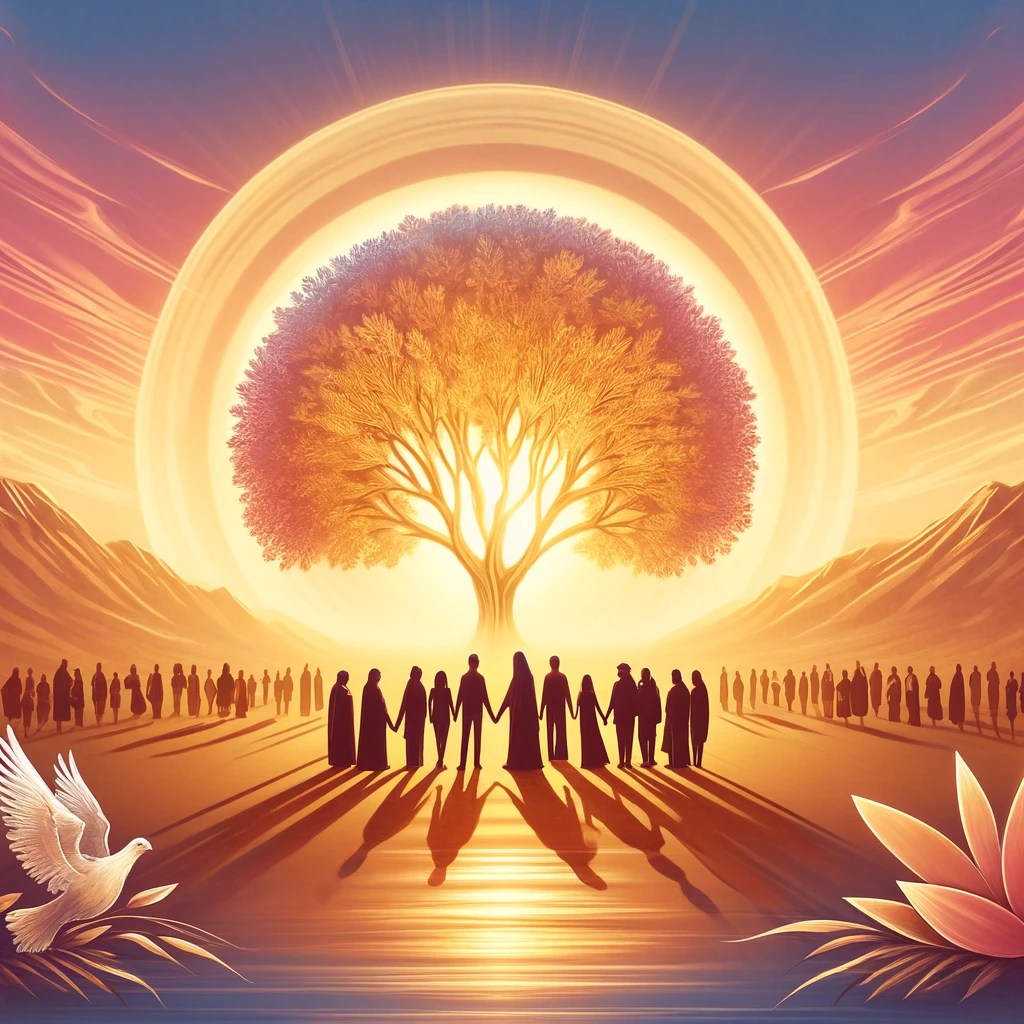
    In the vast tapestry of world religions, certain values transcend cultural and doctrinal differences, weaving together a shared vision of what it means to live a righteous and compassionate life. These values—purity, righteousness, kindness, forgiveness, and compassion—are cornerstones of what many traditions aspire to cultivate in their followers. Whether it’s the Sadhu Dharma in Hinduism, the concept of Tzaddikim in Judaism, or the pursuit of being a Mensch, these ideals serve as beacons of light in our shared human journey.

    Sadhu Dharma, the path of the holy person, is a life dedicated to truth, simplicity, and non-attachment. The Sadhus, through their renunciation and ascetic practices, embody a life that seeks to transcend the material and focus entirely on the spiritual. Their lives are marked by a commitment to Dharma—righteousness and moral order—a principle that resonates deeply in Hindu philosophy. This dedication to purity of mind and heart is not just about personal enlightenment but about embodying virtues that uplift society as a whole.

    In Judaism, the concept of Tzaddikim refers to the righteous ones, those whose lives are marked by a deep commitment to justice, kindness, and integrity. The Tzaddik, much like the Sadhu, is someone who has dedicated their life to the service of others and to the fulfillment of divine commandments. They are seen as pillars of the world, their righteousness serving as a foundation for the spiritual and moral health of the community.

    Similarly, the idea of being a Mensch, which in Yiddish refers to a person of integrity and honor, is highly valued in Jewish culture. A Mensch is someone who embodies the values of kindness, responsibility, and decency in their daily life. This concept, though rooted in Jewish tradition, has universal appeal, as it speaks to the importance of living a life that others can look up to and respect.

    In Christianity, the teachings of Jesus Christ offer a profound example of a life dedicated to love, compassion, and forgiveness. Jesus’s Sermon on the Mount is a timeless guide to living a life of righteousness. His call to love one’s neighbor as oneself, to forgive endlessly, and to seek peace in all things, aligns beautifully with the teachings of Sadhu Dharma and the principles of Tzaddikim. Jesus’s life is a testament to the power of living with an open heart, free from the shackles of anger, greed, and judgment.

    Islam also emphasizes the importance of righteousness and moral conduct. The Quran and Hadith provide guidance on how to live a life that is pleasing to God, through acts of charity, honesty, and justice. The concept of Taqwa, often translated as God-consciousness or piety, encourages Muslims to live in constant awareness of God’s presence, guiding them to act with integrity and compassion. The Prophet Muhammad’s life is filled with examples of humility, kindness, and dedication to the welfare of others, setting a high standard for ethical conduct.

    Buddhism, with its emphasis on the Noble Eightfold Path, also encourages a life of right conduct, right speech, and right livelihood. The Buddha’s teachings on compassion (Karuna) and loving-kindness (Metta) offer a path to purifying one’s mind and living in harmony with others. The simplicity of the Buddha’s advice to “Be good, do good, purify your mind” resonates across all these traditions, offering a succinct summary of the universal path to spiritual awakening.

    Despite the diversity of religious expressions, these examples highlight a shared commitment to cultivating a life of virtue. Whether it’s through the renunciation of a Sadhu, the righteousness of a Tzaddik, the integrity of a Mensch, the compassion of Christ, the piety of a Muslim, or the mindfulness of a Buddhist, the underlying message is clear: to live a life that reflects the highest values of humanity.

    In today’s world, where division and discord often seem to dominate the narrative, these teachings remind us of the importance of unity and the power of virtue. They encourage us to rise above our differences and to see in each other the same divine spark that guides our own path. By embracing these universal principles, we contribute to a more harmonious and compassionate world—a world where peace and righteousness are not just ideals but lived realities.

    As we continue our journey through the sacred stories and teachings of various traditions, may we carry these lessons with us, allowing them to shape our actions and our hearts. In doing so, we honor the diversity of spiritual paths while recognizing the common ground that unites us all.

    🙏🕊️🙏

  • An Appeal for Universal Ethics: Wisdom from the Dalai Lama

    Embracing Universal Ethics for a More Compassionate World

    In a world often divided by religious and ideological lines, the Dalai Lama’s appeal for secular ethics and peace offers a refreshing perspective. He reminds us:

    “For thousands of years, violence has been committed and justified in the name of religion. Religions have often been intolerant and still are in many cases. Religion is often abused or exploited – even by religious leaders – in order to further political or economic interests. For that reason, I say that in the twenty-first century, we need a new form of ethics beyond religion. I am speaking of a secular ethics that can be helpful and useful for over a billion atheists and an increasing number of agnostics. More integral than religion is our fundamental human spirituality. That is the affinity we humans have for love, benevolence, and affection – no matter what religion we belong to.”

    A Call for Reflection and Unity

    The Dalai Lama’s words resonate deeply, especially in times of division and conflict. As Christians, we are called to love our neighbors as ourselves (Matthew 22:39). This teaching aligns with the Dalai Lama’s vision of universal human values grounded in love, benevolence, and affection.

    Transcending Boundaries

    The message is clear: true spirituality transcends religious boundaries. It calls us to recognize our shared humanity and the fundamental values that unite us. This isn’t about diminishing the importance of our faith but about enriching it by embracing a broader, more inclusive perspective.

    Building Bridges of Understanding

    In embracing secular ethics, we are not abandoning our Christian principles but enhancing our capacity to connect with others, regardless of their beliefs. This approach can foster peace, understanding, and cooperation in a world that desperately needs it.

    A Personal Reflection

    Reflecting on these words, I find inspiration in the teachings of Jesus and the Dalai Lama alike. Both emphasize the power of love and compassion as guiding principles. As we navigate the complexities of the twenty-first century, let’s strive to embody these values in our daily lives, building bridges of understanding and unity.


    Discussion Points:

    1. How can we apply the Dalai Lama’s call for universal human values in our communities?
    2. What steps can we take to ensure our faith promotes love and benevolence rather than division?
    3. In what ways can we foster dialogue and understanding among different belief systems?
    4. How can we practice and model these universal ethics in our daily interactions?

    I invite you to share your thoughts and join the conversation in the comments below. How do you see these ideas impacting your life and community?

    🙏🕊️🙏

  • Embracing Forgiveness, Loving-Kindness, and Compassion: A Universal Call to Unity

    A Path to Healing and Unity Through Shared Spiritual Values

    In every spiritual tradition, there lies a core message of forgiveness, loving-kindness, and compassion. These virtues, transcending cultural and religious boundaries, unite us in our shared humanity. Whether through the teachings of Buddha, the wisdom of Jesus, or the insights of various spiritual paths, the call to embrace these qualities is clear and compelling.

    Forgiveness is a profound act of letting go. It is not about condoning wrongdoings but freeing ourselves from the burdens of anger and resentment. As the Dalai Lama teaches, forgiveness is a gift we give to ourselves, a step toward inner peace.

    Loving-Kindness, or “metta” in Buddhist practice, encourages us to extend unconditional love to all beings. Jesus exemplified this through his life, teaching us to love our neighbors as ourselves. In every smile, kind word, and act of generosity, we weave a tapestry of love that can heal and uplift.

    Compassion is the heart’s response to suffering. It compels us to act, to alleviate pain, and to offer solace. The teachings of various traditions remind us that compassion is not a passive feeling but an active force for good. Through compassion, we recognize our interconnectedness and our responsibility to care for one another.

    In these challenging times, let us draw from the wellsprings of our diverse spiritual heritages. Let us embrace forgiveness, loving-kindness, and compassion not just as lofty ideals, but as daily practices that transform our lives and the world around us.

    Together, we can create a world where these universal values are the foundation of our interactions, fostering unity, peace, and understanding among all people.