Tag: ethical learning

  • Into the Mystic: Hitbonenut and the Path of Dissolution into the Divine

    Into the Mystic: Hitbonenut and the Path of Dissolution into the Divine

    The Journey Continues

    In the journey of Jewish mysticism, Hitbonenut stands as a gateway to true contemplation, an invitation to move beyond the mind’s grasping and into the silent vastness of divine presence. Unlike traditional meditation, which often focuses on concentration, Hitbonenut opens the heart to experience, not through thinking, but through the quiet surrender of the self. Inspired by my conversations with Rabbi Shmuel Reich, this post explores Hitbonenut as a pathway to Bittul—a dissolving of ego that leads to Ein Sof, the boundless divine.

    Hitbonenut: Beyond Thought, Beyond Self

    Hitbonenut, or contemplation, is more than simply focusing the mind on an idea—it is a practice that prepares the heart and mind to dissolve into the divine through Bittul (self-nullification). Rabbi Shmuel often emphasized that Hitbonenut is not merely meditation as commonly understood but an opening into a vast, boundless state where the self, with all its concepts and boundaries, melts away into Ein Sof, the Infinite. This contemplative state aligns with what Dzogchen calls “pristine awareness” or what Christian mystics like Saint John of the Cross describe as the “dark night” of pure contemplation.

    In the words of the Alter Rebbe, Rabbi Schneur Zalman of Liadi, Hitbonenut involves immersing oneself in the twin sources of divine light—sovev (transcendent) and memale (immanent)—allowing these aspects to penetrate deeply until the boundaries between self and divine dissolve. Rabbi Shmuel echoed this teaching, suggesting that through Hitbonenut, “we let go of the illusion of separation,” arriving at a state where we no longer perceive ourselves as separate entities but as part of the divine unfolding itself.

    A Practice of Letting Go

    For those inspired to explore Hitbonenut, the practice is one of gentle release rather than mental control. Begin by choosing a divine concept or phrase to contemplate—perhaps the boundlessness of Ein Sof itself. Let the mind rest on this concept, but instead of trying to “figure it out,” allow your thoughts to quiet. As thoughts naturally rise and fall, practice letting them pass without clinging to them. Over time, this brings the mind to a non-conceptual stillness, where even the idea of a “self” softens and dissolves.

    Rabbi Shmuel described this process as “training the mind to be calm and quiet, like rabbis of old, who would spend hours in silence before prayer, merging with Ein Sof through Bittul.” In this silence, the ego relaxes, and the self opens into a vast presence, where all notions of “I” and “other” fall away. This is the true heart of Hitbonenut—not a mental exercise, but an invitation to rest in divine unity, beyond words and concepts.

    Explore Further

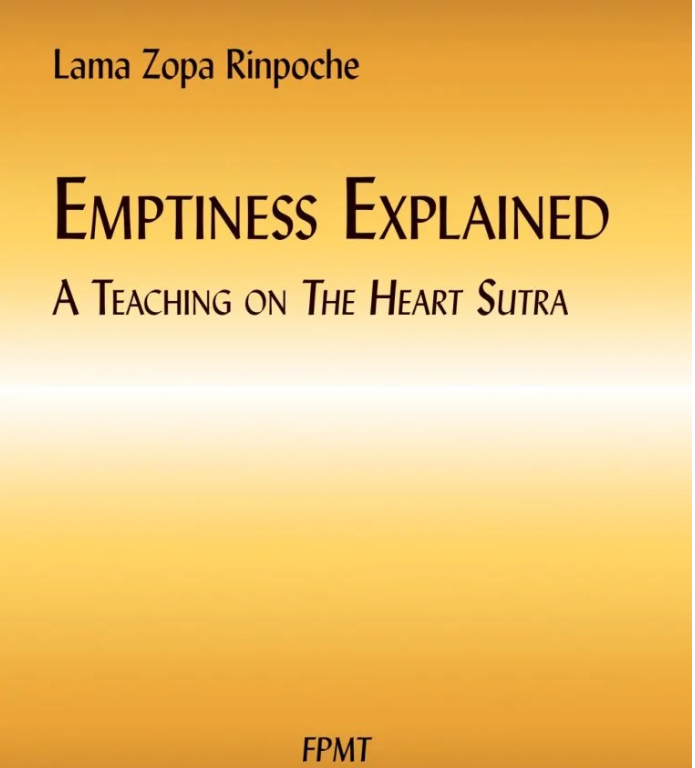
  • Emptiness Explained: Insights from Lama Zopa Rinpoche on the Heart Sutra

    Emptiness Explained: Insights from Lama Zopa Rinpoche on the Heart Sutra

    Transforming Suffering Into Happiness: How the Teachings on Emptiness from the Heart Sutra Support Mental Health and Well-Being

    The Heart Sutra stands as one of the most profound and essential teachings in Buddhism, offering a path to understanding emptiness—the ultimate nature of reality. Lama Zopa Rinpoche’s commentary on this timeless sutra illuminates its teachings, guiding us toward a deeper understanding of how emptiness can transform not only our spiritual practice but also our daily lives.

    In this post, I’ll share key reflections from Rinpoche’s teaching, focusing on the practical wisdom and spiritual inspiration it offers. Whether you’re a seasoned practitioner or simply curious about the philosophy of emptiness, I hope these insights will resonate with your heart.

    What Is Emptiness?

    Lama Zopa Rinpoche explains that emptiness does not mean that things don’t exist—it means that things are empty of inherent existence. All phenomena, including ourselves, arise dependently, shaped by causes, conditions, and labels. This is the essence of the middle way, which avoids the extremes of nihilism (nothing exists) and eternalism (things exist inherently and permanently).

    As the Heart Sutra famously states:

    “Form is emptiness, emptiness is form. Emptiness is not other than form; form is also not other than emptiness.”

    In these words, we see that emptiness and dependent arising are inseparable. While things exist conventionally, their ultimate nature is empty of any independent, fixed essence.

    Practical Ways to Meditate on Emptiness

    Rinpoche offers accessible methods to integrate the understanding of emptiness into both formal meditation and daily life:

    1. Recognizing the Object to Be Refuted

    The first step is identifying the false concept of an independent, inherently existent “I” or object. This is often described as the “I on the I”—the subtle sense that there is a solid self beyond the ever-changing interplay of body and mind. By recognizing this misconception, we can begin to dissolve it.

    2. Meditating on Dependent Arising

    Reflect on how the “I” arises only in dependence on the body, mind, and other aggregates. As Rinpoche teaches, the “I” is merely a label created by the mind. Understanding this dependence helps us see the emptiness of the “I” without negating its conventional existence.

    3. Mindfulness in Daily Life

    Emptiness isn’t confined to sitting meditation. Rinpoche encourages us to bring mindfulness of emptiness into every activity—walking, cooking, working, even shopping. He likens this to recognizing a dream as a dream:

    “While driving a car, see yourself, the car, and the action of driving as hallucinations. They appear solid, but they are not inherently existent. Practicing this awareness is incredibly powerful.”

    Overcoming Fear and Misunderstanding

    The experience of emptiness can sometimes evoke fear, especially the sense of “losing the I.” Rinpoche reminds us that this fear arises from our deep attachment to a false sense of self. However, far from being nihilistic, emptiness reveals the interdependent nature of all things.

    “When bodhisattvas of high intelligence realize emptiness, they experience bliss; for others, deep fear can arise. This fear is a sign of touching the truth of selflessness—it is part of the journey.”

    By grounding our understanding in dependent arising, we can navigate this fear with confidence and clarity.

    Applying Emptiness in Relationships

    Rinpoche’s teaching also provides practical tools for transforming relationships. When we feel hurt or offended, understanding emptiness can soften our reactivity. The other person’s actions—and our own sense of self—are dependently arisen, shaped by countless conditions.

    This awareness allows us to respond with compassion rather than attachment or aversion. As Rinpoche says:

    “Recognize that the ‘I’ that feels hurt is a mental construct. See the other person’s words or actions as arising dependently. This opens the door to greater understanding and kindness.”

    The Transformative Power of Emptiness

    Even the smallest step toward understanding emptiness has profound benefits. Rinpoche explains that simply doubting the solidity of appearances—thinking, “Perhaps things are empty”—can begin to break the chains of samsara.

    “Listening to teachings on emptiness for even a moment plants seeds for liberation. Reflecting on emptiness throughout your day turns ordinary actions into a path to enlightenment.”

    A Living Practice

    The teachings of the Heart Sutra are not just intellectual concepts—they are a living practice. Whether in formal meditation or everyday life, the wisdom of emptiness invites us to see the world with fresh eyes. By letting go of our rigid attachments and false perceptions, we open the door to profound freedom and compassion.

    As Lama Zopa Rinpoche reminds us, we are unbelievably fortunate to encounter these teachings. May we take them to heart and use them to benefit all beings.

    Further Exploration

    To delve deeper into Lama Zopa Rinpoche’s teachings on the Heart Sutra and emptiness, you can download the original PDF here.

    I’d love to hear your thoughts on emptiness and the Heart Sutra! How do these teachings resonate with your own spiritual journey? Feel free to share your reflections in the comments below.

    🙏🕊️🙏