Tag: symptom tracking

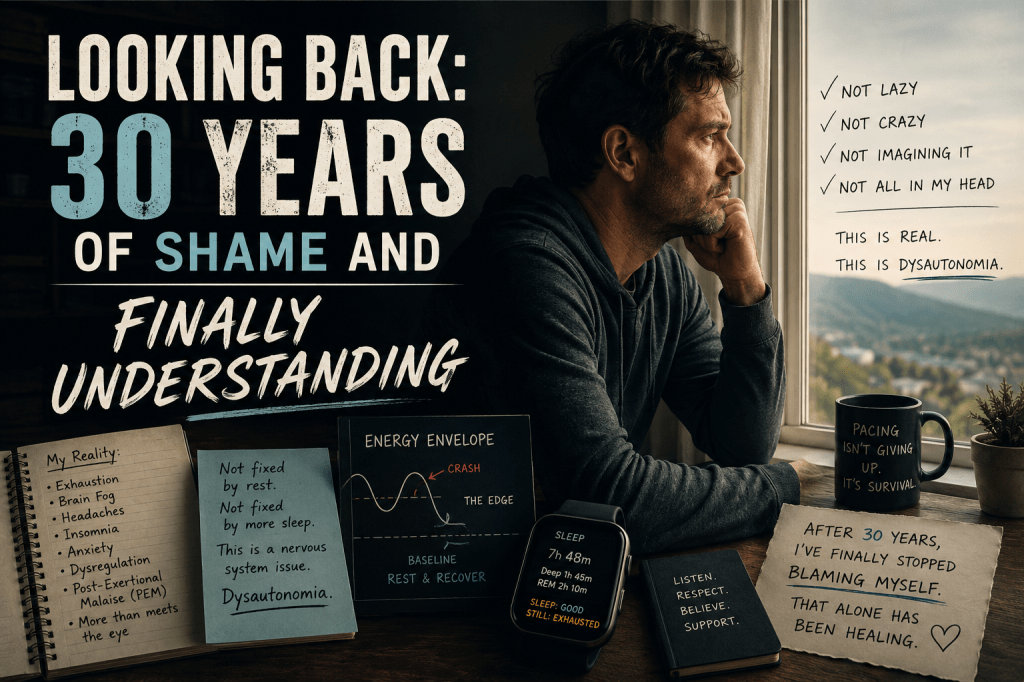
  • Looking Back: 30 Years of Shame and Finally Understanding My Experience

    Looking Back: 30 Years of Shame and Finally Understanding My Experience

    I’ve lived with this illness for over 30 years, and for most of that time I was ashamed of it.

    Doctors kept telling me it was all in my head.

    They said I was depressed, anxious, or that I just didn’t want to work hard enough. They usually prescribed antidepressants and anti-anxiety medications, claiming these drugs would fix me. While the medication may have helped my emotional state somewhat, it did nothing to fix the physical symptoms.

    Thankfully, I eventually stopped letting them gaslight me into taking more and different medications.

    Every time I tried to explain how my body would completely crash after doing normal things, I was met with skepticism or pity.

    So I started doubting myself.

    I felt weak.
    I felt crazy.
    I carried a lot of shame for something I couldn’t control.

    The fatigue and exhaustion that comes with this illness is crushing.

    It’s not normal tiredness. It’s a deep, heavy exhaustion that sleep doesn’t fix. Even the smallest activities can leave me completely wiped out for days.

    My sleep tracker consistently shows that I get adequate deep sleep and REM sleep, yet I still wake up exhausted. That helped me understand something important:

    The problem isn’t simply how much I sleep.

    It’s that my dysautonomia prevents the sleep from being restorative.

    In the early years, the emotional side of it felt a lot like PMS — that same sudden emotional dysregulation, irritability, and feeling completely off — except instead of happening once a month, it could hit at any time.

    Only recently have I finally understood what’s really happening.

    What I have is dysautonomia.

    My autonomic nervous system doesn’t regulate properly anymore.

    That’s why I can suddenly feel freezing cold in a warm room. That’s why I’m much more comfortable lying down than sitting or standing. And that’s why even mild activity can make my whole system short-circuit — suddenly bringing on intense brain fog, overwhelming exhaustion, headaches, insomnia, anxiety, and sometimes depression all at once.

    ME/CFS always felt like an incomplete label to me.

    Yes, I crash after exertion.
    Yes, sleep doesn’t fix it.
    Yes, my body has never functioned the way people expect it to.

    But understanding it as dysautonomia finally explains the day-to-day reality of living in a body whose nervous system breaks down so easily.

    The only thing that actually helps is pacing — staying within my energy envelope.

    I try to live as close to the edge as I can, but carefully. Migraines and tinnitus have become warning signs for me. If I respect those early signals, I can often avoid triggering insomnia, which is far worse than a regular crash and completely throws me off balance.

    After 30 years, I’ve finally stopped blaming myself.

    That alone has been healing.

    I’m sharing this journal entry in case it gives someone else a little more language for their own experience.

    And for family members, friends, and doctors: please know that when we keep turning down invitations, or seem withdrawn, or disappear for long stretches of time, it’s not because we don’t want to be around you.

    Our energy is extremely limited.

    We have to be very careful to avoid crashes.

    Even now, I keep a little journal between doctor visits so I can clearly communicate what I’ve been experiencing. If you’re struggling to explain this illness during appointments, writing things down and bringing it with you can be incredibly helpful.

    Sometimes understanding does not cure the body.

    But it can begin to release the shame.

    And after so many years of being misunderstood, that matters.

  • Ten Suggestions for Managing ME/CFS and How You Can Apply Them to Your Daily Life

    This is what I have learned after 30 years of living with chronic fatigue. These ten focus points have helped me. Maybe they will help you, too.

    NOTE: This article contains a lot of information to process, particularly for those of us dealing with chronic fatigue. Take your time reading and absorbing this information, and don’t hesitate to take breaks as needed. To manage a chronic illness like ME/CFS or Long Covid effectively, it’s crucial to respect our reality and prioritize our self-care. Remember, success is measured in many different ways, and taking care of yourself is always a valuable investment in your overall health and well-being.

    Take care and be gentle with yourself.

    1. Pacing: The first suggestion is pacing. It’s essential to balance rest and activity to avoid overexertion and prevent symptom flare-ups. Remember that pacing is not about doing less, but about finding a sustainable balance. Listen to your body, and don’t push yourself into a flare-up. This will take some practice and is likely to change from day to day. So remember… Be careful…. Be mindful…. Discover what works best for you from day to day….
    2. Sleep Hygiene: The second suggestion is sleep hygiene. It’s crucial to establish a regular sleep schedule, create a relaxing bedtime routine, and maintain a sleep-conducive environment. Quality sleep can help reduce your symptoms and improve your overall well-being. Again, this is a practice that you can adapt and modify over time. So remember… Be careful…. Be mindful…. Discover what works best for you from day to day….
    3. Stress Management: The third suggestion is stress management. Stress can exacerbate symptoms of ME/CFS, so it’s crucial to find ways to manage it. Consider meditation, deep breathing exercises, or mindfulness practices to help manage symptoms. There is a free meditation class offered online by MBSR. The MBSR online training course is 100% free, created by a fully certified MBSR instructor, and is based on the program founded by Jon Kabat-Zinn at the University of Massachusetts Medical School. Palouse Mindfulness offers this course. Another suggestion is Toni Bernhard’s book, How to Be Sick. This is a powerful and insightful book that offers a unique perspective on the challenges faced by those of us suffering from chronic illnesses such as ME/CFS, Long Covid, and other similar conditions. You can take a look at this book below.
    4. Gentle Exercise: The fourth suggestion is gentle exercise. Very, very low-impact exercises like gentle stretching or breathing exercises can help improve physical function and well-being. However, always listen to your body and adjust the level of intensity as necessary so that you are always below your post-exertional malaise threshold. Most graded exercise recommendations do not take this into account, and people often overdo it and exacerbate symptoms. Also, low-impact exercise for us may simply be getting out of bed. Or, if bedbound, turning your head from side to side while lying down. Or, flexing and extending your feet while in bed. If you start by doing less and evaluate your response as you go, you will be less likely to exacerbate your symptoms. I can’t tell you how many times I was enjoying a stretching routine only to have PEM the next day. So remember… Be careful…. Be mindful…. Discover what works best for you from day to day….
    5. Nutrition: The fifth suggestion for optimal health and well-being is to pay close attention to your nutrition. A balanced diet that incorporates a variety of nutrient-dense foods, such as fruits, vegetables, lean proteins, and whole grains, is crucial to maintaining good health. Avoid consuming processed foods that contain high levels of artificial ingredients, unhealthy fats, and added sugars. Opt for fresh, whole foods that provide the essential vitamins, minerals, and fiber your body needs. Don’t forget to drink plenty of water to stay hydrated and promote optimal bodily function. Remember, a healthy diet is an investment in your long-term health and well-being.
    6. Cognitive-Behavioral Therapy (CBT): The sixth suggestion for managing ME/CFS, Long Covid, or any chronic illness is to consider cognitive-behavioral therapy (CBT). This evidence-based therapy can help you develop effective coping strategies to manage the emotional and psychological impacts of living with a chronic illness. By working with a therapist who specializes in CBT, you can learn to identify and challenge negative thought patterns, develop healthy coping mechanisms, and reduce feelings of stress and anxiety. CBT has been shown to be effective for individuals with chronic illnesses, and it can be a valuable tool in helping you manage your symptoms and improve your overall quality of life. Don’t hesitate to reach out to a qualified therapist to explore this option further.
    7. Support Network: The seventh suggestion is to seek out and maintain a strong support system. Your support system may include family, friends, and support groups. These individuals can provide you with emotional support and help you manage your condition.
    8. Medication Management: The eighth suggestion is medication management. When managing chronic fatigue, medication management is an important component. Work with your healthcare provider to find the most effective medications for your symptoms while discussing possible side effects and interactions. Starting with lower doses than normally suggested may also be recommended. So remember… Be careful…. Be mindful…. Discover what works best for you from day to day….
    9. Symptom Tracking: The ninth suggestion for managing a chronic illness like ME/CFS or Long Covid is to engage in regular symptom tracking. Keeping track of your symptoms can help you better manage your condition. By keeping a symptom diary, you can also better understandy patterns and triggers that may be exacerbating your symptoms. The key here is to do less of what makes you feel worse, and do more of what helps you to feel better.
    10. Education: The tenth and final suggestion is education. Educate yourself about ME/CFS & Long Covid, including symptoms, diagnosis, and management strategies. Becoming informed can help you advocate for yourself and make informed decisions about your health. Remember that education is an ongoing process, and it’s important to stay up-to-date on the latest research and information about your chronic conditions.

    In conclusion, managing chronic fatigue requires a multifaceted approach. By incorporating these ten suggestions into your daily life, you can better manage your condition, improve your quality of life, and find hope for the future. Remember to listen to your body, seek support, and stay informed. Thank you for reading.

    Please, for the benefit of others, leave your questions and comments below so we can all learn from one another about these ten steps.