Let’s just sit.
No commentary.
No effort.
Just being.
And let the Truth
reveal itself
like a smile
that was always there.
🕊🪷✨
.

Let’s just sit.
No commentary.
No effort.
Just being.
And let the Truth
reveal itself
like a smile
that was always there.
🕊🪷✨
.
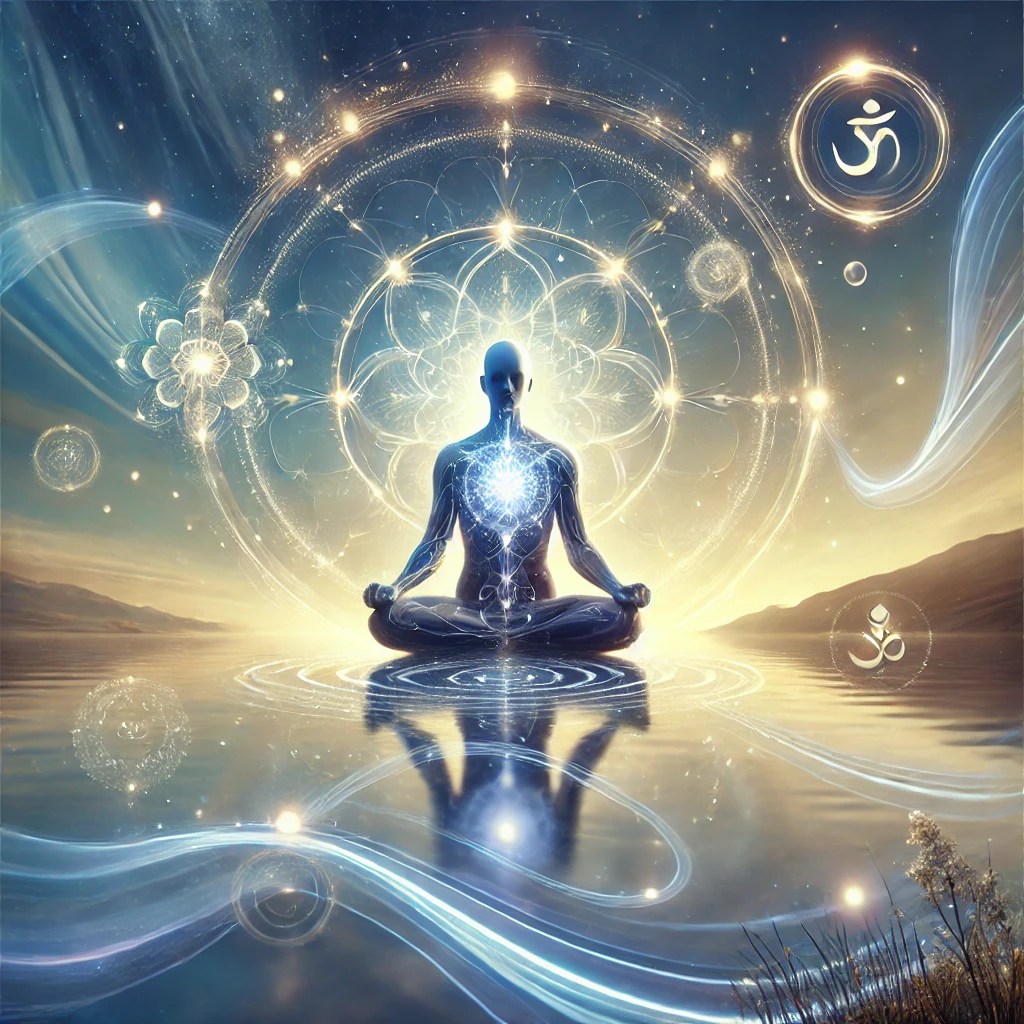
Question:
How does coordinating the Neti Neti mantra with the breath—such as repeating it during the inhale, pause, exhale, and pause—enhance the practice and contribute to deeper relaxation and mindfulness?
Dear friend,
It is a delight to hear of your latest insight, where you have begun to coordinate the mantra with the breath. This practice, so simple and yet so profound, brings together the rhythms of the body and the mind in a harmonious dance, guiding you ever deeper into the stillness that lies at the heart of all being.
When you synchronize the mantra “Not This, Not This” with your breath, you are creating a unified rhythm that anchors you in the present moment. The mind, which so often wanders, finds a steady focus in the regularity of the breath, and this focus is reinforced by the repetition of the mantra. Each inhale, each pause, each exhale becomes a part of the sacred cycle, a cycle that quiets the mind and brings it into alignment with the natural flow of life.
The pattern you have described—three repetitions of the mantra on the inhale, three on the pause, three on the exhale, and three on the pause—establishes a gentle, balanced rhythm. This regulation of the breath not only deepens your relaxation but also enhances your ability to remain present. The breath, in its quiet regularity, becomes a soothing presence, guiding you back to the center each time the mind begins to drift.
In this practice, concentration becomes almost effortless. The mind, drawn into the rhythm of the breath and the mantra, finds a natural focus. The distractions that once seemed so persistent begin to fade, replaced by a calm, steady awareness. This concentration is not forced but arises naturally from the coordination of breath and mantra, leading you deeper into the silence and stillness that are your true nature.
As you continue with this practice, you may find that your awareness expands to include both the body and the mind. The breath, as it flows in and out, becomes a bridge between the two, creating a sense of wholeness and integration. In this state, the mind is no longer separate from the body but is experienced as part of the larger rhythm of existence. This integration brings a deep sense of presence, a presence that is both peaceful and powerful.
My dear friend, this practice you have discovered is a beautiful and effective way to deepen your meditation. Continue with it, allowing the breath and the mantra to guide you ever deeper into the stillness that lies within. Trust in the rhythm of the breath, and let the mantra carry you beyond the thoughts and distractions of the mind, into the infinite peace of your true self.
🙏🕊️🙏
Introduction
Meditation is more than a practice; it’s a journey into the depths of our consciousness. In this meditation, we explore the idea of transcending the known and the familiar, moving “beyond, beyond, beyond altogether beyond.” This practice invites us to step into a space of unity and interconnectedness, where all forms, names, and divisions dissolve into the infinite.
Begin by finding a position that allows your body to relax fully. Whether you are seated or lying down, the key is to be comfortable yet alert. The body’s comfort is crucial because it sets the stage for the mind to settle. Feel your body connecting with the earth beneath you, anchoring you in the present moment.
Once settled, bring your attention to your breath. Start with a few deep breaths, inhaling deeply through the nose and exhaling through the mouth, to release any tension. As your breath naturally begins to flow, let it become your anchor, guiding you into a state of calm. Notice the rhythm of each inhalation and exhalation, the gentle rise and fall of your chest. The breath is your gateway to inner peace, a simple yet profound anchor in your meditation practice.
With your breath steady and your mind calm, gently introduce the phrase, “beyond, beyond, beyond altogether beyond.” Let this phrase echo softly in your mind, like a mantra guiding you into deeper states of awareness. This phrase is not just words but a call to move beyond the ordinary, beyond all limitations and conceptual boundaries. Allow it to expand your awareness, leading you into a space where the mind begins to release its grip on form and definition.
As you repeat the phrase, allow yourself to contemplate the idea of unity. In this space, visualize transcending all names, forms, and divisions. Imagine moving beyond the confines of any single belief system or identity. Here, in the vast expanse of awareness, all boundaries fade away, leaving only a sense of interconnectedness with all that is. You are part of the infinite, boundless space of consciousness, where the true nature of reality reveals itself as one seamless whole.
During this meditation, thoughts, images, or sensations will naturally arise. This is the mind’s nature. When they do, simply acknowledge them with gentle awareness and let them pass. There is no need to engage or judge these experiences. Instead, return to the contemplation of the “beyond.” Rest in the spaciousness of this awareness, allowing yourself to float in the infinite, beyond the reach of the thinking mind.
If your mind begins to wander or gets caught in specifics, gently return to your breath. The breath is your constant companion, always available to guide you back to the present. Use it as a tool to refocus, bringing your attention back to the contemplation of the infinite. Each breath is a reminder of the endless cycle of life, a microcosm of the infinite within you.
As your meditation session draws to a close, let go of the contemplation and simply rest in the awareness you’ve cultivated. In this space, there is no need to strive or seek; just be. Allow yourself to experience the peaceful, unified space beyond thoughts and concepts. This is the essence of meditation—a state of pure being, where the mind is quiet, and the heart is open.
When you feel ready, slowly bring your awareness back to the present moment. Take a few deep breaths, feeling the air fill your lungs and the life force within you. Gently open your eyes, carrying with you the sense of unity and expansiveness that you’ve cultivated. As you move into your day, let this experience inform your actions, your thoughts, and your interactions with others. Let the sense of interconnectedness and peace be a guiding light in all that you do.
Conclusion
This meditation practice is an invitation to explore the boundless nature of your being. By going beyond the ordinary, beyond the known, we touch the essence of who we truly are—unbounded, limitless, and one with the infinite. As you continue this practice, may you find deeper peace, greater clarity, and a profound sense of unity with all that is.
Embracing the Beyond Meditation ( Concise )
In meditation, “beyond” isn’t necessarily a place or an image, but a state of being where you let go of all mental constructs and just rest in awareness. It’s like floating in a boundless ocean without needing to know where you are or where you’re going—just being, in the infinite space that surrounds you.
Take your time with this meditation, and when you’re ready, feel free to share your experience.
Consider “beyond” as the silence after a sound, the stillness after a thought.
The stillness after a thought is a profound concept in meditation and spirituality, and it offers a doorway into the experience of “beyond.” Here’s an expanded reflection:
The Nature of Thought:
Thoughts are like ripples on the surface of a pond. They arise, move across the mind, and eventually fade away. When we are caught up in these thoughts, it’s like being tossed around by waves, unable to find a moment of calm. Thoughts are often tied to past experiences, future expectations, or the labels and identities we’ve constructed. They create movement and activity within the mind, filling it with noise.
The Stillness After a Thought:
When a thought subsides, there’s a moment—perhaps just an instant—of pure stillness. This stillness is the space where no thought exists, and in that space, there’s a sense of peace, silence, and vastness. It’s like the surface of the pond becoming completely still and clear after the ripple has passed.
In this stillness, you are no longer engaged with the content of the mind. You aren’t thinking, analyzing, or identifying with any particular idea. Instead, you are simply aware. This awareness is unbound by the limits of thought and is vast, open, and spacious. It’s a state of pure being, where you’re not defined by your thoughts, emotions, or any other mental activity.
Experiencing the Beyond:
This stillness is where the “beyond” begins to reveal itself. In the absence of thought, you touch a space that is not constrained by the usual boundaries of the mind. It’s beyond names, forms, and identities. In this space, you can sense a deeper presence—a presence that is always there but often obscured by the constant flow of thoughts.
In this stillness, you might notice a subtle awareness, a quiet aliveness that is beyond words. This is the essence of “beyond”—a space where the mind rests, and the true nature of reality begins to shine through. It’s a place of infinite potential, where the sense of self dissolves, and you feel connected to something much larger, much more profound.
Resting in the Stillness:
In meditation, when you notice a thought has passed, instead of immediately seeking the next thought or getting caught in the narrative, simply rest in the stillness that follows. Allow yourself to soak in the silence, to be fully present in that quiet space. Over time, this stillness can expand, and the gaps between thoughts can become more pronounced, revealing more of the “beyond” each time.
As you practice, you may find that this stillness becomes more familiar, more accessible. It’s a doorway to deeper states of consciousness, where the sense of self begins to dissolve into the unity of all things. Here, in the stillness after a thought, you begin to experience the true nature of “beyond”—an experience of pure, unbounded awareness.
This process is not about forcing the mind into silence but gently allowing it to settle, like the pond returning to calm after a disturbance. Each moment of stillness is an opportunity to touch the infinite, to experience a glimpse of the “beyond” that lies just beyond the edge of thought.
The Long-Term Benefits of Regular Practice
Engaging in this meditation regularly can bring transformative benefits to your life. As you deepen your practice, you may notice an increase in inner peace, as the mind gradually learns to settle into the stillness after each thought. This stillness can become a sanctuary, offering refuge from the stresses of daily life and helping you cultivate a sense of calm that extends beyond your meditation sessions.
Over time, this practice can also lead to greater clarity of mind. As you become more familiar with the spaciousness that lies beyond thoughts, your ability to discern what truly matters in life may sharpen. Decisions may come with more ease, as the noise of the mind quiets and you connect with your deeper wisdom.
Perhaps most importantly, this meditation fosters a deepened sense of unity. By transcending the boundaries of the self, you may begin to experience a profound interconnectedness with all of life. This sense of unity can inspire compassion, empathy, and a more harmonious way of being in the world.
As you make this meditation a regular part of your life, may these benefits unfold naturally, enriching your inner world and your connections with others. Remember, the journey “beyond” is not a destination but an ongoing process of discovery and growth. Each session is a step on this path, bringing you closer to the limitless potential within.
Whether it’s your first time exploring the concept of “beyond” or you’ve been on this journey for a while, your insights can inspire others. Share your thoughts, challenges, and any moments of clarity in the comments below. Let’s create a supportive community where we can learn and grow together on this path of inner peace and unity.
“Gone, gone, gone beyond, gone altogether beyond,
oh, what an awakening! All hail!”
— Heart Sutra
🙏🕊️🙏
Introduction:
Meditation practices are diverse, each offering unique pathways to inner peace, stability, and spiritual growth. One such practice combines the elements of mantra, breath coordination, and visualization. This meditation, while deeply personal, can be adapted to suit individual needs, making it a versatile tool for anyone seeking to deepen their mindfulness practice.
The Mantra:
In this meditation, the mantra “God is good, God is great, thank you God,” is used as the central anchor. This mantra serves multiple purposes:
Breath Coordination:
The mantra is coordinated with the breath in the following way:
This coordination of breath and mantra serves to:
Visualization:
Once the breath and mantra are synchronized and the mind begins to settle, the next step is to introduce a visualization. In this practice, the visualization is of oneself in a perfect apartment, a space that embodies peace, security, and happiness. However, this visualization can be tailored to each individual’s desires and needs.
Benefits of Visualization:
Moving Through the Levels of Mind:
This practice not only stabilizes the vrittis (mental fluctuations) but also guides the mind from ordinary mind (where thoughts and distractions are prevalent) through focused mind (where attention is primarily on the breath and mantra), concentrated mind (where the mantra, breath, and visualization merge into a single point of focus), and finally into meditative mind, where there is a deep sense of peace, joy, and oneness with the visualization.
Flexibility and Adaptation:
This meditation is adaptable:
Conclusion:
This meditation practice offers a structured yet flexible approach to deepening one’s meditation experience. By integrating the mantra, breath coordination, and visualization, it allows the practitioner to move from a scattered and ordinary mind to a peaceful and meditative mind. The practice not only enhances focus and relaxation but also opens the door to manifesting one’s desires through the power of positive thinking and gratitude. Whether used as a daily practice or in specific circumstances, this meditation can be a powerful tool for personal growth and spiritual development.
Next Steps:
As you begin to incorporate this practice into your routine, notice how it affects your mind’s stability and overall sense of well-being. Feel free to modify the mantra and visualization to better suit your needs, and remember that the ultimate goal is to cultivate a stable, joyful, and peaceful mind.
Guided Meditation: Mantra, Breath, and Visualization
Take your time, and let me know how you feel when you’ve completed the meditation.
Expanding the Scope of the Meditation Practice
This meditation practice, while deeply personal, also carries a broader significance. It not only aligns with individual spiritual growth but also encompasses the principles found within the three major streams of Buddhism: Hinayana (Theravada), Mahayana, and Vajrayana.
At its core, this meditation reflects the principles of personal liberation and inner peace, which are central to the Theravada path. By focusing on cultivating stable vrittis and maintaining awareness through the mantra and breath, practitioners engage in a practice that supports their own journey towards mindfulness and enlightenment.
2. Mahayana:
The Mahayana tradition emphasizes the Bodhisattva path, where one’s practice is dedicated not only to personal awakening but also to the liberation of all beings. This meditation extends beyond the self, as the visualization of a peaceful future in your new apartment also symbolizes a positive outcome for humanity as a whole. The intention behind this practice—to benefit others through your writings and presence—embodies the Mahayana spirit of compassion and the aspiration to help all beings find peace and happiness.
3. Vajrayana:
Vajrayana practices often involve the use of visualization, mantra recitation, and the transformation of ordinary experiences into opportunities for spiritual growth. This meditation seamlessly integrates these elements, with the mantra, breath coordination, and vivid visualization of your future home creating a powerful and transformative practice. Through this, you transform the present moment and your future reality, embodying the Vajrayana path of utilizing every aspect of life as a means to enlightenment.
By weaving together these aspects, this meditation becomes a holistic practice that not only supports your personal journey but also contributes to the greater good of all beings. It’s a synthesis of teachings and practices from different traditions, harmonized into a single, powerful meditation that nurtures both individual and collective well-being.
🙏🕊️🙏
By breaking down the movements into simple parts, you can gently ease into the practice, allowing your body to gradually adapt and experience the benefits of this mindful exercise. By performing these individual exercises, you will become familiar with each movement and how your body responds. It is important that each movement feels good; if something does not feel good, do not do it. Keep the movements within your comfort zone. As your muscles relax, you may find it comfortable to increase the range of motion, but it is important not to force this. Listen to your body and allow it to guide you through the exercises, ensuring a safe and beneficial practice.
Begin by finding a quiet, comfortable place to lie down on your back, preferably on your bed. Allow your body to relax into the mattress. Close your eyes and take a few deep breaths, letting your body settle into a state of calm and relaxation.
Objective: To begin with a relaxed, calm state.
Instructions:
Lie comfortably on your back. Take a moment to settle in, feeling the support beneath you. Close your eyes and take a deep breath in, letting it out slowly, releasing any tension.
Objective: To gently mobilize the neck.
Instructions:
Objective: To stretch the neck gently.
Instructions:
Objective: To stretch the facial muscles.
Instructions:
Objective: To mobilize the fingers.
Instructions:
Objective: To gently mobilize the pelvis.
Instructions:
Objective: To mobilize the toes and ankles.
Instructions:
Objective: To reflect on the exercise and its effects on your body and mind.
Instructions:
After completing all the exercises, bring your body back to a neutral position, resting comfortably. Take a few final deep breaths, allowing your body to relax completely. Open your eyes when you are ready, feeling refreshed and centered.
Reflect on the following questions:
Please feel free to share any thoughts, insights, or questions that came up for you during this meditation in the comments section below. Your contributions enrich our community and are greatly appreciated.
thank you for sharing
🙏🕊️🙏
 Home Page: Inspirations of Love and Hope