This morning’s contemplative practice felt like stepping into a new realm, where meditation falls away and contemplation unfolds in its place. It was not something I forced or sought after, but rather a quiet surrender into what was already there, waiting to be noticed.
As I lay in stillness, curious pratyayas of sensation and thought began to arise—small flickers of tension in the body, fleeting memories, echoes of past emotions. Yet, there was no need to hold on to them, nor push them away. Instead, curiosity became the guiding force, allowing me to rest gently in the awareness of what is. This curiosity was not the kind that seeks answers, but rather the kind that simply observes without interference—a curiosity that watches, without wanting or resisting.
Namkhai Norbu, in his teachings on Dzogchen, speaks of resting in the natural state, which is not something we attain but something we return to. This state of pure awareness is our birthright, and through practices like sky-gazing, we are reminded of its boundless nature. It is spacious, free of judgment, and untouched by the fluctuations of the mind.
In the stillness of this morning’s practice, I realized how much the mind wants to grasp, to make meaning, or to categorize each sensation or thought that arises. But when we remain in curiosity, those tendencies dissolve. The pratyayas come and go like clouds passing through the sky, and we remain as the observer of it all.
St. John of the Cross describes this process as the soul’s purification—moving through the dark night, not by pushing through it, but by allowing it to unfold naturally. In this unfolding, even the act of surrender becomes effortless. We simply rest in the awareness of being, trusting that the Divine is doing its quiet work in us, without our interference.
This morning’s practice reminded me that contemplation is not something we achieve; it is something we allow. When curiosity is present, we move away from striving for an experience and simply witness what is. And in that witnessing, the doorway to pure awareness opens, effortlessly.
As we continue this contemplative journey, may we lean into the practice of curiosity, allowing it to gently lead us into the spaciousness of pure awareness. In this space, we discover that everything we seek has always been within us, waiting to be uncovered.
As I sit here in my yard, under the shade of tall trees and a sky so vast, I am reminded of the gentle teachings of impermanence. The pratyayas, those rising and falling sensations, memories, and thoughts, have once again surfaced, but they do not hold the weight they once did. Instead, there is a soft awareness that everything is already changing, and that in the grand scheme of time, everything is already gone.
I look over at my RV, which has been a sanctuary for me for so many years. Soon, this land will become something else, transformed into a clubhouse. And yet, in this moment, I am filled with deep appreciation for what has been, for the unconscious and conscious years spent on this blessed earth. The impermanence of it all doesn’t bring sadness, but rather a profound gratitude for having lived through it, both mindfully and unmindfully.
Namkhai Norbu’s sky-gazing practice teaches us to rest in the awareness of what is, without grasping or rejecting. In these moments of contemplation, I’m reminded that sky-gazing isn’t about observing the physical sky but allowing the mind to open into its own natural spaciousness. The practice reflects what is already within—clear, vast, and untouched by the clouds of thought.
As pratyayas of impermanence arise, they are met not with resistance but with curiosity. Curiosity has become my companion on this contemplative path, gently guiding me to rest in awareness without the need for answers or conclusions. There is no longer a push for meaning, only the quiet observation of the present moment unfolding, just as it is.
In this state of being, I can feel both the impermanence of the physical world and the abiding stillness of awareness. It is a paradox, and yet it is also the simplest truth: everything changes, and yet awareness remains the same.
The teachings of St. John of the Cross, Ramana Maharshi, and Namkhai Norbu all point to this truth in their own ways. We move through life, through our spiritual practices, sometimes seeking, sometimes grasping for deeper experiences. But there comes a moment when we simply stop, when we rest in the spaciousness that has always been there. It is not a state we attain; it is a state we remember.
As I continue this practice, I feel a deep gratitude, not just for the present moment, but for all that has been and all that will come. And in this gratitude, the pratyayas seem to soften, leaving behind the quiet awareness that is always there, patiently waiting for us to return.
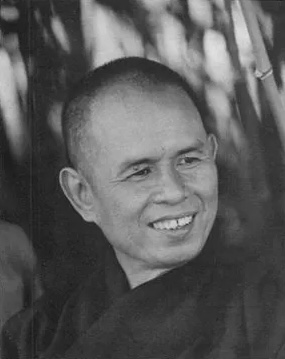
In his gentle and profound way, Thich Nhat Hanh reminds us that we are already what we seek to become. Like a wave searching for water, we often find ourselves running in circles, seeking stability and peace, when in fact we are already made of the very essence we are searching for.
In the previous post, we reflected on the words, “Be still and know that I am God,” and on the teachings that the Kingdom of God is within us, not something to be sought outside. Thich Nhat Hanh offers a similar invitation to stillness, a reminder that we need not search beyond this moment to touch the Divine. His teachings on apranihita—aimlessness—invite us to stop running after something outside of ourselves. The Buddha is not somewhere far away, hidden behind our efforts; the Buddha is within us, right here, right now. We don’t need to become something else or achieve some great transformation to touch the truth of our being. We only need to stop, to recognize that what we are seeking is already present in us.
This echoes the Christian mystic path as well, where we are called to enter the stillness, to trust in the unfolding of the Divine presence within. St. John of the Cross speaks of surrendering into the Divine presence that is always here, guiding us without the need for striving. The great mystics remind us that the more we seek, the further we may feel from the truth. Yet when we stop seeking, when we allow ourselves to simply be, we find that the Kingdom of God is already here, waiting for us in the stillness of our own hearts.
Thich Nhat Hanh’s teachings give form to this same truth. He uses the image of a wave to help us understand that we are not separate from what we seek. Just as the wave is made of water, we too are made of the very essence we long to touch. The wave doesn’t need to run after the water; it is already water. The black cloud doesn’t need to become a white cloud; it only needs light to shine on it, revealing what was always there. In the same way, we don’t need to become something else to experience peace. We need only to stop, to rest in the awareness of who we already are.
As both Sri Nisargadatta Maharaj and Papaji have taught, the very act of searching can take us further from what we seek. Papaji even wrote a book titled Call Off the Search, emphasizing that the more we search, the more we reinforce the illusion that the truth is somewhere else. This persistent search keeps us from realizing the truth that is already right here, right now. By continuing to look outside of ourselves, we create a sense of distance, when in reality there is no distance at all—only the stillness of the present moment, where what we seek has always been.
“You are already what you want to become,” Thich Nhat Hanh says. Yet we spend much of our lives not believing this truth, searching for happiness, fulfillment, and wisdom outside of ourselves. Whether it’s the Kingdom of God, Buddha-nature, or enlightenment, we chase after these ideas as though they are separate from us. But all of the great teachers—whether it be Jesus, the Buddha, or St. John of the Cross—urge us to look within. They tell us that when we stop running after what we already are, we can finally rest in the truth that has always been there.
This is what Thich Nhat Hanh calls aimlessness. The practice of aimlessness is to no longer place something in front of you to chase after. It is to recognize that everything you are searching for is already here. By stopping the search, by becoming still, we can touch the wonders of life that are already present in this moment.
In one of his talks, Thich Nhat Hanh describes this stillness beautifully: “The Kingdom of God, the Pure Land of the Buddha, is available in the here and now.” He reminds us that happiness is found in the simple things—a rose, the fresh air, a loving smile. Like the wave that need not search for water, we need only to stop and recognize the treasures already around us, treasures that we so often miss because we are running in circles.
Thich Nhat Hanh teaches that walking meditation can be a wonderful way to practice this stopping, this resting in the here and now. Each step is not taken with a sense of rushing to arrive somewhere, but with the awareness that we are already where we need to be. With each step, we arrive fully in the present moment, touching the peace, the beauty, and the wonder that is always available. It is a practice that brings us back to the present, back to ourselves, and back to the truth that there is nothing to attain.
“You don’t need to become a Buddha,” Thich Nhat Hanh says, “You are already a Buddha.” You don’t need to search for the Divine; the Divine is already within you. It is only when we stop running that we can finally touch this truth. Like the black cloud that becomes a white cloud when the light shines upon it, we are transformed by the simple act of recognition. In the stillness of aimlessness, we realize that there is no distance between us and what we seek.
As we continue our contemplative journey, may we learn to embrace the wisdom of aimlessness. May we stop chasing after what is already here, within us. And in that stopping, may we find the peace, the joy, and the freedom that comes from recognizing that we have always been enough.
As I sit here in my yard, under the shade of tall trees and a sky so vast, I am reminded of the gentle teachings of impermanence. The pratyayas, those rising and falling sensations, memories, and thoughts, have once again surfaced, but they do not hold the weight they once did. Instead, there is a soft awareness that everything is already changing, and that in the grand scheme of time, everything is already gone.
I look over at my RV, which has been a sanctuary for me for so many years. Soon, this land will become something else, transformed into a clubhouse. And yet, in this moment, I am filled with deep appreciation for what has been, for the unconscious and conscious years spent on this blessed earth. The impermanence of it all doesn’t bring sadness, but rather a profound gratitude for having lived through it, both mindfully and unmindfully.
Namkhai Norbu’s sky-gazing practice teaches us to rest in the awareness of what is, without grasping or rejecting. In these moments of contemplation, I’m reminded that sky-gazing isn’t about observing the physical sky but allowing the mind to open into its own natural spaciousness. The practice reflects what is already within—clear, vast, and untouched by the clouds of thought.
As pratyayas of impermanence arise, they are met not with resistance but with curiosity. Curiosity has become my companion on this contemplative path, gently guiding me to rest in awareness without the need for answers or conclusions. There is no longer a push for meaning, only the quiet observation of the present moment unfolding, just as it is.
In this state of being, I can feel both the impermanence of the physical world and the abiding stillness of awareness. It is a paradox, and yet it is also the simplest truth: everything changes, and yet awareness remains the same.
The teachings of St. John of the Cross, Ramana Maharshi, and Namkhai Norbu all point to this truth in their own ways. We move through life, through our spiritual practices, sometimes seeking, sometimes grasping for deeper experiences. But there comes a moment when we simply stop, when we rest in the spaciousness that has always been there. It is not a state we attain; it is a state we remember.
As I continue this practice, I feel a deep gratitude, not just for the present moment, but for all that has been and all that will come. And in this gratitude, the pratyayas seem to soften, leaving behind the quiet awareness that is always there, patiently waiting for us to return.
A few years ago, a dear friend offered me a piece of advice that I didn’t fully understand at the time. It was as simple as it was mysterious: “Don’t think about anything.” I remember nodding politely, but inside, I couldn’t quite grasp what he meant. How could I just not think about anything? It felt like trying to ask the mind to stop being the mind.
But as the years passed, I found myself returning to his words, and gradually, their meaning began to unfold. It wasn’t about shutting off thoughts or forcing the mind to be blank. Instead, it was an invitation to rest in awareness itself, to allow thoughts to arise and pass like clouds drifting through the sky, without clinging to any of them.
Not thinking about anything doesn’t mean there are no thoughts. It means simply allowing them to be, without engaging, without analyzing or following their pull. It’s like standing at the edge of a river, watching the current flow without needing to step in. In this simple letting go, I found a quiet presence—a clear, open awareness that lies beneath the movement of thought.
Now, when I remember my friend’s advice, I see it as a doorway into the simplest, most natural state. Just being here, resting in awareness, without the need to think about anything at all.
A Gentle Exploration: Not Thinking About Anything
The practice of not thinking about anything may sound simple, but it’s far from trivial. At first, it can feel like trying not to think of a pink elephant—an elusive challenge that leaves us more entangled in thoughts. But as we begin to approach it with softness, we find that the essence of the practice isn’t about forcing thoughts to vanish or emptying the mind entirely. Instead, it’s an invitation to let thoughts arise without grabbing onto them, allowing awareness to simply rest in itself.
This practice has a quiet resonance with neti-neti, the ancient teaching of “not this, not that.” Instead of identifying with each thought or sensation, we’re gently letting everything pass by, not needing to label or resist anything. It’s as though we’re standing on the bank of a river, watching the current flow without stepping in. Each thought drifts along, leaving only the open, effortless awareness that watches. Here, thoughts lose their weight, and the mind gradually settles into a quiet clarity.
As you practice this, you might find moments of stillness that feel spacious, expansive. Awareness itself, untouched by thoughts, begins to reveal its quiet presence. This state doesn’t need effort; it’s like an open sky that remains, whether or not clouds are passing through.
A Simple Practice for Sleep
When practiced in the quiet hours before sleep, not thinking about anything can be a beautiful way to drift into restful awareness. As you lie down, let yourself settle, allowing the body to relax completely. Instead of actively trying to clear your mind, simply rest in the feeling of just being. If thoughts arise, let them drift by naturally, without following them or pushing them away.
You might imagine each thought as a cloud in the sky, passing without disturbing the open space that holds it. Gently let go of the need to engage with any thought, and allow yourself to rest in the peaceful presence beneath all thinking. In this soft, open state, awareness itself becomes a companion as you slip into sleep, supporting a quiet mind and a restful heart.
In the end, not thinking about anything is less about silencing the mind and more about allowing everything to be as it is, without attachment. By practicing this gentle form of neti-neti, we touch the essence of pure awareness—spacious, unchanging, and naturally at peace.
There’s a timeless invitation at the heart of spiritual practice—to discover a deep, unshakable peace within ourselves, one that needs no striving to achieve. In Being Peace, Thich Nhat Hanh reminds us that peace is not something outside to be attained; it’s a natural state within us, accessible in each moment we choose to be fully present. In these quiet moments of awareness, peace isn’t something we do—it’s something we are.
Thich Nhat Hanh, a Vietnamese Zen master, poet, and peace activist, brings a gentle simplicity to this profound teaching. Being Peace weaves together personal stories, practical mindfulness techniques, and timeless Buddhist wisdom. Through each page, his words invite us to embrace peace not as an ideal, but as an embodied presence—a way of being that can transform ourselves and the world.
Discovering Peace in the Present Moment
From the opening pages, Thich Nhat Hanh introduces a revolutionary idea: that each of us already carries the potential for peace within. He writes with an almost childlike clarity, inviting us to notice the ordinary miracles in daily life—a breath, a step, the warmth of the sun. These simple moments become doorways to the present moment, where we can rest in awareness, undisturbed by the mind’s endless motion.
His approach to mindfulness is refreshingly practical. Rather than asking us to transcend the world, he guides us to return to it fully—to be present with whatever is here, exactly as it is. Whether we’re washing the dishes, driving, or simply sitting quietly, we are offered the chance to be peace, right here, right now.
Practicing Compassion and Interbeing
Another central theme in Being Peace is the idea of interbeing—Thich Nhat Hanh’s term for the interconnectedness of all life. He shows how, when we see ourselves as part of a vast web of life, our actions naturally become more compassionate. Understanding interbeing allows us to see that our own well-being is inseparable from that of others. When we cultivate peace within, it radiates outward, touching the world around us.
This interconnection reminds us that our peace is a gift to the world. By learning to “be peace,” we become a refuge for others—a quiet presence that can soothe and support those around us. Through stories of social engagement and personal practice, Thich Nhat Hanh illustrates how inner peace can become a force for transformation, leading to wise, compassionate action in our families, communities, and beyond.
An Invitation to Live Peace
Being Peace doesn’t simply offer teachings; it invites us into a living practice. Thich Nhat Hanh’s words create a soft, steady encouragement to live mindfully, with kindness for ourselves and others. There’s an intimacy in his voice, as if he is gently guiding us by the hand, showing us how to live with more openness, patience, and presence.
The book also provides specific practices, like mindful breathing, walking meditation, and loving-kindness meditation, which make peace a tangible experience. These practices are woven throughout his teachings, allowing readers to integrate mindfulness naturally into daily life.
In reading Being Peace, we’re reminded that peace is not a far-off goal but a living, breathing reality available in each moment. Thich Nhat Hanh shows us that the path to peace begins with the simplest act of bringing awareness to the present moment, just as it is.
Final Reflections
In Being Peace, Thich Nhat Hanh offers us more than words on a page; he offers a way of living. His teachings resonate as a call to each of us to embody the peace we wish to see in the world. Through gentle, grounded guidance, he shows us that true peace is not just an aspiration—it’s a way of being available to each of us, here and now.
If you’re ready to discover this peace within, you may want to exploreBeing Peacein full. Below, you’ll find the book itself, a quiet guide to a more mindful, compassionate way of life.
In our fast-paced world, we often find ourselves caught up in thoughts, judgments, and conceptualizations, missing the richness of direct experience. Embracing the present moment can offer profound benefits, providing a clearer connection to reality and deeper personal insight. This post explores the value of immersing ourselves in the direct experience of now and how it transcends the limitations of conceptual thinking.
Understanding Conceptualization
Conceptualization involves interpreting and framing our experiences through mental constructs and labels. While these concepts help us navigate the world, they can also obscure our immediate experience. For instance, thinking about what it means to feel the cool air against your skin is different from simply feeling it. Concepts can create distance between us and the raw reality of our experiences.
The Power of Direct Experience
Direct experience refers to engaging fully with the present moment without the interference of conceptual thinking. When we focus on the direct sensations, emotions, and awareness of now, we tap into a more authentic and immediate understanding of ourselves and our surroundings. This presence allows for a deeper connection to reality, unfiltered by preconceptions or judgments.
Benefits of Present-Moment Awareness
Direct experience helps us see things as they are, providing clarity and insight that can be lost in conceptual thinking. It allows us to understand our true feelings and reactions without the distortions of our mental filters.
Engaging fully in the present can reduce stress by breaking the cycle of rumination and worry about the past or future. It brings our focus to what is happening now, where we have the power to act.
Being present enhances our connection with others and the world around us. It fosters empathy and understanding by allowing us to experience interactions more directly and authentically.
Practicing present-moment awareness cultivates mindfulness, which can improve our overall quality of life by helping us appreciate simple joys and experiences that we might otherwise overlook.
Cultivating Present-Moment Awareness
Techniques such as meditation, mindful breathing, and body scans can help anchor us in the present moment. These practices encourage us to observe our thoughts and sensations without judgment.
Focus on your senses—what you see, hear, feel, taste, and smell. Engaging with sensory experiences can ground you in the present and deepen your connection to reality.
Take time throughout your day to pause and check in with your immediate experience. Notice the sensations, emotions, and thoughts that arise without getting caught up in them.
Conclusion
Embracing the direct experience of the present moment offers a powerful way to connect more deeply with ourselves and our world. By moving beyond conceptualizations and engaging fully with the now, we can gain clarity, reduce stress, and foster a more profound sense of presence and connection. Let’s explore this direct experience and discover the richness it brings to our lives.
Reflective Questions:
How often do you find yourself lost in thoughts rather than experiencing the present moment directly?
What sensations or experiences do you notice when you focus on being fully present?
How can you integrate more direct experiences into your daily life to enhance your awareness and connection?
Share your thoughts and experiences about engaging with the present moment. How has focusing on direct experience impacted your life? I’d love to hear from you in the comments below.
Lesson 12 of A Course in Miracles introduces the lesson: “I am upset because I see a meaningless world.” This teaching invites us to explore the relationship between our inner state of mind and our perceptions of the world around us. By acknowledging that our upsets often stem from seeing a world devoid of inherent meaning, we can begin to unravel the beliefs and judgments that contribute to our distress.
This practice encourages us to question the validity of our interpretations and the emotional reactions they provoke. By understanding that our perception of a meaningless world reflects our own internal turmoil and confusion, we can start to release the grip of negativity and open ourselves to a more peaceful and compassionate view of reality.
Jesus taught about the importance of inner peace and seeing through the illusions of the world. In John 14:27, He says, “Peace I leave with you; my peace I give you. I do not give to you as the world gives. Do not let your hearts be troubled and do not be afraid.” This teaching aligns with ACIM’s guidance to find peace by letting go of our judgments and accepting the true meaninglessness of the ego’s perceptions.
By practicing Lesson 12, we align ourselves with Christ’s message of inner peace and spiritual clarity. We learn to recognize that our upsets are rooted in our perception of a meaningless world and open ourselves to a deeper connection with the divine peace that transcends all understanding.
Explore Lesson 12 of A Course in Miracles with us, and discover how releasing the belief in a meaningless world can lead to greater inner peace, clarity, and spiritual awakening.
A guided meditation to encompass the elements, themes, messages, and practices of Lesson 12 from A Course in Miracles:
Find a comfortable position, either sitting or lying down, where you can relax and be free from distractions.
Close your eyes gently and take a few deep breaths, allowing yourself to settle into the present moment.
Bring your attention to your breath, feeling the sensation of each inhale and exhale.
Reflect on the central theme of Lesson 12: “I am upset because I see a meaningless world.”
Contemplate the idea that the world you perceive is ultimately meaningless, as it is based on false perceptions and interpretations.
Acknowledge that your upset is not caused by external events, but rather by your own interpretations of those events.
With each breath, imagine releasing any attachment to the meaninglessness of the world you see, allowing it to dissolve like mist in the sunlight.
Visualize yourself stepping back from your perceptions, observing them with a sense of detachment and clarity.
Feel a sense of freedom as you realize that you have the power to choose how you see the world, free from the constraints of past conditioning.
Repeat the following affirmations silently or in your mind:
“I am upset because I see a meaningless world.”
“I release all attachments to the meaninglessness of the world.”
“I choose to see the world with clarity and truth.”
Allow yourself to rest in this space of inner peace and clarity for a few moments, letting go of any attachment to the meaninglessness of the world you perceive.
When you’re ready, gently bring your awareness back to your surroundings. Wiggle your fingers and toes, and slowly open your eyes.
Take a moment to reflect on your experience, noticing any insights or shifts in perception that may have occurred. Remember that you can return to this meditation whenever you feel called to deepen your understanding of Lesson twelve.
Lesson 11 of A Course in Miracles presents the lesson: “My meaningless thoughts are showing me a meaningless world.” This teaching encourages us to recognize the connection between our inner thoughts and our perceptions of the external world. By acknowledging the fleeting and arbitrary nature of our thoughts, we can begin to see beyond the illusions that our minds project onto reality.
This practice invites us to question the validity of our judgments and interpretations. By understanding that our thoughts contribute to the perception of a world that lacks true meaning, we can start to release the mental constructs that keep us bound to suffering and limitation.
Jesus emphasized the importance of seeing beyond appearances and perceiving the deeper truth. In John 7:24, He says, “Stop judging by mere appearances, but instead judge correctly.” This teaching aligns with ACIM’s guidance to look beyond our superficial judgments and recognize the inherent meaninglessness of the world as perceived through ego-driven thoughts.
By practicing Lesson 11, we align ourselves with Christ’s message of spiritual discernment and awakening. We learn to see through the illusions created by our meaningless thoughts and open ourselves to a deeper perception of reality guided by divine wisdom.
Explore Lesson 11 of A Course in Miracles with us, and discover how releasing the belief in a meaningless world can lead to greater peace, clarity, and a profound connection with the eternal truth within.
A guided meditation to encompass the elements, themes, messages, and practices of Lesson 11 from A Course in Miracles:
Find a comfortable position, either sitting or lying down, where you can relax and be free from distractions.
Close your eyes gently and take a few deep breaths, allowing yourself to settle into the present moment.
Bring your attention to your breath, feeling the sensation of each inhale and exhale.
Reflect on the central theme of Lesson 11: “My meaningless thoughts are showing me a meaningless world.”
Contemplate the idea that the thoughts that pass through your mind are ultimately meaningless, as they do not have the power to affect your true essence.
Acknowledge that while your thoughts may seem to create the world you perceive, they are ultimately devoid of any real significance.
With each breath, imagine releasing any attachment to the meaning of your thoughts, allowing them to dissolve like clouds in the sky.
Visualize yourself stepping back from your thoughts, observing them with a sense of detachment and neutrality.
Feel a sense of liberation as you realize that you are not defined by your thoughts, but rather by the awareness that witnesses them.
Repeat the following affirmations silently or in your mind:
“My meaningless thoughts are showing me a meaningless world.”
“I release all attachments to the meaning of my thoughts.”
“I am the silent witness of my mind.”
Allow yourself to rest in this space of inner stillness and clarity for a few moments, letting go of any identification with the thoughts that arise.
When you’re ready, gently bring your awareness back to your surroundings. Wiggle your fingers and toes, and slowly open your eyes.
Take a moment to reflect on your experience, noticing any insights or shifts in perception that may have occurred. Remember that you can return to this meditation whenever you feel called to deepen your understanding of Lesson eleven.
Lesson 10 of A Course in Miracles introduces the lesson: “My thoughts do not mean anything.” This lesson challenges us to question the significance we attribute to our thoughts and the narratives we create around them. By acknowledging that our thoughts are often fleeting and arbitrary, we can begin to release their hold on our emotions and perceptions.
This practice encourages us to observe our thoughts without attaching undue importance to them. By understanding that our thoughts do not inherently hold meaning, we can cultivate a more detached and peaceful relationship with our inner mental landscape.
Jesus taught about the importance of inner purity and the power of thought. In Matthew 15:18, He says, “But the things that come out of a person’s mouth come from the heart, and these defile them.” This teaching aligns with ACIM’s guidance to recognize the fleeting nature of our thoughts and not allow them to dictate our inner peace.
By practicing Lesson 10, we align ourselves with Christ’s message of inner clarity and purity of mind. We learn to release the grip of our thoughts and open ourselves to a deeper connection with the divine presence within us.
Explore Lesson 10 of A Course in Miracles with us, and discover how freeing yourself from the meaning of your thoughts can lead to greater inner peace, clarity, and spiritual awakening.
A guided meditation to encompass the elements, themes, messages, and practices of Lesson 10 from A Course in Miracles:
Find a comfortable position, either sitting or lying down, where you can relax and be free from distractions.
Close your eyes gently and take a few deep breaths, allowing yourself to settle into the present moment.
Bring your attention to your breath, feeling the sensation of each inhale and exhale.
Reflect on the central theme of Lesson 10: “My thoughts do not mean anything.”
Contemplate the idea that the thoughts that pass through your mind are ultimately meaningless, as they do not have the power to affect your true essence.
Acknowledge that while thoughts may seem significant and powerful, they are simply mental constructs that come and go.
With each breath, imagine releasing any attachment to the meaning of your thoughts, allowing them to dissolve like clouds in the sky.
Visualize yourself stepping back from your thoughts, observing them with a sense of detachment and neutrality.
Feel a sense of liberation as you realize that you are not defined by your thoughts, but rather by the awareness that witnesses them.
Repeat the following affirmations silently or in your mind:
“My thoughts do not mean anything.”
“I release all attachments to the meaning of my thoughts.”
“I am the silent witness of my mind.”
Allow yourself to rest in this space of inner stillness and clarity for a few moments, letting go of any identification with the thoughts that arise.
When you’re ready, gently bring your awareness back to your surroundings. Wiggle your fingers and toes, and slowly open your eyes.
Take a moment to reflect on your experience, noticing any insights or shifts in perception that may have occurred. Remember that you can return to this meditation whenever you feel called to deepen your understanding of Lesson ten.
Lesson 9 of A Course in Miracles presents the lesson: “I see nothing as it is now.” This teaching invites us to recognize that our perceptions are often clouded by our past experiences, expectations, and judgments. By acknowledging this, we can begin to see beyond our conditioned responses and open ourselves to a clearer, more objective view of the present moment.
This practice encourages us to question the accuracy of our perceptions and the filters through which we see the world. By understanding that our interpretations may not reflect reality as it truly is now, we can cultivate a more open-minded and compassionate approach to our experiences.
Jesus often taught about the importance of seeing with spiritual clarity and discernment. In Matthew 6:22-23, He says, “The eye is the lamp of the body. If your eyes are healthy, your whole body will be full of light. But if your eyes are unhealthy, your whole body will be full of darkness. If then the light within you is darkness, how great is that darkness!” This teaching aligns with ACIM’s guidance to see beyond illusions and perceive the truth with clarity.
By practicing Lesson 9, we align ourselves with Christ’s message of spiritual vision and discernment. We learn to let go of our conditioned ways of seeing and open ourselves to a more authentic and enlightened perception of reality.
Explore Lesson 9 of A Course in Miracles with us, and discover how shifting your perception can lead to greater clarity, peace, and a deeper connection with the divine.
Here is a guided meditation to encompass the elements, themes, messages, and practices of Lesson 9 from A Course in Miracles:
Find a comfortable position, either sitting or lying down, where you can relax and be free from distractions.
Close your eyes gently and take a few deep breaths, allowing yourself to settle into the present moment.
Bring your attention to your breath, feeling the sensation of each inhale and exhale.
Reflect on the central theme of Lesson 9: “I see nothing as it is now.”
Contemplate the idea that your perceptions of the world are often colored by past experiences, beliefs, and judgments, preventing you from seeing things as they truly are in the present moment.
Acknowledge that when you look upon the world, you are seeing through the filter of your own mind, which distorts your perception of reality.
With each breath, imagine releasing any attachment to past perceptions that prevent you from seeing things as they are now, allowing them to dissolve like clouds in the sky.
Visualize yourself stepping back from your habitual ways of seeing, observing the world with fresh eyes and an open heart.
Feel a sense of liberation as you realize that you have the power to choose how you see the world, free from the constraints of past conditioning.
Repeat the following affirmations silently or in your mind:
“I see nothing as it is now.”
“I release all attachments to past perceptions and judgments.”
“I choose to see the world with clarity and truth.”
Allow yourself to rest in this space of presence and awareness for a few moments, letting go of any attachment to past perceptions that prevent you from seeing things as they are now.
When you’re ready, gently bring your awareness back to your surroundings. Wiggle your fingers and toes, and slowly open your eyes.
Take a moment to reflect on your experience, noticing any insights or shifts in perception that may have occurred. Remember that you can return to this meditation whenever you feel called to deepen your understanding of Lesson nine.
Lesson 8 of A Course in Miracles introduces the idea: “My mind is preoccupied with past thoughts.” This lesson helps us understand how our current perceptions are often influenced by thoughts and memories from the past. By recognizing this preoccupation, we can start to free our minds and experience the present moment more fully.
This practice encourages us to become aware of how much of our mental activity is devoted to reliving past experiences or projecting them onto our present circumstances. By acknowledging this, we can begin to let go of the past’s hold on us, allowing for a clearer, more present-focused mindset.
Jesus taught about the importance of renewing our minds and focusing on the present. In Romans 12:2, Paul writes, “Do not conform to the pattern of this world, but be transformed by the renewing of your mind. Then you will be able to test and approve what God’s will is—his good, pleasing and perfect will.” This aligns with ACIM’s emphasis on releasing past thoughts to experience spiritual renewal and clarity.
By practicing Lesson 8, we align ourselves with Christ’s message of mental renewal and presence. We learn to let go of the past’s influence on our thoughts, creating space for spiritual growth and a deeper connection with the divine.
Explore Lesson 8 of A Course in Miracles with us, and discover how freeing your mind from past thoughts can lead to greater peace and a more vibrant, present-focused life.
Here is a guided meditation to encompass the elements, themes, messages, and practices of Lesson 8 from A Course in Miracles:
Find a comfortable position, either sitting or lying down, where you can relax and be free from distractions.
Close your eyes gently and take a few deep breaths, allowing yourself to settle into the present moment.
Bring your attention to your breath, feeling the sensation of each inhale and exhale.
Reflect on the central theme of Lesson 8: “My mind is preoccupied with past thoughts.”
Contemplate the idea that your mind is often preoccupied with thoughts of the past, replaying memories and scenarios over and over again.
Acknowledge that this preoccupation with the past can cloud your perception of the present moment and prevent you from experiencing true peace and joy.
With each breath, imagine releasing any attachment to past thoughts that keep your mind preoccupied, allowing them to dissolve like mist in the sunlight.
Visualize yourself stepping back from your past thoughts, observing them with a sense of detachment and clarity.
Feel a sense of liberation as you realize that you have the power to choose where to focus your attention in each moment, free from the grip of past conditioning.
Repeat the following affirmations silently or in your mind:
“My mind is preoccupied with past thoughts.”
“I release all attachments to past memories and scenarios.”
“I choose to be present in this moment, here and now.”
Allow yourself to rest in this space of presence and awareness for a few moments, letting go of any attachment to past thoughts that keep your mind preoccupied.
When you’re ready, gently bring your awareness back to your surroundings. Wiggle your fingers and toes, and slowly open your eyes.
Take a moment to reflect on your experience, noticing any insights or shifts in perception that may have occurred. Remember that you can return to this meditation whenever you feel called to deepen your understanding of Lesson eight.