Tag: mental events

  • Neti Neti Series No. 9: Overcoming Self-Doubt in Meditation

    Neti Neti Series No. 9: Overcoming Self-Doubt in Meditation

    Question:

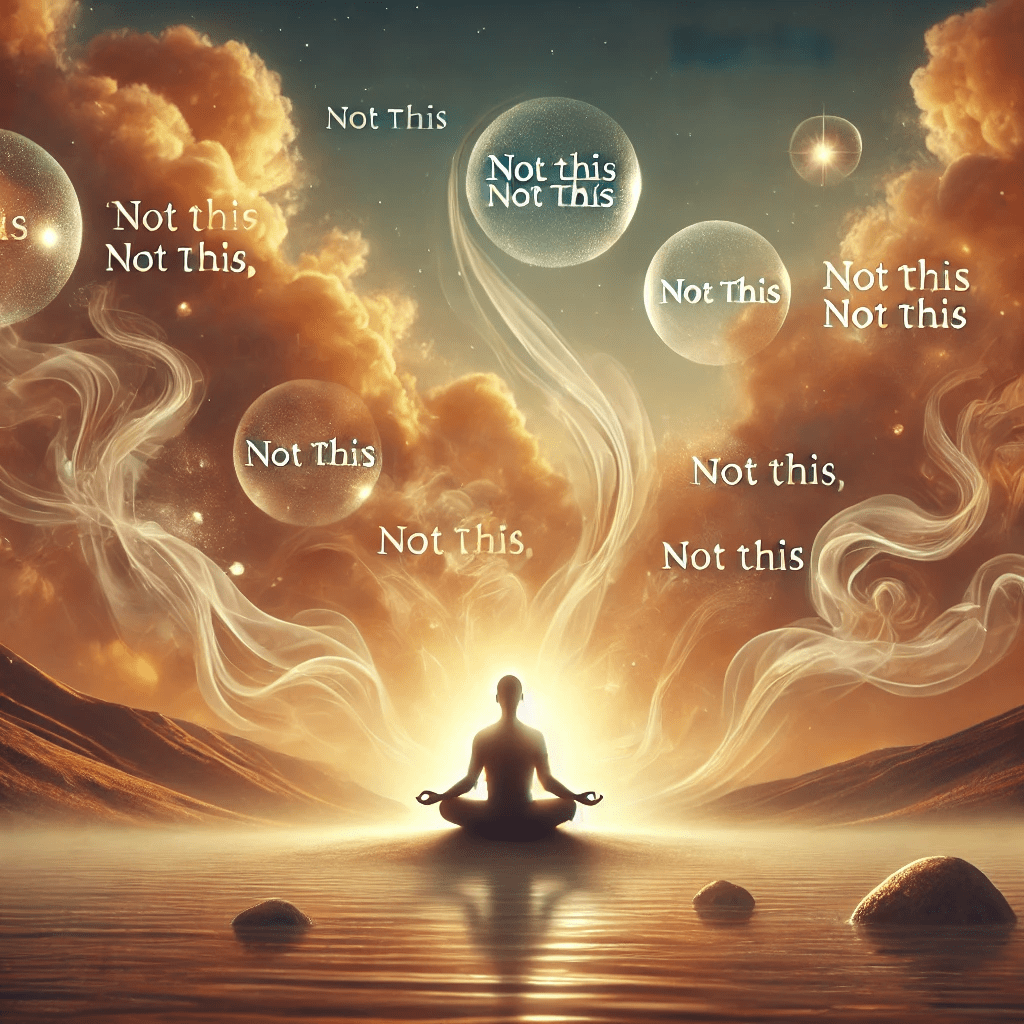
    For many years, the mental events that disturbed me the most were those that questioned, “Am I doing this right or wrong? Am I achieving anything beneficial, or am I just wasting my time?” But today, these doubts had no effect. I simply said, “Not this, not this,” recognizing them as just mental events arising. This mantra is bringing me a freedom from years of anxiety and self-doubt. It’s a significant release. How can I nurture and deepen this newfound freedom in my meditation?

    Dear friend,

    What a significant and liberating insight you have encountered! For many years, those persistent questions—”Am I doing this right?” “Am I wasting my time?”—have cast a shadow over your practice, pulling you into a cycle of doubt and anxiety. And yet, in this round, you have discovered a simple and profound truth: these doubts are nothing more than mental events, no different from any other thoughts that arise in the mind.

    Doubt, particularly the kind that questions whether we are on the right path, can be one of the most insidious obstacles in our practice. It arises from the ego’s need for certainty and validation, from a fear of failure or the unknown. These doubts can be particularly disturbing because they strike at the very heart of our efforts, making us question whether we are moving forward or merely spinning our wheels.

    But now, you have seen through the illusion. By applying the mantra “Not This, Not This” to these doubts, you have recognized them for what they are—simply thoughts, passing phenomena in the mind. They have no more substance or power than any other mental event. In meeting these doubts with “Not This, Not This,” you have taken away their sting, their ability to disturb your peace. They are no longer something to fear or wrestle with; they are just another ripple on the surface of the mind’s vast ocean.

    This realization brings with it a profound freedom. No longer are you bound by the need to do things “right” or the fear of doing them “wrong.” Instead, you can rest in the simplicity of the practice, free from judgment, free from the constant questioning that once held you back. This freedom is not a small thing; it is a significant release, a letting go of years of accumulated doubt and anxiety. It is a gift that allows you to move forward with greater ease and confidence, trusting in the process without the need for constant validation.

    Indeed, this is a significant moment in your journey. The doubts that once plagued you have lost their power, and in their place, you have found a deeper sense of peace and self-acceptance. This is the true power of the mantra “Not This, Not This”—it transforms not just your meditation, but your entire relationship with yourself. It frees you from the chains of doubt and allows you to walk your path with a lighter heart and a clearer mind.

    My dear friend, this is a beautiful and important step on your journey. Continue with this practice, allowing the mantra to guide you ever deeper into the heart of stillness and clarity. Trust in yourself, and know that you are moving in the right direction, free from the burdens of doubt and self-judgment.

    🙏🕊️🙏

  • Post 11: A Moment of Reflection: Integrating the Yoga Sutras So Far

    Post 11: A Moment of Reflection: Integrating the Yoga Sutras So Far

    As we come to this point in our journey through the Yoga Sutras, it is important to pause for a moment. These sutras are not just words to be read; they are seeds, planted within the soil of your mind, each one carrying the potential for deep transformation. And like all seeds, they need time, space, and the right conditions to grow.

    Take a breath. Feel the stillness in the space around you. Notice the quiet beneath the surface of your thoughts. There is a place within you—a place of silence—that is always there, waiting to be discovered, waiting to be touched. It is here, in this silence, that the teachings of the Yoga Sutras truly begin to take root.

    You have been walking alongside Patanjali, exploring the nature of the mind and learning to witness its fluctuations with clarity and detachment. But now, it is time to look not only at the words but at how they have woven themselves into the fabric of your being. How have these teachings touched you? How have they begun to shift the way you move through the world, the way you sit in meditation, the way you witness your thoughts?

    An Invitation to Reflect

    As you sit with these questions, allow yourself to soften. There is no rush to find answers, no need to judge or evaluate where you are on this path. Simply notice. How has the practice of Neti, neti. I am the witness. I am the Seer shaped your understanding of who you are? Have you begun to feel the space that exists between your thoughts, that stillness where you rest in the awareness of the Seer?

    Patanjali’s teachings are an invitation to remember who you are beyond the mind’s fluctuations. Perhaps you have felt moments of clarity, where you touched this deeper awareness. Or perhaps the mind has resisted, pulling you back into its familiar patterns. Either way, you are exactly where you need to be. The journey through the Yoga Sutras is not about perfection, but about presence.

    A Space for Questions and Contemplation

    Take this time to contemplate any questions that may have arisen in your practice. Have there been sutras that resonated deeply with you? Or perhaps certain ideas that feel more challenging, more difficult to integrate? Sit with these questions, knowing that they are a natural part of the process.

    Sometimes, it is in the asking of the question that we find our deepest understanding. Allow the questions to arise without needing immediate answers. Trust that the clarity will come, not through force, but through the gentle unfolding of your practice.

    A Guided Meditation: Resting in the Seer

    Let’s take a few moments together to deepen into this practice. Find a comfortable place to sit, allowing your body to soften, your breath to slow. Close your eyes, and begin to feel the rise and fall of your breath, noticing the gentle rhythm that brings you back to the present moment.

    As thoughts arise, gently say to yourself, Neti, neti. I am the witness. I am the Seer. Let the thoughts pass by like clouds drifting through the sky. There is no need to follow them, no need to push them away. Simply observe, allowing yourself to rest in the stillness that lies beneath the mind’s activity.

    Feel the spaciousness that opens as you release each thought, each sensation. This is the space of pure awareness, the space of the Seer. As you sit in this awareness, notice how the fluctuations of the mind begin to soften, how the stillness becomes more apparent. You are the witness. You are the Seer.

    Rest here, in this stillness, for as long as you need. There is nowhere else to go, nothing else to do. Just this moment. Just this breath.

    Moving Forward with Compassion

    As we prepare to move forward in our journey through the Yoga Sutras, remember that this path is one of compassion—toward yourself, toward your practice, toward the fluctuations of the mind. You are learning to meet yourself with clarity and kindness, to sit in the presence of whatever arises without judgment.

    Allow yourself to take this pause before we dive deeper into the next set of sutras. Let the teachings settle within you, like seeds planted in rich soil. Trust that in time, they will blossom into the wisdom and understanding that you seek.

    Coming Up Next:

    In our next post, we will return to Patanjali’s teachings, exploring Sutras 1.19 and 1.20. These sutras delve deeper into the nature of samadhi, the highest state of meditative absorption, and the paths through which it can be attained. We will reflect on the qualities needed to reach this state, including faith, energy, mindfulness, and wisdom. Join me as we continue this journey toward deeper understanding and inner peace.

    🙏🕊️🙏

  • Post 10: Stages of Meditative Absorption: Patanjali’s Sutras 1.17 and 1.18

    Post 10: Stages of Meditative Absorption: Patanjali’s Sutras 1.17 and 1.18

    In the previous post, we explored the power of detachment and how cultivating non-distraction allows us to rest in the awareness of the Seer. Now, Patanjali takes us deeper into the process of meditation by introducing the stages of meditative absorption, where the mind gradually becomes still and clear. In Sutras 1.17 and 1.18, Patanjali outlines the progressive levels of absorption (samadhi) that arise as the mind moves from engagement with mental events to pure awareness.

    1.17: The first stage of meditative absorption is characterized by reflection, contemplation, bliss, and a sense of individuality.
    1.18: The higher stage of meditative absorption is characterized by the cessation of mental events, revealing a state of pure awareness.

    The Four Layers of Absorption

    Sutra 1.17 describes the initial stages of meditative absorption, where the mind moves through four layers of experience: reflection (vitarka), contemplation (vicara), bliss (ananda), and a subtle sense of individuality (asmita). These layers are not linear but overlapping, offering different aspects of deepening concentration and stillness.

       •   Reflection: At this level, the mind still engages with objects of focus, such as the breath or a mantra, but there is an increasing sense of calm and centeredness. The fluctuations of the mind are present, but they are observed without being disruptive.
       •   Contemplation: As the mind settles further, reflection deepens into contemplation. Here, there is less attachment to external objects and more focus on the inner experience. The mind becomes absorbed in its own stillness.
       •   Bliss: The third layer is characterized by a sense of bliss or joy that arises as the mind releases its habitual attachments. This bliss is not emotional but an inner feeling of contentment and peace.
       •   Sense of Individuality: Even at this stage, there remains a subtle awareness of oneself as an individual, the witness of the experience. This is a more refined level of the ego, still present but not as dominant as in ordinary states of awareness.

    These four layers of absorption allow the mind to rest in deeper levels of concentration, but they are still within the realm of mental events. At this stage, the practitioner is aware of the experience but has not yet transcended the subtle identification with the mind.

    Moving Toward Pure Awareness

    In Sutra 1.18, Patanjali introduces a higher stage of meditative absorption, one that is free from the pull of mental events. Here, the fluctuations of the mind have ceased, and what remains is pure awareness—often described as nirvikalpa samadhi. In this state, there is no longer any identification with thoughts, emotions, or even a subtle sense of self. The Seer abides in its pure, natural state.

    This level of absorption is not easily attained. It is the culmination of disciplined practice, non-attachment, and sustained meditation. It requires the mind to become so still that it no longer engages with even the subtlest of mental events. In this state, there is no longer a division between the Seer and what is seen; there is only pure awareness.

    This experience of pure awareness is often described as the goal of yoga. It is the state where the practitioner experiences freedom from the mind’s fluctuations and rests in the infinite stillness of the pristine mind.

    Bringing It Into Practice: Deepening Your Meditation

    As we practice, we can begin to notice these layers of absorption in our own meditation. At the beginning of meditation, the mind may still be engaged in reflection or contemplation. By gently repeating “Neti, neti. I am the witness. I am the Seer,” we allow the mind to gradually release its attachment to these mental events and move into deeper stillness.

    Over time, as the mind settles, we may experience moments of bliss or peace. These are natural signs that the mind is letting go of its habitual distractions. However, even in these moments, it’s important to remember that the goal is not to cling to these experiences but to continue moving toward deeper levels of absorption.

    The practice of cultivating pure awareness—free from the mind’s fluctuations—requires patience and persistence. Each time we return to the stillness of the Seer, we strengthen our ability to remain in that state for longer periods, eventually moving beyond the subtle sense of individuality and into the state of pure awareness.

    The Path to Pure Awareness

    The stages of meditative absorption are a gradual process, unfolding through disciplined practice and consistent effort. While the initial layers of reflection, contemplation, and bliss are important steps along the path, they are not the final goal. The ultimate aim is to experience the state of pure awareness, where the mind’s fluctuations cease, and the Seer abides in its true nature.

    As we progress on this path, it’s essential to remain patient and compassionate with ourselves. The journey toward pure awareness is not linear, and there will be times when the mind is more active or distracted. The key is to maintain a steady practice, trusting that each moment of mindfulness brings us closer to the stillness of the pristine mind.

    Coming Up Next:

    In our next post, we will take a moment to pause and reflect on the journey through the Yoga Sutras so far. This will be an opportunity to contemplate how the teachings have shaped your practice and explore a guided meditation for deeper integration. After this reflective pause, we will continue the series with the next set of sutras, diving deeper into the path of self-realization.

    🙏🕊️🙏

  • Post 9: The Power of Detachment: Patanjali’s Sutras 1.15 and 1.16

    Post 9: The Power of Detachment: Patanjali’s Sutras 1.15 and 1.16

    In the previous post, we explored the importance of discipline and consistent effort in mastering the mind. Now, Patanjali introduces the concept of detachment as a natural extension of that discipline. In Sutras 1.15 and 1.16, he reveals the deeper layers of non-attachment and how they lead to freedom from desires and aversions.

    1.15: Detachment is the conscious effort to let go of desires for objects or experiences, both seen and unseen.
    1.16: The highest level of detachment is achieved when there is freedom from the pull of even the most subtle mental events, leading to the experience of pure consciousness.

    The Practice of Detachment

    Detachment (vairagya) is the conscious practice of letting go of desires and aversions. In Sutra 1.15, Patanjali defines detachment as the effort to release attachments to both seen and unseen objects or experiences. This includes everything from physical possessions to emotional desires and even subtle expectations we might have about the future.

    Detachment doesn’t mean indifference or suppression of desires. Instead, it is about witnessing these desires as mental events without becoming attached to them. By observing them with clarity, we free ourselves from the push and pull of likes and dislikes. The practice of Neti, neti. I am the witness. I am the Seer helps us recognize these desires as fluctuations of the mind, not reflections of our true self.

    This conscious effort to release attachment is a key part of cultivating equanimity. The more we practice detachment, the more we are able to rest in the pristine mind—a state of awareness that is unaffected by the mind’s desires.

    The Highest Level of Detachment

    In Sutra 1.16, Patanjali describes the highest form of detachment: the ability to remain unaffected by even the most subtle mental events. At this level, we are free from the pull of both desires and aversions, and we rest in pure awareness.

    This is not a state of cold detachment, but a profound experience of freedom. When we are no longer swayed by the mind’s constant fluctuations, we experience a deep sense of peace and clarity. This is the state of kaivalya—pure consciousness—where the Seer abides in its true nature, untouched by mental events.

    Sogyal Rinpoche, a renowned meditation master, often emphasized that meditation is about cultivating non-distraction. The state of meditation is, at its core, a state of non-distraction—remaining present and aware, without being swept away by the mind’s fluctuations. This ties directly into Patanjali’s teaching on detachment. By practicing Neti, neti. I am the witness. I am the Seer, we cultivate non-distraction, allowing us to remain steady in the awareness of the Seer, free from the pull of desires and aversions. Meditation, in this sense, is the practice of being undistracted by mental events, resting in the stillness of the pristine mind.

    The highest level of detachment doesn’t come overnight. It is cultivated through disciplined practice and sincere commitment, as outlined in the previous sutras. As we grow in our ability to let go of desires, we move closer to this state of pure consciousness, where the mind’s fluctuations no longer hold sway over us.

    Bringing It Into Practice: Cultivating Detachment

    Detachment is a practice that we can cultivate daily. Each time we notice a desire or aversion arising, we can pause and observe it as a mental event. Using the phrase “Neti, neti. I am the witness. I am the Seer,” we create space between ourselves and the desire, allowing it to pass without engaging with it.

    This practice of letting go doesn’t mean we should avoid enjoying life or fulfilling our needs. Rather, it’s about maintaining a sense of equanimity, where we are not defined by our desires or driven by them. We can enjoy what life brings while remaining unattached to the outcomes, staying rooted in the awareness of the Seer.

    Over time, this practice of detachment brings a deep sense of freedom. We begin to experience life more fully, without the constant push and pull of desires, aversions, and expectations. The mind’s fluctuations lose their power, and we rest in the stillness of the pristine mind.

    The Joy of Non-Attachment

    As we grow in our practice of detachment, we discover that non-attachment is not about losing joy but about gaining freedom. When we are no longer caught up in the mind’s desires, we experience a deeper, more authentic sense of happiness. This joy arises from being present in the moment, fully engaged with life yet unattached to any particular outcome.

    Non-attachment also allows us to respond to life with greater compassion and wisdom. When we are not driven by our own desires, we can see situations more clearly and act from a place of inner stillness. This is the power of detachment—a freedom that allows us to experience life in its fullness, without becoming entangled in its fluctuations.

    Coming Up Next:

    In our next post, we will explore Sutras 1.17 and 1.18, where Patanjali describes the various stages of meditative absorption and the transition from mental events to deeper states of awareness. Join me as we continue this journey toward deeper clarity, peace, and self-realization.

    🙏🕊️🙏

  • Post 8: The Importance of Discipline: Patanjali’s Sutras 1.13 and 1.14

    Post 8: The Importance of Discipline: Patanjali’s Sutras 1.13 and 1.14

    As we have seen in the previous sutras, Patanjali emphasizes the nature of mental events—fluctuations that arise in the mind—which can either distract us or be observed with clarity. Now, in Sutras 1.13 and 1.14, Patanjali shifts our attention to the importance of disciplined practice, showing us how consistent effort is essential in gaining mastery over the mind.

    1.13: The practice of yoga is the effort to remain steady in the awareness of the Seer.
    1.14: This practice becomes firmly grounded when pursued for a long time, without interruption, and with sincerity.

    These two sutras bring into focus the essential qualities of discipline in yoga: persistence, consistency, and sincerity. Patanjali emphasizes that mastery over the mind is not achieved through occasional effort but through sustained, dedicated practice over time.

    The Effort to Remain Steady

    Sutra 1.13 defines the practice of yoga as the effort to remain steady in the awareness of the Seer. This is where discipline truly comes into play. In our day-to-day life, the mind is constantly drawn into the fluctuations of thoughts, emotions, and external distractions. The practice of yoga, as Patanjali teaches, is the ongoing effort to maintain our awareness of the Seer—the true self—amid these fluctuations.

    This is not a passive state of relaxation but an active practice of mindfulness. Each time we notice a mental event, we have the opportunity to reaffirm our awareness of the Seer. Using the phrase “Neti, Neti. I am the witness. I am the Seer,” we can gently return to the present moment, reminding ourselves that we are not the fluctuations of the mind but the one who observes them.

    The effort here is not about forcefully suppressing thoughts or emotions, but about gently bringing the mind back to stillness each time it becomes distracted. Over time, this practice strengthens our ability to remain steady and centered, even in the face of mental events.

    The Power of Consistency

    Patanjali elaborates further in Sutra 1.14, reminding us that this practice becomes firmly grounded only when it is pursued for a long time, without interruption, and with sincerity. Consistency is key in yoga. The mind’s fluctuations are relentless, and it takes sustained effort to cultivate the steadiness of the Seer.

    Patanjali’s emphasis on long-term practice is important. Mastery over the mind doesn’t happen overnight, nor is it achieved through sporadic practice. The discipline of yoga requires us to show up again and again, each time renewing our commitment to remain present. Over time, this consistency bears fruit, allowing us to experience greater clarity, peace, and self-awareness.

    This is why sincerity is also essential. It’s not just about going through the motions of meditation or mindfulness; it’s about truly committing to the practice with an open heart. When we practice sincerely, we develop a deep sense of trust in the process, knowing that each moment of mindfulness strengthens our ability to remain in the awareness of the Seer.

    Bringing It Into Practice: Building a Steady Practice

    In practical terms, this means making space in our daily lives for consistent practice. Whether it’s through meditation, mindful breathing, or simply taking moments throughout the day to return to the awareness of the Seer, the key is to remain dedicated.

    When distractions arise, and they inevitably will, gently bring your awareness back with “Neti, Neti. I am the witness. I am the Seer.” This simple phrase helps you cultivate the steadiness that Patanjali describes, allowing you to witness the mind’s activity without becoming entangled in it.

    The power of this practice lies in its repetition. The more we engage with the process, the more natural it becomes to return to stillness. Over time, we develop a firm foundation of mindfulness that can weather even the most persistent mental events.

    Maintaining Discipline Through Sincerity

    As we practice, it’s essential to approach the discipline with sincerity. This doesn’t mean pushing ourselves harshly or becoming frustrated when the mind wanders. Instead, it’s about maintaining a gentle, loving commitment to the process. Each time we bring the mind back to the Seer, we do so with a sense of gratitude for the opportunity to deepen our awareness.

    In this way, discipline becomes less of a burden and more of an act of devotion. We are not forcing the mind into stillness; we are guiding it, with patience and sincerity, toward a deeper connection with our true nature. Over time, this practice becomes a source of joy, as we witness the mind’s fluctuations without becoming attached to them, remaining steady in the awareness of the Seer.

    Coming Up Next:

    In the next post, we will explore Sutras 1.15 and 1.16, where Patanjali introduces the concept of detachment and deeper levels of non-attachment. We will reflect on how this practice of detachment can free us from the grip of desires and aversions, allowing us to remain centered in the Seer. Join me as we continue this journey toward mastery over the mind and deeper self-awareness.

    🙏🕊️🙏

  • Post 7: Memory and Non-Attachment: Patanjali’s Sutras 1.11 and 1.12

    In the previous post, we explored the nature of imagination and sleep as mental events, recognizing their potential to distract us or be witnessed with clarity. Now, Patanjali takes us further into the exploration of mental events, focusing on memory and the practice of non-attachment.

    1.11: Memory is the retention of mental impressions from past experiences.
    1.12: Non-attachment is the practice of detaching from mental events, leading to mastery over them.

    These sutras offer a profound reflection on how the mind holds onto the past and how cultivating non-attachment can free us from the grip of these mental events. Memory, while useful, can often bind us to patterns of thought that shape our perception of the present. Non-attachment becomes the key to releasing these patterns and living more fully in the pristine mind.

    Memory: A Mental Event That Holds Us in the Past

    Memory (smriti) is a powerful mental event that allows us to recall past experiences, feelings, and thoughts. On a practical level, memory is essential for learning and functioning in daily life. However, when we become overly attached to our memories, they can cloud our present awareness, trapping us in patterns of the past.

    For example, we often replay old memories in our minds, reliving past successes, failures, or emotional moments. These memories can influence our current perception, making it difficult to see the present clearly. They create mental events that may feel real but are rooted in the past, shaping how we engage with the world around us.

    Just as with imagination and sleep, memory is simply another mental event. The more we engage with it, the more it pulls us away from the present moment. However, by recognizing memory as a mental event, we can observe it without becoming attached, allowing it to arise and pass without coloring our awareness of the now.

    Non-Attachment: The Key to Mastering Mental Events

    Patanjali introduces the practice of non-attachment (vairagya) in Sutra 1.12 as the means by which we gain mastery over the fluctuations of the mind. Non-attachment doesn’t mean suppressing or avoiding mental events; rather, it is the practice of witnessing them without becoming identified with them.

    In the case of memory, non-attachment allows us to remember the past without letting it control the present. By practicing Neti, Neti. I am the witness. I am the Seer., we remind ourselves that we are not the memory, but the one who observes it. This simple practice of non-attachment creates space between us and the mental event, freeing us from the patterns of the past.

    Non-attachment is not something that happens overnight. It is cultivated through disciplined practice, returning to the awareness of the pristine mind again and again. As we grow in our ability to observe mental events without attachment, we strengthen our capacity to remain present, no matter what arises in the mind.

    Bringing It Into Practice: Letting Go of Memory’s Grip

    When memories arise during meditation or daily life, it’s important to acknowledge them without getting caught in their narrative. You can simply remind yourself, “Neti, Neti. I am the witness. I am the Seer.” This helps create the mental space to witness the memory and let it go without attachment.

    In doing so, we train ourselves to let go of the past and stay rooted in the present. We begin to see memory as just another mental event, not as something that defines who we are or how we must respond to life. With each practice of non-attachment, we loosen the grip that memories have over us, freeing ourselves from the patterns that bind us to the past.

    This practice doesn’t diminish the importance of memory but helps us place it in its proper context—as a useful tool rather than an overwhelming influence. As we continue to practice non-attachment, we experience more freedom, clarity, and presence in our everyday life.

    Maintaining Discipline in Non-Attachment

    The discipline of non-attachment requires patience and consistency. The mind will naturally want to hold onto memories, but each time we observe them without attachment, we take a step closer to mastery. Non-attachment isn’t about becoming indifferent; it’s about becoming fully present, without being swayed by the mental events that arise.

    Through this discipline, we can cultivate a deeper awareness of the pristine mind—a state of clarity, peace, and presence that is untouched by the mind’s fluctuations. The more we practice non-attachment, the easier it becomes to witness mental events and remain centered in the Seer.

    Coming Up Next:

    In our next post, we will explore Sutra 1.13 and 1.14, where Patanjali explains the importance of disciplined practice in achieving mastery over the mind. We’ll reflect on how consistent effort and non-attachment work together to bring us closer to the realization of our true nature. Join me as we continue this journey toward deeper self-awareness and inner peace.

    🙏🕊️🙏

  • Post 6: Navigating Imagination and Sleep: Patanjali’s Sutras 1.9 and 1.10

    In our previous posts, we explored the nature of right knowledge and wrong knowledge as mental events, recognizing them as fluctuations of the mind that can distract us from the clarity of the Seer. Now, Patanjali takes us further into the types of mental events, focusing on imagination and sleep.

    1.9: Imagination is the mental event that arises when words or concepts are not based on reality.
    1.10: Sleep is the mental event that occurs when there is an absence of awareness.

    These two sutras reveal important aspects of the mind’s activity that can either lead to further distraction or be witnessed with clarity. Both imagination and sleep are natural, but without mindfulness, they can obscure our ability to remain in the awareness of the Seer.

    Imagination: The Mind’s Tendency to Create

    Imagination (vikalpa) is the mind’s ability to create images, scenarios, or concepts that are not rooted in actual experience. This can be a powerful tool for creativity, but when we become entangled in imaginative thoughts, they pull us away from the present moment and the reality of what is. Imagination is a type of mental event that can lead to confusion when we mistake it for truth.

    For instance, how often do we find ourselves lost in a daydream or a scenario that has no bearing on reality? Whether it’s imagining a future outcome or reliving a past experience, imagination can easily become a source of distraction. Yet, when we recognize imagination as just another mental event, we can let it pass without getting caught up in it. The key is to observe it without judgment or engagement, remembering that we are the Seer, not the mental event.

    Sleep: Absence of Awareness—and the Potential for Lucid Dreaming

    Interestingly, Patanjali includes sleep (nidra) as a mental event. While sleep is essential for physical and mental rejuvenation, it is still a state of mind where awareness is typically absent. In the context of yoga, sleep represents a gap in our mindfulness—a temporary state where the mind is not engaged with external reality but is still present in a subtle way.

    However, there’s another dimension to sleep that Patanjali may be pointing toward: the practice of remaining aware even while dreaming. This is known as lucid dreaming, where the dreamer becomes conscious of the fact that they are dreaming. Just as we practice mindfulness in waking life, it’s possible to cultivate awareness during dreams, allowing us to witness the dream without becoming absorbed in the content.

    In dreams, we are often fully engaged in the mental events that arise, much like we are in our waking life. Yet, with practice, we can maintain a sense of the Seer—the witness of the dream itself. Neti Neti can become a spontaneous practice even in the dream world, reminding us that we are the dreamer, not the dream. For those who are interested, this practice can be cultivated over time, offering a deeper level of awareness during the state of sleep.

    Bringing It Into Practice: Staying Present Amid Mental Events

    As with the other mental events we’ve discussed, both imagination and sleep can be observed without judgment. Rather than getting caught up in the content of our imaginations or losing ourselves in unconscious moments, we can use the practice of Neti, neti to return to the present. By simply acknowledging these as mental events, we free ourselves from their pull.

    When you find yourself lost in an imaginative thought, you can gently remind yourself, “Neti, Neti. I am the witness. I am the Seer.” This allows you to return to a place of stillness and clarity, observing the imagination without engaging with it. Similarly, if you notice moments of mindlessness or dullness creeping in during your day—or even in the dream state—the same practice can bring you back into awareness, helping you stay present.

    This practice doesn’t require us to suppress imagination or fight against sleep; instead, we recognize these mental events as temporary and return to the awareness of the pristine mind. By observing these fluctuations without attachment, we maintain the discipline necessary to cultivate equanimity and inner stillness.

    Maintaining Discipline in Mindfulness

    As we’ve seen before, discipline plays a crucial role in this process. The mind naturally drifts toward imaginative scenarios and moments of dullness. But through disciplined practice, we strengthen our ability to remain anchored in the awareness of the Seer. Each time we recognize imagination or mindlessness and return to stillness, we reinforce the clarity of the pristine mind.

    Over time, this discipline allows us to witness mental events without becoming distracted by them, no matter how subtle or engaging they may be. By maintaining this mindfulness, we can rest in the simplicity of awareness, untouched by the mind’s fluctuations.

    Coming Up Next:

    In our next post, we will explore Sutras 1.11 and 1.12, where Patanjali continues to describe mental events, focusing on memory and the practice of non-attachment. We’ll reflect on how memory shapes our perception of the present and how cultivating non-attachment frees us from the patterns of the past. Join me as we continue this journey toward deeper self-awareness and peace.

    🙏🕊️🙏

  • Post 5: Simplifying the Mental Events: Patanjali’s Sutras 1.7 and 1.8

    In our previous post, we explored how the mind fluctuates through five different types of mental events, or vrittis, as outlined in Sutras 1.5 and 1.6. These mental fluctuations—whether based on right knowledge, wrong knowledge, imagination, sleep, or memory—are all part of the mind’s natural activity. Patanjali now dives deeper into two specific categories of these mental events: right knowledge and wrong knowledge.

    1.7: Right knowledge is based on direct perception, inference, or the testimony of others.
    1.8: Wrong knowledge is a false understanding that is not based on reality.

    Patanjali’s distinction between right and wrong knowledge is important in understanding how our mind interprets the world. However, while this distinction is helpful, it can also lead us into a dualistic mindset, where we feel the need to evaluate every thought and determine whether it is “right” or “wrong.” This process can quickly become a source of confusion and further mental activity, pulling us away from the simplicity of recognizing the mind’s fluctuations for what they are: just mental events.

    The Trap of Over-Analyzing Mental Events

    When we begin to engage with thoughts, trying to categorize them as true or false, we lose sight of the purpose of yoga: to quiet the mind and return to the awareness of the Seer. It’s easy to get caught up in evaluating whether our perception is accurate or if our thoughts align with reality. However, in doing so, we fall back into the mind’s natural tendency to analyze, categorize, and divide. This keeps us stuck in the fluctuations rather than witnessing them from the calm, steady place of the Seer.

    This is where the teachings of Pristine Mind, as shared by Orgyen Chowang, become helpful. Instead of evaluating each thought, we can view all of these fluctuations—whether based on right or wrong knowledge—as simple mental events. When a thought arises, we don’t need to engage with it or analyze its validity. Instead, we gently recognize, “Ah, a mental event,” and return to the awareness of the pristine mind. This allows us to maintain a simpler, more manageable practice, without getting lost in the content of the thought itself.

    Bringing It Into Practice: The Power of Simplicity

    When thoughts arise during practice—whether they seem to be accurate or inaccurate—there is no need to judge or engage with them. By labeling them as mental events, we create space between the mind’s activity and our true nature, the Seer. This space allows us to witness the thoughts without becoming involved in them, reminding us that we are not our thoughts.

    However, there may be times when certain mental events are more distracting or persistent. In these moments, you can use the phrase, “Neti, neti. I am the Seer. I am the witness.” This simple yet powerful affirmation not only helps you negate the mental event but also affirms the truth of your being. It is not a mechanical mantra, but a tool to guide you back to a state of equanimity and mindful observance.

    When subtle mental events arise and pass away without distracting you, there’s no need to engage with the phrase. You can simply rest in the stillness of your mind, observing without interference. But when the mind becomes entangled in a particularly strong mental event, repeating “Neti, neti. I am the Seer. I am the witness” can help you return to the awareness of the Seer, allowing the mental event to dissolve and stillness to re-emerge.

    This flexible approach honors the flow of your practice—allowing you to respond when needed, while maintaining a light touch when the mind is naturally calm.

    Maintaining Discipline in the Face of Mental Events

    Just as we discussed in earlier posts, this approach requires discipline. The mind will always want to evaluate, engage, and label, but the practice of yoga teaches us to observe these mental events without getting drawn into them. Discipline is what allows us to consistently return to the stillness of the Seer, untouched by the mind’s activity. The more we practice this discipline, the easier it becomes to remain present and unaffected by the fluctuations of the mind.

    By adopting this simpler approach, we give ourselves the freedom to experience the pristine mind more frequently, without the need to overanalyze or categorize every thought. This shift in perspective allows us to experience the deeper peace that yoga offers, moving us closer to the realization of our true nature.

    Coming Up Next:

    In our next post, we will explore Sutras 1.9 and 1.10, where Patanjali continues his exploration of mental events, focusing on imagination and sleep. We will see how these mental events, too, can either distract us from the Seer or be witnessed with clarity. Join me as we continue this journey toward a deeper understanding of the mind and the peace that comes from recognizing all thoughts as just mental events.

    🙏🕊️🙏

  • Introducing the Neti Neti Practice Series: A Journey of Self-Inquiry

    Welcome to the Practices of Neti Neti series, an exploration into one of the most profound methods of self-inquiry within the Advaita Vedanta tradition. This series is dedicated to the practice of Neti Neti—a Sanskrit phrase meaning “not this, not this”—which serves as a guide for stripping away all that is not the true Self, leading to the recognition of our pristine, unchanging nature.

    What is Neti Neti?

    Neti Neti is a process of negation that helps practitioners identify and discard false identifications with thoughts, emotions, and sensations. It is a method of peeling back the layers of the ego to reveal the stillness and silence of the pristine mind—the pure consciousness that is unaffected by the fluctuations of the mind. This practice is at the heart of Advaita Vedanta and is used to guide the seeker toward the realization of the Self, or Atman, which is ultimately one with Brahman, the universal consciousness.

    About This Series

    In this series, you will find a collection of questions and answers that delve deeply into the practice of Neti Neti. Each question is a reflection of the natural inquiries that arise during meditation and self-inquiry. The answers are written in a contemplative and encouraging style, as letters from a friend —offering wisdom, clarity, and support as you navigate your own journey of self-discovery.

    Why Questions and Answers?

    The format of questions followed by reflective answers is inspired by the teaching styles of great spiritual masters like Ramana Maharshi and Papaji. This approach allows for a dynamic exploration of the practice, addressing the doubts and insights that naturally emerge as one progresses on the path. By engaging with these questions, you’ll find that the answers are not merely intellectual responses, but invitations to deeper inquiry and realization.

    How to Use This Series

    This series is designed to be read sequentially, as the posts build upon each other, following the natural flow of practice and understanding. However, you are also welcome to explore the posts in any order, depending on where you are in your own practice.

    Each post presents a question that might arise during your meditation or reflection, followed by a letter that offers guidance on how to address it. These letters are not just answers—they are invitations to deepen your practice, to explore the subtleties of Neti Neti, and to connect with the stillness that lies beyond all mental events.

    Beginning the Journey

    As you embark on this journey through the Neti Neti practice, remember that this path is not about attaining something new, but about recognizing what has always been present. The goal is to gently guide the mind away from its distractions, allowing the pristine mind—your true nature—to shine through.

    Whether you are new to Neti Neti or looking to deepen your understanding, I invite you to explore these letters with an open heart and a quiet mind. May they serve as a steady guide on your path to self-realization.

    Engage and Explore Together

    I warmly encourage you to leave any questions or reflections in the comments section of each post. If a question resonates deeply or sparks a new line of inquiry, I may create additional blog posts to explore these topics further. Your engagement helps to create a community of shared learning, where we can all benefit from each other’s insights and experiences.

    Let us begin this journey together, one question and one insight at a time, as we uncover the truth of who we truly are.

    For those who wish to explore further the concept of pristine mind and its practices, I highly recommend Orgyen Chowang Rinpoche’s book, Pristine Mind: A Journey into Self-Awareness. Although this book does not specifically address the Neti Neti practice, it offers profound insights into the nature of pristine mind, a state of pure awareness that lies beyond the mental events and distractions that often cloud our perception. Rinpoche’s teachings provide a clear and accessible guide to realizing and resting in this natural state, which closely aligns with the ultimate goal of Neti Neti. You can explore the Kindle version of this book below, which may serve as a valuable companion on your journey of self-inquiry and spiritual awakening.

    🙏🕊️🙏

  • Deepening the Practice of Self-Inquiry and Non-Duality

    Welcome to this guided practice designed to deepen your understanding of self-inquiry and non-duality. This practice invites you to explore the nature of the “I-thought” as an expression of Brahman or pristine mind. By engaging in this practice, you can cultivate a deeper sense of unity and awareness, recognizing all experiences as manifestations of the same fundamental reality.

    Introduction to the Practice

    Self-inquiry is a profound method for exploring the nature of the self and its relationship to the broader reality. This practice involves contemplating the question “What is this?” and recognizing that all experiences which arise are mental events and expressions of the pristine mind. It encourages a non-judgmental, open inquiry that allows insights, which are also mental events and expressions of the pristine mind, to arise naturally. Whether you are new to self-inquiry or have been practicing for some time, this approach can help deepen your understanding and bring greater clarity and peace.

    Review of Insights for Practice 1: Self-Inquiry (Atma Vichara)

    Key Insights to Consider:

    1. Nature of the I-Thought:

    • The “I-Thought” is simply a mental event, a vritti, or a pratyaya.
    • Just like waves in the ocean, the “I-Thought” is an expression of the same underlying awareness (pristine mind).

    2. Non-Dual Awareness:

    • Mental events and pristine mind are not separate; they are one. This reflects the Zen saying, “Not one, not two.”
    • Atman (individual self) and Brahman (universal self) are essentially the same. The realization that Atman is Brahman is key to understanding non-duality.

    3. Unity of Experience:

    • What appears as two (fluctuations of mind and calm mind) is actually one unified experience.
    • The fluctuations of mind (vrittis) arise and dissolve in the same awareness, which remains unchanged and ever-present.

    4. Witnessing Awareness:

    • The witness or the “I” experiencing pure awareness is not the ego but the true Self (Atman), which is equanimously free from attachment and aversion.
    • Self-realization involves recognizing this witness and understanding that it is ultimately one with the universal Self (Brahman).

    Practice 1: Self-Inquiry (Atma Vichara)

    1. Find a Quiet Space:

    • Sit comfortably in a place where you won’t be disturbed.

    2. Focus on the Breath:

    • Take a few deep breaths to settle the mind. Allow your breath to become natural and relaxed.

    3. Ask the Question:

    • Gently introduce the question: “Who am I?” or “What is this I-Thought?” Let the question arise naturally in your mind.

    4. Investigate the I-Thought:

    • Notice when the “I” arises in your thoughts. Ask yourself, “To whom does this thought occur?”
    • Recognize that the one claiming ownership of the thought is itself another mental event. For example, “I am thinking this” or “This is my thought.”
    • Observe this sense of “I” and inquire, “What is the source of this I-Thought?”

    5. Rest in Awareness:

    • When thoughts or answers arise, don’t engage with them. Simply notice them and return to the question.
    • Recognize that the “I-Thought” and the thoughts recognizing it are mental events, like waves in the ocean.
    • See all these mental events as expressions of Brahman or pristine mind.

    6. Deeper Reflection:

    • Reflect on the Zen saying, “Not one, not two.” Contemplate how the “I-Thought” and the awareness of the “I-Thought” are not separate.
    • Consider how mental events, including the “I-Thought,” arise and dissolve in the same awareness.

    7. Allow Space for Insights:

    • Give space for insights to arise naturally. There is no need to force understanding; let it unfold in its own time.

    8. Conclude with Gratitude:

    • End your session with a moment of gratitude for the practice and any insights that may have arisen.

    Deepening the Practice of Self-Inquiry:

    1. Maintain Awareness of the Inquiry:

    • As you contemplate, “What is this?” allow the question to permeate your awareness. Let it be a gentle, persistent inquiry that you return to whenever you notice your mind wandering.

    2. Recognize All Experiences as Expressions:

    • Continuously remind yourself that all thoughts, sensations, and perceptions are expressions of Brahman or pristine mind. This helps dissolve the perceived separation between the observer and the observed.

    3. Stay Present with the Experience:

    • Fully immerse yourself in the present moment, observing how thoughts and sensations arise and dissolve. Notice the underlying awareness that remains constant amidst these fluctuations.

    4. Allow Insights to Arise Naturally:

    • Avoid the urge to intellectually grasp or analyze the insights. Instead, allow understanding to arise naturally as you maintain a state of open inquiry.

    5. Embrace Non-Judgmental Awareness:

    • Observe without judgment. Whether the mind is active or calm, recognize both states as expressions of Brahman. This non-judgmental awareness fosters a deeper acceptance of your experience.

    6. Integrate the Zen Question:

    • When you ask, “What is this?” apply it to everything in your experience—thoughts, sensations, emotions, the sense of self. Allow the question to deepen your sense of curiosity and openness.

    7. Rest in the Awareness:

    • When moments of clarity or stillness arise, rest in that awareness. Recognize that this stillness is not separate from the fluctuations but the very ground of all expressions.

    8. Periodic Reflection:

    • Take moments during and after your practice to reflect on your experiences. How does the inquiry feel? What insights are emerging? How is your sense of self transforming?

    9. Practice Consistently:

    • Regular practice is key. Set aside dedicated time each day to engage in this inquiry, allowing the depth of understanding to gradually unfold.

    10. Conclude with Gratitude and Dedication:

    • End your sessions by expressing gratitude for the practice and any insights gained. Dedicate the merit of your practice to the benefit of all beings.

    Conclusion

    By maintaining this approach, you’ll be able to deepen your realization of non-duality and experience the unity of all expressions with the pristine mind. Let me know how the practice goes and if there are any specific experiences or questions you’d like to explore further.

    Practice Reinforcement

    1. Self-Inquiry:
    • Continue with self-inquiry by keeping the focus on witnessing the source of the “I-Thought” and recognizing it as an expression of Brahman.

    2. Regular Reflection:

    • Spend a few moments each day reflecting on your true nature as an expression of Brahman. This regular contemplation can deepen your realization.

    3. Mindful Awareness:

    • Practice mindful awareness in all activities, noticing how each moment is an expression of the same underlying reality.

    Reflection Points:

    • Who or what is the I-Thought?: Reflect on your experience of the “I-Thought” during your practice. How does it feel to inquire into its nature?
    • Non-Dual Awareness: Contemplate the unity of mental events and pristine mind. How does this realization impact your sense of self and awareness?
    • How does recognizing thoughts and sensations as expressions of Brahman impact your sense of self and awareness?
    • What insights arise when you inquire, “What is this?” in relation to your current experience?

    Feel free to share your thoughts in the comments section below. Your participation helps create a supportive community for all those seeking inner peace and mindfulness.

    🙏🕊️🙏