Tag: nutrition

  • Slow-Cooked Brown Rice Congee for Gentle Strength

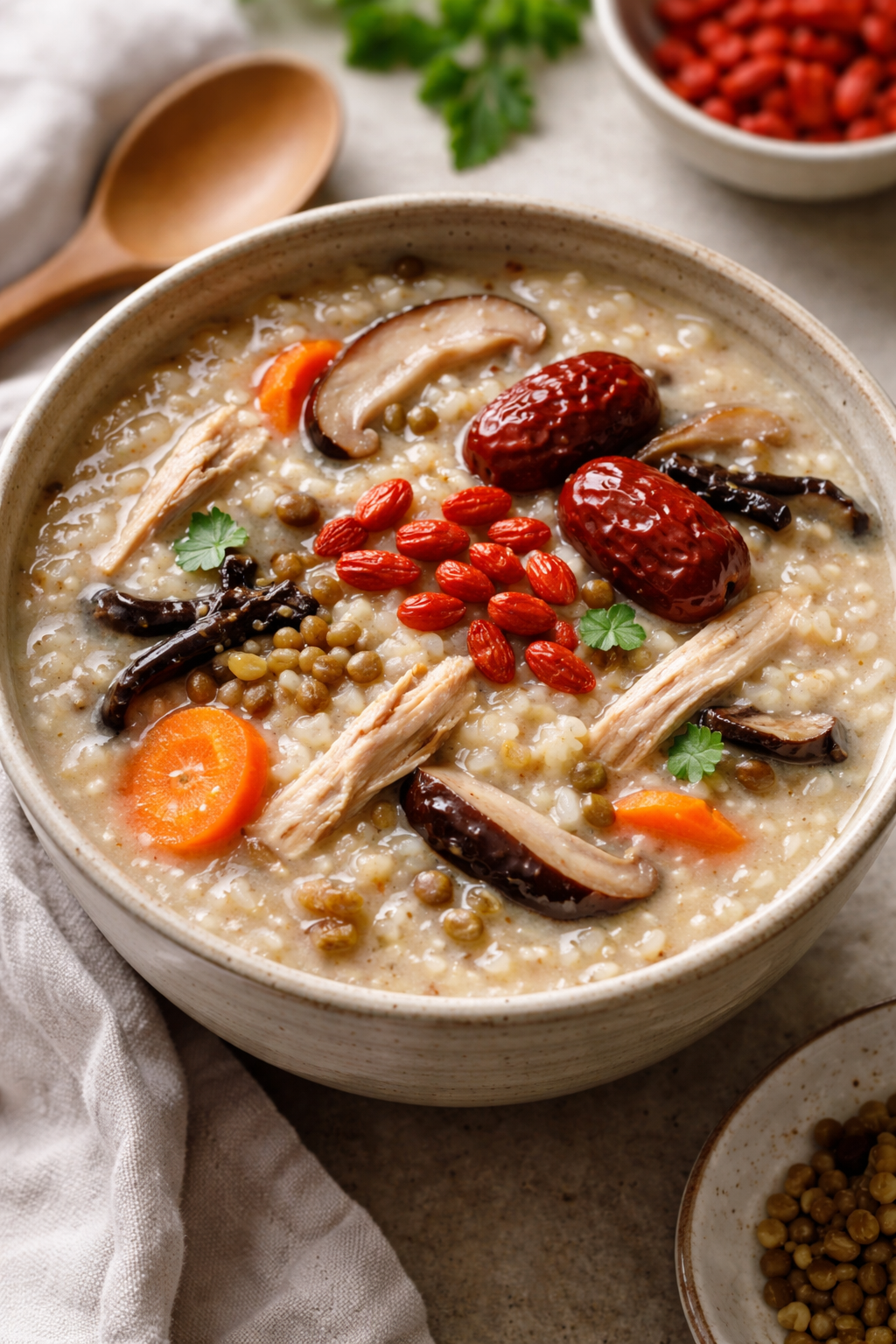
    Slow-Cooked Brown Rice Congee for Gentle Strength

    There are some foods that feel less like meals and more like companions. This congee is one of them. It doesn’t hurry. It doesn’t stimulate. It simply stays—warming, softening, and offering quiet nourishment to a body that may already be carrying more than its share.

    Slow-cooked over several hours, this brown rice congee is especially suited for times of fatigue, recovery, or convalescence. It is gentle on digestion, deeply hydrating, and built around ingredients long respected in Traditional Chinese Medicine for supporting Qi, Blood, and Essence without strain.


    Ingredients

    • ½ cup brown rice, rinsed
    • Plenty of water (approximately 8–10 cups, adding more as needed)
    • 1 tablespoon mung beans
    • 2 carrots, sliced
    • 2 shiitake mushrooms, sliced
    • Fresh ginger, a few thin slices (to taste)
    • 1-inch piece American ginseng
    • Black tree fungus (wood ear), soaked and sliced
    • Jujube (red dates), added toward the end
    • Goji berries, added toward the end
    • A small pinch of salt

    Optional Protein (about ¼ lb):

    • Tofu (soft or medium)
    • White fish
    • Chicken
    • Beef or other gently cooked meats

    Method

    Place the rinsed brown rice and mung beans into a large pot with plenty of water. Bring to a gentle boil, then reduce the heat to a very low simmer. Add the carrots, shiitake mushrooms, ginger, American ginseng, black tree fungus, and a small pinch of salt.

    If using a protein, add it now, choosing preparations that are simple and lightly cut. Cover loosely and allow the congee to cook slowly for about four hours, stirring occasionally and adding water as needed. The goal is a soft, porridge-like consistency, with the rice grains breaking down into a smooth, nourishing base.

    During the final 20–30 minutes of cooking, add the jujube and goji berries. This preserves their gentle sweetness and medicinal qualities without overcooking them.

    Taste and adjust seasoning if needed. Let the congee rest briefly before serving.


    A Quiet Reflection

    This is the kind of food that asks very little of you.

    While it cooks, you are free to rest. While you eat, there is nothing to solve or fix. Each spoonful feels like it arrives already listening, already aware of the body’s limits.

    Congee has long been considered a healing food not because it is powerful in the dramatic sense, but because it is willing to be humble. It meets weakness without judgment and strength without force.


    Nutritional Perspective (Western View)

    From a nutritional standpoint, this congee offers:

    • Complex carbohydrates from brown rice, providing slow, steady energy without blood sugar spikes
    • Dietary fiber to support gut health and gentle detoxification
    • Beta-carotene and antioxidants from carrots and goji berries
    • Immune-supportive compounds from shiitake mushrooms
    • Anti-inflammatory properties from fresh ginger
    • Hydration support, as the high water content aids circulation, digestion, and cellular repair

    Because it is soft and well-cooked, nutrients are easier to absorb—especially important for those with compromised digestion or low energy reserves.


    Traditional Chinese Medicine Perspective

    In TCM, congee is often prescribed when the Spleen and Stomach need support—particularly in cases of fatigue, deficiency, or post-illness recovery.

    • Brown rice strengthens the Spleen and provides stable Qi
    • Carrots gently tonify Blood and support digestion
    • Shiitake mushrooms support Wei Qi (defensive energy) and immune resilience
    • American ginseng nourishes Yin and Qi without overstimulation, making it especially suitable for chronic fatigue or heat-with-deficiency patterns
    • Black tree fungus supports Blood, moistens dryness, and benefits circulation
    • Jujube (red dates) harmonize the formula, nourish Blood, and calm the Spirit (Shen)
    • Goji berries nourish Liver and Kidney Yin, gently supporting vitality and vision
    • Ginger warms the middle burner, aiding digestion and preventing stagnation

    Taken together, this congee is balancing rather than forcing—supportive of long-term vitality rather than short-term energy spikes.


    A Final Note

    This dish can be eaten warm throughout the day, thinned with additional hot water if needed, and adapted gently over time. It is forgiving, flexible, and kind—qualities worth cultivating both in the kitchen and in ourselves.

    May it nourish not only the body, but also the quiet confidence that healing does not need to be rushed.

  • Ten Suggestions for Managing ME/CFS and How You Can Apply Them to Your Daily Life

    This is what I have learned after 30 years of living with chronic fatigue. These ten focus points have helped me. Maybe they will help you, too.

    NOTE: This article contains a lot of information to process, particularly for those of us dealing with chronic fatigue. Take your time reading and absorbing this information, and don’t hesitate to take breaks as needed. To manage a chronic illness like ME/CFS or Long Covid effectively, it’s crucial to respect our reality and prioritize our self-care. Remember, success is measured in many different ways, and taking care of yourself is always a valuable investment in your overall health and well-being.

    Take care and be gentle with yourself.

    1. Pacing: The first suggestion is pacing. It’s essential to balance rest and activity to avoid overexertion and prevent symptom flare-ups. Remember that pacing is not about doing less, but about finding a sustainable balance. Listen to your body, and don’t push yourself into a flare-up. This will take some practice and is likely to change from day to day. So remember… Be careful…. Be mindful…. Discover what works best for you from day to day….
    2. Sleep Hygiene: The second suggestion is sleep hygiene. It’s crucial to establish a regular sleep schedule, create a relaxing bedtime routine, and maintain a sleep-conducive environment. Quality sleep can help reduce your symptoms and improve your overall well-being. Again, this is a practice that you can adapt and modify over time. So remember… Be careful…. Be mindful…. Discover what works best for you from day to day….
    3. Stress Management: The third suggestion is stress management. Stress can exacerbate symptoms of ME/CFS, so it’s crucial to find ways to manage it. Consider meditation, deep breathing exercises, or mindfulness practices to help manage symptoms. There is a free meditation class offered online by MBSR. The MBSR online training course is 100% free, created by a fully certified MBSR instructor, and is based on the program founded by Jon Kabat-Zinn at the University of Massachusetts Medical School. Palouse Mindfulness offers this course. Another suggestion is Toni Bernhard’s book, How to Be Sick. This is a powerful and insightful book that offers a unique perspective on the challenges faced by those of us suffering from chronic illnesses such as ME/CFS, Long Covid, and other similar conditions. You can take a look at this book below.
    4. Gentle Exercise: The fourth suggestion is gentle exercise. Very, very low-impact exercises like gentle stretching or breathing exercises can help improve physical function and well-being. However, always listen to your body and adjust the level of intensity as necessary so that you are always below your post-exertional malaise threshold. Most graded exercise recommendations do not take this into account, and people often overdo it and exacerbate symptoms. Also, low-impact exercise for us may simply be getting out of bed. Or, if bedbound, turning your head from side to side while lying down. Or, flexing and extending your feet while in bed. If you start by doing less and evaluate your response as you go, you will be less likely to exacerbate your symptoms. I can’t tell you how many times I was enjoying a stretching routine only to have PEM the next day. So remember… Be careful…. Be mindful…. Discover what works best for you from day to day….
    5. Nutrition: The fifth suggestion for optimal health and well-being is to pay close attention to your nutrition. A balanced diet that incorporates a variety of nutrient-dense foods, such as fruits, vegetables, lean proteins, and whole grains, is crucial to maintaining good health. Avoid consuming processed foods that contain high levels of artificial ingredients, unhealthy fats, and added sugars. Opt for fresh, whole foods that provide the essential vitamins, minerals, and fiber your body needs. Don’t forget to drink plenty of water to stay hydrated and promote optimal bodily function. Remember, a healthy diet is an investment in your long-term health and well-being.
    6. Cognitive-Behavioral Therapy (CBT): The sixth suggestion for managing ME/CFS, Long Covid, or any chronic illness is to consider cognitive-behavioral therapy (CBT). This evidence-based therapy can help you develop effective coping strategies to manage the emotional and psychological impacts of living with a chronic illness. By working with a therapist who specializes in CBT, you can learn to identify and challenge negative thought patterns, develop healthy coping mechanisms, and reduce feelings of stress and anxiety. CBT has been shown to be effective for individuals with chronic illnesses, and it can be a valuable tool in helping you manage your symptoms and improve your overall quality of life. Don’t hesitate to reach out to a qualified therapist to explore this option further.
    7. Support Network: The seventh suggestion is to seek out and maintain a strong support system. Your support system may include family, friends, and support groups. These individuals can provide you with emotional support and help you manage your condition.
    8. Medication Management: The eighth suggestion is medication management. When managing chronic fatigue, medication management is an important component. Work with your healthcare provider to find the most effective medications for your symptoms while discussing possible side effects and interactions. Starting with lower doses than normally suggested may also be recommended. So remember… Be careful…. Be mindful…. Discover what works best for you from day to day….
    9. Symptom Tracking: The ninth suggestion for managing a chronic illness like ME/CFS or Long Covid is to engage in regular symptom tracking. Keeping track of your symptoms can help you better manage your condition. By keeping a symptom diary, you can also better understandy patterns and triggers that may be exacerbating your symptoms. The key here is to do less of what makes you feel worse, and do more of what helps you to feel better.
    10. Education: The tenth and final suggestion is education. Educate yourself about ME/CFS & Long Covid, including symptoms, diagnosis, and management strategies. Becoming informed can help you advocate for yourself and make informed decisions about your health. Remember that education is an ongoing process, and it’s important to stay up-to-date on the latest research and information about your chronic conditions.

    In conclusion, managing chronic fatigue requires a multifaceted approach. By incorporating these ten suggestions into your daily life, you can better manage your condition, improve your quality of life, and find hope for the future. Remember to listen to your body, seek support, and stay informed. Thank you for reading.

    Please, for the benefit of others, leave your questions and comments below so we can all learn from one another about these ten steps.