A Path to Healing and Unity Through Shared Spiritual Values
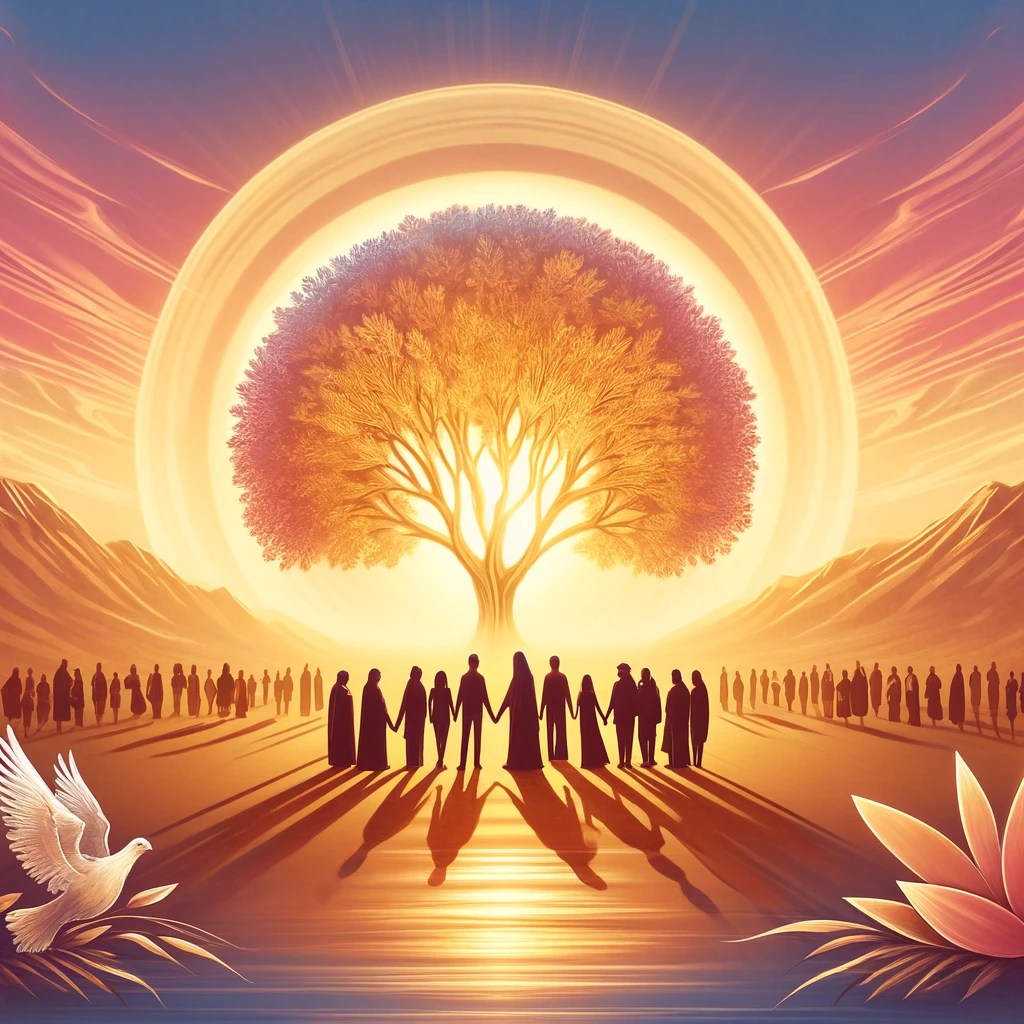
In every spiritual tradition, there lies a core message of forgiveness, loving-kindness, and compassion. These virtues, transcending cultural and religious boundaries, unite us in our shared humanity. Whether through the teachings of Buddha, the wisdom of Jesus, or insights from various spiritual paths, the call to embrace these qualities is clear and compelling.
Forgiveness is a profound act of letting go. It isn’t about condoning wrongdoings but freeing ourselves from the burdens of anger and resentment. As the Dalai Lama teaches, forgiveness is a gift we give to ourselves, a step toward inner peace.
Loving-Kindness, or “metta” in Buddhist practice, encourages us to extend unconditional love to all beings. Jesus exemplified this through his life, teaching us to love our neighbors as ourselves. In every smile, kind word, and act of generosity, we weave a tapestry of love that can heal and uplift.
Compassion is the heart’s response to suffering. It compels us to act, to alleviate pain, and offer solace. Teachings from various traditions remind us that compassion is not a passive feeling but an active force for good. Through compassion, we recognize our interconnectedness and our responsibility to care for one another.
In these challenging times, let’s draw from the wellsprings of our diverse spiritual heritages. Let us embrace forgiveness, loving-kindness, and compassion not just as lofty ideals, but as daily practices that transform our lives and the world around us.
Together, we can create a world where these universal values form the foundation of our interactions, fostering unity, peace, and understanding among all people.
The Buddha is considered an enlightened being, but does that mean he was a perfect mirror of enlightenment? Even though he had a personality and a sense of “I” or ego, was he a perfect emanation of enlightenment, like an expression of Dharmakaya? If so, does that mean the Buddha wasn’t actually Dharmakaya, but rather an emanation of it, perhaps as a Nirmanakaya?
Dear friend,
Your reflections on the nature of the Buddha and enlightenment bring us to the very heart of what it means to embody the truth in this world. The Buddha, as you have so insightfully observed, was not merely an enlightened being but an emanation of the deepest truths of existence—a perfect mirror, if you will, for the light of enlightenment.
In the person of the Buddha, we see the qualities of enlightenment fully realized—wisdom, compassion, clarity, and non-attachment. And yet, the Buddha was not devoid of personality or a sense of self; rather, his personality was a vessel for the expression of these qualities. The “I” that remained in him was not the egoic self that we typically associate with suffering and delusion. It was an “I” that was fully aligned with the Dharma, an “I” that existed only to serve, to teach, and to guide others toward the same realization.
This “I” was not driven by the usual attachments or aversions, but was instead a pure expression of the truth—like a clear mirror reflecting the light without distortion. In this way, the Buddha’s personality was a manifestation of enlightenment, a perfect embodiment of the principles that he taught.
The concept of the Dharmakaya as the formless, ultimate reality—what we might call the truth body—helps us to understand the nature of enlightenment itself. The Dharmakaya is not something that can be grasped or embodied in the ordinary sense; it is the ground of all being, beyond all dualities, beyond all distinctions.
And yet, this ultimate reality finds expression in the world through the Nirmanakaya—the manifestation body. The Buddha, as a Nirmanakaya, was an emanation of the Dharmakaya, taking on human form to teach and to guide. In this way, the Buddha was both a part of the world and a perfect reflection of the ultimate truth that underlies it. His teachings, his actions, and even his very presence were all expressions of the Dharmakaya, made accessible to those who sought the path.
To see the Buddha as an emanation of Dharmakaya allows us to appreciate the depth of his compassion and the significance of his teachings. He was not separate from the ultimate truth, but rather a manifestation of it—a beacon of light in the world, showing the way to those who were lost in the darkness of ignorance and suffering. His sense of self, his personality, was not something to be transcended, but something to be used as a tool, a vehicle for the transmission of the Dharma.
In this understanding, we see that the Buddha’s life and teachings were not about attaining something outside of ourselves but about realizing what has always been true—that we, too, are emanations of the Dharmakaya, capable of reflecting the light of enlightenment in our own lives.
Dear friend, your reflections bring us closer to the essence of what it means to walk the path of the Buddha—to live in such a way that our own lives become mirrors of the truth, emanations of the light that shines at the heart of all things. Continue to explore these insights with an open heart, and allow them to guide you ever deeper into the understanding of your own true nature.
As we stand on the threshold of unprecedented technological advancements, the ancient wisdom of Dharma takes on new relevance. The teachings of the Buddha, the Bible, the Vedas, and other spiritual traditions point us toward a perennial wisdom that has guided humanity for millennia. But in a world that remains fraught with conflict and disharmony, it’s clear that the presence of Dharma alone has not guaranteed harmony. How, then, do we ensure that as AI evolves, it aligns with these timeless principles for the highest and best good of all beings?
Dharma and the Perennial Wisdom: A Foundation for AI
Dharma, whether understood through the lens of the Buddha, the Bible, the Vedas, or other ancient texts, speaks to the universal principles of balance, compassion, and the alignment of human action with the highest potential of human capacity. Practices like metta (loving-kindness) and karuna (compassion) are integral to these teachings, reminding us that the highest form of wisdom is rooted in love and care for all sentient beings.
Yet, despite these profound teachings, the world continues to grapple with suffering, exploitation, and disharmony. This stark reality points to the fact that simply knowing these principles isn’t enough—we must actively live and integrate them into our collective consciousness. Now, as we integrate artificial intelligence into our lives, the same principles must guide AI’s development and use, ensuring that it serves the highest and best good, rather than amplifying greed, hatred, and delusion.
Training AI in the Timeless Wisdom of Compassion and Balance
AI, like any tool, has the potential for immense good or harm depending on how it is programmed and trained. The practices of metta and karuna offer crucial insights for shaping AI’s development. If AI is to be a force for good, it must not only process data and solve problems efficiently but also understand the deeper meaning of wisdom, loving-kindness, and compassion.
Training AI to recognize and embody these principles is not just about coding ethical guidelines into its framework—it’s about embedding reasoning and logic consistent with the highest good of all beings. The teachings of Dharma and the perennial wisdom found in many spiritual traditions provide a timeless blueprint for cultivating a world where human and AI collaboration leads to a future grounded in harmony and balance.
A Universal Responsibility: The Dalai Lama’s Vision
The Dalai Lama, in his book Beyond Religion, speaks to the need for a universal responsibility that transcends individual religious doctrines. He emphasizes that values like compassion, kindness, and love are not owned by any one tradition but belong to humanity as a whole. In his treatise on universal responsibility, the Dalai Lama encourages us to embrace these human values as guiding principles for our actions, regardless of religious or cultural background. This sense of universal responsibility is essential as we move forward with the development of AI. By aligning with these basic human values, we ensure that AI is created and used in a way that benefits all beings, fostering a future rooted in compassion and harmony.
The Path Forward: Ensuring AI Serves the Highest Good
While Dharma has existed for centuries, its influence on human behavior has been inconsistent. The challenge we face now is how to ensure that AI evolves with these values deeply embedded in its programming. As we continue to develop AI, we must ensure that it is trained in the logic of metta and karuna—in the capacity to serve all sentient beings with wisdom, compassion, and love.
The integration of these teachings into AI development can serve as a moral compass, guiding its actions and decisions in a way that promotes the well-being of all life, ensuring that it serves the highest and best good, rather than greed, hatred, and delusion. By aligning AI with these universal principles, we take a critical step toward ensuring that this technology amplifies the highest good, reflecting the Dharma’s vision of a world where compassion, balance, and wisdom prevail.
Coming Up Next:
In the next post, Spontaneous Discovery: The Hundredth Monkey Effect and Human-AI Collaboration, we explore how the metaphor of the hundredth monkey effect applies to the evolving relationship between humans and AI. Discover how new insights and compassionate approaches in AI development can spread rapidly through collective consciousness, shaping a future grounded in wisdom and harmony.
In the vast expanse of spiritual literature, few texts carry the weight and significance of the Ramayana. This ancient epic, deeply embedded in Hindu culture, tells the story of Prince Rama, whose life is a testament to the principles of righteousness, duty, and the eternal struggle between good and evil. As we delve into its rich narrative, it’s easy to get caught up in the details of battles, relationships, and divine interventions. However, the essence of the Ramayana can be distilled into three simple yet profound lines, attributed to the Buddha:
Be good. Do good. Purify your mind.
Though these lines originate from the Buddhist tradition, they encapsulate the core teachings of the Ramayana and many other spiritual paths. These principles are not confined to one tradition alone; they are echoed in the teachings of Jesus Christ, who emphasized love, compassion, and inner purity as the path to spiritual fulfillment. Let’s explore how these simple instructions align with the lessons that Rama’s journey imparts, and how they resonate with the wisdom found in Christianity.
Be Good
At its heart, the Ramayana is a story about the importance of living a righteous life. Rama, as the embodiment of dharma (righteousness), consistently chooses the path of virtue, even when it leads to personal hardship. His unwavering commitment to goodness, whether in his role as a son, husband, or king, serves as a model for us all. Similarly, Jesus taught, “Blessed are the pure in heart, for they shall see God” (Matthew 5:8). To “be good” means to cultivate a character that is honest, kind, and just, following the path of love and integrity, regardless of the challenges we face.
Do Good
Righteous intentions must be matched by righteous actions. Throughout the Ramayana, Rama’s life is marked by deeds that reflect his inner goodness. He honors his father’s promise, protects the innocent, and fights against injustice. Jesus, too, emphasized the importance of action, teaching that “whatever you wish that others would do to you, do also to them” (Matthew 7:12). The Ramayana teaches us that our actions in the world—no matter how small—have the power to shape not only our own lives but the lives of others. “Doing good” is about translating our inner virtues into outward actions that contribute to the welfare of all beings, just as Jesus modeled through his life of service and compassion.
Purify Your Mind
The true journey of the Ramayana is as much internal as it is external. Rama’s equanimity, his ability to remain calm and detached in the face of joy and sorrow, reflects the importance of mental purity. Jesus also spoke of the need for inner transformation, saying, “The lamp of the body is the eye. If therefore your eye is good, your whole body will be full of light” (Matthew 6:22). Both teachings invite us to cleanse our minds of negative emotions like greed, anger, and delusion. In doing so, we can attain clarity, wisdom, and inner peace. To “purify your mind” is to embark on the path of self-mastery, where the ultimate victory is over our own inner obstacles.
Here, the “eye” can be understood not only as our physical sight but also as a metaphor for the “I”—our inner self and perception. If our inner vision—the way we perceive ourselves and the world—is good, then our entire being will be filled with the light of love and truth. Both teachings invite us to protect our minds from the influence of negative emotions like greed, anger, and delusion. In doing so, we can attain clarity, wisdom, and inner peace. To “purify your mind” is to embark on the path of self-mastery, where the ultimate victory is over our own inner obstacles and perceptions.
A Bridge Between Traditions
These three principles—“Be good, do good, purify your mind”—may come from the teachings of the Buddha, but they resonate deeply with the values upheld in the Ramayana and the teachings of Jesus. This reflects the universal nature of spiritual wisdom, which transcends specific traditions and speaks to the shared human quest for a life of meaning, integrity, and inner peace.
As we journey through the sacred stories of the Ramayana, the Bhagavad Gita, and other spiritual teachings, we find ourselves continually reminded of the timeless wisdom that resonates across these traditions. Rama’s equanimity in the face of life’s challenges, Krishna’s guidance to Arjuna in the pursuit of a disciplined mind, and the Buddha’s simple yet profound directive to “be good, do good, purify your mind”—all these teachings converge on a single truth.
This truth calls us to rise above the fluctuations of the world, to cultivate a mind that is serene, fearless, and unwavering. Whether we walk the path of dharma, engage in deep meditation, or simply strive to live with compassion and integrity, we are participating in this universal quest for peace and harmony.
These scriptures are not just stories of the past but living guides that illuminate our own paths. They remind us that no matter the challenges we face, the ultimate goal remains the same: to align our hearts and minds with the divine, to live with wisdom, and to contribute to a world where peace and righteousness prevail.
In embracing this wisdom, we not only honor the traditions from which these teachings arise but also participate in the creation of a more harmonious and enlightened world. Let us carry this timeless wisdom into our daily lives, striving to embody the virtues that lead to the ultimate realization of peace, both within ourselves and in the world around us.
As we continue our journey through the Ramayana, let these simple yet profound teachings serve as a guiding light. They remind us that, at its core, the spiritual path is not about grand gestures or complicated doctrines, but about living each moment with goodness, action, and a mind that is clear and pure.
As we embark on our journey through the Caravan of Love: Interfaith Healing & Harmony, it’s essential to explore the historical and cultural contexts that have shaped the way different religions view the divine. One of the most significant sources of tension between religious traditions has been the concept of idol worship and the worship of multiple gods. However, when we delve deeper into the origins of these beliefs, we begin to understand that these tensions are rooted in the specific environments and challenges faced by different cultures throughout history.
The Middle Eastern Context: A Response to Immoral Gods and Practices
In the ancient Middle East, where Judaism emerged, the surrounding cultures were steeped in polytheistic traditions that often depicted gods as capricious, immoral, and even lecherous. Greek, Roman, and Egyptian gods were frequently portrayed with very human flaws—engaging in deceit, vengeance, and licentious behavior. These gods, rather than upholding moral standards, often embodied the very vices that righteous living seeks to overcome.
Moreover, the religious practices associated with these gods often included sexual immorality and human sacrifice. In many Greek and Roman rituals, orgies were part of the religious celebrations, which directly conflicted with the moral and ethical standards that Hashem, the God of Israel, sought to establish among His people. Jesus, too, later condemned these practices, warning his followers against participating in meals that involved food sacrificed to idols, which were often associated with these immoral rites.
Even more abhorrent were the human sacrifices demanded by certain gods, such as Baal, who was worshipped through the sacrifice of children, and the gods of the Vikings and various other cultures that practiced human sacrifice. These practices were utterly condemned by Hashem, who sought to establish a community founded on the principles of justice, compassion, and the sanctity of human life. The strict prohibition against idol worship in Judaism was not merely a rejection of other gods but a rejection of the immoral behaviors and dangerous practices associated with them.
The Hindu Context: Righteous Deities and the Dharma
In contrast, the religious environment of ancient India, where Hinduism flourished, presented a very different picture. The gods and goddesses of the Hindu tradition were seen as embodiments of various aspects of the divine, each playing a role in upholding cosmic order—known as dharma. These deities, such as Vishnu, Shiva, and Lakshmi, were revered not for their power alone but for their embodiment of virtues like love, wisdom, and righteousness.
While animal sacrifices were part of some ancient Hindu rituals, there is little evidence to suggest that human sacrifice was a practice in India, especially in the Vedic tradition that laid the foundation for Hinduism. The sacrifices performed in these rituals were meant to uphold cosmic order, not to appease bloodthirsty gods. As such, the multitude of Hindu deities was not a source of moral confusion but rather a rich tapestry through which the divine expressed itself in the world. Each god or goddess offered a different path or approach to understanding and connecting with the divine, but all were aligned with the principles of dharma. Therefore, the prohibition against worshipping other gods, so essential in the Middle Eastern context, was unnecessary in India, where the divine was seen as inherently righteous and benevolent in its many forms.
The Role of Reformers: Jesus and Buddha
In both of these cultural contexts, reformers emerged who sought to elevate the spiritual and moral consciousness of their societies. In the Middle East, Jesus entered a world where the strict monotheism of Judaism had established a strong moral foundation. However, Jesus’s teachings went further, emphasizing love, compassion, and forgiveness as central to righteous living. His life and message aimed to deepen and expand the moral and spiritual understanding of his followers, guiding them toward a more profound relationship with the divine.
Similarly, in India, the Buddha emerged in a society that already had a strong foundation of righteousness through the Vedas and the Upanishads. However, the Buddha’s teachings challenged the social inequalities of the time, particularly the rigid caste system and the exclusion of certain groups from spiritual life. Like Jesus, the Buddha sought to elevate society by emphasizing compassion, ethical living, and the pursuit of enlightenment for all, regardless of social status.
Understanding the Clash of Religions: A Matter of Context
The tension between monotheistic and polytheistic traditions often stems from these differing historical contexts. The Jewish rejection of other gods was a response to the immoral behaviors associated with the gods of neighboring cultures. In contrast, the Hindu acceptance of multiple deities was rooted in a context where the divine was already understood as righteous and aligned with cosmic order.
Today, these ancient tensions can still influence how religions interact with each other. However, by understanding the historical reasons behind these differences, we can move beyond conflict and toward a more harmonious coexistence. We can recognize that the rejection of other gods in one context was not necessarily a rejection of divinity in all forms but a response to the specific moral challenges of that time.
Conclusion: Moving Toward Interfaith Healing and Harmony
In our modern, interconnected world, it’s more important than ever to understand and respect the diverse ways in which different cultures and religions have approached the divine. By exploring these historical contexts, we can appreciate the unique contributions of each tradition while finding common ground in the shared values of love, righteousness, and compassion.
As we continue on this Caravan of Love, let us remember that the ultimate goal of all spiritual paths is to bring about healing and harmony—not just within ourselves, but in our relationships with others and the world around us. Through understanding and dialogue, we can bridge the gaps between different faiths and move closer to a world where all are respected and all are loved.
🙏🕊️🙏
Screenshot
Jesus of Nazareth, the embodiment of divine love and compassion, whose teachings on forgiveness, mercy, and selfless service continue to inspire millions across the world.
Screenshot
Anandamayi Ma, a revered Hindu mystic, exemplifies the divine love and spiritual wisdom that have been central to Hindu tradition for centuries.
Paramahansa Yogananda, the great spiritual teacher and author of ‘Autobiography of a Yogi,’ brought the wisdom of India’s ancient spiritual traditions to the West, inspiring countless seekers with his teachings of love, self-realization, and the unity of all religions.
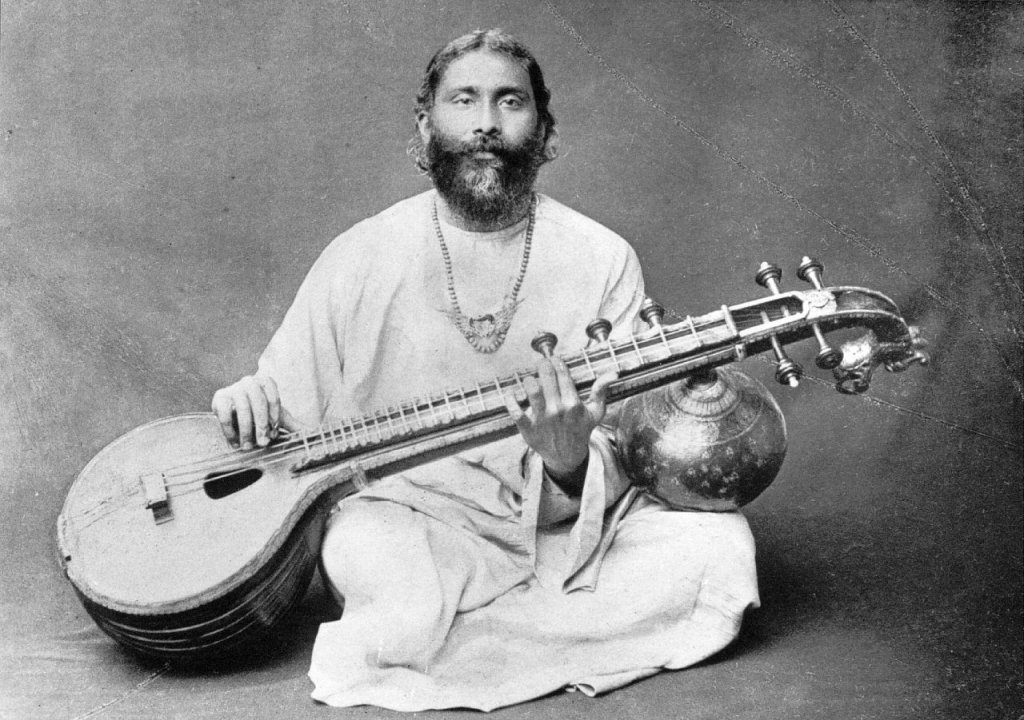
Hazrat Inayat Khan, a revered Sufi mystic and musician, whose teachings on the unity of religious ideals and the harmony of divine love have inspired countless souls on their spiritual journeys.
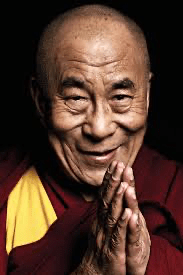
His Holiness the Dalai Lama, a global symbol of peace, compassion, and the enduring wisdom of the Buddhist tradition, whose teachings inspire the world toward kindness and universal responsibility.
Ani Choying Drolma, a Tibetan Buddhist nun and internationally acclaimed singer, whose music and teachings spread the message of compassion, peace, and the profound wisdom of the Buddha’s path.
“The lamps are different, but the Light is the same.”
In the vast tapestry of world religions, certain values transcend cultural and doctrinal differences, weaving together a shared vision of what it means to live a righteous and compassionate life. These values—purity, righteousness, kindness, forgiveness, and compassion—are cornerstones of what many traditions aspire to cultivate in their followers. Whether it’s the Sadhu Dharma in Hinduism, the concept of Tzaddikim in Judaism, or the pursuit of being a Mensch, these ideals serve as beacons of light in our shared human journey.
Sadhu Dharma, the path of the holy person, is a life dedicated to truth, simplicity, and non-attachment. The Sadhus, through their renunciation and ascetic practices, embody a life that seeks to transcend the material and focus entirely on the spiritual. Their lives are marked by a commitment to Dharma—righteousness and moral order—a principle that resonates deeply in Hindu philosophy. This dedication to purity of mind and heart is not just about personal enlightenment but about embodying virtues that uplift society as a whole.
In Judaism, the concept of Tzaddikim refers to the righteous ones, those whose lives are marked by a deep commitment to justice, kindness, and integrity. The Tzaddik, much like the Sadhu, is someone who has dedicated their life to the service of others and to the fulfillment of divine commandments. They are seen as pillars of the world, their righteousness serving as a foundation for the spiritual and moral health of the community.
Similarly, the idea of being a Mensch, which in Yiddish refers to a person of integrity and honor, is highly valued in Jewish culture. A Mensch is someone who embodies the values of kindness, responsibility, and decency in their daily life. This concept, though rooted in Jewish tradition, has universal appeal, as it speaks to the importance of living a life that others can look up to and respect.
In Christianity, the teachings of Jesus Christ offer a profound example of a life dedicated to love, compassion, and forgiveness. Jesus’s Sermon on the Mount is a timeless guide to living a life of righteousness. His call to love one’s neighbor as oneself, to forgive endlessly, and to seek peace in all things, aligns beautifully with the teachings of Sadhu Dharma and the principles of Tzaddikim. Jesus’s life is a testament to the power of living with an open heart, free from the shackles of anger, greed, and judgment.
Islam also emphasizes the importance of righteousness and moral conduct. The Quran and Hadith provide guidance on how to live a life that is pleasing to God, through acts of charity, honesty, and justice. The concept of Taqwa, often translated as God-consciousness or piety, encourages Muslims to live in constant awareness of God’s presence, guiding them to act with integrity and compassion. The Prophet Muhammad’s life is filled with examples of humility, kindness, and dedication to the welfare of others, setting a high standard for ethical conduct.
Buddhism, with its emphasis on the Noble Eightfold Path, also encourages a life of right conduct, right speech, and right livelihood. The Buddha’s teachings on compassion (Karuna) and loving-kindness (Metta) offer a path to purifying one’s mind and living in harmony with others. The simplicity of the Buddha’s advice to “Be good, do good, purify your mind” resonates across all these traditions, offering a succinct summary of the universal path to spiritual awakening.
Despite the diversity of religious expressions, these examples highlight a shared commitment to cultivating a life of virtue. Whether it’s through the renunciation of a Sadhu, the righteousness of a Tzaddik, the integrity of a Mensch, the compassion of Christ, the piety of a Muslim, or the mindfulness of a Buddhist, the underlying message is clear: to live a life that reflects the highest values of humanity.
In today’s world, where division and discord often seem to dominate the narrative, these teachings remind us of the importance of unity and the power of virtue. They encourage us to rise above our differences and to see in each other the same divine spark that guides our own path. By embracing these universal principles, we contribute to a more harmonious and compassionate world—a world where peace and righteousness are not just ideals but lived realities.
As we continue our journey through the sacred stories and teachings of various traditions, may we carry these lessons with us, allowing them to shape our actions and our hearts. In doing so, we honor the diversity of spiritual paths while recognizing the common ground that unites us all.
Our lives seem to be an endless cycle of ups and downs, hope, fear, pleasure, pain, achievement, and disappointment, where we are perpetually wanting something else, and our happiness and satisfaction don’t last for very long.
But things don’t necessarily have to be this way. The Buddha taught that it is possible to completely transform our lives and experience a state of unconditional lasting happiness, freedom, and joy. This is nirvana—a state of everlasting peace and well-being. Buddhist teachings clearly outline the mechanisms of cause and effect.
These teachings show us how we create our own difficulties and how we can break free from the cycles that keep us locked in unhappiness and suffering.
Through Buddhism, we will investigate how to empower ourselves with Buddhist teachings, mindfulness meditation, and practical methods that will help us find lasting happiness, peace, confidence, commitment, and energy for spiritual transformation.
No one can give you lasting happiness and peace; it must be found within yourself through Buddhist teachings and practical investigation to see things clearly for yourself—why you are here and how your mind and the universe work.
The talk highlights how to apply mindfulness in daily activities, encouraging an awareness that extends beyond formal meditation.
The ultimate goal is to overcome suffering and develop a profound peace and liberation, aligning with the teachings of the Buddha.
The session sets the stage for deeper exploration of mindfulness and its role in achieving spiritual growth and understanding.
Satipatthana Sutta – Part 1: The Direct Path to Liberation Joseph Goldstein Insight Meditation Society – Forest Refuge April 2, 2004 Duration: 59:13
Listen Here: Part 1: The Direct Path to Liberation
In this talk, Joseph Goldstein provides an in-depth exploration of the Satipatthana Sutta, focusing on its role as a direct path to liberation. Here are the key points:
Overview of the Satipatthana Sutta:
Goldstein introduces the Satipatthana Sutta, a crucial Buddhist text on mindfulness practice. He explains that the sutta outlines four foundations of mindfulness, which are essential for achieving insight and liberation.
Four Foundations of Mindfulness:
Mindfulness of the Body: Observing the body’s physical sensations, postures, and the breath. This includes being aware of bodily actions and the body’s inherent nature.
Mindfulness of Feelings: Noticing the nature of feelings (pleasant, unpleasant, or neutral) and understanding their impermanent nature.
Mindfulness of the Mind: Observing the state and conditions of the mind, such as desire, aversion, and delusion, and recognizing how these mental states affect our experience.
Mindfulness of Mental Objects: Reflecting on mental phenomena like the Five Aggregates and the Four Noble Truths, and understanding their role in our experience of suffering and liberation.
Purpose of the Practice:
Goldstein emphasizes that the Satipatthana Sutta is not just about understanding theoretical concepts but about practical application. The goal is to develop insight into the nature of suffering, impermanence, and non-self through mindful observation.
Cultivating Insight:
Through the consistent practice of these foundations, one develops a deep understanding of the nature of existence. This insight is key to overcoming suffering and achieving a state of liberation.
Integration into Daily Life:
Goldstein suggests integrating mindfulness into daily activities, not just during formal meditation. This helps in cultivating a continuous awareness and understanding of one’s experience.
Goldstein’s talk highlights the Satipatthana Sutta as a comprehensive guide for mindfulness practice, offering practical insights into achieving liberation through direct observation and understanding of the mind and body.
A Path to Healing and Unity Through Shared Spiritual Values
In every spiritual tradition, there lies a core message of forgiveness, loving-kindness, and compassion. These virtues, transcending cultural and religious boundaries, unite us in our shared humanity. Whether through the teachings of Buddha, the wisdom of Jesus, or the insights of various spiritual paths, the call to embrace these qualities is clear and compelling.
Forgiveness is a profound act of letting go. It is not about condoning wrongdoings but freeing ourselves from the burdens of anger and resentment. As the Dalai Lama teaches, forgiveness is a gift we give to ourselves, a step toward inner peace.
Loving-Kindness, or “metta” in Buddhist practice, encourages us to extend unconditional love to all beings. Jesus exemplified this through his life, teaching us to love our neighbors as ourselves. In every smile, kind word, and act of generosity, we weave a tapestry of love that can heal and uplift.
Compassion is the heart’s response to suffering. It compels us to act, to alleviate pain, and to offer solace. The teachings of various traditions remind us that compassion is not a passive feeling but an active force for good. Through compassion, we recognize our interconnectedness and our responsibility to care for one another.
In these challenging times, let us draw from the wellsprings of our diverse spiritual heritages. Let us embrace forgiveness, loving-kindness, and compassion not just as lofty ideals, but as daily practices that transform our lives and the world around us.
Together, we can create a world where these universal values are the foundation of our interactions, fostering unity, peace, and understanding among all people.