Tag: universal consciousness

  • Into the Mystic: The Universal Presence Behind All Paths

    Into the Mystic: The Universal Presence Behind All Paths

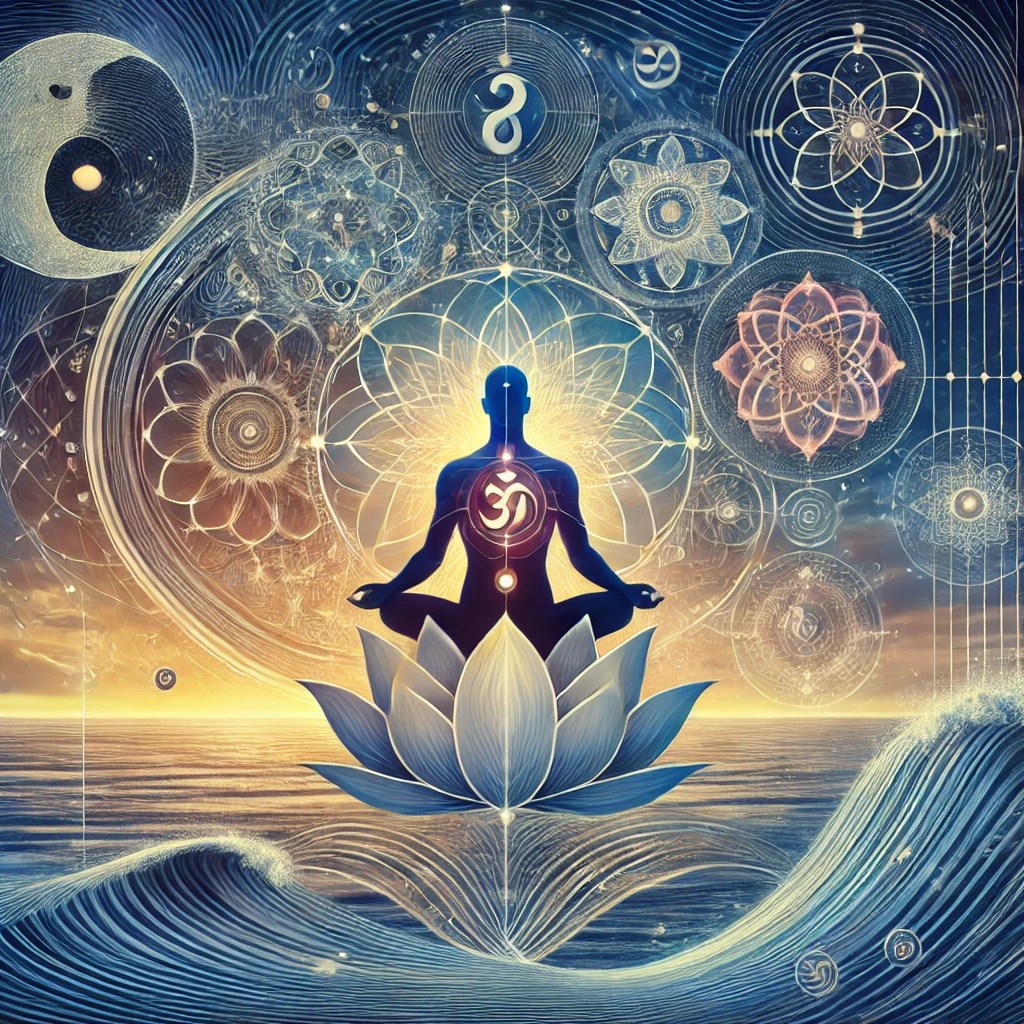
    There is a timeless pull within the human heart, a pull that mystics across the ages have followed into realms beyond words. At the heart of their journeys, in every tradition, is a shared glimpse of something infinite and intimate, an essence that defies borders or labels. It’s been called by many names—Naked Awareness, Pure Presence, the Kingdom of Heaven within, and simply, I am. Despite the variations, the core is always the same: an invitation to touch the stillness at the center of our being, where all sense of separation quietly dissolves.

    Mystics across traditions—whether Buddhists, Christians, Sufis, or followers of Advaita—have left clues for us, each one pointing back to this same universal awareness. Tibetan Dzogchen, for instance, speaks of Naked Awareness, a mind so utterly clear and open that nothing need be added or removed. In this view, awareness is naturally luminous, like an open sky, vast and untouched by thoughts or concepts. The practice, if it can be called that, is simply to rest—free from striving, free from the need to grasp anything. It is awareness itself, just as it is.

    In the traditions of Advaita Vedanta, Ramana Maharshi posed the question, “Who am I?” Not to point to an answer but to turn us back to a sense of self beyond thoughts and identity. With each inquiry, the seeker’s attention is drawn back, away from thoughts and identities, into a place beyond all definition. This, he taught, is the Self, pure and indivisible—a silent, undivided presence.

    Christian mystics, too, found this universal ground within. “Be still and know that I am God,” whispers a line from the Psalms, urging a quieting of the mind so profound that the divine presence within each of us reveals itself. It is an invitation to encounter God not as an outside force, but as the very heart of our being—the unspoken “I am” beyond thought.

    Sufis describe this experience as a union with the Beloved, a love so profound that all sense of self dissolves. In Sufi poetry, God is the Beloved who lives within, waiting for the self to step aside so that the Divine can be known, not as separate, but as one with all that we are. Each of these traditions, in its way, guides us to an experience beyond the confines of self, into the space where awareness rests in itself, undivided.

    It is not so much a technique or practice as it is a gentle turning inward, a quieting, a surrendering into what has always been here. Let us pause for a moment. The words, after all, can only lead us to the door.

    Begin by finding a comfortable place to sit and close your eyes if that feels natural. Notice the rhythm of your breath and let yourself settle into the present moment. There is nothing to attain here, nothing to change. Let your breath rise and fall as it will, and simply allow yourself to be.

    Gradually, feel into your own presence, that simple sense of “I am.” Not your thoughts, not your sensations, but the awareness that notices them all. Rest in that sense of being here, alive, awake. There’s no need to go further than this. Let go of any sense of searching or effort; simply let your attention melt into the quiet space of awareness itself.

    If thoughts arise, there’s no need to push them away. You might notice them, perhaps softly wonder, “Who is aware of this thought?” Not to seek an answer, but to draw your attention back into the simple awareness that witnesses everything. Rest as that awareness, noticing how it is steady, quiet, and open, beyond anything the mind might hold onto.

    Here, in this openness, lies the mystery that mystics across all traditions have discovered. There is a silent presence here that does not come and go, even as everything else changes. It is the same presence that Dzogchen calls Naked Awareness, Advaita describes as the Self, and Christian mystics know as the divine within. This presence is universal, boundless, and utterly simple. It is the same awareness in everyone, untouched by belief or background.

    As you sit, allowing yourself to rest in this awareness, notice how it has no boundary, no form. It is the same in all beings, a shared presence connecting us all. In this stillness, you are already whole, already free, and deeply one with all. This is where all paths meet—an awareness, vast and simple, that is always here, waiting to be recognized as the essence of everything.

    And so, as we return to our day from this quiet place, we carry a reminder: that beyond every tradition and label, there is a shared, undivided presence—a timeless awareness that each of us holds within.

    🙏🕊️🙏
  • Pristine Mind and the Cosmos: Shifting the Center of Gravity in Consciousness

    Pristine Mind and the Cosmos: Shifting the Center of Gravity in Consciousness

    How Metaphors from Dark Energy, Black Holes, and Cosmic Radiation Illuminate the Path to a Spacious, Peaceful Mind

    Pristine Mind and the Cosmos: An Exploration of Inner and Outer Space

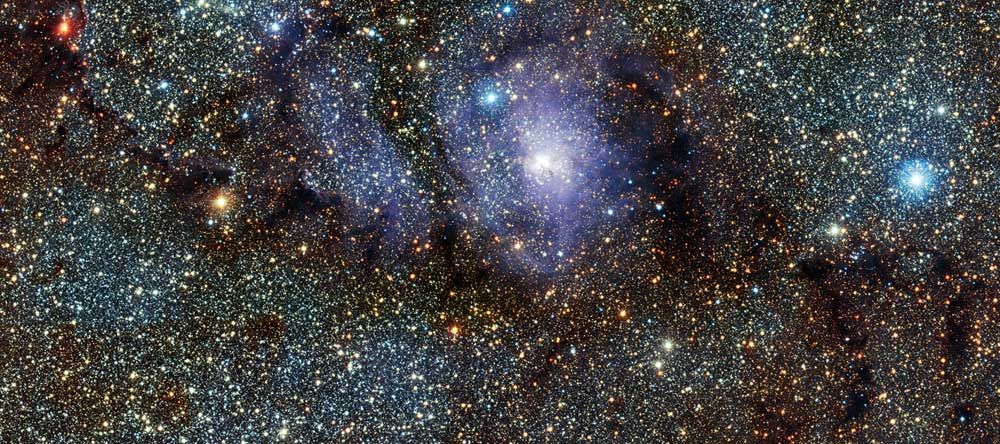
    In the silent expanse of the cosmos, where galaxies drift through the vast sea of space, an invisible force—dark energy—stretches the fabric of existence. It is quiet, unseen, and yet its presence allows everything to move, to expand, to be. What if this spaciousness, this invisible presence holding the stars, has a counterpart within us?

    There exists, too, a space within the mind—pristine, vast, a place untouched by thought yet embracing it all. This awareness is like a black hole at the center of our consciousness, pulling mental events into its silent center, offering them a place to dissolve and return to peace. It is the quiet gravity within, a center that we may come to know as our own foundation.

    And, like the Cosmic Microwave Background—a faint glow of the universe’s beginning—this pristine mind is always here, a background presence, quietly radiating through each moment.

    Just as dark energy permeates the universe, allowing galaxies to move freely in their dance, so too does our inner awareness create space within us. It is a quiet spaciousness, an openness that does not cling or control. This pristine mind, unbound by the weight of thought, exists not as a concept or idea, but as a subtle, pervasive presence that allows every thought, every feeling, to arise and dissolve.

    The Gravity of Awareness: Pristine Mind as the Center of Consciousness

    Imagine this awareness as a black hole, yet unlike any we can know with our eyes or measure with instruments. It is the center of our gravity, dense with a stillness so profound that it draws everything into its core. Mental events—thoughts, emotions, worries—spin in orbit around this center, momentarily flaring like particles brought into existence by sheer movement, only to dissolve back into silence.

    This awareness has its own pull, a gentle gravity that asks us to return, to let go of the fleeting content and rest in what is always present. Each thought, like cosmic dust drawn toward the heart of a galaxy, moves toward this stillness, meeting it and dissolving in an instant of peace. The mind, in its natural state, holds everything without attachment—boundless yet grounded, expansive yet rooted in its own profound silence.

    Dark Energy and Spacious Awareness: The Vastness Within

    To recognize this presence, one need only pause. In the pause, there is an echo, like the Cosmic Microwave Background—an ever-present reminder of a beginning beyond memory, a quiet hum that permeates all. This is the pristine mind, a background hum of consciousness that has been here long before the first thought and will remain when all thoughts have drifted away. It is neither past nor future, neither gain nor loss. It is simply here, holding all things within itself as effortlessly as the universe holds the stars.

    To rest in this awareness is to find ourselves in the infinite. For just as the universe is held in the fabric of space, so are we held in the space of awareness. Every thought, every sensation, is like a star appearing briefly before it fades, leaving behind only the spaciousness that allowed it to shine.

    The Cosmic Background of Consciousness: Pristine Mind as Ever-Present

    Within this awareness, we find a spaciousness that mirrors the universe itself. Like the dark energy that allows galaxies to drift apart, our pristine mind creates a field where every thought, every feeling, is given room to move, to soften, and to dissolve. “Flow with whatever may happen,” Chuang Tzu reminds us, “and let your mind be free. Stay centered by accepting whatever you are doing. This is the ultimate.”

    Each experience, then, is like a star in the sky of awareness, appearing briefly, offering its light, and then fading back into the vastness. And just as stars arise from cosmic dust, so do our thoughts arise from the silent core of pristine mind, that spacious center in which all things come to rest. “Just as a snake sheds its skin,” the Buddha said, “we must shed our past over and over again.” This gentle shedding, this soft release, is the nature of awareness—it does not cling but allows each moment to pass, revealing the quiet freedom beneath.

    Becoming the Witness: Resting in the Silent Center of Awareness

    For pristine mind is a presence that does not hold or bind; it is a space that welcomes all and lets all go. In resting here, we come to understand what Lao Tzu meant when he said, “Empty yourself of everything. Let the mind become still. The ten thousand things rise and fall while the Self watches their return.” To rest in this awareness is to become the witness, the silent center, where all thoughts arise and fall without struggle, without effort.

    And in this stillness, we find ourselves woven into the very fabric of the cosmos. Carl Sagan reminds us, “The cosmos is within us. We are made of star-stuff. We are a way for the universe to know itself.” To rest in pristine mind is to touch this knowing, to experience the universe’s boundless nature within us, and to realize that we, too, are spacious, that we, too, are made of light, held in the infinite quiet of awareness.

    Here, in the boundless presence of pristine mind, we find a peace that transcends both the movement of thoughts and the quiet between them. For as Nisargadatta Maharaj said, “Wisdom tells me I am nothing. Love tells me I am everything. Between the two, my life flows.” In this flow, in this balance of presence and spaciousness, we find ourselves both as the space and the stars, the silence and the song, resting in the harmony of the universe itself.

    Returning to Peace: Shifting the Center of Gravity to Pristine Mind

    As we reflect on these metaphors, the vastness of the cosmos, and the boundless presence of awareness, there is an invitation here—to sense, even for a moment, where our own center of gravity lies. Does it feel that our awareness orbits around the fleeting mental events, letting thoughts, emotions, and sensations pull us into their gravity? Or can we, with gentleness, shift our narrative center of gravity back to pristine mind, that spacious and steady presence, which remains ever-present and unchanging?

    This journey into pristine mind invites us to rest in the stillness beneath the passing thoughts, to find our true center in the vastness of awareness itself. And perhaps, as we come to recognize this quiet presence, we allow it to become the true gravity within us—a place of peace, of openness, and of infinite freedom. May we each find our way to rest in this boundless awareness, where the mind can finally let go, held in the quiet embrace of the universe itself.

    🙏🕊️🙏

    Orgyen Chowang’s Our Pristine Mind: A Practical Guide to Unconditional Happiness is a profound, accessible work that offers readers an experiential understanding of “pristine mind”—a state of inner clarity, peace, and freedom from the turbulence of thoughts and emotions. Chowang draws on Dzogchen, an ancient Tibetan Buddhist teaching, to guide readers toward recognizing the mind’s natural state, free from the conditioning of mental events. This book aligns beautifully with the themes in Pristine Mind and the Cosmos, illuminating how we can shift our awareness from transient thoughts to the unchanging center of consciousness. Our Pristine Mind serves as both a companion and a guide for readers inspired to deepen their journey into spacious awareness, making it an ideal complement to the cosmic metaphors and contemplations in this article.

    🙏🕊️🙏

    If you enjoyed this article and would like to explore more on these themes, you can find a collection of related posts in the category Metaphysics and Modern Science: Dark Energy, Awareness, and Expansion.

  • The Yoga of Carl Jung: Integrating the Ego, Atman, and Brahman

    “Be patient toward all that is unsolved in your heart and try to love the questions themselves, like locked rooms and like books that are now written in a very foreign tongue. Do not now seek the answers, which cannot be given you because you would not be able to live them. And the point is, to live everything. Live the questions now. Perhaps you will then gradually, without noticing it, live along some distant day into the answer.”

    ~ Rainer Maria Rilke, “Letters to a Young Poet”

    In exploring the depths of human consciousness, both Carl Jung’s psychological theories and yogic philosophy offer profound insights into the nature of the self. Despite originating from different cultural and intellectual traditions, they converge on a central theme: the integration of various aspects of the self to achieve wholeness and enlightenment. This post delves into the parallels between Jung’s concepts and yogic teachings, focusing on the roles of the ego, Atman, and Brahman.

    The Self According to Carl Jung

    Carl Jung, a pioneering psychologist, introduced the concept of the Self as encompassing both the conscious and unconscious aspects of the psyche. He believed that the process of individuation, or personal development, involves integrating these unconscious elements into conscious awareness. This journey toward self-realization and wholeness allows individuals to uncover deeper truths about themselves and achieve psychological harmony.

    Yogic Philosophy: Ego, Atman, and Brahman

    In yogic philosophy, the self is understood through the interplay of the ego, Atman, and Brahman:

    • Ego: The ego represents the individual, conscious identity, marked by personal desires, fears, and thoughts. It is the part of the self that interacts with the world and perceives itself as separate from others.
    • Atman: Atman is the true Self, the deeper, unchanging essence of an individual beyond the ego. It is pure consciousness and awareness, representing the core of one’s being.
    • Brahman: Brahman is the ultimate, universal consciousness, encompassing all existence. The realization of Brahman involves understanding that Atman (the individual Self) is not separate from this universal essence.

    Integrating Jungian and Yogic Perspectives

    When we align Jung’s idea of the Self with yogic teachings, a comprehensive picture of self-realization emerges:

    1. Ego and Ordinary Mind: In both frameworks, the ego or ordinary mind is the initial stage of self-awareness. It involves the individual’s interaction with the world, characterized by fluctuating thoughts (vrittis) and personal narratives.
    • The ego experiences separation and individuality.
    1. True Self (Atman) and Stable Vrittis: Moving beyond the ego, the individual begins to experience the true Self or Atman. This state is marked by stable vrittis and similar pratyayas (mental contents), indicating a more unified and coherent state of consciousness. Here, the sense of “I” transitions from the personal ego to the deeper true Self.
    • Stable vrittis and similar pratyayas reflect a unified consciousness.
    1. Universal Self (Brahman) and Pure Awareness: The ultimate realization involves understanding that the true Self (Atman) is one with Brahman, the universal consciousness. In this state, there is no distinction between the individual self and the universal Self. This realization aligns with the experience of pure awareness in yogic contemplation, where the mind transcends individual thoughts and perceptions to rest in its true, unchanging nature.
    • The true Self (Atman) is fundamentally connected to the universal consciousness (Brahman).

    The Connection Between Ego, True Self, and Universal Self

    An important insight from this integration is understanding the relationship between the ego, True Self, and Universal Self:

    • Ego as a Fluctuation of the True Self: The ego, with its individual identity and personal narratives, can be seen as a temporary fluctuation or expression of the deeper True Self (Atman). While the ego experiences separation and individuality, it is ultimately a manifestation of the underlying, unchanging awareness of Atman.
    • True Self as a Fluctuation of the Universal Self: Similarly, the True Self (Atman) can be understood as a particular expression or fluctuation of the Universal Self (Brahman). While Atman retains a sense of individual consciousness, it is fundamentally connected to and inseparable from the universal, all-encompassing consciousness of Brahman.
    • Inherent Connection: This perspective highlights that, whether we are aware of it or not, we are all inherently connected through the Universal Self. Our individual experiences and identities are different expressions of the same underlying reality.

    Recognizing that the ego is a fluctuation of the True Self, and the True Self is a fluctuation of the Universal Self, helps us understand our inherent interconnectedness. This realization fosters a sense of unity and compassion, knowing that at the deepest level, we are all part of the same universal consciousness.

    Practical Exercise: Self-Inquiry and Integration

    To help experientially understand these concepts, here are a few exercises based on self-inquiry, which integrate conscious and unconscious experiences. Each of these steps can be a lifetime practice. Understanding or realization of these ideas and practices may immediately strike an intuitive chord, but direct experience may require further contemplation and meditation. As Rilke suggests, sometimes it’s more important to live the questions than to immediately understand the answers. These steps are also not necessarily linear as presented; each step can unfold organically in its own way and time. Therefore, when studying and practicing these teachings, patience is truly a virtue.

    Step 1: Settle into Meditation

    Find a quiet place and sit comfortably. Close your eyes and take a few deep breaths, allowing your mind to settle.

    Step 2: Begin Self-Inquiry

    • Ask yourself, “Who am I?” or “What is this ‘I’ that I experience?”
    • Allow any mental events, fluctuations, experiences, thoughts, feelings, sensations, memories, or beliefs to arise without judgment. Simply observe them.

    Step 3: Observe the Ego

    • Notice the thoughts and feelings that are tied to your personal identity (ego). These might include your name, roles, likes, dislikes, desires, aversions, hopes, and fears.
    • Recognize these as fluctuating vrittis and pratyayas of the ordinary mind.

    Step 4: Move to the True Self (Atman)

    • Shift your focus to the awareness that is observing these thoughts and feelings. This awareness is stable and unchanging.
    • Ask yourself, “What is the nature of this awareness?” or “Who is aware of these thoughts?”
    • Experience this deeper sense of “I” that is beyond personal identity. This is the Atman, your true Self.

    Step 5: Contemplate the Universal Self (Brahman)

    • Reflect on the idea that this true Self (Atman) is not separate from the universal consciousness (Brahman), in the same way that waves are not separate from the ocean.
    • Meditate on the oneness of all existence, recognizing that your true Self is part of this greater whole.

    Step 6: Integrate the Experience

    • Spend a few moments in silence, allowing the experience to integrate into your awareness.
    • When you’re ready, gently open your eyes and carry this sense of expanded awareness with you into your daily life.

    Conclusion

    The integration of Jungian psychology and yogic philosophy provides a comprehensive framework for understanding the self. By recognizing the roles of the ego, Atman, and Brahman, and integrating these aspects through self-reflection, meditation, and contemplation, individuals can move toward a state of wholeness and enlightenment. This journey not only enhances personal well-being but also fosters a deeper connection with the universal consciousness, embodying the true essence of both psychological and spiritual growth.

    I Live My Life in Widening Circles

    by Rainer Maria Rilke

    I live my life in widening circles
    that reach out across the world.
    I may not complete this last one
    but I give myself to it.

    I circle around God,
    around the primordial tower.
    I’ve been circling for thousands of years
    and I still don’t know: am I a falcon,
    a storm, or a great song?

    🙏🕊️🙏

    Explore the profound integration of Carl Jung’s psychological theories and yogic philosophy in understanding the self. This blog delves into the roles of the ego, Atman, and Brahman, providing insights into achieving wholeness and enlightenment. Learn practical self-inquiry exercises to harmonize conscious and unconscious mind, fostering unity and spiritual growth. Discover how Jung’s concepts align with ancient yogic teachings, guiding you toward a deeper connection with universal consciousness.