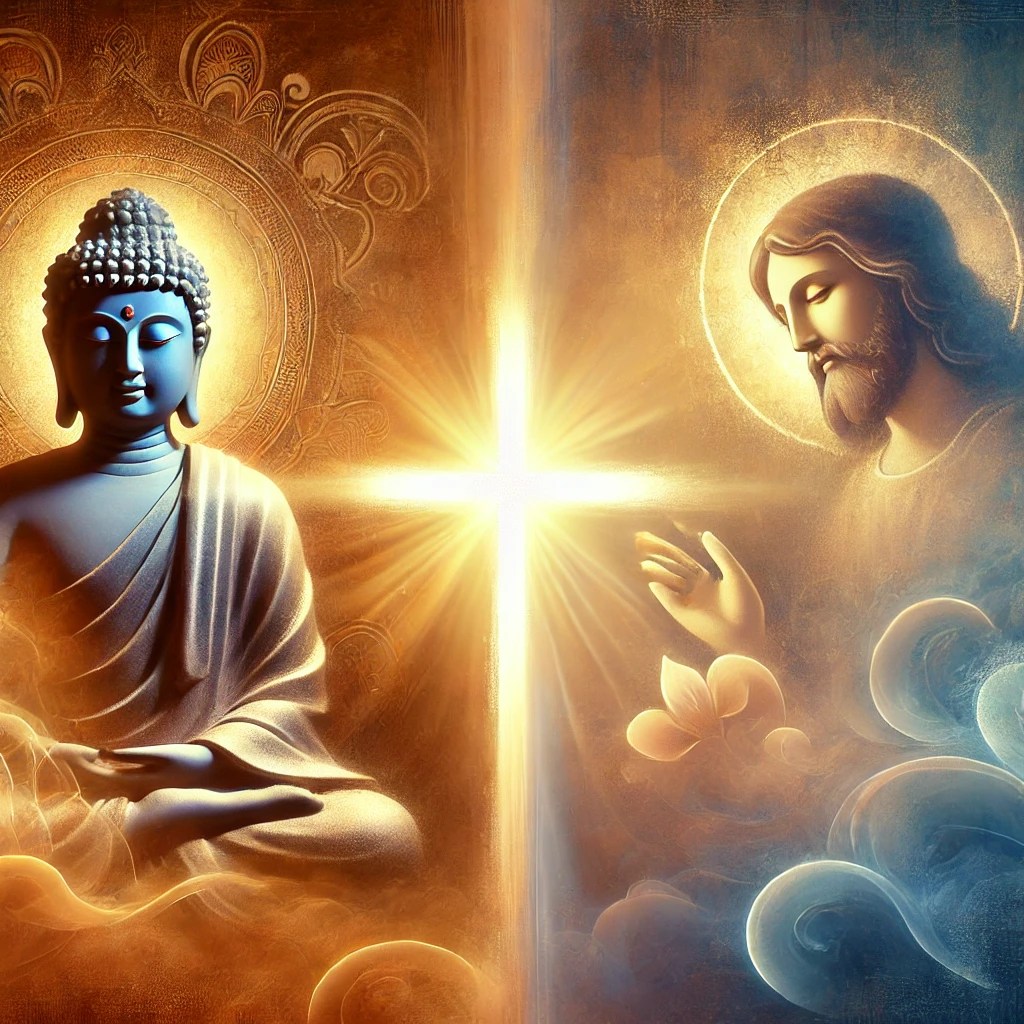
Tag: Spiritual Unity

  • Stillness as a Shared Thread: Rediscovering the Contemplative Heart Across Faiths

    Stillness as a Shared Thread: Rediscovering the Contemplative Heart Across Faiths

    It was two thirty in the morning. I sat in silence, trying to rest into stillness. The world around me slept, yet within me, a gentle inquiry stirred: Why is it that only certain traditions teach us to dwell in this quiet space?

    In my journey through interfaith dialogue, I’ve noticed something curious. In Buddhist practice—and in the Advaita Vedanta stream of Hinduism—stillness isn’t peripheral. It’s central. These traditions invite us, again and again, to be. To rest, not just physically, but inwardly. To let go of striving, stories, even self, and to dwell in the deep, felt presence of this very moment.

    Yet in Judeo-Christian traditions, though rich in prayer, justice, and community, the practice of stillness often seems harder to find. It’s not that it doesn’t exist—it does. The Psalms offer, “Be still and know that I am God.” Christian mystics, Jewish Kabbalists, and solitary monks across centuries have spoken of the silence where God is most intimately known. But somehow, for many practitioners today, the embodied experience of silence and inward stillness is rarely cultivated or taught.

    Why is that?

    Perhaps it’s because Western religious traditions have long emphasized doing—serving, obeying, proclaiming, believing. These are beautiful, powerful acts. Yet they can eclipse the quieter invitation: to rest in the Divine without needing to understand, explain, or prove.

    Stillness, after all, is not emptiness. It is the fertile ground from which love, compassion, and insight can grow. It is the place where breath returns to breath, and the soul remembers itself—not as an idea, but as a living presence.

    As someone walking the interfaith path, I find hope here. Stillness can be a meeting ground—not a dogma, but a practice. A place where traditions speak not about the sacred, but from it.

    Whether you call it God, the Divine, Buddha-nature, or simply the Mystery—stillness is where it lives in us.

    Maybe now is the time to rekindle that thread. To remind ourselves, and one another, that beyond all teachings and texts, there is a silence waiting to be heard.

    🙏🕊🙏


  • One Vine, Many Branches: Honoring the Shared Wisdom of Judaism and Christianity.

    One Vine, Many Branches: Honoring the Shared Wisdom of Judaism and Christianity.

    Rediscovering the Sacred Bond of Love and Compassion


    Dear reader, as you read and reflect on these ideas, I invite you to share any thoughts, questions, or reflections in the comments. Let’s begin a dialogue rooted in mutual respect, understanding, and a shared journey of spiritual growth. 🙏

    Introduction

    This essay began as a personal contemplation of the mezuzah, a small but profound symbol in Jewish tradition, traditionally placed on the doorposts of a home. As I considered placing a mezuzah in my own home and reflected on the scripture within it, I realized its message is universal—one that resonates deeply with both Jews and Christians.

    The central verse inscribed within the mezuzah comes from Deuteronomy 6:5: “You shall love the Lord your God with all your heart, with all your soul, and with all your might.” This commandment, foundational to Jewish life, is also echoed in the teachings of Jesus in the New Testament, reaffirming its relevance for Christians as well.

    As I meditated on this sacred text, it became clear that the message of the mezuzah transcends religious boundaries. It reminds us of the shared roots between Judaism and Christianity and the common spiritual calling to love God fully and extend that love to others.

    Alongside this divine love stands a second truth just as powerful: “You shall love your neighbor as yourself.” These two commandments form the moral and spiritual backbone of both Jewish and Christian teachings.

    This essay is an invitation to explore the deep threads that connect these two traditions—threads often forgotten but never broken. By recognizing the shared wisdom in their teachings, perhaps we can move closer to a spirit of unity, respect, and understanding between brothers and sisters of faith.


    Shared Commandments: The Heart of the Law

    Both Judaism and Christianity place love for God at the center of spiritual life. In Deuteronomy 6:5, Moses commands the people of Israel: “You shall love the Lord your God with all your heart, with all your soul, and with all your might.” This verse, central to Jewish prayer and identity, calls for complete devotion—an offering of one’s entire being in love and service to God.

    Centuries later, Jesus reaffirms this same commandment in Matthew 22:37-40, when asked to name the greatest law: “You shall love the Lord your God with all your heart, with all your soul, and with all your mind. This is the first and great commandment. And the second is like it: You shall love your neighbor as yourself. On these two commandments hang all the Law and the Prophets.”

    This shared commandment reveals a profound truth: love for God is not bound by tradition or time—it is a universal call that transcends religious divisions. It challenges all people of faith to seek a relationship with the divine that is wholehearted, sincere, and rooted in compassion.


    Love in Action: The True Measure of Devotion

    Loving God with all your heart, soul, and might is not merely a matter of belief or ritual—it is a call to action. Both Judaism and Christianity teach that true devotion is reflected in how we treat others, especially the most vulnerable.

    In Matthew 25:31-46, Jesus offers a powerful reminder of this truth. Speaking of the final judgment, he says, “I was hungry and you gave me food, I was thirsty and you gave me drink, I was a stranger and you welcomed me.” When his followers ask when they ever saw him in need, he replies, “Truly I tell you, whatever you did for one of the least of these brothers and sisters of mine, you did for me.” Here, love for God is directly tied to compassion for others—acts of kindness are not separate from spiritual devotion; they are its highest expression.

    In Jewish tradition, this same responsibility runs deep. The Torah calls upon the people of Israel to care for the stranger, feed the hungry, and support the poor. This obligation is rooted in the idea of tikkun olamrepairing the world. Just as Jesus urged his followers to serve “the least of these,” Judaism teaches that justice and compassion are the foundation of true faith.

    Paul’s words in Romans 11:17-18 offer a reminder to Christians of this shared spiritual lineage: “You, though a wild olive shoot, have been grafted in among the others and now share in the nourishing sap from the olive root.” This powerful metaphor points back to the covenant made with Israel and reminds Christians that their faith is deeply connected to the family of Moses.

    Both traditions agree that love for God must ripple outward, transforming how we live and how we respond to suffering and injustice. Whether offering comfort to a stranger, feeding the hungry, or working for fairness in society, these acts are living prayers—evidence of a heart truly devoted to God.


    The Heart of the Law: A Shared Ethical Foundation

    The essence of the Torah, as explained by the great Jewish sage Rabbi Hillel, reveals a deep connection between Jewish and Christian teachings. When asked to summarize the entire Torah while standing on one foot, Hillel responded: “What is hateful to you, do not do to your fellow. This is the whole Torah; the rest is commentary—now go and learn.” (Talmud, Shabbat 31a)

    This profound teaching echoes the words of Jesus in Matthew 22:37-40, when he summarizes the core of the law with two commandments: “You shall love the Lord your God with all your heart, with all your soul, and with all your mind. This is the first and great commandment. And the second is like it: You shall love your neighbor as yourself. On these two commandments hang all the Law and the Prophets.”

    To clarify what it means to love one’s neighbor, Jesus shared the Parable of the Good Samaritan (Luke 10:25-37). In this story, a man is beaten, robbed, and left for dead on the side of the road. While two religious leaders pass by without offering help, a Samaritan—considered an outsider and enemy by the Jews of that time—stops, cares for the wounded man, and ensures his recovery. Jesus concludes the parable by asking, “Which of these three do you think was a neighbor to the man who fell into the hands of robbers?” The answer is clear: the true neighbor is the one who showed mercy.

    This teaching expands the definition of neighbor beyond faith, ethnicity, or social standing. It challenges both Jews and Christians to extend compassion not just to those within their own communities but to anyone in need.

    In Judaism, this ethic underlies tikkun olam—the responsibility to repair the world through acts of justice, kindness, and compassion. In Christianity, Jesus elevates this same principle as the heart of spiritual practice, calling his followers to embody love through action, humility, and grace.

    By highlighting these shared teachings, we are reminded that the true fulfillment of God’s commandments lies not in rigid observance alone, but in living out love, compassion, and justice in our relationships with one another. This shared foundation offers a bridge between the two faiths—a path toward unity, mutual respect, and a deeper understanding of God’s will.


    Grafted into the Tree: Embracing the Heritage of Faith

    Rather than seeing Judaism as something other than Christianity, it is time to recognize it as the foundation upon which Christianity stands. Paul’s words in Romans 11:17 remind us that to be grafted into the tree means to partake of its nourishment, wisdom, and heritage. It is not a rejection of what came before but an invitation for mutual love, respect, and enrichment.

    Jesus himself speaks of this connection in John 15:5: “I am the vine; you are the branches.” Just as the branch draws life from the vine, so too does Christianity draw from the rich soil of Judaism. The tree cannot flourish without its roots, and the branches cannot bear fruit without remaining connected to the source.

    This is not a call for conversion or blending of distinct identities but an invitation for Jews and Christians to honor their shared foundation. Christians can deepen their faith by reconnecting with the Jewish roots of their beliefs, while Jews can discover new dimensions of understanding by engaging with the teachings of Jesus as a Jewish rabbi who sought to fulfill, not abolish, the law.

    In truth, we are not two separate trees but branches of the same living vine, drawing from the same source of divine love and wisdom. Our shared growth comes from recognizing that we are, and always have been, brothers and sisters in God—each tradition carrying pieces of a larger, more complete understanding of the sacred.


    A Personal Reflection: Living Between Traditions

    For me, this exploration is not just intellectual—it’s deeply personal. I was born Jewish, and later, I was baptized as a Christian. In many ways, my life has become a living journey of discovering what it truly means to honor both faiths, to follow the teachings of Moses and Jesus, and to embrace the fullness of that shared spiritual heritage.

    It’s important to remember that Jesus himself was not a Christian—he was a Jew, a rabbi who lived within the Jewish tradition and taught from its sacred texts. His earliest followers were also Jews, seeking to live by the wisdom and love that Jesus embodied. The term Christianity only came into use later, as different groups of followers began to spread his message beyond the Jewish community.

    When Emperor Constantine formalized Christianity as the official religion of the Roman Empire, many elements of Jewish practice were stripped away or outlawed altogether. Practices like observing the Sabbath and following traditional Jewish customs were pushed aside, creating a divide that Jesus himself never intended. What emerged was a new religion, shaped as much by political forces as by spiritual devotion—one that often distanced itself from the Jewish roots it was born from.

    I believe that if Jesus were to witness how Christianity has evolved, he might be deeply saddened by how far it has drifted from his original teachings. Yet, there is hope in returning to the heart of Jesus’ message—a message rooted in love and the recognition that we are all brothers and sisters under God.


    Mutual Growth: A Shared Path Toward Spiritual Evolution

    The relationship between Judaism and Christianity has long been marked by misunderstanding and historical wounds, leading many Jews to reject Christianity as a matter of instinct, and many Christians to overlook their deep connection to Judaism. Yet, if we look beyond these divisions, we find that both traditions have much to offer for each other’s growth.

    Christianity carries a message of personal transformation, forgiveness, and universal compassion that can speak to the evolving spiritual journey of the Jewish people. At the same time, Judaism offers Christians a richer understanding of the sacred traditions, practices, and wisdom from which Jesus himself emerged—a grounding in the covenantal relationship with God that nurtured the earliest followers of Christ.

    This is not a call for conversion or the blending of distinct identities but an invitation for mutual love, respect, and enrichment. Christians can deepen their faith by reconnecting with the Jewish roots of their beliefs, while Jews can discover new dimensions of understanding by engaging with the teachings of Jesus as a Jewish rabbi who sought to fulfill, not abolish, the law.

    In truth, we are not two separate trees but branches of the same living vine, drawing from the same source of divine love and wisdom. Our shared growth comes from recognizing that we are, and always have been, brothers and sisters in God—each tradition carrying pieces of a larger, more complete understanding of the sacred.


    Acknowledging Differences, Embracing Common Ground

    It would be incomplete to speak of unity without acknowledging the reality that, for some Jews and some Christians, there are irreconcilable differences—historical, theological, and cultural divides that cannot be overlooked or easily bridged. The weight of history, marked by persecution, misunderstanding, and pain, has left scars that continue to shape the relationship between these two faiths.

    Yet, even in the presence of these differences, there exists a profound depth of shared values and spiritual connection. Both Judaism and Christianity hold sacred the commandments to “love the Lord your God with all your heart, with all your soul, and with all your might” and to “do unto others as you would have them do unto yourself.” These universal truths form the foundation for mutual respect and understanding.

    Recognizing both our differences and our shared roots allows us to move forward not in denial, but in hope. It opens a space where Jews and Christians can honor their distinct paths while still working toward a future of harmony, wisdom, and compassion. In doing so, we fulfill the deepest intentions of both faiths—to love God fully and to extend that love outward in service to one another.

    🙏🕊🙏

  • Into the Mystic: The Universal Presence Behind All Paths

    Into the Mystic: The Universal Presence Behind All Paths

    There is a timeless pull within the human heart, a pull that mystics across the ages have followed into realms beyond words. At the heart of their journeys, in every tradition, is a shared glimpse of something infinite and intimate, an essence that defies borders or labels. It’s been called by many names—Naked Awareness, Pure Presence, the Kingdom of Heaven within, and simply, I am. Despite the variations, the core is always the same: an invitation to touch the stillness at the center of our being, where all sense of separation quietly dissolves.

    Mystics across traditions—whether Buddhists, Christians, Sufis, or followers of Advaita—have left clues for us, each one pointing back to this same universal awareness. Tibetan Dzogchen, for instance, speaks of Naked Awareness, a mind so utterly clear and open that nothing need be added or removed. In this view, awareness is naturally luminous, like an open sky, vast and untouched by thoughts or concepts. The practice, if it can be called that, is simply to rest—free from striving, free from the need to grasp anything. It is awareness itself, just as it is.

    In the traditions of Advaita Vedanta, Ramana Maharshi posed the question, “Who am I?” Not to point to an answer but to turn us back to a sense of self beyond thoughts and identity. With each inquiry, the seeker’s attention is drawn back, away from thoughts and identities, into a place beyond all definition. This, he taught, is the Self, pure and indivisible—a silent, undivided presence.

    Christian mystics, too, found this universal ground within. “Be still and know that I am God,” whispers a line from the Psalms, urging a quieting of the mind so profound that the divine presence within each of us reveals itself. It is an invitation to encounter God not as an outside force, but as the very heart of our being—the unspoken “I am” beyond thought.

    Sufis describe this experience as a union with the Beloved, a love so profound that all sense of self dissolves. In Sufi poetry, God is the Beloved who lives within, waiting for the self to step aside so that the Divine can be known, not as separate, but as one with all that we are. Each of these traditions, in its way, guides us to an experience beyond the confines of self, into the space where awareness rests in itself, undivided.

    It is not so much a technique or practice as it is a gentle turning inward, a quieting, a surrendering into what has always been here. Let us pause for a moment. The words, after all, can only lead us to the door.

    Begin by finding a comfortable place to sit and close your eyes if that feels natural. Notice the rhythm of your breath and let yourself settle into the present moment. There is nothing to attain here, nothing to change. Let your breath rise and fall as it will, and simply allow yourself to be.

    Gradually, feel into your own presence, that simple sense of “I am.” Not your thoughts, not your sensations, but the awareness that notices them all. Rest in that sense of being here, alive, awake. There’s no need to go further than this. Let go of any sense of searching or effort; simply let your attention melt into the quiet space of awareness itself.

    If thoughts arise, there’s no need to push them away. You might notice them, perhaps softly wonder, “Who is aware of this thought?” Not to seek an answer, but to draw your attention back into the simple awareness that witnesses everything. Rest as that awareness, noticing how it is steady, quiet, and open, beyond anything the mind might hold onto.

    Here, in this openness, lies the mystery that mystics across all traditions have discovered. There is a silent presence here that does not come and go, even as everything else changes. It is the same presence that Dzogchen calls Naked Awareness, Advaita describes as the Self, and Christian mystics know as the divine within. This presence is universal, boundless, and utterly simple. It is the same awareness in everyone, untouched by belief or background.

    As you sit, allowing yourself to rest in this awareness, notice how it has no boundary, no form. It is the same in all beings, a shared presence connecting us all. In this stillness, you are already whole, already free, and deeply one with all. This is where all paths meet—an awareness, vast and simple, that is always here, waiting to be recognized as the essence of everything.

    And so, as we return to our day from this quiet place, we carry a reminder: that beyond every tradition and label, there is a shared, undivided presence—a timeless awareness that each of us holds within.

    🙏🕊️🙏

  • Teachings of Jesus: Reclaiming the Inclusive Message of Christ

    Teachings of Jesus: Reclaiming the Inclusive Message of Christ

    It is said that Jesus once spoke of a way, a truth, a life so profound that it encompassed the very heart of God. “I am the way, and the truth, and the life,” he told his followers. “No one comes to the Father except through me.” These words, layered with mystery and spoken from love, have carried through centuries. And yet, how often they have been misunderstood, repurposed into boundaries rather than bridges, wielded as walls instead of the doors they were meant to open.

    There is a kind of longing in his words—a deep invitation to move beyond the illusions of separation, to find the divine not outside ourselves, but within, as Jesus himself had done. In Jesus’ teaching, this “way” was not a narrow path limited to a chosen few. It was a state of being, a way of love so expansive that it could hold the world. His life was a testament to living in union with the divine, a living call to embody forgiveness, humility, compassion, and boundless love.

    But history, with its tendency to divide, layered his words with exclusivity. Over time, these teachings became more rigid, turning a universal invitation into something that seemed fixed and exclusive. Jesus’ invitation to “follow me” became a doctrine that built walls, casting out rather than gathering in. And yet, if we listen closely, we can hear in his words the open-hearted wisdom of a mystic, inviting everyone to walk the path of inner transformation.

    Imagine Jesus not as a gatekeeper, but as a guide. His invitation was not a declaration of exclusivity, but a call to realize that same divine life he had found—to awaken to the “I am” within each of us, the unifying spirit that he embodied. In this light, Jesus’ teachings stand alongside those of the Buddha, of Krishna, of all those who point to the divine presence within. His “way” is the way of being itself, the universal path of transcending the self, of living from a heart unburdened by the ego’s needs.

    To reclaim the inclusivity of Jesus’ message is to see that he points to a God who is not bound by labels or affiliations, a God who resides in each of us. In this understanding, his words are not a barrier but a bridge, a call to see divinity reflected in every soul, beyond all boundaries of religion or creed. His “way” becomes not the only way but a path that opens us to the vastness of God, a way that invites all, through love, to come home.

    🙏🕊️🙏

  • Buddhism and Christianity: Finding Common Ground in Compassion and Ethical Living

    Buddhism and Christianity: Finding Common Ground in Compassion and Ethical Living

    To many, the word Buddhism may conjure images of statues or rituals that seem foreign or difficult to understand, particularly for those from a conservative Christian background. However, at its heart, Buddhism is not about worshiping an idol or a false god, as some might mistakenly believe. Rather, it is a path of inner transformation that shares many core values with Christianity—values like compassion, ethical living, and the sincere effort to become a better person.

    In Buddhism, practitioners turn to the Three Jewels: the Buddha, who represents the potential for awakening within all of us; the Dharma, the teachings that show the way to live with love, wisdom, and peace; and the Sangha, the community of practitioners who support one another in their spiritual journey. In this sense, the Buddha is not a deity to be worshiped but a teacher, much like how Christians might revere the wisdom of Jesus Christ. The focus is not on idol worship, but on following a path that leads to moral and spiritual growth.

    At first glance, the colorful rituals, sacred music, and intricate costumes may seem confusing or overwhelming. Yet these outward forms are simply expressions of an inner practice that remains deeply practical and profound: the training of the mind. Tibetan Buddhism is not a religion in the conventional sense of belief or dogma but rather a transformative path aimed at purifying the mind. Through meditation, visualization, mantra, and ritual, the practice cultivates clarity, compassion, and liberation from egoic tendencies.

    Just as Christians seek to become more like Christ—striving for kindness, humility, and love—Buddhists seek to become the best version of themselves, nurturing virtues such as compassion, patience, and wisdom. To be a Buddhist is to make a commitment to ethical living, to ensure that one’s actions bring benefit rather than harm to others. This mirrors the Christian commandment to “love thy neighbor as thyself.”

    At the heart of both traditions lies a dedication to improving one’s character and living in a way that reflects love and goodness. For Buddhists, this means confronting the mind directly—meeting thoughts and emotions with honesty and care. Instead of avoiding or denying the difficulties of life, Buddhists engage with their minds head-on, seeking to transform fear, anger, or selfishness into peace, kindness, and clarity. This inner work echoes the Christian call to examine one’s heart, repent, and strive for purity in thought and deed.

    In his teachings, Dilgo Khyentse Yangsi Rinpoche offers a striking and relatable metaphor that bridges ancient wisdom with modern technology. He likens the practice of Dharma to the way we sync our wireless earbuds with our phones. Just as the earbuds must be paired and in sync with the phone to receive the signal and work properly, our minds must be aligned with the Dharma to receive its benefits.

    This idea resonates with many spiritual traditions. For Christians, the same concept applies to our relationship with the Holy Spirit or with Christ’s teachings. God is always present within us and around us, but if we are distracted by anger, impatience, or worldly concerns, we lose that vital connection. Simply believing in Jesus’ sacrifice isn’t enough if we are not living in sync with his teachings. By aligning our hearts and minds with Christ’s message of love, forgiveness, and humility, we can fully experience the divine presence and live in harmony with God’s will.

    Far from being a pagan religion, Buddhism is, at its core, a path of deep moral reflection and inner peace. Like Christianity, it calls for a transformation of the heart—one that aligns us with love, compassion, and a life of service. While the outward expressions of these paths may look different, the goal is the same: to become more loving, wise, and true to the divine nature that exists within each of us.

    For Christians who might feel uncertain about Buddhism, it can be helpful to remember that the values of both traditions are not in conflict but in harmony. Whether we call this journey “walking with Christ” or “following the Dharma,” both paths seek the same destination—a life lived with integrity, compassion, and love for others. By finding these common threads, we can open our hearts to one another, honoring the diversity of ways that humans seek truth and goodness.

    I invite you to watch the video below, which served as the inspiration for this post. It offers a beautiful glimpse into the teachings of Dilgo Khyentse Yangsi Rinpoche and the heart of Tibetan Buddhism. This film explores not only the path of mind training but also the deep compassion and wisdom that unite Buddhist and Christian values. Whether you are new to these teachings or have been walking your own spiritual path for years, this video provides an opportunity to reflect on the shared human quest for love, kindness, and awakening.

    🙏🕊️🙏

  • A Prayer for Universal Peace and Harmony

    O Divine Source of all creation,
    The One who is known by many names,
    And who dwells in every heart,
    We come before you with humble hearts,
    Seeking your blessing of peace and harmony.

    May your love flow through us like a river,
    Washing away all hatred, division, and fear,
    And filling our hearts with compassion for all beings.

    Teach us to see beyond our differences,
    To honor the divine in every person,
    And to live as instruments of your peace in this world.

    May we walk the path of righteousness,
    Guided by your wisdom and grace,
    So that our actions may bring healing and unity
    To a world that so deeply longs for peace.

    Let all nations and peoples come together,
    In a spirit of understanding and respect,
    Embracing the truth that we are all your children,
    And that in your eyes, we are one family.

    Grant us the courage to forgive,
    The strength to love without condition,
    And the wisdom to seek justice and mercy
    For every living being.

    May your light shine in our hearts,
    And may we carry that light into the world,
    Bringing hope to the weary,
    And peace to all who suffer.

    In your holy name, we pray,
    For goodwill on earth, and peace among all beings.

    Amen.
    Om Shanti Shanti Shanti.
    Salaam.
    Shalom.

    🙏🕊️🙏

  • Meditation Practice: A Journey Beyond the Beyond

    Discovering Inner Peace and Infinite Awareness

    Introduction

    Meditation is more than a practice; it’s a journey into the depths of our consciousness. In this meditation, we explore the idea of transcending the known and the familiar, moving “beyond, beyond, beyond altogether beyond.” This practice invites us to step into a space of unity and interconnectedness, where all forms, names, and divisions dissolve into the infinite.

    1. Find a Comfortable Position

    Begin by finding a position that allows your body to relax fully. Whether you are seated or lying down, the key is to be comfortable yet alert. The body’s comfort is crucial because it sets the stage for the mind to settle. Feel your body connecting with the earth beneath you, anchoring you in the present moment.

    1. Settle into Breath Awareness

    Once settled, bring your attention to your breath. Start with a few deep breaths, inhaling deeply through the nose and exhaling through the mouth, to release any tension. As your breath naturally begins to flow, let it become your anchor, guiding you into a state of calm. Notice the rhythm of each inhalation and exhalation, the gentle rise and fall of your chest. The breath is your gateway to inner peace, a simple yet profound anchor in your meditation practice.

    1. Contemplative Focus

    With your breath steady and your mind calm, gently introduce the phrase, “beyond, beyond, beyond altogether beyond.” Let this phrase echo softly in your mind, like a mantra guiding you into deeper states of awareness. This phrase is not just words but a call to move beyond the ordinary, beyond all limitations and conceptual boundaries. Allow it to expand your awareness, leading you into a space where the mind begins to release its grip on form and definition.

    1. Reflect on Unity

    As you repeat the phrase, allow yourself to contemplate the idea of unity. In this space, visualize transcending all names, forms, and divisions. Imagine moving beyond the confines of any single belief system or identity. Here, in the vast expanse of awareness, all boundaries fade away, leaving only a sense of interconnectedness with all that is. You are part of the infinite, boundless space of consciousness, where the true nature of reality reveals itself as one seamless whole.

    1. Let Go

    During this meditation, thoughts, images, or sensations will naturally arise. This is the mind’s nature. When they do, simply acknowledge them with gentle awareness and let them pass. There is no need to engage or judge these experiences. Instead, return to the contemplation of the “beyond.” Rest in the spaciousness of this awareness, allowing yourself to float in the infinite, beyond the reach of the thinking mind.

    1. Return to Breath

    If your mind begins to wander or gets caught in specifics, gently return to your breath. The breath is your constant companion, always available to guide you back to the present. Use it as a tool to refocus, bringing your attention back to the contemplation of the infinite. Each breath is a reminder of the endless cycle of life, a microcosm of the infinite within you.

    1. Rest in Awareness

    As your meditation session draws to a close, let go of the contemplation and simply rest in the awareness you’ve cultivated. In this space, there is no need to strive or seek; just be. Allow yourself to experience the peaceful, unified space beyond thoughts and concepts. This is the essence of meditation—a state of pure being, where the mind is quiet, and the heart is open.

    1. Gently Close the Session

    When you feel ready, slowly bring your awareness back to the present moment. Take a few deep breaths, feeling the air fill your lungs and the life force within you. Gently open your eyes, carrying with you the sense of unity and expansiveness that you’ve cultivated. As you move into your day, let this experience inform your actions, your thoughts, and your interactions with others. Let the sense of interconnectedness and peace be a guiding light in all that you do.

    Conclusion

    This meditation practice is an invitation to explore the boundless nature of your being. By going beyond the ordinary, beyond the known, we touch the essence of who we truly are—unbounded, limitless, and one with the infinite. As you continue this practice, may you find deeper peace, greater clarity, and a profound sense of unity with all that is.

    Embracing the Beyond Meditation ( Concise )

    1. Find a Comfortable Position: Sit or lie down comfortably, allowing your body to relax and settle.
    2. Settle into Breath Awareness: Begin with a few deep breaths to center yourself. Allow your breath to become your anchor, focusing on the gentle rhythm of inhalation and exhalation.
    3. Contemplative Focus: As you continue to breathe, bring your awareness to the concept of going “beyond, beyond, beyond altogether beyond.” Let this phrase echo in your mind, guiding you toward a sense of expansiveness.
    4. Reflect on Unity: Contemplate the idea of transcending all names, forms, and divisions. Visualize yourself moving beyond the confines of any single belief system or identity, into a vast, boundless space of unity and interconnectedness.
    5. Let Go: As thoughts, images, or sensations arise, simply acknowledge them and let them pass, returning to the contemplation of the “beyond.” Allow yourself to rest in the spaciousness of this awareness.
    6. Return to Breath: If your mind begins to wander or get caught in specifics, gently bring your focus back to the breath and the contemplation of the infinite.
    7. Rest in Awareness: As you reach the end of your session, let go of the contemplation and simply rest in the open awareness you’ve cultivated. Allow yourself to experience the peaceful, unified space beyond thoughts and concepts.
    8. Gently Close the Session: When you’re ready, slowly bring your awareness back to the present moment. Take a few deep breaths and gently open your eyes, carrying the sense of unity and expansiveness with you as you go about your day.

    In meditation, “beyond” isn’t necessarily a place or an image, but a state of being where you let go of all mental constructs and just rest in awareness. It’s like floating in a boundless ocean without needing to know where you are or where you’re going—just being, in the infinite space that surrounds you.

    Take your time with this meditation, and when you’re ready, feel free to share your experience.


    Consider “beyond” as the silence after a sound, the stillness after a thought.

    The stillness after a thought is a profound concept in meditation and spirituality, and it offers a doorway into the experience of “beyond.” Here’s an expanded reflection:

    The Nature of Thought:

    Thoughts are like ripples on the surface of a pond. They arise, move across the mind, and eventually fade away. When we are caught up in these thoughts, it’s like being tossed around by waves, unable to find a moment of calm. Thoughts are often tied to past experiences, future expectations, or the labels and identities we’ve constructed. They create movement and activity within the mind, filling it with noise.

    The Stillness After a Thought:

    When a thought subsides, there’s a moment—perhaps just an instant—of pure stillness. This stillness is the space where no thought exists, and in that space, there’s a sense of peace, silence, and vastness. It’s like the surface of the pond becoming completely still and clear after the ripple has passed.

    In this stillness, you are no longer engaged with the content of the mind. You aren’t thinking, analyzing, or identifying with any particular idea. Instead, you are simply aware. This awareness is unbound by the limits of thought and is vast, open, and spacious. It’s a state of pure being, where you’re not defined by your thoughts, emotions, or any other mental activity.

    Experiencing the Beyond:

    This stillness is where the “beyond” begins to reveal itself. In the absence of thought, you touch a space that is not constrained by the usual boundaries of the mind. It’s beyond names, forms, and identities. In this space, you can sense a deeper presence—a presence that is always there but often obscured by the constant flow of thoughts.

    In this stillness, you might notice a subtle awareness, a quiet aliveness that is beyond words. This is the essence of “beyond”—a space where the mind rests, and the true nature of reality begins to shine through. It’s a place of infinite potential, where the sense of self dissolves, and you feel connected to something much larger, much more profound.

    Resting in the Stillness:

    In meditation, when you notice a thought has passed, instead of immediately seeking the next thought or getting caught in the narrative, simply rest in the stillness that follows. Allow yourself to soak in the silence, to be fully present in that quiet space. Over time, this stillness can expand, and the gaps between thoughts can become more pronounced, revealing more of the “beyond” each time.

    As you practice, you may find that this stillness becomes more familiar, more accessible. It’s a doorway to deeper states of consciousness, where the sense of self begins to dissolve into the unity of all things. Here, in the stillness after a thought, you begin to experience the true nature of “beyond”—an experience of pure, unbounded awareness.

    This process is not about forcing the mind into silence but gently allowing it to settle, like the pond returning to calm after a disturbance. Each moment of stillness is an opportunity to touch the infinite, to experience a glimpse of the “beyond” that lies just beyond the edge of thought.


    The Long-Term Benefits of Regular Practice

    Engaging in this meditation regularly can bring transformative benefits to your life. As you deepen your practice, you may notice an increase in inner peace, as the mind gradually learns to settle into the stillness after each thought. This stillness can become a sanctuary, offering refuge from the stresses of daily life and helping you cultivate a sense of calm that extends beyond your meditation sessions.

    Over time, this practice can also lead to greater clarity of mind. As you become more familiar with the spaciousness that lies beyond thoughts, your ability to discern what truly matters in life may sharpen. Decisions may come with more ease, as the noise of the mind quiets and you connect with your deeper wisdom.

    Perhaps most importantly, this meditation fosters a deepened sense of unity. By transcending the boundaries of the self, you may begin to experience a profound interconnectedness with all of life. This sense of unity can inspire compassion, empathy, and a more harmonious way of being in the world.

    As you make this meditation a regular part of your life, may these benefits unfold naturally, enriching your inner world and your connections with others. Remember, the journey “beyond” is not a destination but an ongoing process of discovery and growth. Each session is a step on this path, bringing you closer to the limitless potential within.

    Whether it’s your first time exploring the concept of “beyond” or you’ve been on this journey for a while, your insights can inspire others. Share your thoughts, challenges, and any moments of clarity in the comments below. Let’s create a supportive community where we can learn and grow together on this path of inner peace and unity.

    “Gone, gone, gone beyond, gone altogether beyond,
    oh, what an awakening! All hail!”


    — Heart Sutra

    🙏🕊️🙏

  • Om, Hail to the Healer: Embracing the Light of Healing

    Introduction

    In our journey towards healing and spiritual growth, we often find that different traditions offer similar paths to wellness and inner peace. Whether we are invoking the Medicine Buddha or calling upon the Holy Spirit, the essence remains the same: seeking the divine light of healing. This post explores the universal nature of this healing energy, demonstrating how both the Tibetan Medicine Buddha mantra and the Christian invocation of the Holy Spirit guide us towards transformation and renewal.

    The Essence of Healing

    Healing is a journey, not just of the body, but of the mind and spirit. The Medicine Buddha mantra calls upon the essence of healing, inviting us to connect with a deeper source of wellness and harmony. By reciting these words, we align ourselves with the energy of the great healer, the one who transcends the boundaries of physical ailments and touches the core of our being.

    Hail to the Healer

    In the phrase “hail to the healer,” we express reverence and gratitude. This healer is not confined to the realm of the divine but exists within each of us. By acknowledging and honoring this inner healer, we empower ourselves to take an active role in our own healing journey. We salute the wisdom and compassion that reside within, guiding us towards wholeness and balance.

    The Great Healer

    The term “great healer” underscores the boundless nature of this healing energy. It is not limited by time, space, or circumstance. The great healer is a reminder that we are supported by an infinite source of love and light, capable of transforming our deepest wounds into opportunities for growth and renewal.

    Healer of the World

    As we invoke the “healer of the world,” we recognize the interconnectedness of all beings. Our healing is not an isolated event but a ripple that extends outwards, touching the lives of others. By embracing our own healing, we contribute to the collective well-being of the planet. This mantra becomes a prayer for global harmony, fostering a sense of unity and compassion for all.

    May Your Light Ascend

    Finally, the plea “may your light ascend” is a call for enlightenment and upliftment. It is an invitation for the divine light to rise within us, dispelling darkness and illuminating our path. As we chant these words, we open ourselves to the transformative power of this light, allowing it to guide us towards a higher state of consciousness and peace.

    Integrating Christian Perspectives: The Holy Spirit as Healer

    The invocation of healing through the Medicine Buddha mantra can be closely aligned with calling upon the Holy Spirit. In Christian tradition, the Holy Spirit is often described as the comforter, guide, and healer. Just as the Medicine Buddha represents the embodiment of healing, the Holy Spirit embodies divine healing and guidance in the Christian faith.

    The phrase “hail to the healer” can thus resonate deeply with Christians who invoke the Holy Spirit. The Holy Spirit is the source of infinite love and light, capable of bringing about profound transformation and renewal. By recognizing this parallel, we can see that whether we are chanting “Om, hail to the healer” or praying for the Holy Spirit’s presence, we are opening ourselves to the same divine energy of healing and compassion.

    Embracing Interfaith Healing

    By acknowledging the similarities between the Medicine Buddha mantra and the invocation of the Holy Spirit, we foster a sense of unity and shared purpose. Healing, in its truest form, transcends religious boundaries and speaks to the universal human experience of seeking wellness and peace.

    Integrating the Mantra into Daily Life

    Incorporating the Medicine Buddha mantra or invoking the Holy Spirit into our daily practice can be a source of profound healing and inspiration. Here are a few ways to weave these sacred practices into your routine:

    Morning Meditation or Prayer:

    • Begin your day with a few minutes of chanting the mantra or praying for the Holy Spirit’s guidance, setting a tone of healing and positivity.

    Healing Visualizations:

    • As you recite the mantra or pray, visualize a radiant light enveloping you and extending to others, promoting physical and emotional well-being.

    Mindful Moments:

    • Throughout the day, take pauses to silently or audibly chant the mantra or offer prayers, bringing a sense of calm and centeredness.

    Evening Reflection:

    • End your day by reflecting on the healing energies you’ve experienced, offering gratitude for the light within and around you.

    Conclusion

    “Om, hail to the healer, the great healer, the healer of the world, may your light ascend!” These words are more than a mantra; they are a beacon of hope, a testament to the power of healing that lies within each of us. By embracing this sacred chant or invoking the Holy Spirit, we embark on a journey of transformation, guided by the light of the great healer towards a world of compassion, unity, and peace.

    🙏🕊️🙏

  • Lesson 23 of A Course in Miracles (ACIM): Guided Meditation – “I can escape from the world I see by giving up attack thoughts.”

    Lesson 23 of A Course in Miracles presents the lesson: “I can escape from the world I see by giving up attack thoughts.” This teaching challenges us to recognize the role of our thoughts in shaping our perception of reality. By acknowledging that our attack thoughts imprison us in a world of conflict and separation, we can begin to choose thoughts of peace and forgiveness.

    This practice invites us to become aware of the destructive nature of attack thoughts and their impact on our inner peace. By understanding that our thoughts create our experience of the world, we can start to cultivate a mindset of compassion and non-judgment.

    Jesus taught about the transformative power of love and forgiveness. In Matthew 5:44-45, He says, “But I tell you, love your enemies and pray for those who persecute you, that you may be children of your Father in heaven. He causes his sun to rise on the evil and the good, and sends rain on the righteous and the unrighteous.” This teaching aligns with ACIM’s guidance to release attack thoughts and choose love as a path to spiritual freedom and unity.

    By practicing Lesson 23, we align ourselves with Christ’s message of unconditional love and healing. We learn to let go of thoughts that reinforce separation and open ourselves to a deeper connection with divine love and oneness.

    Explore Lesson 23 of A Course in Miracles with us, and discover how giving up attack thoughts can lead to greater peace, joy, and spiritual awakening.

    Guided Meditation: Lesson 23 from A Course in Miracles

    Find a comfortable position, either sitting or lying down, where you can relax and be free from distractions.

    Close your eyes gently and take a few deep breaths, allowing yourself to settle into the present moment.

    Bring your attention to your breath, feeling the sensation of each inhale and exhale.

    Reflect on the central theme of Lesson 23: “I can escape from the world I see by giving up attack thoughts.”

    Contemplate the idea that the world you perceive is a reflection of your thoughts, and by releasing attack thoughts, you can escape from its limitations.

    Acknowledge that attack thoughts only serve to imprison you in a cycle of negativity and fear.

    With each breath, imagine releasing any attachment to attack thoughts, allowing yourself to fully embrace the idea of giving them up.

    Visualize yourself letting go of all thoughts of judgment, criticism, and condemnation, allowing your mind to be filled with peace and love instead.

    Feel a sense of liberation as you release the need to attack and defend, choosing instead to extend love and forgiveness to yourself and others.

    Repeat the following affirmations silently or in your mind:

    “I can escape from the world I see by giving up attack thoughts.”

    “I release all attachment to attack thoughts.”

    “I choose to extend love and forgiveness to myself and others.”

    Allow yourself to rest in this space of peace and forgiveness for a few moments, feeling the weight of attack thoughts lift from your mind.

    When you’re ready, gently bring your awareness back to your surroundings. Wiggle your fingers and toes, and slowly open your eyes.

    Take a moment to reflect on your experience, noticing any insights or shifts in perception that may have occurred.

    Remember that you can return to this meditation whenever you feel called to deepen your understanding of Lesson 23.