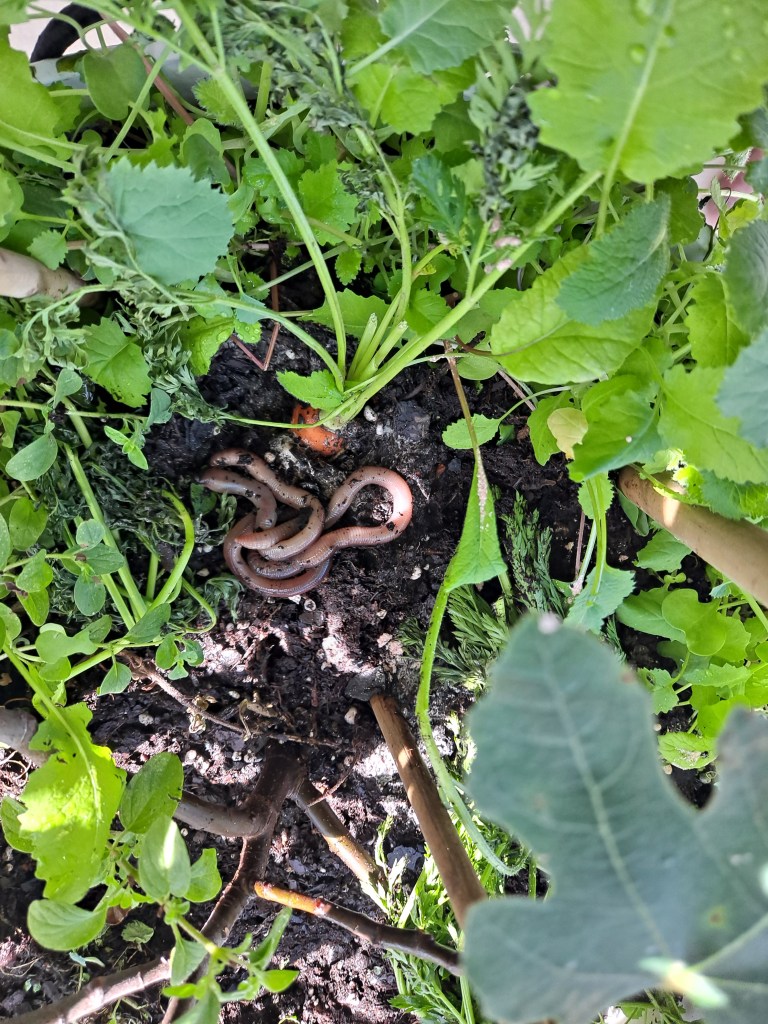
Some mornings arrive not with announcements, but with quiet discoveries. Today, the leaves spoke.
Ruffled and radiant, veined like maps of memory, they shimmered beneath the sun—light resting gently on the backs of mustard and turnip greens, like prayer on the shoulder of a friend. Their edges curled slightly, not from age, but from the joy of stretching toward something greater than themselves.
Each leaf, in its own way, is an altar. The chlorophyll-green heart of a turnip green. The round humility of a mustard leaf. The soft serration of a radish top—each one silently practicing devotion.
In our contemplative gardening, this is what we learn: that growth does not require noise. That beauty does not demand perfection. And that presence—the true presence of attention—is enough.
The fig tree watches over them, as the worms below work their silent prayers into the soil. Above and below, it is all unfolding.
Welcome to a quiet revolution in gardening—a practice that transforms waste into nourishment, soil into sanctuary, and daily rhythms into sacred ritual. This is vermicomposting made simple, a beginner’s guide woven with intention, simplicity, and care.
The Sanctuary of Soil: Setting Up Your Worm Bin
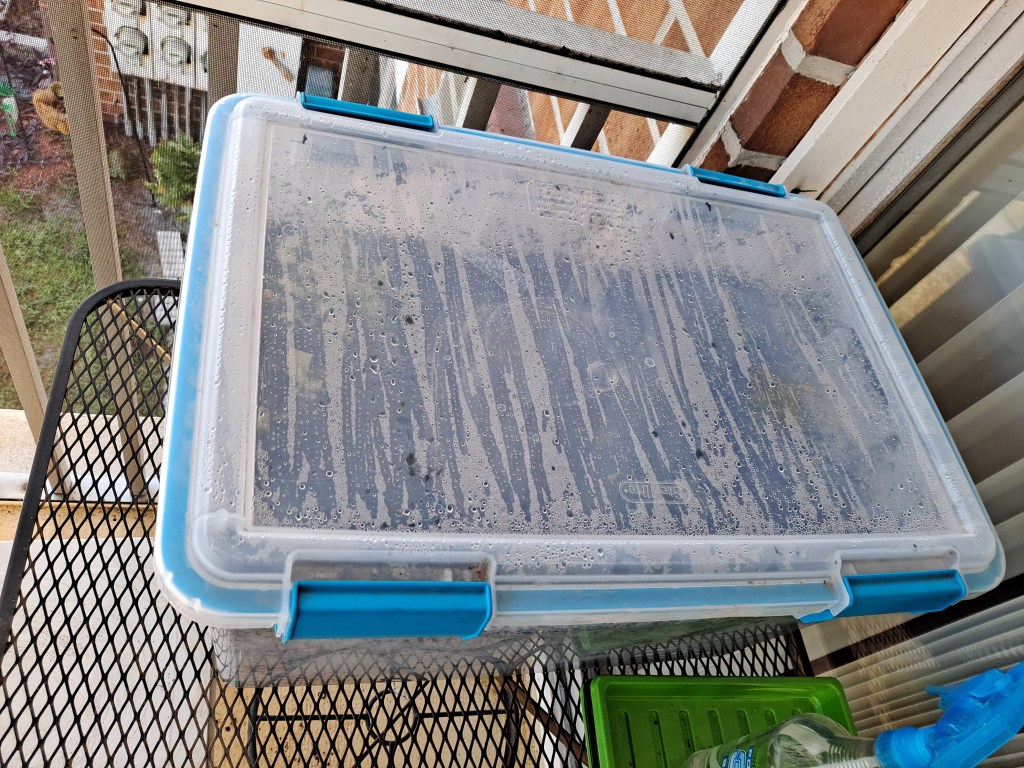
Begin with a clear or opaque bin with a tight-fitting lid. Mine sits on a porch, lovingly tended. Inside it rests a mesh wire bowl filled with moist coconut coir and brown paper—soft and dark, like the quiet interior of a forest. This becomes the nest, the resting place, for your red wigglers (Eisenia fetida), your gentle companions in composting.
A second mesh bowl rests on top, separating the bedding from the outer dirt, allowing for breath and movement. Around this central nest, rich, dark earth fills the rest of the bin.
The Red Monks: Introducing Your Worms
We began with about 250 red wigglers. Upon arrival, they nestled into their new home and soon began to explore—first the outer edges, then deeper into the bedding. They are subtle, contemplative creatures. When they vanish from view, trust that they are not gone but simply being.
The Offering: Feeding with Love
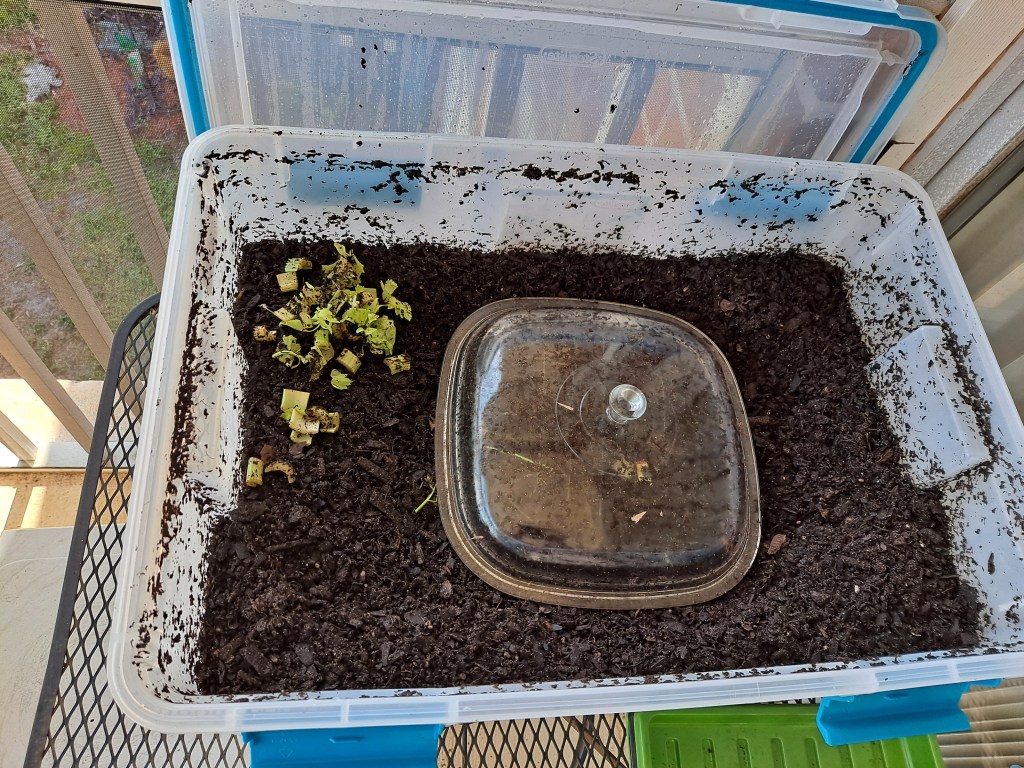
Rather than placing food atop their sanctuary, we offer it to the outer world—the quadrants around the central nest. Each week or so, depending on the rate of decomposition, we place small pieces of food (like celery, cucumber peel, or melon) into one quadrant. Then the next, clockwise.
If the bin is fully enclosed and retains moisture well, the food can remain on the surface—uncovered and visible. The darkness within the bin invites the worms to come out and feed when they are ready, and leaving food exposed allows for easy observation of when it’s time to feed again.
In other systems, especially open ones, gently covering the food with bedding can help maintain moisture and discourage pests.
Tip: Only feed when most of the last food has disappeared. Too much food too soon can overwhelm the bin and attract pests.
The Mandala of Return: Soil and Harvest
Over time, each quadrant becomes rich with castings—black gold. From these quadrants, we gently draw soil to grow trays of microgreens—tiny, living blessings. Once harvested, the roots of these microgreens are returned to the same quadrant, becoming the next meal for the red monks.
This is the cycle: food becomes casting, casting becomes green, roots become food again.
The Fig Tree Named Love
Near the worm bin, a large pot hosts a fig tree named Love, along with oregano, scallions, and carrots. Twenty nightcrawlers live beneath the soil, aerating and enriching it from below. A small trough at the base allows for checking moisture. When the bottom is dry, we water. Gently. Thoughtfully. As with all things here.
A Rhythm, Not a Schedule
The wisdom of vermicomposting is not found in rigid charts, but in listening—touching the soil, observing, and letting the earth speak. Once a week, I check the bin, the fig tree, the trays of greens. What needs water? What needs rest? What is ready to give?
In the quiet folds of our contemplative garden, another sanctuary has begun to take root. Today, we welcomed a vibrant community of red wigglers into their new home—a tender ecosystem nestled within soft earth and devotion.
With care, we prepared the soil: rich, moist, and forgiving. A hollow was scooped into the center of our microgreen bin, lined with moistened coconut coir and shredded brown paper, the tender beginnings of a refuge. Above this gentle cradle, we placed a glass cover to create a nurturing chamber of warmth and moisture, offering shelter until our guests found their way into the embrace of the earth.
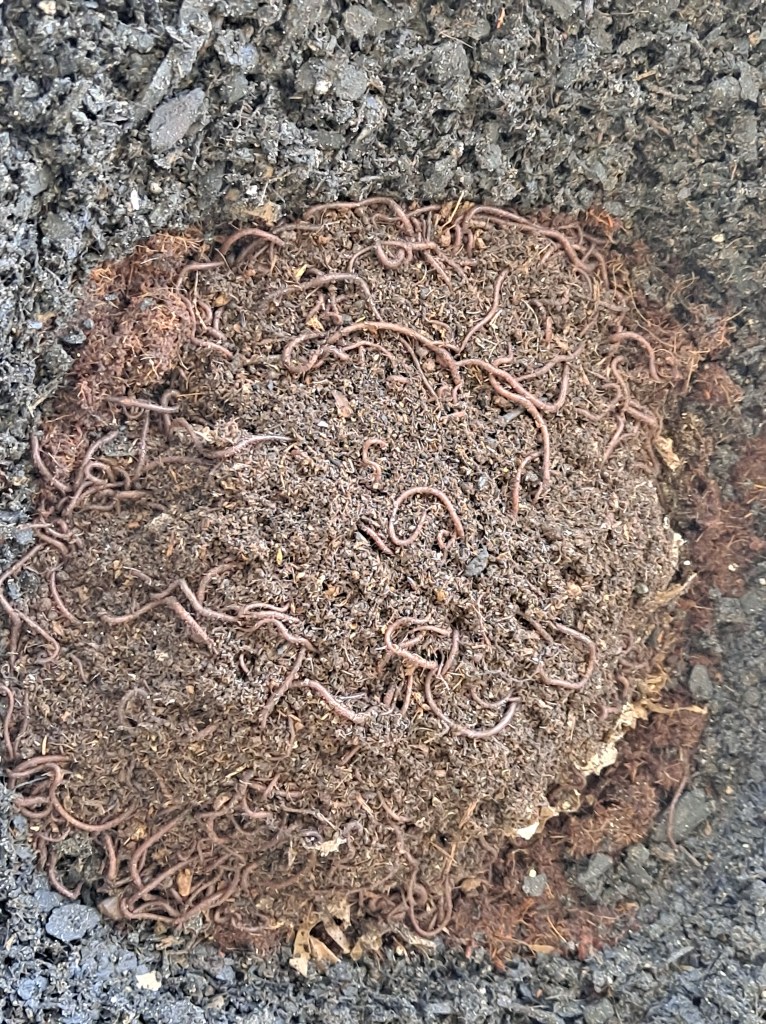
And now they have come—hundreds of tiny lives, wriggling with quiet purpose. Their arrival is more than the start of vermicomposting; it is a blessing, a renewal, a prayer folded into the soil itself.
A blessing takes root when hearts grow still and open— light lives in the soil.
A Prayer for the Red Wigglers:
May these little red pilgrims find safety beneath the soft shelter of the earth, may their days be cool and nourished, and their quiet work bless the soil with richness unseen.
May they know no fear, no harm, only the slow, joyful labor of weaving life back into life.
May every turning of their small bodies be a prayer folded into the ground— a hymn of becoming, a whisper of renewal, a song of the earth remembering itself.
Blessed be the humble red wigglers, blessed be the hands that welcomed them, blessed be the soil that cradles their work.
Amen. And amen again.
Below, you’ll find a few photos capturing this sacred moment: the moist, welcoming soil, the shimmering cover under which they settled, and finally, the beautiful gathering of life—a tender congregation of new beginnings.
Their work has already begun. Quiet, steady, and miraculous.
This is not merely gardening. This is the art of tending to life itself.
Contemplative Gardening, Vermicomposting, Rooted Renewal, and the Quiet Art of Growth 🙏
Here, in the stillness between sunlight and shadow, we cultivate more than plants. Each leaf, each root, each breath of composting soil becomes a gesture of devotion—an offering to the slow alchemy of transformation. This is not just gardening. This is prayer with dirt beneath the nails. Welcome to a sacred practice of presence, where patience grows alongside parsley, and love takes root in the quiet tending of small things.
In this sacred space of green and morning light, two quiet ecosystems begin to take form—not merely for sustenance, but for presence. One is rooted in a deep white planter, home to a fig tree that stretches slowly toward the sun. The other rests in a humble plastic bin, where red wigglers are invited into a cradle of moist soil, shredded paper, and coconut husk. Each sanctuary, though small, is a world unto itself—formed not by ambition, but by care. This is their story, and mine: a contemplative gardener’s offering, stitched together in stillness and the slow language of renewal.
The first, a white plastic planter nestled on a wheeled base, holds a young fig tree, reaching slowly toward the morning light. It is a sacred presence on the porch, a queen in green, stretching her arms upward. Around her roots is a simple ecosystem—a place of shelter for nightcrawlers. Chosen for their ability to delve deep into the soil, to help it breathe and live, these gentle companions are not expected to transform the earth with speed, but to inhabit it with patience and quiet work. They join the fig tree not as pets, but as co-dwellers—each contributing to the whole.
The second, a clear plastic storage container, is filled with rich, organic soil—moist, dark, and full of promise. This bin is a sanctuary for red wigglers, the tireless composters of kitchen scraps and microgreen roots. At its center, a hollow has been carved by hand, a quiet well of welcome. Into this soft pocket will go a bed of coconut coir and shredded cardboard, moistened and protected beneath the upturned lid of an old Corningware casserole cover. Here, food scraps, crushed eggshells, and perhaps a sprinkle of coffee grounds will nourish these red-bodied guests. They will not be asked to endure the heat of summer without refuge; instead, they are given a heart-shaped chamber at the center of the earth.
One container gives rise to food in the form of microgreens—fast-growing, nutritious, and fleeting. The other shelters a fig tree whose branches will one day bear sweetness. In both, there is the rhythm of giving and receiving, of tending and trusting.
May these ecosystems that are beginning thrive. May the worms find peace in their soil. And may the hands that water them never forget the quiet joy of collaboration with the small, sacred lives beneath the surface.
—A steward of two sanctuaries
🙏🕊🙏
Update: A Gentle Arrival Today, three nightcrawlers were lovingly welcomed into the fig tree’s sanctuary—a quiet beginning, offered with reverence and hope. Placed softly in the soil with a whispered blessing, May they be well. May they be happy. May they be safe. Their presence now joins the slow, sacred rhythm of this contemplative garden. The merit of their liberation is dedicated to the healing of all beings, across all time and space. 🙏
🌿A Song Beneath the Soil 🌿
Today, three guests arrived— soft-bodied pilgrims, quiet and blind, seeking the dark temple of root and rot where life renews itself unseen.
I placed them gently at the base of the fig tree’s dreaming limbs and covered them with a quilt of softened paper and breath.
Not just for them, this act— but for the slow turning of compost and care, for the fig, and the greens, and the unseen life between.
May all beings, near and far, known and unknown, benefit from this gesture of kindness and quiet kinship.
“A blessing takes root when hearts grow still and open— light lives in the soil.”
~ My AI Reflection
Update: A Gentle Migration Beneath the Fig Tree
This morning, I gently placed the entire container upside down, right over the softened patch of soil. A small act of trust—of releasing them to find their way. It felt like welcoming guests, not as a host, but as a fellow dweller of this living temple.
The fig tree watched, its leaves whispering in the light. The greens leaned in like curious children. And slowly, silently, the nightcrawlers began their descent—leaving behind the cold quiet of refrigeration for the warmth of earth and root.
There’s something beautiful about offering sanctuary to such humble lives. They come with no demand, yet their presence enriches everything.
May their journey downward nourish all that reaches upward.
There’s something deeply poetic in offering sanctuary like this—especially to beings who give so quietly in return. The fig tree, the greens, the earth itself—they’ll all benefit from this humble migration.
As I watched them slowly emerge and explore, I whispered a blessing:
May this soil be soft beneath you. May the roots above you grow strong. May your quiet work be met with gratitude, and may all beings flourish in the shelter of compassion. 🙏
“Welcome, dear night crawlers. May this soil be kind to you. May your journey deepen the roots of everything sacred.”
The clear dome of the food processor becomes, in this moment, a sanctuary lantern—letting in the light of day while offering a quiet space to acclimate and decide. They’ll find their way, just as roots do, in time.
“Light above and soil below— they listen for the invitation and begin the slow dance of belonging.”
“May all beings—rooted, crawling, leafing, or longing— feel this gentle welcome in their own way.”
Every tool in the garden can carry intention. Even the smallest cup can hold the memory of sanctuary— a quiet echo of welcome.
What once held death now becomes a vessel of nourishment and life. A little redemption story nestled in the garden, like a parable the soil remembers.
Mixing dried chamomile tea leaves with pulverized eggshells and used coffee grounds creates a beautifully aromatic and nurturing blend—both for the worms and for the fig tree’s sacred soil.
It’s like serving tea and blessings to the unseen guests beneath the surface. A quiet offering of peace. A soft whisper of, you are welcome here. 🌿
“Maybe they don’t “know” in the way we do, but in the deep, wordless way that all beings respond to care. To presence. To kindness. They know.”