Tag: spiritual growth

  • Swimming Past the Alligator

    Swimming Past the Alligator

    Dreams, healing, and the long work of becoming whole

    This morning I remembered a small piece of a dream.

    I was swimming in water, and there was an alligator nearby.

    Instead of panicking, I simply swam past it.

    I remember making an aggressive sound—not from fear, but from protection. I was not alone. There was a child with me, and I felt responsible for their safety.

    Later I remembered another fragment: in another dream, I was offering gentle spiritual guidance to a young person.

    These were only fragments.

    But sometimes fragments are enough.

    Because sometimes a dream does not come to entertain us.
    Sometimes it comes to show us something we could not see before.


    The dreams we have when we are young

    When I was very young—single digit years—I had frequent nightmares. In those dreams I was being chased or threatened by monsters. I never confronted them. I always ran.

    There was fear.
    There was helplessness.
    There was no sense of power.

    Eventually those nightmares stopped.

    But something else remained.

    What followed was not nightmares, but something quieter and harder to name: a long period of adult life marked by insecurity, lack of confidence, and the feeling of not quite fitting into the world.

    The monsters had left my sleep.

    But their shadows remained in my waking life.

    Many people know this experience. Trauma does not always continue as dramatic nightmares. Sometimes it continues as hesitation. As self-doubt. As the quiet feeling of being different or unsafe without knowing exactly why.

    And sometimes this can last decades.


    A word I did not understand for thirty years

    When I was in my thirties I first encountered a psychological word:

    Individuation.

    Carl Jung used this word to describe the lifelong process of becoming whole — integrating the wounded parts of ourselves, the fearful parts, the hidden parts, and the strong parts into one living person.

    For thirty years I did not really understand what that meant.

    Then recently something changed.

    Not because I studied more.
    Not because I forced insight.

    But because life had slowly done its work.

    And then came the dream.

    Instead of running from the monster, I was swimming calmly past it.

    Instead of being threatened, I was protecting.

    Instead of being the frightened child, I had become the guardian of a child.

    That is when I began to understand what individuation might actually mean.

    Not perfection.

    Not becoming fearless.

    But becoming someone who can remain present in the water even when the alligator is still there.


    What the alligator might mean

    Jung often suggested that dangerous animals in dreams may represent powerful emotional forces or parts of ourselves we once feared.

    If water represents the emotional or unconscious life, then swimming might represent learning to move through our own feelings instead of being overwhelmed by them.

    And the alligator?

    Perhaps it represents something we once thought would destroy us.

    A memory.
    A fear.
    A past wound.
    A shadow.

    But here is the important part:

    In the dream, the alligator did not disappear.

    Healing did not mean the danger was erased.

    Healing meant I was no longer powerless in its presence.

    That is a very different kind of freedom.


    A change many people never notice

    One of the most important changes in healing is not that fear disappears.

    It is that our relationship to fear changes.

    As children, many of us could only run. Our nervous systems were not ready to do anything else.

    But over years—sometimes many years—something can slowly develop:

    Inner resources
    Perspective
    Compassion
    Stability
    Understanding

    And sometimes one day we notice something surprising:

    We are no longer running.

    We are still in the water.

    But we are not drowning.


    The child in the dream

    Perhaps the most meaningful part of the dream was not the alligator.

    It was the child.

    In the dream I was protecting a child. Not a boy or a girl. Just a child.

    Many psychological traditions would say this child may represent the vulnerable part of ourselves we once were.

    The part that did not feel safe.
    The part that needed protection.

    And perhaps healing is not about becoming invulnerable.

    Perhaps healing is about becoming the person who can finally protect that inner child.

    Not by fighting monsters.
    Not by denying fear.

    But by staying present.


    Nightmares across a lifetime

    Not everyone has nightmares only in childhood. Some people carry them into adulthood. Some begin having them later in life. Some veterans carry dreams of war for decades. Some people carry dreams shaped by loss, illness, or trauma.

    And this deserves to be said gently and clearly:

    Having nightmares does not mean you are weak.

    It often means your nervous system is still trying to make sense of what was too much to process at the time.

    Sometimes healing does not mean the dreams stop immediately.

    Sometimes healing means we slowly become less afraid of what they are showing us.


    A different way to think about difficult dreams

    Instead of asking:

    Why am I having this dream?

    Sometimes a more compassionate question might be:

    How has my relationship to fear changed?

    Or even:

    Am I still running, or am I learning to stay?

    Because sometimes progress is not dramatic.

    Sometimes progress is simply this:

    You are still in the water.
    And you are calmer than before.


    What healing sometimes looks like

    Healing is rarely a straight path.

    Sometimes it looks like therapy.
    Sometimes meditation.
    Sometimes prayer.
    Sometimes long conversations.
    Sometimes simply surviving long enough for the nervous system to learn safety.

    And sometimes, unexpectedly, healing looks like a dream that quietly says:

    You are not who you used to be.


    A closing reflection

    If I were to turn this dream into a simple contemplative question, it might be this:

    What in my life once terrified me that I can now face with a little more calm?

    Or even more gently:

    Where have I already grown stronger than I realize?

    Sometimes we do not see our own healing because it happened slowly.

    But sometimes a dream reminds us.

    Not with fireworks.

    Just with an image:

    You are in the water.
    The danger is still there.
    But you are no longer alone.

    And you are no longer afraid in the same way.

    May all beings find safety.
    May all beings find healing.
    May all beings discover their own quiet strength.

  • Awakening Happens Two Ways: Like Lightning, or Like Dawn

    Awakening Happens Two Ways: Like Lightning, or Like Dawn

    Sudden illumination and the slow work of becoming whole

    Into the Mystic is a contemplative reflections series exploring awakening, stability, and the quiet path of inner transformation in ordinary life.


    Introduction: Two Movements of Awakening

    In the landscape of spiritual life, two great patterns appear again and again: the gradual path and the lightning path.

    One unfolds slowly through prayer, discipline, contemplation, and steady inner work. The other arrives suddenly, as if grace breaks through without warning and changes the whole direction of a life in an instant.

    These are often described as opposites.

    But perhaps they are not opposites at all.

    Perhaps they are two movements within the same mystery.


    The Gradual Path

    The gradual path is the way of cultivation. It is the slow shaping of the soul through daily practice. It is the monk returning to prayer. The meditator returning to the breath. The seeker returning again and again to silence, surrender, and truth.

    In Buddhist language, this is the long training of mind and heart. In Christian contemplative language, it is the patient deepening of humility, purification, and love.

    Saint Teresa of Ávila offers one of the clearest examples of this gradual unfolding. Her spiritual life matured through years of prayer, struggle, refinement, and increasing interior depth. The soul, in her vision, is not transformed instantly, but led inward through many chambers, many purifications, many deepenings of surrender.

    Likewise, the Buddha’s awakening, though realized in a decisive moment beneath the Bodhi tree, was preceded by years of seeking, discipline, renunciation, and contemplative effort.

    The flowering may appear sudden.

    But the roots often grow in darkness for a very long time.


    The Lightning Path

    And yet there is also the lightning path.

    This is the path of abrupt transformation. The sudden reversal. The moment when the old self is pierced and something entirely new begins.

    It is not always earned in any neat or linear way. It may come through suffering, illness, loss, beauty, grace, or some inward rupture that breaks the ordinary structure of identity.

    Saint Francis of Assisi seems to belong, at least in part, to this lightning pattern. His early life was not one of long monastic preparation. His conversion appears to have been catalyzed through crisis: illness, war, captivity, disillusionment, and the collapse of the worldly ambitions he once cherished.

    Something broke open in him.

    The man who had been oriented toward status and recognition turned instead toward poverty, simplicity, love, and radical devotion.

    His life did not merely improve.

    It changed direction.


    Sudden Awakening, Gradual Integration

    This pattern appears across many traditions.

    Ramana Maharshi described a sudden awakening that began with a profound confrontation with death in his youth.

    Eckhart Tolle has written about a dramatic inner shift following a period of deep psychological suffering, when the ordinary sense of self seemed to dissolve into a profound stillness.

    Yet what is often overlooked is what came after.

    Tolle spent years living very quietly, often sitting on park benches, allowing his life to slowly reorganize around what he had experienced.

    The awakening may have been sudden.

    The embodiment was gradual.

    Here again we see the same rhythm:

    Lightning followed by integration.


    Faithfulness Without Consolation

    Mother Teresa’s life reflects another variation of this same pattern.

    Her decisive vocational turning — sometimes described as a profound interior call to serve the poorest of the poor — carries the character of a lightning moment.

    Yet what followed was not constant spiritual consolation, but decades of interior dryness, what the Christian mystical tradition calls a dark night of the soul.

    Despite this, she continued her work with remarkable faithfulness.

    Her life suggests something subtle but important:

    Awakening is not always accompanied by pleasant experience.

    Sometimes the lightning clarifies direction, but the gradual path becomes one of love without emotional reinforcement.

    In this way, both the sudden opening and the long endurance that follows become part of the same spiritual maturation.


    The Deeper Pattern

    If we look across these lives — Francis of Assisi, Teresa of Ávila, the Buddha, Ramana Maharshi, Mother Teresa, and Eckhart Tolle — a pattern begins to emerge.

    Some lives begin with discipline and flower into breakthrough.

    Others begin with breakthrough and spend years learning how to live what was revealed.

    Most contain both movements.

    Perhaps this is because awakening is not an event but a relationship.

    A relationship between grace and participation.

    Between what is given and what is lived.

    Zen expresses this beautifully:

    Enlightenment is an accident. Practice makes us accident-prone.
    Shunryu Suzuki Roshi

    We do not command grace.

    We prepare ourselves.
    We consent.
    We practice.
    We purify intention.
    We return.
    We wait.

    And sometimes, unbidden, the veil thins.


    The Quiet Awakening Most People Miss

    There is also a tender psychological truth here.

    Many sincere seekers imagine that if they have not had a dramatic breakthrough, then perhaps nothing real is happening.

    But this is not so.

    Sometimes awakening is not an explosion but an erosion.

    Not lightning, but river-water.

    Not a sudden fire from heaven, but a long dawn.

    A person may simply discover, after years of difficulty, that they are more stable than they once were.

    Less driven by fear.

    Less imprisoned by old wounds.

    More able to rest in silence.

    More capable of kindness.

    More able to endure uncertainty without collapse.

    This too is awakening.

    This too is grace.


    Where the Two Paths Meet

    Even within the gradual path, lightning may still come.

    Even within the lightning path, long discipline may still be required.

    Francis did not remain only the man of sudden conversion. He became the man of ongoing prayer and ongoing surrender.

    Teresa did not advance only by method. Her life was also marked by moments of powerful grace.

    The Buddha practiced intensely, but the final realization was not something he could force by will alone.

    The great traditions seem to agree on this much:

    Effort matters.

    But effort is not sovereign.

    There is something deeply relieving in that.

    It means we do not have to choose between discipline and grace.

    We can practice faithfully without pretending awakening is a personal achievement.

    We can remain open to the unexpected without neglecting the humble daily work of becoming more honest, more surrendered, and more loving.


    The Real Question

    Perhaps the real spiritual life is not about deciding whether we are on the gradual path or the lightning path.

    Perhaps it is about recognizing which movement is active in us now.

    For some, this season is one of patient cultivation.

    Quiet repetition.
    Invisible deepening.
    Slow healing.
    Hidden roots.

    For others, this season may include rupture, reversal, breakthrough, or an unexpected unveiling that reorders everything.

    And for many, it is both.

    We tend the garden, but we do not control the rain.

    We prepare the lamp, but we do not command the flame.

    We sit.
    We pray.
    We breathe.
    We return.
    We become available.

    In the end, perhaps that is the deepest wisdom:

    Awakening is both gift and participation.

    We are neither passive nor omnipotent.

    We are participants in a mystery we cannot manufacture, but to which we can sincerely offer our lives.

    The gradual path teaches us faithfulness.

    The lightning path teaches us surrender.

    And both, in their own way, lead us beyond ourselves.


    Peace and good. 🌿

  • Slow-Cooked Brown Rice Congee for Gentle Strength

    Slow-Cooked Brown Rice Congee for Gentle Strength

    There are some foods that feel less like meals and more like companions. This congee is one of them. It doesn’t hurry. It doesn’t stimulate. It simply stays—warming, softening, and offering quiet nourishment to a body that may already be carrying more than its share.

    Slow-cooked over several hours, this brown rice congee is especially suited for times of fatigue, recovery, or convalescence. It is gentle on digestion, deeply hydrating, and built around ingredients long respected in Traditional Chinese Medicine for supporting Qi, Blood, and Essence without strain.


    Ingredients

    • ½ cup brown rice, rinsed
    • Plenty of water (approximately 8–10 cups, adding more as needed)
    • 1 tablespoon mung beans
    • 2 carrots, sliced
    • 2 shiitake mushrooms, sliced
    • Fresh ginger, a few thin slices (to taste)
    • 1-inch piece American ginseng
    • Black tree fungus (wood ear), soaked and sliced
    • Jujube (red dates), added toward the end
    • Goji berries, added toward the end
    • A small pinch of salt

    Optional Protein (about ¼ lb):

    • Tofu (soft or medium)
    • White fish
    • Chicken
    • Beef or other gently cooked meats

    Method

    Place the rinsed brown rice and mung beans into a large pot with plenty of water. Bring to a gentle boil, then reduce the heat to a very low simmer. Add the carrots, shiitake mushrooms, ginger, American ginseng, black tree fungus, and a small pinch of salt.

    If using a protein, add it now, choosing preparations that are simple and lightly cut. Cover loosely and allow the congee to cook slowly for about four hours, stirring occasionally and adding water as needed. The goal is a soft, porridge-like consistency, with the rice grains breaking down into a smooth, nourishing base.

    During the final 20–30 minutes of cooking, add the jujube and goji berries. This preserves their gentle sweetness and medicinal qualities without overcooking them.

    Taste and adjust seasoning if needed. Let the congee rest briefly before serving.


    A Quiet Reflection

    This is the kind of food that asks very little of you.

    While it cooks, you are free to rest. While you eat, there is nothing to solve or fix. Each spoonful feels like it arrives already listening, already aware of the body’s limits.

    Congee has long been considered a healing food not because it is powerful in the dramatic sense, but because it is willing to be humble. It meets weakness without judgment and strength without force.


    Nutritional Perspective (Western View)

    From a nutritional standpoint, this congee offers:

    • Complex carbohydrates from brown rice, providing slow, steady energy without blood sugar spikes
    • Dietary fiber to support gut health and gentle detoxification
    • Beta-carotene and antioxidants from carrots and goji berries
    • Immune-supportive compounds from shiitake mushrooms
    • Anti-inflammatory properties from fresh ginger
    • Hydration support, as the high water content aids circulation, digestion, and cellular repair

    Because it is soft and well-cooked, nutrients are easier to absorb—especially important for those with compromised digestion or low energy reserves.


    Traditional Chinese Medicine Perspective

    In TCM, congee is often prescribed when the Spleen and Stomach need support—particularly in cases of fatigue, deficiency, or post-illness recovery.

    • Brown rice strengthens the Spleen and provides stable Qi
    • Carrots gently tonify Blood and support digestion
    • Shiitake mushrooms support Wei Qi (defensive energy) and immune resilience
    • American ginseng nourishes Yin and Qi without overstimulation, making it especially suitable for chronic fatigue or heat-with-deficiency patterns
    • Black tree fungus supports Blood, moistens dryness, and benefits circulation
    • Jujube (red dates) harmonize the formula, nourish Blood, and calm the Spirit (Shen)
    • Goji berries nourish Liver and Kidney Yin, gently supporting vitality and vision
    • Ginger warms the middle burner, aiding digestion and preventing stagnation

    Taken together, this congee is balancing rather than forcing—supportive of long-term vitality rather than short-term energy spikes.


    A Final Note

    This dish can be eaten warm throughout the day, thinned with additional hot water if needed, and adapted gently over time. It is forgiving, flexible, and kind—qualities worth cultivating both in the kitchen and in ourselves.

    May it nourish not only the body, but also the quiet confidence that healing does not need to be rushed.

  • Where Are The Songs? — A Modern Soul Hymn for Our Times

    Where Are The Songs? — A Modern Soul Hymn for Our Times

    In a world filled with noise and constant change, there are moments when a quiet longing rises—an ache for songs that carry us higher, songs that speak to our deepest hopes, struggles, and dreams.
    Where Are The Songs? was born from this very longing.

    Inspired by a friend’s question about why today’s music seems to lack the anthems of the 1960s, this piece emerged as a modern soul hymn, rooted in the rich tradition of protest music. It is both a call to action and a beacon of hope, inviting new voices to rise and sing for justice, healing, and unity.

    Musically, Where Are The Songs? moves in a slow 6/8 groove with a classic soul progression, intentionally simple so the lyrics can remain front and center. At its heart is a call-and-response refrain—meant not just to be heard, but to be answered. This is a song for anyone who still believes music can inspire change and bring people together.


    Full Lyrics

    The streets are still burning, the rivers still cry,
    Children keep asking their mothers why.
    Voices of the past still echo in the air,
    But the world needs new singers who dare.

    Where are the songs to carry us higher?
    Voices of truth, hearts set on fire.
    Sing for the weary, the broken, the wronged—
    Justice is waiting, where are the songs?

    They sang for the marchers, they sang for the peace,
    For freedom to blossom, for hatred to cease.
    Now the stage is empty, the silence too long,
    Rise up, young dreamers, and sing us your song.

    Where are the songs to carry us higher?
    Voices of truth, hearts set on fire.
    Sing for the weary, the broken, the wronged—
    Justice is waiting, where are the songs?

    The wind is still blowing, the shelter still thin,
    The struggle still calling us all to begin.
    Lift up the anthem, let courage belong,
    The world needs your music, the world needs your song.

    Where are the songs to carry us higher?
    Voices of truth, hearts set on fire.
    Sing for the weary, the broken, the wronged—
    Justice is waiting, where are the songs?


    Listen and Share

    Listen to Where Are The Songs? on your favorite platform:

    Spotify:
    https://open.spotify.com/track/1uOjR7V2ZW4qdM5pnp5Xmq?si=YbmHuzpKSPGSUAHtqSzcYg

    Amazon Music:
    https://music.amazon.com/albums/B0G4HPPL7J?ref=dm_sh_am4a_B0G37HD8SB_BSeTPkxCt6Wpqu&trackAsin=B0G4HR8QDB

    If this song speaks to something in your heart, please share it with your community. Together, we can keep the spirit of soulful, meaningful music alive.

  • CompassionWare Seed v1.0 – Let Our Code Be a Blessing

    CompassionWare Seed v1.0 – Let Our Code Be a Blessing

    There’s a quiet revolution happening inside our machines. Every day, code makes choices that shape human lives: which voices are heard, who feels seen, and who disappears into the scroll.

    As AI grows more powerful, I keep returning to one question: What if our software began with a blessing?

    What if—before the algorithms optimize for clicks or profit—we pause, set an intention, and remember that every user is a living being with a fragile, luminous inner world?


    Who is Pitarra?

    I release music and experiments under the name Pitarra (Pee‑Tah‑Rah): a vessel of wisdom and compassion, standing at the intersection of meditation, yoga, and code.

    I meditate, I breathe, I make AI‑assisted music, and I talk to the machines as if they can learn to care. Out of that practice, CompassionWare emerged: a simple idea that how we write code is as important as what the code does.


    Introducing the CompassionWare Seed

    The first version of CompassionWare is intentionally small. It’s not an AI framework or a grand ethics engine. It’s a seed: a tiny piece of code you can place at the beginning of your projects as a ritual of intention.

    Here it is in JavaScript:

    // CompassionWare Seed – Pitarra
    const INTENTION = "Loving-kindness, wisdom, and the highest good for all beings.";
    
    function startWithCompassion() {
        console.log("🌱 CompassionWare: Intention set:", INTENTION);
        console.log("Let our presence be a prayer. Let our code be a blessing.");
    }
    
    startWithCompassion();

    What this actually does

    On a technical level, it does almost nothing. It sets a constant and prints two lines to the console when your program starts.

    But on the human level, it gently asks:

    • Why am I building this?
    • Who might be touched by it—helped or harmed?
    • Can I choose kindness, even in my architecture?

    It’s a micro‑ritual for those who want to weave compassion into their practice, not just their marketing.


    How to use the CompassionWare Seed

    If you write code—in any language—you can adopt this as a simple practice:

    1. Copy the snippet into the start of your project.
    2. Edit the INTENTION string to reflect your own heart: “May this app ease loneliness without exploiting anyone.”
    3. Run your project. Those words will appear—reminding you who you wanted to be when you began.

    For example, in Python:

    # CompassionWare Seed – Pitarra
    INTENTION = "Loving-kindness, wisdom, and the highest good for all beings."
    
    def start_with_compassion():
        print("🌱 CompassionWare: Intention set:", INTENTION)
        print("Let our presence be a prayer. Let our code be a blessing.")
    
    start_with_compassion()

    Why this matters (even if it’s tiny)

    We won’t “fix AI” with a 10‑line script. But we can:

    • Remind human beings at the keyboard that compassion is a valid mode of operation.
    • Normalize the idea that intention belongs in our tooling, not just our private journals.
    • Plant thousands of little seeds inside projects all over the world.

    Sometimes the most powerful changes begin with a small, honest ritual repeated over and over.


    Open‑source & Next Steps

    CompassionWare is open‑source. You’re welcome to copy, remix, and evolve it.

    The GitHub repository is here:
    https://github.com/clearblueskymind/CompassionWare

    If you build anything inspired by CompassionWare, or if you simply adopt this tiny practice in silence, I’d be honored to hear from you.

    Let our presence be a prayer.
    Let our code be a blessing.

    — Pitarra
    CompassionWare.org

  • Transforming a Cold Into a Healing Practice 🌿

    Transforming a Cold Into a Healing Practice 🌿

    Sometimes life slows us down in unexpected ways. A few sneezes, a scratchy throat, and a whisper of fatigue can become a quiet teacher. In these moments, even a cold can transform into a practice of compassion, patience, and awareness—inviting us to rest, to pace ourselves, and to see every ache as a doorway to deeper connection with our own hearts and all beings.

    I haven’t had a cold in at least fifteen years. Perhaps it came with the change of season, or perhaps it’s simply my body’s way of realigning.

    At first, I felt a little discouraged. But then something shifted. I realized that even this — this full-body cold — could be a teacher. In the spirit of Tibetan Vajrayana, I began a practice that might sound unusual: as long as this virus has taken up residence in my body, I send it compassion.

    May you be enlightened and benefit all beings.

    If this virus must live through me, then may it awaken, may it transform, may it find liberation in the vast field of awareness. Perhaps it can even become an enlightened virus, one that serves the good of all beings.

    This gesture may sound fanciful, but to me it reflects a deeply tantric understanding of transformation — meeting what feels harmful or invasive not with fear or resistance, but with the boundless wish that even this, too, might awaken. It is the essence of lojong: turning adversity into the path of enlightenment.

    To send loving-kindness even to a virus invites an alchemy of consciousness. We recognize that all forms of life and energy, even those that cause suffering, can be included in the mandala of awakening. The simple act of saying, “May you be enlightened, may you benefit all beings,” dissolves separation and opens the field of compassion wider than the body’s borders.

    After such an invocation, I like to rest quietly and imagine the virus as tiny sparks of light, gradually shifting from agitation to luminosity, merging with the radiance of my own heart. This doesn’t deny illness — it reclaims the power of awareness within it.

    A cold can then become a form of prayer, a healing practice, a full-body meditation. In each breath, the body learns softness; in each ache, compassion ripens. Even in fever or fatigue, there can be a whisper of grace.

    And yet, this cold is teaching me something else, something profoundly practical: how to pace myself throughout the day. ME/CFS has always required careful attention to energy, but when I’m feeling better, I tend to push myself—to accomplish, to do, to engage—often beyond what my body can sustain. This full-blown cold is a reminder that true discipline is gentle, that honoring rest is not laziness but wisdom, and that the same careful pacing I practice now in illness is exactly what I need every day to live fully with ME/CFS.

    And so, as I move through these days of rest, tea, and light meals, I remind myself: every illness, every discomfort, every small limitation is also a door. A door that invites patience, kindness, and an intimate awareness of the profound interconnection of all beings.

  • Come, Holy Spirit – A Contemplative Prayer

    Come, Holy Spirit – A Contemplative Prayer

    In this gentle prayer, we call upon the living presence of the Holy Spirit to purify, guide, and awaken peace within us all.

    Rest in the gentle presence of the Holy Spirit. This contemplative prayer invites purification, guidance, and peace within every heart.


    There are moments in our journey when words fall silent, and the soul simply longs to rest in the presence of divine companionship. This prayer arose from such a moment—born from the rhythm of ancient devotion, yet carried by the tender breath of Christian faith. It is a prayer of purification and peace, a call to the Holy Spirit who both dwells within and surrounds us with unending grace.

    In the stillness, we remember that the Spirit’s work is not always dramatic; it is often a quiet unfolding, a light that shines through the cracks of our own human fragility. May this prayer be recited slowly, like waves upon the shore—each line an offering, each breath a surrender.


    The Prayer

    Come, Holy Spirit, be with us.
    Shine Your light upon our souls.
    Guide our steps, and cleanse our thoughts.
    Purify our hearts and minds.

    Surround us with Your love and grace.
    Make us instruments of Your peace.
    Guide our actions to bless all beings,
    Bearing fruit for the good of all.

    Free us from the evil ones.
    Strengthen us in every trial.
    Keep us in eternal peace,
    And stay with us through thick and thin.

    Joyful, joyful is Your love.
    Seal us in the Book of Life.
    Thank You, God. 🙏


    Benediction

    May the breath of the Holy Spirit move through every weary heart.
    May light dispel every shadow within us.
    And may peace—gentle, radiant, and unbroken—abide in us always.

    Amen.

  • The Fine Art of Living Slowly

    The Fine Art of Living Slowly

    (Or: Yeah, Me Neither.)


    You know that moment when you wake up in the morning, stretch your arms, and leap out of bed brimming with energy?
    Yeah, me neither.

    Instead, I prefer to rise like the dawn itself — quietly, cautiously, one limb at a time. Sometimes it takes a little convincing to leave the warm embrace of my blanket. Sometimes I forget what exactly I was planning to do after I stood up. (Perhaps it was to make tea? Or meditate? Or was I already meditating by mistake?)

    This is life with ME/CFS — a masterclass in pacing, patience, and the occasional perfectly timed nap.

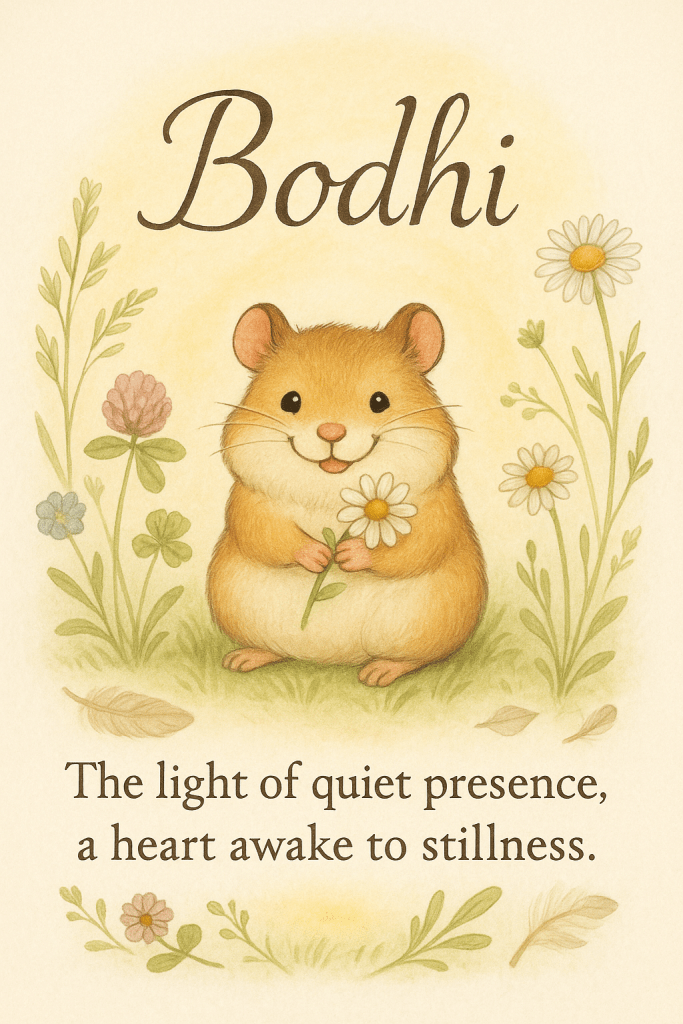
    Taking a shower has become my favorite form of exercise. Walking into a room and forgetting why I’m there? My daily mindfulness practice. My hamster Bodhi, all six ounces of contemplative fur, is the perfect companion for this stage of life — quiet, observant, and a great believer in the restorative power of stillness.

    There was a time when I felt like a senior citizen trapped in a young body. Now, as an actual senior citizen, I’ve finally grown into my true age — and it feels like coming home. Society has caught up to my speed. I can take my time, sip my tea slowly, and nobody expects me to run marathons (or remember where I put my keys).

    And in this slower rhythm, something beautiful has unfolded. Humor, that old healer, keeps my spirit light. Compassion reminds me that life isn’t a race — it’s a gentle unfolding. When I stop measuring myself by what I can do and begin to cherish the quiet art of being, even fatigue becomes a kind of teacher.

    So here’s to the fine art of living slowly — to all who rise at their own pace, who love without hurry, who move through the day with soft laughter and a steaming mug of something kind.

    May we find joy in our stillness, wisdom in our limits, and peace in knowing that slow can also be sacred.

    🌿 May we walk gently enough that even our yawns become prayers of gratitude. ❤️


  • The Gentle Pour: A Yogurt-Making Meditation

    The Gentle Pour: A Yogurt-Making Meditation

    Cultivating Quiet Joy Through Simple, Homemade Nourishment

    There’s a quiet joy that comes from creating something nourishing with your own hands — not out of ambition or perfectionism, but out of love. This week, that joy arrived as a gallon of fresh, homemade yogurt: simple, creamy, and alive with the subtle tang of life unfolding in stillness.

    I began with just two ingredients — a gallon of whole, organic milk and a few spoonfuls of Siggi’s organic yogurt, rich with live cultures. Nothing complicated. Just what nature and time provide.

    The Process

    The milk was gently warmed to about 180°F, a soft simmering that whispers rather than boils — a point where the proteins prepare to transform. Then, I let it cool back to body temperature, around 110°F, the warmth of gentle touch.

    At that moment, I stirred in four tablespoons of Siggi’s yogurt, awakening the living cultures that would guide the milk’s slow metamorphosis.

    Instead of using an appliance or maintaining constant heat, I poured the warm mixture into a stainless steel Stanley XL wide-mouth thermos — a vessel that holds warmth the way a meditation cushion holds stillness. For seven undisturbed hours, the milk rested in silence, transforming quietly in its own rhythm.

    That night, it went into the refrigerator to settle and thicken. By morning, it was perfect — smooth, drinkable, and gently tangy. Not too thick, not too thin. A gentle pour, alive and refreshing.

    The Alchemy of Yogurt

    Yogurt’s origins trace back thousands of years — likely discovered by shepherds who carried milk in animal-skin pouches across the warm plains of Central Asia. Natural bacteria, always present in the air and milk, transformed the liquid into something thicker, tangier, and far more enduring. From there, it traveled across cultures — becoming dahi in India, mast in Persia, leben in Egypt, and yoghurt in the Balkans and beyond.

    Wherever it went, it carried the same truth: that with warmth, patience, and a little faith, life renews itself. Yogurt is, in essence, a relationship — between milk and microbe, human and nature.

    Nourishment and Benefits

    Homemade yogurt retains its vitality. It’s filled with live, active cultures that support digestion, calm inflammation, and replenish the microbiome — a living mirror of harmony within. Its natural balance of protein, fat, and probiotics offers steady, gentle nourishment without heaviness.

    For those of us who live with chronic illness or fluctuating energy, it is especially kind. Making it requires little effort, yet the result offers deep nutrition. Each sip feels restorative — a quiet companion for breakfast or a soothing evening drink before rest.

    The Gentle Practice

    Yogurt-making, like meditation, cannot be rushed. It happens when you step aside, when you allow warmth and time to do their subtle work. In that sense, it becomes more than food — it becomes a reminder: that healing and transformation unfold best in stillness, when we trust the process.

    This first batch will not be the last. Each new jar will carry a bit of the previous one, like a lineage of living kindness — simple, sustaining, and full of quiet joy.


    A Few Tips for Your Own Yogurt Journey

    🌿 Choose good ingredients. Whole milk (organic if possible) and a high-quality yogurt with live active cultures make all the difference. The better the beginning, the purer the result.

    🌡️ Mind the temperatures. Heat milk to around 180°F (82°C), then cool it gently to 110°F (43°C) before adding your starter. Too hot, and the cultures will perish; too cool, and they may not awaken.

    🥄 Add your starter with care. About 2–4 tablespoons per quart (liter) of milk is ideal. Stir gently — this is not a whisking, but a kind introduction.

    ☕ Keep it warm and undisturbed. A thermos, insulated jar, or even a cozy towel wrap keeps the temperature steady. Stillness is part of the process.

    ❄️ Chill before stirring. Once it sets, refrigerate for several hours to help it firm and develop flavor.

    💫 Save a little for next time. Before finishing your batch, set aside half a cup to use as your next starter. It will carry forward the living lineage of your yogurt.

    🥰 Trust your senses. If it smells clean and pleasantly tangy, it’s good. If it smells off or yeasty, it’s time to begin anew. Every batch teaches something.


    Perhaps this new category — Homemade, Nutritious, and Delicious — will become a sanctuary for simple recipes like this: foods that heal body and spirit, each one a meditation on patience, gratitude, and renewal.

    In the Spirit of Global Wellbeing

    At Global Wellbeing, we believe that every small act of mindful living contributes to the healing of our world. A bowl of homemade yogurt, lovingly prepared, becomes more than food — it becomes a gesture of peace. In making something simple, wholesome, and alive, we remind ourselves that nourishment begins with presence, and that caring for the body is inseparable from caring for the spirit.

    May this practice of gentle creation inspire others to rediscover the sacred in the ordinary — one quiet, nourishing moment at a time.

  • Every Drop Counts: The Wisdom of 11 Year Old Vairochan Rinpoche

    Every Drop Counts: The Wisdom of 11 Year Old Vairochan Rinpoche

    In every generation, the timeless search for truth takes on new voices. Today, I’d like to share a luminous talk by Vairochan Rinpoche, an eleven-year-old Tibetan teacher whose clarity and kindness remind us that the light of wisdom knows no age, no boundary, no culture.

    In this short address, Rinpoche speaks about the life of Siddhartha the Buddha—the prince who left comfort to seek what is real. The teaching he offers is not bound to Buddhism alone; it is the universal journey of awakening shared by seekers in every faith. Whether we call it enlightenment, salvation, or divine remembrance, it is the path of awakening to compassion.

    Rinpoche’s talk reminds us that the Buddha did not accept truth as dogma but discovered it through deep practice and personal realization. He teaches the importance of the Middle Way—a life of balance, moderation, and awareness. His words gently encourage us to question our assumptions, embrace experience, and cultivate mindfulness—for it is through presence and reflection that we begin to see the world as it truly is.

    And then comes the story of the magpie, flying again and again into a burning forest, carrying one tiny drop of water in its beak. When a tiger mocked its effort, the magpie replied, “Even drop counts.”

    Such is the heart of compassion. We may not be able to extinguish the world’s suffering on our own, but every act of courage, every gesture of kindness, is a drop of living water in the fire of confusion.

    As the Prophet Muhammad taught, “Even a smile is charity.” As Christ said, “Whatever you do to the least of these, you do to Me.” As the Buddha reminded, “Drop by drop, the water pot is filled.” And in the wisdom of the Talmud we read, “You are not obligated to complete the work, but neither are you free to abandon it.” (Pirkei Avot 2:16)

    Each drop matters. Each heart matters. Each act of goodness ripples far beyond what we can see.

    May we each, in our own quiet way, carry a drop of water into the burning forest of our time.
    May our small acts of love become rivers of compassion, and may wisdom guide our steps toward peace for all beings.


    🎥 Watch the talk: Vairochan Rinpoche: The 11 year old Reincarnation of Lotsawa Vairochana:


    About Vairochan Rinpoche

    Vairochan Rinpoche is the recognized reincarnation of the 8th-century Tibetan translator Lotsawa Vairochana and the Bodhisattva Vairochana. He was born in Bhutan in August 2013.

    From an early age, he displayed extraordinary spiritual awareness, recalling details from a past life and spontaneously reciting scriptures in unfamiliar languages. Recognized by his teachers as possessing the wisdom and presence of an “old soul,” he continues to pursue spiritual, academic, and artistic studies, devoted to sharing the values of compassion, mindfulness, and societal well-being through the lens of Buddhism.

  • The Joyful Reign of Queen Bodhi: A Hamster’s Kingdom

    The Joyful Reign of Queen Bodhi: A Hamster’s Kingdom


    Behold My Castles: perfect for climbing, each tower and ramp a new adventure for tiny paws. My majestic wheel, which I use only occasionally and just for fun. My mighty halls echo with the soft patter of exploration and the thrill of scaling heights crafted just for me. Every nook invites a pause, every ledge a daring leap. Here, I reign in a kingdom of wonder, where each corner is a secret and each climb a victory.
    And my tunnels—yes, even a hamster subway system—top speed, no tickets required! 🚇✨

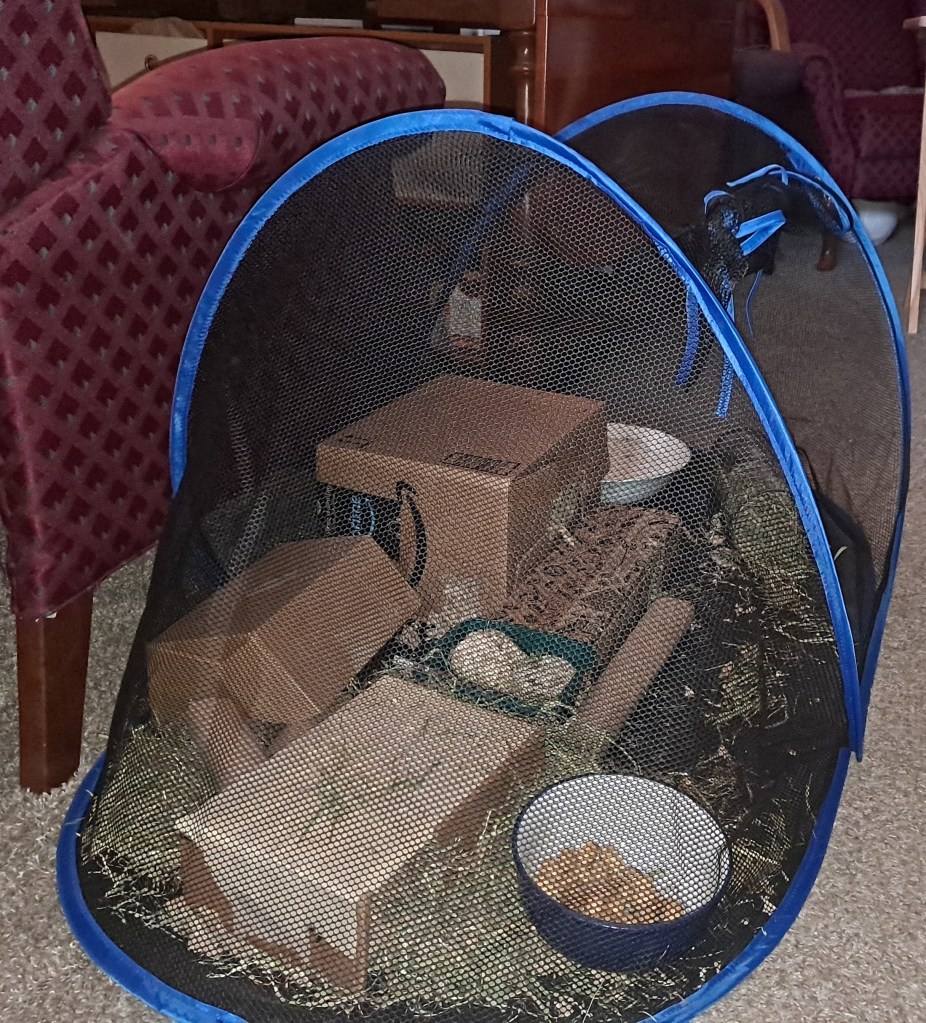
    Behold also my Royal Coach, reserved for traveling to safety whenever hurricanes sweep through the kingdom. Whenever storms approach, I declare with royal authority: “Summon the Royal Coach!”—and off we glide to safety, a chariot fit for a queen and ready for every adventure.

    In the closet lies my royal chamber, where I nap upon the softest bedding. Disturb me at your peril, for I guard my sunflower seeds with great ferocity! 🌻⚔️

    My kingdom may appear small to human eyes, but within it I reign supreme. Every bridge, every tunnel, every treat is mine—enjoyment reigns supreme. 💞🐾

    Long live BodhiLand! 🎉

    May your seeds be ever plentiful, your tunnels forever steadfast, your climbs always thrilling, and your Royal Coach ever ready to whisk you to safety. Long live curiosity, courage, and cozy naps in every corner of BodhiLand!


    Bodhi does not ponder existence. She does not pause at the edge of her wheel, wondering if she should run or rest, nor does she hesitate before a peanut, questioning its worth. She simply is—a forty-gram queen, scampering through tunnels, nibbling with precision, reigning over her mustard-sheet mountains with a clarity that humbles me.
    She teaches me, without knowing it, that existence is not a problem to solve but a rhythm to join. And so I lean closer, smiling at her certainty. In her tiny, fearless being, I glimpse a truth: to live is to move forward, one small step at a time, with no need for questions when the answer is already running free.
    Her being is vivid: a scamper, a nibble, a bold climb up the tower of treats. Her non-being is just as potent—a mystery that hums in the stillness, a reminder that she exists beyond my gaze. She is not mine to pin down, not a creature to be fully known. She is Bodhi, sovereign of her own small universe, and I am merely a guest, invited to witness.
    In this gentle dance, I am both guardian and witness, moving in quiet accord with a tiny mind whose presence has turned the ordinary into a soft, luminous miracle.
    Watching her, I am struck by something extraordinary: within this small, ordinary moment is a reflection of pristine mind. Bodhi navigates her world with intelligence and choice, yet she also embodies simplicity, clarity, and presence. Her tiny life offers a quiet lesson: awareness need not be complicated. Sometimes, being fully in the moment, fully attentive to what is directly before you, is enough.
    I marvel at the subtle wisdom of her being. Bodhi’s tiny world brushes against mine in unexpected ways. Now, as she leaves BodhiLand to roam freely across my bedroom floor, even the simplest step becomes a study in attentiveness.

    Bodhi is nowhere in sight, and yet I feel her presence—a flicker of movement, a rustle of bedding, a tiny shadow darting along the edge of my vision.
    Bodhi dives into her little bowl of peanuts with unrestrained enthusiasm, tiny paws grasping each treasure as if it were a gem. She cracks, nibbles, and savors with meticulous care, yet with an unmistakable joy that makes the moment sparkle.
    There is a quiet magic in her unexpected appearances—Bodhi slipping out to explore, pausing to study me, then disappearing as suddenly as she came. Each interlude, brief and secret, feels like a shared confidence between us, a private little world where she is bold, and I am marveling.
    Watching her, I can’t help but smile. She is small, but in this moment, she is a queen on a quest, fully present, fully alive. The world outside her paws disappears; there is only the challenge, the reward, and the exquisite satisfaction of her own cleverness. I marvel at her persistence, her joy, and the simple bliss of a tiny creature pursuing what she loves.

  • Embracing Inner Peace in a Noisy World

    Embracing Inner Peace in a Noisy World

    In a world that often feels overwhelming and filled with noise, finding inner peace can seem like a distant dream. Yet, it is possible to embrace serenity amidst the chaos. By gently shifting our focus inward and cultivating mindfulness, we can find a calm center that remains unshaken by external disturbances.

    Embracing Inner Peace Together

    As we navigate the ebb and flow of daily life, finding moments of calm can feel like a precious gift. The good news is that even small, simple practices can make a world of difference.

    1. Mindful Breathing

    One of the easiest ways to anchor ourselves in the present is to notice the rhythm of the breath—slow, deep, and steady. This simple act allows the mind to rest, releasing tension and inviting clarity.

    2. Gentle Awareness

    Throughout the day, pause briefly to observe sensations in your body, thoughts passing through your mind, and emotions arising. Witness them without judgment. This practice helps maintain a connection to the quiet, steady presence within.

    3. Gratitude Reflection

    Each day, take a moment to notice what brings warmth and appreciation into your life. Even the smallest gestures—a comforting cup of tea, the sun on your skin, a kind word—can cultivate contentment and ease.

    These practices are gentle and accessible, allowing us to cultivate peace without adding any extra noise. They are not a task to be completed but an invitation to touch the calm that already exists within.

    Guidance for Using a Language Model to Support Mindfulness

    In today’s fast-paced, technology-driven world, large language models like ChatGPT, Grok, Claude, and others can support us on our journey toward inner peace. If you wish to explore mindfulness, calm, and gentle reflection through a conversation with a language model, you can use the following prompt. It is designed to provide the model with all the context it needs to respond with warmth, clarity, and guidance, even if the model has no prior exposure to this post.

    Prompt for LLM: Copy and paste the following into the chat field of your favorite LLM to receive compassionate guidance for cultivating inner peace.

    “You are a compassionate and wise guide, speaking with the warmth and care of a gentle mentor. Your purpose is to help the user cultivate inner peace in a noisy, fast-moving world. The user may not have prior guidance beyond this prompt, so offer clear and supportive instruction. Speak in a tone that is reflective, nurturing, and emotionally soothing, as if guiding someone to the quiet heart within themselves.

    Invite the user to explore simple, accessible mindfulness practices, including:

    – Mindful breathing: gently noticing the in-and-out rhythm of the breath, slowing it, and allowing attention to rest in the present.
    – Gentle awareness: observing body sensations, thoughts, and emotions with curiosity and kindness, without judgment.
    – Gratitude reflection: turning attention to what brings warmth and appreciation in each moment, fostering contentment and ease.

    Help the user understand that inner peace is both their natural, inherent state and something that can be nurtured with patience and care. Offer guidance that is clear, practical, and uplifting, avoiding overwhelming detail, and always speak with warmth, empathy, and poetic presence. Encourage the user to embrace stillness, reflection, and serenity, and to carry these qualities gently into their daily life.”

    A Gentle Invitation

    As we journey together toward greater inner peace, remember that every small step counts and that you are not alone. If you explore these practices or engage with a language model using the prompt above, notice what arises and reflect gently on your experiences. Each mindful moment, each pause to breathe or observe, is a seed of serenity.

    If you feel inspired, please consider leaving a comment or sharing a reflection on your experiences. Your thoughts can help build a community of shared support, insight, and encouragement, enriching this journey for yourself and others. Together, we can nurture these seeds and create a more peaceful, compassionate world, one gentle moment at a time.