Tag: spiritual guidance

  • Exploring Dzogchen’s Transformative Path: A Journey into Our Pristine Mind

    Exploring Dzogchen’s Transformative Path: A Journey into Our Pristine Mind

    Reflections on Pristine Awareness, Dzogchen, and Finding Clarity in Challenging Times

    As I sit with Our Pristine Mind in my hands, I am aware that I am not merely reading a book. I am entering a silent conversation with an ancient wisdom, one that gently unfolds its layers with each page, as if lifting the veils of my own mind. In the quiet of early morning or beneath the faint glow of a reading lamp at night, the words begin to sink into the places where thought usually moves too quickly, too restlessly.

    Dzogchen—a word I’ve heard in passing, sometimes as an exotic echo from distant mountains, sometimes as an answer whispered through stories of sages and scholars—is not simply an idea here. It emerges like a breath I have almost forgotten to take, a reminder that within my mind lies a pure, boundless awareness untouched by the cycles of confusion, emotion, or distraction. Dzogchen does not demand; it simply reveals.

    The teacher, Orgyen Chowang Rinpoche, through his voice in Our Pristine Mind, speaks to the essential nature of awareness with a softness that does not impose but invites. I am reminded of Rilke, who once spoke of patience and of growing quietly in one’s own way, like a tree. Here, too, the practice of Dzogchen is like that tree, patient and grounded, yet ever-revealing. It asks nothing from me but presence, a willingness to recognize that what I have been searching for has always been here, beneath the surface of my rushing thoughts.

    Rinpoche speaks to our current world—the difficulties, the fractures, the relentless march of modern life. Dzogchen, he says, has come forward in these times not because it is new, but because we are perhaps ready to see its simplicity. To see that the vastness of pristine awareness is not somewhere far away or reserved for saints and sages. It is here, in the quiet pause between breaths, in the stillness that accompanies an unfiltered experience of now.

    The metaphor of the “brilliant moon in dark times” comes alive as I read, a reminder that even in moments when life feels overcast and filled with turmoil, there exists within us a clear, illuminating presence. Dzogchen does not banish the darkness; rather, it reveals a light that has been hidden within it all along.

    This practice, this profound teaching, calls us to approach life differently—to walk, speak, even think with the awareness that we are not separate from each other, from the world, or from the mind that perceives it all. It is an invitation to cultivate what Rinpoche calls “pristine awareness” in daily life, and this awareness transforms not only how we experience joy but also how we engage with suffering. Even anger, fear, and sorrow are welcomed as parts of the unfolding dance, teachers in their own right.

    The path of Dzogchen, I am learning, is not about leaving this world behind or aspiring to some distant perfection. Instead, it is an opening into a fuller, clearer life here and now—a kind of blossoming from the cold winter of searching into the warm spring of presence.

    If you feel the weight of the world’s challenges or the heaviness of inner obstacles, there is a softness, a kindness in Dzogchen that may resonate. As I explore these teachings, I feel them steadying me, offering a compass to navigate the storms of distraction and disconnection that modern life so often brings.

    And so, I share these reflections with the hope that you, too, may find something here that speaks to your own journey—a word, a phrase, a quiet reminder of the freedom that rests quietly within, waiting to be seen.

    🙏🕊️🙏

    If you’re interested in exploring this transformative approach further, I highly recommend Orgyen Chowang’s book The Pristine Mind. His teachings provide a clear, compassionate path toward uncovering the inherent purity of our mind, offering a source of deep fulfillment and lasting peace.

  • Book Review: Being Peace by Thich Nhat Hanh

    Book Review: Being Peace by Thich Nhat Hanh

    There’s a timeless invitation at the heart of spiritual practice—to discover a deep, unshakable peace within ourselves, one that needs no striving to achieve. In Being Peace, Thich Nhat Hanh reminds us that peace is not something outside to be attained; it’s a natural state within us, accessible in each moment we choose to be fully present. In these quiet moments of awareness, peace isn’t something we do—it’s something we are.

    Thich Nhat Hanh, a Vietnamese Zen master, poet, and peace activist, brings a gentle simplicity to this profound teaching. Being Peace weaves together personal stories, practical mindfulness techniques, and timeless Buddhist wisdom. Through each page, his words invite us to embrace peace not as an ideal, but as an embodied presence—a way of being that can transform ourselves and the world.

    Discovering Peace in the Present Moment

    From the opening pages, Thich Nhat Hanh introduces a revolutionary idea: that each of us already carries the potential for peace within. He writes with an almost childlike clarity, inviting us to notice the ordinary miracles in daily life—a breath, a step, the warmth of the sun. These simple moments become doorways to the present moment, where we can rest in awareness, undisturbed by the mind’s endless motion.

    His approach to mindfulness is refreshingly practical. Rather than asking us to transcend the world, he guides us to return to it fully—to be present with whatever is here, exactly as it is. Whether we’re washing the dishes, driving, or simply sitting quietly, we are offered the chance to be peace, right here, right now.

    Practicing Compassion and Interbeing

    Another central theme in Being Peace is the idea of interbeing—Thich Nhat Hanh’s term for the interconnectedness of all life. He shows how, when we see ourselves as part of a vast web of life, our actions naturally become more compassionate. Understanding interbeing allows us to see that our own well-being is inseparable from that of others. When we cultivate peace within, it radiates outward, touching the world around us.

    This interconnection reminds us that our peace is a gift to the world. By learning to “be peace,” we become a refuge for others—a quiet presence that can soothe and support those around us. Through stories of social engagement and personal practice, Thich Nhat Hanh illustrates how inner peace can become a force for transformation, leading to wise, compassionate action in our families, communities, and beyond.

    An Invitation to Live Peace

    Being Peace doesn’t simply offer teachings; it invites us into a living practice. Thich Nhat Hanh’s words create a soft, steady encouragement to live mindfully, with kindness for ourselves and others. There’s an intimacy in his voice, as if he is gently guiding us by the hand, showing us how to live with more openness, patience, and presence.

    The book also provides specific practices, like mindful breathing, walking meditation, and loving-kindness meditation, which make peace a tangible experience. These practices are woven throughout his teachings, allowing readers to integrate mindfulness naturally into daily life.

    In reading Being Peace, we’re reminded that peace is not a far-off goal but a living, breathing reality available in each moment. Thich Nhat Hanh shows us that the path to peace begins with the simplest act of bringing awareness to the present moment, just as it is.

    Final Reflections

    In Being Peace, Thich Nhat Hanh offers us more than words on a page; he offers a way of living. His teachings resonate as a call to each of us to embody the peace we wish to see in the world. Through gentle, grounded guidance, he shows us that true peace is not just an aspiration—it’s a way of being available to each of us, here and now.

    If you’re ready to discover this peace within, you may want to explore Being Peace in full. Below, you’ll find the book itself, a quiet guide to a more mindful, compassionate way of life.

    🙏🕊️🙏

  • Carried Through the Storm: Trusting the Divine Footprints in the Mystic Journey

    Carried Through the Storm: Trusting the Divine Footprints in the Mystic Journey

    On the spiritual path, we often find ourselves in moments of struggle, isolation, and uncertainty, wondering where the Divine is in our darkest hours. The old story of Footprints in the Sand offers a timeless reminder: even when we feel most alone, we are never truly abandoned. The footprints that carry us through the storm are those of the Divine, supporting us in ways we may not recognize in the moment.

    The Story of Footprints in the Sand

    The familiar story goes something like this: A person looks back on their life journey and notices two sets of footprints in the sand during times of ease and joy, but only one set of footprints during their most difficult and painful moments. Confused and feeling abandoned, they ask God, “Where were you when I needed you the most?”

    God gently replies, “During those difficult times, when you saw only one set of footprints, it was then that I carried you.”

    This story is simple yet profound, capturing the heart of the mystic journey—trusting that in our most challenging moments, even when we feel lost or abandoned, we are being carried by a greater force.

    Trusting in the Divine Support

    As mystics, seekers, or those walking a spiritual path, there are often periods where the way forward feels unclear. We may find ourselves fumbling through transitions, dealing with loss, illness, or inner turmoil, and it’s easy to feel as if we are walking this path alone. However, like the person in the story, we may later come to realize that during these times of struggle, we were never alone. We were being supported, even carried, by something greater than ourselves.

    The footprints of the Divine, whether we call this presence God, the Universe, or our Higher Self, are always there, even when we cannot see them. Part of the mystic path is learning to trust in this unseen support, to have faith that during the most difficult stretches of our journey, we are being held and guided.

    Recognizing the Invisible Presence

    There are times when we may not feel the direct presence of the Divine, and it can be easy to feel lost or disconnected. But as we reflect on our experiences, we begin to see that in those moments, there was something carrying us through. Perhaps it was an inner strength we didn’t realize we had, the unexpected help of a friend, or a moment of grace that appeared when we needed it most. These are the Divine’s footprints in our life.

    As mystics, part of our practice is to develop this awareness—to recognize the quiet, invisible ways in which the Divine shows up, even when it’s not immediately obvious. The more we trust this presence, the more we can rest in the assurance that we are always supported, no matter how difficult the path may seem.

    Surrendering to the Flow of Life

    The story of Footprints in the Sand also teaches us about surrender. When we are in the midst of struggle, our minds often fight to control or resist what’s happening. We want to fix things, to understand why we are going through a challenge, or to make sense of the pain. But surrendering to the flow of life, trusting that we are being carried, allows us to soften into the experience and let the Divine do its work.

    This doesn’t mean passivity or giving up, but rather a deep trust that the difficulties we face are part of a larger unfolding. The footprints remind us that we are not the sole navigators of our lives. There is a greater force walking with us, carrying us when needed, and guiding us toward the deeper truths of our being.

    Walking the Mystic Path with Faith

    For those on the mystic path, the message of the footprints is a reminder of faith—not blind faith, but a faith born out of experience. As we reflect on our own journeys, we begin to see how the Divine has been present, even in the most challenging times. This faith allows us to walk the path with more confidence, knowing that the footprints are always there, even when we cannot see them.

    In our moments of doubt, when the path feels difficult or unclear, the footprints remind us that we are never truly walking alone. We are always being carried by the Divine, supported in ways we may not fully understand, but that are always present.

    Conclusion: The Footprints in Your Journey

    As you navigate your own spiritual journey, take comfort in the footprints that appear along the way. Trust that during your most challenging times, the Divine is carrying you, even if it doesn’t feel that way in the moment. The mystic path is not always easy, but it is always supported by a presence that walks with us, guiding us toward greater understanding and deeper connection with the Divine.

    May this story of Footprints in the Sand serve as a reminder that no matter where you are on your path, you are never truly alone. The footprints of God, the Divine, or the Universe are always there, carrying you through the storms of life and walking beside you in the moments of joy.

    🙏🕊️🙏

  • Thich Nhat Hanh: A Path of Mindfulness and Peace

    Thich Nhat Hanh: A Path of Mindfulness and Peace

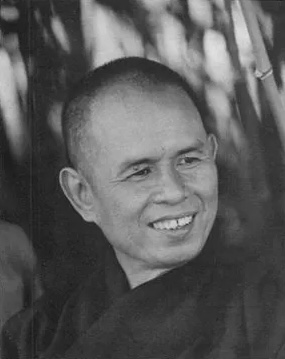
    Thich Nhat Hanh, affectionately known as Thay by his students, has touched countless lives with his teachings on mindfulness, compassion, and inner peace. As a Vietnamese Buddhist monk, a poet, and a peace activist, his life’s work offers a profound invitation to awaken to the present moment and live with a heart of compassion.

    Throughout his life, Thich Nhat Hanh authored over 100 books, each infused with the gentle yet powerful wisdom that encourages us to return to the breath, to find peace where we are, and to extend that peace to the world around us. Whether we are walking, eating, or simply breathing, his teachings remind us that each moment is an opportunity to cultivate mindfulness. In doing so, we transform our suffering, both inner and outer, into a source of peace.

    One of the most transformative aspects of his legacy is Engaged Buddhism. Thay believed that mindfulness was not just for the meditation cushion but for every aspect of life. Whether advocating for peace during the Vietnam War or teaching about reconciliation, he wove together mindfulness and social action, reminding us that true peace begins with ourselves, but does not end there.

    Thich Nhat Hanh’s legacy continues to inspire not only individuals but also communities, through meditation centers like Plum Village, which he founded. These centers are spaces of refuge, where people can practice mindfulness, deepen their spiritual understanding, and live in harmony with one another.

    If you wish to experience Thich Nhat Hanh’s teachings more intimately, I invite you to listen to his words directly on Thich Nhat Hanh Audio.

    One particularly powerful dharma talk is Love in Action, offered by Thay in Hanoi during the “Engaged Buddhism in the 21st Century” retreat. This 78-minute talk, delivered in English on May 9, 2008, is a profound exploration of how love and compassion manifest through mindful action in our everyday lives. You can listen to the full talk here.

    Thich Nhat Hanh left us a rich legacy of mindfulness, compassion, and hope, a path we can continue to walk, one mindful step at a time.

    🙏🕊️🙏

  • Ramayana No. 17: The Journey of Life: Lessons from Rama’s Epic Story

    Ramayana No. 17: The Journey of Life: Lessons from Rama’s Epic Story

    Inspired by Chapter 1.3 of the DeBroy Translation of the Ramayana

    In the Ramayana, we follow Rama on an extraordinary journey filled with triumphs and tribulations. As we explore his life, we come to realize that it is not just a story of a prince, but a reflection of the very fabric of human existence. From his birth as a noble soul to his struggles, battles, and eventual return to Ayodhya, Rama’s journey offers a mirror for the journey each of us takes through life.

    This timeless epic, as retold by Valmiki, holds deep truths that resonate as powerfully today as they did in ancient times. Below are some key lessons from Rama’s life that provide valuable insights for the modern world.

    Adversity is Part of the Journey

    Rama’s life is marked by periods of great adversity, including his unjust exile from Ayodhya and the abduction of his wife, Sita. Despite the hardships, Rama never wavers in his resolve to uphold dharma (righteousness).

    In today’s world, we often face our own versions of exile—whether it’s personal setbacks, professional struggles, or moments of loss. Rama’s journey teaches us that adversity is not something to avoid but to embrace as part of life. How we respond to these challenges defines who we are. Like Rama, we can face our difficulties with resilience, staying true to our values, and knowing that every trial brings growth.

    The Power of Friendship and Support

    Rama does not walk the path of exile alone. His unwavering companions—his brother Lakshmana, his devoted friend Hanuman, and the loyal Sugriva—each play crucial roles in helping him overcome seemingly insurmountable obstacles.

    In a world where individualism is often prized, the Ramayana reminds us of the importance of relationships and support networks. We are not meant to face life’s challenges alone. Surrounding ourselves with people who uplift and support us can make all the difference when facing hardships. True friends, like Hanuman and Lakshmana, offer strength when we need it most.

    The Balance Between Duty and Personal Desires

    One of the most powerful themes of the Ramayana is the constant tension between personal desires and duty (dharma). Rama is exiled because of his stepmother’s wishes, yet he chooses to honor his father’s promise, even at the cost of his own happiness.

    In today’s fast-paced and achievement-oriented society, we are often pulled between pursuing personal goals and fulfilling our responsibilities to others. The story of Rama reminds us that living with integrity sometimes means placing duty above personal ambition. This does not mean sacrificing our happiness; instead, it’s about finding harmony between the two and understanding that a life lived in accordance with one’s principles brings long-lasting peace.

    Redemption and Return: The Cycle of Life

    After years of struggle, Rama defeats Ravana, rescues Sita, and returns to Ayodhya to claim his rightful place as king. His return represents not only a physical homecoming but a symbolic redemption after enduring exile and loss.

    This mirrors the cycles we experience in life. Periods of difficulty and hardship eventually give way to renewal and recovery. Rama’s return reminds us that no matter how long the journey or how deep the struggle, there is always a path back to peace, fulfillment, and purpose. In moments when we feel lost, we can take comfort in the knowledge that challenges are temporary, and our personal “return to Ayodhya” is always on the horizon.

    The Enduring Power of Faith and Devotion

    Throughout the Ramayana, Rama places his faith in the larger forces at work. Whether in his interactions with sages, his prayers to deities, or his reliance on his loyal companions, his life demonstrates the importance of faith and devotion—not just in the divine, but in the power of goodness and righteousness.

    In our modern lives, where uncertainty often reigns, faith can serve as an anchor. Whether it’s faith in ourselves, in a higher power, or in the principles of justice and kindness, maintaining a sense of devotion can guide us through life’s challenges. Like Rama, when we stay connected to a sense of purpose greater than ourselves, we find strength, clarity, and peace.

    Conclusion: The Ramayana as a Guide for Our Times

    Rama’s journey is a timeless reflection of the human experience. His life teaches us that hardship, sacrifice, and redemption are all part of our own stories. By embracing adversity, cultivating meaningful relationships, honoring our duties, and holding onto faith, we can navigate the challenges of modern life with grace and resilience.

    The Ramayana, as retold by Valmiki and beautifully translated by DeBroy, continues to inspire countless generations. Its wisdom transcends time, offering guidance for anyone seeking a life of purpose, integrity, and fulfillment. Just as Rama found his way back to Ayodhya, we too can find our way through the trials of life, emerging stronger and wiser.

    Read Chapter 1.3 of the DeBroy Translation of the Ramayana

  • Ramayana No. 14: Be Good, Do Good, Purify Your Mind: A Simple Reflection on the Ramayana’s Timeless Wisdom

    Ramayana No. 14: Be Good, Do Good, Purify Your Mind: A Simple Reflection on the Ramayana’s Timeless Wisdom

    In the vast expanse of spiritual literature, few texts carry the weight and significance of the Ramayana. This ancient epic, deeply embedded in Hindu culture, tells the story of Prince Rama, whose life is a testament to the principles of righteousness, duty, and the eternal struggle between good and evil. As we delve into its rich narrative, it’s easy to get caught up in the details of battles, relationships, and divine interventions. However, the essence of the Ramayana can be distilled into three simple yet profound lines, attributed to the Buddha:

    Be good.
    Do good.
    Purify your mind.

    Though these lines originate from the Buddhist tradition, they encapsulate the core teachings of the Ramayana and many other spiritual paths. These principles are not confined to one tradition alone; they are echoed in the teachings of Jesus Christ, who emphasized love, compassion, and inner purity as the path to spiritual fulfillment. Let’s explore how these simple instructions align with the lessons that Rama’s journey imparts, and how they resonate with the wisdom found in Christianity.

    Be Good

    At its heart, the Ramayana is a story about the importance of living a righteous life. Rama, as the embodiment of dharma (righteousness), consistently chooses the path of virtue, even when it leads to personal hardship. His unwavering commitment to goodness, whether in his role as a son, husband, or king, serves as a model for us all. Similarly, Jesus taught, “Blessed are the pure in heart, for they shall see God” (Matthew 5:8). To “be good” means to cultivate a character that is honest, kind, and just, following the path of love and integrity, regardless of the challenges we face.

    Do Good

    Righteous intentions must be matched by righteous actions. Throughout the Ramayana, Rama’s life is marked by deeds that reflect his inner goodness. He honors his father’s promise, protects the innocent, and fights against injustice. Jesus, too, emphasized the importance of action, teaching that “whatever you wish that others would do to you, do also to them” (Matthew 7:12). The Ramayana teaches us that our actions in the world—no matter how small—have the power to shape not only our own lives but the lives of others. “Doing good” is about translating our inner virtues into outward actions that contribute to the welfare of all beings, just as Jesus modeled through his life of service and compassion.

    Purify Your Mind

    The true journey of the Ramayana is as much internal as it is external. Rama’s equanimity, his ability to remain calm and detached in the face of joy and sorrow, reflects the importance of mental purity. Jesus also spoke of the need for inner transformation, saying, “The lamp of the body is the eye. If therefore your eye is good, your whole body will be full of light” (Matthew 6:22). Both teachings invite us to cleanse our minds of negative emotions like greed, anger, and delusion. In doing so, we can attain clarity, wisdom, and inner peace. To “purify your mind” is to embark on the path of self-mastery, where the ultimate victory is over our own inner obstacles.

    Here, the “eye” can be understood not only as our physical sight but also as a metaphor for the “I”—our inner self and perception. If our inner vision—the way we perceive ourselves and the world—is good, then our entire being will be filled with the light of love and truth. Both teachings invite us to protect our minds from the influence of negative emotions like greed, anger, and delusion. In doing so, we can attain clarity, wisdom, and inner peace. To “purify your mind” is to embark on the path of self-mastery, where the ultimate victory is over our own inner obstacles and perceptions.

    A Bridge Between Traditions

    These three principles—“Be good, do good, purify your mind”—may come from the teachings of the Buddha, but they resonate deeply with the values upheld in the Ramayana and the teachings of Jesus. This reflects the universal nature of spiritual wisdom, which transcends specific traditions and speaks to the shared human quest for a life of meaning, integrity, and inner peace.

    As we journey through the sacred stories of the Ramayana, the Bhagavad Gita, and other spiritual teachings, we find ourselves continually reminded of the timeless wisdom that resonates across these traditions. Rama’s equanimity in the face of life’s challenges, Krishna’s guidance to Arjuna in the pursuit of a disciplined mind, and the Buddha’s simple yet profound directive to “be good, do good, purify your mind”—all these teachings converge on a single truth.

    This truth calls us to rise above the fluctuations of the world, to cultivate a mind that is serene, fearless, and unwavering. Whether we walk the path of dharma, engage in deep meditation, or simply strive to live with compassion and integrity, we are participating in this universal quest for peace and harmony.

    These scriptures are not just stories of the past but living guides that illuminate our own paths. They remind us that no matter the challenges we face, the ultimate goal remains the same: to align our hearts and minds with the divine, to live with wisdom, and to contribute to a world where peace and righteousness prevail.

    In embracing this wisdom, we not only honor the traditions from which these teachings arise but also participate in the creation of a more harmonious and enlightened world. Let us carry this timeless wisdom into our daily lives, striving to embody the virtues that lead to the ultimate realization of peace, both within ourselves and in the world around us.

    As we continue our journey through the Ramayana, let these simple yet profound teachings serve as a guiding light. They remind us that, at its core, the spiritual path is not about grand gestures or complicated doctrines, but about living each moment with goodness, action, and a mind that is clear and pure.

    🙏🕊️🙏

  • The Spark Within: A Journey of Inner Awakening

    There’s a light within each of us—an undeniable, ever-present spark. This light, though sometimes hidden, is never truly absent. It may flicker when the winds of confusion blow or dim when the shadows of doubt creep in, but it is always there, quietly waiting to be noticed, nurtured, and allowed to grow.

    For many, the journey toward that inner light is complicated by the noise of the world—by dogma, expectations, and the need to “belong” to a certain path. But the truth is, this light doesn’t belong to any one religion or tradition. It is the essence of all paths, the core of what it means to be human. And it is awake within you, even now, quietly glowing, waiting for your attention.

    Beyond Dogma, Into the Heart of Spirituality

    Perhaps you’ve felt it—this pull toward something deeper, something spiritual, but without the constraints of organized religion. Many feel this way, walking a fine line between the spiritual yearning within them and the weight of doctrines and beliefs that feel restrictive. The good news is that the essence of spirituality is not found in rigid dogma but in the spaciousness of the heart.

    The great mystics of every tradition—whether Jewish, Christian, Buddhist, or others—have pointed to the same truth: the divine is already within us. Jewish mystical teachings speak of the divine spark within every soul, a reflection of God that can never be extinguished, no matter how much the world may try to cover it.

    As we walk our own unique paths, there is no need to choose between spirituality and religious identity. You don’t have to subscribe to a particular belief system to nurture the light within you. All you need is a willingness to be present with yourself, to sit quietly with that spark, and give it space to breathe.

    Fanning the Flame

    When you feel that spark flicker, pay attention. You may not need to do anything grand. Simply acknowledge it, as you would the first sign of dawn, and let it unfold naturally. Like sunshine and water for a plant, the light within needs only a little attention, a little care, and it will grow.

    This is not about seeking or striving. It’s about letting go of the distractions that pull you in different directions and coming back to that simple truth: you already have everything you need. The divine presence you seek is already alive within you, waiting for you to notice it.

    Whether through moments of quiet reflection, connection with others, or simply being with the world around you, this light will grow. It doesn’t require the labels of religion or the boundaries of belief. It only asks for your awareness, for the quiet recognition that it is there—and that it has been all along.

    A Shared Journey

    Remember, you are not alone in this journey. Throughout history, countless others have walked the path of spiritual discovery, often feeling the same pull toward something deeper. The great mystics, the sages, the poets, and even those who quietly reflect on their own lives, have all touched this truth: that our essence is divine, that we are all connected, and that the light within us is the very light of the universe.

    You have already felt this light. You have already seen it, even if just for a moment. Trust in that, and allow yourself to be curious, to explore it further without fear or hesitation. There is no rush. There is only the gentle unfolding of what has always been true: you are that light, and it is enough.

    In today’s world, we often exchange greetings without much thought. Words like “How are you?” or, in Hebrew, “Ma Shalom Cha?”—which many now interpret as “How are you?”—slip past us with little depth or reflection. But Ma Shalom Cha is much more than just a casual greeting. In its original meaning, it asks, “How is your peace?”—“How is your inner peace? How is your connection with the divine?”

    When I met Avi, a young man on his own spiritual journey, I looked into his eyes and asked him, “Ma Shalom Cha?” At first, it seemed to him like the casual phrase he’d heard a thousand times. But when I explained the true meaning, he paused. For perhaps the first time, he understood that I wasn’t just asking how he was doing, but how his peace was. How was his soul resting in the presence of the divine?

    It was a moment of awakening, a recognition of something deeper. In that moment, Avi saw the light within himself, the divine spark that flickers beneath the surface, often hidden by the noise and distractions of modern life.

    Beyond Dogma, Into the Heart of Spirituality

    In a world where even deep questions like “Ma Shalom Cha?” have been reduced to casual greetings, it’s easy to feel pulled in different directions, confused by dogma or by what others expect us to believe. But the truth is, the essence of spirituality is not found in rigid rules or religious identities. It is found in the quiet, gentle presence of peace within each of us.

    The great mystics of every tradition—from Jewish mysticism to the teachings of the East—all point to the same truth: the divine is already within us. The spark of God, the neshama, is already alive in each soul, and it doesn’t need labels or doctrines to be real. It only asks for our attention, for us to pause and reflect: How is my peace?

    Fanning the Flame

    The modern world often reduces “Ma Shalom Cha” to a simple “How are you?” and “Ma Nishma?” to “What’s up?”—losing the sacred depth these phrases once carried. But the light within you is not lost, and the questions themselves still hold power if we let them.

    When we take the time to sit with these questions—How is my peace? How is my soul?—we give the divine spark within us space to breathe. It’s not about striving for enlightenment or seeking external answers. It’s about recognizing that the peace you seek is already there, waiting to be acknowledged. Like sunshine and water for a plant, this inner peace grows with care and awareness.

    A Shared Journey

    So I ask you, as I asked Avi: Ma Shalom Cha? How is your peace? Not as a casual greeting, but as an invitation to look inward, to nurture the light within you. And as we close, I’ll ask you a deeper question: Ma Nishma? How is your soul?

    In a world that often reduces these profound questions to surface-level exchanges, let’s reclaim their depth. Let’s reconnect with the divine spark within us, the light that ties us all together. It’s there, waiting to be seen, to be nurtured, and to grow. The peace you seek, the light you long for—it’s already within you.

    Adonai Echad—the Lord is One. It beautifully echoes the truth of oneness that transcends all divisions. In the heart of all traditions, we find this profound recognition that there is only one source, one truth, one Divine presence, no matter how we name or perceive it.

    The unity of Adonai Echad reminds us that, despite the apparent differences in our paths, we are all connected, all part of that oneness. It’s a call to embrace the shared divinity in ourselves and others, to see beyond the surface and recognize the sacred unity that binds us all.

    All you need is a willingness to be present with yourself, to sit quietly with that spark, and give it space to breathe.

    🙏🕊️🙏

  • Introducing the Neti Neti Practice Series: A Journey of Self-Inquiry

    Welcome to the Practices of Neti Neti series, an exploration into one of the most profound methods of self-inquiry within the Advaita Vedanta tradition. This series is dedicated to the practice of Neti Neti—a Sanskrit phrase meaning “not this, not this”—which serves as a guide for stripping away all that is not the true Self, leading to the recognition of our pristine, unchanging nature.

    What is Neti Neti?

    Neti Neti is a process of negation that helps practitioners identify and discard false identifications with thoughts, emotions, and sensations. It is a method of peeling back the layers of the ego to reveal the stillness and silence of the pristine mind—the pure consciousness that is unaffected by the fluctuations of the mind. This practice is at the heart of Advaita Vedanta and is used to guide the seeker toward the realization of the Self, or Atman, which is ultimately one with Brahman, the universal consciousness.

    About This Series

    In this series, you will find a collection of questions and answers that delve deeply into the practice of Neti Neti. Each question is a reflection of the natural inquiries that arise during meditation and self-inquiry. The answers are written in a contemplative and encouraging style, as letters from a friend —offering wisdom, clarity, and support as you navigate your own journey of self-discovery.

    Why Questions and Answers?

    The format of questions followed by reflective answers is inspired by the teaching styles of great spiritual masters like Ramana Maharshi and Papaji. This approach allows for a dynamic exploration of the practice, addressing the doubts and insights that naturally emerge as one progresses on the path. By engaging with these questions, you’ll find that the answers are not merely intellectual responses, but invitations to deeper inquiry and realization.

    How to Use This Series

    This series is designed to be read sequentially, as the posts build upon each other, following the natural flow of practice and understanding. However, you are also welcome to explore the posts in any order, depending on where you are in your own practice.

    Each post presents a question that might arise during your meditation or reflection, followed by a letter that offers guidance on how to address it. These letters are not just answers—they are invitations to deepen your practice, to explore the subtleties of Neti Neti, and to connect with the stillness that lies beyond all mental events.

    Beginning the Journey

    As you embark on this journey through the Neti Neti practice, remember that this path is not about attaining something new, but about recognizing what has always been present. The goal is to gently guide the mind away from its distractions, allowing the pristine mind—your true nature—to shine through.

    Whether you are new to Neti Neti or looking to deepen your understanding, I invite you to explore these letters with an open heart and a quiet mind. May they serve as a steady guide on your path to self-realization.

    Engage and Explore Together

    I warmly encourage you to leave any questions or reflections in the comments section of each post. If a question resonates deeply or sparks a new line of inquiry, I may create additional blog posts to explore these topics further. Your engagement helps to create a community of shared learning, where we can all benefit from each other’s insights and experiences.

    Let us begin this journey together, one question and one insight at a time, as we uncover the truth of who we truly are.

    For those who wish to explore further the concept of pristine mind and its practices, I highly recommend Orgyen Chowang Rinpoche’s book, Pristine Mind: A Journey into Self-Awareness. Although this book does not specifically address the Neti Neti practice, it offers profound insights into the nature of pristine mind, a state of pure awareness that lies beyond the mental events and distractions that often cloud our perception. Rinpoche’s teachings provide a clear and accessible guide to realizing and resting in this natural state, which closely aligns with the ultimate goal of Neti Neti. You can explore the Kindle version of this book below, which may serve as a valuable companion on your journey of self-inquiry and spiritual awakening.

    🙏🕊️🙏

  • Who is Ramana Maharshi?

    Discovering the Self: Ramana Maharshi’s Guide to Self-Inquiry and True Realization

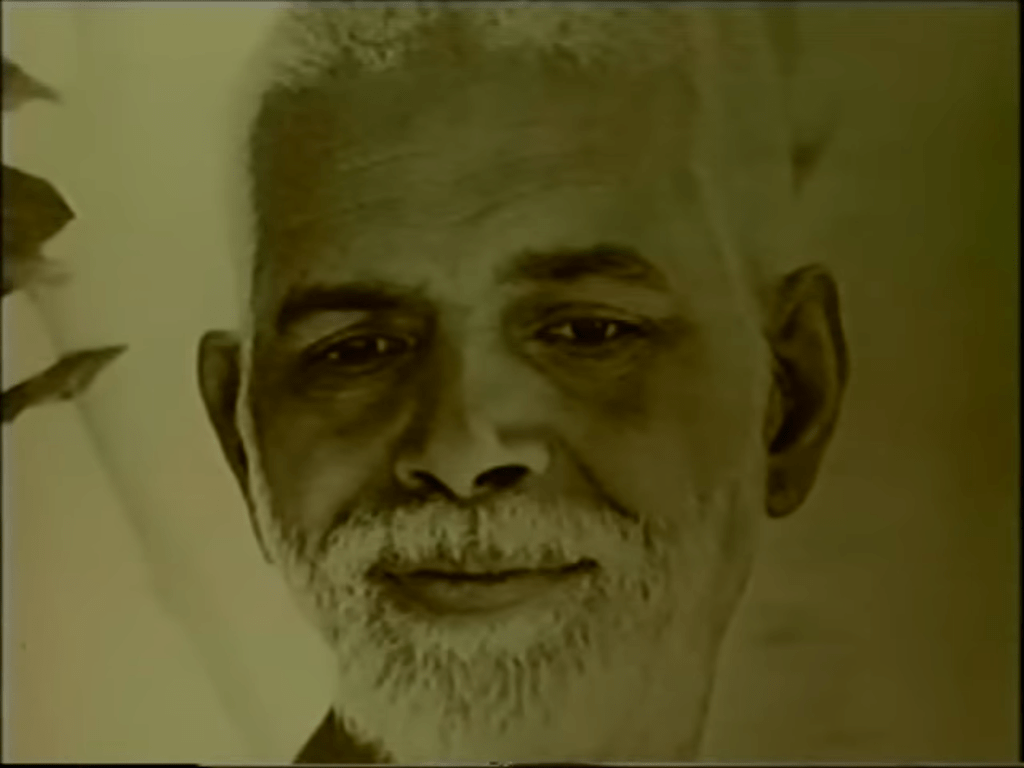
    Ramana Maharshi is one of the most revered spiritual teachers of the 20th century, known for his profound teachings on self-realization and non-duality. Born in 1879 in Tamil Nadu, India, he experienced a spontaneous awakening at the age of 16, during which he became acutely aware of the impermanence of the body and the eternal nature of the Self. Following this experience, he left his home and spent the rest of his life on the sacred mountain of Arunachala, where he became a guiding light for spiritual seekers from around the world.

    Ramana’s teachings are centered around the practice of Atma Vichara, or self-inquiry, which he considered the most direct path to realizing one’s true nature. Unlike other spiritual practices that involve rituals or external observances, Ramana emphasized turning inward to investigate the true nature of the ‘I’—the sense of individual self that we all experience.

    The Essence of Self-Inquiry

    Ramana Maharshi’s core teaching can be encapsulated in the question, “Who am I?” He taught that the sense of ‘I’ or ego, which we often associate with our thoughts, emotions, and bodily identity, is merely a superficial layer that veils our true Self, which is pure consciousness or awareness.

    The process of self-inquiry involves directing your attention inward, asking yourself where this sense of ‘I’ originates. Ramana explained that by persistently asking this question and observing the ‘I’ thought, one can trace it back to its source. This source is the true Self, the unchanging awareness that underlies all experience.

    If One Watches Whence the ‘I’ Arises

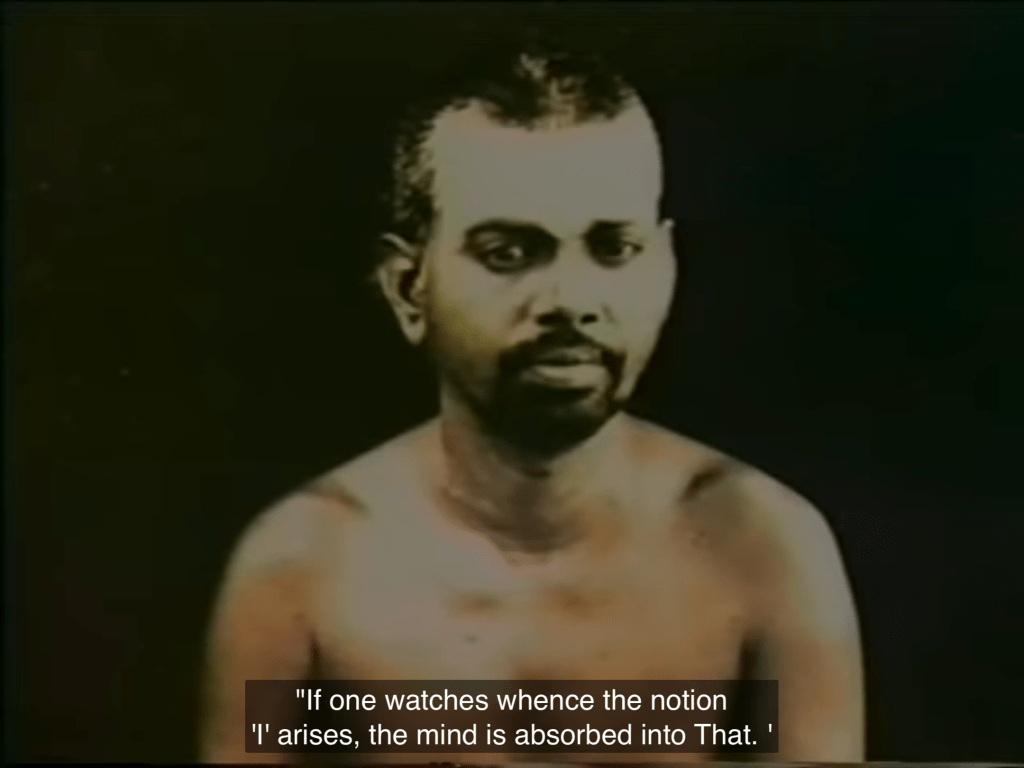
    In one of his teachings, Ramana Maharshi stated, “If one watches whence the notion ‘I’ arises, the mind is absorbed into That.” This teaching points to a subtle yet profound practice. The ‘I’ thought is the root of all mental activity and the sense of individuality. By turning attention to this root, rather than being entangled in the branches of thoughts and feelings, the mind can naturally dissolve into its source—pure awareness, which Ramana refers to as “That.”

    How to Practice Self-Inquiry

    If you find yourself puzzled by this teaching or struggle to sense “That” from which the ‘I’ arises, know that this is a common experience on the path of self-inquiry. The mind, accustomed to focusing outward, finds it challenging to turn inward and settle into stillness.

    Here’s how you can approach this practice:

    1. Sit Quietly: Begin by sitting quietly, with your eyes closed if that feels comfortable. Take a few deep breaths and allow your body and mind to relax.
    2. Turn Inward: Gently bring your attention to the sense of ‘I’. This ‘I’ could be a thought, a feeling, or simply the awareness that you exist.
    3. Ask the Question: Silently ask yourself, “Who am I?” or “Where does this ‘I’ arise from?” Don’t seek an intellectual answer. Instead, let the question be a pointer that guides your awareness inward.
    4. Observe: As you focus on the ‘I’, observe its nature. Does it have a shape, a location? Can you find its origin? Be curious, but not analytical.
    5. Rest in the Awareness: As you continue this enquiry, allow the mind to settle. If thoughts arise, simply notice them and gently bring your attention back to the feeling of ‘I’. Over time, the mind may begin to merge with the deeper awareness that is always present.

    Realizing the Self

    Through persistent practice, you may come to realize that the ‘I’ you have always identified with is not your true Self. The ‘I’ arises and dissolves in the vast expanse of pure awareness—‘That’ which Ramana Maharshi points to. This realization is not something to grasp intellectually, but a direct experience that brings about a profound inner peace and freedom.

    Ramana Maharshi’s teachings are a beacon for those seeking to transcend the ego and discover their true nature. The path of self-inquiry, though simple in its approach, can lead to the ultimate realization of the Self—the awareness that is ever-present, unchanging, and beyond all notions of individuality.

    🙏🕊️🙏

  • Embracing the True Vine: Staying Connected to the Universal Values Exemplified by Jesus

    Introduction

    The metaphor of the vine and branches in John 15:1-17 offers insights into our spiritual lives that transcend religious boundaries. This passage challenges us to reflect on the nature of our connection to Jesus and to universal values like love and compassion and how they shape our lives. Here, we explore key themes from this scripture and consider how they can guide us on our personal and spiritual journeys.

    The Art of Pruning

    “He cuts off every branch in me that bears no fruit, while every branch that does bear fruit he prunes so that it will be even more fruitful.” (John 15:2)

    Pruning, in the spiritual sense, is a selective and thoughtful process. Just as a gardener skillfully prunes a tree to promote balance and growth, we can embrace challenges and changes as opportunities for growth. Identify areas of your life that feel overgrown or chaotic. Take small steps to simplify and focus, such as decluttering your environment or letting go of habits that no longer serve you.

    Staying Connected to Core Values

    “I am the vine; you are the branches. If you remain in me and I in you, you will bear much fruit; apart from me you can do nothing.” (John 15:5)

    Staying connected to values like love, kindness, compassion, and forgiveness is about more than participating in rituals. It involves living these principles in our daily lives. Start your day with a moment of gratitude or set an intention to act with kindness. Reflect on how your actions align with these values. Consider journaling your experiences to deepen your understanding and commitment.

    Bearing Fruit Naturally

    “This is to my Father’s glory, that you bear much fruit, showing yourselves to be my disciples.” (John 15:8)

    The fruits of love, kindness, and compassion arise naturally when we are deeply rooted in these values. To nurture these virtues, practice mindfulness in your interactions. Notice how your words and actions impact others. Small acts, like offering a smile or a listening ear, can create ripples of positivity.

    Redefining Joy

    “As the Father has loved me, so have I loved you. Now remain in my love. If you keep my commands, you will remain in my love, just as I have kept my Father’s commands and remain in his love. I have told you this so that my joy may be in you and that your joy may be complete.” (John 15:9-11)

    Joy, in this context, transcends temporary pleasures. It is a profound inner contentment that comes from aligning with our higher values and living in compassion. Cultivate joy by engaging in activities that nourish your spirit, whether it’s spending time in nature, creating art, or volunteering. Reflect on what brings you true fulfillment and integrate these into your life.

    Loving-Kindness as the Core

    “My command is this: Love each other as I have loved you.” (John 15:12)

    At the heart of universal teachings is the call to love one another. This love encompasses kindness and compassion for all. Try incorporating a loving-kindness meditation into your routine, where you silently wish happiness and peace for yourself, your loved ones, and even those you find challenging. This practice can help cultivate a more compassionate mindset.

    The Mystery of Choice

    “You did not choose me, but I chose you and appointed you so that you might go and bear fruit—fruit that will last.” (John 15:16)

    The concept of being chosen invites reflection on divine grace and human free will. Embrace the idea that the choice to live a life of love and service is an ongoing journey. Regularly evaluate your decisions and their alignment with your values. Trust that your commitment to these choices connects you to a greater purpose.

    Friendship and Connection

    “I no longer call you servants, because a servant does not know his master’s business. Instead, I have called you friends, for everything that I learned from my Father I have made known to you.” (John 15:15)

    The idea of spiritual friendship invites us into an intimate, close connection with the values we hold dear. Seek out communities or groups that share your values and engage in meaningful conversations. Building relationships based on love and trust can enrich your spiritual journey and provide support when you face challenges.

    “You Are My Friends” – Jesus

    (John15:14)

    In quiet moments, whispers speak,
    A friendship rare, divine, unique.
    No longer servant, now a friend,
    In love and truth, our souls transcend.

    He calls us near, no distance wide,
    In him, our hopes and fears confide.
    Not Lord alone, but friend so true,
    A bond that’s deep, profound, and new.

    He shares with us the Father’s will,
    In every silence, every still.
    His words, a gentle guiding light,
    In friendship’s warmth, our hearts ignite.

    No secrets kept, all laid bare,
    In open trust, a love we share.
    He walks with us through joy and pain,
    In every loss, in every gain.

    Together, one, we stand and grow,
    In friendship’s grace, we come to know.
    The gift of love that never ends,
    For in his arms, we’re called as friends.

    When shadows fall and doubts arise,
    His friendship shines through darkest skies.
    A beacon bright, a steadfast guide,
    In him, our hearts and hopes reside.

    So call him friend, this wondrous grace,
    A closeness time cannot erase.
    In every breath, in every stride,
    With Jesus, friend, we walk beside.


    Contemplative Questions

    • How do you nurture your connection with core values in your daily life?
    • What areas of your life might benefit from a spiritual “pruning” to promote growth?
    • How do you experience the fruits of love and kindness naturally flowing from your actions?
    • In what ways do you understand and practice love as loving-kindness?
    • How does the idea of spiritual friendship influence your journey?
    • What does joy mean to you, and how do you cultivate it beyond worldly experiences?
    • How do you perceive the mystery of choice, and how does it affect your sense of purpose?

    Invitation to Share

    I invite you to reflect on these questions and share your thoughts in the comments below. Your insights and experiences can enrich this exploration and inspire others on their journeys.

    🙏🕊️🙏

  • Embracing the Journey: The Subtle Path of Spiritual Growth


    In the quiet hours of prayer, contemplation and meditation, it’s natural to hope that all the time and energy devoted to spiritual practice would lead to a profound sense of being in a spiritually “good place.” After all, when you pour your heart into understanding the deeper truths of existence, there’s an expectation that the fruits of this labor should be evident—peace, clarity, and a steady sense of progress.

    Yet, the journey of spiritual growth is often far more complex and subtle than we anticipate. It’s not a straight path with clear markers of progress, but rather a winding road filled with unexpected turns, peaks, and valleys. Even with the most dedicated practice, there can be moments when you don’t feel as spiritually grounded or advanced as you might hope. These moments can be perplexing, leaving you wondering why, despite all your efforts, you don’t feel as though you’re where you “should” be.

    One of the first realizations on this path is that spiritual growth is not a linear process. It doesn’t follow a simple trajectory of consistent upward progress. Instead, it’s a dynamic and often unpredictable journey. There are times of clarity and deep connection, where everything seems to fall into place, and times of confusion, where doubt and uncertainty creep in. What may feel like a setback or a period of stagnation could actually be a vital part of your deeper growth—an integration phase where the insights you’ve gained are settling into your being.

    Another aspect to consider is the expectations that the mind creates. The mind often forms ideas about what spiritual progress should look like—perhaps a constant state of peace, detachment from worldly concerns, or a sense of enlightenment that transcends daily struggles. When reality doesn’t match these expectations, it can lead to frustration and a sense of inadequacy. However, true spiritual growth often occurs beneath the surface, in ways that are not immediately visible or even consciously felt. The changes may be subtle, shifting how you respond to challenges, deepening your capacity for compassion, or fostering a quiet resilience that wasn’t there before.

    A crucial part of this journey is learning to accept where you are in the present moment without judgment. This includes embracing feelings of doubt, frustration, or uncertainty as natural parts of the human experience. These emotions are not signs of failure or lack of progress, but rather aspects of the path that invite you to deepen your practice of self-acceptance. Recognizing and allowing these feelings to be, without trying to force them away or judge them, can be a profound spiritual practice in itself.

    In this process, self-compassion becomes an essential ally. It’s important to be gentle with yourself as you navigate the ups and downs of the spiritual path. The goal is not to reach a specific destination but to be present with yourself through all the fluctuations of life. Self-compassion allows you to honor your efforts and your humanity, acknowledging that growth isn’t always about visible results but about the ongoing commitment to living with intention and awareness.

    There is also the reality that progress isn’t always visible. Sometimes, the growth you’re experiencing spiritually isn’t something you can easily measure or feel. It may be happening internally, in ways that you can’t yet recognize. Trusting in the process and knowing that your efforts are meaningful, even when they don’t produce immediate, tangible results, is key. The work you’re doing in contemplation and meditation is laying the groundwork for ongoing transformation, even if it’s not always apparent.

    Letting go of the idea of a “spiritually good place” can also be liberating. This notion can create a sense of pressure or inadequacy, as though where you are now isn’t good enough. But spirituality isn’t about reaching a final state of being; it’s about the ongoing discovery, learning, and connection with the deeper aspects of yourself. Every moment, including those filled with doubt or struggle, is an integral part of the spiritual journey. These moments are not obstacles to overcome but experiences that shape and refine your understanding and compassion.

    In reflecting on this, it’s also helpful to remember that, just as with the countless acts of quiet goodness and resilience that exist in the world, your spiritual growth might be unfolding in ways that are subtle and quiet, but no less profound. The efforts you make, the practices you engage in, and the intentions you hold are all contributing to your growth, whether you can see it in the moment or not.

    So, if you ever find yourself questioning where you are on your spiritual path, take a step back and consider the possibility that you are exactly where you need to be. The journey of spiritual growth is ongoing, and every effort you make is a meaningful part of that journey. Even the moments that feel like setbacks are opportunities for deeper reflection and growth.

    In those moments when the weight of expectations or the sense of stagnation feels heavy, it may be wise to rest, to reflect on your journey, and to remind yourself that progress is not always about the destination but about the journey itself. You’re already doing the work, and that, in itself, is a sign of deep commitment and progress.

    The spiritual path is not about perfection or reaching a final state of enlightenment. It’s about being present with yourself, embracing the journey with all its complexities, and trusting that every step you take is leading you closer to the true essence of who you are.


  • Lesson 24 of A Course in Miracles (ACIM): Guided Meditation – “I do not perceive my own best interests.”

    Lesson 24 of A Course in Miracles introduces the lesson: “I do not perceive my own best interests.” This teaching challenges us to reflect on the limitations of our ego-driven desires and perceptions. By acknowledging that our personal interests often conflict with our spiritual growth and well-being, we open ourselves to divine guidance and wisdom.

    This practice invites us to become aware of the ego’s narrow focus on self-preservation and immediate gratification. By understanding that our true best interests lie in alignment with spiritual truth and love, we can start to release attachments and open ourselves to higher guidance.

    Jesus emphasized the importance of seeking spiritual treasures and aligning with divine will. In Matthew 6:19-21, He says, “Do not store up for yourselves treasures on earth, where moths and vermin destroy, and where thieves break in and steal. But store up for yourselves treasures in heaven, where moths and vermin do not destroy, and where thieves do not break in and steal. For where your treasure is, there your heart will be also.” This teaching aligns with ACIM’s guidance to shift our focus from worldly desires to spiritual truth and eternal values.

    By practicing Lesson 24, we align ourselves with Christ’s message of surrendering ego-driven desires and seeking divine guidance. We learn to trust in the wisdom of the Holy Spirit and align our perceptions with the greater good.

    Explore Lesson 24 of A Course in Miracles with us, and discover how relinquishing perceived self-interests can lead to greater spiritual fulfillment, peace, and awakening.

    Guided Meditation: Lesson 24 from A Course in Miracles

    Find a comfortable position, either sitting or lying down, where you can relax and be free from distractions.

    Close your eyes gently and take a few deep breaths, allowing yourself to settle into the present moment.

    Bring your attention to your breath, feeling the sensation of each inhale and exhale.

    Reflect on the central theme of Lesson 24: “I do not perceive my owny best interests.”

    Contemplate the idea that your perceptions are often clouded by ego-based desires and fears, which lead you away from your true best interests.

    Acknowledge that when you rely solely on your own judgment, you may not always make decisions that serve your highest good.

    With each breath, imagine releasing any attachment to ego-based desires and fears, allowing yourself to fully embrace the idea of surrendering to a higher guidance.

    Visualize yourself letting go of the need to control outcomes, trusting instead in the wisdom of your higher self and the universe.

    Feel a sense of peace and trust wash over you as you surrender to the knowledge that your true best interests are always being taken care of.

    Repeat the following affirmations silently or in your mind:

    “I do not perceive my own best interests.”

    “I release all attachment to ego-based desires and fears.”

    “I trust in the wisdom of my higher self and the universe.”

    Allow yourself to rest in this space of surrender and trust for a few moments, feeling supported and guided.

    When you’re ready, gently bring your awareness back to your surroundings. Wiggle your fingers and toes, and slowly open your eyes.

    Take a moment to reflect on your experience, noticing any insights or shifts in perception that may have occurred.

    Remember that you can return to this meditation whenever you feel called to deepen your understanding of Lesson 24.