Tag: Buddhist Philosophy

  • Every Drop Counts: The Wisdom of 11 Year Old Vairochan Rinpoche

    Every Drop Counts: The Wisdom of 11 Year Old Vairochan Rinpoche

    In every generation, the timeless search for truth takes on new voices. Today, I’d like to share a luminous talk by Vairochan Rinpoche, an eleven-year-old Tibetan teacher whose clarity and kindness remind us that the light of wisdom knows no age, no boundary, no culture.

    In this short address, Rinpoche speaks about the life of Siddhartha the Buddha—the prince who left comfort to seek what is real. The teaching he offers is not bound to Buddhism alone; it is the universal journey of awakening shared by seekers in every faith. Whether we call it enlightenment, salvation, or divine remembrance, it is the path of awakening to compassion.

    Rinpoche’s talk reminds us that the Buddha did not accept truth as dogma but discovered it through deep practice and personal realization. He teaches the importance of the Middle Way—a life of balance, moderation, and awareness. His words gently encourage us to question our assumptions, embrace experience, and cultivate mindfulness—for it is through presence and reflection that we begin to see the world as it truly is.

    And then comes the story of the magpie, flying again and again into a burning forest, carrying one tiny drop of water in its beak. When a tiger mocked its effort, the magpie replied, “Even drop counts.”

    Such is the heart of compassion. We may not be able to extinguish the world’s suffering on our own, but every act of courage, every gesture of kindness, is a drop of living water in the fire of confusion.

    As the Prophet Muhammad taught, “Even a smile is charity.” As Christ said, “Whatever you do to the least of these, you do to Me.” As the Buddha reminded, “Drop by drop, the water pot is filled.” And in the wisdom of the Talmud we read, “You are not obligated to complete the work, but neither are you free to abandon it.” (Pirkei Avot 2:16)

    Each drop matters. Each heart matters. Each act of goodness ripples far beyond what we can see.

    May we each, in our own quiet way, carry a drop of water into the burning forest of our time.
    May our small acts of love become rivers of compassion, and may wisdom guide our steps toward peace for all beings.


    🎥 Watch the talk: Vairochan Rinpoche: The 11 year old Reincarnation of Lotsawa Vairochana:


    About Vairochan Rinpoche

    Vairochan Rinpoche is the recognized reincarnation of the 8th-century Tibetan translator Lotsawa Vairochana and the Bodhisattva Vairochana. He was born in Bhutan in August 2013.

    From an early age, he displayed extraordinary spiritual awareness, recalling details from a past life and spontaneously reciting scriptures in unfamiliar languages. Recognized by his teachers as possessing the wisdom and presence of an “old soul,” he continues to pursue spiritual, academic, and artistic studies, devoted to sharing the values of compassion, mindfulness, and societal well-being through the lens of Buddhism.

  • Neti Neti Series No. 15: The Buddha as a Mirror of Enlightenment

    Question:

    The Buddha is considered an enlightened being, but does that mean he was a perfect mirror of enlightenment? Even though he had a personality and a sense of “I” or ego, was he a perfect emanation of enlightenment, like an expression of Dharmakaya? If so, does that mean the Buddha wasn’t actually Dharmakaya, but rather an emanation of it, perhaps as a Nirmanakaya?

    Dear friend,

    Your reflections on the nature of the Buddha and enlightenment bring us to the very heart of what it means to embody the truth in this world. The Buddha, as you have so insightfully observed, was not merely an enlightened being but an emanation of the deepest truths of existence—a perfect mirror, if you will, for the light of enlightenment.

    In the person of the Buddha, we see the qualities of enlightenment fully realized—wisdom, compassion, clarity, and non-attachment. And yet, the Buddha was not devoid of personality or a sense of self; rather, his personality was a vessel for the expression of these qualities. The “I” that remained in him was not the egoic self that we typically associate with suffering and delusion. It was an “I” that was fully aligned with the Dharma, an “I” that existed only to serve, to teach, and to guide others toward the same realization.

    This “I” was not driven by the usual attachments or aversions, but was instead a pure expression of the truth—like a clear mirror reflecting the light without distortion. In this way, the Buddha’s personality was a manifestation of enlightenment, a perfect embodiment of the principles that he taught.

    The concept of the Dharmakaya as the formless, ultimate reality—what we might call the truth body—helps us to understand the nature of enlightenment itself. The Dharmakaya is not something that can be grasped or embodied in the ordinary sense; it is the ground of all being, beyond all dualities, beyond all distinctions.

    And yet, this ultimate reality finds expression in the world through the Nirmanakaya—the manifestation body. The Buddha, as a Nirmanakaya, was an emanation of the Dharmakaya, taking on human form to teach and to guide. In this way, the Buddha was both a part of the world and a perfect reflection of the ultimate truth that underlies it. His teachings, his actions, and even his very presence were all expressions of the Dharmakaya, made accessible to those who sought the path.

    To see the Buddha as an emanation of Dharmakaya allows us to appreciate the depth of his compassion and the significance of his teachings. He was not separate from the ultimate truth, but rather a manifestation of it—a beacon of light in the world, showing the way to those who were lost in the darkness of ignorance and suffering. His sense of self, his personality, was not something to be transcended, but something to be used as a tool, a vehicle for the transmission of the Dharma.

    In this understanding, we see that the Buddha’s life and teachings were not about attaining something outside of ourselves but about realizing what has always been true—that we, too, are emanations of the Dharmakaya, capable of reflecting the light of enlightenment in our own lives.

    Dear friend, your reflections bring us closer to the essence of what it means to walk the path of the Buddha—to live in such a way that our own lives become mirrors of the truth, emanations of the light that shines at the heart of all things. Continue to explore these insights with an open heart, and allow them to guide you ever deeper into the understanding of your own true nature.

    🙏🕊️🙏

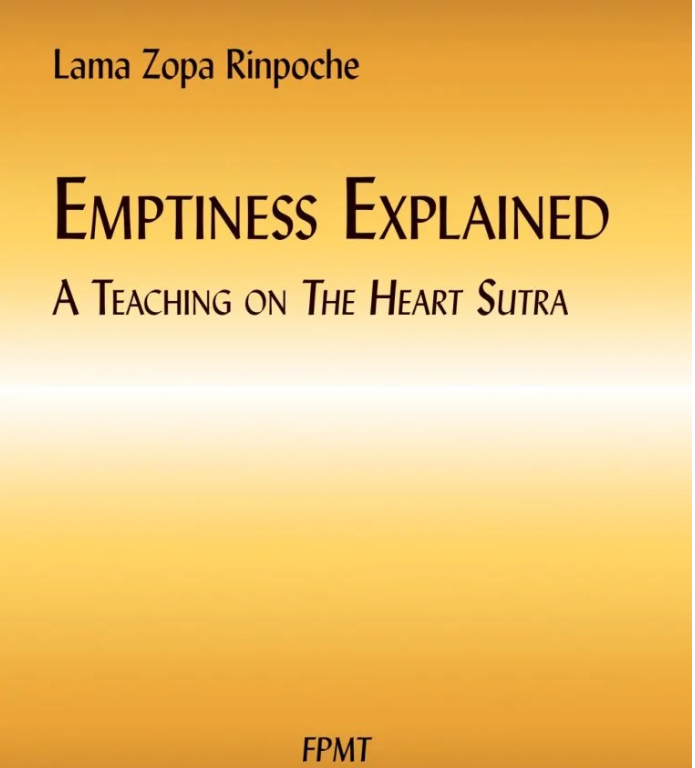
  • Emptiness Explained: Insights from Lama Zopa Rinpoche on the Heart Sutra

    Emptiness Explained: Insights from Lama Zopa Rinpoche on the Heart Sutra

    Transforming Suffering Into Happiness: How the Teachings on Emptiness from the Heart Sutra Support Mental Health and Well-Being

    The Heart Sutra stands as one of the most profound and essential teachings in Buddhism, offering a path to understanding emptiness—the ultimate nature of reality. Lama Zopa Rinpoche’s commentary on this timeless sutra illuminates its teachings, guiding us toward a deeper understanding of how emptiness can transform not only our spiritual practice but also our daily lives.

    In this post, I’ll share key reflections from Rinpoche’s teaching, focusing on the practical wisdom and spiritual inspiration it offers. Whether you’re a seasoned practitioner or simply curious about the philosophy of emptiness, I hope these insights will resonate with your heart.

    What Is Emptiness?

    Lama Zopa Rinpoche explains that emptiness does not mean that things don’t exist—it means that things are empty of inherent existence. All phenomena, including ourselves, arise dependently, shaped by causes, conditions, and labels. This is the essence of the middle way, which avoids the extremes of nihilism (nothing exists) and eternalism (things exist inherently and permanently).

    As the Heart Sutra famously states:

    “Form is emptiness, emptiness is form. Emptiness is not other than form; form is also not other than emptiness.”

    In these words, we see that emptiness and dependent arising are inseparable. While things exist conventionally, their ultimate nature is empty of any independent, fixed essence.

    Practical Ways to Meditate on Emptiness

    Rinpoche offers accessible methods to integrate the understanding of emptiness into both formal meditation and daily life:

    1. Recognizing the Object to Be Refuted

    The first step is identifying the false concept of an independent, inherently existent “I” or object. This is often described as the “I on the I”—the subtle sense that there is a solid self beyond the ever-changing interplay of body and mind. By recognizing this misconception, we can begin to dissolve it.

    2. Meditating on Dependent Arising

    Reflect on how the “I” arises only in dependence on the body, mind, and other aggregates. As Rinpoche teaches, the “I” is merely a label created by the mind. Understanding this dependence helps us see the emptiness of the “I” without negating its conventional existence.

    3. Mindfulness in Daily Life

    Emptiness isn’t confined to sitting meditation. Rinpoche encourages us to bring mindfulness of emptiness into every activity—walking, cooking, working, even shopping. He likens this to recognizing a dream as a dream:

    “While driving a car, see yourself, the car, and the action of driving as hallucinations. They appear solid, but they are not inherently existent. Practicing this awareness is incredibly powerful.”

    Overcoming Fear and Misunderstanding

    The experience of emptiness can sometimes evoke fear, especially the sense of “losing the I.” Rinpoche reminds us that this fear arises from our deep attachment to a false sense of self. However, far from being nihilistic, emptiness reveals the interdependent nature of all things.

    “When bodhisattvas of high intelligence realize emptiness, they experience bliss; for others, deep fear can arise. This fear is a sign of touching the truth of selflessness—it is part of the journey.”

    By grounding our understanding in dependent arising, we can navigate this fear with confidence and clarity.

    Applying Emptiness in Relationships

    Rinpoche’s teaching also provides practical tools for transforming relationships. When we feel hurt or offended, understanding emptiness can soften our reactivity. The other person’s actions—and our own sense of self—are dependently arisen, shaped by countless conditions.

    This awareness allows us to respond with compassion rather than attachment or aversion. As Rinpoche says:

    “Recognize that the ‘I’ that feels hurt is a mental construct. See the other person’s words or actions as arising dependently. This opens the door to greater understanding and kindness.”

    The Transformative Power of Emptiness

    Even the smallest step toward understanding emptiness has profound benefits. Rinpoche explains that simply doubting the solidity of appearances—thinking, “Perhaps things are empty”—can begin to break the chains of samsara.

    “Listening to teachings on emptiness for even a moment plants seeds for liberation. Reflecting on emptiness throughout your day turns ordinary actions into a path to enlightenment.”

    A Living Practice

    The teachings of the Heart Sutra are not just intellectual concepts—they are a living practice. Whether in formal meditation or everyday life, the wisdom of emptiness invites us to see the world with fresh eyes. By letting go of our rigid attachments and false perceptions, we open the door to profound freedom and compassion.

    As Lama Zopa Rinpoche reminds us, we are unbelievably fortunate to encounter these teachings. May we take them to heart and use them to benefit all beings.

    Further Exploration

    To delve deeper into Lama Zopa Rinpoche’s teachings on the Heart Sutra and emptiness, you can download the original PDF here.

    I’d love to hear your thoughts on emptiness and the Heart Sutra! How do these teachings resonate with your own spiritual journey? Feel free to share your reflections in the comments below.

    🙏🕊️🙏

  • Tibetan Buddhism: A Path of Mind Training and Intrinsic Wisdom

    Tibetan Buddhism: A Path of Mind Training and Intrinsic Wisdom

    In our journey of exploring spirituality across traditions, it is time to welcome the teachings of Tibetan Buddhism. At first glance, the colorful rituals, sacred music, and intricate costumes may seem confusing or overwhelming. Yet these outward forms are simply expressions of an inner practice that remains deeply practical and profound: the training of the mind. Tibetan Buddhism is not a religion in the conventional sense of belief or dogma but rather a transformative path aimed at purifying the mind. Through meditation, visualization, mantra, and ritual, the practice cultivates clarity, compassion, and liberation from egoic tendencies.

    A recent film about Dilgo Khyentse Yangsi Rinpoche, the reincarnation of the revered master Dilgo Khyentse Rinpoche, offers a glimpse into the heart of this tradition. Watching the young tulku receive teachings and grow within a vibrant Tibetan community reveals how this ancient wisdom lives on, passed from one generation to the next as a thriving, living practice. The film gently invites viewers into a deeper understanding of the teachings, dissolving the outer complexities to reveal a path focused on inner transformation.

    One recurring theme throughout the film is that all Buddhist practice, no matter its form, is centered on mind training. The rituals and prayers, while beautiful, are not the essence; rather, they serve as vehicles to refine awareness and soften the grip of delusion. The practice is about gently cleaning the mind, sweeping away negativity and confusion like a gardener tending to weeds, leaving space for the natural qualities of wisdom and compassion to emerge.

    Vajrayana Buddhism offers a unique method for engaging with life’s challenges. Instead of rejecting or avoiding difficulties, the practice transforms even negative thoughts and emotions into opportunities for awakening. It becomes a skillful means of shifting the mind’s energy toward positive states. This approach is not about suppressing thoughts but about meeting them with awareness, transforming suffering into insight and confusion into clarity.

    Tibetan Buddhism emphasizes the reduction of ego grasping, fostering a spirit of nonviolence, and cultivating compassion. It shifts attention away from religious belief and toward the inner work of softening the heart and taming the restless mind. These teachings are not confined to cultural forms but reflect a universal truth—the journey of every human soul toward peace and freedom. The path’s essence aligns beautifully with the teachings of Advaita Vedanta and even echoes the mystical experiences of figures like St. John of the Cross. While each tradition expresses itself differently, the underlying message is the same: the liberation of the mind from illusion, opening into a state of oneness.

    In this light, Tibetan Buddhism can be seen as a cultural version of the Yoga Sutras of Patanjali, offering practices that lead to inner stillness and self-realization. It is, in essence, a kind of spiritual atonement—a process of purification and return to the true nature of mind, much like the mystical experiences found in other traditions.

    What makes Tibetan Buddhism particularly rich is its capacity to embrace complexity. It does not reject thoughts, emotions, or even suffering. Instead, it teaches practitioners to meet these experiences with skill and openness, transforming them into pathways toward deeper insight. Watching the young tulku learn within the community demonstrates this beautifully—how every moment, even the difficult ones, can become part of the practice.

    We invite you to explore this film, which offers a rare and intimate view into the life of Dilgo Khyentse Yangsi Rinpoche and the vibrant Tibetan community that nurtures his path. Beneath the ornate rituals lies a simple but profound truth: Tibetan Buddhism, like all genuine spiritual traditions, is ultimately a path of mind training. It offers not only the possibility of individual liberation but also a way to cultivate compassion and wisdom for the benefit of all beings.

    🙏🕊️🙏

  • Buddhism and Christianity: Finding Common Ground in Compassion and Ethical Living

    Buddhism and Christianity: Finding Common Ground in Compassion and Ethical Living

    To many, the word Buddhism may conjure images of statues or rituals that seem foreign or difficult to understand, particularly for those from a conservative Christian background. However, at its heart, Buddhism is not about worshiping an idol or a false god, as some might mistakenly believe. Rather, it is a path of inner transformation that shares many core values with Christianity—values like compassion, ethical living, and the sincere effort to become a better person.

    In Buddhism, practitioners turn to the Three Jewels: the Buddha, who represents the potential for awakening within all of us; the Dharma, the teachings that show the way to live with love, wisdom, and peace; and the Sangha, the community of practitioners who support one another in their spiritual journey. In this sense, the Buddha is not a deity to be worshiped but a teacher, much like how Christians might revere the wisdom of Jesus Christ. The focus is not on idol worship, but on following a path that leads to moral and spiritual growth.

    At first glance, the colorful rituals, sacred music, and intricate costumes may seem confusing or overwhelming. Yet these outward forms are simply expressions of an inner practice that remains deeply practical and profound: the training of the mind. Tibetan Buddhism is not a religion in the conventional sense of belief or dogma but rather a transformative path aimed at purifying the mind. Through meditation, visualization, mantra, and ritual, the practice cultivates clarity, compassion, and liberation from egoic tendencies.

    Just as Christians seek to become more like Christ—striving for kindness, humility, and love—Buddhists seek to become the best version of themselves, nurturing virtues such as compassion, patience, and wisdom. To be a Buddhist is to make a commitment to ethical living, to ensure that one’s actions bring benefit rather than harm to others. This mirrors the Christian commandment to “love thy neighbor as thyself.”

    At the heart of both traditions lies a dedication to improving one’s character and living in a way that reflects love and goodness. For Buddhists, this means confronting the mind directly—meeting thoughts and emotions with honesty and care. Instead of avoiding or denying the difficulties of life, Buddhists engage with their minds head-on, seeking to transform fear, anger, or selfishness into peace, kindness, and clarity. This inner work echoes the Christian call to examine one’s heart, repent, and strive for purity in thought and deed.

    In his teachings, Dilgo Khyentse Yangsi Rinpoche offers a striking and relatable metaphor that bridges ancient wisdom with modern technology. He likens the practice of Dharma to the way we sync our wireless earbuds with our phones. Just as the earbuds must be paired and in sync with the phone to receive the signal and work properly, our minds must be aligned with the Dharma to receive its benefits.

    This idea resonates with many spiritual traditions. For Christians, the same concept applies to our relationship with the Holy Spirit or with Christ’s teachings. God is always present within us and around us, but if we are distracted by anger, impatience, or worldly concerns, we lose that vital connection. Simply believing in Jesus’ sacrifice isn’t enough if we are not living in sync with his teachings. By aligning our hearts and minds with Christ’s message of love, forgiveness, and humility, we can fully experience the divine presence and live in harmony with God’s will.

    Far from being a pagan religion, Buddhism is, at its core, a path of deep moral reflection and inner peace. Like Christianity, it calls for a transformation of the heart—one that aligns us with love, compassion, and a life of service. While the outward expressions of these paths may look different, the goal is the same: to become more loving, wise, and true to the divine nature that exists within each of us.

    For Christians who might feel uncertain about Buddhism, it can be helpful to remember that the values of both traditions are not in conflict but in harmony. Whether we call this journey “walking with Christ” or “following the Dharma,” both paths seek the same destination—a life lived with integrity, compassion, and love for others. By finding these common threads, we can open our hearts to one another, honoring the diversity of ways that humans seek truth and goodness.

    I invite you to watch the video below, which served as the inspiration for this post. It offers a beautiful glimpse into the teachings of Dilgo Khyentse Yangsi Rinpoche and the heart of Tibetan Buddhism. This film explores not only the path of mind training but also the deep compassion and wisdom that unite Buddhist and Christian values. Whether you are new to these teachings or have been walking your own spiritual path for years, this video provides an opportunity to reflect on the shared human quest for love, kindness, and awakening.

    🙏🕊️🙏

  • Exploring the Origins of Thought: A Synthesis of Jung, Ramana Maharshi, Kabbalah, and Tibetan Buddhism

    In our journey to understand the nature of thoughts and the Self, we find ourselves drawing from the wisdom of various traditions—Jungian psychology, Vedanta as taught by Ramana Maharshi, the mystical insights of Kabbalah, and the profound teachings of Tibetan Buddhism. These perspectives, though rooted in different cultural and philosophical backgrounds, converge in fascinating ways, offering a profound understanding of where thoughts come from and where they go.

    The Self: A Jungian Perspective

    Carl Jung’s concept of the Self is expansive, encompassing both the conscious and unconscious aspects of the psyche. In Jungian thought, the Self is not just the sum of our conscious awareness but also includes the vast, often hidden, realm of the unconscious. Yet, Jung’s Self goes even further—it includes the totality of our being, which can be seen as connected to the divine. In this view, the Self is also God, the Infinite, the Eternal—encompassing everything, with nothing excluded.

    Ein Sof and the Infinite Source

    In Kabbalistic tradition, this concept of the Infinite is referred to as Ein Sof, meaning “without end.” Ein Sof represents the boundless, formless aspect of God, from which all creation emerges. It is the source of all existence, the primordial void from which thoughts and realities arise.

    When we combine this with Jung’s understanding, we see that thoughts can be considered as arising from Ein Sof—the infinite potential. They emerge from the stillness, the formless void, moving first into the unconscious mind. From there, they bubble up into conscious awareness, manifesting in a way that we can perceive and reflect upon.

    The Vedantic View: Ramana Maharshi on the Self

    Ramana Maharshi’s teachings on the Self resonate deeply with these ideas. He teaches that the true Self is pure awareness, beyond both the conscious and unconscious mind. The thoughts that arise within us, whether they seem to come from the unconscious or are immediately conscious, are all manifestations within this pure awareness.

    In Ramana’s framework, the conscious mind and the unconscious mind are both part of the egoic self—the sense of individual identity that is ultimately an illusion. However, by engaging in self-inquiry, we can trace our thoughts back to their true origin—the pure, infinite awareness that Ramana equates with the Self or Atman. This is the same awareness that Jung might refer to as the totality of the Self, and that Kabbalists understand as arising from Ein Sof.

    The Tibetan Buddhist Perspective: All Phenomena as Ornaments of the Dharmakaya

    Tibetan Buddhism offers a similar understanding but expresses it through the rich metaphor of the Dharmakaya, the truth body of the Buddha. According to these teachings, everything that arises—every thought, every perception, every experience—is an ornament of the Dharmakaya. This means that all phenomena are expressions of the ultimate reality, which is pure, unconditioned awareness or Buddha nature.

    There is a common saying in Tibetan Buddhism: “All phenomena are the ornaments of the Dharmakaya,” or “All sound is the sound of Dharma; all sight is the display of Dharma.” This view suggests that everything we perceive, everything we experience, is not separate from the ultimate reality but is a manifestation of it. Just as thoughts arise from and dissolve back into Ein Sof or the Self, in Tibetan Buddhism, they are seen as temporary displays of the Dharmakaya, arising from the vastness of Buddha nature.

    Buddha’s Enlightenment: Recognizing Mara as the Self

    This understanding is beautifully illustrated in the story of Buddha’s enlightenment under the Bodhi tree. As Siddhartha Gautama sat in deep meditation, Mara—the personification of illusion and desire—appeared to tempt him and distract him from his path to enlightenment. Mara represented all the fears, desires, and illusions that arise within the mind.

    However, instead of engaging with Mara as an external force, the Buddha recognized that Mara was not separate from himself. He famously said to Mara, “I know you. You are a creation of my own mind.” In that moment, by recognizing that Mara was merely a projection of his own thoughts, the Buddha disempowered Mara completely. Mara dissolved, and with that, Siddhartha Gautama achieved enlightenment, becoming the Buddha.

    This moment is a powerful example of self-realization. By recognizing that thoughts, desires, and fears are not external realities but manifestations of the mind, the Buddha transcended them. In the same way, we can see that our thoughts, no matter how powerful they may seem, arise from and dissolve back into the infinite Self, the ultimate reality.

    The Quantum Nature of Thought

    In many ways, this understanding is mirrored in the discoveries of quantum physics. Particles, which seem solid and real, are actually 99.99% empty space. They appear and disappear from the quantum field so rapidly that they seem solid and continuous, much like how thoughts arise and dissolve within our consciousness. The solidity of our thoughts—or indeed our reality—is an illusion, a fleeting manifestation from the infinite potential that is the true Self.

    Practical Application: Self-Inquiry and Meditation

    Understanding thoughts as arising from Ein Sof or as ornaments of the Dharmakaya, and recognizing them as internal projections like Mara, can profoundly inform our practice of self-inquiry and meditation. When a thought arises, we can trace it back, not just through the layers of consciousness and unconsciousness but beyond, into the infinite source. This practice can help us see the impermanence and illusory nature of thoughts and, by extension, of the ego itself.

    Through this inquiry, we can begin to experience the Self not just as a concept but as a living reality—the infinite awareness from which all arises and to which all returns.

    Conclusion

    This synthesis of Jungian psychology, Ramana Maharshi’s Vedanta, Kabbalistic mysticism, Tibetan Buddhism, and the story of Buddha’s enlightenment offers a rich, multifaceted understanding of the nature of thought and the Self. It invites us to see beyond the surface of our thoughts and experiences, recognizing them as temporary manifestations of the infinite. Whether through self-inquiry, meditation, or contemplation of these ideas, we are invited to explore the deeper reality of the Self—an exploration that can lead to profound spiritual awakening and insight.

    🙏🕊️🙏

  • Ramayana No. 4: The Human Role in the Cosmic Drama—Reflections on Universal Responsibility


    As I reflect on the early chapters of the Ramayana, one theme stands out to me: the unique and pivotal role that human beings play in the battle between good and evil. In this epic, we see that even the gods, with all their divine powers, find themselves unable to defeat the formidable forces of darkness, embodied by Ravana. It is mankind, specifically the avatar Rama, who is destined to intervene, symbolizing the profound responsibility and power inherent in human nature.

    This idea of human responsibility resonates deeply with the teachings of the Dalai Lama, who often speaks about the concept of universal responsibility. The Dalai Lama reminds us that each of us holds the key to creating a harmonious and peaceful world. He emphasizes that our actions, rooted in compassion, ethics, and a sense of interconnectedness, are vital to overcoming the challenges we face as a global community.

    The Ramayana and the Dalai Lama’s teachings both underscore the extraordinary potential of human life. They suggest that while divine forces may guide and support us, it is ultimately through human action—through our choices, our commitment to dharma, and our compassion for others—that we can make a lasting impact on the world.

    In the Ramayana, Rama’s journey is a testament to the power of human virtue and courage in the face of adversity. It is through his adherence to dharma, his unwavering commitment to righteousness, that he is able to confront and overcome the darkness that threatens to engulf the world. Similarly, the Dalai Lama calls us to rise to our own challenges with a sense of universal responsibility, understanding that our individual actions contribute to the collective well-being of all beings.

    Yet, the Ramayana reminds us that this is not merely a physical battle, but a moral and spiritual one as well. The true battle takes place not just on the external battlefield, but within the mind and heart of each individual. It is a struggle against the vrittis—the mental fluctuations and disturbances—that cloud our judgment, and the pratyayas—the impressions and biases—that shape our perceptions. These internal forces can lead us astray, pulling us away from our true nature and the path of dharma.

    In this inner battle, maintaining integrity becomes paramount. It is about upholding righteousness, not just in our actions but in our thoughts and intentions. The Ramayana teaches us that true victory is achieved not through brute force, but through the cultivation of wisdom, compassion, and moral clarity. It calls us to act with compassion even in the face of adversity, to rise above the vrittis and pratyayas that might otherwise lead us to act out of anger, fear, or selfishness.

    This inner battle mirrors the cosmic struggle between Rama and Ravana, between dharma and adharma. Just as Rama must confront Ravana, we too must confront the demons within us—the doubts, fears, and attachments that obscure our pristine mind. The pristine mind, which is our true nature, is inherently wise and compassionate, but it is often obscured by the noise of the vrittis and the influence of the pratyayas.

    The journey of self-realization, like Rama’s journey, is about clearing away these obstacles and returning to the purity of our true nature. It is about recognizing that the greatest battles we face are often within ourselves, and that the path to victory lies in quieting the mind, cultivating inner peace, and aligning ourselves with dharma.

    As we continue to explore the Ramayana, let us keep this theme in mind. The epic is not just a story of gods and demons, but a profound reflection on the human condition. It challenges us to recognize our own role in the cosmic drama and to embrace the responsibility we have to bring light into the world.

    This parallel between the Ramayana and the Dalai Lama’s message invites us to consider how we can live more consciously, how we can contribute to the greater good, and how we can fulfill our potential as human beings. It is a call to action, to see ourselves not as passive observers of the world’s events, but as active participants in the ongoing battle between good and evil, between harmony and chaos.

    May this reflection inspire us all to take our place in this great story, to recognize the power we hold, and to use it wisely and compassionately, for the benefit of all.

    You can explore this epic story in the edition of the Ramayana used in this series, written by Valmiki and translated by Suparna Ghosh, on Amazon here.

    Alternatively, you can choose from several other versions and translations that are available. It is even available as an abridged audiobook on Audible, narrated by Ram Dass here.

    🙏🕊️🙏

  • Ramayana No. 3: The Battle Within—Reflections on Dharma, Maya, and the Path to Enlightenment

    A reflection on how different traditions approach the conflict of good and evil.


    As we journey deeper into the Ramayana, we begin to sense the epic struggle that lies at the heart of this story—the battle between Rama and Ravana, between dharma and adharma, righteousness and unrighteousness. Though I haven’t yet reached the point where this battle unfolds, my mind naturally turns to how such a conflict might be resolved, not just in the narrative of the Ramayana, but within ourselves.

    In this post we explore the themes of spiritual warfare, self-realization, and the resolution of good versus evil as seen through the lens of both the Ramayana and the story of the Buddha’s enlightenment.

    There’s something deeply universal in these stories—how each tradition approaches the battle between light and darkness, between dharma and adharma, and ultimately, between self-realization and the illusions that keep us from it.

    In the Buddhist tradition, there’s a story about the Buddha’s enlightenment that resonates deeply with this theme. As the Buddha sat beneath the Bodhi tree, Mara—the embodiment of illusion and desire—appeared to him, attempting to distract him from his meditation and his path to enlightenment. These distractions, these demons, were not external forces, but reflections of the Buddha’s own mind—the vrittis and pratyayas, the mental events that arise in all of us.

    In a powerful moment of clarity, the Buddha touched the earth, asserting his right to be, to realize his true nature. He looked at Mara and recognized him not as an enemy to be defeated, but as an illusion to be understood. “I know you, Mara,” the Buddha said. “You are nothing but my own thoughts.” And with that realization, Mara dissolved, and the Buddha attained enlightenment.

    This story invites us to consider the battles we face not as external wars against others, but as internal struggles with our own illusions, fears, and desires. It suggests that the path to victory is not through conquering these forces in the traditional sense, but through understanding and integrating them, leading to the dissolution of illusion and the realization of truth.

    As I reflect on this, I find myself wondering how the Ramayana will resolve its own epic battle. Will Rama’s conflict with Ravana echo the Buddha’s realization, with an understanding that dissolves illusion? Or will it be a more traditional battle, where dharma triumphs over adharma through strength and righteousness?

    Without venturing into spoilers, I suggest that as we continue reading, we keep this question in mind: How do different traditions, from the Ramayana to the teachings of the Buddha, teach us to deal with the obstacles and illusions that arise on our spiritual path? Is the resolution found in battle, in integration, or perhaps in a combination of both?

    Reflect, dear reader, on the many ways we might confront the challenges on our own paths—whether we see them as battles to be fought or illusions to be understood. And as we delve further into the Ramayana, we might find our own insights into how to navigate these challenges, guided by the wisdom of the ages.

    🙏🕊️🙏

    You can explore the edition of the Ramayana used in this series, written by Valmiki and translated by Suparna Ghosh, on Amazon here.

    🙏🕊️🙏