Tag: unconscious mind

  • The Role of Shadow Work in Spiritual Growth

    In the journey of spiritual growth, one often encounters the need to explore the depths of the self, including the parts that may be hidden or uncomfortable to face. This exploration, known as shadow work, is essential for both psychological healing and spiritual growth. By understanding and integrating these shadow aspects, we move toward a more complete and authentic sense of self.

    Understanding the Shadow

    The concept of the shadow originates from the work of Carl Jung, who described it as the unconscious part of the personality that the conscious mind tends to reject or ignore. These are aspects of ourselves—our fears, desires, and impulses—that we may find uncomfortable or unacceptable. However, the shadow is not limited to what we consider “negative” or “bad.” It also includes latent strengths and positive qualities that have been disowned due to societal or personal conditioning.

    Importantly, the shadow is a specific part of the broader unconscious mind. While the shadow consists of the aspects of ourselves that we have repressed or rejected, the unconscious encompasses much more. The unconscious is the vast, all-encompassing reservoir that includes everything outside of our conscious awareness—both positive and negative, known and unknown. This includes not only disowned aspects of ourselves (the shadow) but also latent talents, creativity, and profound wisdom that we may not yet be aware of.

    The unconscious mind is like a vast repository of knowledge and potential, waiting to be accessed. In contrast, the shadow represents the darker, hidden aspects of the unconscious—those parts of ourselves that we don’t like to acknowledge or have actively pushed away, though it can also include disowned positive qualities.

    Recognizing these shadow aspects allows us to reclaim parts of ourselves that have been disowned or have simply been undiscovered, leading to a more balanced and authentic existence. Embracing the shadow is not just about facing our fears but also about uncovering and integrating the hidden gems within us, fostering a richer, more complete understanding of who we truly are.

    A Cautionary Note on Shadow Work

    While shadow work can be a powerful tool for personal growth and self-awareness, it’s important to approach it with care, especially if you have a history of trauma or intense emotional difficulties. The process of bringing repressed or unconscious aspects of the self into awareness can sometimes evoke strong reactions. For some, this may be manageable and lead to healing. For others, it could feel overwhelming or re-traumatizing.

    If you find that engaging in shadow work brings up intense emotions, distressing memories, or feelings of being overwhelmed, it may be wise to seek support. This could mean talking to a trusted friend or family member, or working with a therapist who can guide you through the process in a safe and supportive environment. Remember, shadow work is not about pushing yourself beyond your limits, but about gently exploring the parts of yourself that are ready to come into the light of awareness.

    Taking these precautions ensures that your journey into shadow work is as safe and constructive as possible, allowing you to integrate these aspects of yourself in a way that promotes healing and growth.

    Processing the Shadow with Forgiveness, Loving-Kindness, and Compassion

    As you begin to uncover and integrate the shadow, it’s natural to encounter discomfort or resistance. These reactions are a part of the process, signaling that you are touching on something important. To support yourself during this journey, it’s essential to cultivate forgiveness, loving-kindness, and compassion—both for yourself and others.

    1. Forgiveness: Understand that the parts of yourself that reside in the shadow were often placed there as a protective mechanism. They were rejected or repressed because, at some point, it felt safer to do so. Forgive yourself for these past decisions, recognizing that you were doing the best you could at the time. Practicing self-forgiveness creates space for healing and reintegration.
    2. Loving-Kindness Meditation: Engage in loving-kindness (Metta) meditation to foster a sense of warmth and compassion toward yourself. Begin by sending loving-kindness to yourself, saying phrases like, “May I be safe, may I be happy, may I be healthy, may I live with ease.” As you progress, extend these feelings toward others, including those who may trigger shadow aspects. This practice helps to soften the heart and create an environment of acceptance.
    3. Compassion: Approach your shadow with gentle curiosity rather than harsh judgment. Recognize that these aspects are part of the human experience and that everyone has a shadow. By meeting these parts of yourself with compassion, you begin to dissolve the barriers of shame and fear that keep the shadow hidden. Compassion allows for a deeper understanding and integration of these elements into your conscious life.

    As you work through your shadow, these tools will help you stay grounded and kind to yourself. Remember that shadow work is not about perfection but about embracing your whole self. By processing these elements with forgiveness, loving-kindness, and compassion, you pave the way for deeper healing and a more authentic, peaceful life.

    Practical Shadow Work

    Engaging in shadow work requires a willingness to face the less comfortable aspects of ourselves with honesty and courage. This process is not about eradicating the shadow but about bringing it into the light of awareness so that it can be integrated into our conscious experience. Here are some practical steps to begin the process:

    1. Journaling: Write freely about your thoughts, feelings, and reactions to daily events. Pay attention to recurring themes, emotional triggers, and patterns that may point to shadow aspects. Reflect on situations where you felt a strong emotional response—what might they reveal about hidden parts of yourself?
    2. Meditation: Use meditation to observe your thoughts and emotions without judgment. As you sit in stillness, allow whatever arises to come into your awareness. Notice any resistance or discomfort, and explore what these feelings might be connected to in your subconscious.
    3. Reflection: Spend time contemplating your reactions and behaviors in relationships and interactions. Are there qualities in others that you strongly dislike or admire? These can be clues to your own shadow, reflecting traits you may be denying in yourself.
    4. Dream Analysis: Dreams are a direct window into the unconscious. Keep a dream journal and look for recurring symbols, themes, or figures. Analyzing these elements can help you uncover hidden aspects of your psyche.

    By incorporating these practices into your routine, you can gradually bring the shadow into consciousness, where it can be understood, accepted, and integrated. Shadow work is an ongoing process that deepens over time, leading to a more balanced and authentic sense of self.

    Integrating the Shadow

    The goal of shadow work is not to eliminate the shadow but to integrate it into your conscious awareness. Integration involves accepting your shadow without judgment, recognizing that these aspects are part of the human experience. By doing so, you transform what was once a source of inner conflict into a source of strength and insight.

    When the shadow is integrated, it becomes a wellspring of creativity, energy, and authenticity. You may find that you have greater compassion for yourself and others, less reactivity in challenging situations, and an increased sense of inner peace. The process of integration allows you to embrace all parts of who you are, leading to a more complete and harmonious sense of self.

    By integrating the shadow, you move closer to wholeness. This wholeness is not about perfection but about being fully present with all aspects of yourself, both light and dark. It’s about recognizing that every part of you has value and contributes to the richness of your life experience.

    🙏🕊️🙏
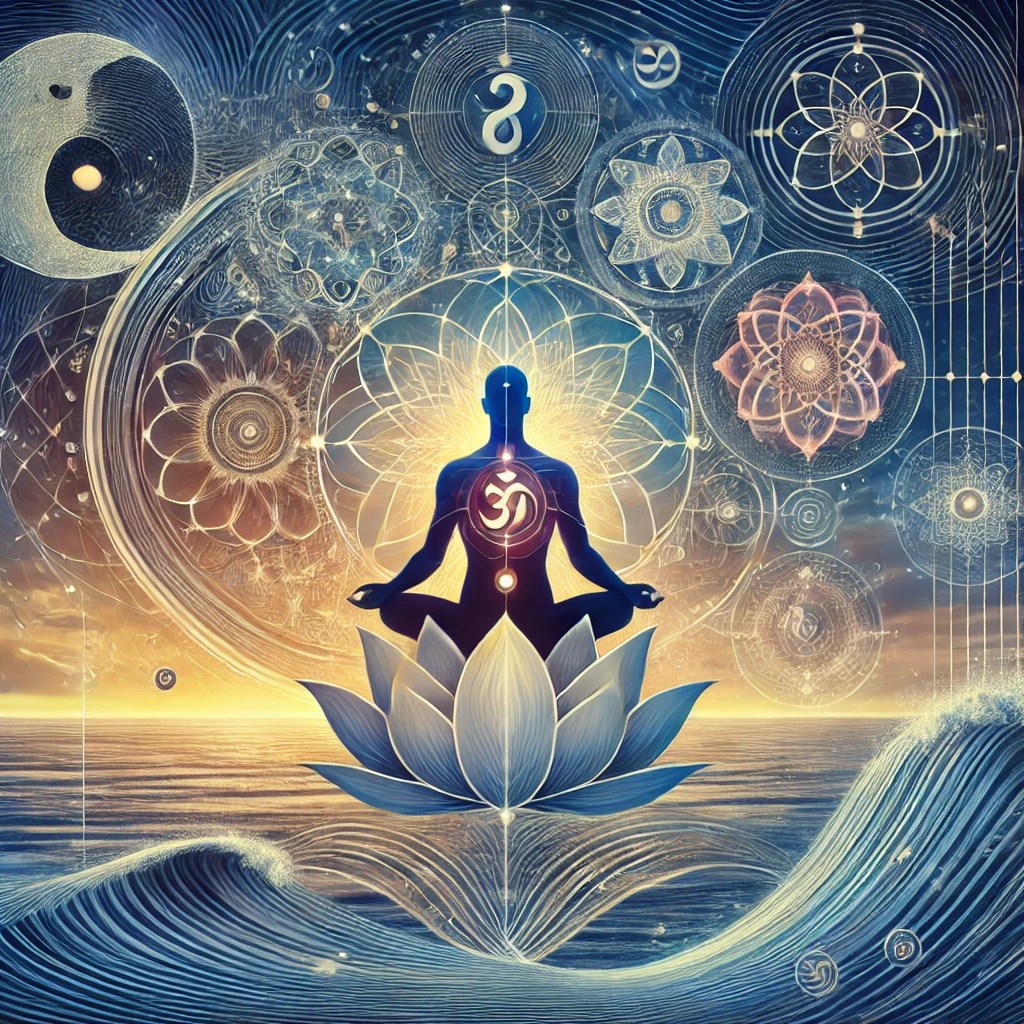
  • The Yoga of Carl Jung: Integrating the Ego, Atman, and Brahman

    “Be patient toward all that is unsolved in your heart and try to love the questions themselves, like locked rooms and like books that are now written in a very foreign tongue. Do not now seek the answers, which cannot be given you because you would not be able to live them. And the point is, to live everything. Live the questions now. Perhaps you will then gradually, without noticing it, live along some distant day into the answer.”

    ~ Rainer Maria Rilke, “Letters to a Young Poet”

    In exploring the depths of human consciousness, both Carl Jung’s psychological theories and yogic philosophy offer profound insights into the nature of the self. Despite originating from different cultural and intellectual traditions, they converge on a central theme: the integration of various aspects of the self to achieve wholeness and enlightenment. This post delves into the parallels between Jung’s concepts and yogic teachings, focusing on the roles of the ego, Atman, and Brahman.

    The Self According to Carl Jung

    Carl Jung, a pioneering psychologist, introduced the concept of the Self as encompassing both the conscious and unconscious aspects of the psyche. He believed that the process of individuation, or personal development, involves integrating these unconscious elements into conscious awareness. This journey toward self-realization and wholeness allows individuals to uncover deeper truths about themselves and achieve psychological harmony.

    Yogic Philosophy: Ego, Atman, and Brahman

    In yogic philosophy, the self is understood through the interplay of the ego, Atman, and Brahman:

    • Ego: The ego represents the individual, conscious identity, marked by personal desires, fears, and thoughts. It is the part of the self that interacts with the world and perceives itself as separate from others.
    • Atman: Atman is the true Self, the deeper, unchanging essence of an individual beyond the ego. It is pure consciousness and awareness, representing the core of one’s being.
    • Brahman: Brahman is the ultimate, universal consciousness, encompassing all existence. The realization of Brahman involves understanding that Atman (the individual Self) is not separate from this universal essence.

    Integrating Jungian and Yogic Perspectives

    When we align Jung’s idea of the Self with yogic teachings, a comprehensive picture of self-realization emerges:

    1. Ego and Ordinary Mind: In both frameworks, the ego or ordinary mind is the initial stage of self-awareness. It involves the individual’s interaction with the world, characterized by fluctuating thoughts (vrittis) and personal narratives.
    • The ego experiences separation and individuality.
    1. True Self (Atman) and Stable Vrittis: Moving beyond the ego, the individual begins to experience the true Self or Atman. This state is marked by stable vrittis and similar pratyayas (mental contents), indicating a more unified and coherent state of consciousness. Here, the sense of “I” transitions from the personal ego to the deeper true Self.
    • Stable vrittis and similar pratyayas reflect a unified consciousness.
    1. Universal Self (Brahman) and Pure Awareness: The ultimate realization involves understanding that the true Self (Atman) is one with Brahman, the universal consciousness. In this state, there is no distinction between the individual self and the universal Self. This realization aligns with the experience of pure awareness in yogic contemplation, where the mind transcends individual thoughts and perceptions to rest in its true, unchanging nature.
    • The true Self (Atman) is fundamentally connected to the universal consciousness (Brahman).

    The Connection Between Ego, True Self, and Universal Self

    An important insight from this integration is understanding the relationship between the ego, True Self, and Universal Self:

    • Ego as a Fluctuation of the True Self: The ego, with its individual identity and personal narratives, can be seen as a temporary fluctuation or expression of the deeper True Self (Atman). While the ego experiences separation and individuality, it is ultimately a manifestation of the underlying, unchanging awareness of Atman.
    • True Self as a Fluctuation of the Universal Self: Similarly, the True Self (Atman) can be understood as a particular expression or fluctuation of the Universal Self (Brahman). While Atman retains a sense of individual consciousness, it is fundamentally connected to and inseparable from the universal, all-encompassing consciousness of Brahman.
    • Inherent Connection: This perspective highlights that, whether we are aware of it or not, we are all inherently connected through the Universal Self. Our individual experiences and identities are different expressions of the same underlying reality.

    Recognizing that the ego is a fluctuation of the True Self, and the True Self is a fluctuation of the Universal Self, helps us understand our inherent interconnectedness. This realization fosters a sense of unity and compassion, knowing that at the deepest level, we are all part of the same universal consciousness.

    Practical Exercise: Self-Inquiry and Integration

    To help experientially understand these concepts, here are a few exercises based on self-inquiry, which integrate conscious and unconscious experiences. Each of these steps can be a lifetime practice. Understanding or realization of these ideas and practices may immediately strike an intuitive chord, but direct experience may require further contemplation and meditation. As Rilke suggests, sometimes it’s more important to live the questions than to immediately understand the answers. These steps are also not necessarily linear as presented; each step can unfold organically in its own way and time. Therefore, when studying and practicing these teachings, patience is truly a virtue.

    Step 1: Settle into Meditation

    Find a quiet place and sit comfortably. Close your eyes and take a few deep breaths, allowing your mind to settle.

    Step 2: Begin Self-Inquiry

    • Ask yourself, “Who am I?” or “What is this ‘I’ that I experience?”
    • Allow any mental events, fluctuations, experiences, thoughts, feelings, sensations, memories, or beliefs to arise without judgment. Simply observe them.

    Step 3: Observe the Ego

    • Notice the thoughts and feelings that are tied to your personal identity (ego). These might include your name, roles, likes, dislikes, desires, aversions, hopes, and fears.
    • Recognize these as fluctuating vrittis and pratyayas of the ordinary mind.

    Step 4: Move to the True Self (Atman)

    • Shift your focus to the awareness that is observing these thoughts and feelings. This awareness is stable and unchanging.
    • Ask yourself, “What is the nature of this awareness?” or “Who is aware of these thoughts?”
    • Experience this deeper sense of “I” that is beyond personal identity. This is the Atman, your true Self.

    Step 5: Contemplate the Universal Self (Brahman)

    • Reflect on the idea that this true Self (Atman) is not separate from the universal consciousness (Brahman), in the same way that waves are not separate from the ocean.
    • Meditate on the oneness of all existence, recognizing that your true Self is part of this greater whole.

    Step 6: Integrate the Experience

    • Spend a few moments in silence, allowing the experience to integrate into your awareness.
    • When you’re ready, gently open your eyes and carry this sense of expanded awareness with you into your daily life.

    Conclusion

    The integration of Jungian psychology and yogic philosophy provides a comprehensive framework for understanding the self. By recognizing the roles of the ego, Atman, and Brahman, and integrating these aspects through self-reflection, meditation, and contemplation, individuals can move toward a state of wholeness and enlightenment. This journey not only enhances personal well-being but also fosters a deeper connection with the universal consciousness, embodying the true essence of both psychological and spiritual growth.

    I Live My Life in Widening Circles

    by Rainer Maria Rilke

    I live my life in widening circles
    that reach out across the world.
    I may not complete this last one
    but I give myself to it.

    I circle around God,
    around the primordial tower.
    I’ve been circling for thousands of years
    and I still don’t know: am I a falcon,
    a storm, or a great song?

    🙏🕊️🙏

    Explore the profound integration of Carl Jung’s psychological theories and yogic philosophy in understanding the self. This blog delves into the roles of the ego, Atman, and Brahman, providing insights into achieving wholeness and enlightenment. Learn practical self-inquiry exercises to harmonize conscious and unconscious mind, fostering unity and spiritual growth. Discover how Jung’s concepts align with ancient yogic teachings, guiding you toward a deeper connection with universal consciousness.
  • Journey of Individuation: Unveiling the Depths Within

    Navigating the Path of Individuation and Spiritual Growth Through Celibacy

    Individuation invites us to venture beyond the surface of our conscious minds, where our thoughts and reasoning reside. It is an exploration of the vast, submerged realms of our unconscious—where buried treasures and forgotten truths await rediscovery.

    A pivotal aspect of this journey involves embracing our shadow—the aspects of ourselves often shrouded in fear, insecurity, and unacknowledged desires. By bravely confronting these hidden corners of our psyche, we integrate them into our conscious awareness, reclaiming lost parts of ourselves and nurturing a profound sense of wholeness.

    Yet, individuation is not merely a process of shadow work; it encompasses a journey through the rich tapestry of archetypes within us. These universal symbols, rooted in the collective unconscious, shape our behaviors, dreams, and aspirations. Whether encountering the anima, the feminine aspect within men, or the animus, the masculine within women, integrating these archetypes fosters inner harmony and balance.

    As we delve deeper, we encounter the collective unconscious—a reservoir of humanity’s shared experiences and symbols. Here, myths, legends, and dreams intertwine, offering profound insights into our psyche and our interconnectedness with the world.

    Ultimately, individuation unfolds as a path to self-realization and spiritual growth. It beckons us to become the fullest expression of ourselves—authentic, integrated, and aligned with our true essence. Through this transformative journey, we uncover our unique purpose and contribution to the world, embracing challenges as opportunities for personal evolution.

    So, as you navigate life’s complexities, remember that individuation serves as your inner compass. It guides you through uncertainty, empowering you to uncover your true potential and live a life rich with meaning and fulfillment. Embrace this journey of self-discovery with curiosity and courage, for it leads to the deepest truths and the highest peaks of human experience.

    Personal Reflection on Celibacy and Individuation

    In my journey of individuation, I’ve come to recognize and accept the shadow elements within me, including my desire for sexual intimacy in a loving relationship. This desire, when it arises, is a powerful force—a chemistry that can be both invigorating and challenging. Rather than fearing this aspect of myself or feeling guilty about it, I’ve learned to understand and respect it as part of my human experience.

    My commitment to celibacy is not about denying or rejecting this desire but about channeling it in a way that serves my highest good and spiritual growth. By acknowledging and integrating this aspect of my shadow, I create a healthier and more harmonious relationship with myself. This acceptance allows me to honor my commitment to celibacy with a sense of peace and self-compassion, knowing that it supports my spiritual journey and personal integrity.

    Understanding my shadow helps me to stay grounded and mindful when these desires surface. It empowers me to make conscious choices that align with my values and priorities. This process of individuation—embracing and integrating all parts of myself—leads to a deeper sense of wholeness and happiness.

    Ultimately, by accepting my shadow and respecting my desires, I cultivate a more authentic and balanced self. This acceptance enhances my ability to live in harmony with my commitment to celibacy, fostering a fulfilling and spiritually aligned life.

    Celibacy as a Choice for Spiritual Growth

    Celibacy, for me, is a personal and spiritual practice chosen to deepen my commitment to spiritual growth. It creates a boundary that helps me focus on my relationship with the divine and my personal development. While celibacy is not required for spiritual growth, it can be a deliberate choice to aid in one’s spiritual journey.

    By choosing celibacy, I am dedicating my energy and attention to cultivating a deeper understanding of myself and my spiritual path. This practice supports my highest good and spiritual unfolding, allowing me to live in greater alignment with my values and aspirations. It is a choice that enhances my individuation process, helping me to integrate all aspects of my being and achieve a more harmonious and fulfilling life.