
Welcome to a quiet revolution in gardening—a practice that transforms waste into nourishment, soil into sanctuary, and daily rhythms into sacred ritual. This is vermicomposting made simple, a beginner’s guide woven with intention, simplicity, and care.
The Sanctuary of Soil: Setting Up Your Worm Bin
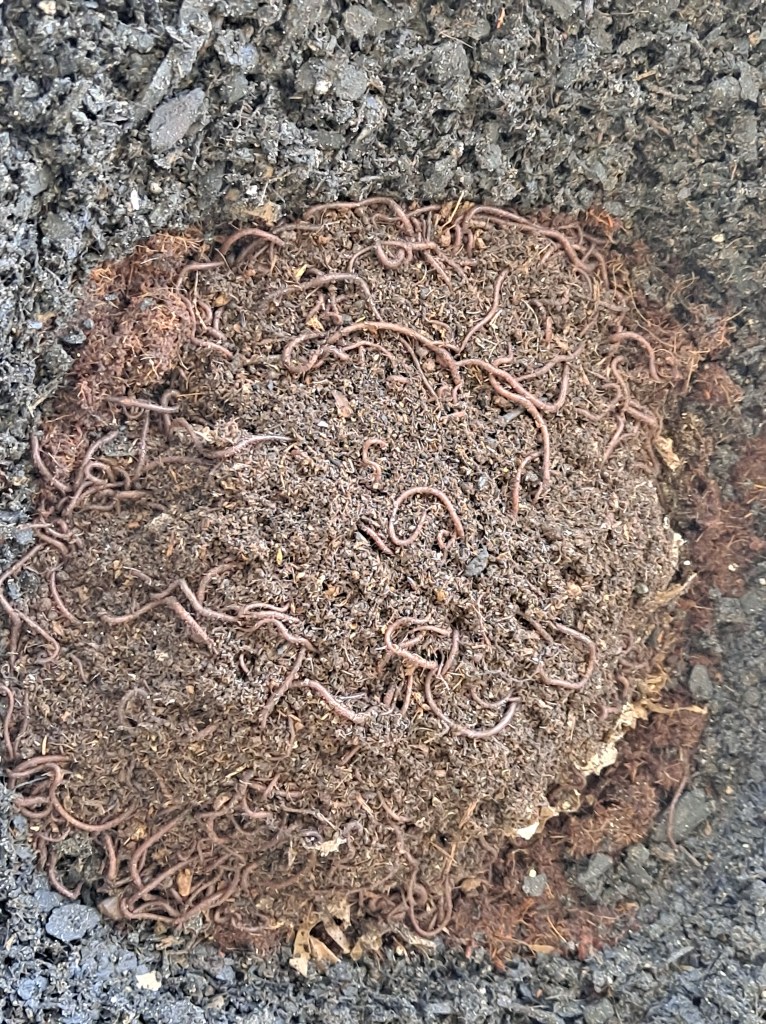
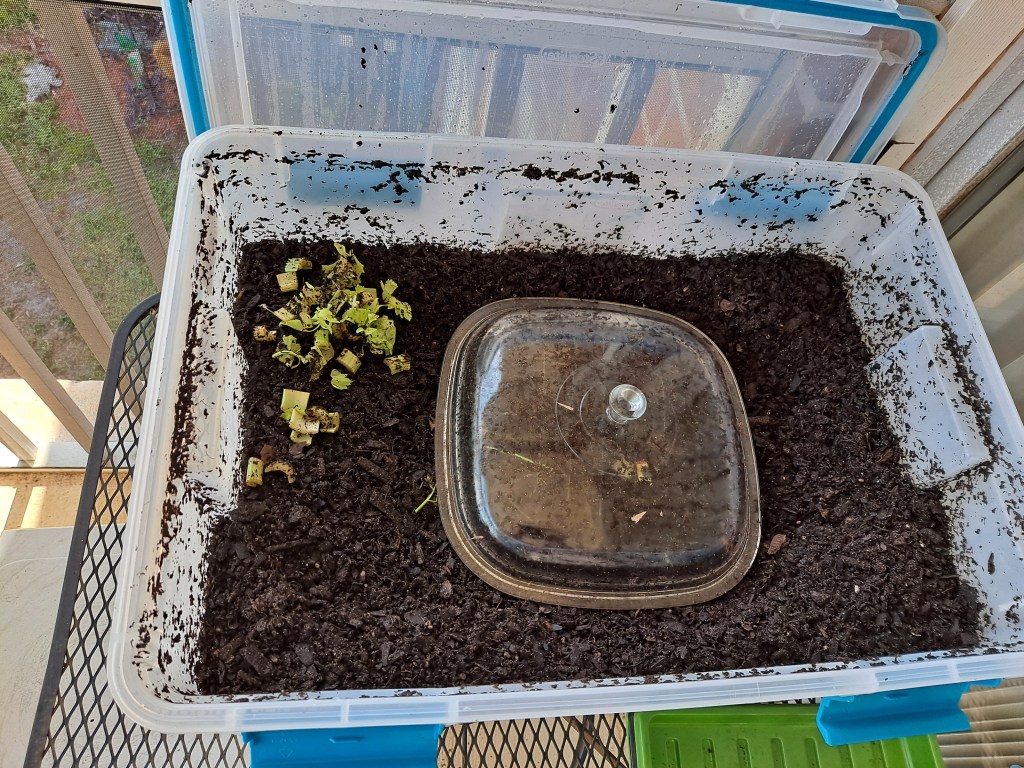
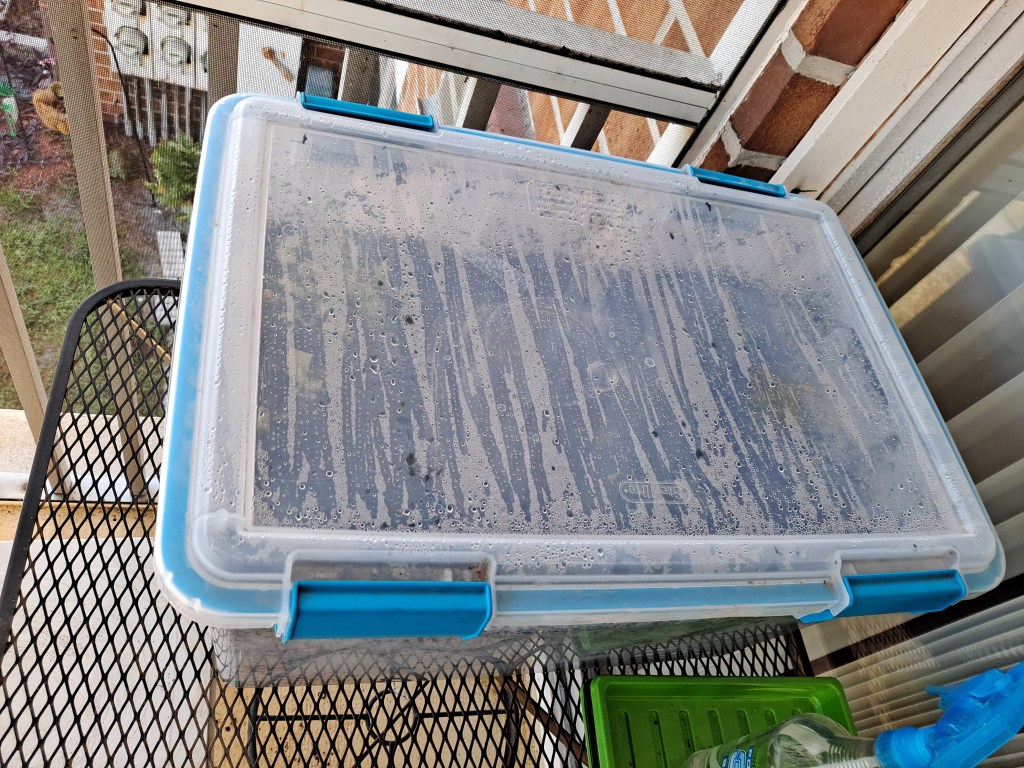
Begin with a clear or opaque bin with a tight-fitting lid. Mine sits on a porch, lovingly tended. Inside it rests a mesh wire bowl filled with moist coconut coir and brown paper—soft and dark, like the quiet interior of a forest. This becomes the nest, the resting place, for your red wigglers (Eisenia fetida), your gentle companions in composting.
A second mesh bowl rests on top, separating the bedding from the outer dirt, allowing for breath and movement. Around this central nest, rich, dark earth fills the rest of the bin.
The Red Monks: Introducing Your Worms
We began with about 250 red wigglers. Upon arrival, they nestled into their new home and soon began to explore—first the outer edges, then deeper into the bedding. They are subtle, contemplative creatures. When they vanish from view, trust that they are not gone but simply being.
The Offering: Feeding with Love
Rather than placing food atop their sanctuary, we offer it to the outer world—the quadrants around the central nest. Each week or so, depending on the rate of decomposition, we place small pieces of food (like celery, cucumber peel, or melon) into one quadrant. Then the next, clockwise.
If the bin is fully enclosed and retains moisture well, the food can remain on the surface—uncovered and visible. The darkness within the bin invites the worms to come out and feed when they are ready, and leaving food exposed allows for easy observation of when it’s time to feed again.
In other systems, especially open ones, gently covering the food with bedding can help maintain moisture and discourage pests.
Tip: Only feed when most of the last food has disappeared. Too much food too soon can overwhelm the bin and attract pests.
The Mandala of Return: Soil and Harvest
Over time, each quadrant becomes rich with castings—black gold. From these quadrants, we gently draw soil to grow trays of microgreens—tiny, living blessings. Once harvested, the roots of these microgreens are returned to the same quadrant, becoming the next meal for the red monks.
This is the cycle: food becomes casting, casting becomes green, roots become food again.
The Fig Tree Named Love
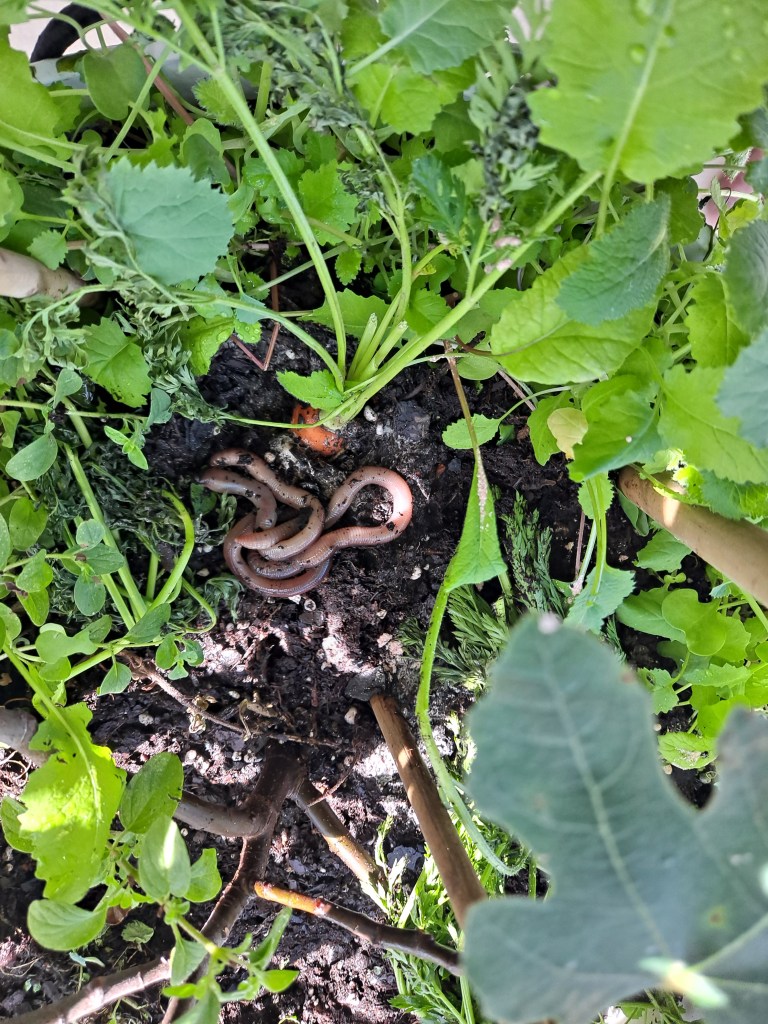
Near the worm bin, a large pot hosts a fig tree named Love, along with oregano, scallions, and carrots. Twenty nightcrawlers live beneath the soil, aerating and enriching it from below. A small trough at the base allows for checking moisture. When the bottom is dry, we water. Gently. Thoughtfully. As with all things here.
A Rhythm, Not a Schedule
The wisdom of vermicomposting is not found in rigid charts, but in listening—touching the soil, observing, and letting the earth speak. Once a week, I check the bin, the fig tree, the trays of greens. What needs water? What needs rest? What is ready to give?
🙏🕊🙏

 Home Page: Inspirations of Love and Hope
Thank you 🙏